Links between direct and indirect childhood victimization, social information processing skills and antisocial behavior in adolescents
[Los vínculos entre la victimización infantil directa e indirecta, las habilidades de procesamiento de la información social y las conductas antisociales en adolescentes]
Beatriz Ortega1, María Verónica Jimeno1, Eleonora Topino2, Maaike Van Rest3, & José Miguel Latorre1
1Research Group on Victimology and Psychopathology of Childhood and Adolescence (VIPIA) at the Criminology Research Center of the of Castilla-La Mancha, Albacete, Spain; 2Libera Università Maria Santissima Assunta, Rome, Italy; 3Vrije Universiteit Amsterdam, The Netherlands
https://doi.org/10.5093/apj2026a9
Received 15 June 2024, Accepted 20 October 2025
Abstract
Child and adolescent victimization can impact cognitive processes and individuals’ subsequent social adjustment. These early experiences may affect the presence of biases in social information processing skills, increasing aggressive and maladaptive behaviors in children and adolescents. The aim of this study was to explore the associations between direct and indirect victimization experienced by a group of adolescents and their social information processing skills and engagement in antisocial behaviors over the last year. The sample comprised 364 adolescents from a high school in Spain. Aggressive self-efficacy has an indirect mediating effect on the relation between childhood and adolescent victimization and the development of antisocial behaviors. Indirect victimization is a slightly stronger predictor of antisocial behaviors than direct victimization. Understanding the behavioral and cognitive repercussions of childhood and adolescent victimization may help design and/or perfect interventions to avoid biased processing patterns being perpetuated and behavioral problems becoming chronic.
Resumen
La victimización infantil y adolescente puede afectar a los procesos cognitivos y al posterior ajuste social de los individuos. Específicamente estas experiencias tempranas influyen en la presencia de sesgos en las habilidades del procesamiento de la información social, aumentando la conducta agresiva y desadaptada en niños y adolescentes. El objetivo de este estudio fue explorar la asociación entre la victimización infantil directa e indirecta experimentada por un grupo de adolescentes, con sus habilidades de procesamiento de la información social y las conductas antisociales del último año. La muestra la componían 364 adolescentes de un instituto de España. La autoeficacia agresiva tuvo un efecto mediador indirecto en la relación entre la victimización infantil y adolescente y el desarrollo de conductas antisociales. La victimización indirecta tiene un poder predictivo de los comportamientos antisociales ligeramente mayor que la directa. Conocer las secuelas conductuales y cognitivas de las experiencias de victimización infantil y adolescente puede ayudar a diseñar y/o perfeccionar la intervención para evitar que se perpetúen los patrones de comportamiento sesgados y los problemas conductuales.
Palabras clave
Victimización infantil, Procesamiento de la información social, Conducta antisocial, Sesgos, Modelo de mediaciónKeywords
Childhood victimization, Social information processing, Antisocial behavior, Biases, Mediation modelCite this article as: Ortega, B., Jimeno, M. V., Topino, E., Van Rest, M., & Latorre, J. M. (2026). Links between direct and indirect childhood victimization, social information processing skills and antisocial behavior in adolescents. Anuario de Psicología Jurídica, 36, Article e260476. https://doi.org/10.5093/apj2026a9
Corresponding: veronica.jimeno@uclm.es (María V. Jimeno Jiménez).Various studies have shown that childhood and adolescent victimization is a risk factor for the development of externalizing behaviors (e.g, Allen et al., 2021; Fleckman et al., 2016; Tremblay-Perreault & Hébert, 2020; D. Yoon et al., 2021) and socially maladjusted behaviors (e.g., Braga et al., 2018; Degli Esposti et al., 2020; Farrell & Zimmerman, 2017; Ortega et al., 2024; Pittman & Farrell, 2022). This relation is well established and numerous works have sought to understand the mechanisms that underlie the association between the two phenomena (e.g., Guerra et al., 2021; Heleniak & McLaughlin, 2020; Lee & Feng, 2021; Trickett et al., 2011; Yoon et al., 2016). The field of psychology has studied the way in which different distorted cognitive processes may affect the emergence and maintenance of maladaptive behaviors, including social information processing biases (Roncero et al., 2016). Social information processing (SIP; Crick & Dodge, 1994) is a widely recognized and studied socio-cognitive model for understanding social adjustment in children and adolescents, which mainly focuses on aggressive behavior (Ziv & Elizarov, 2020). This theory posits that when a child or adolescent is confronted by a problematic social situation, six cognitive steps that lead to a behavioral response are activated (Crick & Dodge, 1994). To respond appropriately to social situations, individuals must first correctly encode the contextual information (encoding); second, they must mentally interpret and represent this information accurately (interpretation); third, they must specify an appropriate interaction goal (goal generation); fourth, they must generate response alternatives to achieve this goal (response generation); fifth, they must evaluate the different response alternatives (response evaluation); and sixth, they must select and implement the optimal response (response selection) (Orobio de Castro, 2004). Many studies have supported this model, noting that aggressive and other maladaptive behaviors in children and adolescents can be explained by the presence of deficits or biases during the various processing steps (e.g., Dodge et al., 2015; Lansford et al., 2010; Orobio de Castro & van Dijk, 2017; Van Dijk et al., 2017; Van Rest et al., 2019). One of the most widely studied biases related to aggressive behavior is the hostile attribution bias (e.g., Martinelli et al., 2018; Orobio de Castro et al., 2002; Verhoef et al., 2019), which may be a key psychological mechanism in children’s chronic aggression (Dodge et al., 2015). Various mental processes, cognitive schemas, emotions, learning experiences, and memories stored in the long-term memory database contribute in the processing of social information. Together, these elements constitute the social knowledge through which children and adolescents interpret their environment (Crick & Dodge, 1994; Verhoef et al., 2022). When a child is exposed to violence early in life, either directly (e.g., child maltreatment by primary caregivers or peer abuse) or indirectly (e.g., witnessing violence), their “database” is dominated by negative social experiences, which subsequently shapes their understanding of the environment and social interactions (Ziv & Elizarov, 2020). Children who have experienced maltreatment exhibit a complex and differentiated profile of social understanding (Luke & Banerjee, 2013). Early experiences of socialization establish neural pathways that, through repeated use, become increasingly stable and complex. As a result, children may develop rigid patterns of social cognition that are resistant to change, such as a tendency to be hyper-vigilant to threats in the environment or deficits in attention to social cues (Dodge et al., 2002). Additionally, difficulties in the early processing stage may lead them to inaccurate judgments abouts others’ intentions, reduced access to prosocial behavioral strategies, and poor response decision-making (Camodeca et al., 2003). Research has shown that the cognitive schemas formed as a result of victimization during childhood and adolescence tend to persist over time (Calvete et al., 2018). Indeed, a large body of evidence suggests that experiences of childhood and adolescent victimization have a negative impact on cognition in both the short and long term (Cubillo, 2022; Estévez et al., 2019; Kellij et al., 2022; Pabian & Vandebosch, 2021; Wang et al., 2023). Numerous studies have shown that victims of school bullying tend to pay greater attention to negative and threatening social cues, exhibit poorer emotion recognition and register social cues less accurately (see Kellij et al., 2022 for a review). Hostile attribution styles have also been observed among victims of child abuse (emotional, physical, and sexual) (e.g., Gibb et al., 2009), as well as in cases of peer victimization and bullying (e.g., Betts et al., 2017; Guy et al., 2017; Kokkinos & Voulgaridou, 2018; Pornari & Wood, 2010), and of indirect victimization and witness victimization (Calvete & Orue, 2011; Ziv, 2012), with children exposed to violence presenting a tendency to generate and positively evaluate aggressive responses (Ziv, 2012; Ziv & Sorongon, 2011). This response evaluation includes self-efficacy evaluation. Self-efficacy was described as the degree to which people perceive that they can successfully perform specific behaviors (Bandura, 1977). Crick and Dodge’s (1994) theoretical model proposes that self-efficacy can influence the selection and enactment of a behavior. Thus, some studies have shown that different types of victimization (e.g., peer victimization) are associated with lower assertive or prosocially oriented self-efficacy and higher aggressive self-efficacy (see van Reemst et al., 2016 for a review). Previous research has shown that such alterations in SIP skills may explain the relation between childhood and adolescent victimization and social maladjustment (e.g., Calvete & Orue, 2011; Dodge et al., 1995; Lansford et al., 2010; Pettit et al., 2010; Ziv, 2012). Some studies has even been suggested that the SIP skills involved in the relation between victimization and social maladjustment might differ between direct and indirect victims of violence (Calvete & Orue, 2011). This research has a twofold aim: first, to explore how biases in social information processing skills mediate the relation between experiences of direct and indirect childhood victimization and engagement in antisocial behaviors during adolescence and second, to determine whether the mediating effects differ depending on the type of victimization (direct or indirect). The first research question addressed in this study is: does bias in social information processing skills serve as an intervening mediator in the relation between experiences of direct and indirect childhood victimization and adolescents’ engagement in antisocial behavior? We hypothesize that social information processing skills—such as problem recognition, hostile interpretation, aggressive response generation, and aggressive self-efficacy—mediate the relation between experiences of childhood and adolescent victimization and engagement in antisocial behavior during adolescence (see Figure 1). Figure 1 The Mediation Model 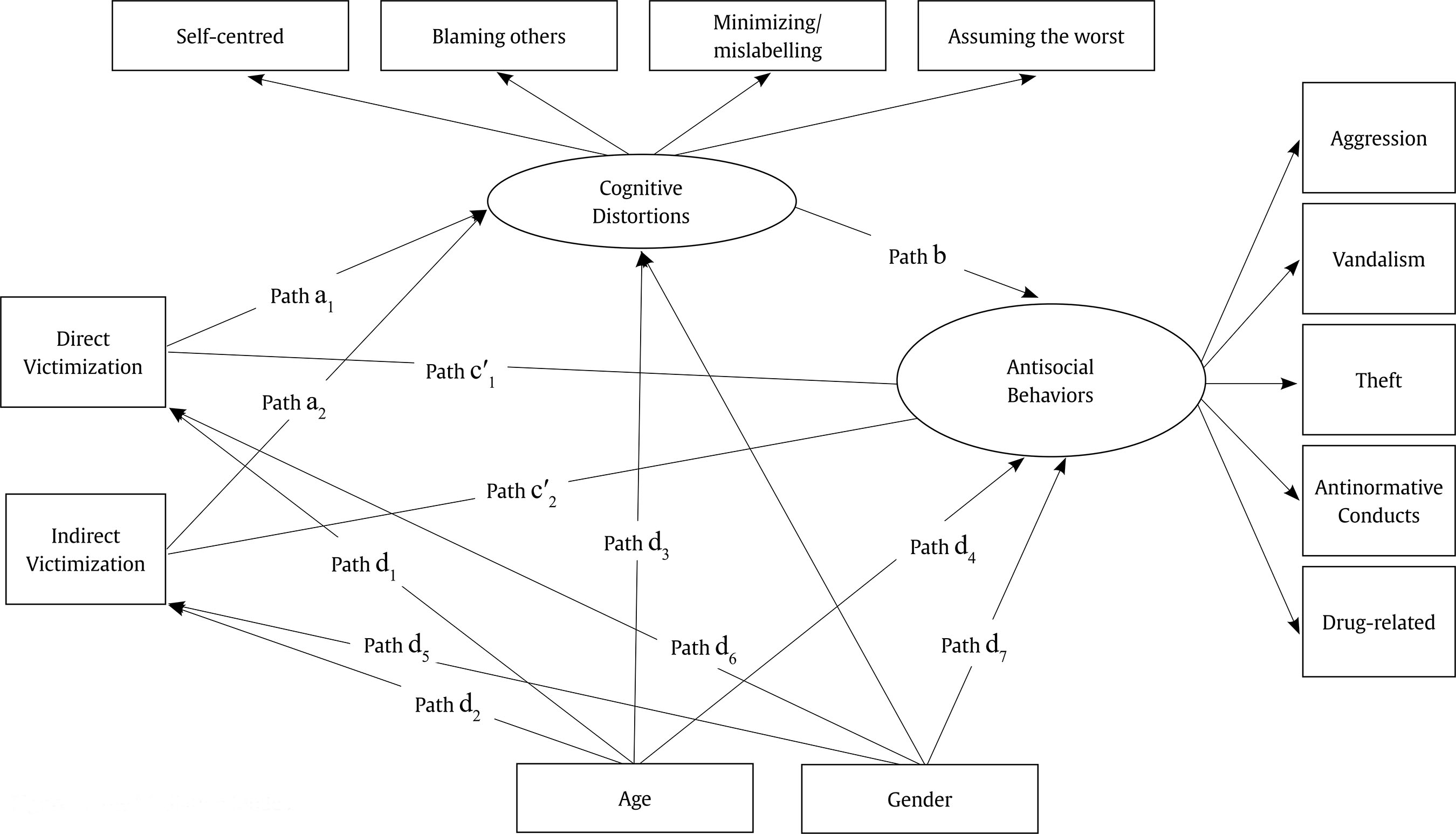 Our second research question is: are there differences in the mediating effects between direct and indirect victimization and biases in social information processing? Accordingly, we hypothesize that the mediating effects will vary depending on whether an individual has been a direct or indirect victim of violence. Specifically, we hypothesize that the mediating effects will be greater for indirect victimization than for direct victimization. Participants The initial sample consisted of 515 adolescents from a high school in Castilla-La Mancha (Spain) who consented to participate in the research. Data from participants that dropped out or who did not respond to all the items or questionnaires were eliminated. The final sample consisted of 364 adolescents aged 12-18 years (M = 14.17, SD = 1.52), of whom 55.2% were female, 42.6% were male, and 2.2% declined to specify their sex. The adolescents were predominantly of European origin (98.9%), primarily from Spain. Table 1 summarizes the sociodemographic data of the participants. The inclusion criteria were as follows: (a) being aged between 12 and 18 years and (b) having no learning difficulty, as confirmed by the school counseling team, that would make it difficult or impossible to autonomously complete the self-reported questionnaires. Table 1 Sample Characteristics 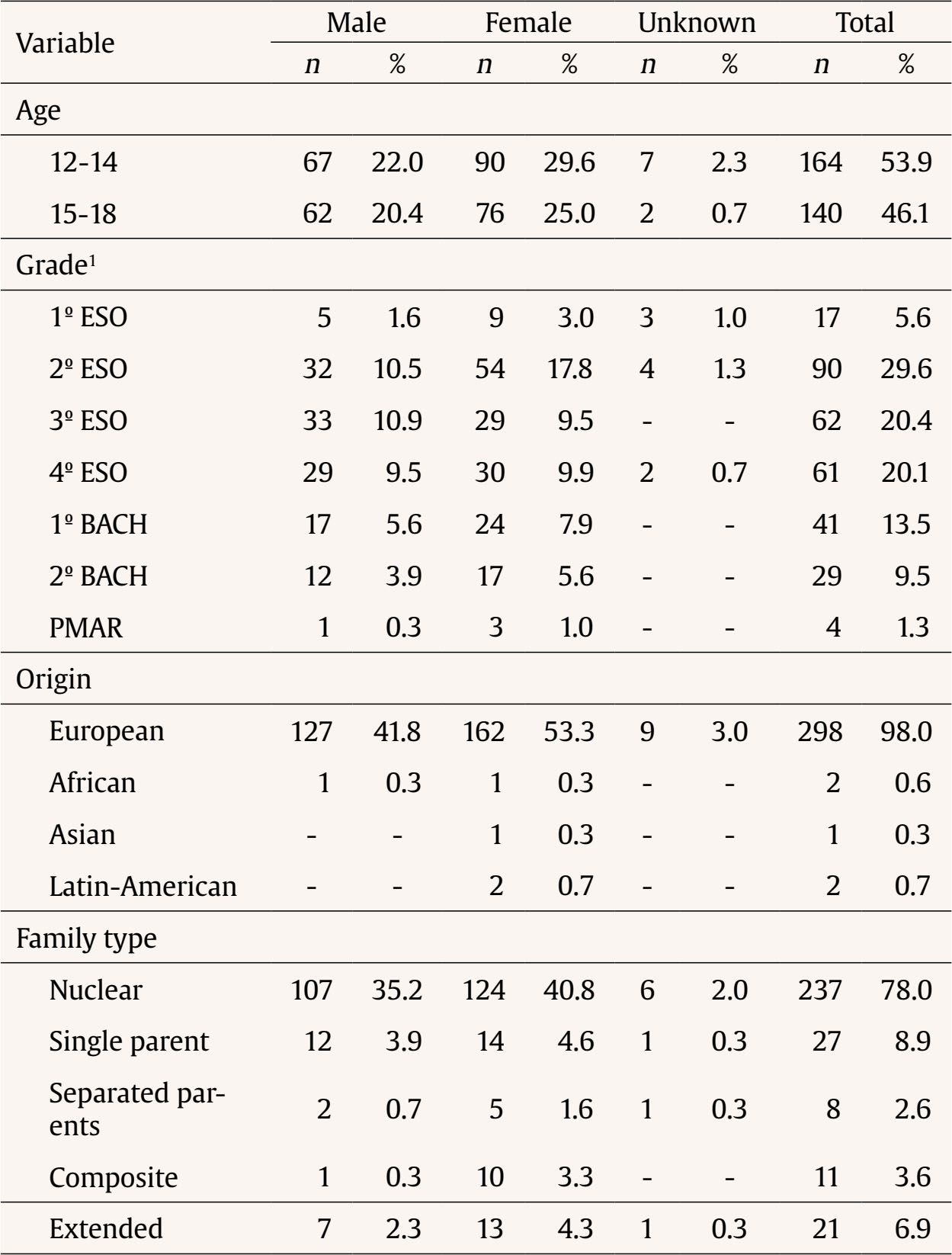 Note. 1According to the Spanish Education System; ESO = Compulsory Secondary Education; BACH = Baccalaureate; PMAR = Program for the Improvement of Learning and Performance. Measures Questionnaire on Sociodemographic Data An ad hoc questionnaire was created to collect data considered relevant for the research. Among other items, the adolescents were asked about age, sex, school grade, type of family, and whether they had been reported for disciplinary problems or expelled from school. Juvenile Victimization Questionnaire (JVQ; Finkelhor et al., 2005) To assess victimization during childhood and adolescence, we used the Spanish version of this questionnaire (Pereda et al., 2018). This consists of 36 items corresponding to different victimizations that can be classified into six areas: conventional crime (property victimization, e.g., personal theft, and crimes against persons, e.g., assault without weapon), primary caregiver victimization (e.g., physical abuse), peer and/or sibling victimization (e.g., physical intimidation), sexual victimization (with physical contact, e.g., sexual abuse/assault by known adult, and without physical contact, e.g., verbal sexual harassment), indirect victimization and/or witnessing violence (family violence, e.g., witness to domestic violence, and community violence, e.g., witness to assault with weapon), and electronic victimization (e.g., harassment). Adolescents may respond no (0) or yes (1) to each item according to their experience. In its Spanish adaptation, the scale has shown satisfactory psychometric properties (with a Cronbach’s alpha of .80, good indications of construct validity based on associations with trauma-related symptomatology, and positive indications of test-retest reliability; Pereda et al., 2018). Social Information Processing Test - Spanish To assess biases in SIP skills, we used three videos from the Spanish adaptation of the Sociale Informatie Verwerkings Test (SIVT; Van Rest et al., 2014; Van Rest et al., 2020). These videos (A = accidental situation, B = ambiguous situation, and E = hostile situation) show scenes concerning interpersonal problems involving a peer or an adult. In all the videos, the outcome of the situation is negative for the victim. Four SIP cognitions were assessed in line with the separate steps of the SIP model (Crick & Dodge, 1994; Lemerise & Arsenio, 2000), and in accordance with previously reported SIP assessment procedures (e.g., Kupersmidt et al., 2011; van Nieuwenhuijzen & Vriens, A., 2012; Van Rest et al., 2014). The four cognitions covered processing from beginning to end, selecting from the early, middle, and late stages of the SIP model (Crick & Dodge, 1994; Lansford et al., 2006), and based on previous studies using the SIVT (e.g., Van Rest et al., 2019). Encoding was assessed using the open-ended question “What happened in this video?”. Responses were coded according to the degree of the adolescent’s recognition of the problem (0 = no recognition of the problem, 1 = partial recognition of the problem, 2 = total recognition of the problem). Inter-rater reliability kappas were calculated for each of the three videos separately; for video A, k = .73, for video B, k = .75, and for video E, k = .99. Hostile attribution was assessed using a three-point Likert-type question: ‘What do you think of [this perpetrator]?’ (1 = neutral , 2 = a little mean, 3 = (very) mean ). Hostile interpretation was averaged across the three videos. Aggressive response generation was assessed with the open-ended question: ‘If this happened to you, what would you do?’. Answers were coded into an aggressive or antisocial response versus a passive or assertive response. A total score for Aggressive Response Generation was calculated. Inter-rater reliability kappas for the response generation items were calculated for each of the three videos separately; for video A, k = .80, for video B, k = .88, and for video E, k = .74. Self-efficacy for aggressive responses was measured after presenting videos with an aggressive, assertive, or passive response as possible enactment by the victims in the three situations. The self-efficacy of each type of response was assessed by the question ‘Could you also respond like [this victim]?’ The participants answered on a 5-point Likert-type scale, ranging from 1 = totally not to 5 = totally . A mean score for the self-efficacy for aggressive responses was calculated across the three videos. Antisocial Behavior Questionnaire (ABQ; Luengo et al., 1999) To assess adolescents’ antisocial behaviors during the last year, the short version of the questionnaire (dos Santos et al., 2019) was administered. This questionnaire consists of 20 items on antisocial behaviors classified into different dimensions: aggression (aggressive acts against other people, e.g., beating someone up in a fight), vandalism (aggressive acts against objects, e.g., hitting, smashing, or scratching parked cars or motorbikes), theft with different levels of seriousness (e.g., taking a stranger’s bicycle and keeping it), antinormative behavior (e.g., spending the night away from home, without permission) and drug-related behaviors (e.g., taking drugs with a group of friends). Adolescents are required to score, on a four-point Likert scale, the number of times they have engaged in each behavior during the past 12 months (1 = never, 2 = a few times (1 to 5 times), 3 = many times (6 to 10 times), 4 = frequently (more than 10 times)). The short version of the ABQ has shown satisfactory psychometric properties, with a Cronbach’s alpha of .91 for the total scale and greater than or equal to .70 for the different factors except for antinormative conduct, which stands at .61, χ2(165) = 492.10, p < .001, χ2/df = 2.98, GFI = .905, RMR = .011, and RMSEA = .065; dos Santos et al., 2019). Procedure This research was approved by the Medicine Research Ethics Committee of the Integrated Care Area of Albacete [2021-62]. The research complies with the ethical principles of the Declaration of Helsinki, follows the ethical guidelines for research involving human participants published by the Official Association of Psychologists and adopted under Law 14/ 2007, of July 3, on biomedical research. The processing of personal data required in this study is governed by the applicable data protection laws, specifically Regulation (EU) 2016/679 of the European Parliament and of the Spanish Council of April 27, 2016 on the protection of individuals with regard to the processing of personal data and the free movement of such data (GDPR), and Organic Law 3/2018, of December 5, on the Protection of Personal Data and Guarantee of Digital Rights. For data collection, we contacted the principal of the high school, who agreed to collaborate. Once the high school had agreed to take part in the study, an information letter was sent to the students’ parents. The letter explained the aims of the study and the confidentiality of the results and included a request for informed consent. Furthermore, the minors participated voluntarily, also giving their informed consent. Both parents and participants gave their signed informed consent. Data collection took place in the classrooms and on the dates agreed upon with the teacher of each group. The sessions lasted approximately 50 min. The data were gathered during the 2021/2022 academic year. Data Analysis SPSS v. 21.0 (IBM) and AMOS v. 24.0 (IBM) were the statistical software programs used to analyse the collected data. Descriptive statistics were calculated for all the study variables. The hypothesized model was tested by using the two-step approach for structural equation modeling (SEM; Anderson & Gerbing, 1988). Therefore, a one-factor solution was implemented and compared with the SEM model using the chi-square difference test (Δ χ ²): the model with the lower chi-square value was considered superior if the p-value was statistically significant (Byrne, 2010). Furthermore, the goodness of fit for the models was evaluated using the following indices: the discrepancy divided by degrees of freedom (CMIN/df), with values below 5 considered acceptable (Hooper et al., 2008; Marsh & Hocevar, 1985); the goodness of fit index (GFI) and the comparative fit index (CFI), with values above .90 considered acceptable (Hu & Bentler, 1999; Kline, 2015); the standardized root mean square residual (SRMR) and the root mean square error of approximation (RMSEA), with values below .08 considered acceptable (Fabrigar et al., 1999; Marsh et al., 2004). A bootstrapping procedure with 90% bias-corrected confidence intervals based on 1,000 resamples was employed to evaluate the model’s statistical stability (Preacher & Hayes, 2008). Finally, the R-squared index was calculated. The interpretation was guided by Cohen’s thresholds (Cohen, 1988): R2 < .02 indicates a very weak effect, .02 ≤ R2 < .13 suggests a weak effect,.13 ≤ R2 < .26 represents a moderate effect, and R2 ≥ .26 signifies a substantial effect. Table 2 shows the descriptive results of the study variables. The hypothesized model was then tested. First, the comparison with the one-factor solution showed a significant chi-square variation: Δχ2 = 34.34, Δdf = 8, p < .001. Since the chi-square of the SEM model (χ2 = 74.511) was lower than the one-factor one (χ2 = 108.851), the SEM model was considered significantly superior. Furthermore, this model showed a good fit: CMIN/df = 2.258, GFI = .965; CFI = .929, SRMR = .048; RMSEA = .059 (see Figure 1). Table 2 Percentages, Means, and Standard Deviations for the Study Variables 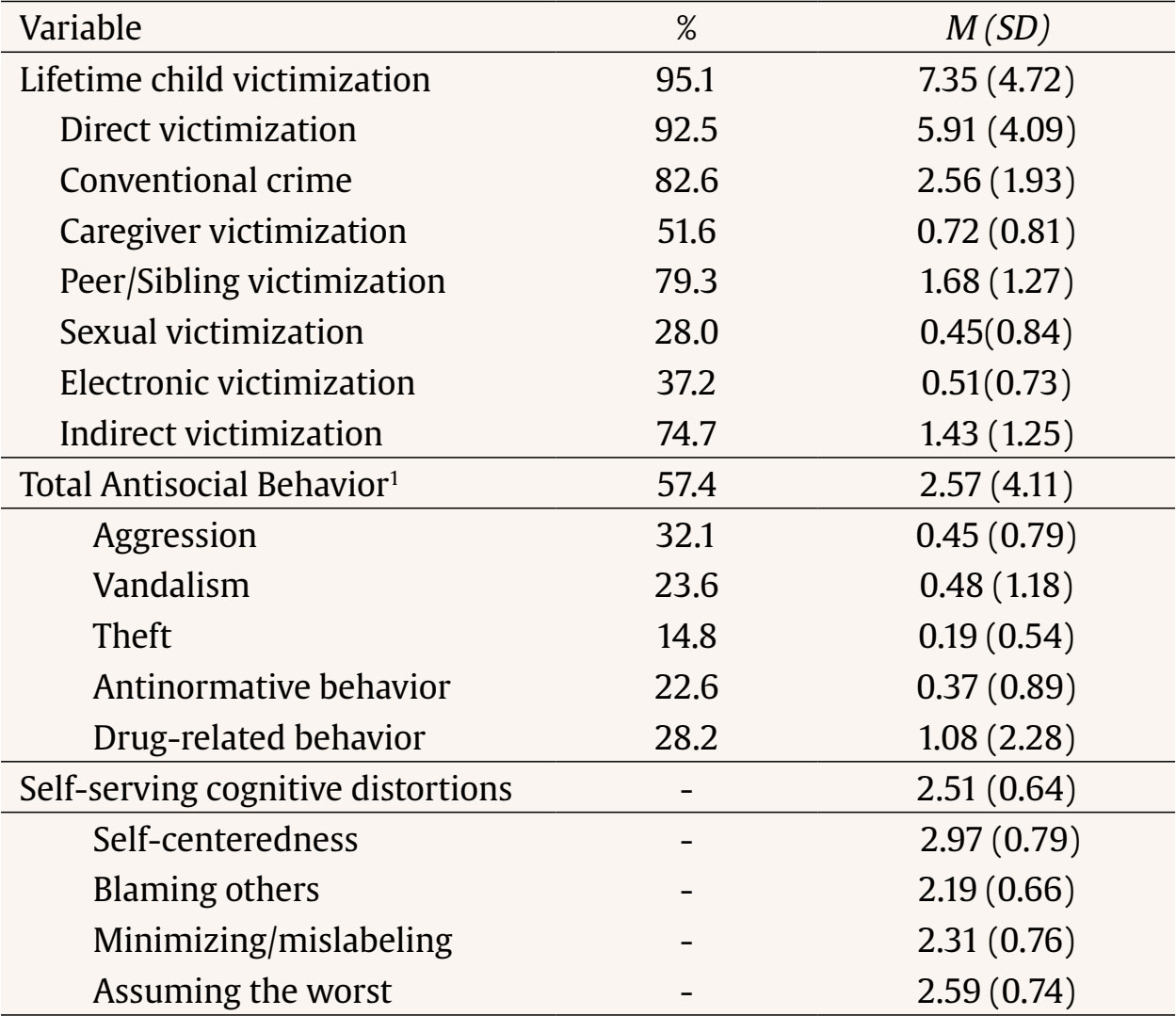 Note. Percentages refer to the number of adolescents who have experienced at least one victimization or have engaged in at least one antisocial behavior; 1antisocial behavior means refer to the frequency of involvement in the behaviors (range score of 1 to 4). More specifically, a significant total effect was found in the relation between childhood victimization and antisocial behavior ( β = .93, p < .001). Moreover, childhood victimization was significantly and positively related to aggressive self-efficacy ( β = .148, p < .05), i.e., a social information processing skill which was also positively predicted by aggressive response generation ( β = .215, p < .001) and hostile interpretation ( β = .233, p < .001), which was, in turn, negatively influenced by problem recognition ( β = -.121, p < .05). Furthermore, aggressive self-efficacy was significantly and positively associated with antisocial behavior ( β = .166, p < .05). In addition, when included in the model, the social information processing skills partially mediated the effect of childhood victimization on antisocial behaviors, which, despite being lower, remained significant ( β = .90, p < .001). The bias-corrected bootstrap procedure was employed to test the stability of the model’s findings: this confirmed that the total, direct, and indirect effects were statistically significant, as shown in Table 3. Table 3 Correlation Matrix 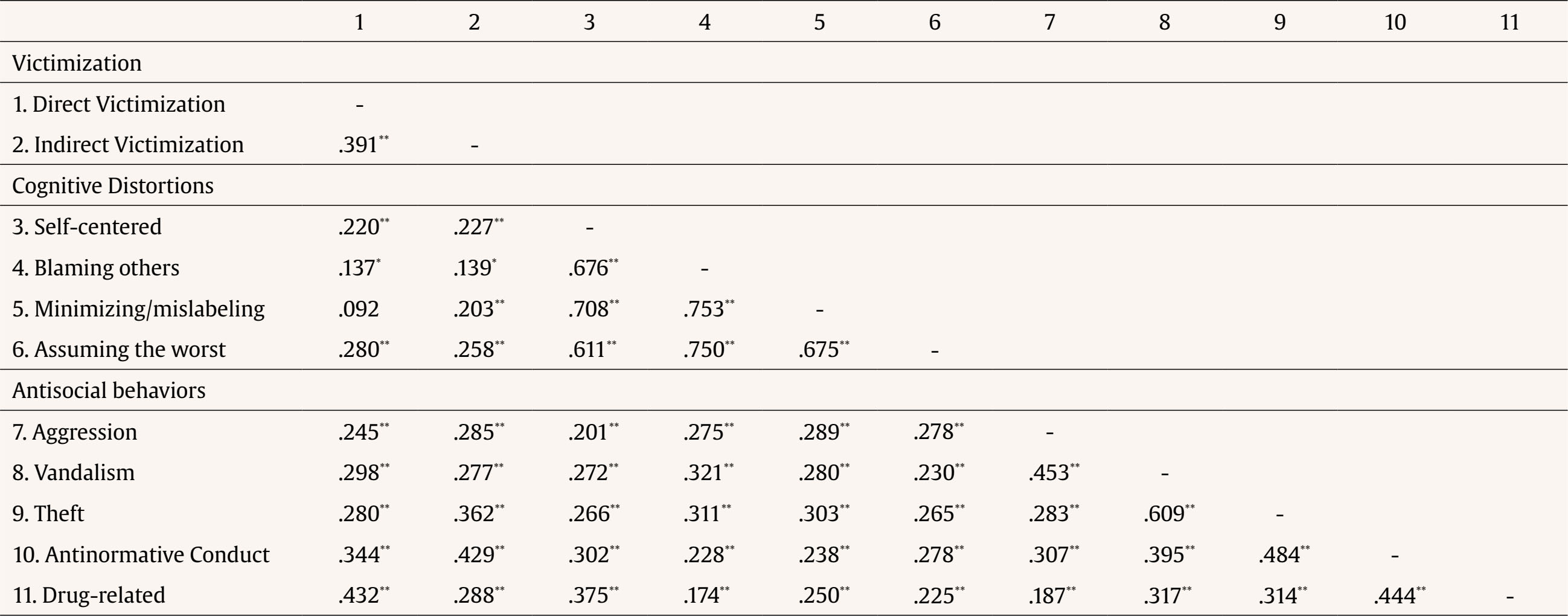 Note. *p < .05, **p < .01. Finally, the analysis revealed a strong positive relation between the independent variables and the dependent variable, with a squared multiple correlation coefficient (R2) of .890. This indicates that approximately 89% of the variance in antisocial behaviors can be explained by the variables involved in the model. Descriptive results indicate that adolescents in our sample have experienced an average of 5.3 direct victimizations and 1.31 indirect victimizations across their lifetimes. The mean scores for SIP skills indicate that adolescents partially recognize the problems presented in the video-based social scenarios and tend to interpret others’ intentions as being a little mean. Meanwhile, adolescents do not tend to spontaneously generate aggressive responses to problematic social situations (mean of .26 out of 3), and their perceived self-efficacy in engaging in aggressive responses is not particularly high (2.39 out of 5). Finally, the most frequently reported antisocial behaviors among adolescents in the past year were drug-related activities, followed by aggression, and vandalism. A substantial body of evidence has demonstrated that early victimization experiences influence individuals’ cognitive functioning both in the short and long term (Cubillo, 2022). Specifically, it has been observed that different types of victimization during childhood and adolescence are related to alterations and biases in social information processing skills (Hepp et al., 2021; Kellij et al., 2022; van Reemst et al., 2016), and that these biases are associated with aggressive and maladaptive behaviors in children and adolescents (e.g., Crick & Dodge, 1996; Dodge et al., 2013; Orobio de Castro & van Dijk, 2017; Van Rest et al., 2019). The results of our study suggest that, among the adolescents in our sample, victimization during childhood primarily affects their self-perception and their evaluation of personal skills and abilities. Previous research has shown that children who experience victimization may develop more negative views of themselves and their social environments during childhood (Sinclair et al., 2012) and early adulthood (Pabian & Vandebosch, 2021). In the present study, victimization experiences are linked to positive self-efficacy of individuals’ abilities to act aggressively. Perceived self-efficacy has a direct influence on behavioral choices and also affects cognitive processes, emotional responses, and the motivation to engage in specific behaviors or to overcome obstacles and challenges (Bandura, 1977). Previous studies have shown that aggressive self-efficacy is associated with normative beliefs about aggression and reactive aggression (Hadley et al., 2017), and that children who have experienced victimization but also exhibit aggressive behaviors have lower prosocial self-efficacy (Levy & Gumpel, 2022). Arguably, the adolescents in our sample consider themselves capable of acting aggressively because they have learned this behavior through their personal experience and observation of the environment, integrating maladaptive cognitive schemas that favor aggression into their databases (Calvete et al., 2018; Huesmann, 2018; Van Cappellen et al., 2023). Children that have been victimized exhibit difficulties in the early stages of social information processing (e.g., Godleski & Murray-Close, 2023; Guy et al., 2017; ; Kokkinos & Voulgaridou, 2018; Yao & Enright, 2022; Zhao et al., 2023). However, our findings provide no evidence that childhood victimization affects problem recognition or hostile attribution bias, nor that this bias is directly linked to the development of antisocial behaviors. Several studies have also found no evidence of a direct relation between childhood victimization and hostile attribution bias (Kawabata et al., 2013) or of an association between hostile attribution bias and social maladjustment (Van Nieuwenhuijzen et al., 2017; Van Rest et al., 2019). These associations may be due to the format used to measure the variables (Dodge et al., 2002). Evaluating the early stages of processing presents a certain difficulty, as encoding of cues may require specific methods, such as eye tracking. (e.g., Garon et al., 2018; Horsley et al., 2010; Troop-Gordon et al., 2018). This study assesses problem recognition which does not refer purely to the encoding step, but is rather a process that is combined with the interpretation of the social situation, with it being hard to disentangle them using the video vignettes method (Van Rest et al., 2014). Table 4 Latent Variables’ Factor Loadings and Boostrap Confidence Intervals 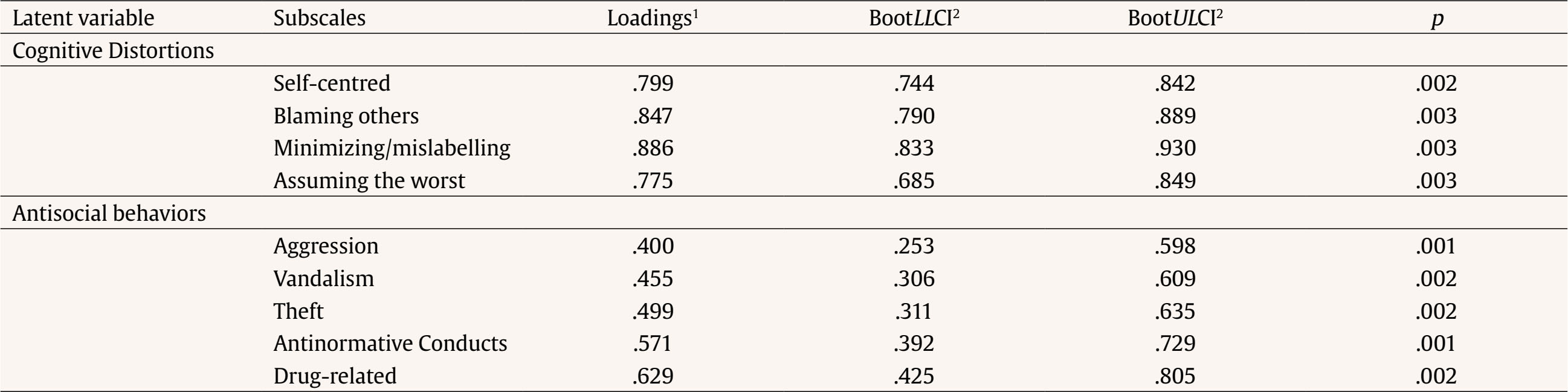 Note. 1Standardized regression weights; 295 % bias-corrected bootstrap confidence intervals (1,000 bootstrapped samples); model fit: CMIN/df = 3.753, GFI = .926, NFI = .900, CFI = .923, SRMR = .057. The roles of age and gender as confounding variables have been controlled. Mediating Effect of SIP Skills on Social Maladjustment The first aim of this study was to explore how biases in social information processing skills mediate the relation between experiences of direct and indirect childhood victimization and engagement in antisocial behaviors during adolescence. Several studies have reported that SIP skills mediate between victimization experiences and subsequent social maladjustment (e.g., Dodge et al., 2013; Helmsen et al., 2012; Pettit et al., 2010; Zhu et al., 2020; Ziv, 2012;). Our findings support this evidence and confirm our first hypothesis, as aggressive self-efficacy is observed to have an impact on the relation between childhood and adolescent victimization and the development of antisocial behaviors. However, no mediating effect of the other SIP skills on the relation between childhood victimization and involvement in antisocial behavior is observed. These findings are contrary to the results of previous research which reveal, for example, the mediating effect of hostile attribution bias in the relation between different types of victimization and aggression, such as childhood maltreatment (Doge et al., 1997; Richey et al., 2016; Zhu et al., 2020), peer victimization (Perren et al., 2013), or direct and indirect victimization suffered in multiple contexts such as school, neighbourhood and home (Calvete & Orue, 2011). It would be interesting to further explore these relations in order to examine the causes of these differences, as the studies have been carried out on samples with different characteristics. Thus, age (e.g., primary education in Calvete & Orue, 2011) or cultural characteristics (e.g., studies conducted in different countries as in Zhu et al., 2020) may be distinguishing factors across studies. Similarly, it is possible that the normative development of aggressive and/or antisocial behavior during adolescence (Moffit, 2018) overlaps with adolescents’ cognitive characteristics and their self-perception to react aggressively. Despite aggressive self-efficacy being the only step of SIP that mediates the association between childhood victimization and antisocial behaviors, our results show that previous steps of SIP influence aggressive self-efficacy. Drawing on the theoretical model proposed by Crick and Dodge (1994), these findings suggest that, although the different steps of SIP are independent, they are interconnected and have an impact on one another. Specifically, our results indicate that lower problem recognition leads to higher hostile attribution of the intentions of others, and hostile attribution leads to a better evaluation of one’s own ability to react aggressively. Additionally, although no significant relation is observed between hostile attribution and the generation of aggressive responses, both independently influence the increase in aggressive self-efficacy. These findings replicate previous results on the mediating effect of SIP skills between other factors associated with social maladjustment, such as executive functions and aggression (e.g., Van Rest et al., 2019). Table 5 Unstandardized coefficients of the model and Bootstrap Confidence Intervals 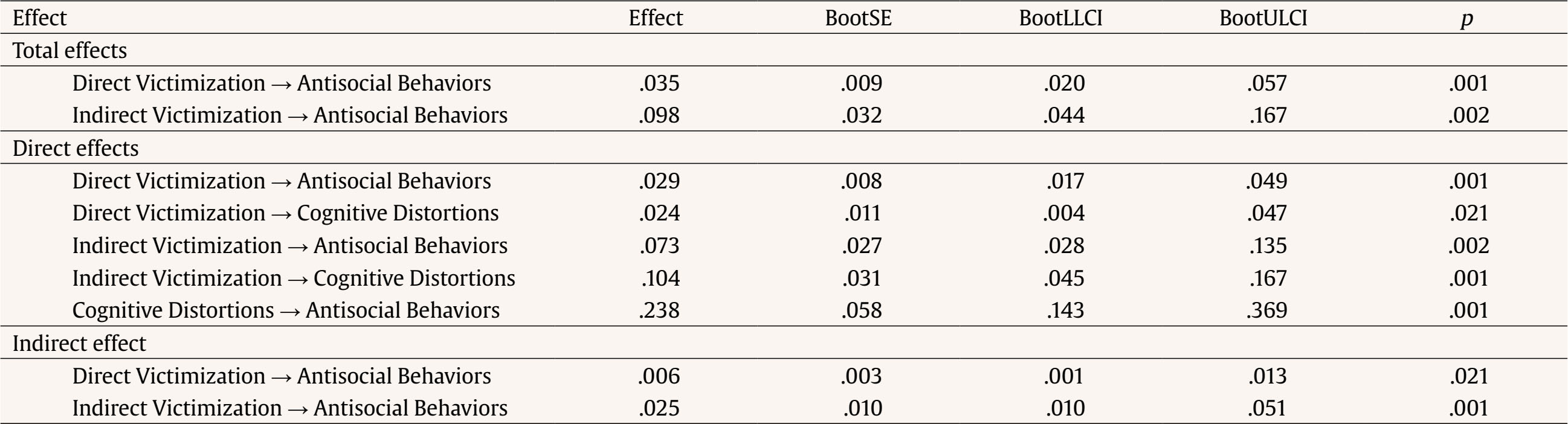 Note. The roles of age and gender as confounding variables have been controlled. Differences between Direct and Indirect Victimization The second aim of this study was to determine whether the mediating effects differ depending on the type of victimization (direct or indirect). Previous studies have shown that direct and indirect victimization have a differentiated effect on SIP skills and subsequent social adjustment (Calvete & Orue, 2011; Reid-Quiñones et al., 2011; Ziv, 2012). Calvete and Orue (2011), for example, reported that direct victimization was a predictor of reactive aggression through hostile attribution, whereas indirect victimization predicted reactive aggression through hostile attribution and response selection. Our results indicate that aggressive self-efficacy is the only SIP component that mediates the relation with antisocial behavior in both direct and indirect victimization. Furthermore, no significant differences were found in how direct and indirect victimization related to the different SIP skills. However, indirect victimization was found to have a greater influence on both SIP skills and the development of antisocial behavior. Although this difference is small, our second hypothesis is thus confirmed.This finding corroborates the evidence reported in previous studies that suggests indirect victimization might have a differential effect on cognition and social adjustment (e.g., Bacchini et al., 2015; Bacchini et al., 2020; Dragone et al., 2019; Janosz et al., 2008; Janosz et al., 2018; Meléndez Guevara et al., 2022; Mrug & Windle, 2010; Reid-Quiñones et al., 2011). Limitations The findings of our study have both strengths and limitations. First, our results are novel and contribute to the literature on SIP, broadening the focus to include different types of antisocial behaviors and underlining their mediating role. There is scant pervious literature showing the mediating role of SIP skills, more specifically in relation to prior experiences of childhood victimization and the development of antisocial behaviors. The work is not, however, without limitations which should be considered. First, we used the Spanish adaptation of the SIVT instrument, which originally consisted of six videos representing problematic social situations. Our study only used three videos. Despite these videos representing different topics (one accidental, one ambiguous, and one hostile situation), it is possible that the reduced variety of scenes may have affected the results pertaining to the adolescents’ processing skills. Second, although the cross-sectional design of the study provided us with the opportunity to examine SIP skills as a mediating mechanism linking child victimization to antisocial behaviors, longitudinal and experimental studies are required for the indirect effects revealed to be interpreted as causally mediated. Conclusions The findings of the present study show that social information processing mediates between previous victimization experiences and the development of antisocial behaviors. Specifically, in our sample of adolescents, victimization experienced during childhood and adolescence increases the perceived self-efficacy to act aggressively in problematic situations. This self-efficacy is also influenced by lower problem recognition, higher attribution of hostility in the actions of others, and greater generation of aggressive responses. Although victimization predicts antisocial behaviors through aggressive self-efficacy, three important aspects are worth underscoring. First, childhood and adolescent victimization has a direct effect on the development of adolescent antisocial behaviors. Second, aggressive self-efficacy predicts antisocial behaviors engaged in by adolescents, but does not do so in isolation from the other steps of SIP. The different alterations in the previous processing steps (problem recognition, intention attribution, and response generation) are indirectly associated with antisocial behaviors through self-efficacy. Third, despite direct and indirect victimization significantly influencing adolescents’ cognition and engagement in antisocial behaviors, indirect victimization was found to have a slightly greater effect than direct victimization. Study Implications Our findings may be considered to have significant practical and clinical implications. Understanding the behavioral and cognitive consequences of childhood and adolescent victimization experiences could serve to help design and/or perfect interventions for adolescents that have suffered victimizations over their lifespan. Intervention programs focused on training processing skills have been shown to be effective (see the review by Peng et al., 2023). It is thus key to identify the negative and maladaptive cognitions that affect antisocial behaviors This would help understand the specific aspects that need to be addressed at the therapeutic and preventive level in order to avoid these distorted patterns and cognitions being perpetuated over time (Hepp et al., 2021; Pabian & Vandebosch, 2021; Wang et al., 2023), and to prevent the problems related to adolescents’ social adjustment becoming chronic (Dodge et al., 2015). This in turn would avoid victims transitioning to aggressors (Balan et al., 2022) and their behaviors developing into severe forms of antisocial personality (Estrada et al., 2023; Franco & Bazon, 2017; Hakim et al., 2024). Conflict of Interest The authors of this article declare no conflict of interest. Acknowledgment We thank to the students, teachers, high school and families for their collaborations and participation in the study. Cite this article as: Ortega, B., Jimeno, M.V., Topino, E., Van Rest, M., and Latorre, J. M. (2026). Links between direct and indirect childhood victimization, social information processing skills and antisocial behavior in adolescents. Anuario de Psicología Jurídica, 36, Article e260476, 1-10. https://doi.org/10.5093/apj2026a9 Funding This research has been developed and financed by the University of Castilla-La Mancha’s own R+D+i Plan program and co-financed by the European Social Fund (ESF). |
Cite this article as: Ortega, B., Jimeno, M. V., Topino, E., Van Rest, M., & Latorre, J. M. (2026). Links between direct and indirect childhood victimization, social information processing skills and antisocial behavior in adolescents. Anuario de Psicología Jurídica, 36, Article e260476. https://doi.org/10.5093/apj2026a9
Corresponding: veronica.jimeno@uclm.es (María V. Jimeno Jiménez).Copyright © 2026. Colegio Oficial de la Psicología de Madrid


Herramientas:
 PDF
PDF e-PUB
e-PUB CrossRef
 JATS
JATS Imprimir
 Enviar
ALERTA POR E-MAIL
La Revista de Anuario de Psicología Jurídica está distribuida bajo una licencia de Creative Commons Reconocimiento-NoComercial-SinObra Derivada 4.0 Internacional.com