Weaponizing the Bond: Pet Abuse as a Mediator of IPV Victimization and Mental Health Symptomology
Noah D. Renken, Chelsea M. Spencer, & Mariah M. Moore
Kansas State University, USA
https://doi.org/10.5093/pi2026a13
Received 12 May 2026, Accepted 22 September 2026
Abstract
Objective: The purpose of the current study was to understand how the perpetration of pet abuse (i.e., dog and cat), in the context of intimate partner violence (IPV), contributes to victims’ mental health outcomes. We were specifically interested in examining 1) the relationship between a partner’s pet abuse perpetration and depression, anxiety, and PTSD and 2) how pet abuse might mediate the relationship between IPV victimization and mental health outcomes. Method: Participants (N = 1,173) were recruited online via TestSet and responded to items related to IPV victimization, their partner’s maltreatment of dogs or cats, and current mental health symptomology. Separate path models estimated the direct and indirect effects of physical, psychological, and sexual IPV victimization on depression, anxiety, and PTSD symptoms, with a partner’s cat and dog abuse specified as mediators. Results: Psychological IPV victimization and pet abuse consistently emerged as the strongest direct predictors of mental health symptomology across all models. Dog and cat abuse significantly mediated the relationships between physical and sexual IPV, but not psychological IPV, on victims’ depressive, anxiety, and PTSD symptoms. Conclusions: Pet abuse is a significant risk marker for IPV and psychological distress. Pet abuse warrants both legal recognition as a form of domestic violence and clinical recognition as a distinct source of trauma.
Keywords
Intimate partner violence, Pet abuse, Mental health, VictimizationCite this article as: Renken, N. D., Spencer, C. M., & Moore, M. M. (2026). Weaponizing the Bond: Pet Abuse as a Mediator of IPV Victimization and Mental Health Symptomology. Psychosocial Intervention, 35, Article e260821. https://doi.org/10.5093/pi2026a13
Correspondence: ndrenken@ksu.edu (N. D. Renken).Intimate partner violence (IPV) is a pervasive global health issue that affects millions around the world. According to the World Health Organization (WHO, 2026), IPV involves “behavior by an intimate partner or ex-partner that causes physical, sexual or psychological harm, including physical aggression, sexual coercion, psychological abuse and controlling behaviors.” IPV has shown to impact individuals of all races, ethnicities, socioeconomic status, education, gender identity, and sexual orientation, it is disproportionately harmful to women and those with intersecting marginalized identities wherein systems of healthcare, policy, and housing inequalities affect outcomes (Mackety et al., 2025; McLeod et al., 2020). In fact, prevalence rates reported by the WHO in 2023 estimate that approximately one in four women globally have been victimized by physical and/or sexual IPV at least once in their lifetime, with adolescents, older women, transgender women, women with disabilities, and sex workers being particularly vulnerable (WHO, 2025b). Further, IPV has been shown to negatively impact victims in a myriad of ways. Namely, IPV is linked to negative physical health outcomes (e.g., cardiovascular disease, diabetes, pain syndromes, unintended pregnancy, sexually transmitted infections, and sexual dysfunction; Calvillo et al., 2024; Constantino et al., 2019; Dolezal et al., 2009; Li et al., 2014; WHO, 2026) and mental health outcomes (e.g., PTSD, anxiety, depression, substance use, suicidal ideation, suicidal attempts, and death; Devries et al., 2011; Shields et al., 2025; Spencer et al., 2025; Rodrigues et al., 2025). Often victims experience multiple negative effects of IPV, and longitudinal research suggests the impacts can be prolonged and resource-intensive, particularly when violence is experienced by multiple members of the family (e.g., child and parent; Burghart & Backhaus, 2024). Due to the widespread, negative, and prolonged impacts of IPV on mental and physical health, the topic warrants further research to help understand the impacts of violence on victims and families. IPV and Mental Health Outcomes IPV negatively impacts victims’ mental health, ranging from mood disorders to suicidal attempts (e.g., Devries et al., 2011; Shields et al., 2025). Shields et al. (2025) examined mental health impacts of non-physical IPV on both women and men who experienced IPV victimization, uncovering that women had a higher likelihood of reporting fair/poor mental health, including suicidal thoughts, mood and anxiety disorders, PTSD, and pain compared to men. Meta-analyses highlight the plethora of negative mental health impacts that are associated with sexual, psychological, and physical violence victimization, highlighting a need for further exploration efforts toward prevention and treatment to support victims and break cycles of abuse (Spencer et al., 2019, 2024, 2026). Further, mental health stability significantly impacts other factors in one’s life, enabling individuals to cope with life stressors, learn and work effectively, and contribute to their communities and relationships (Hapuarachchi et al., 2025; WHO, 2025a). It is not uncommon for victims of IPV to also witness abuse perpetrated towards other members of the family, such as children or household pets that are regarded as members of the family (Bidarra et al., 2016; Flynn, 2000). Moreover, pet abuse in the context of IPV has been conceptualized as a coercive tactic that perpetrators of IPV enact in order to further control, manipulate, and incite fear into victims (Flynn, 2000; Gallagher et al., 2008). This may exacerbate negative mental health outcomes of IPV when victims also experience their pets being mistreated by their perpetrator. Therefore, we aim to further understand the potential compounding impacts of IPV and pet abuse on victims’ mental health. Pet Abuse and IPV Animal abuse, defined as “nonaccidental, socially unacceptable behavior that causes pain, suffering or distress, and/or death to an animal” (Ascione, 2007, p. 3), is another serious form of violence. Animal abuse occurs through several forms of cruelty, including hoarding, neglect (e.g., restricting access to food and water), sexual abuse, poisoning, facilitating animal fights, tormenting, torture, among others (Gullone, 2014; Lockwood & Arkow, 2016). The perpetration of animal abuse is unfortunately common in the U.S., as the National Incident-based Reporting System documented over 22,000 incidents during 2023 (Animal Welfare Institute, 2026). Further, the lifetime prevalence rate of animal cruelty among U.S. adults has been estimated to be 1.8% (see Vaughn et al., 2009). It is important to note that animal abuse is commonly underreported (e.g., Parfitt & Alleyne, 2018) and, as such, its actual scope is likely greater than current data suggest. While animal cruelty encompasses a broad range of species and contexts, the purpose of the current paper is to examine abuse against companion animals, which refer to those kept for companionship through meaningful human-animal relationships (Pongrácz & Dobos, 2023). As such, we will use the term “pet abuse” throughout to denote this form of violence. Given that many theorists increasingly recognize household pets as important members of the family system (e.g., Irvine & Cilia, 2017), it is necessary to further study pet abuse and its relation to other forms of family violence, including IPV. The perpetration of pet abuse is connected to IPV (e.g., Ascione, 2007; Barbosa-Torres et al., 2024; Fitzgerald et al., 2022). Theorists have argued that perpetrators often use violence against household pets as a mechanism for intimidating and exerting control over their intimate partners (Alleyne & Parfitt, 2019; Cleary et al., 2021; Newberry, 2018). As researchers have examined this relationship more closely, pet abuse has emerged as a serious risk marker for IPV victimization. For example, using a sample of women IPV victims, Barrett et al. (2020) found that those whose pets were frequently and severely abused were at heightened risk of physical, sexual, and psychological abuse. More recently, Author (2024a) examined how the relationship between IPV victimization and pet abuse varied across animal species, including cats, dogs, small animals (e.g., rabbits, hamsters), and horses. It was found that a partner’s cat abuse, compared to all other species, was most strongly associated with IPV victimization. In fact, a partner’s cat abuse increased the risk of “severe” IPV victimization (i.e., violence that poses risk of injury) by over 1,000%. Further, a partner’s dog abuse and small animal abuse increased the risk of severe IPV by 312% and 453%, respectively, while horse abuse was not significantly related to IPV. Thus, examining pet species separately (rather than as a monolith) can provide a more nuanced understanding of pet abuse in the context of IPV. Ultimately, it is clear that pet abuse and IPV are interconnected forms of violence, and additional research is necessary to better understand this relationship, including its impact on the mental health of victims. IPV, Pet Abuse, and Mental Health Research consistently shows that IPV has devastating impacts on the health and well-being of victims. With respect to mental health specifically, IPV victimization is associated with various adverse outcomes, including increased anxiety, depression, post-traumatic stress disorder (PTSD), and suicidality (Spencer et al., 2019; Lagdon et al., 2014; White et al., 2024). Important to note, these relationships have been observed across diverse samples (e.g., varied genders, countries, economic contexts) and forms of violence, highlighting the pervasive impact of IPV. Given this, it follows that victims commonly turn to household pets as a source of emotional support and safety (Fitzgerald, 2007; Flynn, 2000; Newberry, 2017). Unfortunately, this bond can be weaponized by perpetrators as a way to further control their partners, as evidenced by findings that victims commonly delay leaving abusive relationships due to concerns regarding pet safety (Hardesty et al., 2013; Newberry, 2017). It is unsurprising that pet abuse contributes to the psychological suffering of IPV victims (e.g., Faver & Strand, 2007), with some theorists arguing that pet abuse is a distinct form of family trauma (Randour et al., 2021). However, despite this, minimal research has examined how its co-occurrence with IPV may explain specific mental health outcomes among victims. The current study seeks to address this gap and further elucidate how these intersecting forms of family violence affect victim mental health and well-being. Theoretical Framework According to Johnson’s (2008) typology of IPV, forms of partner violence vary across patterns of power and coercive control. Among these typologies, intimate partner terrorism and situational couple violence are most commonly observed in intimate partnerships (Johnson, 2008), and pet abuse may co-occur in both contexts. Intimate partner terrorism is defined as the use of coercive control, which may be characterized by dominant, violent, and restrictive acts to decrease a partner’s autonomy. This type of violence has commonly been found among heterosexual partnerships perpetrated by men towards women, is often unidirectional, and encompasses acts that create fear in one’s partner to control their actions. However, research has highlighted that it is also not uncommon for men in heterosexual relationships to experience intimate terrorism (Graham-Kevan & Archer, 2005). Consistent with extant research (e.g., Alleyne & Parfitt, 2019; Flynn, 2000; Gallagher et al., 2008), perpetrators may harm pets with whom their victims share a close relational bond as a mechanism of coercive control that can decrease the victim’s likelihood of leaving the relationship, in line with intimate partner terrorism. On the other hand, situational couple violence does not demonstrate the heightened level of control, is often bi-directional, and has been associated with a lack of emotion regulation, poor conflict resolution skills, and communication deficits within the partner dynamic (Fitzgerald et al., 2019; Johnson, 2008). An additional explanation for perpetration of harm both toward one’s partner and a household pet may be due to situational couple violence where emotion regulation deficits may increase the likelihood of perpetration (Fitzgerald et al., 2019; Johnson, 2008). Research has indicated a link between maladaptive emotion regulation (i.e., under-regulation and mis-regulation) and aggressive behaviors (Cohn et al., 2010), such as IPV or pet abuse. Parfitt and Alleyne (2017) found that undergraduate participants who were less able to regulate their emotions and their behavior were more likely to engage in pet abuse as an outlet. Thus, individuals who struggle with emotion regulation may turn to maladaptive forms of coping, such as violence toward both their partners and household pets, not necessarily as an intentional form of control but as a deficit in emotion regulation. Given that pet abuse may emerge across different IPV contexts, the current study examines IPV victimization broadly to capture how a partner’s pet abuse relates to victims’ experiences regardless of typological subtype. The Current Study The purpose of the current study is to examine the relationships among IPV victimization, a partner's pet abuse perpetration, and mental health outcomes, including anxiety, depression, and PTSD. Research consistently demonstrates that IPV victimization is associated with a heightened risk for adverse mental health outcomes (Spencer et al., 2019; Lagdon et al., 2014; White et al., 2024). Additionally, pet abuse has been found to contribute to IPV victims’ psychological suffering (Faver & Strand, 2007). Thus, the current study seeks to examine 1) the relationship between a partner’s pet abuse perpetration and depressive, anxiety, and PTSD symptoms and 2) how a partner’s pet abuse perpetration might mediate the relationship between IPV victimization and mental health outcomes. The current study will also determine how this effect varies across pet species (i.e., dog or cat) and IPV form (i.e., physical, psychological, and sexual abuse). Ultimately, the goal of the current study is to better understand how pet abuse, a recognized form of coercive control (e.g., Hardesty et al., 2013; Newberry, 2017), may serve as a mechanism for psychological harm in relationships involving IPV. Participants and Procedures The present study was approved by [blinded]’s Institutional Review Board. Data were collected through the online survey platform, TestSet, in August of 2025. Participants were compensated for filling out the survey. To protect potential participants taking the survey, prior to the informed consent, participants were provided a warning about the sensitive nature of the survey (e.g., pet abuse, IPV victimization). Participants were adults (above the age of 18 years old) living in the United States. Participants had to have been in an intimate relationship within the past year to participate in filling out the survey. For this study, we only used individuals who reported that their current or most recent intimate partners interacted with either a cat or dog. A total of 1,173 individuals met the inclusion criteria for the present study. The sample consisted of 643 (54.8%) men, 518 (44.2%) women, five nonbinary individuals, three transgender individuals, three individuals who identified as “other,” and one individual who chose not to answer. Participants were allowed to check all that apply, and 498 (42.5%) identified as White, 321 (27.4%) as Black or African American, 262 (22.3%) as Hispanic or Latinx, 161 (13.7%) as Asian, 70 (6.0%) as Native American or Alaska Native, 12 (1.0%) as Native Hawaiian or Pacific Islander, five (0.4%) as Southwest Asian, North African, or Middle Eastern, and 15 (1.3%) reported “other.” The majority of the sample were heterosexual (n = 1020; 87.4%), followed by bisexual (n = 87; 7.5%), gay or lesbian (n = 44; 3.8%), pansexual (n = 7; 0.6%), “other” (n = 6; 0.6%), and queer (n = 3; 0.3%). There were six participants who chose not to respond. The majority of participants reported on their current relationship (n = 949; 80.9%) and the rest reported on their previous relationship that was in the past year (n = 224; 19.1%). Measures Intimate Partner Violence Victimization Physical, psychological, and sexual IPV victimization was measured using the Revised Conflict Tactics Scale (CTS-2; Straus et al., 1996). The CTS-2 contains 78 items that measure physical, psychological, and sexual IPV perpetration and victimization. For the purpose of the present study, only victimization items were utilized. The CTS-2 asks participants to identify how many times in the past year certain acts occurred in their relationship. Subscales measuring physical IPV victimization (e.g., my partner threw something at me that could hurt), psychological IPV victimization (e.g., my partner insulted or swore at me), and sexual IPV victimization (e.g., my partner used force (like hitting, holding down, or using a weapon) to make me have oral or anal sex) were used. Items were scored so that 0 = this has never happened, 1 = this happened once, 2 = this happened twice, 4 = this happened 3-5 times, 8 = this happened 6-10 times, 15 = this happened 11-20 times, and 25 = this happened more than 20 times. Items were summed where higher scores indicated higher levels of IPV victimization. The internal consistency for physical IPV victimization (α = .92), psychological IPV victimization (α = .89), and sexual IPV victimization (α = .84) were all acceptable. Partner’s Dog and Cat Abuse Perpetration A partner's dog and cat abuse perpetration was measured using a revised version of the Partner’s Treatment of Animals Scale (PTAS; Fitzgerald et al., 2016). Participants were asked what animals their current or most recent partner had interacted with. If participants identified that their partner had interacted with a dog or a cat, they were provided a separate revised version of the PTAS that changed the word “pet” to either “dog” or “cat.” If the participant identified that their partner interacted with both dog(s) and cat(s), two separate surveys were provided, one examining abuse of dog(s) and one examining abuse of cat(s). The PTAS is a 40-item scale that measures acts of abuse towards animals, where participants rated on a scale of 0 = never to 4 = very frequently how often they witnessed their partner’s maltreatment of cats or dogs. Items included in the scale ask about physical animal abuse (e.g., kicked a pet), emotional animal abuse (e.g., scared a pet on purpose), threats to harm animals (e.g., threatened to harm or get rid of a pet), animal neglect (e.g., refused to feed a pet), and severe abuse of an animal (e.g., killed a pet). Items were summed so that higher scores indicated higher levels of dog or cat abuse. The internal consistency for cat abuse (α = .99) and dog abuse (α = .98) were both acceptable. Depression Depressive symptoms were measured by the Patient Health Questionnaire-9 (PHQ-9; Kroenke et al., 2001). The PHQ-9 is a 9-item measure that assesses depressive symptoms over the past two weeks. Items are scored on a Likert scale from 0 = not at all to 3 = nearly every day. Items were summed so that higher scores indicated higher levels of depressive symptoms, and scores can range from 0 to 27. Scores of 20 or above indicate severe depression. The internal consistency for the PHQ-9 was acceptable (α = .94). Anxiety Anxiety symptoms were measured by the Generalized Anxiety Disorder-7 scale (GAD-7; Spitzer et al., 2006). The GAD-7 is a 7-item scale used to measure anxiety symptoms over the past two weeks. Items are scored on a Likert scale from 0 = not at all to 3 = nearly every day. Items were summed so that higher scores indicated higher levels of anxiety symptoms, and scores can range between 0 and 21. Scores between 15 and 21 indicate severe anxiety. The internal consistency for the GAD-7 was acceptable (α = .93). Post-Traumatic Stress Disorder PTSD symptoms were measured using the Posttraumatic Stress Disorder (PTSD) Checklist for DSM-5 (PCL-5; Weathers et al., 2013). The PCL-5 is a 20-item measure examining DSM-5 PTSD symptoms over the past month. Items are scored on a 5-point Likert scale ranging from 0 = not at all to 4 = extremely. Total scores range from 0 - 80. Items were summed so that higher scores indicated higher levels of PTSD symptom severity. The internal consistency for the PCL-5 was acceptable (α = .97). Analysis Plan First, descriptives and bivariate correlations among all variables were conducted in SPSS v. 30 (IBM Corp, 2023). Multicollinearity diagnostics (tolerance and variance inflation factor values) were examined to assess potential collinearity among the IPV predictors. Path analyses were conducted using Mplus v. 8 (Muthén & Muthén, 2017). Path models were estimated to examine associations between physical, psychological, and sexual IPV victimization, partner’s pet abuse perpetration (cat and dog), and victims’ mental health outcomes (depression, anxiety, and PTSD symptoms). Variables were tested for normality, and models were estimated using maximum likelihood estimation with robust standard errors (MLR) to account for non-normality on several variables (Kline, 2016; West et al., 1995). Missing data were handled using full information maximum likelihood (FIML) under the assumption of missing at random. Separate path models were estimated for partner’s cat abuse and dog abuse. In each model, physical, psychological, and sexual IPV victimization were specified as predictors, partner’s pet abuse perpetration (cat or dog) was specified as a mediator, and mental health outcomes (depression, anxiety, and PTSD symptoms) were specified as dependent variables. Direct paths were estimated from IPV variables to both the pet abuse and mental health outcomes. Indirect effects from IPV victimization variables to mental health outcomes through partner’s pet abuse (cat or dog) were also estimated. Gender, age, education level, and if they reported on a current or former relationship were included as control variables, with paths specified from covariates to partner’s pet abuse perpetration and all mental health outcomes (i.e., depression, anxiety, and PTSD symptoms). Indirect effects were estimated using the MODEL INDIRECT command in Mplus. Statistical significance was evaluated using two-tailed p-values and 95% confidence intervals. Given the cross-sectional nature of the data, indirect effects were interpreted as statistical associations consistent with mediation, rather than evidence of causal mediation. The path model was specified based on prior empirical literature linking IPV victimization, pet abuse, and mental health outcomes, as well as the power and control framework. Specifically, the model was designed to examine the direct associations between physical, psychological, and sexual IPV victimization and mental health, as well as the indirect associations through pet abuse. Pet abuse was specified as the mediator because previous research suggests that pet abuse functions as a coercive control tactic within abusive relationships and may impact victim’s psychological well-being (e.g., Faver & Strand, 2007; Newberry, 2017). Because the objective was to estimate these theoretically and empirically derived pathways, rather than compare competing structural models, all hypothesized paths were specified, resulting in both models being just-identified (df = 0). Overall model fit indices were not informative. Instead, interpretation of the results focused on the strength, direction, and statistical significance of estimated parameters. A total of 1,173 participants were included in the present study. Over half of the sample had experienced some form of psychological IPV victimization (n = 907; 77.3%) or physical IPV victimization (n = 611; 52.1%). There were 561 (47.8%) participants who experienced some form of sexual IPV victimization. For women, 395 (76.3%) experienced psychological IPV victimization, 238 (45.9%) experienced physical IPV, and 215 (41.5%) experienced sexual IPV. For men, 479 (74.5%) experienced psychological IPV victimization, 326 (50.7%) experienced any form of physical IPV victimization, and 263 (40.9%) experienced some form of sexual IPV victimization. Of the 690 individuals who reported their current or most recent partner interacted with cats, 259 (37.5%) identified that their partner had abused a cat. Of the 972 participants who reported their current or most recent partner interacted with a dog, 399 (41%) identified some sort of abusive acts occurred toward the dog. A total of 168 (14.3%) participants scored a 20 or above on the PHQ-9, indicating severe depression. There were 225 (19.2%) participants who scored a 15 or above on the GAD-7, indicating severe anxiety. Descriptive statistics of all variables are shown in Table 1. All variables included in the analysis were significantly correlated (see Table 2). Multicollinearity diagnostics indicated that collinearity was not problematic, with tolerance values ranging from .21 to .34 and variance inflation factors ranging from 2.93 to 4.77. Multicollinearity was unlikely to have substantially influenced the path analysis estimates. Table 1 Descriptive Statistics of Variables Included in the Analyses (n = 1,173)  Note. SD = standard deviation; skewness and kurtosis values indicated moderate non-normality; robust maximum likelihood (MLR) estimation was used. Table 2 Correlations among Variables Included in the Analysis  Note. IPV = intimate partner violence; PTSD = posttraumatic stress disorder. p < .001. IPV, Cat Abuse, and Mental Health Outcomes Physical (β = .23, p = .019; see Table 3 and Figure 1) and sexual IPV victimization (β = .26, p = .009) were associated with partner’s cat abuse, and psychological IPV was not (p = .791). Age was negatively associated with partner’s cat abuse (β = -.09, p =.036). Partner’s cat abuse perpetration was positively associated with depression (β = .15, p < .001), anxiety (β = .10, p =.003), and PTSD symptoms (β = .16, p < .001). Psychological IPV victimization was significantly associated with depression (β = .39, p < .001), anxiety (β = .42, p < .001), and PTSD symptoms (β = .39, p < .001), while physical and sexual IPV victimization were not. Being a woman was significantly associated with depression (β = -.09, p < .001) and anxiety (β = -.11, p < .001), but not PTSD symptoms or partner’s cat abuse perpetration. Younger age was associated with depression (β = -.23, p < .001), anxiety (β = -.23, p < .001), and PTSD symptoms (β = -.26, p < .001). Figure 1 The Relationship between IPV Victimization, Partner’s Cat Abuse Perpetration, and Mental Health Symptoms (n = 690). 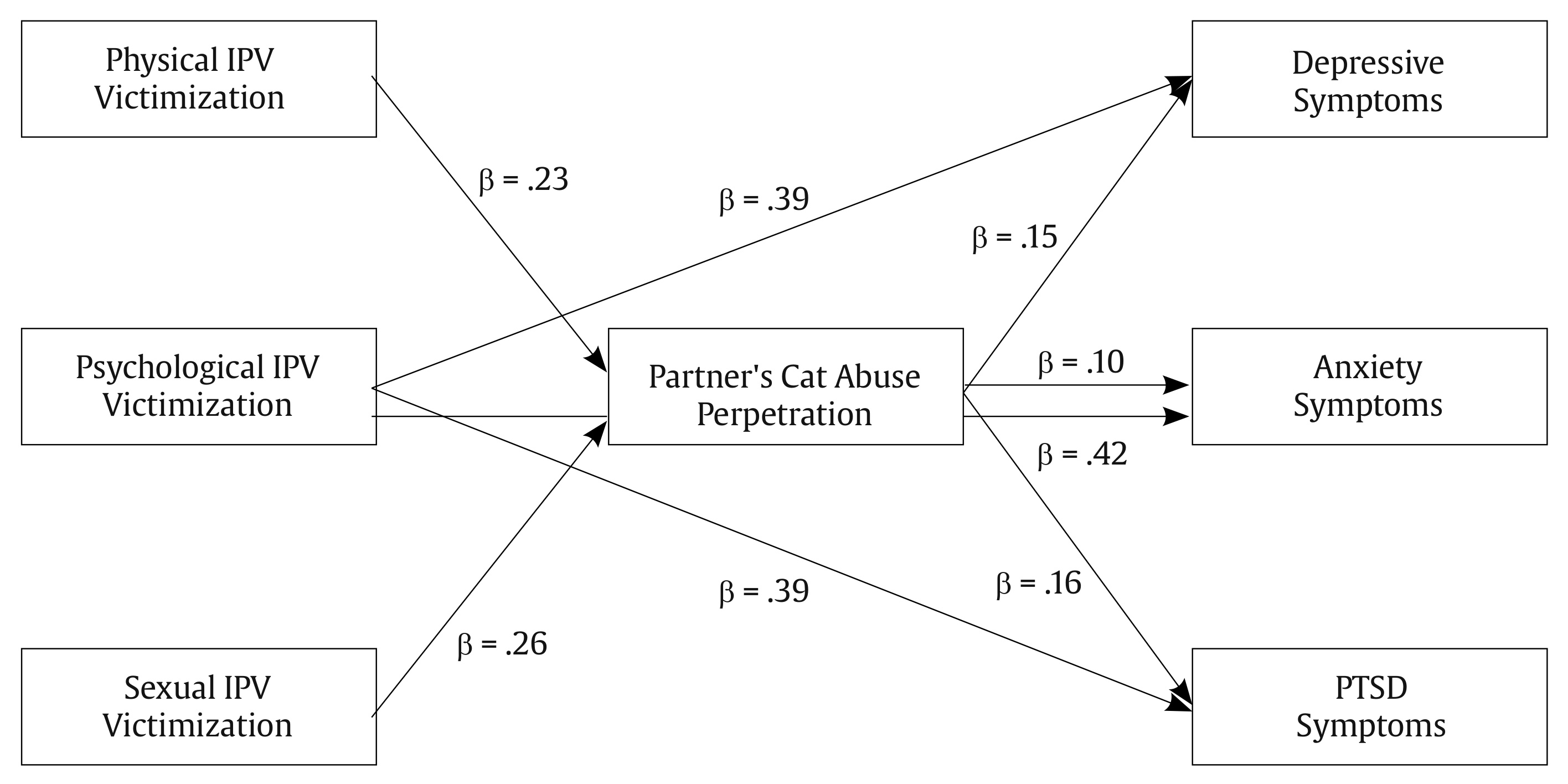 Table 3 Path Analysis Examining the Relationship between Intimate Partner Violence (IPV) Victimization, Partner’s Cat Abuse Perpetration, and Mental Health Symptoms (depression, anxiety, and PTSD symptoms; n = 690) 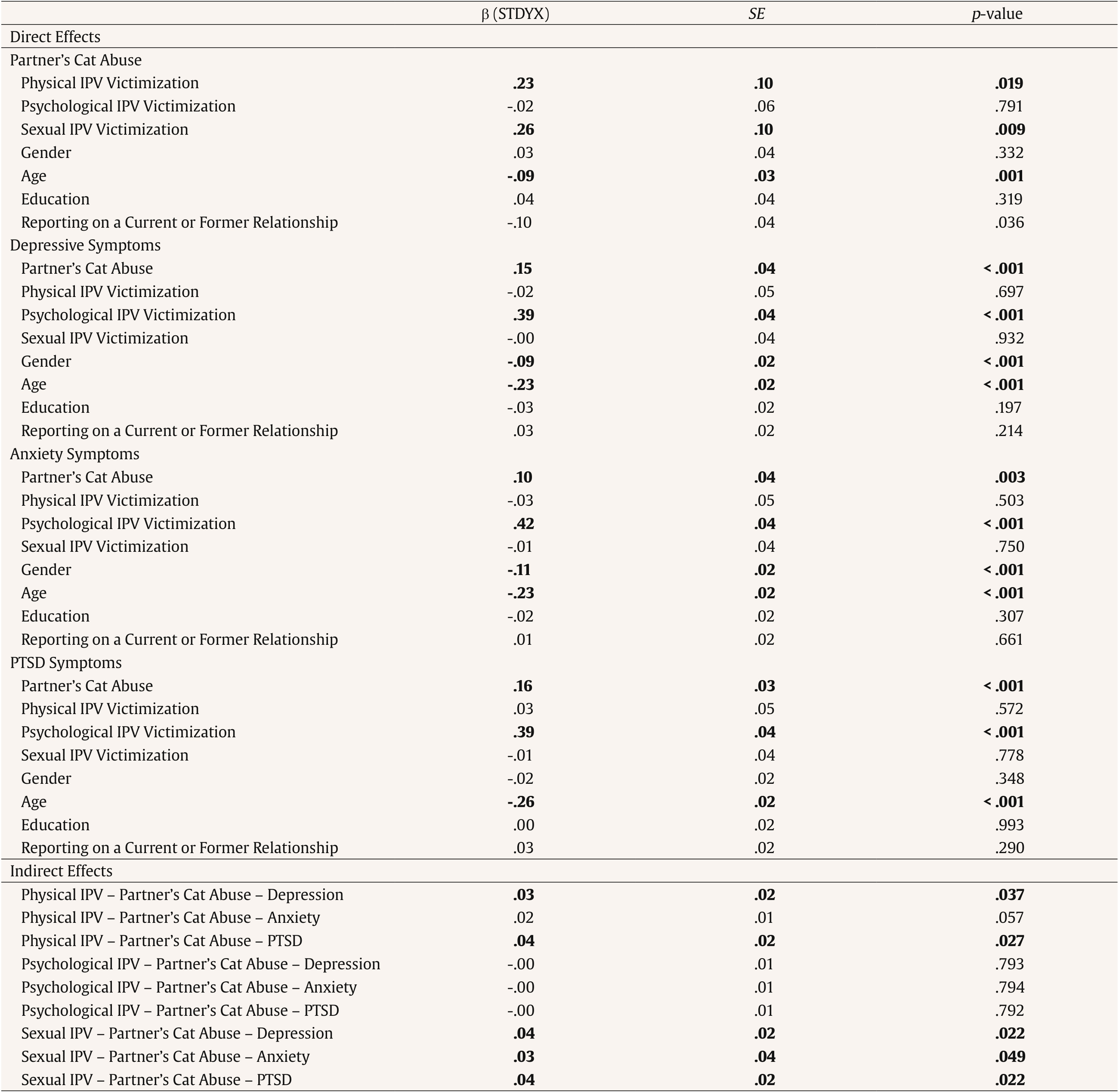 Note. β = standardized beta (STDYX); SE = standard error; boldface indicates statistical significance. Physical IPV victimization was indirectly associated with depression (β = .03, p =.037) and PTSD symptoms (β = .04, p =.027) through partner’s cat abuse. Similarly, sexual IPV victimization showed significant indirect associations with depression (β = .04, p =.022), anxiety (β = .03, p =.049), and PTSD (β = .04, p =.022). In contrast, psychological IPV victimization was not indirectly associated with victim mental health outcomes through cat abuse. IPV, Dog Abuse, and Mental Health Outcomes Physical (β = .19, p = .024; see Figure 2 and Table 4) and sexual IPV victimization (β = .38, p < .001) were significantly associated with partner’s dog abuse, whereas psychological IPV victimization was not (p = .314). Younger age was associated with partner’s dog abuse perpetration (β = -.06, p = .003). Partner’s dog abuse perpetration was significantly associated with all mental health outcomes, including depression (β = .16, p < .001), anxiety (β = .17, p < .001), and PTSD symptoms (β = .23, p < .001). Psychological IPV victimization was directly associated with depression (β = .38, p < .001), anxiety (β = .40, p < .001), and PTSD symptoms (β = .38, p < .001). Physical and sexual IPV victimization were not directly associated with depression, anxiety, or PTSD symptoms. Being a woman was significantly associated with depression (β = -.09, p < .001) and anxiety (β = -.12, p < .001), but not PTSD symptoms. Younger age was significantly associated with depression (β = -.24, p < .001), anxiety (β = -.23, p < .001), and PTSD symptoms (β = -.26, p < .001). Figure 2 The Relationship between IPV Victimization, Partner’s Dog Abuse Perpetration, and Mental Health Symptoms (n = 972). 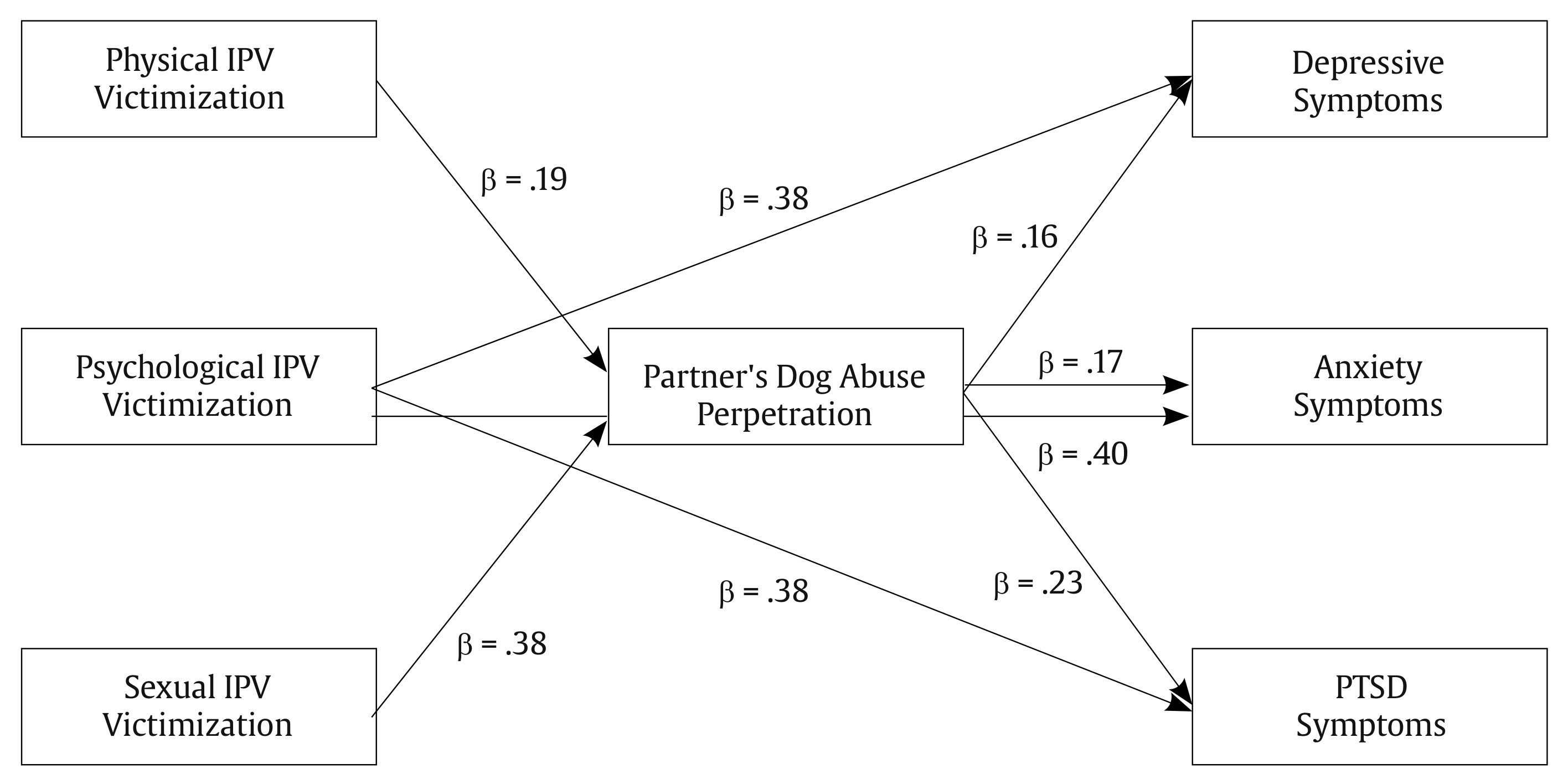 Table 4 Indirect Path Analysis Examining the Relationship between Intimate Partner Violence (IPV) Victimization, Partner’s Dog Abuse Perpetration, and Mental Health Symptoms (depression, anxiety, and PTSD symptoms; n = 972) 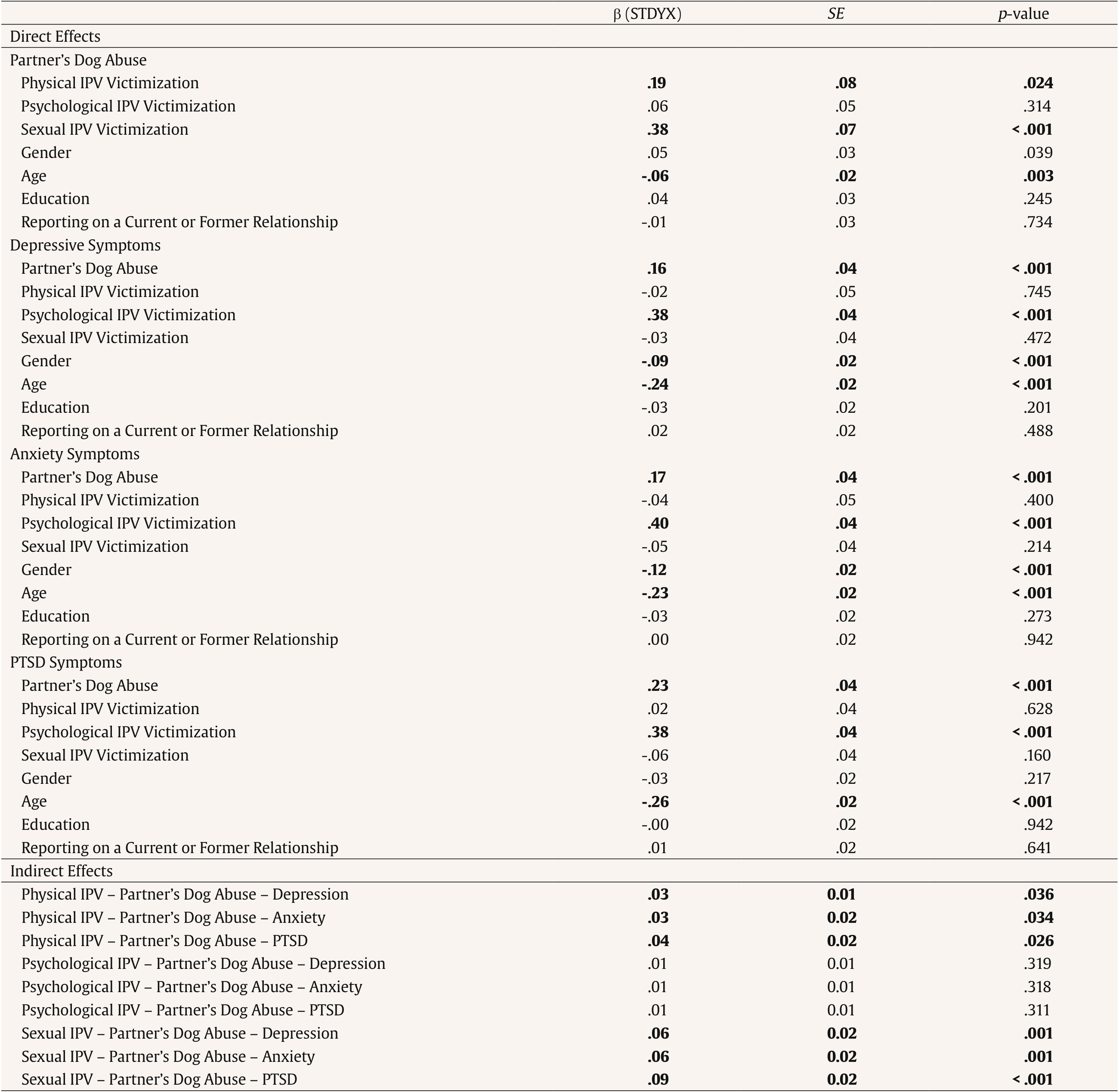 Note. β = standardized beta (STDYX); SE = standard error; boldface indicates statistical significance. Significant indirect effects were observed from both physical and sexual IPV victimization to all mental health outcomes through dog abuse. Specifically, physical IPV was indirectly associated with depression (β = .03, p =.036), anxiety (β = .03, p =.034), and PTSD symptoms (β = .04, p =.026) through partner’s dog abuse perpetration. Sexual IPV victimization had significant, indirect associations with depression (β = .06, p =.001), anxiety (β = .06, p =.001), and PTSD symptoms (β = .09, p < .001). Indirect effects of psychological IPV victimization through partner’s dog abuse were not significant across any mental health outcomes. The purpose of the current study was to examine partner’s pet abuse (i.e., dog or cat) as a cross-sectional mediator between IPV victimization (i.e., physical, sexual, psychological) and mental health symptoms related to depression, anxiety, and PTSD. Previous research indicates that IPV victimization correlates with adverse mental health outcomes (Spencer et al., 2019; Lagdon et al., 2014; White et al., 2024), and that pet abuse contributes to victims’ suffering (e.g., Faver & Strand, 2007). However, to our knowledge, this is the first study to specifically examine 1) how a partner’s pet abuse perpetration correlates with validated measures of mental health outcomes and 2) how a partner’s pet abuse perpetration might mediate the relationship between IPV victimization and mental health outcomes. Across our sample, consistent with previous research (Author, 2024a), we found that physical and sexual IPV victimization were associated with a partner’s cat and dog abuse. We also found that some forms of IPV victimization, particularly psychological abuse, were associated with heightened depression, anxiety, and PTSD symptoms, which aligns with previous research (Author, 2024b). Of most relevance to our research questions, we found that a partner’s dog and cat abuse perpetration was associated with all adverse victim mental health outcomes and significantly mediated relationships between physical and sexual IPV victimization and mental health symptoms. Partner’s cat abuse perpetration was significantly associated with victim depression, anxiety, and PTSD symptoms, even when controlling for multiple forms of IPV victimization, gender, age, education, and if the participant reported on a former or current partner. For depression and anxiety, cat abuse, psychological IPV, gender, and age were the only significant direct predictors, with psychological IPV emerging as the strongest. For PTSD, psychological IPV, cat abuse, and age emerged as the only significant direct predictors. Similarly, we found that a partner’s dog abuse perpetration uniquely predicted depression, anxiety, and PTSD symptoms among our sample. For depression and anxiety, dog abuse, psychological IPV, gender, and age all emerged as significant direct predictors, with psychological IPV being the strongest. The same pattern emerged for PTSD, although gender was not a significant predictor. It is unsurprising that psychological IPV victimization had the strongest unique effect across all outcomes, as research consistently demonstrates its association with psychological distress, often more so than other forms of IPV (e.g., Jiwatram-Negron et al., 2022; Lagdon et al., 2014). These findings enhance our understanding of the impact of pet abuse on victims’ well-being. While previous studies have shown that pet abuse contributes to IPV victims’ psychological suffering (e.g., Faver & Strand, 2007), our study extends this by demonstrating that these relationships hold even when accounting for co-occurring forms of IPV. In fact, both cat and dog abuse perpetration emerged as stronger predictors of mental health symptomology than physical and sexual IPV across all models, suggesting pet abuse may have a greater impact on victims’ mental health than previously recognized. Further, that psychological IPV and pet abuse consistently emerged as some of the strongest predictors may reflect their shared nature as mechanisms for coercive control (Alleyne & Parfitt, 2019; Lohmann et al., 2024; Newberry, 2017). Our finding that younger age was associated with higher levels of anxiety, depression, and PTSD symptoms is consistent with previous research demonstrating that these symptoms are more common among younger adults (e.g., O’Connor et al., 2023; Schein et al., 2021). Younger age was also associated with higher levels of partner-perpetrated pet abuse, which aligns with previous research indicating that younger individuals are more likely to engage in animal abuse (Emmett et al., 2021). Additionally, our findings that being a woman was significantly associated with increased depressive and anxiety symptoms are also consistent with extant literature (Hartung & Lefler, 2019; Vesga-López et al., 2008) and align with research suggesting that women (compared to men) exhibit more internalizing psychological symptoms (e.g., Rosenfield & Smith, 2010). Although the present study was not designed to examine whether gender differences in mental health were explained by gender differences in IPV victimization, it is possible that women’s heightened depression and anxiety symptoms partly reflect their disproportionate risk of IPV victimization (see Cunningham & Anderson, 2023). Ultimately, these findings emphasize the importance of recognizing pet abuse, in the context of IPV, as serious risk markers for mental health symptomology among victims. Another objective of the current study was to examine how a partner’s pet abuse might explain the relationship between IPV victimization and mental health outcomes among victims. Extant literature has demonstrated that IPV and pet abuse are co-occurring forms of domestic violence (Barrett et al., 2020; Cleary et al., 2021), and as such, it is necessary to examine pet abuse within a broader pattern of coercive control. We found that a partner’s cat and dog abuse perpetration significantly mediated several relationships between IPV forms and mental health outcomes. Specifically, cat and dog abuse significantly mediated the relationships between physical and sexual IPV victimization and depression, anxiety, and PTSD symptoms. For both cat and dog abuse, the mediated pathways between sexual IPV and mental health outcomes were slightly stronger than those between physical IPV and mental health outcomes. Notably, a partner’s cat and dog abuse perpetration did not significantly mediate the relationships between psychological IPV victimization and any mental health outcomes. Our findings that both cat and dog abuse mediated the effects of physical and sexual IPV, but “not” psychological IPV, on victims’ mental health symptoms are important to highlight. This suggests that pet abuse may serve as a mechanism for more “overtly” violent forms of abuse to manifest in psychological harm for victims. That is, physical and sexual IPV operate similarly through processes related to direct bodily violations and physical domination (e.g., Ali et al., 2016). Contrarily, psychological IPV occurs through more cognitive and emotional-based mechanisms (e.g., emotional manipulation, degradation, threats) and is reflective of coercive control (e.g., Dokkedahl et al., 2021; Lohmann et al., 2024). Given that pet abuse itself has been recognized as a distinct coercive control tactic (Alleyne & Parfitt, 2019; Hardesty et al., 2013; Newberry, 2017), for victims of physical and sexual IPV, witnessing pet abuse may add a distinct layer of harm that exacerbates their psychological suffering. Contrarily, for psychological IPV, the most common form of IPV (Leemis et al., 2022), pet abuse may not introduce a distinct form of harm for victims given their shared overlap of manipulation and control. Limitations First, because the data used in the present study were cross-sectional, we were unable to test temporal or causal mediation among IPV, pet abuse, and mental health outcomes. Therefore, the mediation results should be interpreted as statistical associations, as longitudinal research is needed to establish temporal ordering. Further, our selected measures of anxiety, depression, and PTSD assessed general symptomology, rather than those directly attributed to IPV victimization and/or a partner’s pet abuse. Additionally, this study asked participants about their current or former intimate partner’s pet abuse, and there is a possibility that pet abuse occurred that the participant did not witness or was not aware of. There is also potential for recall bias, social desirability bias, or underreporting of pet abuse or IPV. Another possible limitation of the study was the warning placed at the beginning of the survey that notified potential participants of the sensitive nature of the data collection (e.g., questions about IPV and pet abuse). Although this was done to protect individuals taking the survey, it may have altered the sample by either removing individuals who did not want to answer questions on abuse or drawing individuals who wanted to share their experiences of abuse, which could impact the generalizability of the findings. The prevalence of IPV victimization observed in the present study was higher than what has been commonly reported in large-scale surveys (WHO, 2025b, 2026). Several methodological factors may help explain these differences. First, IPV victimization was measured as a dichotomous variable, and as such, the prevalence rates reflect any reported occurrence of the behavior rather than repeated or severe victimization. Second, the CTS-2 (Strauss et al., 1996) assesses a broad range of behaviors associated with physical, sexual, and psychological IPV, which may have led to higher prevalence rates compared to studies using broader screening questions or more restrictive definitions of IPV. Additionally, because participants were informed during recruitment that the survey addressed IPV and pet abuse, individuals with relevant lived experiences may have been more likely to participate in the study, potentially contributing to higher rates of IPV victimization among our sample. These considerations should be considered when interpreting the generalizability of the findings. Lastly, the sample consisted of mostly heterosexual individuals residing in the U.S. The findings of the present study may not generalize to other populations. Future Research Directions To help combat some of the limitations of the present study, it may be useful for future research to collect longitudinal data to examine how IPV victimization and partner’s pet abuse impact victims’ mental health outcomes over time. Future longitudinal research is needed to establish temporal relationships among IPV victimization, partner-perpetrated pet abuse, and mental health outcomes. Relatedly, future research should include measures of mental health symptomology that are specific to experiences with violence to further strengthen these relationships. The present study examined gender, age, education, and if the participant was reporting on a previous or current partner as covariates in the models, and future research could also examine additional demographic and contextual covariates that may impact the relationship between IPV, pet abuse, and mental health symptoms. Further, the present study specifically examined cat and dog abuse, and future research could benefit from examining other pet species (e.g., small animals) in this context. Additionally, future research should examine whether pet abuse subtypes (e.g., physical, emotional, and severe abuse, neglect, threats to harm animals) differentially mediate the relationship between IPV victimization and victim mental health outcomes. For example, it may be that a perpetrator’s overt threats to harm a pet may emerge as a distinct mechanism of coercive control, compared to physical abuse, and investigating this distinction would yield valuable information. Lastly, future research should explore protective factors that could mitigate depression, anxiety, and PTSD symptoms among victims who have experienced partner-perpetrated pet abuse. Factors such as social support, access to pet-inclusive domestic violence services, and mental health services may help buffer negative mental health outcomes and help inform intervention strategies. Clinical and Policy Implications This study offers important clinical implications regarding IPV and pet abuse. Our findings that physical and sexual IPV victimization were significantly associated with a partner’s cat and dog abuse further corroborate that pet abuse serves as a critical risk marker for IPV (Author, 2024a; Cleary et al., 2021). Given that physical and sexual IPV victimization are associated with a heightened risk of injury for victims (e.g., Author, 2024c; Campbell et al., 2002), it is especially important for mental health clinicians to regularly screen and assess for pet abuse. Our findings also reinforce the importance of treating exposure to pet abuse as a traumatic event itself, rather than a feature of IPV. We found that a partner’s cat and dog abuse perpetration consistently emerged as one of the strongest predictors of depression, anxiety, and PTSD symptoms among our sample. Research has shown that IPV victims commonly rely on household pets as a source of emotional support (Fitzgerald, 2007; Flynn, 2000; Newberry, 2017), and some scholars have even argued that pets can serve as important attachment figures themselves (see Meehan et al., 2017). As such, witnessing a partner’s abuse towards a beloved pet may best be conceptualized as an attachment wound, and should be treated as such by mental health clinicians. This study also yields significant policy implications, including the importance of legally recognizing pet abuse as a form of domestic violence. In 2024, only fourteen U.S. states included animal cruelty in their definitions of domestic violence (Animal Legal Defense Fund, 2024). The omission of animal cruelty in these legal definitions contributes to detrimental consequences faced by victims, including reduced access to comprehensive resources (e.g., domestic violence shelters that allow pets), delayed help-seeking, a lack of accountability for perpetrators, amongst others (e.g., Ascione et al., 2007; Lockwood, 2008; Newberry, 2017). Our findings reinforce that a partner’s pet abuse perpetration is a distinct mechanism for inflicting psychological harm upon victims, and legal frameworks should account for this form of abuse. As of 2026, 42 U.S. states have passed legislation to include pets in domestic violence protection orders (Wisch, 2026). While such legislation is invaluable in limiting abusers’ coercive control, additional measures are necessary to further promote the safety and well-being of victims and their pets. For example, according to the 2021 National Survey on Domestic Violence and Pets, only 250 domestic violence shelters across the U.S. were pet-friendly (Urban Resource Institute & National Domestic Violence Hotline, 2021). Thus, increasing funding for, and access to, pet-friendly domestic violence shelters should be prioritized by state and federal policymakers. Ultimately, our study highlights the need for pet abuse to be treated with greater seriousness across legal and policy sectors. Conclusion The current study sought to examine how pet abuse, in the context of IPV, relates to mental health outcomes. To our knowledge, this is the first study to 1) examine how a partner’s pet abuse associates with validated measures of depression, anxiety, and PTSD, and 2) test how pet abuse might mediate the relationship between IPV victimization (i.e., physical, sexual, psychological) and mental health symptomology. For depression, anxiety, and PTSD, psychological IPV victimization and pet abuse (i.e., dog and cat abuse) consistently emerged as the strongest predictors of symptomology. We also found that cat and dog abuse significantly mediated the relationships between physical and sexual IPV and depression, anxiety, and PTSD, but not the relationship between psychological IPV and these outcomes. Taken together, our results highlight pet abuse as a serious risk marker for mental health symptomology among victims. Additionally, pet abuse may serve as a unique mechanism for psychological harm in contexts where victims experience overt, physical abuse (i.e., physical and sexual IPV). Our research yields important clinical and policy implications, including the recognition of pet abuse as a distinct form of trauma within coercive relationships. Conflict of Interest The authors of this article declare no conflict of interest. Cite this article as: Renken, N. D., Spencer, C. M., & Moore, M. M. (2026). Weaponizing the bond: Pet abuse as a mediator of IPV victimization and mental health symptomology. Psychosocial Intervention, 35, Article e260821. https://doi.org/10.5093/pi2026a13 |
Cite this article as: Renken, N. D., Spencer, C. M., & Moore, M. M. (2026). Weaponizing the Bond: Pet Abuse as a Mediator of IPV Victimization and Mental Health Symptomology. Psychosocial Intervention, 35, Article e260821. https://doi.org/10.5093/pi2026a13
Correspondence: ndrenken@ksu.edu (N. D. Renken).Copyright © 2026. Colegio Oficial de la Psicología de Madrid


 PDF
 e-PUB
 CrossRef
 JATS
 Print
 Send