Memory of Traumatic Experiences: From Amnesia to Post-traumatic Stress Disorder
[Memoria de experiencias traumáticas: de la amnesia al trastorno de estrés Postraumático]
Antonio L. Manzanero1, Rocío Vallet2, Marta Guarch-Rubio3, Alba Vara1, Sergio Escorial1, & Ray Bull4
1Universidad Complutense de Madrid, Spain; 2Universidad Pontificia de Comillas, Spain; 3Universidad San Jorge, Spain; 4University of Derby, U.K.
https://doi.org/10.5093/apj2026a12
Received 30 October 2024, Accepted 20 September 2025
Abstract
The purpose of the present study is to analyze the difference between the long-term memories of victims and witnesses/observers of a traumatic event and the effect of post-traumatic symptoms on the quality of memories. The event was the 11th of March, 2004, terrorist attacks in Madrid. Results showed that the victims characterized the event with higher quality and accessibility than the witnesses, particularly flashbulb memories. These differences could be related to the victims’ greater emotional reaction experienced during the event and the relevance/importance attributed to it, supporting the emotional-integrative and the importance-driven emotional reactions models of flashbulb memory formation. The intensity and quantity of post-traumatic symptoms present in the victims significantly affected the quality and accessibility of memories, as well as the associated emotions. The ‘Continuous Accessibility Model of Memory’ could explain the accessibility of autobiographical memories, where limitations to remembering could range from amnesia to PTSD, with flashbulb memories being the non-pathological prelude to the latter.
Resumen
El propósito del presente estudio es analizar la diferencia entre las memorias a largo plazo de las víctimas y los testigos/observadores de un evento traumático, así como el efecto de los síntomas postraumáticos en la calidad de esas memorias. El hecho analizado fue el atentado terrorista del 11 de marzo de 2004 en Madrid. Los resultados mostraron que las víctimas caracterizaron el evento con mayor calidad y accesibilidad que los testigos, especialmente con recuerdos vívidos. Estas diferencias podrían estar relacionadas con la mayor reacción emocional experimentada por las víctimas durante el evento y la relevancia/importancia atribuida al mismo, respaldando los modelos de formación de memoria vívida basados en la integración emocional y la importancia emocional. La intensidad y la cantidad de síntomas postraumáticos presentes en las víctimas afectaron significativamente a la calidad y accesibilidad de los recuerdos, así como las emociones asociadas. El “Modelo Continuo de Accesibilidad de la Memoria” podría explicar la accesibilidad de los recuerdos autobiográficos, donde las limitaciones para recordar podrían ir desde la amnesia hasta el TEPT, siendo los recuerdos fotográficos un preludio no patológico de este último.
Palabras clave
Memoria vívida, Trastorno de estrés postraumático, Victimas, Ataques terroristasKeywords
Flashbulb memory, Post-traumatic stress disorder, Victims, Terrorist attacksCite this article as: Manzanero, A. L., Vallet, R., Guarch-Rubio, M., Vara, A., Escorial, S., & Bull, R. (2026). Memory of Traumatic Experiences: From Amnesia to Post-traumatic Stress Disorder. Anuario de Psicología Jurídica, 36, Article e260479. https://doi.org/10.5093/apj2026a12
Correspondence: antonio.manzanero@psi.ucm.es (A. Manzanero).The study of traumatic memories, defined as memories of events with a negative valence and a high emotional impact (Brewin, 2007), has generated in recent years a great debate regarding the implications it may have on the understanding of the mechanisms involved in memory and, in an applied way, on the accuracy of victims’ statements in legal contexts and the construction of collective memories regarding events of social and historical relevance (Manzanero et al., 2020, 2021; Maswood et al., 2019). In the field of forensic psychology and, more specifically, in psychology of testimony, the analysis of the characteristics of memory of traumatic events provided by witnesses and victims, as well as the factors that can influence them, is of great importance. Similarly, the evaluation of memory in people who have experienced some type of traumatic situation could have a clinical application, as many of the pathologies that these people can present are related to memory, for example, post-traumatic stress disorder (PTSD) (Maniglio, 2013). Some studies on eyewitness testimony have found a positive relationship between the accessibility of memory for an event and the level of personal and emotional involvement in that event (Berntsen & Thomsen, 2005; Garner et al., 2016). On the other hand, other studies warn about the influence of stress on memory (Schwabe et al., 2022). Leventon and Bauer (2016) examined the role of emotion on memory, finding an interaction between emotion and memory during information encoding. On the contrary, other authors have found this same effect when emotional activation is low (Davidson & Vanegas, 2015). In relation to emotional activation, some authors consider that emotional events (positive or negative) are remembered with greater accuracy, vividness and persistence when compared to non-emotional events (Roozendaal & McGaugh, 2011), such that the emotional intensity influences the memory of an event (Öner & Gülgöz, 2018; Schaefer & Philippot, 2005; Talarico et al., 2004, 2009). In particular, some studies carried out on the memory of the 9/11 attacks in New York demonstrate the importance of the relevance attributed to the event in the quality of its memory (McIsaac & Eich, 2004; Tekcan et al., 2003). However, other studies have found that traumatic events are less well remembered, possibly due to the influence that the experienced stress can have on cognitive processes such as attention, perception, and memory, which leads to a more superficial, less elaborate processing of the information (Battista et al., 2020; Brown, 2003; Morgan & Southwick, 2014; Schmidt, 2004). In short, on the one hand, there are studies that have found how emotional activation can enhance the accessibility of the memory but, on the other hand, some studies have found that a high level of involvement could worsen its quality and accuracy. Thus, in the face of a traumatic experience, the ability to remember could range from amnesia, in which remembering anything about the event is impossible, to PTSD in which forgetting is not possible. Amnesia would be linked to organic damage (for example, to a head injury) and it seems unlikely that it can develop solely from psychological factors (Manzanero & Palomo, 2020). PTSD would be fundamentally a memory disorder, where the high accessibility of the memory of the events plays a fundamental role in its development (Bisby et al., 2020; Marks et al., 2018; Rubin et al., 2008). The emotional response will vary according to cognitive, situational, and personality factors (Mattson et al., 2018). Consequently, faced with the same event, some people may develop a type of post-traumatic disorder and others may not, some may experience a strong emotional reaction and others may not, and there may well be individuals who are more vulnerable than others. People with less involvement are likely to process information more passively and superficially, but a greater involvement may lead to a deeper processing of the information and a better recall of the event. Similarly, their accounts could also contain more references to cognitive processes, due to the need to make a greater number of inferences to interpret the information. Thus, the intensity of the emotion associated with the event and the degree of involvement seem to be important factors to take into account when evaluating the characteristics of memory. In conclusion, as suggested by the Continuous Accessibility Model of Memory (Manzanero & Morales-Valiente, 2024), when confronted with a traumatic experience, the memory ability of primary victims may vary along a continuum. This spectrum ranges from amnesia, where victims might not recall any details about the event, to PTSD, where they cannot forget (see Figure 1). Figure 1 Continuous Accessibility Model of Memory, according to the accessibility of the memory and the causes that generate the different types of memory. 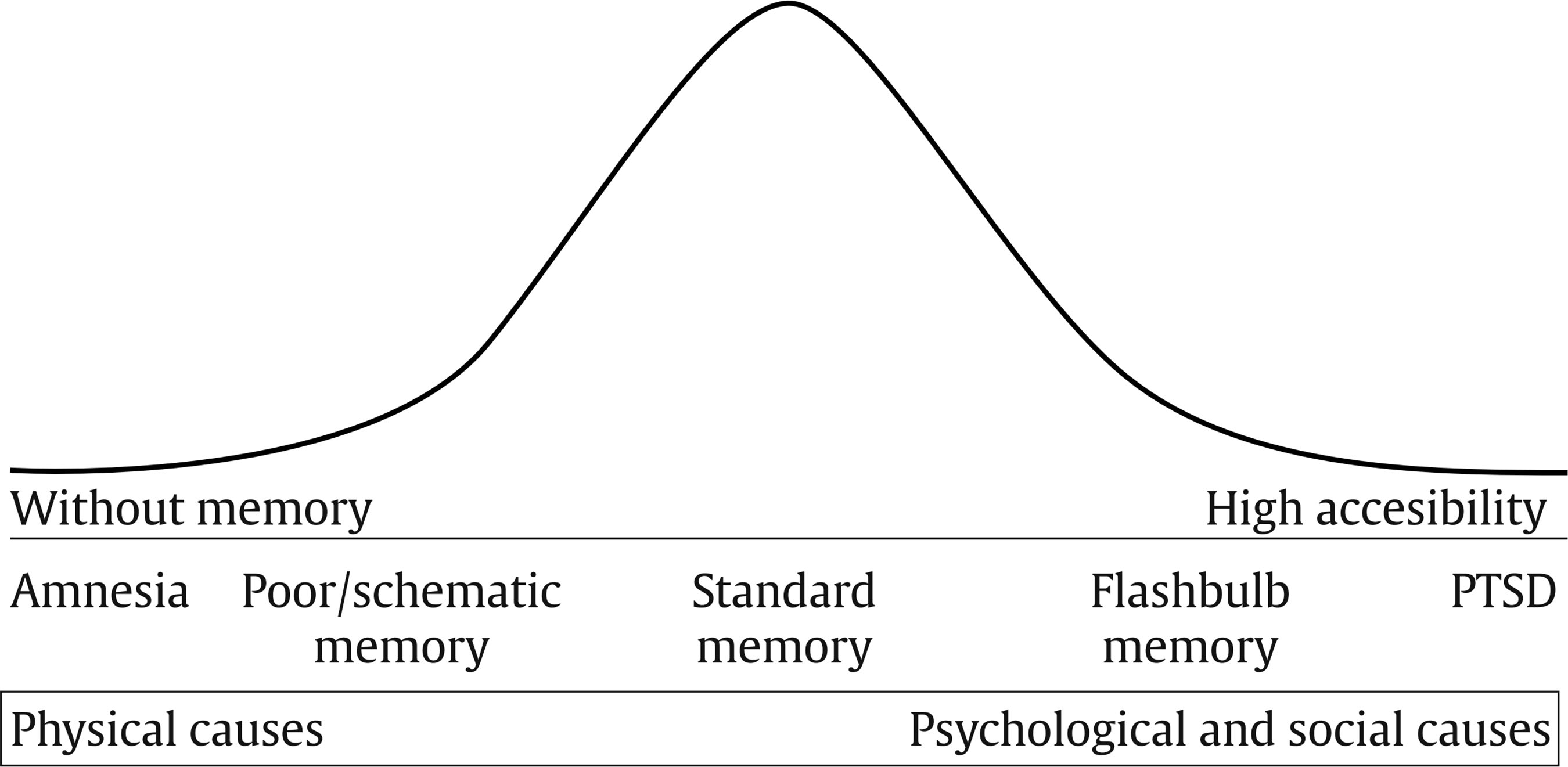 Amnesia would develop from head injuries that generate organic damage that affects the ability to generate a long-term memory of the events. It would be unlikely to develop amnesia based solely on psychological factors (Mangiulli et al., 2022; Manzanero & Palomo, 2020). In the absence of this pathology, the encoding conditions and other retention factors could give rise to qualitatively and quantitatively poor memories (poorly detailed and schematic), with more semantic than episodic characteristics, which would be memories, nonetheless. At the other end of the continuum, most traumatic experiences would generate a memory whose characteristics and accessibility would be as expected according to the mechanisms of normal memory functioning. In general, primary and indirect victims would tend not to forget, due to the distinctiveness and meaning of the traumatic events. Thus, social and individual factors could give rise to memories with a greater degree of accessibility, vividness and associated with the feeling that the passage of time does not affect them. These could be the prelude to PTSD, where mainly primary victims could develop a memory disorder that is the opposite to amnesia and that implies a chronic accessibility of the memories related to the traumatic experience in the form of flashbacks, ruminations or nightmares, with progressively more intense emotions associated with each recall (Rubin et al., 2008). According to the findings of the present study, the greater degree of detail with which the event is remembered by the victims with PTSD would be related to the number of recalls carried out. The high accessibility of the memory of a traumatic experience in PTSD could be due to an over-generalization of retrieval cues. The first recalls could occur by automatic (implicit) retrieval mechanisms caused by the presence of specific contextual (semantic and episodic) cues strongly associated to the experience. Progressively, less specific clues, but related to the previous ones, could trigger the recall of the memory of the events, in a transgression of the Encoding Specificity Principle (Tulving & Thomson, 1973). In the over-generalization of the retrieval cues, each new recall of the traumatic memory would play a determining role, increasing its accessibility and generating new connections, giving rise to hypermnesia (Payne, 1987; Scrivner & Safer, 1988), which would be one step closer towards PTSD (Desmedt, 2021). The objective of the present study was to analyze the differential memory characteristics regarding the quality of memories, associated emotions, and their accessibility in victims and witnesses of the 2004 Madrid attacks, as well as to examine the impact of the presence of post-traumatic stress disorder and post-traumatic symptoms on their memory. Participants The sample consisted of 77 individuals (64.93% women), 47 witnesses (61.70% women), with a mean age of 50.87 years (SD = 5.29), who were mere observers of the events through the media, and 30 victims (70.00% women), with a mean age of 45.23 years (SD = 9.26) who had a high degree of involvement in the events because they were victims of the attacks who were on the trains, on the platforms or at the station during the attack and in the moments immediately after. The gender variable was not significantly associated with involvement status (Chi-square = .554, p = .457). However, these two conditions were not equivalent in their mean age (t = 3.034, p = .004, d = .795). In order to seek data from witnesses with a low degree of involvement in the attacks, the participation of relatives of the students of the Degree in Psychology at the UCM was requested. To obtain data corresponding to the victims of the attacks, a collaboration agreement was achieved with the General Directorate of Support for Victims of Terrorism of the Spanish Home Office, who considered this study to be of great interest. As an inclusion criterion, it was considered that the participants in the witness group were men and women who, at the time of the 11M terrorist attacks in 2004, were over 18 years old, resided in Madrid, had knowledge of the attacks through the media, and had no direct or indirect involvement in the attacks as victims or family members of victims. In the case of the victims of the 11M terrorist attacks in 2004, all of them were registered in the census of victims of terrorism elaborated by the General Directorate of Support for Victims of Terrorism. The 1858 registered victims were invited to participate in the study. In both groups, participants under medical treatment for pathologies that affected their cognitive abilities were excluded. Due to the confidentiality of health data, it was not provided to the researchers. However, psychologists from the General Directorate of Support for Victims of Terrorism, who provide support to these victims and have information about their sequelae and cognitive impairments, made sure that all victims met the specific requirements of not having disorders that would affect their cognitive abilities. Procedure The traumatic event were the terrorist attacks that took place in Madrid on the 11th of March, 2004, which affected 4 trains, with 10 simultaneous explosions. A total of 193 people died and 1858 were injured. Data collection took place twelve years after the events. To evaluate the phenomenological characteristics of the memory of the events, all the participants were asked to remember it and complete the Phenomenological Questionnaire for Autobiographical Memory (CCFRA/PQAM-31) (Manzanero et al., 2021). This questionnaire allows exploration of the phenomenological characteristics of memory on a Likert-type scale ranging between 1 and 7. The dimensions evaluated were: Quality of the memory (degree of detail, vividness, fragmentation, comprehension, definition, complexity, recovery perspective, doubts, visual information, colour, sound, smell, touch, taste); Associated emotions (implications, intensity of feelings, valence, relevance, feelings during the event and now, thoughts during the event); and Accessibility (recall effort, forgetting details, reviviscence, remembering previous and subsequent events, thinking and talking about the event). Items 21 and 22 were not considered in the analyses because victims with potential memory problems were excluded from the study. Items 8 and 29 (about where and when the event occurred) were not included as these were provided in the instructions. The reliability coefficients, using Cronbach’s alpha, were .84 for the 27 items employed in this study. Therefore, according to George and Mallery’s (2003) classification, the internal consistency index of the questionnaire was good. In addition, the EGEP-5 Questionnaire (Crespo et al., 2017) was used, which allows the evaluation of Post-Traumatic Stress Disorder in adults according to the DSM-5 criteria. It was used to determine the possible development of traumatic symptoms and the presence of this disorder in individuals with a high level of involvement (30 individuals). Cronbach’s alpha, was .94 for the 31 items evaluated in this study. The internal consistency index of the questionnaire was excellent. Analyses First, we aim to test the existence of differences in the CCFRA/PQAM-31 items as a function of the participants’ involvement status (victims vs. witnesses) on different phenomenological characteristics associated with the recall of the traumatic event. Because both groups are not age-equivalent -as indicated in the Participants section- we will use age as a covariate in the analyses. Previously, we tested the assumptions of normality and homoscedasticity in the dependent variables (CCFRA/PQAM-31) to determine whether the approximation of the analysis could be based on a parametric technique or it would be necessary to use a nonparametric technique. Because the sample size is less than 50 in both groups we tested for normality using Shapiro-Wilks. Equality of variances was tested using Levene’s test (see Table 1 in the Results section). The non-compliance with normality in all items for both groups, the threat this poses to variance-based statistical tests (Whitlock & Schluter 2009; Zar, 2010), the non-compliance with homoscedasticity in several items, plus a small and unequal sample size for both conditions made us opt for a non-parametric analysis technique to cover the first objective: the non-parametric ANCOVA (Quade’s procedure). Table 1 Normality test (Shapiro-Wilks) and Levene’s test (equality of variances). 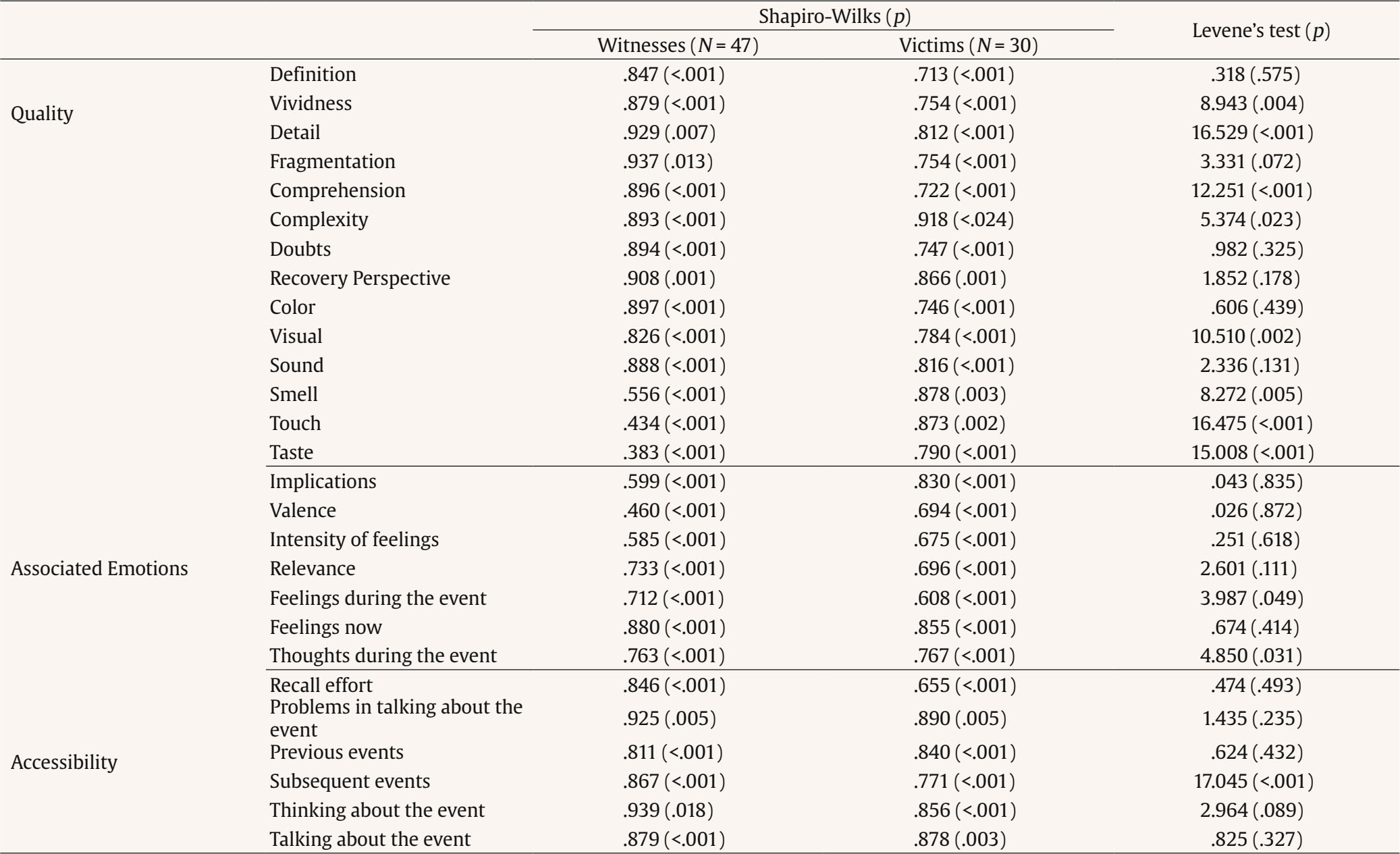 The Quade test (1967) (nonparametric ANCOVA) is a procedure that we performed in 3 steps: Step 1: Ranks are assigned to all cases in the dependent variables (CCFRA/PQAM-31 items) and in the covariate (i.e. age) ignoring the group variable (implication condition). Step 2: A linear regression is performed on the rank in each DV using as IV the rank in the covariate. In this step the unstandardized residuals are save and the group factor is still ignored. Step 3: An ANOVA is performed using as DV the residual saved in the previous step for each item from CCFRA/PQAM-31 and as IV the group factor (involvement condition). The F statistic in this ANOVA is the F statistic proposed by Quade. Finally, the EGEP-5 -a measure of Post-Traumatic Stress Disorder in adults - was used to determine the presence of this disorder in victims. From these data, we calculated two global measures: number of symptoms and symptom intensity. Spearman’s correlation was then calculated between the CCFRA/PQAM-31 items and these two global indicators derived from the EGEP-5. All statistical analyses were performed using SPSS software version 28 (IBM, 2021). Ethical Standards This study was approved by the Ethic Committee from Complutense University of Madrid (Spain), reference number 2016/17-023. All participants were informed about the voluntary nature of their participation in the study. Victims were informed that the evaluation results would not in any way affect their status as victims of the 11M attacks, nor would it imply any form of compensation. Similarly, they were informed that their participation would be anonymous and their identifying information would not be disclosed to the researchers. All participants were requested to sign the informed consent form. The results derived from the study of the normality and homoscedasticity assumptions of the CCFRA in both groups are shown in Table 1. As can be seen in Table 1, for all the CCFRA/PQAM-31 items the normality of the distributions is rejected in the two involvement conditions. This absence of normality in the data poses a particular threat to variance-based statistical tests (Whitlock & Schluter, 2009; Zar, 2010). Moreover, for several items it is not possible to assume equality of variances. All this, together with a small and unequal sample size in both conditions, leads us to use a nonparametric approach to obtain the following results. The results obtained for each variable, according to the degree of involvement, using a non-parametric ANCOVA (Quade´s procedure) controlling by age, are shown in Table 2. Table 2 Mean, standard deviation and non-parametric ANCOVA controlling by age (F statistic Quade´s) for each dependent variable. 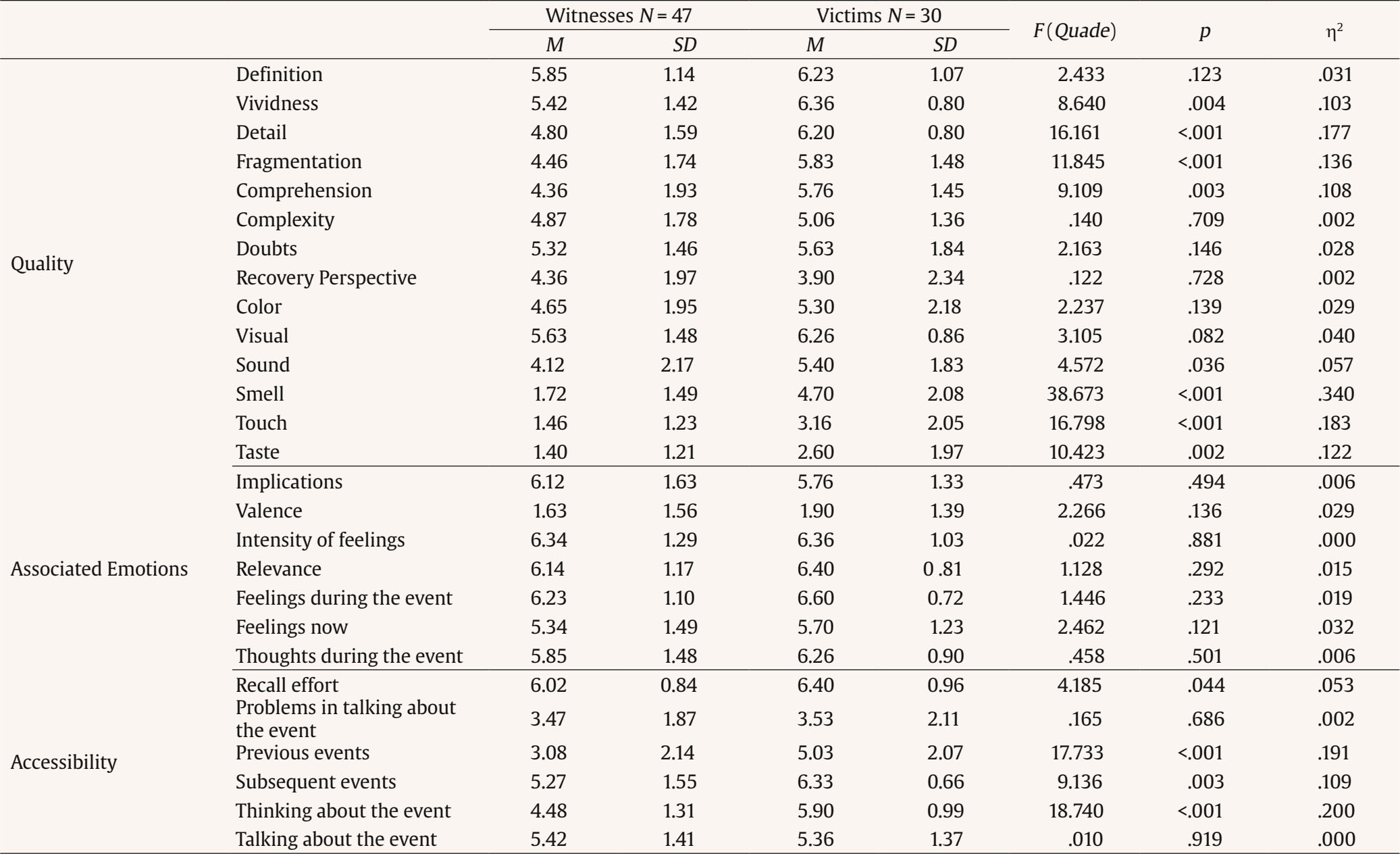 The variables in which a significant difference between the two groups was found are described below. Quality of the memory: The group of victims obtained significantly higher scores regarding the vividness, degree of detail, fragmentation and comprehension of their memory. Likewise, this group obtained a higher score for memory of sensory information (sound, smell, touch and taste). The effect sizes (obtained through partial η2) were large in the most cases. The smell (η2 = .340), touch (η2 = .183) and degree of detail (η2 = .177) had the largest differences between conditions when the effect of age was controlled. Accessibility: The group of victims had better memory of the events before and after the attack and reported a greater number of recalls (i.e., they thought more frequently about the event). The effect sizes were again large, with thinking about the event ( η2 = .200) and previous events ( η2 = .191) having the largest differences. Associated emotions: Regarding this set of variables, no significant differences were obtained between both groups. Relationship with Measures of Post-traumatic Stress The group of victims had a clinical measure of post-traumatic stress (EGEP-5). It is important to note here that of the total of 30 participants in the sample of victims affected by the 11M attacks, only 6 met the clinical criteria for the diagnosis of post-traumatic stress disorder. Moreover, two new variables were computed for all the participants in this group from the EGEP-5 scores: number of symptoms and symptom intensity. The average number of post-traumatic symptoms present in the victims was 9.43 (SD = 5.20) out of a total of 22 possible symptoms evaluated. The most frequent post-traumatic symptoms were intrusive symptoms, while the least frequent ones were avoidance symptoms. Only two participants indicated not having any intrusive symptoms. The average number of intrusive symptoms was 5.92 (SD = 4.10). Ten participants reported not having any avoidance symptoms, with an average of 1.03 (SD = 0.88). Regarding cognitive and mood disturbances, four participants did not present such alterations, and the average number of symptoms in this category was 2.60 (SD = 2.15). Finally, five participants indicated not having any symptoms related to arousal and reactivity, with an average of 2.68 (SD = 1.91) symptoms. Table 3 shows the Spearman correlation (and 95% CIs) between the CCFRA items and these new variables. The results indicate that the number of symptoms appearing in the victims is related to quality characteristics (amount of details, comprehensibility, doubts about accuracy, perspective of recovery, and certain sensory details such as sound and smell), associated emotions (implications, valence, and relevance), and accessibility (recall effort, subsequent events, and thinking about the event). In all cases, the correlations were positive, except for valence, where, as expected, a higher number of symptoms correlated negatively with positive valence. Table 3 Spearman correlation and 95% CI between CCFRA/PQAM-31 items and number of PTSD symptoms and symptom intensity (from EGEP-5). 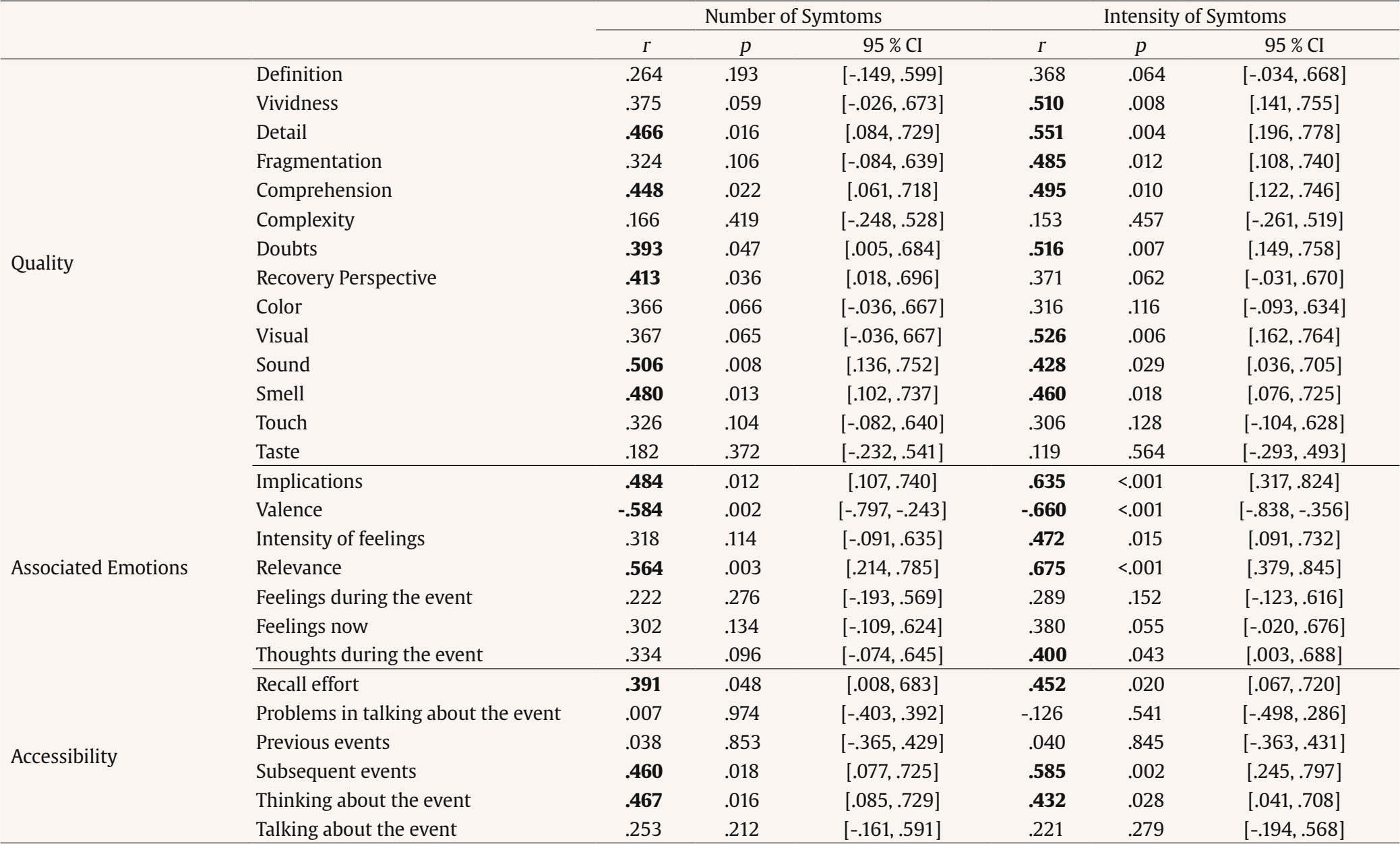 The subjective intensity of the present symptoms was also related to the quality of memories (vividness, amount of details, fragmentation, comprehensibility, doubts about accuracy, and certain sensory details such as visual, sound and smell), associated emotions (implications, valence, intensity of feelings, relevance, and thoughts during the event), and accessibility (recall effort, subsequent events, and thinking about the event). Similar to the previous case, all the correlations were positive except for valence. In summary, it appears that in this group of victims, those who experience greater post-traumatic stress symptoms (in terms of number and intensity) tend to obtain higher scores on the characteristics of CCFRA. In other words, they tend to have a stronger and more vivid memory of the 11M attacks in all phenomenological dimensions (quality, accessibility, and associated emotions). Although the sample size is relatively small, the preliminary findings show robust and significant positive correlations between the number of symptoms and their intensity, specifically in relation to memory quality, accessibility, and associated emotions. These correlations provide valuable insights into the potential relationships between post-traumatic symptoms and the phenomenological aspects of memory in this context. However, further research with larger sample sizes is necessary to confirm and generalize these findings. The results obtained show significant differences in the characteristics of the memory of the attacks, depending on the degree of involvement of the participants, specifically regarding the quality of the memory and its accessibility, but not regarding the associated emotions. According to Talarico and Rubin (2003), flashbulb memories (FBMs) are detailed and vivid memories of important events with emotional relevance (accidents, natural catastrophes, terrorist attacks...), which are characterized by a greater security in the memory of the event and a greater inclusion of contextual details than with other types of autobiographical memories and that are remembered for the rest of the person’s life. It is said by some to be a type of memory characterized by high accessibility and a feeling of confidence in the accuracy of what is remembered “as if it had just happened”, long after the events have occurred. Flashbulb memories, when a significant public event occurs, allow to remember for a long period of time not only details of the event itself but also irrelevant details about the context in which they received the news (where they were, what they were doing, etc…), which often includes sensory details. In fact, the remembered information regarding when, where and who gave them the news of a certain event (contextual information) is key when it comes to evaluating whether there is a flashbulb memory of a certain event or not (Pezdek, 2003; Talarico et al., 2019). The following paragraphs discuss the results obtained for each of the dimensions analyzed (quality, accessibility and emotionality). Quality of the memory: the victims, with more involvement in the events, remembered the attacks with greater vividness, degree of detail, fragmentation and comprehension than the group with less involvement. This is in line with previous research that related emotional activation and memory (Chiu et al. 2013; Manzanero & Recio, 2012; Schwabe et al., 2022) or degree of involvement and memory (Manzanero et al., 2009; Talarico et al., 2019). Likewise, the emotional reaction of each individual will favor post-event reprocessing and recall, which will also serve to improve recall, vividness and security in the acuity of memory (Finkenauer et al., 1998). The victims, with the greater involvement, thought about the event more times and showed greater accessibility to their memory, which may be the reason for the differences found in the present study regarding the vividness and comprehension of the event. The present findings are in line with the findings of Nachson and Slavutskay-Tsukerman (2010) who compared the memory that victims, witnesses and uninvolved controls had of the same traumatic event: the explosion at a Tel Aviv nightclub. They found that both victims and witnesses (who had not been harmed) remembered more details than the control group. The victims had the best memory of both the central and peripheral details. The type (central vs. peripheral) and the accuracy of the details recalled were therefore directly related to the degree of involvement in the event. The current findings are also in line with those obtained by other studies that show how traumatic memories are characterized by poor accuracy for irrelevant details, but better memory for central details (Berntsen, 2002; Metcalfe et al., 2019). Regarding memory fragmentation, in a study designed to evaluate the effect that emotional activation can have on memory (Guez et al., 2015), these authors found that a negative emotional activation was associated with a poor ability to integrate stimuli, because of a deficit in the associative ability of memory. Therefore, the memory of an event experienced with a negative emotional activation would be more fragmented because it would impair the associative processing of the information. Along the same lines, other research shows that the memory of a traumatic event could be fragmented and difficult to express in a narrative way (Byrne et al., 2001). Perhaps, this could be the reason why a significant difference is not obtained regarding the times that both groups have spoken of the event. In the case of the victims, with the greater involvement, due to the difficulty of expressing the events, and in the case of the witnesses, with less involvement, due to less accessible memory. The differences between the sensory information recalled by the victims compared to the witnesses were also significant for 3 of the 5 senses (smell, touch and taste). It seems obvious that only if a person has experienced the event first-hand, will he/she be able to perceive smells, sounds and somatosensory sensations. In fact, speaking with one of the supervisors who was traveling on board one of the damaged trains, he reported how he vividly remembered the sound of talking or ringing on the mobile phones of the passengers who were on board the train, some of them deceased and many wounded. The sensory information provided is, therefore, indicative of the format through which the participants have access to the facts, first-hand (personally) or second-hand (impersonally). In this regard, there are some studies whose results show how traumatic memories are usually associated with intense (odorous, auditory, tactile...) and very visual (Herman, 1992; Van der Kolk, 1998) sensations. Though, of course, witnesses in their recreating of what they witness can add information that was not originally in their memory. Accessibility: The group of victims shows a greater subjective effort when trying to recall the events. They find it more difficult to remember, although it is not more difficult for them to talk about the events compared to the witness group. The victims remembered more both of the events prior to the attack and those after it. If we look at these results together with those obtained with respect to the time, both results could be related (time information and accessibility). In episodic memory, the information would have an autobiographical organization, subject to spatio-temporal parameters, being therefore organized according to the theme and by time periods that mark the course of our lives. Therefore, it is not surprising that the previous and subsequent events are used as milestones when retrieving the requested temporal information. In sum, the victims, with the greater involvement, reported a greater number of multiple recalls, that is, they thought more often about it. These results could also be a consequence of intrusive memories (reexperiencing) that are often present in people who have experienced a traumatic event. People refer to recurrent and intrusive memories of the event that cause discomfort and in which images, thoughts or perceptions are included (criterion B of the DSM-5). It should be noted that, except for two participants in the victim group, the remaining participants met the criteria for Criterion B. This suggests a high prevalence of this symptoms in the sample. This finding further emphasizes the impact of trauma on individuals’ psychological well-being and highlights the importance of addressing these symptoms in therapeutic interventions. Similarly, it can be affirmed that traumatic memories exhibit high accessibility, contrary to beliefs associating them with amnesia. Associated emotions: The emotions associated with the memory of the event by both groups are very similar, they seem to remember it in a similar way with respect to implications, valence, intensity of feelings, and relevance of the event (in that no significant differences were found). This could be explained by the characteristics of the traumatic event that was traumatic and negative and whose consequences could be considered catastrophic for all of our participants, regardless of their degree of involvement. Those of us who lived in Madrid in 11th of March, 2004, remember it as an event with serious implications at all levels, with a clearly negative valence, very relevant and with associated feelings of great intensity. Also, no significant differences were found for degree of involvement regarding thoughts or feelings during the event and at present, probably for the same reason. In the sample composed of people with a greater degree of involvement, we found 20% of people with PTSD. This is consistent with that found in other studies that have analyzed the presence of this long-term disorder in victims of traumatic events: 18% PTSD in refugees from political violence (Eisenman et al., 2003); 9% PTSD in refugees (Sabin et al., 2003); 16.53% PTSD in war survivors (Ayazi et al., 2014); 14.5% PTSD in survivors of war conflicts (Eytan et al., 2011); 16.7% of PTSD in victims of torture (Gómez-Varas et al., 2016); 9%, PTSD according to a meta-analysis of twenty articles on the effects of stress on refugee populations (Fazel et al., 2005). In addition, the quantity and intensity of post-traumatic symptoms were strongly related to the phenomenological characteristics of memories, impacting the quality and accessibility of memories, as well as the associated emotions. The findings could be explained by the greater number of recalls that are assumed in victims of traumatic events (re-experiencing, intrusive memories...). People who experience a traumatic event often recall it as more traumatic after a certain amount of time has lapsed, compared to their memory of the event immediately after it occurred. This is what some authors call the memory amplification effect and is associated with re-experiencing symptoms (Oulton et al. 2016). This effect becomes more pronounced with a higher quantity and greater intensity of post-traumatic symptoms present. The greater quality and accessibility with which the group of victims remembered the event could also be related to that greater number of recalls (they thought more about the event). Significant correlations were found between thinking about the event and degree of detail, smell, and touch which suggests that having thought more times about the event generated a better memory of sensory information. The current findings support the hypothesis that the delayed memory of a traumatic event could differ in its characteristics depending on the degree of involvement of the persons involved, as a consequence of a different processing of the perceived information (more automatic in the case of victims with greater involvement), the emotional activation experienced (mediated by the relevance of the event) and the accessibility of the memory. The emotion experienced will depend on the cognitive evaluation made of the event in which the individual and social consequences of it will play an important role. If after this evaluation, the event is considered to be of great personal relevance, many people will prepare to respond adaptively to such a situation. Depending on the importance/relevance that people consider the event to have and depending on their personal characteristics, they will react in one way or another (narrowing or not the focus of attention, for example) and, finally will experience a certain emotional state. Mere exposure to an event is not enough to ensure a complete encoding of the event, even for a personally important event (Talarico et al., 2019). Individual prior knowledge and the nature of the event itself will influence the encoding of details and their inclusion in long-term memory. In other words, what we already know determines what we can or cannot remember. The current findings regarding the quality of the memory and its accessibility depended on the degree of involvement of the persons involved. The higher scores obtained by the group with greater involvement regarding the quality of their memory seem to be directly related to the greater emotional reaction experienced during the event, which would cause a greater re-elaboration of the memory as a consequence of post-event recalls (Finkenauer et al., 1998). Likewise, the characteristics of the memory of victims are similar to the characteristics of a flashbulb memory, with the event being remembered with a greater degree of detail, greater vividness and definition. Finkenauer et al. (1998) suggested the emotional-integrative model for this type of memories. According to this model, the formation and maintenance of vivid memories will be influenced by factors such as the associated emotion and the number of times the information has been retrieved, either directly (such as the effect generated by the surprise factor and the emotion that the event evokes) or indirectly, because the emotional impact of an event with sufficient relevance will evoke a greater mental rumination, a greater tendency to share our memory socially and a greater monitoring of the information provided by the media regarding the event. In this way, personal importance and consequentiality determine the intensity of the emotional state and it is this emotion that, indirectly, explains the formation of this type of memory, along with the number of times the information is recalled. On the other hand, according to the importance-driven emotional reactions model, proposed by Er (2003), the personal consequences will determine the intensity of the emotional reaction: the emotional activation will be different according to the consequences that the person thinks the event could have. In this way, the importance given will cause intense emotional reactions that, when shared with others, will reinforce the memory trace and cause the formation of FBM. Therefore, the greater the degree of importance of the event and the greater the emotional reaction, the more detailed and accurate the memory will be. However, certain emotional states will cause a greater tendency to share emotional events with other people and to try to gather more information about the event, which will result in a greater number of recalls. The emotional intensity of the event will cause us to share our experience more socially (Maswood et al., 2019) and, therefore, to retrieve the stored information more frequently. On the other hand, the higher score obtained by the group with greater involvement regarding sensory information confirms the findings of other studies, where the memory of a traumatic event is related to intense sensations across all the senses (Herman, 1992; Van der Kolk, 1998). However, taking into account the current correlational analyses, a factor to take into account in future research would be the relevance or importance given to the event, which proves to be more transcendental for the memory than the degree of involvement of the person (victim or witness), as it correlates with many of the variables here analyzed. From the results obtained, several conclusions can be drawn. The degree of involvement of the participants in the traumatic event had a significant impact on the characteristics of their memory. The victims, with greater involvement, remembered the event with greater vividness, detail, fragmentation, and comprehension compared to the witnesses, with less involvement. This is consistent with previous research that has linked emotional activation and memory, as well as the degree of involvement and memory. The group with greater involvement had a higher quality of memory, characterized by greater vividness, detail, and comprehension of the event. Emotional reactions and post-event reprocessing and recall played a role in improving the quality of memory. Traumatic memories are often characterized by better memory for central details and poor accuracy for irrelevant details. The group of victims showed greater subjective effort when trying to recall the events, but they were not more difficult to talk about compared to the witness group. Victims also remembered more events prior to and after the attack. The accessibility of memory was influenced by the emotional activation experienced during the event, as well as the number of times the event was recalled. The Continuous Accessibility Model of Memory, as a theoretical approach, proposes that the accessibility of memories is not limited to a binary distinction of accessible or inaccessible memories, but rather exists on a continuum. According to this model, the accessibility of a memory can vary based on various factors such as the associated emotional intensity, frequency of recall, memory quality, and its connection to other memories. Also, the model provides a conceptual framework for understanding how post-traumatic symptoms can influence how victims of traumatic events experience, process, and recall the traumatic event. In the context of victims of traumatic events, this model suggests that post-traumatic symptoms, both in quantity and intensity, can influence the accessibility of trauma-related memories. The greater the quantity and intensity of symptoms, the more likely it is for traumatic memories to be more accessible and present in an individual’s experience. This can manifest in the frequent occurrence of intrusive memories, difficulty in avoiding or suppressing trauma-related thoughts, and the emotional intensity associated with traumatic memories. Regarding the associated emotions, both groups, victims and witnesses, had similar emotions associated with the memory of the event. The traumatic nature of the event resulted in negative valence, intense feelings, and relevance for all participants, regardless of their degree of involvement. Thus, a memory amplification effect can be defined. The memory of a traumatic event can become more traumatic over time, especially in individuals with a higher quantity and intensity of post-traumatic symptoms. The number of recalls and the emotional impact of the event contribute to the memory amplification effect. Also, the personal consequences and the perceived importance of the event determine the intensity of the emotional reaction. The emotional activation, in turn, influences the formation and maintenance of vivid memories. Compared to the witnesses, the victims who experienced the event firsthand recalled sensory information related to the event (smells, sounds, tactile sensations) more than witnesses. Traumatic memories are often associated with intense sensory experiences. In any case, it seems that the importance or relevance given to the event played a more significant role in memory characteristics than the degree of involvement of the person (victim or witness). Relevance correlated with many of the variables analyzed in the study. In conclusion, the results suggest that the memory of a traumatic event can vary in its characteristics depending on the degree of involvement of the individuals involved. The emotional activation, number of recalls, and importance given to the event contribute to the quality and accessibility of the memory. Victims and witnesses may have distinct but overlapping memory experiences, with victims often experiencing more intense emotions and sensory details. The main limitation of the present study was the number of participants in the condition with the greater degree of involvement. As it was a closed sample with voluntary participation, and all those who had physical injuries (e.g., severe head injuries) that could affect their cognitive abilities were excluded, its size depended on the number of victims and individuals involved in the event. The Ministry of the Interior registered 1,954 individuals directly or indirectly affected by the 11M attacks, which means that only 1.53% of the total sample was here studied. However, according to that registry, 193 people died, so the current sample of victims could be considered as representative of those deceased victims. Conflict of Interest The authors of this article declare no conflict of interest. Acknowledgements Dedicated to the victims of 11M. This work is part of a research project on assessment of memories and psychological disorders associated to trauma, developed by UCM Research Group on Eyewitness Testimony (ref. 971672), in the framework of the projects financed by Santander-Universidad Complutense de Madrid (PR87/19-22576). Cite this article as: Manzanero, A. L., Vallet, R., Guarch-Rubio, M., Vara, A., Escorial, S., & Bull, R. (2026). Memory of traumatic experiences: From amnesia to post-traumatic stress disorder. Anuario de Psicología Jurídica, 36, Article e260479, 1-9. https://doi.org/10.5093/apj2026a12 References |
Cite this article as: Manzanero, A. L., Vallet, R., Guarch-Rubio, M., Vara, A., Escorial, S., & Bull, R. (2026). Memory of Traumatic Experiences: From Amnesia to Post-traumatic Stress Disorder. Anuario de Psicología Jurídica, 36, Article e260479. https://doi.org/10.5093/apj2026a12
Correspondence: antonio.manzanero@psi.ucm.es (A. Manzanero).Copyright © 2026. Colegio Oficial de la Psicología de Madrid


Herramientas:
 PDF
PDF e-PUB
e-PUB CrossRef
 JATS
JATS Imprimir
 Enviar
ALERTA POR E-MAIL
La Revista de Anuario de Psicología Jurídica está distribuida bajo una licencia de Creative Commons Reconocimiento-NoComercial-SinObra Derivada 4.0 Internacional.com