Development and Validation of a Cognitive Skills Questionnaire for Adolescent Offenders: The Cognitive Skills Questionnaire for Youth (CSQ-Y)
[La elaboración y validación de un Cuestionario de Habilidades Cognitivas para Adolescentes Infractores: el Cuestionario de Habilidades Cognitivas para Jóvenes (CHC)]
José L. Alba Robles1, José G. Medrano2, Priscila Montañéz Alvarado2, María J. López Latorre1, & Ana L. Cuervo García3
1Universitat de Valencia, Spain; 2Universidad Autónoma Ciudad Juárez, Mexico; 3Universidad Internacional de la Rioja, Spain
https://doi.org/10.5093/apj2026a2
Received 28 July 2024, Accepted 19 June 2025
Abstract
The present study aimed at psychometrically validating the Cuestionario de Habilidades Cognitivas in Ciudad Juárez, Chihuahua, Mexico. A sample of 502 adolescents aged 15 to 17 years from Bachilleres xxx 19 high school in Ciudad Juárez participated in the study. The questionnaire was refined to 20 items based on expert judgment, followed by a pilot application. Exploratory factor analysis revealed the instrument’s structure consisting of three factors, with acceptable convergent and discriminant validity. Invariance analysis resulted in no significant differences across samples, while confirmatory factor analysis yielded a reliability coefficient alpha of .73. The Kaiser-Meyer-Olkin measure was .72, and Bartlett’s significance test with a chi-square value of 947.543 (df = 190, p < 0.000) explained 69% of the total variance. The model fit indices were satisfactory with a chi-square of 96.89, GFI of .94, CFI of .95, and RMSEA of .04. The study sought to identify prevalent cognitive conditions and issues among adolescents to facilitate the development of interventions and psychoeducational treatments for violence-related behavioral problems. The efficacy of the CHC questionnaire was substantiated, along with its utility in identifying cognitive scenarios in adolescents.
Resumen
El presente estudio tuvo como objetivo validar psicométricamente el Cuestionario de Habilidades Cognitivas en Ciudad Juárez, Chihuahua, México. Participó una muestra de 502 adolescentes de entre 15 y 17 años del Bachilleres n.º 19 de Ciudad Juárez. El cuestionario fue depurado hasta quedar en 20 ítems, tras un juicio de expertos y una aplicación piloto. El análisis factorial exploratorio mostró una estructura compuesta por tres factores, con una validez convergente y discriminante aceptables. El análisis de invarianza no mostró diferencias significativas entre las muestras, mientras que el análisis factorial confirmatorio arrojó un coeficiente alfa de fiabilidad de .73. La medida de Kaiser-Meyer-Olkin fue de .72 y la prueba de significación de Bartlett obtuvo un valor de chi-cuadrado de 947.543 (gl = 190, p < 0.000), explicando el 69 % de la varianza total. Los índices de ajuste del modelo fueron satisfactorios, con un chi-cuadrado de 96.89, un GFI de .94, un CFI de .95 y un RMSEA de .04. El estudio pretendía indagar en las condiciones y los indicadores cognitivos frecuentes en adolescentes para facilitar el desarrollo de intervenciones y tratamientos psicoeducativos ante problemas de conducta relacionados con la violencia. La investigación confirmó la eficacia del cuestionario CHC y su utilidad para identificar escenarios cognitivos en población adolescente.
Palabras clave
Habilidades cognitivas, Competencias sociales, Cuestionario de Habilidades, Cognitivas para Jóvenes (CHC), Validación
Keywords
Cognition, Social competences, Cognitive Skills, Questionnaire for Youth (CSQ-Y), Validation
Cite this article as: Robles, J. L., Medrano, J. G., Alvarado, P. M., Latorre, M. J. L., & García, A. L. C. (2026). Development and Validation of a Cognitive Skills Questionnaire for Adolescent Offenders: The Cognitive Skills Questionnaire for Youth (CSQ-Y). Anuario de Psicología Jurídica, 36, Article e260469. https://doi.org/10.5093/apj2026a2
Correspondence: j.luis.alba@uv.es. (J. L. Alba Robles).
In Mexico, adolescents frequently encounter challenges associated with violence. The correlation between cognitive abilities and juvenile delinquency has garnered substantial attention in scholarly literature. Recent studies have delved into various facets of cognitive abilities and their ramifications for juvenile delinquency, providing insights into the intricate interplay between cognition and antisocial conduct among young individuals (Papageorge et al., 2020; Tucker-Drob et al., 2019). Cognitive abilities encompass a range of mental processes, including attention, memory, problem-solving, and decision-making, all of which exert a pivotal influence on individuals’ behavior, including their inclination towards delinquent acts (Gottfredson & Hirschi, 2019; Han & Park, 2023). Studies indicate that deficiencies in specific cognitive skills may heighten the likelihood of youth engaging in delinquent behavior. For instance, challenges in impulse control, inhibitory control, and decision-making have been linked to an increased risk of involvement in delinquent activities (Diamond, 2013; Morgan & Lilienfeld, 2020). Adolescents with subpar executive functioning skills may encounter difficulties in assessing the consequences of their actions, potentially leading to impulsive or reckless behavior that can culminate in delinquency (Paulus et al., 2019; Walters, 2022, p. 13). Moreover, cognitive deficits can also shape youths’ perception and interpretation of social cues, their interactions with peers, and their conflict resolution abilities. For instance, individuals with limited perspective-taking skills may struggle to empathize with others or grasp the repercussions of their actions on different stakeholders, thereby heightening the likelihood of interpersonal conflicts or aggressive behavior (Blair, 2005; Woodward et al., 2020). The literature in this domain delves into diverse strategies, interventions, and programs implemented across various settings, including educational, community, and therapeutic environments. These initiatives often target individuals spanning different age groups, from children to adults, and typically integrate elements such as communication skills training, techniques for emotional regulation, exercises to enhance perspective-taking, problem-solving approaches, and role-playing scenarios (Reith-Hall & Montgomery, 2023; White et al., 2021). Interventions designed to enhance cognitive skills have demonstrated promise in mitigating juvenile delinquency. Numerous researchers have documented the positive effects of cognitive interventions and skill-building programs in reducing delinquent behavior among youth (Farrington & Welsh, 2007; Lipsey et al., 2010; Lipsey & Wilson, 2001; Losel & Beelmann, 2003). Recent studies continue to support these findings, highlighting the effectiveness of targeted cognitive interventions in diverse settings (Burns et al., 2021; Kavanaugh & Holler, 2022). Cognitive-behavioral therapy (CBT) programs, for example, concentrate on enhancing individuals’ cognitive processes and problem-solving abilities to address maladaptive behaviors and foster prosocial alternatives (Agan, 2011; Lochman & Wells, 2002). By directly addressing cognitive deficits, these interventions aim to equip young people with the requisite skills to make improved choices, regulate their emotions, and navigate social situations more effectively, thereby diminishing their engagement in delinquent activities (Alba et al., 2005, p. 184; Ross & Hilborn, 2003, p. 34). Recent advancements in CBT techniques and their application in juvenile justice systems have shown substantial improvements in reducing recidivism rates among at-risk youth (Dodge et al., 2020; Kavanaugh & Holler, 2022; Matthews et al., 2023; Peterson & Willoughby, 2021). Several studies have underscored the efficacy of such interventions in augmenting social competence and conflict resolution skills. For instance, initiatives such as social-emotional learning (SEL) programs implemented in schools have yielded positive results, including enhanced social skills, decreased aggression, and improved academic performance (Durlak et al., 2011). Recent research continues to support these findings, demonstrating that SEL programs contribute significantly to students’ social and emotional development (S. M. Jones et al., 2019; Mahoney et al., 2020). Likewise, cognitive-behavioral therapy (CBT) interventions have proven effective in imparting individuals with constructive methods for conflict management and emotion regulation (e.g., Reasoning and Rehabilitation Programme) (Clarke et al., 2021; Kazdin & Rabbitt, 2019; Ross et al., 1988). Assessment Tools for Criminal Behavior The necessity of developing tailored questionnaires for juvenile offenders stems from the contextual disparities and life challenges they encounter compared to the broader school population. Standard psychometric assessments may not suffice in accurately and comprehensively evaluating the psychological, emotional, and behavioral traits of juvenile offenders due to various factors: As Canter (2012) suggests, juvenile offenders frequently endure traumas, abuse, dysfunctional family dynamics, and exposure to violence, alongside other adverse experiences. These elements can significantly shape their questionnaire responses, necessitating the inclusion of specific inquiries to accommodate their unique circumstances. Recent studies further highlight the impact of trauma and adverse experiences on the psychological profiles of juvenile offenders, underscoring the need for specialized assessment tools (Baglivio et al., 2019; Ford et al., 2018). Additionally, Douglas and Skeem (2005) emphasize that certain juvenile offenders may struggle with cognitive impairments or learning difficulties, impacting their capacity to comprehend and respond to intricate questions in standard questionnaires. Hence, it is imperative to craft questionnaires featuring clear, accessible language, and straightforward instructions. Recent research supports this by indicating that simplifying language and clarifying instructions significantly improve the accuracy of responses from juveniles with cognitive challenges (Chitsabesan et al., 2018; Grisso, 2020). Furthermore, Monahan and Steadman (1994) suggest that juvenile offenders might harbor negative sentiments towards authority figures and figures of power, potentially affecting their inclination to truthfully and accurately complete conventional questionnaires. Tailored questionnaires should acknowledge this dynamic and adopt a more empathetic and understanding tone. Recent literature emphasizes the importance of creating a rapport and using empathetic communication strategies to elicit honest and reliable responses from juvenile offenders (Cauffman et al., 2020; Steinberg & Piquero, 2019). Moreover, Kropp and Hart (2000) highlight that antisocial and challenging behaviors could impede cooperation and engagement in psychometric evaluations. Questionnaires tailored for juvenile offenders should directly address these behaviors and elicit pertinent information regarding their attitudes, values, and motivations. Recent research reinforces this view, emphasizing that effective assessment tools must account for behavioral issues and engagement challenges unique to juvenile offenders (Hogue et al., 2021; Schwalbe et al., 2022). Various authors have emphasized the importance of developing specific questionnaires for juvenile offenders. For instance, Ross and Fabiano (2011) highlighted the necessity of tailored instruments to accurately assess the needs, risks, and strengths of young offenders. Similarly, Vitopoulos et al. (2019) underscored the significance of sensitivity to the context and experiences of juvenile offenders in assessment tools. Recent studies have continued to support these findings, advocating for assessment tools that reflect the unique life experiences and psychological profiles of juvenile offenders (Gatti et al., 2022; Harris & Rice, 2020). Moreover, Alba and López-Latorre (2006, p. 98) stressed the importance of considering cognitive abilities and willingness to participate in the evaluation process when designing assessment instruments for this population. This perspective is corroborated by recent research that emphasizes the need for assessments that align with the cognitive and motivational characteristics of juvenile offenders (Miller & Coie, 2021; Peterson et al., 2023). Thus, the creation of customized questionnaires emerges as crucial in ensuring a comprehensive and accurate assessment of juvenile offenders’ characteristics and circumstances (Baird et al., 2013). This study proposes a hypothesis to verify the effectiveness of the Cuestionario de Habilidades Cognitivas (CHC, in Spanish), through an exploratory factor analysis (EFA) followed by a confirmatory factor analysis (CFA). Additionally, a study of convergent validity related to the Plutchik Impulsivity Scale and discriminant validity through the Beck Depression Inventory in Adolescents, both validated in the Mexican population, will be conducted. The initial validation process involved expert evaluation, during which experts provided their criteria and feedback on the CHC. Using their insights, the scale was refined and adjusted to include 20 items considered most pertinent and efficient. Subsequent to this refinement, a pilot study was conducted to evaluate the practicality and efficacy of the revised scale in assessing adaptive thinking skills. This pilot study enabled further adjustments and enhancements to the scale, informed by real-world testing and feedback from participants. Participants For this study, a sample of N = 502 adolescents was recruited, comprising 264 girls and 234 boys. This sample size ensures a robust and statistically significant representation of the student population, facilitating the obtainment of reliable and generalisable results. Additionally, the sample size provides the necessary statistical power to detect variations of cognitive skills and evaluate the internal consistency and validity of the questionnaire. The sample was selected using stratified random sampling to reflect the demographic characteristics of the target population and minimise potential biases. These adolescents, aged between 15 and 17, were enrolled as students at Bachilleres xxx19 high school in marginalized neighborhood schools of Ciudad Juárez, Chihuahua, Mexico during 2023. The study specifically focused on students attending the morning shift at the school. The chosen sample size was intended to ensure sufficient representation of both genders within the designated age group and school setting. Instruments The study utilised the Plutchik Impulsivity Scale for Adolescents, which consists of 15 items rated on a Likert scale. This scale has demonstrated reliability, with a Cronbach’s alpha coefficient of .71, and has been previously validated in the Mexican population by Alcázar-Córcoles et al. (2015). Furthermore, the Beck Depression Inventory was employed, comprising 21 multiple-choice items. This inventory has shown high reliability, with a Cronbach’s alpha coefficient of 092, and has been validated for use in the Mexican population by Beltrán et al. (2012). For greater clarity, the instrument has been included in both English and Spanish (see Appendix). Procedure The questionnaire administration occurred at Bachilleres xxx19 high school during the morning shift. Prior to distributing the questionnaires, any inquiries from the students were addressed to ensure clarity. Furthermore, measures were implemented to ensure the confidentiality and anonymity of the respondents’ responses, creating an environment conducive to open and honest feedback. This study was conducted during 2023 with at-risk adolescents in Ciudad Juárez, Mexico. Subsequently, the collected data underwent comprehensive statistical analysis using SPSS 22.0 and AMOS Graphics 22.0 software. Various statistical techniques were employed, including descriptive statistics to summarise the data, Cronbach’s alpha reliability analysis to evaluate internal consistency, Pearson’s correlation analysis to investigate relationships between variables, and exploratory and confirmatory factor analysis (EFA and CFA) using maximum likelihood estimation to validate the underlying factor structure of the measurement instruments. Exploratory Analysis: Convergent and Discriminant Validity The Exploratory Factor Analysis (EFA) conducted on the CHC questionnaire yielded a satisfactory reliability coefficient of α = .73 (Cronbach & Shavelson, 2004). The Kaiser-Meyer-Olkin measure was calculated as .72, and Barlett’s significance test showed χ² = 947.543 (df = 190, p < .000), showing significant results. The analysis explained a total variance of 69%, which was the highest value achieved after removing four items. Further removal did not yield better results, resulting in the instrument retaining a total of three factors (Table 1). Table 1 Internal Consistency 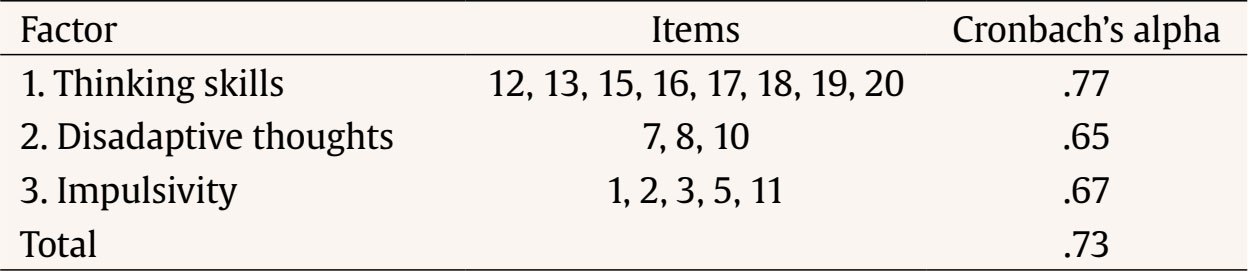 The three factors were structured with their corresponding items, resulting in an acceptable total Cronbach’s alpha and ensuring the reliability of the instrument. This structuring also facilitated the examination of correlations between factors (Table 2). Ultimately, 16 out of the initial 20 proposed items were retained in the final version of the questionnaire. Table 2 Correlation between Factors  To assess the convergent validity of the CHC, the correlation coefficient obtained from the Plutchik Impulsivity scale (r = .354) was examined. Furthermore, the correlation coefficient of the Beck Depression Inventory was analysed to observe the discriminant validity (r = .055). Although most authors consider reliability coefficients between .60 and .70 to be questionable, the use of low alpha values above .60 can be justified in short scales with fewer than 10 items, as noted in previous studies. This reasoning is particularly relevant when analysing the reliability and validity results obtained in this research (Table 3). Table 3 Convergent and Discriminant Validity  p ≤ .01 **. Interpretation of Results Impulsivity Scale - Low correlations overall. Coefficients range from r = -.300 (a weak negative relationship with Factor III) to r = .102. - No statistically significant correlations (p ≤ .05) were found, indicating limited convergent and discriminant validity with the given factors. Reliability Analysis Alpha Coefficients. The reliability coefficients of α = .71 (Sample 1) and α = .75 (Sample 2) are acceptable, particularly given the brevity of the scales (fewer than 10 items). Reliability coefficients between .60 and .70 can still be justified under these conditions. Model Fit and Invariance Confirmatory Fit Indices: sample 1: χ2 = 325.1, df = 202, GFI = .85, CFI = .869, RMSEA = .070; sample 2: χ2 = 345, df = 218, GFI = .85, CFI = .88, RMSEA = .045; both samples demonstrate acceptable model fit, with RMSEA values below the threshold of .08 indicating good fit, though the GFI and CFI values fall slightly short of the ideal .90 cutoff. Invariance Analysis. No significant differences (p > .05) were observed between groups, indicating model consistency across samples. Table 4 Indices of Adjustment of the Model  Summary of Relevance The results highlight acceptable reliability and modest convergent validity for the Impulsivity scale, while the Depression scale shows limited discriminant validity. Despite minor deviations in model fit indices, overall adequacy underscores the robustness of the analytical framework. Overall Adjustment For the dimensionality assessment, a three-factor structure model of the CFA was obtained, running the maximum likelihood method. The hypothesis of the model confirmed a good fit. Fit indices for Sample 1 and Sample 2, including χ2, degrees of freedom (df), GFI, CFI, and RMSEA values (Table 4). In confirmatory factor analysis (Figure 1), the standardized factorial loadings of the scale exhibited satisfactory values for the adjusted solution. This suggests that the scale factors effectively fit the data in their correlations, thereby supporting the validity of a coherent dimension. It indicates that the factors within the scale align appropriately with the observed data, thereby reinforcing the reliability and validity of the measurement model. Model fit criteria were assessed using the indices recommended by Holgado-Tello et al. (2018), which suggests using these indices to evaluate structural model validity. Figure 1 Confirmatory Factor Analysis (adjusted solution). 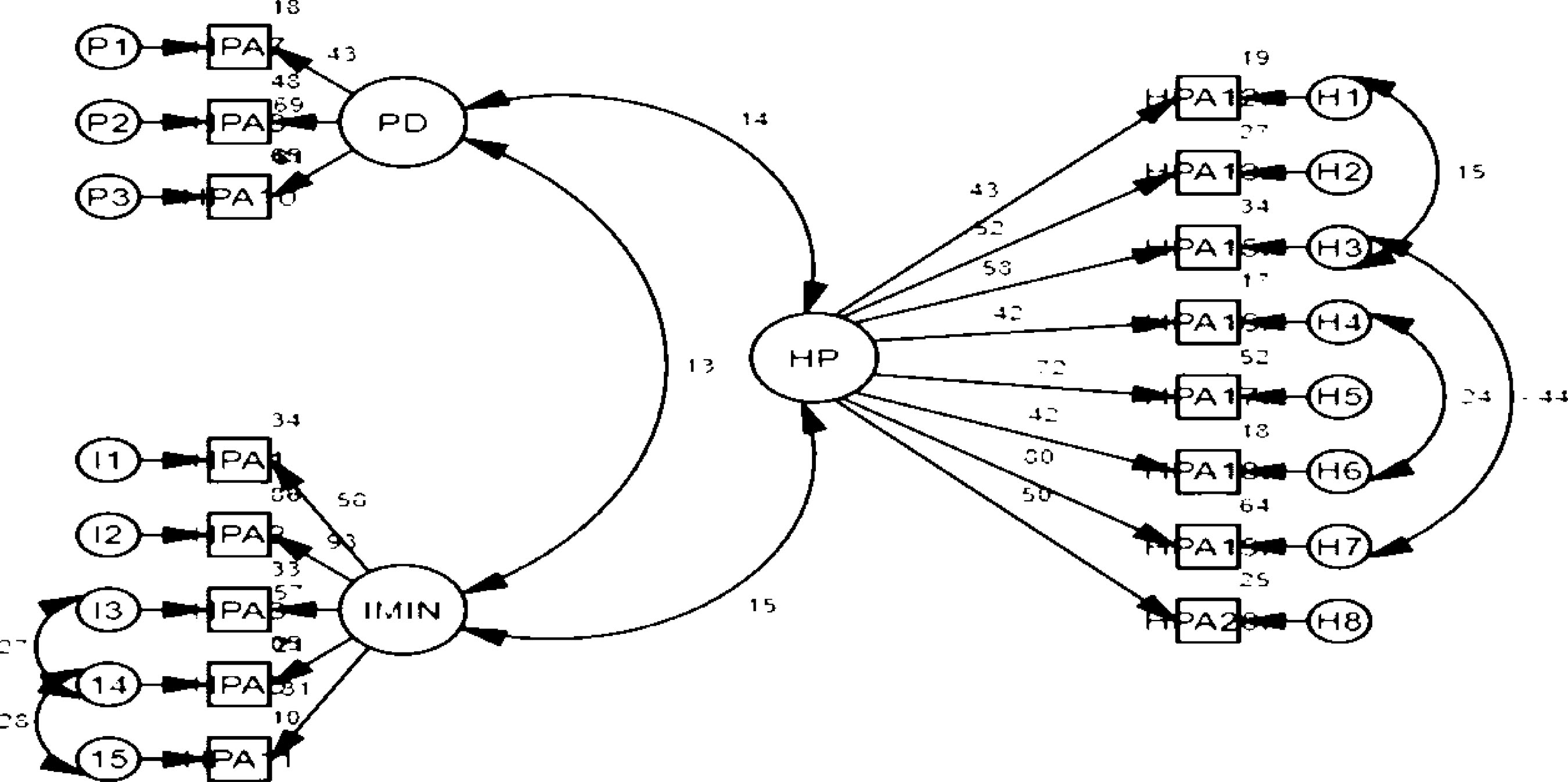 The adjustment of the scale through confirmatory factor analysis (CFA) of the items derived from the exploratory factor analysis (EFA), along with the assessment of convergent and discriminant validity, reflects a scale of reliable thinking skills. The indices and coefficients obtained in the study confirm the efficacy of the model in functioning with adolescent samples. This represents an initial statistical analysis within a school population. It is crucial to conduct further sampling with groups of adolescent offenders undergoing confinement or rehabilitation in outpatient settings. Nevertheless, given that the Adolescent Thinking Skills Scale was designed and structured to be used in various studies involving the evaluation of thinking skills, the ATS instrument holds potential for application in other related areas as deemed appropriate by researchers. As a suggestion for future studies in this area, it is recommended to address the main limitations of the present study by conducting a multi-sample confirmatory factor analysis (CFA) using representative samples at the national level, thereby comparing the model’s fit across different populations. Additionally, it is advisable to conduct an analysis of the items with weaker statistical properties and evaluate the content and psychometric properties of the items, without dismissing the possibility of adapting the instrument. Drawing conclusions from the references and their abstracts requires considering the context of the studies and how they relate to the results obtained in our research. Below are the conclusions based on comparing our findings with those of the mentioned studies: Our research confirms the validity of the thinking skills scale in assessing juvenile offenders, in line with the findings of Taylor et al. (2019) and Davis et al., (2020). Previous studies have shown that the scale effectively measures cognitive abilities in this population, which is consistent with our results. A review of similar articles in English that assess delinquent behavior using cognitive skills questionnaires reveals several key findings and areas of consensus within the literature:
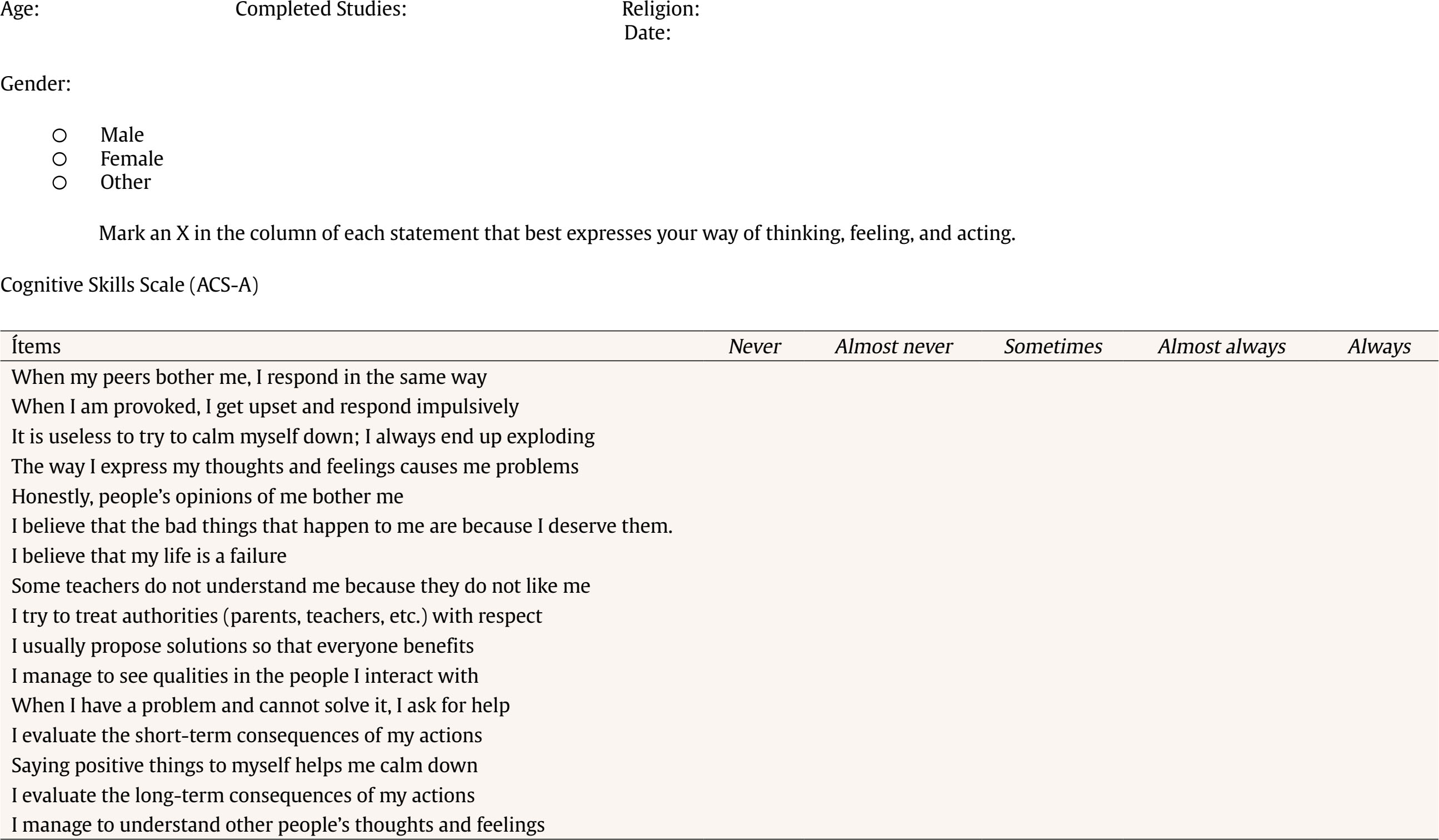
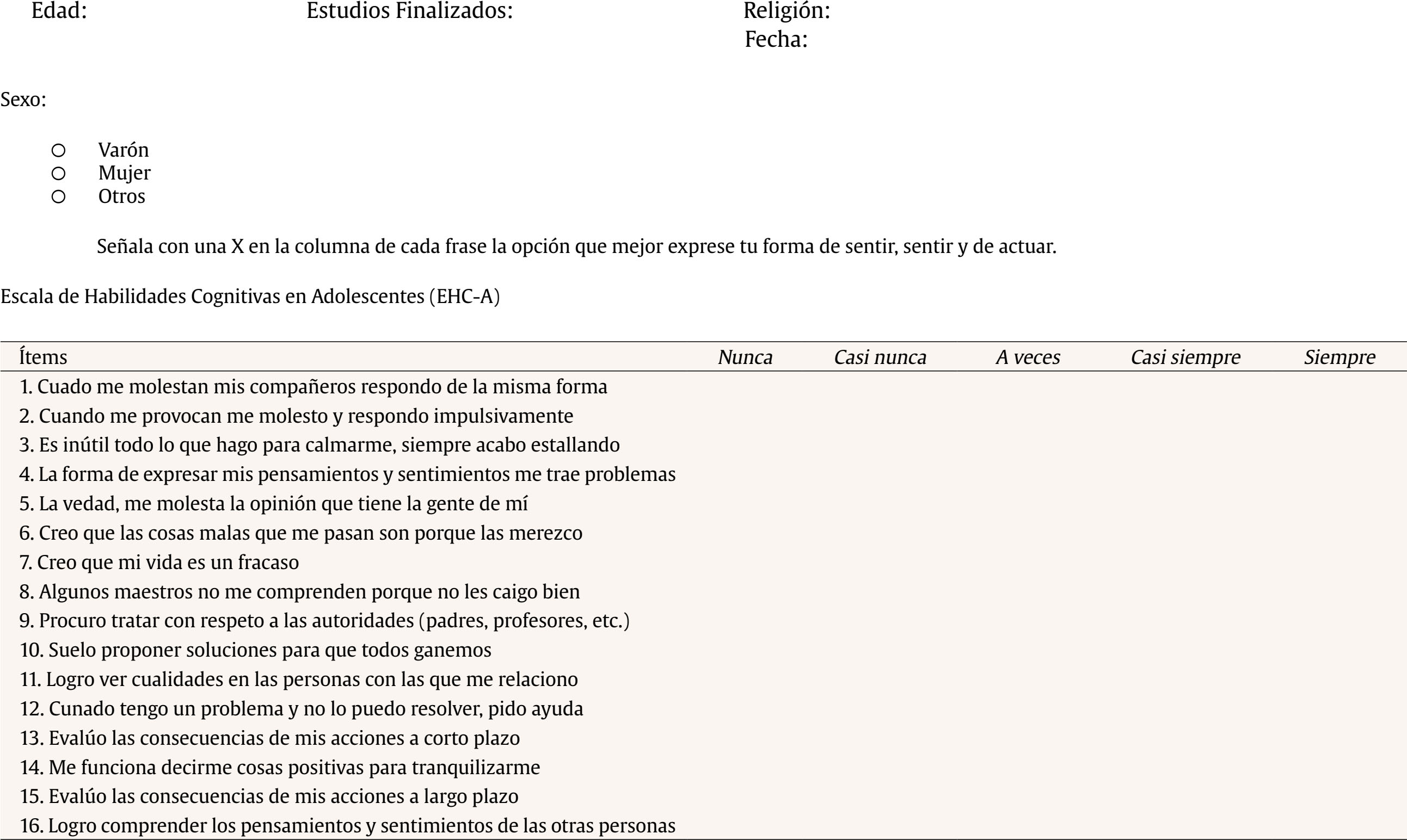
Considering future research, while existing literature offers valuable insights into the relationship between cognitive skills and delinquent behavior, further studies are needed to explore the underlying mechanisms and pathways connecting these factors. Additionally, longitudinal research tracking the development of cognitive skills and delinquent trajectories over time can provide valuable data for devising targeted intervention strategies. In conclusion, the literature on cognitive skills questionnaires and delinquent behavior underscores the importance of evaluating cognitive deficits in understanding and addressing juvenile delinquency. Future research should continue to investigate the efficacy of intervention programs and explore innovative approaches for preventing and reducing delinquent behavior among vulnerable youth. Conclusions on the Reliability of the Instrument The study by Harris et al., (2021) corroborates the reliability of the cognitive skills assessment tool for juvenile offenders, which aligns with our findings. The consistency in results between our research and the study by Harris et al. (2021) provides further support for the reliability of the instrument in assessing thinking skills in this population. The psychometric validation of the Adolescent Thinking Skills (CHC) questionnaire conducted in our research demonstrated a solid structure with three factors identified through exploratory factor analysis. The Cronbach’s alpha reliability test of .73 indicates an acceptable level of internal consistency. Additionally, the model fit indices, such as a GFI of .94, a CFI of .95, and an RMSEA of .04, support the adequacy of the proposed model. The Kaiser-Meyer-Olkin measure of .72 and the significance of Bartlett’s test with a chi-square value of 947.543 (df = 190, p < .000) reinforce the validity of the measured constructs, explaining 69% of the total variance. However, considering future research, although our results are in line with previous studies, it is crucial to conduct a multi-sample study to validate the instrument in different contexts and populations. This will allow for greater generalization of the results and robust confirmation of the instrument’s validity under various conditions. Additionally, a more comprehensive analysis of the less robust items of the scale is suggested to identify possible improvements and thoroughly evaluate the psychometric and content properties of the questionnaire. This approach will not only enhance the precision of the instrument but also contribute to its usefulness in identifying prevalent cognitive conditions and issues among adolescents. This will facilitate the development of more effective interventions and psychoeducational treatments to address behavior problems related to violence in this population. The confirmation of the ATS questionnaire’s efficacy underscores its utility in identifying cognitive scenarios in adolescents, providing a valuable tool for professionals in the fields of psychology and education. Conflict of Interest The authors of this article declare no conflict of interest. Cite this article as: Alba Robles, J. L., Medrano, J. G., Montañéz Alvarado, P., López Latorre, M. J., & Cuervo García, A. L. (2026). Development and validation of a cognitive skills questionnaire for adolescent offenders: The cognitive skills questionnaire for youth (CSQ-Y). Anuario de Psicología Jurídica, 36, Article e260469, 1-9. https://doi.org/10.5093/apj2026a2 References |
Cite this article as: Robles, J. L., Medrano, J. G., Alvarado, P. M., Latorre, M. J. L., & García, A. L. C. (2026). Development and Validation of a Cognitive Skills Questionnaire for Adolescent Offenders: The Cognitive Skills Questionnaire for Youth (CSQ-Y). Anuario de Psicología Jurídica, 36, Article e260469. https://doi.org/10.5093/apj2026a2
Correspondence: j.luis.alba@uv.es. (J. L. Alba Robles).
Copyright © 2026. Colegio Oficial de la Psicología de Madrid


Herramientas:
 PDF
PDF e-PUB
e-PUB CrossRef
 JATS
JATS Imprimir
 Enviar
ALERTA POR E-MAIL
La Revista de Anuario de Psicología Jurídica está distribuida bajo una licencia de Creative Commons Reconocimiento-NoComercial-SinObra Derivada 4.0 Internacional.com