Profiles of the Dark Triad in Economic vs. Ordinary Offenders: A Comparative Study of Power, Morality, and Social Dominance
[Los perfiles de la tríada oscura en los delincuentes económicos frente a los comunes: un estudio comparativo de poder, moralidad y dominio social]
Lucía Halty1, Paula Visedo1, Andrea Giménez-Salinas1, Javier Gómez-Lanz1, & Elena García-Bravo2
1Universidad Pontificia de Comillas, Spain; 2Ministerio del Interior, Spain
https://doi.org/10.5093/apj2026a4
Received 5 March 2025, Accepted 4 September 2025
Abstract
This study examines Dark Triad personality profiles in economic versus common criminals, assessing their links to power sensation, moral disengagement, and social dominance. It involves 682 inmates in a Spanish prison, divided into 350 economic and 332 common criminals. Participants answered questionnaires on Dark Triad traits (machiavellianism, narcissism, psychopathy), power types (hard, soft), moral disengagement, and social dominance orientation. Findings reveal common criminals scored higher in machiavellianism, narcissism, psychopathy, and moral disengagement but lower in soft power compared to economic criminals. Regression analysis identified psychopathy, moral disengagement, and soft power as predictors of criminal type. Economic criminals showed lower psychopathy and moral disengagement but higher soft power scores. The results indicate distinct psychological profiles for each group, suggesting tailored rehabilitation approaches: ethical reinforcement for economic criminals and empathy development for common criminals. This study contributes to understanding criminal behavior, emphasizing the need for differentiated criminal justice and rehabilitation strategies based on specific personality traits.
Resumen
Este estudio examina los perfiles de personalidad de la “tríada oscura” en delincuentes económicos frente a delincuentes comunes, evaluando sus vínculos con la sensación de poder, la desvinculación moral y el dominio social. Participaron 682 reclusos de prisiones españolas, divididos en 350 delincuentes económicos y 332 comunes. Los participantes respondieron a cuestionarios sobre rasgos de la tríada oscura (maquiavelismo, narcisismo, psicopatía), tipos de poder (duro, blando), desvinculación moral y orientación al dominio social. Los resultados revelan que los delincuentes comunes obtuvieron puntuaciones más altas en maquiavelismo, narcisismo, psicopatía y desvinculación moral, pero más bajas en poder blando en comparación con los delincuentes económicos. El análisis de regresión identificó la psicopatía, la falta de compromiso moral y el poder blando como predictores del tipo de delincuencia. Los delincuentes económicos mostraron puntuaciones más bajas en psicopatía y falta de compromiso moral, pero más altas en poder blando. Los resultados indican perfiles psicológicos distintos para cada grupo, lo que indica enfoques de rehabilitación adaptados: el refuerzo ético para los delincuentes económicos y desarrollo de la empatía para los comunes. El estudio contribuye a la comprensión del comportamiento delictivo, subrayando la necesidad de estrategias diferenciadas de justicia penal y rehabilitación basadas en rasgos específicos de personalidad.
Palabras clave
Tríada oscura, Delincuente económico, Poder, Moralidad, Dominio socialKeywords
Dark Triad, Economic offender, Power, Morality, Social dominanceCite this article as: Halty, L., Visedo, P., Giménez-Salinas, A., Gómez-Lanz, J., & García-Bravo, E. (2026). Profiles of the Dark Triad in Economic vs. Ordinary Offenders: A Comparative Study of Power, Morality, and Social Dominance. Anuario de Psicología Jurídica, 36, Article e260471. https://doi.org/10.5093/apj2026a4
Correspondence: lhalty@comillas.edu (L. Halty).Dark Triad, General Crime, and White-collar Crime The dark triad of personality is composed of three core traits: machiavellianism, subclinical narcissism and subclinical psychopathy (Paulhus & Williams, 2002). The characteristics of machiavellianism include manipulation to achieve one’s own goals, a lack of morality, an absence of empathy, and cynicism (D. N. Jones & de Roos, 2017). Narcissistic personality traits involve, on the other hand, feelings of entitlement, superiority, grandiosity, and dominance (Morf & Rhodewalt, 2001). Finally, psychopathic traits involve callousness, a lack of empathy, and impulsivity (Paulhus, 2014). The main difference between subclinical and clinical traits is the degree of severity; people at the lower end of the spectrum present fewer psychological symptoms, while people at the higher end present more psychological symptoms (Paulhus & Williams, 2002). Although the personality traits associated with the dark triad are not necessarily pathological (i.e., subclinical) (Paulhus & Williams, 2002), they increase the predisposition towards cognitive distortions, antisocial beliefs, utilitarian relationships, lack of perspective, lack of empathy and insensitivity (Dirslane & Patrick, 2017). In numerous researches, the dark triad personality has been related to a wide variety of criminal behaviors, such as stalking (Kanemasa et al., 2024; Stefanska et al., 2022), harassment (Longpré et al., 2022), bullying (Buckels et al., 2018), sexually deviant behavior (Snow & Longpré, 2022), and violent crimes against people, such as injury and homicide (Edwards et al., 2017). The dark triad is, therefore, a good predictor of general or common delinquency (Alsheikh, 2020; Wright et al., 2017). Although the studies establish significant differences in the association between each of the elements that make up the dark triad and the criminal typologies mentioned, low self-control is a trait connected with most crimes, regardless of the specific personality profile associated with it (Wright et al., 2017). In this regard, individuals with high scores in narcissism show significant associations with reckless driving, substance abuse (Azizli et al., 2016), and violent behaviors, especially if they also have low self-control scores (Larson et al., 2014). On the other hand, machiavellianism correlates with minor forms of delinquency, such as bullying and intimidation (Azizli et al., 2016), which fits with their manipulative and cynical nature and the self-justification of their behavior through rationalizations linked to convenience and their ultimate goals (D. N. Jones, 2016). Finally, correlation and regression analyses indicate that low empathy and psychopathy are more strongly associated and better predictors of psychological abuse and physical/sexual abuse (Carton & Egan, 2017); subjects with high degrees of psychopathy have a certain tendency to engage in criminal activities related to theft, murder, and rape, offending, and abusing others with no sense of guilt or remorse (Hirschi, 2017). In contrast to the abundance of research on the connection between the dark triad and general crime, its relationship with white-collar crimes has been less studied. However, the presence of these traits in individuals holding executive positions in companies has been examined (Jonason et al., 2012a). White-collar crimes (WCC) can be defined as behaviors that violate the fiduciary responsibility of public trust, committed by individuals in their occupational activity who have a high socioeconomic status (Helmakamp et al., 1996). This is a criminological context in which it is possible to theorize that the traits that make up the dark triad of the personality could be conducive to the commission of criminal offenses, since it is not in vain that the dark triad has been shown to be a predictor of financial misbehavior (D. N. Jones, 2014). Thus, machiavellianism could facilitate the manipulation of the environment through lies or humiliation to generate favorable or economically profitable opportunities for deception (Carré et al., 2020; Christie & Geis, 2013). Its characteristic features, such as the pursuit of self-interest and manipulation of others for personal gain, could predispose subjects with machiavellianism to manipulative and unethical behaviors to achieve selfish goals (Christie & Geis, 2013). Narcissism, on the other hand, could facilitate the alteration of the perception of guilt through self-conviction of success in committing fraud or deception (Harrison et al., 2018) and drive the search for gratification through success and power. Also, psychopathic traits could facilitate the use of manipulation for professional and personal gain (Hare, 1993) and, in combination with narcissistic traits, could lead to risk-taking behaviours without considering the consequences. The possibility that these characteristics could increase susceptibility to engage in WCC suggests that the dark triad may be a valuable predictor of predisposition to commit such crimes (Amos et al., 2024). However, as indicated above, very few studies on the dark triad have analysed its relationship with white-collar crime. Of particular interest is the one recently developed by Amos et al. (2024), who concluded, after analyzing a sample of 157 subjects, that there is a significant relationship between psychopathy (disinhibition and meanness), narcissism and favorable attitudes towards WCCs. On the other hand, Karandikar and Jones (2023) analyzed the relationship between the dimensions of the dark triad with different WCC subtypologies, noting that they are associated differently and with different intensities with the various WCC modalities. Thus, machiavellianism is more directly related to more complex and strategic behaviors involving less risk and more reward. In contrast, psychopathy would be more associated with crimes involving more impulsive and immediate gratification behaviors. In any case, the scarcity of studies means that the relationship between the dark triad and WCCs is more intuitive than empirical and is largely based on previous studies related to its three dimensions (Karandikar & Jones, 2023). It is true that research on the relationship between each dimension of the dark triad and WCCs has been more extensive, particularly in relation to narcissism and psychopathy (Perri, 2011). Thus, in reference to narcissism, some studies have compared samples of white-collar criminals with business people or professionals who occupy high positions in companies and have concluded that narcissism is a predictor of these crimes, together with hedonism and low self-control (Blickle et al., 2006). Individuals who score high in narcissism exhibit less inhibition in committing fraud because they lack fear of possible arrest or punishment (Bucy, 2008) and because it does not create a moral problem for them (Barnard, 2008). On the other hand, Rijsenbilt (2011) showed that CEOs with high levels of narcissism committed more WCC to cover their appearances, maintain their status, and silence criticism or contrary opinions. In reference to psychopathy, although most studies that have evaluated its relationship with crime have analyzed common or violent criminal typologies (Carton & Egan, 2017; Wright et al., 2017), its presence in the business and professional environment has also been related to dysfunctional managers and corporate psychopaths (Stevens et al., 2012). These authors consider that many of the characteristics of successful psychopaths are mistaken for characteristics valued for career advancement, and thus, they tend to get the most representative positions in companies. Additionally, studies such as Lingnau et al. (2017) analyze the relationship between psychopathic traits and the acceptance of economic crime and conclude that certain psychopathic traits (cold-heartedness, machiavellian egocentricity, and rebellious nonconformity) are predictors of accounting fraud and other WCCs. Psychopathy has been verified as a significant predictor of criminal cognition and beliefs that support criminal style (Perri, 2013), but it has also been associated with a propensity for occupational criminal behaviors and has been evidenced as a risk factor explaining economic crime (Alalehto & Azarian, 2018; Perri & Brody, 2012). Compared to non-criminal psychopaths, psychopathic economic offenders show characteristics such as egocentrism, pathological lying, personal charm, narcissism, and condescension towards others (Poulin, 2011; Ragatz et al., 2012). Likewise, psychopathic economic offenders, although they do not act impulsively, do tend to exploit others and reflect egocentrism, manipulation, exploitation, and a machiavellian attitude when pursuing their goals even though the means they use to do so are lawful (Ray, 2007). Machiavellianism is the least studied dimension individually in its relationship with economic crime, although it has been related to dishonest behavior—as some authors conclude that people with high machiavellianism tend to hide information (Pan et al., 2016)—and, on occasion, machiavellianism has also been shown to overlap with psychopathy and narcissism, as we have reflected in the studies discussed above, jointly reflecting manipulative and strategic thinking (Persson, 2019). In the study of the dark triad of personality, several authors have sought to relate the most significant traits of these profiles with various concepts that also appear associated in the literature with socially aversive and criminal behaviors (Hodson et al. 2009; Sijtsema et al., 2019). In the particular case of this study, we sought to analyze the relationship of these three personality profiles with the general sense of power, the propensity for moral disengagement, and the orientation towards social dominance. The general sense of power refers to individuals’ self-perception of their ability to influence others (Willis et al., 2016). Therefore, it is a concept that manifests itself in interaction and that, therefore, can only be understood in relation to another individual or group of individuals. All three profiles of the dark triad personality have a certain tendency to seek, through various social tactics, power and achievement for their own benefit (Jonason et al., 2012b). However, to date, no articles have been found that connect the general sense of power and the dark triad personality. The propensity for moral disengagement scale (PMDS; Moore, 2012) is a unidimensional scale that assesses moral disengagement, a concept already introduced by Albert Bandura in his cognitive-social learning theory (Bandura, 1999). It refers to the voluntary inactivation of the self-regulatory processes that set in motion the mechanisms that trigger the transgression of social norms, immoral or unethical behaviors, and the disinhibition of aggressive impulses (Bandura, 2002). Sijtsema et al., 2019 found a positive relationship between machiavellian personality, moral disengagement mechanisms, and antisocial behavior, without specifying which of these three is the most employed within these profiles. Individuals with narcissistic traits may also be called to transgress social norms, since, as indicated, they seek to put their personal interest before that of others (Egan et al., 2015). These individuals tend to use the mechanism of dehumanization (Locke, 2009), which involves “stripping” people of the qualities that make them human, also presenting a significant lack of moral commitment (B. D. Jones et al., 2017). On the other hand, a recent meta-analysis by Marshall et al. (2018) argues that people with psychopathic traits have difficulties distinguishing between right and wrong. Finally, social dominance orientation (SDO) alludes to the socio-ideological attitude by which an individual approves or disapproves of a hierarchical society and supports social inequalities (Ho et al., 2015). The construct comprises the set of attitudes and values related to competition, such as dominance, power, and superiority, rooted in a perception of the world as a “competitive jungle” (Duckitt, 2001). This is, therefore, a relatively stable attitude predicted in certain biological personality traits, such as those present in the dark triad of personality (Lee et al., 2013) and given that people with high scores on the SDO prefer a society in which there are groups with greater status and power than others, different authors suggest that it is likely that at the individual level they also present a strong desire for power over others (Lee et al., 2013). Research studies by Hodson et al. (2009) suggest that individuals with high scores on some of the three components of the triad tend to favor and support hierarchy among groups, but not necessarily conformity within them. The present study has two fundamental objectives. Firstly, we aim to investigate the dark triad personality profile in a sample of economic criminals versus a sample of common criminals. Secondly, we aim to examine the relationship between the dark triad of personality and the variables of general sense of power, moral disengagement, and social dominance in both samples. The relevance of this research is based on three significant arguments. Firstly, the lack of studies on the relationship between dark triad and white-collar crimes; there are only two studies that directly analyze this relationship and one of them analyzes its relationship with subtypologies within economic crime (Karandikar & Jones, 2023) and the other one with beliefs towards economic crime (Amos et al., 2024), in the general population not convicted of a crime. Secondly, there are no studies comparing samples of common and economic offenders. Existing analyses have primarily compared economic offenders with business people. Thirdly, this study will be the first to be conducted in Spain. Sample The total sample consists of 682 persons serving a sentence in a Spanish prison, of whom 350 are classified as economic offenders and 332 as common offenders. The group of common offenders has a mean age of 43.4 years (SD = 9.37; min. 18, max. 76), with 80.7% being men and 19.3% women. Regarding nationality, 82.6% are Spanish. Concerning the typology of crimes, the most frequently convicted offense is property crimes (40%), followed by crimes against public health (28%), gender-based violence (8%), crimes against life and public health (8%), sexual offenses (6%), traffic offenses (4%), breaches of sentence (3%), others (2%), and unspecified (1%). The group of economic offenders has a mean age of 51.31 years (SD = 11.57; min. 24, max. 78), with 89.4% being men and 10.6% women. Regarding nationality, 91.1% are Spanish. Concerning the typology of crimes, the primary offense for which economic offenders are convicted is fraud and falsification, including scams and misappropriation (73%), followed by offenses against the Public Treasury and Social Security (8%), offenses against Public Administration (7%), punishable insolvencies (3%), money laundering and receiving stolen goods (3%), and, to a much lesser extent, unspecified economic offenses (3%). Procedure The participants’ data were collected from various penitentiary and social reintegration centers throughout the national territory, under the direction and coordination of the General Secretariat of Penitentiary Institutions. The label of common offender was assigned to participants who presented any of the following types of offenses: property crimes, crimes against public health, gender-based violence, sexual offenses, and crimes against life and health. Economic offenders were classified as such if they presented any of the following types of offenses: fraud and falsification, including scams and misappropriation; offenses against the Public Treasury and Social Security, encompassing tax evasion and subsidy fraud; receiving stolen goods and money laundering; punishable insolvencies, including bankruptcy fraud and asset concealment; economic crimes against Public Administration, such as bribery, influence peddling, and embezzlement. Both groups were selected based on inclusion criteria, such as being over 30 years old, serving a sentence, not being in pretrial detention, and having a basic level of education enabling them to understand the questionnaire provided. The questionnaires were administered by project researchers to selected inmates on a voluntary basis and preceded by informed consent and a data protection protocol, which was signed by each inmate voluntarily participating in the research. Additionally, the project received favorable ethical approval from an ethics committee before commencing the research. Instruments Short Dark Triad (SD3; D. N. Jones & Paulhus, 2014) The SD3 (adapted into Spanish by Nohales, 2015) is a 27-item instrument divided into three subscales to measure each of the traits of the dark triad. In this case, each subscale contains nine items that measure different facets of each construct using a 5-point Likert scale response format ranging from 1 (strongly disagree) to 5 (strongly agree). In our study, the reliability of the subclinical psychopathy, subclinical narcissism, and machiavellianism scales was alpha = .672, .595, and .728, respectively. Generalized Sense of Power Scale (GSPS; Anderson et al., 2012) The GSPS scale (adapted into Spanish by Willis et al. 2016) measures people’s perception of their ability to influence others. It consists of 8 items with a 7-point Likert scale response format ranging from 1 (strongly disagree) to 7 (strongly agree). The reliability data for both subscales are alpha = .725 for hard power and alpha = .747 for soft power. Propensity to Morally Disengage Scale (PMDS; Moore, 2012) The PMDS scale evaluates the level of moral disengagement experienced by the person. It consists of 24 items with a 7-point Likert scale response format ranging from 1 (strongly disagree) to 7 (strongly agree). The alpha of the scale in our study is .749. Social Dominance Orientation Scale (SDOS; Pratto et al., 1994) The social dominance scale (adapted into Spanish by Montes-Berges & Silván-Ferrero, 2003) was developed to measure individuals’ predisposition towards maintaining hierarchical and non-egalitarian intergroup relationships. It consists of 16 items with a 7-point Likert scale response format ranging from 1 (strongly disagree) to 7 (strongly agree). The alpha of the scale in our study is .773. Data Analysis Firstly, descriptive analyses were conducted to describe the sample. Secondly, to compare whether there are differences between the group of economic offenders and common offenders in all study variables, considering the gender variable, a factorial ANOVA with two independent variables, “group” and “gender”, was performed. Logistic regression analyses were conducted to determine the ability of psychological variables to predict membership in the group of economic offenders versus common offenders. Lastly, bivariate correlations were conducted to examine the relationship between the dark triad and social dominance, power, and morality variables. All analyses were conducted using the IBM SPSS statistical package (version 28, 2021). The following are the descriptive data of all dependent variables of the study (dark triad of personality, generalized sense of power, propensity to morally disengage, and social dominance orientation) in each comparison group (common criminal vs. economic) and by gender (male vs. female) (Table 1). Table 1 Descriptive Data of Dependent Variables according to Group Membership and Gender 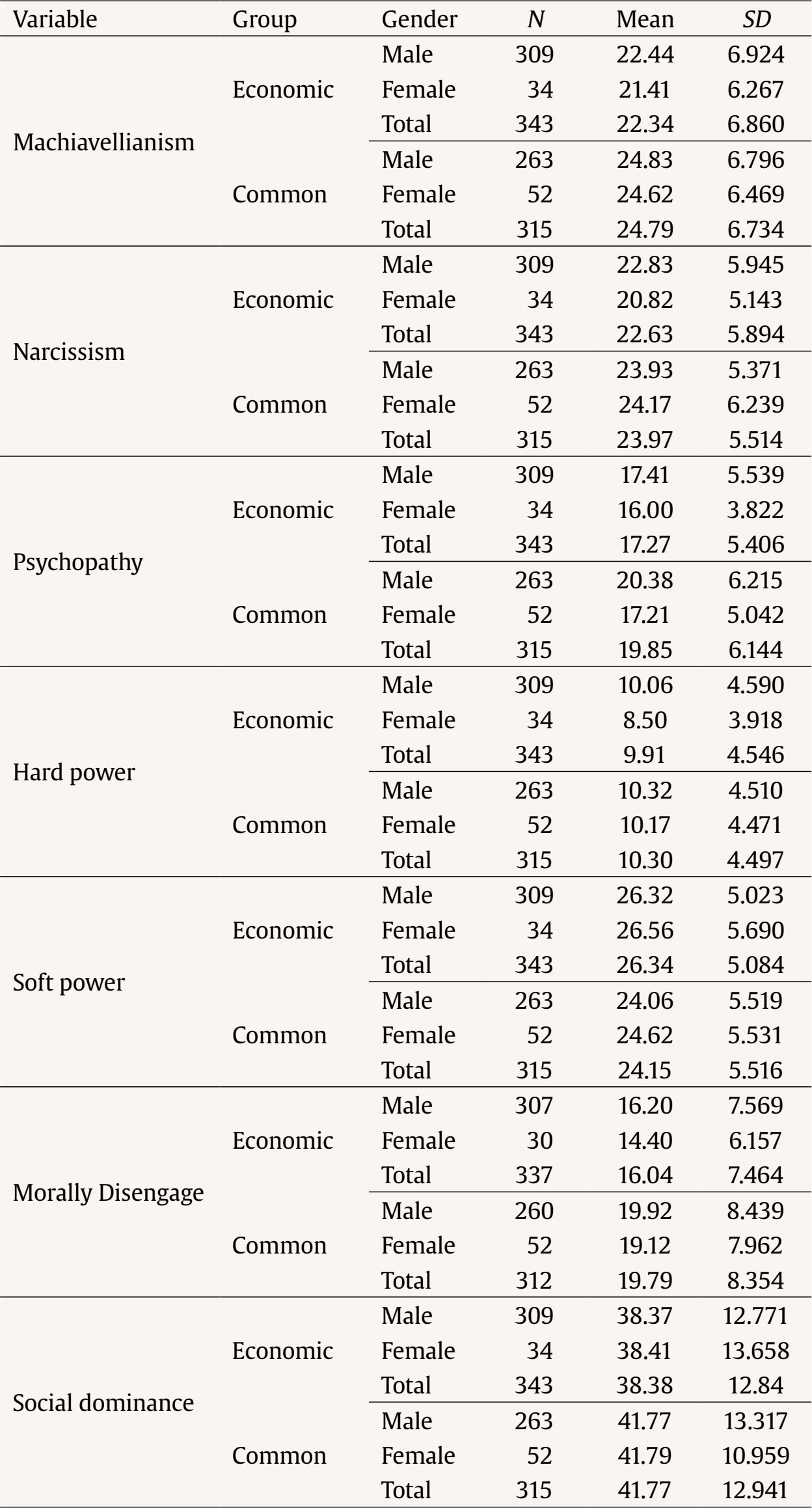 Table 2 shows the statistical data of the comparison between variables. As can be observed, there are no statistically significant differences in the gender variable, except for the intersection with the psychopathy variable, where men have a significantly higher score than women. Despite there being an individual gender effect on the psychopathy variable, this does not translate into significant differences in interaction with the group variable. In none of the studied variables is there an interaction effect between the group variable and gender. What does appear are statistically significant differences between economic criminals and common criminals in the three elements of the triad, in soft power, and in moral disengagement. In the variables where a group effect does appear, it is observed (Table 1) that common criminals have significantly higher scores than economic criminals in the variables of machiavellianism, narcissism, psychopathy, and moral disengagement; however, they present significantly lower scores in the soft power variable (Figure 1). Table 2 Statistical data and Effect Size of Dependent Variables according to Group Membership and Gender 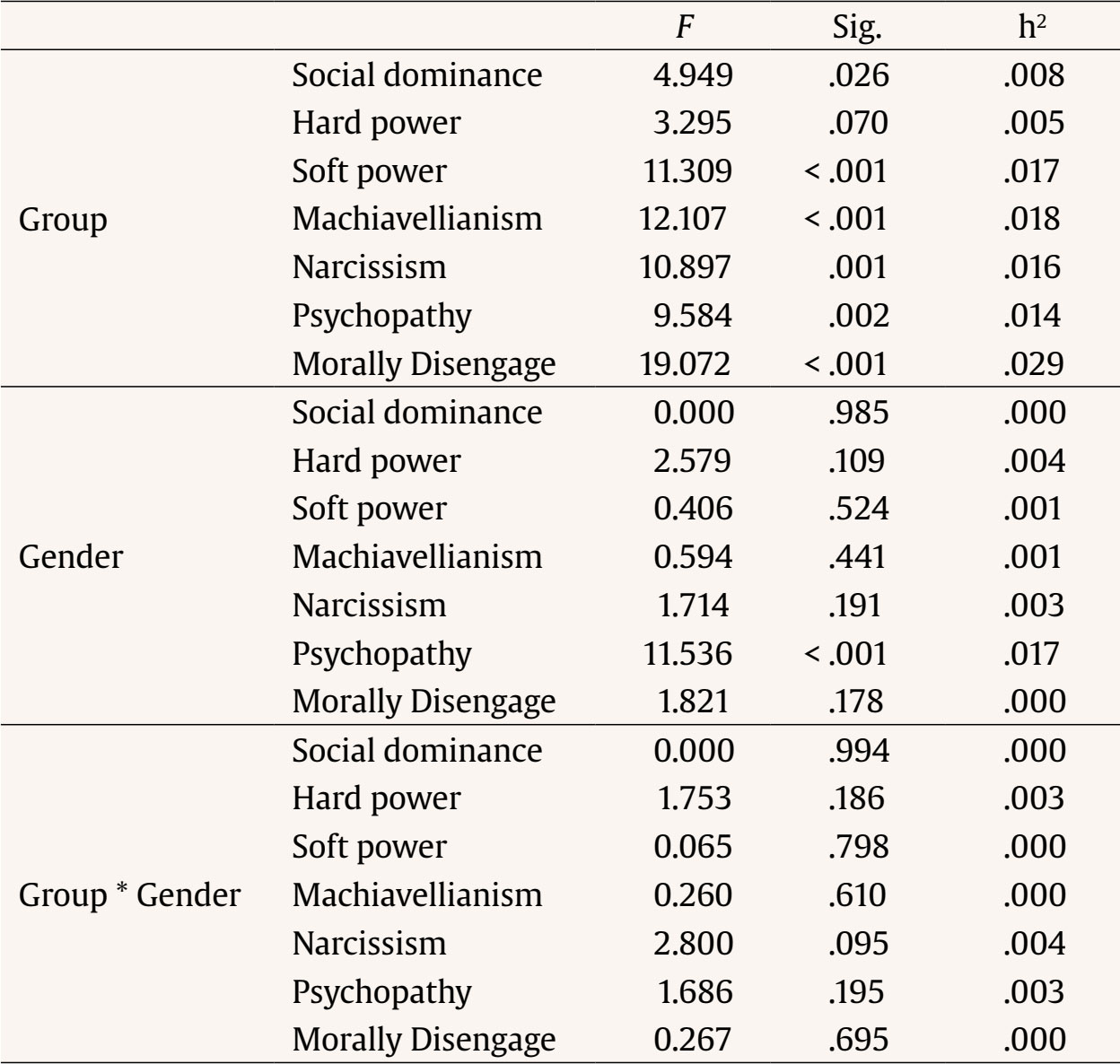 Figure 1 Means of Each Study Variable between the Group of Common Criminals and Economic Criminals. 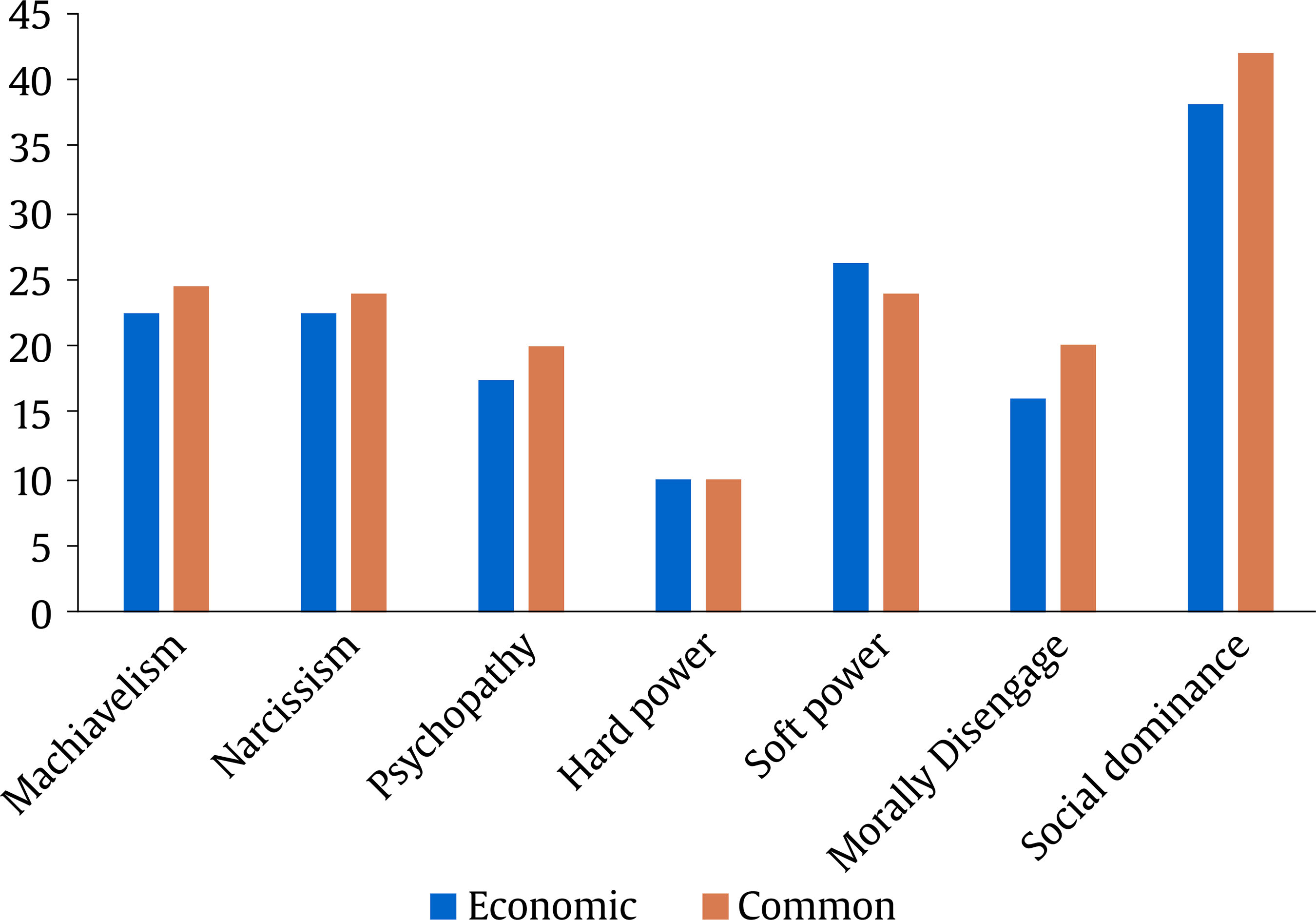 Table 3 presents the results of the logistic regression analysis. As can be seen, of all the variables introduced into the regression equation only the subclinical psychopathy variable, the soft power variable, and the moral disengagement variable were significant (R2 Nagelkerke = .135); therefore, these variables are the ones that make it possible to predict membership in one criminal group or another. These results indicate that economic criminals are characterized by a profile of lower scores in subclinical psychopathy and moral disengagement, while they exhibit higher scores in the soft power variable compared to common criminals. Table 3 Results of the Logistic Regression Analysis 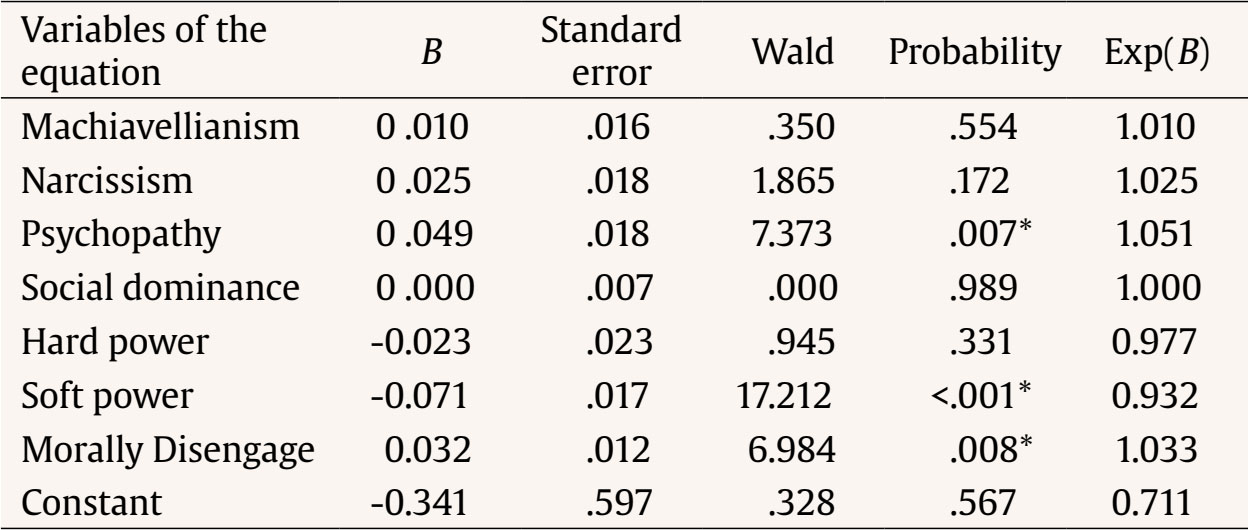 *p < .05. Finally, regardless of group membership, correlation analyses were conducted to study the relationship between the elements of the dark triad and variables of social dominance, power, and morality. The results in Table 4 indicate that moral disengagement is significantly related to all elements of the triad but is more strongly associated with machiavellianism and psychopathy than with narcissism. The variable of social dominance orientation is significantly related to all three elements of the triad, but it is more strongly correlated with psychopathy than with machiavellianism and narcissism. Lastly, regarding the variable of generalized sense of power, hard power is significantly related to all three elements of the triad, with the highest correlation being with narcissism and soft power is only significantly related to the subclinical narcissism variable. Table 4 Bivariate Correlations between the Dark Triad, Social Dominance, Power, and Morality 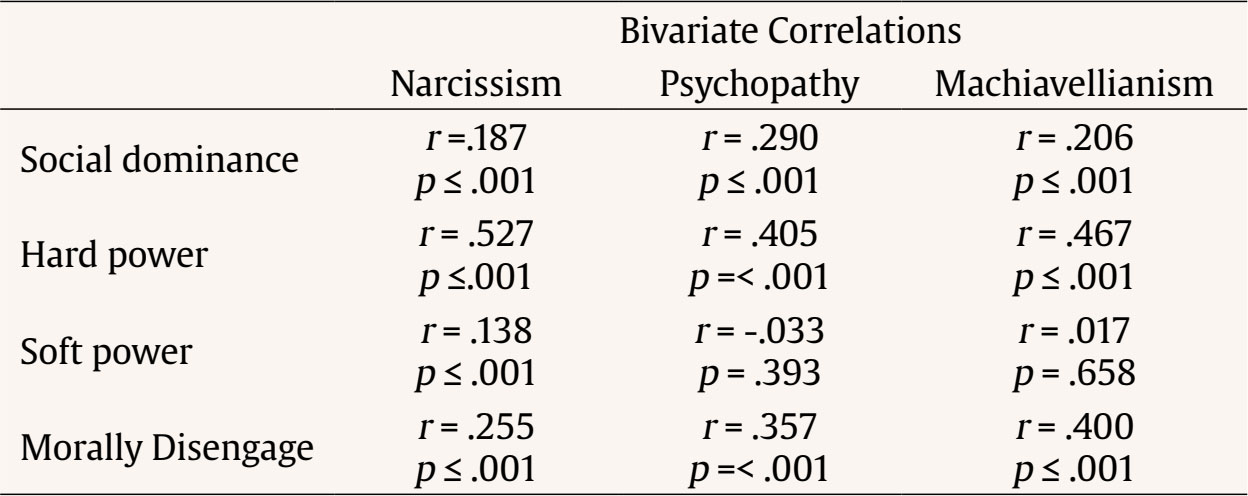 As a complementary exploratory analysis, we examined whether age or educational level could be modulating the observed relationships. Correlation analyses between age and the main variables (dark triad, power, morality, dominance) did not reveal any significant associations. Similarly, comparisons between participants with different educational levels did not reveal any statistically relevant differences in any of the key variables. These results suggest that the effects described in this study remain consistent regardless of the age or academic background of the individuals. This study aimed to analyze the dark triad personality profiles among two types of offenders: economic versus common. Additionally, the relationship between elements of the dark triad and variables such as general sense of power, lack of moral commitment, and social dominance orientation among economic and common offenders was examined among both groups. The capacity of psychological variables to predict membership in the group of economic offenders versus common offenders was also determined. The results showed that common delinquents have significantly higher scores than economic delinquents in the machiavellianism, narcissism, psychopathy, and moral detachment variables, while they have significantly lower scores in the soft power variable. Regression analyses showed that the variables with the most significant power were subclinical psychopathy, moral detachment and the type of soft power. Economic offenders are characterized by a profile of lower scores on subclinical psychopathy and moral detachment and, in contrast, higher scores on the soft power variable, compared to common offenders. To date, no studies have been found in the literature that compare these types of offenders in the aforementioned variables. However, the scientific literature does establish, with great solidity, the existence of a positive correlation between delinquency and the dark triad of personality, due to the shared characteristics of individuals with these personality traits, such as egocentrism, emotional coldness, and aggressive behavior (Alsheikh, 2020). Additionally, numerous studies support moral disengagement as a predictor of criminal behavior (Pelton et al., 2004). Although no specific studies have been found linking the type of power associated with each of the dark triad personality traits, numerous researchers and theorists affirm pursuit of power and selfishness as a central characteristic of the dark triad of personality. A 2015 study investigating the relationship between personality traits and social values found a strong association between achievement and power as primary values among individuals with high scores on dark triad traits (Kajonius et al., 2015). The study further suggests that these individuals often hold values that involve the exclusion of others and the enhancement or promotion of oneself (Jonason et al., 2015). Finally, in a study conducted in the organizational field, results consistent with the above were obtained, as the trait of machiavellianism present in individuals in supervisory positions was found to be positively related to the use of strategies and techniques linked to the abuse of power (Wisse & Sleebos, 2016). Although economic offenders scored lower on subclinical psychopathy in our study, this does not necessarily imply the absence of psychopathic traits. Literature has increasingly highlighted the existence of a subtype known as “successful” or “corporate” psychopathy, characterized by emotional detachment, manipulativeness, superficial charm, and low impulsivity—traits that may be more socially adaptive and less likely to be captured by general psychopathy screening tools like the SD3 (Paulhus, 2014). Therefore, the lower scores in economic offenders may reflect the limits of the instrument in detecting more covert or strategic manifestations of psychopathy rather than a true absence of such traits. This consideration opens avenues for future research using alternative measures that differentiate between overt and instrumental psychopathy profiles. Regarding the relationship of the three triad concepts with general sense of power, disengagement, and social dominance orientation, we can highlight that social dominance orientation is most strongly related to psychopathy (Heaven & Bucci, 2001), hard power is most strongly related to narcissism (Körner et al., 2022), soft power only shows a relationship to narcissism (Raven et al., 1998; Jonason et al., 2012), and lack of moral commitment is more strongly related to machiavellianism (Egan et al., 2015). A study conducted by Nicol and Rounding in 2013 supports how empathy can act as a mediating variable in social dominance orientation (Nicol & Rounding, 2013), aligning with the previously mentioned results related to psychopathy, since one of the main characteristics of individuals with this personality trait is the absence of empathy. Conversely, individuals with high levels of empathy experience positive attitudes toward different individuals and exhibit cooperative and prosocial behaviors (Batson et al., 1997), an attitude opposed to social dominance. Additionally, consistent with the aforementioned findings, there is a study whose results indicate that in individuals with narcissistic personality traits soft approaches predominate, such as the promise of reward, charm, and appearance (Jonason et al., 2012; Raven et al., 1998). Finally, in line with the above, a study conducted by Maftei et al. (2022) finds an especially strong correlation between Machiavellianism and lack of moral commitment, particularly at the organizational level, with moral justification being one of the mechanisms most used by these profiles. This research is a pioneering exploration in Spain of the study of the dark triad of personality in a sample of common offenders compared to a sample of economic offenders, though it is not without limitations. Firstly, although the gender variable is analyzed in the results and no differences are observed, the sample presents an unequal distribution (majority of men), which could limit the understanding of gender differences in the studied variables. Secondly, it would be desirable to study in greater depth how psychosocial and economic factors, along with personality characteristics, contribute to criminal behavior and the differentiation between types of offenders. Finally, one methodological limitation concerns the internal consistency of the narcissism subscale of the SD3 (α = .595). Although the original authors reported slightly lower reliability for this subscale due to the broad and multifaceted nature of narcissism (D. N. Jones & Paulhus, 2014), our result falls at the lower bound of acceptability. This may be especially relevant in prison settings, where narcissistic traits may manifest in less grandiose or more defensive forms, potentially reducing the coherence of self-report measures. Future studies could consider including broader or alternative measures to assess narcissistic tendencies in forensic populations. Despite the limitations, the results of this research are not only especially relevant as they provide unprecedented data to date, but they also offer important practical implications for the design and implementation of differentiated treatments in penitentiary and rehabilitation settings, based on the specific characteristics of economic and common offenders. Since economic offenders show lower levels of subclinical psychopathy and moral disengagement, but higher levels of soft power, intervention programs could focus on strengthening ethics and social responsibility, while effectively managing their social influence skills for positive purposes. On the other hand, common offenders, with higher scores in psychopathy, narcissism, and moral disengagement, could benefit from treatments focused on developing empathy, impulse control, and moral restructuring. This approach would not only help reduce recidivism but could also be tailored to the individual characteristics of the offenders to improve their reintegration into society, emphasizing strategies that directly address the dark triad traits identified in each group. Conflict of Interest The authors of this article declare no conflict of interest. Cite this article as: Halty, L., Visedo, P., Giménez-Salinas, A., Gómez-Lanz, J., & García-Bravo, E. (2026). Profiles of the Dark Triad in economic vs. ordinary offenders: A comparative study of power, morality, and social dominance. Anuario de Psicología Jurídica, 36, Article e260471, 1-8. https://doi.org/10.5093/apj2026a4 Funding This study has been carried out within the framework of a project funded by the Ministry of Science and Innovation, Spain, with the reference: PID2020-118682RB-100. References |
Cite this article as: Halty, L., Visedo, P., Giménez-Salinas, A., Gómez-Lanz, J., & García-Bravo, E. (2026). Profiles of the Dark Triad in Economic vs. Ordinary Offenders: A Comparative Study of Power, Morality, and Social Dominance. Anuario de Psicología Jurídica, 36, Article e260471. https://doi.org/10.5093/apj2026a4
Correspondence: lhalty@comillas.edu (L. Halty).Copyright © 2026. Colegio Oficial de la Psicología de Madrid


Herramientas:
 PDF
PDF e-PUB
e-PUB CrossRef
 JATS
JATS Imprimir
 Enviar
ALERTA POR E-MAIL
La Revista de Anuario de Psicología Jurídica está distribuida bajo una licencia de Creative Commons Reconocimiento-NoComercial-SinObra Derivada 4.0 Internacional.com