Underreporting Rate in Hate Crimes in Spain: Why is so High?
[La baja frecuencia de denuncias de los delitos de odio en España: ¿a qué se debe?]
Jesús Gómez1, Andrea Gimenez-Salinas2, Tomás Fernández-Villaza1, Concha Antón3, Carlos J. Máñez1, & Javier López-Gutiérrez4
1Spanish National Office Against Hate Crimes, General Directorate for Coordination and Studies, State Secretariat for Security, Ministry of Interior, Spain; 2University of Pontificia Comillas, Madrid, Spain; 3University of Salamanca, Spain; 4Guardia Civil, Ministry of Interior, Spain
https://doi.org/10.5093/apj2026a3
Received 8 August 2024, Accepted 30 August 2025
Abstract
Hate crimes are becoming a significant criminological issue and a priority in many political agendas. One of the biggest problems is the low reporting rate to police all over countries. This article presents results of an online victimization survey conducted by the Spanish National Office against Hate Crimes in 2020-21. The study aims to understand underreporting in the Spanish context, which may be also useful to guide strategies to combat hate crimes with similar characteristics. In this study, we firstly found that only 10% of the victims have reported their crime to the criminal justice system, being therefore around 90% the black figure or base Spanish underreporting rate in hate crimes. Besides, we analysed if there were significant differences between reporting and non-reporting victims in sociodemographic characteristics and specific questions of the survey. Significant differences in the likelihood of reporting have been discovered in the level of education, employment status, having been the victim of a hate crime in the last five years, the relationship between perpetrator and victim, and the seriousness of the crime. With the findings we may understand better hate crimes and lead to better policy strategies to combat intolerance in democratic countries.
Resumen
Los delitos de odio se están convirtiendo en un problema criminológico importante y una prioridad en muchas agendas políticas. Uno de los mayores problemas es la baja tasa de denuncia a la policía en todos los países. Este artículo presenta los resultados de una encuesta de victimización online realizada por la Oficina Nacional contra los Delitos de Odio de España en 2020-21. El estudio busca comprender esta baja frecuencia de denuncias en el contexto español, lo que también puede ser útil para orientar las estrategias de lucha contra los delitos de odio con características similares. En este estudio se observó, en primer lugar, que solo el 10% de las víctimas han denunciado su delito ante el sistema de justicia penal, lo que representa alrededor del 90% de la frecuencia básica de denuncias en delitos de odio en España. Además, se analizó si existían diferencias significativas entre las víctimas que denuncian y las que no denuncian en cuanto a las características sociodemográficas y las preguntas específicas de la encuesta. Se detectaron diferencias significativas en la probabilidad de denuncia en función del nivel educativo, la situación laboral, haber sido víctima de un delito de odio en los últimos cinco años, la relación entre el agresor y la víctima y la gravedad del delito. Ante estos resultados podemos comprender mejor los crímenes de odio y elaborar mejores estrategias políticas para combatir la intolerancia en los países democráticos.
Palabras clave
Delitos de odio, Discurso de odio, Escasez de denuncias, Encuesta de victimización, Sistema de justicia criminalKeywords
Hate crimes, Hate speech, Underreporting, Victimization survey, Criminal justice systemCite this article as: Gómez, J., Gimenez-Salinas, A., Fernández-Villaza, T., Antón, C., Máñez, C. J., & López-Gutiérrez, J. (2026). Underreporting Rate in Hate Crimes in Spain: Why is so High?. Anuario de Psicología Jurídica, 36, Article e260470. https://doi.org/10.5093/apj2026a3
Correspondence: ses.ondod@interior.es (J. Gómez).Over the past few decades, hate crimes have experienced an increasing position in European policy agendas (Perry, 2001; Williams & Tregidga, 2014). Additionally, the European Union has increased the amount of legislation to combat hate crimes and to ensure that victims have a full access to justice and protection resources. An example is the Council Framework Decision 2008/913/JHA on combating certain forms and expressions of racism and xenophobia by means of criminal law. Nevertheless, the protection established by the legislation is maximized if a victimization report to the police is duly delivered by the victims. Without a proper report, the crime may not be adequately prosecuted due to the lack of relevant information or because the victim’s complaint is needed for its prosecution. Underreporting rates are a big problem with different crime typologies, especially sexual crimes (Finkelhor & Ormrod 2001), but is even more significant in crimes related to bias-motivated or hate crimes (Freilich & Chermak, 2013; Pezzella et al., 2019). Reporting rates are still very low and they decrease when minorities are involved (Lantz & Wergen, 2022; Tyler, 2005). Hate Crimes or Bias-motivated Offenses The term “hate crimes” is a subject of debate due to uncertainty about offender motivations and victim characteristics (Garland & Chakraborti, 2012). A central question is whether these crimes are driven by pure hatred or by less intense feelings like prejudice or bias (Lawrence, 2003). Some academics prefer the term “bias crimes” to encompass a broader spectrum of motivations, especially in the United States (Garland & Chakraborti, 2012). Hate crimes reflect a bias in the selection of the victim, based on the perpetrator’s perception that the victim’s group is a “permanent outsider.” The lack of consensus in the definition is due to its use in various contexts, disciplines, and legislations (Schweppe, 2021). Recent psychological theories on prejudice and hate, such as dehumanization and infra-humanization (Haslam & Louhman, 2014; Leyens et al., 2007), help us understand the extreme manifestations of prejudice. Additionally, the multidimensional nature of hate (Sternberg, 2005) suggests that hate can be rooted in prejudice (Dovidio et al., 2005). A broad definition of hate crimes includes offenses motivated by prejudice or antipathy toward a victim’s group based on race, ethnicity, religion, sexual orientation, disability, gender identity, or other similar categories (Iganski, 2001; Perry, 2001). These crimes not only affect individual victims but also entire communities, due to their perceived “outgroup” status. Perry (2001) describes them as “message crimes,” intended to send a threatening message. Hate Crime Prevalence and Underreporting Rates Hate crimes are less frequently reported than non-hate crimes. This has been confirmed by several authors, even if they do not provide specific figures (Levin, 1999; Pezzella et al., 2019; Sandholtz et al., 2013). Previous victimisation surveys have shown that there are differences in the rates of hate crime victimization, in different geographical contexts. In the United States Bureau of Justice Statistics [BJS, 2021], data reported by respondents to the National Crime Victimization Survey (NCVS) showed that the rate of violent hate crime victimization in 2019 was 0.1% of respondents aged 12 or older. Additionally, 90% of hate crimes recorded by the NCVS were violent crimes and 10% were property crimes. In terms of reporting rates, about 44% of hate victimizations were reported to the police, and these practices increased with the severity of the victimization. In the European context, results of the International Crime Victims Survey (ICVS) (Kesteren, 2016) showed that, on overage, 2.8% of the West European population said they had been a victim of hate crime in 2004. The highest percentages were found in France, Denmark, Luxembourg, Belgium, The United Kingdom, and The Netherlands (above 4%). Rates of hate crime below 2% were found in Finland, Italy, Portugal, Greece, and Austria (Van Dijk et al., 2008). Regarding the immigrant population, ICVS in 2005 showed that they were over-victimized in comparison to non-immigrants. The immigrant population experienced a disproportionately higher rate of victimization, with 10% reporting being victims compared to 2% of non-immigrants (Van Dijk et al., 2008). Unfortunately, we do not have victimization surveys in Spain showing similar results. Victimization surveys conducted by the European Union Agency for Fundamental Rights (FRA) found that between 30% and 49% of respondents had experienced some form of bias-motivated harassment and between 9% and 22% had experienced physical violence in the five years prior to the surveys. There are differences between certain groups in the EU. For example, while 9% of respondents overall had experienced physical violence in the five years prior to the survey, the proportion was higher among respondents belonging to an ethnic community (22%), respondents who identify as lesbian, gay or bisexual (19, and respondents who are severely restricted in their usual activities due to a disability or health problem (17%) (European Union agency for Fundamental Rights [FRA, 2021]). In relation to the reporting rates, FRA surveys consistently reveal a very low number of incidents of bias-motivated violence and harassment reported to any organization, including the police. Although incidents of bias-motivated violence are more often reported than the incident of bias-motivated harassment, the vast majority of physical attacks still remain unknown to the police. Less than one-third (30%) of respondents across the EU reported to the police the most recent incident of physical violence in the five years before the survey (FRA, 2021). The second European Union Minorities and Discrimination Survey (EU-MIDIS II) shows that the level of reporting is quite uneven across target groups and between member states, ranging from 30% to 2%. Why Hate Crimes are Underreported There are two main circumstances affecting hate crimes underreporting. One concerns the individual decision of the victim after being a hate crime victim and the other is affected by police classification and management; for example, police agencies sometimes misclassify hate crimes as ordinary crimes (Giannasi, 2014). In an international context, it has been found that individual police officers or police agencies do not adequately report hate crimes (Nolan & Akiyama, 1999), including the fact that sometimes they only report the basic type of crime without the underlying discrimination motive (Cronin et al., 2007; Pezzella et al., 2019). Another problem at the international level is that each police agency uses different criteria to classify the facts (Martin, 1996). In Spain, the existence of an Action Protocol for the State Security Forces and Corps (Ministry of Interior), which clearly structures the criteria for recording complaints by police forces at the national level, reduces the problem of handling accusations. To our study, we will mainly focus on the first type of circumstances concerning the victim personal decision. Two are the most cited reasons affecting individual report decisions. First, the degree to which the victim perceives the police to be a legitimate and trustworthy source of authority (Mazerolle et al., 2013; Murphy & Barkworth, 2014), in other words, the perception of police legitimacy (Pezzella et al., 2019). Distrust and lack of confidence in the police are significant predictors of hate crime victim underreporting for several marginalized groups protected under contemporary hate crime legislation (Berrill & Herek, 1990; BJS, 1997; Gerstenfeld, 2013; Powers et al., 2018; Sandholtz et al. 2013). Additionally, hate crime victims who have reported victimization in the past but feel that the police have not taken their case seriously are less likely to report future victimisation (Feddes & Jonas, 2020; Pezzella et al. 2019). The poor service and attitude and treatment from the police, if they had a previous experience, can also be a reason given for non-reporting (Cuerden & Blakemore, 2020). Second, victim circumstances can also be a limitation to reporting hate crimes. This topic can be best treated under the different target groups of hate crimes. In the case of persons with a migrant background, various circumstances, such as language barriers, cultural differences between their country of origin and their country of residence, and fear of deportation if they have an illegal residence status, may contribute to underreporting (Bureau of Justice Statistics, 1997). Finally, regarding the victim experience, the fear of retaliation by offenders is often mentioned as a reason for not reporting. Those circumstances contribute to a sense of disconnection between victims and police protection (Bureau of Justice Statistics, 1997; Nolan & Akiyama, 1999). Other minorities such as disabled persons have a high level of underreporting by different motives. Sin (2013) found that victims of disability-motivated hate crimes were often advised by third parties not to report, especially when the victim had a learning disability. Thorneycroft and Asquith (2015) stated that hate crimes are often considered so normative to disabled victims that they are not aware of being victims of hate-motivated violence. Additionally, Saxton et al. (2001) found that people with disabilities also believed that the police would not believe them and would not fully investigate the case, causing a greater burden of stress to the victim. Additionally, LGBTIQ+ victims are less likely to report to the police because they believe that the police are homophobic, they are afraid of being stigmatized, or they fear they could have some of the consequences of reporting, such as being outed (Hubbard, 2021). To summarize all obstacles to reporting, Vergani and Navarro (2021), after a big revision of the literature, came up with a typology of barriers to reporting based on five types divided into two categories: a) internal barriers, such as internalization (beliefs, ideologies or values that validate or minimize hate victimization) or lack of awareness (lack of knowledge or understanding of civil and human rights or legislation protecting the victims) and b) external barriers, such as fear of consequences (fear of retaliation or specific fears of minorities), lack of trust in statutory agencies (the most common barrier related to the relationship with the police), or accessibility (affecting the access and effectiveness of reporting mechanisms). These barriers are experienced differently among communities (Vergani & Navarro, 2021). Personal and Offense Characteristics and Reporting Several studies have been conducted to find victim characteristics associated with reporting and non-reporting victim behaviour (Lantz et al., 2019; Vergani & Navarro, 2021; Xie & Baumer, 2019). In this sense, being a foreigner, non-white, Hispanic, and having higher education increases the likelihood of reporting. Conversely, being male, married, between the ages of 12 and 34, and a minority (especially immigrants who are first arriving in the destination country) increase the likelihood of not reporting hate crime victimization (Erentzen & Schuller, 2020; FRA, 2021; Sargeant et al., 2014). In addition, results from FRA surveys show that the rate of reporting is higher among people who experience limitations in their daily lives due to health problems or disabilities (FRA, 2021). The impact of race on hate crime reporting is controversial. Some studies have found that it does have an impact on hate crime reporting (Felson & Paré, 2005). For example, a racial dyad (victim and offender of the same race) is a stronger predictor of reporting than the race of the victim alone (Powers et al., 2018; Xie and Lauritsen, 2012). However, other studies (Powers et al., 2018) have found that race is not related to reporting of hate and non-hate crimes, as white victims are less likely to report hate crimes to the police than non-hate crimes. Inconsistencies could be due to methodological issues (some studies measure actual reporting and others measure intention to report), the moderating role of variables other than the severity of the crime (Vergani & Navarro, 2021), or the different circumstances affecting migrants depending on the country of study. For example, Lantz et al (2022) found that the severity of the crime played an important role in the decision to report. In their research, Black victims were more likely to report serious crimes than White victims, but they found no differences for non-serious crimes. Finally, the severity of the offence is one of the variables that has received the most attention in the analysis of the likelihood of reporting (Lantz & Wenger, 2021; Vergani & Navarro, 2021). In general, the higher the perceived severity of the offence, the higher the likelihood of reporting. The need for police assistance will be the concern that determines reporting behaviour in the most serious cases: crimes involving assault, where weapons are used, when the assault involve more than one person, and when they are especially injurious (Lantz et al., 2019; Lantz & Kim, 2019; Messner et al., 2004). On the contrary, reportability decreases for offenses involving verbal abuse, rude gestures from strangers on the street, and threatening social media posts (Vergani & Navarro, 2021). However, recent comparative research by Torrente et al. (2017) has shown that the variables affecting reporting are not universal. Analysing reporting practices in 17 countries, they found that they vary according not only to the type of crime but also to socio-economic areas. In the case of hate crimes, most research has focused on The United States and central and northern European countries (Xie & Baumer, 2019). In Spain, there are no specific studies that analyze hate crime reporting practices. Hate crimes in Spain began to be systematically recorded in 2011 (Antón et al., 2012). Although with a relatively short trajectory, the actions carried out, especially in police training and in the improvement of the statistical system, allowed Spain to be considered by the FRA, since its 2014 report, as one of the European countries that comprehensively collects data on hate crimes (Antón Rubio et al., 2021). The statistics provided by the Ministry of Interior offer data on reported cases. However, no victimization surveys have been conducted in Spain about hate crimes, providing information about victimization rates, underreporting rates and differences between subjects reporting and nonreporting their hate crime victimizations. It is true that in 2017 the Ministry of Interior, before the creation of ONDOD in 2018, carried out a pilot victimization survey that had a low and non-representative participation, and for that reason we consider in this article the survey of 2020-21 the first study. For those reasons, the analysis of the first Spanish victimization survey is extremely relevant to have a deeper understanding of the underreporting rate and the circumstances explaining it in the Spanish context. That could help to promote strategies to increase reporting hate crime rates focused on the most vulnerable population, not only in Spain but also in other countries with similar characteristics. In that sense, the present study aims to have an understanding of data coming from the first victimization survey conducted in Spain regarding three main topics: 1) to know the overall rate of underreporting of hate crimes based on a victimization survey conducted in Spain in order to compare it with other countries, 2) to compare the profile of the victims coming from the survey to those victimizations known by the police, and 3) to analyze if there are significant differences between reporting and non-reporting victims in sociodemographic characteristics and specific questions in the survey. The Spanish National Office against Hate Crimes (ONDOD) is in charge of advising the Ministry of Interior on combating hate crimes, including hate speech (Gómez et al. 2023). One of its functions is to analyze data concerning hate crimes to generate intelligence and increase the efficacy and efficiency of Law Enforcement Agencies (LEAs) in fighting against those criminal offenses. Following its consulting function, ONDOD conducted a victimization survey between December 18, 2020 and March 31, 2021. The main goal of this survey was to collect information from people who had been a victim of a hate crime in the last five years to know the underreporting rate in our country and to have a deeper understanding of the circumstances explaining it. The survey questions were designed by a team of experts composed by members of the National Office and the University in collaboration with third-sector associations to include their experience and opinion on this criminal phenomenon. The survey was mainly implemented through a link published on the Ministry of Interior’s website, but a version in paper was distributed to civil society organizations that are in contact with people who do not have access to digital devices or internet (people experiencing homelessness and people with limited means and resources). Additionally, the survey was also accessible in an “easy-to-read” format to facilitate the participation of people with developmental disabilities, facilitating the comprehension of the reading. Table 1 shows the questions asked in the survey and included in this study. Table 1 Questions of the Victimization Survey Carried out by the Spanish National Office against Hate Crimes (ONDOD) 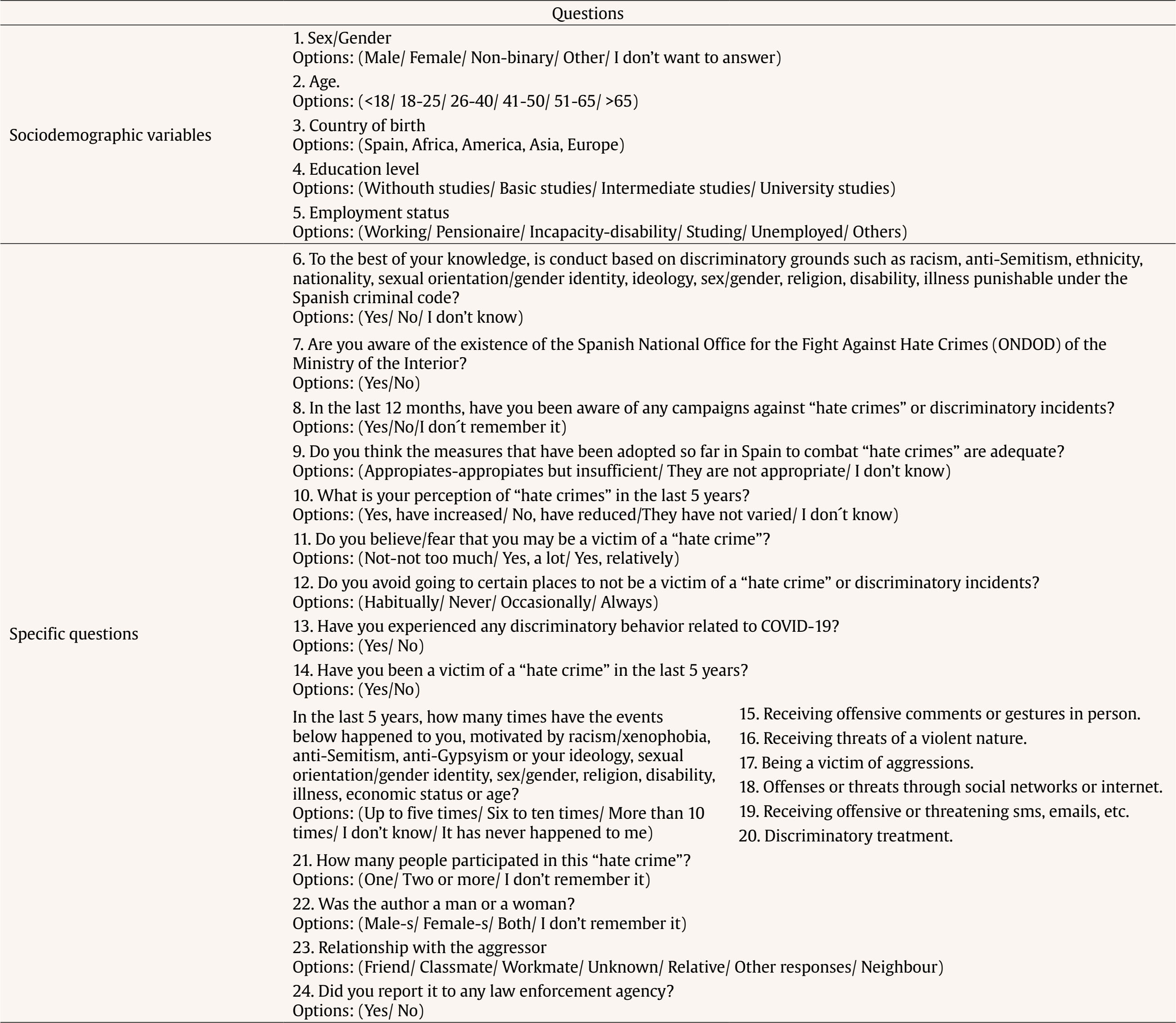 Note. These could be divided into two groups: sociodemographic variables and specific questions Sample The total participation was 782 people. However, a specific question of the survey was used to filter the results shown in this study based on whether the participants answered that they had been victims of a hate crime in the last five years, resulting in a total of 437 participants (hereafter we are using this sample size). The victims (N = 437) were equally distributed between men (50.3%) and women (45.5%). Most of the participants of the sample were in the range from 26 to 40 years old (40.04%), followed by people of 41 to 50 years old (23.81%), 18 to 25 (17.39%), 51 to 65 (16.71%). Unfortunately, not many migrants participated. Most of the participants were born in Spain (84.21%). However, it should be noted that in 2024 migrants made up approximately 13.4% of Spain’s overall population. This would mean that the participation could be considered as representative. On the other hand, participants were from different provinces of Spain: Madrid (27%), Barcelona (9.84%), Murcia (.26%), Sevilla (5.03), Valencia (5.03%), etc. (López-Gutiérrez et al. 2021). In relation to the level of education, most of them had university studies (51.71%), followed by people with intermediate studies (35.01%), basic studies (9.15%), and no-studies (4.12%). Finally, a great majority of the participants were working (53.09%), yet 21.28% were unemployed and 17.17% were students. A small percentage was retired or in other situations. Procedure The survey was conducted between December 18th, 2020, to March 31st, 2021, during the pandemic of COVID-19 through the exponential non-discriminative snowball sampling method, in which associations representing vulnerable groups helped to recruit participants. In fact, we observed peaks of participation when NGOs and other civil organizations spread the survey in social networks. On the other hand, the period of time chosen to conduct the survey presented some difficulties. Mobility restrictions due to the pandemic were positive because we had access to many people who were confined in their residences through the online link; nevertheless, it was more difficult to have access to other immigrants or minorities who were less accessible in this period. In order to follow the second objective, we used data from a database gathered by the Ministry of Interior (Statistical System of Criminality [Sistema Estadístico de Criminalidad] - SEC), including the complaints made by hate crime victims to the police or other authorities. Specifically, the comparison has been made with complaints gathered from 2014 to 2020, because the Ministry of Interior has been collecting more comprehensive hate crime data since 2014. Statistical Analysis Regarding the data analysis, we used contingency tables and chi-square tests to compare differences between the different levels of the variables (easily explained, for example, in Rana & Singhai 2015). The chi-square test statistic, developed by Pearson (1990), can be used to evaluate whether there is an association between the rows and columns in a contingency table. To optimize the whole sample size, we split the analysis into three sections, because data categories with very small sample sizes make the statistical analysis less robust, muddying the results. First, regarding sociodemographic variables, we removed participants with just a few individuals of different categories to homogenize the dataset. Concerning sex, we removed non-binary participants (n = 16) and others (n = 2). On the other hand, we removed people younger than 18 years old (n = 3) and older than 65 years old (n = 3). Participants from Asia (n = 4) were also removed, and people who answered in “other employment situation” (n = 3). Therefore, the final sample size used was N = 407. Following data cleaning, 30 participants, were excluded from the dataset. However, this led to more robust statistical results. This reduction in sample size does not pose a significant limitation for generalizing the findings, as the statistical analyses in the initial sections were marginally affected. The proportion of data excluded was small and its removal enhanced the clarity of certain findings – such as the identification of significant differences by gender and age group – by increasing the statistical power of the analysis. For future studies, we plan to consider making more efforts on recruiting individuals under the age of 18, over the age of 65 or, who consider themselves as non-binary, among others, to be able to analyze those categories. On the other hand, for the analysis of the survey’s specific questions, which were divided into two sections (see the results), we used the full sample size (N = 437) to preserve as much information as possible. The statistical analyses were carried out using R statistical software version 4.1.1 (R Core Team, 2021) and the significance level was set at p ≤ .05. Underreporting Rate and Profile of Hate Crimes Victims The first general and relevant finding of the study is that only 10.76% (43 out of 437) of participants who had been victims of a hate crime in the last five years filed a complaint or report the case to the police. This means that the underreporting rate is almost 90%, the highest underreporting rate among all criminal offences. Regarding the profile of the victims participating in the survey (Table 1), we find that most of them are women (50.35%) even if there are 45.53% of men and 3.33% non-binary. They are young, since the most frequent age was from 26 to 40 years old (40.04%) and mostly Spanish (84.21%). They have a high education, since 51.71% of the sample has university studies, and the majority of them have a job at the moment of their participation (53.09%) or were finishing their studies (17.17%). Only 21% of the sample were unemployed. If we compare the profile of victims from the survey with the one provided by a bigger sample extracted from the SEC database (N = 9755), we found no differences in the comparable variables. The SEC database includes all reports made to the police or other public institutions and we extracted data from 2014 to 2020. In this regard, Table 2 shows that the profile of victims coming from the database has a higher percentage of women (60.3% vs. 30.7%) in comparison to the survey, meaning that although there are no differences in reporting between males and females (around 10%) there are more women reporting hate crimes. The age distribution is similar to the survey: the most frequent age ranges from 26 to 40 years old (31.8%), followed by the age range from 41 to 50 (20.3%), and from 18 to 25 (17.7%). Less frequent are the victims older than 51 (17.09%) and younger than 18 years old (11.5%). Nonetheless, the distribution of the victims’ region of origin showed some differences: the percentage of nationals was lower in the SEC data (71.3% vs. 84.21%), in comparison to the survey. As a consequence, there were more non-national victims in the SEC data, mainly from Africa (14.2%), America (8.65%), and Europe (4.91%). Table 2 Profiles of the Participants of the Victimization Survey Carried out by the Spanish National Office against Hate Crimes (ONDOD) versus the Profile of the Victims that Reported Hate Crimes in Spain between 2014 and 2020 (N = 9,755) 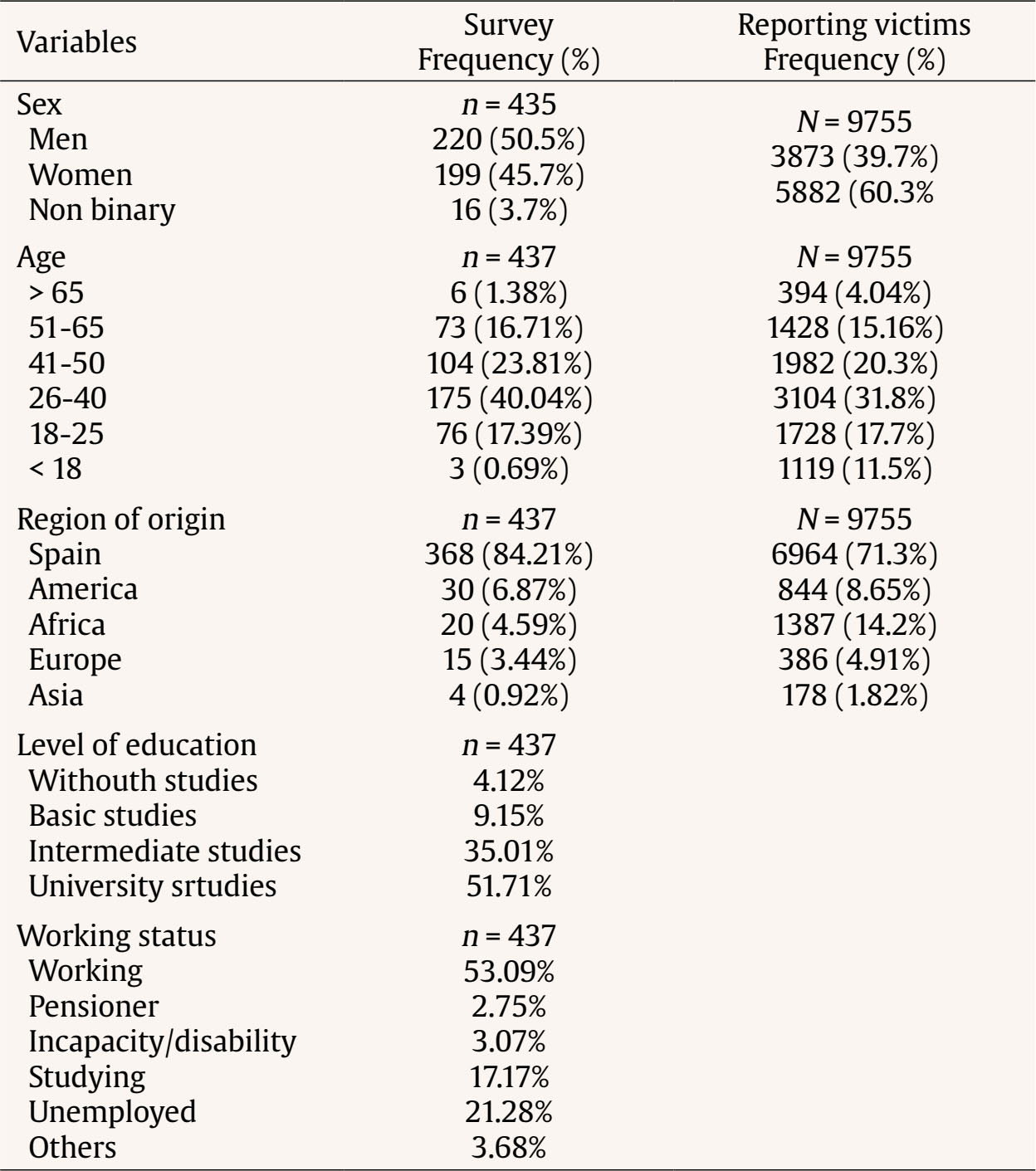 Note. Data gathered from the Spanish Crime Statistical System [Sistema Estadístico de Criminalidad, SEC] Differences in Sociodemographic Variables concerning the Reporting Decision We have conducted an analysis in order to compare, from the survey sample, those who have reported the offense and those who have not. Regarding the five sociodemographic variables analyzed, the variables showing significant differences are the following (see Table 3): level of education (chi-square = 9.38, df = 3, p = .019) and employment status (chi-square = 17.55, df = 3, p < .001). Concerning the level of education, those with lower education were significantly more likely to report, almost twice as likely (20%) to report, than those with intermediate and university studies. On the other hand, unemployed victims (21.5%) and pensioners (16.7%) were more likely to report when experienced a hate crime in comparison to young students (4.4%). Table 3 Contingency Tables for the Sociodemographic Variables (N = 407) of the Victimization Survey Carried out by the Spanish National Office against Hate Crimes (ONDOD) 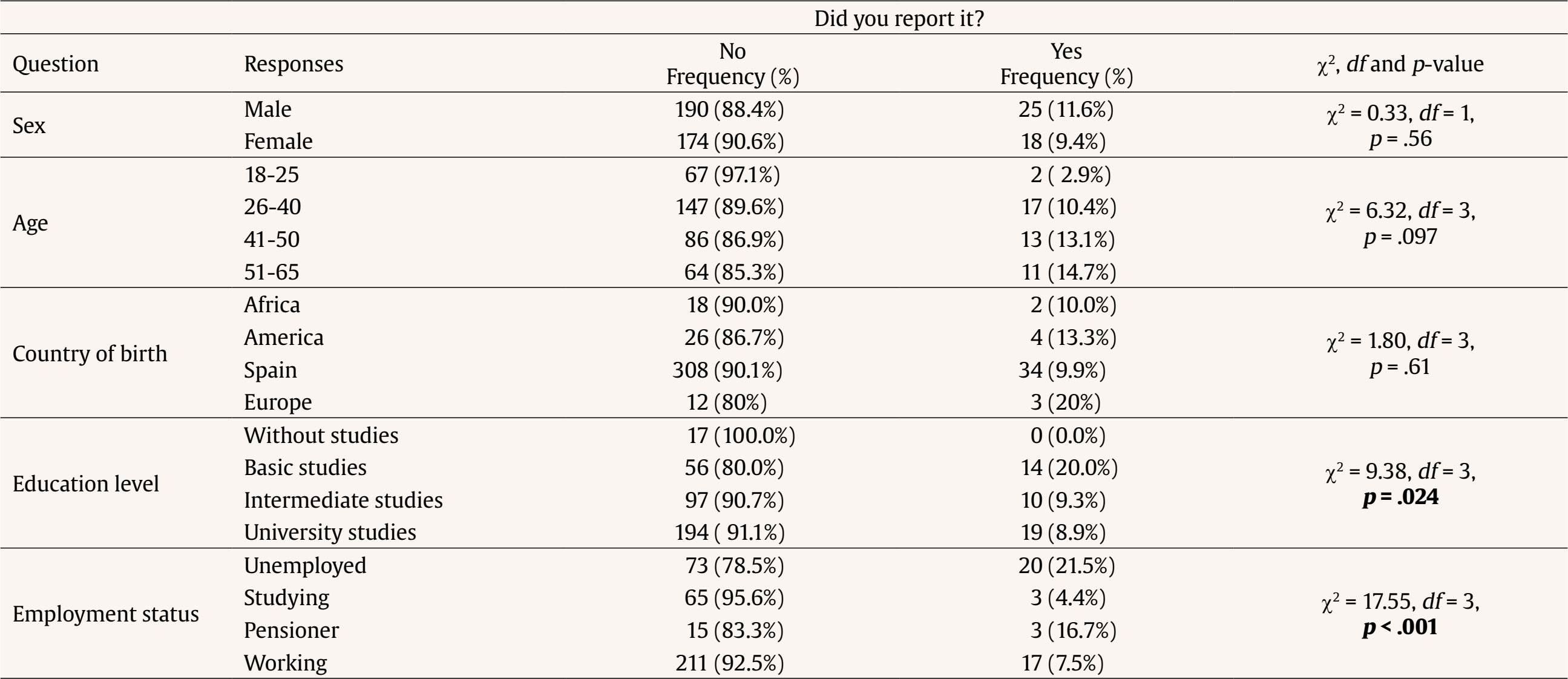 Note. Significant p values are highlighted in bold. The other three sociodemographic variables analyzed showed no significant differences: sex/gender (chi-square = 0.54, df = 1, p = .52), age (chi-square = 6.32, df = 3, p = .095), and country of birth (chi-square = 1.80, df = 3, p = .68; see Table 2). Nevertheless, concerning age, it appears to be some trends, although the differences were not statistically significant. From all age ranges, younger victims seem to be the category with the highest underreporting rate. Only 2.9% of people aged between 18 and 25 made a complaint when they experienced a hate crime, when the average of the rest of age ranges is around 10%. Additionally, the oldest victims are also more likely to report (14.7%). It seems that very young and very old victims are more likely to report their hate crime victimizations. Differences in other Survey Questions Regarding the specific part of the survey including questions non-related to the criminal offense, the variables in which significant differences were found in relation to the reporting rate were three (Table 4). First, participants who had experienced some discriminatory behavior during the COVID-19 pandemic were more likely to report their victimization than those who did not (chi-square = 4.13, df = 1, p = .047), yet this result is not very conclusive as we did not ask more questions related to the pandemic, which is a limitation of the survey. On the other hand, people who had been victimized in the last five years more than once reported significantly less than those who suffered only one crime (chi-square = 8.99, df = 1, p < .001), this is counterintuitive unless victims of more than one crime feel that the justice system is not working well as we explain below. Finally, the type of relationship with the aggressor proved to be a significant factor in the comparison of participants who had reported the crime with those who had not (chi-square = 26.09, df = 6, p < .001). In this sense, when the aggressor was a neighbor or a relative the reporting rate increased significantly (46.2% and 22.2% respectively). However, when the aggressor was a friend (0%), a classmate (0%), or a co-worker (6%) the rate decreased significantly. This is an interesting result that will need further in-depth analysis in future studies. Nonetheless, it may already offer valuable insights for improving reporting practices, particularly by considering the relationship between the victim and the perpetrator. Finally, the sex/gender of the perpetrator was almost statistically significant. When the offender was a woman, victims reported significantly less (2.4%) than when it was a man or multiple men. Table 4 Contingency Tables and Chi-square Test for the Specific Questions (N = 437) of the Victimization Survey Varried out by the Spanish National Office against Hate Crimes (ONDOD) 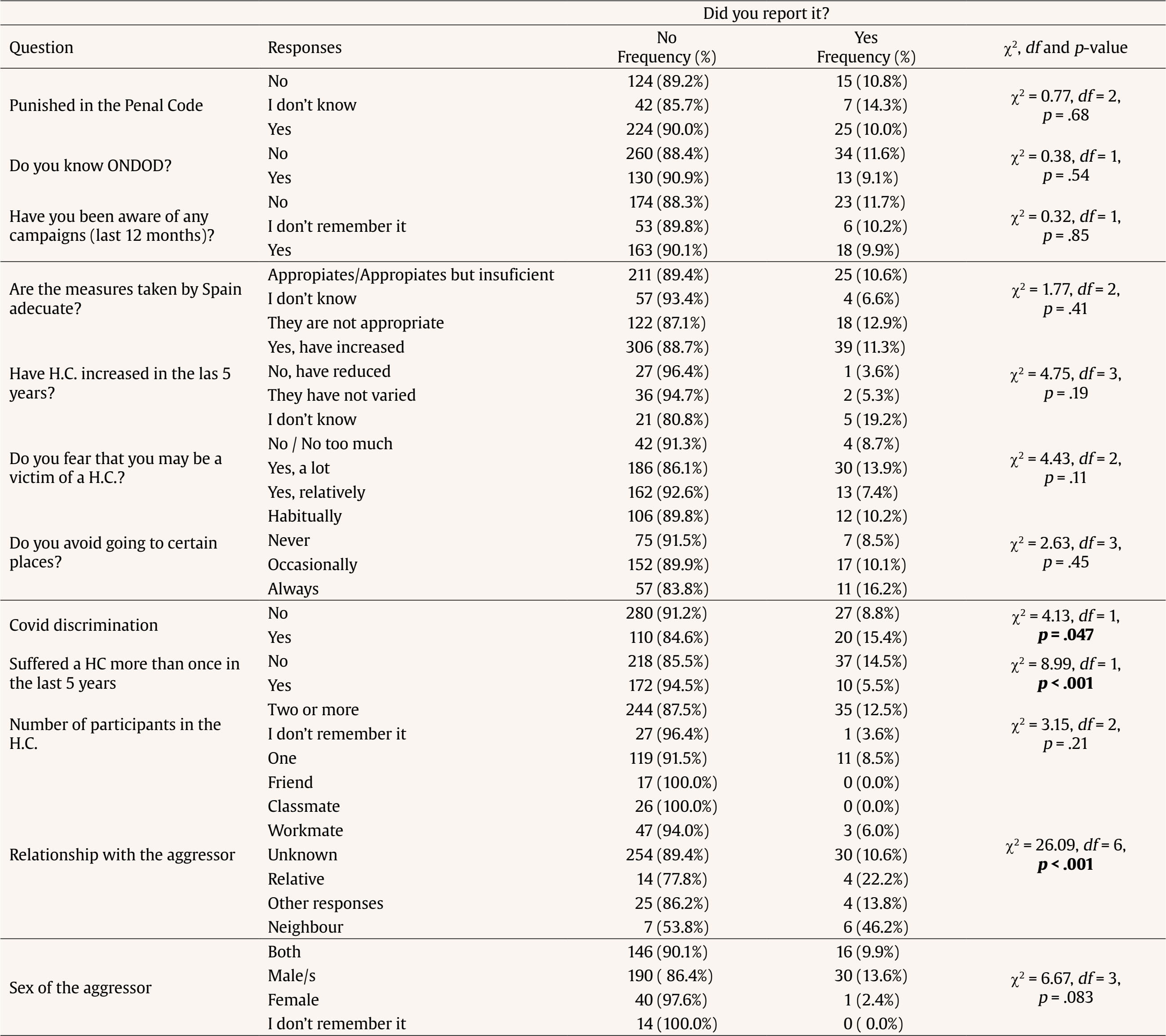 Note. Significant p values are highlighted in bold. Differences in the Frequence and Severity of the Crime The victimization survey has several questions related to the number of times in the last five years that respondents had received discriminatory acts motivated by prejudice. As can be seen in Table 5, we only found statistical differences in two variables: receiving threats of a violent nature, being a victim of aggression and receiving offensive or threatening SMS, emails, etc. When the victims received more than six violent threats, they filed significantly more complaints (26.2%) than when they had received five or less (7.9%). On the other hand, those victims who had been victim of physical aggression (from 20.2% to 28% depending on the number of aggressions: up to five times, ...; see Table 5) reported more than those that had not (4.6%). In addition, there were also significant differences in the proportion of complaints filed by those who have suffered a greater number of offensive or threatening SMS, emails, etc. (Table 5). Table 5 Contingency Tables for Specific Questions Related with PenalT of the Victimization Survey Carried out by the Spanish National Office against Hate Crimes (ONDOD) 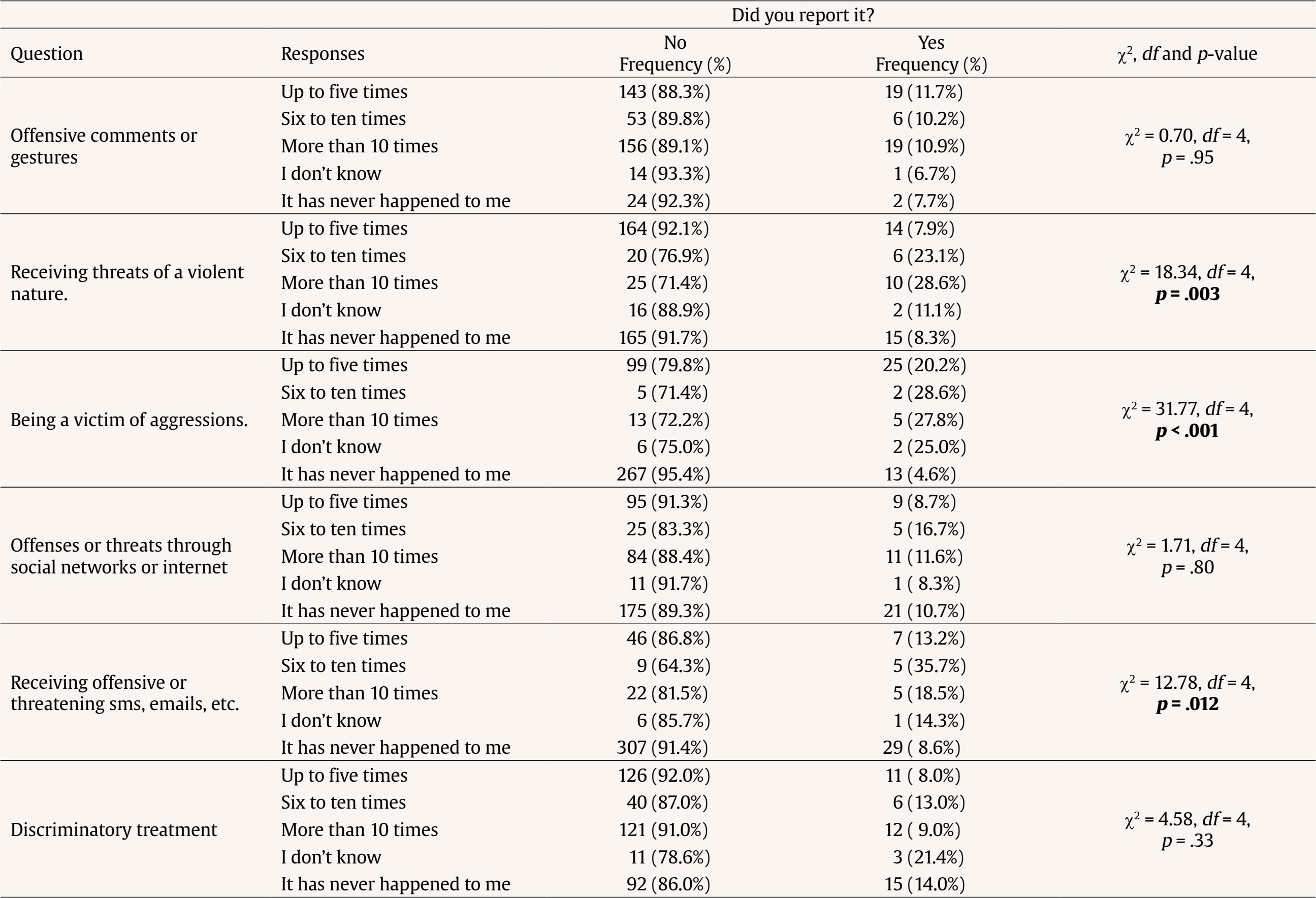 Note. Significant p values are highlighted in bold. Although the results may appear similar to those presented in the previous section, which states the following: “On the other hand, people who had been victimized in the past five years more than once reported significantly less than those who had suffered only once”, the difference arises from the greater specificity of the current questions, which take into account the severity of the crime. In other words, when specific questions refer to serious discriminatory behaviors, reporting rates increase as a function of the frequency or severity of the discrimination experienced. However, this relationship does not appear when respondents are asked in more general terms whether people tend to report more when they have suffered more hate crimes. Finally, it is worth noting, due to the importance of hate speech in social networks, that there were no significant differences (chi-square = 1.10, df = 3, p = .78) in the degree of under-reporting rates in relation to whether offenses or threats have been received in social networks (ranging from 8.7% to 12.8%; see for more details Table 5) or not (10.7%). Underreporting hate crimes presents a substantial challenge for criminal investigators since incidents that are not reported to the police cannot be investigated or prosecuted. Additionally, when police authorities lack awareness of the true scale of the problem, it may result in the allocation of insufficient personnel and resources to address it effectively (FRA, 2018), and a poor or no response can be given to the victim who suffers the ultimate consequences of the crimes (Fohring, 2014). The main objective of the study was to find out the underreporting rates of hate crimes in Spain which, according to the survey conducted by ONDOD, is close to 90%. This is the highest rate compared to other victimizations surveys: 54% reported by the NCVS, around 70% reported by FRA (2021), and 65% reported by Sandholtz et al. (2013). Besides, it is by far higher than the average of 60% of underreporting across all types of crimes (Fohring, 2014). The explanation of these results involves multiple variables. Procedural justice theory (Sunshine & Tyler, 2003; Tyler, 1990) considers that individuals’ willingness to cooperate with legal authorities depends on their perceptions of fairness and legitimacy in police behavior. In the field of hate crimes, international studies have shown that low institutional trust is consistently associated with underreporting (Pezzella et al., 2019; Wiedlitzka et al., 2018), even among victims of severe aggression (McNeeley, 2018; Shields, 2021). Similarly, in Spain, López-Gutiérrez et al. (2021) found that victims’ perception of the police as a legitimate and reliable source of protection is a significant factor influencing individual decisions to report, and pointed out some of the reasons for this. A significant percentage of victims did not report because they thought the police would not take them seriously (37.95%), distrust the police (24.62%), or have had a previous negative experience with the police (15.9%). It is important to note that respondents were allowed to select multiple answers. Additionally, some studies on hate crimes show that victims are especially affected by fear of secondary victimization as a consequence of police interaction, as is the case for the LGTBIQ+ community (Berrill & Herek, 1990) and ethnic minorities (Atack, 2022). Procedural justice theory suggests that improving perceptions of police impartiality, dignity, and transparency could foster greater reporting rates, especially among marginalized groups. Additionally, the Intersectionality Theory (Crenshaw, 1989) provides a useful lens to analyze how overlapping social categories such as race, gender, sexuality, religion, and disability shape both the experience of hate crimes and the response to them. As shown in recent research (Flores et al., 2023; Kutateladze, 2022; Soldatic et al., 2023), some groups exposed to multiple forms of discrimination may suffer more severe victimization, which could either increase or reduce the likelihood of reporting depending on how institutional trust and community support are configured. Although the sample size of the present study did not allow for this type of stratified analysis, it may help to explain some of the reporting patterns observed in the present study. These dynamics also underscore how reporting decisions are not solely a function of individual choice, but are shaped by broader social structures, including access to support networks, perceived institutional legitimacy, and the severity of victimization experiences. Apart from the above, non-reporting victims responded in the survey that they did not know it was a crime (20%) or that they did not know hate crimes were punished in the Spanish Penal Code (31.81%, López-Gutierrez et al., 2021). This is a real barrier, since their ignorance could conduct in the minimization of the problem and, as a consequence, avoiding a police complaint (Pezzella et al., 2019). Information and awareness campaigns should be conducted to inform about hate crimes and promote reporting and assistance to victims, putting even more emphasis in vulnerable groups, such as people with disabilities, which could be more affected by the unawareness of the criminal definition (Thorneycroft & Asquith, 2015). Moreover, better coordination with third parties should be implemented since many victims are sometimes advised by third parties not to report, especially when they have a learning disability (Sin, 2013). In this regard, Kutateladze (2022), in a study on queer Latin immigrants in Miami, found that encouragement from close contacts was the strongest predictor of victims’ willingness to report. This underlines the importance of community networks and trusted intermediaries in promoting access to justice for vulnerable populations. Finally, other motives, such as being afraid of retaliation (20%) or that it is considered by the victim a private matter and dealt with it themselves (14.36%), were also mentioned. These motives show the victim’s motivations for non-reporting and this gives us privileged information to increase reporting practices, though since these questions were multi-response it is difficult to know the graded significance of these motives. On the other hand, other studies show that victim experiences of hate may be more complex than the motives recorded by the police or surveys due to the fact that victims tend to perceive their experience as targeting multiple aspects of their identity (Erentzen & Schuller, 2020). The second objective of the article was to compare the victim profile coming from the survey with the profile of reporting victims gathered by the SEC database. In this regard, both show a similar, yet not equal, distribution in the comparable variables: sex, age, and country of origin. Regarding the country of origin, a slight difference was found in victims from Africa and America. In relation to age, we did not collect a lot of information in the survey of people younger than 18 and older than 65. However, the victimization survey may serve as a good photography to describe hate crimes, victims, and unreported cases. Regarding the third objective, we have analyzed the underreporting rate in depth. Two sociodemographic variables showed significant differences between reporting and non-reporting victims. First, the level of education: victims with no education reported significantly less than those with intermediate or higher education. This is in line with findings shown by Pezzella et al. (2019). However, this result should be taken with caution because of the low sample size of people without education (n = 17). In contrast, people with basic education, with a more considerable sample size (n = 56), showed a significant pattern, with 20% of them reporting. This result was contrary to previous studies considering that perhaps it would be expected that people with a higher level of education (either intermediate or university) would report more (e.g., Pezzella et al., 2019). However, these results are consistent with the so-called paradox of crime reporting (Zaykowski et al., 2019), because victims who are in a more socially vulnerable situation have a greater need to turn to the police, regardless of their possible reluctance to deal with the police. On the contrary, at least for non-severe crimes, more educated people with higher social status would have more social resources to find a solution or compensation for the harm suffered, so they would not be forced to resort to police protection (Xie & Lauritsen, 2012), which would explain the results found here. Second, and concerning employment status, students and workers reported considerably less than pensioners or unemployed, who almost double the average of 10%. One explanation for this could be that the last may have more free time to report. Besides, being a student usually correlates with age, and although this last variable was not significant, younger people reported proportionately less than older people (2.9% versus 14.7%; see Table 3). Therefore, if we compare that result of the survey with the profile of the victims who actually came forward to report (SEC database), we might infer that 18-to-25-year-old victims may likely higher in terms of numbers of victims than other age cohorts despite the official data shows the opposite, which would be in line with the fact that hate crime victimization rates in young people are higher (Kena & Thompson, 2021). The disparities observed in the age of reporting were analogous to those identified by Pezzella et al. (2019), wherein victims aged 12-34 years reported less frequently than their older counterparts. Conversely, Harlow’s (2005) research in the USA yielded contrasting results. The lower rate of reporting observed in young people could be attributed to the phenomenon of “the culture of silence”, a concept extensively researched in educational environments, which demonstrates the reluctance of young people to disclose information to adults (Olweus, 1993). This reluctance may be further compounded by their diminished level of trust in law enforcement (Hurst & Frank, 2000). A number of studies have also highlighted the difficulty for adults in taking bias-motivated incidents reported by children seriously, or in considering them to be mere “kids’ pranks”. In addition, young people may be more likely to use the denial strategy to maintain their self-esteem, which would lead them to increase their threshold for perceiving discrimination (Antón Rubio et al., 2021). All of this is in line with one of the results: when the perpetrator was a classmate the participants did not report on any occasion (see Table 3). The other interesting trend found was that nationals of EU countries were more likely to report than average, which may reflect that Europeans have more trust in police authorities than people from other nationalities, but we also have to take into account that most EU citizens are likely to have a regulated administrative situation, unlike non-EU citizens. Another interesting finding was that the relationship between victim and perpetrator showed significant differences between reporting and non-reporting victims, as briefly mentioned above. On the one hand, when the perpetrator was a neighbor (46.2%) or a relative (22.2%), the rate of reporting was five times higher and two times higher respectively, whereas when the perpetrator was a friend or a work or school colleague, the rate of reporting decreased significantly compared to when the perpetrator was a stranger, which was the category that reported less (10.6%). This is not consistent with studies supporting that being a stranger perpetrator increases the likelihood of reporting (Pezzella et al., 2019; Xie & Baumer, 2019), but it makes some sense. Low reporting rates when the aggressor was a colleague at work or a classmate at school can be explained by the fear of reprisals in the workplace or fear of losing a friendship, or maybe the aforementioned “law of silence”. Similar reluctance may occur in tight-knit communities where fear of retaliation or damaging relationships leads victims to “deal with it themselves” (Shields, 2021; Vergani & Navarro, 2021). Such patterns underscore that reporting is not merely an individual decision but one shaped by situational and cultural factors. Breaking this normalization requires proactive interventions in those everyday settings – from anti-bullying programs in schools to workplace protocols – that make it clear hate incidents are neither acceptable nor to be silently endured. In Spain, Policía Nacional and Guardia Civil implement a national plan, called Plan Director para la Convivencia y Mejora de la Seguridad en los Centros Educativos y sus Entornos to try to encourage youth to report to the police all types of crimes that they suffer. On the other hand, and unreasonably, those who have experienced several hate crimes in the last five years reported less than those who experienced only one crime. In this case, one possible explanation could be the normalization of the incidents, which could diminish the subjective severity of the facts for the victims (Chakraborti, 2015). The context in which hate incidents occur also matters for reporting. Drawing from routine activity theory (Cohen & Felson, 1979), many hate crimes happen in everyday settings – on the commute, at school or work, in one’s neighborhood – where victims regularly cross paths with offenders. These routine encounters can lead to a dangerous normalization of low-level harassment and abuse (Chakraborti, 2015). Indeed, qualitative research in Europe suggests that a lack of effective measures to encourage reporting contributes to victims “underestimating and mitigating the experienced violations” (Pezzella et al., 2019; Wiedlitzka et al., 2018). In other words, when bias-motivated slurs or threats become a routine part of someone’s life, they may start to view such incidents as ordinary or not “worth” reporting (Chakraborti, 2015; Kutateladze, 2022). This dynamic was reflected in our finding that victims who suffered multiple hate incidents were paradoxically less likely to report than those who experienced a single incident. Repeated victimization can desensitize individuals or breed resignation – especially if earlier incidents went unaddressed – thereby reinforcing the cycle of silence. Another possible explanation could be a negative experience with the police authorities in the first victimization or fear of reprisals in cases of known offenders (Vergani & Navarro, 2021). Nevertheless, as Xie and Baumer (2019) stated, the reason why victims do not report to the police may be multifaceted. Close to significance was sex of the author and when the perpetrator was female the reporting rate dropped to 2.4%. Wong and Van de Schoot (2012) showed that when perpetrators were female the victims tend to report less than when they were male, although this result was influenced by the perpetrator-victim relationship, as women tend to assault more people they know, yet these victims tend to report less (Gartner & Macmillan, 1995; Goudriaan, 2006). On the other hand, six questions related to several crime typologies were asked in the victimization survey. Significant differences were found mainly according to the intensity or severity of the discriminatory acts. When victims had suffered threats of a violent nature and had been victims of aggression or had received offences or threats by SMS or email, they reported significantly more than when they had received offensive comments/gestures or offences/threats through social networks or the internet. In other words, they reported more when the event they had suffered was of a greater magnitude. This aligns with previous findings by Lantz et al. (2022), who analyzed over 21,000 incidents from the National Crime Victimization Survey (NCVS) and found that the severity of the incident significantly increased the likelihood of reporting. Notably, victims of more serious hate crimes were approximately 70% more likely to report than those subjected to less serious ones. Similar conclusions were reached by Vergani and Navarro (2023), who argue that the seriousness and visibility of the offense amplify the perceived necessity of institutional intervention, thus increasing reporting rates. Finally, and surprisingly, we found no relationship between the number of offenses in social networks and the number of times victims reported to the police, despite the fact that in other research we found that hate speech in social networks is the prelude to hate crimes reported to police stations (Arcila Calderón et al. 2024). As discussed above, this can be explained by the normalization of low-level harassment and abuse (Chakraborti, 2015). Fortunately, with the use of different algorithms and artificial intelligence (e.g., Gómez et al. 2024; del Valle-Cano et al. 2023), we would be able to automatically monitor hate speech, which is highly increasing in the last years, and respond to the most serious offenses while respecting the fundamental right to freedom of expression. Conclusions Through this study, based on the first complete national victimization survey, we have found an estimation of the hate crimes underreporting rate in Spain and its association with different variables. We believe that this study may be of great interest to law enforcement and public authorities not only in Spain but in countries of similar characteristics. Since politicians’ decisions should be guided by the intelligence provided by data analysis (Hunt et al., 2014), this study could promote policy strategies to minimize acts of intolerance in contemporary societies. The underreporting rate encountered in this study is high in relation to other countries with similar hate crime characteristics. This raises the need to have a deeper understanding of the motives to implement policies to increase victim confidence in the police as well as coordination strategies with third-sector institutions to promote victim support. We found significant differences in the rate of underreporting for both socio-demographic variables and variables related to the characteristics of the crime. In summary, younger victims, who were studying, and who had a very low or high level of education were less likely to report. On the other hand, the reporting rate was higher for victims of more serious crimes, i.e., crimes affecting more important legal assets such as physical integrity, and for those whose aggressor was a neighbor or relative. This leads to the conclusion that the phenomenon of underreporting of hate crimes is a complex issue and that it may be important to take this into account in national policies, for example, governments may adopt different strategies depending on the profile of the victim. Limitations of the Study A limitation of this study was the participation, especially in view of the high rates of underreporting, which makes comparisons between victims who reported versus those who did not. Despite of that, this study is pioneer in Spain, although some questions need to be explored in greater depth. For example, one question in the survey that did not provide much information was the one about the COVID-19 virus pandemic. We found that people that had suffered discrimination during the pandemic was more likely to report to the police, in general, when they suffered a hate crime at any moment (i.e., not during the pandemic). Unfortunately, there were no more questions on this topic, so any plausible explanation would be very speculative, but one reason might be related to the country of the victims or their age, but it is not possible to know for sure. Despite the modest sample sizes of both data sources utilized in this study, it is recommended that future surveys garner increased participation, thereby enhancing the robustness of the statistical models. In particular, perceptions of police legitimacy, intersectional vulnerabilities, and the influence of close social ties all play a role in shaping the victim’s decision to report or remain silent. Future research with larger samples should further investigate these interrelated dimensions to support more inclusive and effective policy responses. Nevertheless, it is believed that the patterns identified in this study can contribute to the mitigation of this societal problem. In the near future, the Ministry of the Interior will await the results of a new survey designed to address some of the issues raised in this study, as well as other new ones. In this survey, a greater emphasis will be placed on obtaining a higher number of responses from migrants but also a greater total sample size. Furthermore, we will strive to gain a more profound understanding of both the victims’ and the witnesses’ perspectives. Moreover, some limitations related to the sampling design must be acknowledged. The use of snowball sampling through networks linked to universities and third sector organizations may have introduced a selection bias, potentially leading to an overrepresentation of university-educated individuals and residents of the Madrid region. This could limit the generalizability of the findings to the broader Spanish population. Additionally, the relatively low participation of migrants – one of the groups most affected by hate crimes – may have constrained our ability to analyze differences across national or ethnic groups, yet participation was in percentage similar to the migrant population in Spain (around 15%). Future studies should prioritize strategies for improving representation among these populations to ensure more inclusive and robust findings. Policy Recommendations The measures we propose to tackle this problem would be three. First, raising awareness of hate crime, its criminal definition, and the need to report it in order to increase victim protection. A considerable share of respondents in our study did not realise that the harm they had suffered was criminal or punishable (López-Gutiérrez et al., 2021). Information campaigns should clarify what hate crimes are, emphasize their seriousness, and publicize the available support services (Kutateladze, 2022; Thorneycroft & Asquith, 2015). Public condemnations of hate incidents by authorities, together with outreach in multiple languages and formats, can empower victims with the knowledge and confidence needed to report. Second, improving the relationship of trust between victims and the police by increasing training and awareness, allocating greater resources to police officers, and bringing the police closer to the victims to reduce the social distance. Procedural justice theory suggests that individuals are more likely to report when they perceive the police as fair, impartial, and respectful (Sunshine & Tyler, 2003; Tyler, 1990). Police agencies that engage respectfully with minority communities and community-led organizations tend to encourage reporting (Shields, 2021; Wiedlitzka et al., 2018). Regular dialogue, partnership initiatives, and the presence of specialized hate crime officers can signal to victims that their reports will be taken seriously and handled appropriately (McNeeley, 2018). In many localities in Spain, the relationship between the police and the third sector is relatively close, but it needs to be extended to other social actors. Projects such as “CISDO: Inter-Police and Social Cooperation Against Hate Crimes” (EU Commission, CERV-2022-101083348) and “TAHCLE: Training Against Hate Crimes for Law Enforcement”, led by the Office for Democratic Institutions and Human Rights of the OSCE, may contribute to this goal (Antón Rubio, 2022; FRA, 2018). In addition, strengthening victim support services may improve reporting outcomes. When victims know they can have access to legal advice, counselling, and protection from retaliation, they are more likely to begin a criminal justice procedure. For example, training victim advocates or liaison officers – as implemented in some EU states – helps to reduce secondary victimization and provides counseling throughout the reporting process (Fohring, 2014; Wiedlitzka et al., 2018). Third, promoting hate crime reporting, but especially among young people. In workplace and school environments, greater dissemination of information is needed to promote attitudes in favor of reporting, which would increase the protection and quality of victims’ lifes. Some countries have implemented third-party reporting centres, anonymous hotlines, and online platforms to lower the threshold for reporting (Goudriaan, 2006; Sandholtz et al., 2013). These options are helpful for those who fear direct interaction with authorities or who doubt that their experience “qualifies” as a hate crime. Additionally, community networks play a key role. Encouragement from friends, relatives, and community leaders has proven to be a decisive factor in reporting decisions, especially in vulnerable groups (Kutateladze, 2022). In conclusion, the Ministry of the Interior has published a “Good Practice Guide for Hate Crime Reporting” for victims. Concurrently, the institution has promulgated the “III Action Plan to Combat Hate Crimes”, the “Protocol for Action by law enforcement agencies for hate crime and conduct in breach of the legal provisions on discrimination”, and “Guidelines for dealing with victims of hate crimes with developmental disabilities”. The implementation of these plans, guides and strategies by the Ministry of Interior is intended to address issues of underreporting and enhance the quality of police victim assistance. In addition, the institution has proposed the implementation of annual surveys to evaluate the effectiveness of these strategies in enhancing hate crime reporting rates and the perception of legitimacy among hate crime victims in relation to law enforcement. Conflict of Interest The authors declare no conflict of interest. Cite this article as: Gómez, J., Gimenez-Salinas, A., Fernández-Villaza, T., Antón, C., Máñez, C. J., & López-Gutiérrez, J. (2026). Underreporting rate in hate crimes in Spain: Why is so high?. Anuario de Psicología Jurídica, 36, Article e260470, 1-13. https://doi.org/10.5093/apj2026a3 References |
Cite this article as: Gómez, J., Gimenez-Salinas, A., Fernández-Villaza, T., Antón, C., Máñez, C. J., & López-Gutiérrez, J. (2026). Underreporting Rate in Hate Crimes in Spain: Why is so High?. Anuario de Psicología Jurídica, 36, Article e260470. https://doi.org/10.5093/apj2026a3
Correspondence: ses.ondod@interior.es (J. Gómez).Copyright © 2026. Colegio Oficial de la Psicología de Madrid


Herramientas:
 PDF
PDF e-PUB
e-PUB CrossRef
 JATS
JATS Imprimir
 Enviar
ALERTA POR E-MAIL
La Revista de Anuario de Psicología Jurídica está distribuida bajo una licencia de Creative Commons Reconocimiento-NoComercial-SinObra Derivada 4.0 Internacional.com