Effect of Facilitators’ Work Experience on Process Outcomes in an Intervention for Intimate Partner Violence Perpetrators
[El efecto de la experiencia laboral del personal facilitador en los resultados del proceso en una intervención con agresores de pareja]
Rocío Pérez-Sabater1, Manuel Roldán-Pardo2, Cristina Expósito-Álvarez1, & Marisol Lila1
1Department of Social Psychology, Faculty of Psychology and Speech Therapy, University of Valencia, Spain; 2Department of Basic Psychology, Neuropsychology, and Social Psychology, Faculty of Psychology, Catholic University of Valencia, Spain
https://doi.org/10.5093/ejpalc2026a6
Received 23 December 2025, Accepted 20 April 2026
Abstract
Background/Aim: Limited research has examined the role of facilitators in the effectiveness of intervention programs for intimate partner violence (IPV) perpetrators. Nevertheless, specific facilitator characteristics, such as facilitators’ work experience, could potentially impact the intervention process, although empirical evidence supporting this relationship is scarce. In response to this gap, the present study investigated the influence of facilitators’ work experience on key process outcomes: working alliance, stage of change, motivation to change, active participation and participants’ satisfaction with the intervention. Method: The sample consisted of 428 court-mandated male IPV perpetrators and 56 group facilitators who worked in pairs. Facilitators were categorized into three experience-based groups: little-little experience, ample-little experience and ample-ample experience. Ample experience was operationalized as having facilitated at least three intervention groups. Results: The findings indicated that the participants led by the ample-ample experienced facilitators reported a stronger working alliance and higher satisfaction with the intervention. Participants led by both the ample-ample and the ample-little experienced facilitators exhibited more advanced stages of change and higher motivation to change compared to those led by the little-little experienced facilitators. Interestingly, participants led by the little-little experienced facilitators demonstrated more active participation by doing more homework than the participants led by the ample-little experienced facilitators. Conclusions: These findings have important implications for intervention practice. Engaging facilitators with substantial work experience appears to enhance the quality of the working alliance, promote motivation to change violent behavior, and improve participants’ satisfaction with the intervention. Such outcomes underscore the value of practitioners’ experience in achieving meaningful engagement and progress in IPV intervention programs.
Resumen
Antecedentes/objetivo: La investigación sobre el papel de los profesionales y las profesionales en la eficacia de los programas de intervención para agresores de pareja es limitada. No obstante, determinadas características de quienes facilitan la intervención, como su experiencia laboral, podrían influir en el proceso de intervención, aunque la evidencia empírica que respalda esta relación es escasa. En respuesta a esta carencia, el presente estudio analiza la influencia de la experiencia laboral de los y las profesionales en resultados clave del proceso: la alianza de trabajo, el estadio de cambio, la motivación al cambio, la participación activa y la satisfacción de los participantes con la intervención. Método: La muestra la componen 428 hombres agresores de pareja con obligación judicial de participar y 56 facilitadores y facilitadoras de grupo que trabajan en parejas. Los facilitadores y las facilitadoras se clasificaron en tres grupos según su experiencia: poca-poca experiencia, amplia-poca experiencia y amplia-amplia experiencia. Por experiencia amplia se entiende haber facilitado al menos tres grupos de intervención. Resultados: Los resultados indican que los participantes dirigidos por facilitadores y facilitadoras con amplia-amplia experiencia informan de una alianza de trabajo más sólida y una mayor satisfacción con la intervención. Los participantes dirigidos tanto por facilitadores y facilitadoras con amplia-amplia como con amplia-poca experiencia muestran etapas de cambio más avanzadas y una mayor motivación para cambiar en comparación con aquellos dirigidos por facilitadores y facilitadoras con poca-poca experiencia. Curiosamente, los participantes dirigidos por facilitadores y facilitadoras con poca-poca experiencia muestran una participación más activa, realizando más tareas para casa que los participantes dirigidos por facilitadores y facilitadoras con amplia-poca experiencia. Conclusiones: Estos resultados tienen importantes implicaciones para la práctica de la intervención. Contar con facilitadores y facilitadoras con una experiencia laboral considerable parece mejorar la calidad de la alianza de trabajo, fomentar la motivación para cambiar conductas violentas y aumentar la satisfacción de los participantes con la intervención. Estos resultados ponen de relieve el valor de la experiencia profesional para promover una implicación significativa y avances en los programas de intervención en violencia de pareja.
Keywords
Facilitators’ work experience, Process outcomes, Male perpetrators, Intimate partner violence, Intervention programsPalabras clave
Experiencia laboral del personal facilitador, Resultados del proceso, Hombres agresores, Violencia de género, Programas de intervenciónCite this article as: Pérez-Sabater, R., Roldán-Pardo, M., Expósito-Álvarez, C., & Lila, M. (2026). Effect of Facilitators’ Work Experience on Process Outcomes in an Intervention for Intimate Partner Violence Perpetrators. The European Journal of Psychology Applied to Legal Context, 18, Article e260181. https://doi.org/10.5093/ejpalc2026a6
Correspondence: marisol.lila@uv.es (M. Lila).According to the latest World Health Organization report (WHO, 2025), intimate partner violence (IPV) constitutes a serious social issue of pandemic proportions. This type of violence is perpetrated by a current or former intimate partner who engages in physically, sexually, economically, psychologically and/or socially abusive behavior toward their partner or ex-partner (Hacıaliefendiolu et al., 2021; Kyle, 2023). The WHO (2025) estimates that approximately 25.8% of women aged 15-49 worldwide have experienced physical and/or sexual violence in an intimate relationship. IPV is a serious issue that has profoundly negative effects on the physical and psychological health of female victims, as well as on their families and society as a whole (Gracia et al., 2020; Martín-Fernández et al., 2019, 2020; Oram et al., 2022; Ríos-Lechuga et al., 2024). The severe consequences of IPV, along with its high prevalence, have prompted governments and international organizations to focus their efforts on the design and implementation of intervention programs that target IPV perpetrators (Butters et al., 2021; Cramer et al., 2024; Gracia et al., 2025; Lila et al., 2019). Systematic reviews and meta-analyses on the effectiveness of such interventions have suggested that, while participation in these programs is often associated with reduced recidivism, their overall impact seems to remain limited (Arce et al., 2020; Santirso, Gilchrist et al., 2020; Stephens-Lewis et al., 2021). As a result, several researchers have focused on identifying strategies that may be more effective for working with perpetrators. These studies have tended to show that motivational strategies are an innovative approach that when incorporated into standard programs (i.e., cognitive-behavioral) may enhance program effectiveness (Expósito-Álvarez, Gilchrist et al., 2024; Expósito-Álvarez, Roldán-Pardo et al., 2024; Lila et al., 2018; Pinto e Silva et al., 2024). In particular, incorporating these strategies into intervention programs for IPV perpetrators could help reduce dropout rates, recidivism and treatment resistance (Expósito-Álvarez et al., 2021). Moreover, these strategies appear to increase personal accountability for violent behavior and promote more active participation among perpetrators in the intervention process (Babcock et al., 2016; Lila et al., 2018; Murphy et al., 2018; Soleymani et al., 2022; Stuart et al., 2013). Research also suggests that, for motivational and cognitive-behavioral strategies to be effective, it seems essential to have well-trained professionals in facilitating intervention programs for IPV perpetrators (Ferrer-Pérez et al., 2016; Gannon et al., 2019; Geldschläger et al., 2010). In a qualitative study conducted by Morrison et al. (2017), which involved semi-structured interviews with professionals in the field, the need for specific qualifications to work with this population was emphasized. Participants tended to highlight the importance of training in IPV and in the dynamics of control and power inherent in these relationships. Additionally, some appeared to underline the value of having a professional background in social work or therapy, supplemented by specialization in perpetrator intervention. Giesbrecht, Edmonds, Bowns et al. (2023) also conducted a qualitative study and interviewed nine professionals, who generally stressed the importance of receiving specialized training in working with IPV perpetrators to better understand their relational dynamics and complex needs. Similarly, in a systematic review, Gannon et al. (2019) found that IPV intervention programs seemed to be more effective when a qualified professional was consistently present throughout the intervention process. In line with these findings, a study by Renehan (2021) suggested that formal academic qualifications and programme training alone may not adequately prepare practitioners to intervene with IPV perpetrators, thereby pointing to the potential importance of specific practical experience and support in working with this population. Furthermore, greater work experience seems to be related to the development of leadership skills that positively impact program outcomes (Waldo et al., 2007). In this regard, leadership, understood as the active guidance of perpetrators throughout the intervention process, has been reported to be associated with higher levels of participant learning and group cohesion (Roldán-Pardo et al., 2024; Waldo et al., 2007). Moreover, these leadership-related benefits have been linked with stronger working alliances and more active participation by perpetrators in intervention sessions (Roldán-Pardo et al., 2024). Facilitators’ work experience may also play an important role in fostering participants’ treatment engagement. For example, in another study by Morrison et al. (2019), 76 IPV perpetrators were interviewed about their perspectives of the facilitators of the intervention program in which they had participated. Participants reported that the facilitation team’s experience seemed to help reduce their initial resistance to the intervention and to facilitate their involvement in the process of change. They also emphasized that facilitators’ experience, particularly their ability to convey information clearly and understandably, was perceived as an important element in fostering their learning throughout the program. Although several authors have pointed to the importance of having qualified professionals with experience in working with IPV perpetrators (Morrison et al., 2019; Renehan, 2021), there appears to be considerable heterogeneity in the training and experience requirements for facilitators in these programs (Maiuro & Eberle, 2008; Morrison et al., 2017; Price & Rosenbaum, 2009). Additionally, the literature examining the impact that facilitators’ experience may have on the outcomes of intervention programs for IPV perpetrators remains limited (Morrison et al., 2017, 2019; Silvergleid & Mankowski, 2006). It may therefore be particularly important to further explore how such experience could influence key process variables, such as working alliance, stage of change and motivation to change violent attitudes and behaviors, perpetrators’ active participation in the program and participants’ satisfaction with various aspects of the program, including facilitators, program implementation, the learning process and the peer group (Roldán-Pardo et al., 2025; Vargas et al., 2020). Stronger working alliances have frequently been linked with greater motivation to both actively participate in and complete intervention programs for IPV perpetrators, which in turn may contribute to lower dropout and recidivism rates (Santirso et al., 2018; Semiatin et al., 2013; Taft et al., 2004). In relation to the stage of change, perpetrators in more advanced stages tend to exhibit more protherapeutic behaviors throughout the intervention and seem more likely to establish a stronger working alliance with facilitators (Carbajosa et al., 2017; Semiatin et al., 2013; Taft et al., 2004). Similarly, IPV perpetrators who participate in intervention programs that incorporate motivational strategies tend to exhibit more motivation to change, which appears to be reflected in their lower recidivism rates (Lila et al., 2025; Lila & Gilchrist, 2023; Santirso, Gilchrist et al., 2020). Another variable that has been associated with a lower risk of recidivism is active participation during intervention sessions, which seems to be related to greater treatment adherence and, consequently, could be associated with a reduced risk of recidivism (Expósito-Álvarez, Roldán-Pardo et al., 2024; Lila et al., 2019; Tutty et al., 2020). Regarding participants’ satisfaction with the intervention, studies have found that higher levels of satisfaction tend to be associated with greater involvement in treatment (Parra-Cardona et al., 2013), greater motivation to change, a more positive working alliance, and lower recidivism rates (Roldán-Pardo et al., 2025). Together, all of these variables could be associated with increased effectiveness in intervention programs for IPV perpetrators. Hence, the present study aims to analyze the effect of facilitators’ level of experience on the intervention process variables (i.e., working alliance, stage of change, motivation to change, active participation and participants’ satisfaction with the intervention). By examining these associations, the study could contribute to the development of clearer criteria on the facilitator characteristics that are particularly relevant for facilitating intervention groups, such as their level of professional experience. This knowledge is potentially useful as a basis for decisions regarding the recruitment, training and supervision of facilitators, and may also provide policy makers and service providers with empirical evidence to support the establishment of minimum standards and guidelines for professionals delivering IPV intervention programs. To the best of our knowledge, this is the first study that, from a quantitative approach, specifically examines the impact of facilitators’ work experience on the outcomes of an intervention program for IPV perpetrators. Participants The present study’s sample consisted of 428 participants enrolled in an intervention program for IPV perpetrators in Spain (Contexto Program; Lila et al., 2012, 2018). Participants were court-mandated by the Penalties and Alternative Measures Management Services under the General Secretariat of Penitentiary Institutions (Spanish Ministry of the Interior, Spanish Government) to attend the program, which was delivered at the University of Valencia, Spain. They were assigned to 51 intervention groups, each comprising 9-12 participants and lasting approximately one year. These were closed groups, such that no new participants could be incorporated once the intervention group had begun. The inclusion criteria were defined as: (a) participants aged over 18, (b) convicted of IPV against women and referred by a court to participate in an intervention program for IPV perpetrators, (c) without severe mental and/or physical health problems, (d) signed informed consent, and (e) completion of the group-based intervention. Table 1 displays perpetrators’ socio-demographic characteristics. Table 1 Perpetrators’ Sociodemographic Characteristics 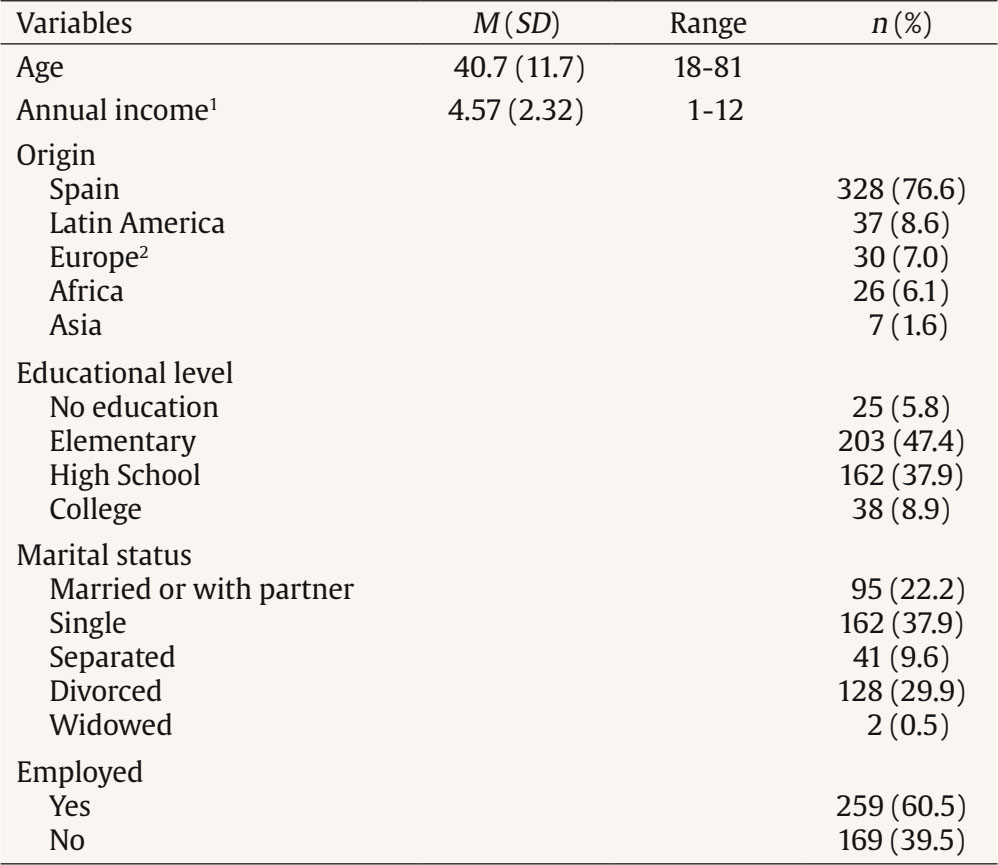 Note. M = mean, SD = standard deviation. 1Annual income: 1: <€1,800, 2: €1,800-€3,600, 3: €3,600-€6,000, 4: €6,000-€12,000, 5: €12,000-€18,000, 6: €18,000-€24,000, 7: €24,000-€30,000, 8: €30,000-€36,000, 9: €36,000-€60,000, 10: €60,000 €90,000, 11: €90,000–€120,000, and 12: >€120,000. 2European countries except Spain. Facilitators The study included 56 facilitators of the Contexto Program (Lila et al., 2018). 47 women (83.9%) and 9 men (16.1%). Of these, 89.2% were Spanish, 3.6% were Italian, and the remaining facilitators (approximately 1.8% each) were French, Colombian, Chilean, or Romanian. All facilitators held a university degree in Psychology and were selected through a competitive recruitment process based on curriculum merits. Before facilitating groups, they received 30 hours of training on theoretical and practical content, including motivational strategies, specific training in the Individual Motivational Plan (IMP), and training in IPV perpetrator intervention from a feminist, psychoeducational, cognitive-behavioral, and motivational perspective (Lila et al., 2018; Santirso, Lila et al., 2020). Each facilitator had at least one year of practical experience managing perpetrator intervention groups. On average, professionals had facilitated 2.47 IPV intervention groups (SD = 1.82, range = 1-9). The number of groups facilitated was used as the main indicator of professional experience since some professionals may have facilitated several groups within a single year, whereas others may have led fewer groups by year due to differences in workload distribution or contract conditions. Therefore, the number of facilitated groups provided a more specific and informative measure of facilitators’ practical experience than years of service. The Intervention Program The Contexto Program is a community-based intervention program for men convicted of IPV offenses and sentenced to less than two years in prison, who received a suspended sentence conditional on their participation in the perpetrator program (Lila et al., 2018). The program follows a closed group format and combines five 1.5-hour individual sessions and thirty-five 2-hour weekly group sessions. Its structure is grounded in the ecological model framework (Heise, 2011) and is designed to reduce risk factors and enhance protective factors for IPV by using evidence-based cognitive-behavioral and motivational strategies. Regarding individual sessions, the program includes three motivational interviews with each participant before the start of the group intervention, one individual session in the middle of the program to review progress and change, and one final individual session at the end of the program to assess how the program has helped the participant acquire tools for building healthier relationships and to identify which attitudes and behaviors may have changed or improved. Instruments Sociodemographic Characteristics Information on participants’ sociodemographic characteristics was collected for the baseline analysis, including age, annual household income (ranging from 1 = under €1,800 to 12 = over €120,000), origin (0 = Spain, 1 = Latin America, 2 = European countries except Spain, 3 = Africa, 4 = Asia), educational level (1 = no education, 2 = elementary studies, 3 = high school studies, 4 = university studies), marital status (1 = married or with partner, 2 = single, 3 = separated, 4 = divorced, 5 = widowed), and employment status (0 = unemployed, 1 = employed). Risk of IPV Recidivism Facilitators employed the Spousal Assault Risk Assessment Guide (SARA; Kropp & Hart, 2000; Spanish version by Andrés-Pueyo et al., 2008) to evaluate participants’ risk of recidivism at baseline. The SARA comprises 20 items designed to ascertain the primary risk factors for IPV. Responses were collected using a 3-point Likert-type scale (0 = absent, 1 = possibly present and 2 = present). Higher scores indicate a higher risk of IPV recidivism. The SARA has demonstrated its capacity for both predictive validity and reliability (Kropp & Hart, 2000; Messing & Thaller, 2013). Its Spanish version has been employed in studies with IPV perpetrators (Expósito-Álvarez et al., 2025; Lila et al., 2018; Llor-Esteban et al., 2016). In the present study, risk of recidivism was included to assess group equivalence at baseline. Work Experience in Facilitating IPV Intervention Groups Facilitators’ experience was dichotomized as 0 (little experience) if they had conducted fewer than three intervention groups, and as 1 (ample experience) if they had conducted three intervention groups or more. This cutoff was informed by the distribution of facilitator experience in the sample, with three groups corresponding approximately to the upper quartile of the distribution. Given that intervention groups were conducted by two facilitators, this variable was categorized into three levels by taking into account both facilitators’ experience: 1 = little-little experience, 2 = ample-little experience and 3 = ample-ample experience. Working Alliance The Working Alliance Inventory – Short Revised (WAI-SR; Hatcher & Gillaspy, 2006) was used. It includes 12 items on a 5-point Likert-type scale (1 = rarely to 5 = always). The WAI-SR includes two subscales: agreement (e.g., “My facilitator and I are working toward goals we have agreed on”) and bond (e.g., “My facilitator and I respect each other”). As each intervention group was led by two facilitators, every participant evaluated each item for both facilitators. The research staff then calculated the average score for each item. The WAI-SR has shown good internal consistency and validity (Hatcher & Gillaspy, 2006), and has been previously used in Spanish IPV perpetrators samples (Roldán-Pardo et al., 2025). Cronbach’s alpha reliability coefficients for the agreement and bond subscales were .97 and .89, respectively. Stage of Change Following the Transtheoretical Model of Change (Prochaska & DiClemente, 1982), both facilitators evaluated participants’ stage of change with respect to their violent behavior. Ratings were based on facilitators’ observations and on their clinical judgment regarding participants’ verbalizations, degree of responsibility-taking, awareness of their perpetration of IPV, and attitudes toward change and toward participation in the program. Stage of change was measured with a single item on a 5-point Likert-type scale (1 = precontemplation, 2 = contemplation, 3 = preparation, 4 = action, 5 = maintenance). The stages were coded as follows: 1 = precontemplation, the participant does not recognize that he has a problem, tends to deny or minimize it, and has no intention of changing; 2 = contemplation, the participant is beginning to acknowledge that he has a problem and that change may be necessary, although he has not yet made a firm decision or taken action; 3 = preparation, the participant has decided to change and has started to take initial steps to address his violent behavior; 4 = action, the participant is actively engaging in behaviors aimed at changing his IPV-related attitudes and actions and is beginning to experience some success; and 5 = maintenance, the participant has achieved a temporary stability of change and is using strategies to prevent relapse. Higher scores indicate a more advanced stage of change. Both facilitators rated each participant’s stage of change independently and then discussed their evaluations until reaching consensus on the final score. Motivation to Change Facilitators appraised participants’ motivation to change using two independent items on a 5-point Likert-type scale (1 = very low to 5 = very high). Items included the assessment of participants’ motivation to change their violent attitudes and behaviors toward women and toward any person. Facilitators discussed the assessment until an agreement was reached. Active Participation The proportion of homework activities delivered by participants in relation to the total number of assigned homework activities. Satisfaction with the Intervention The Satisfaction with the Intervention for Intimate Partner Violence Perpetrators Scale (SIIPVS; Roldán-Pardo et al., 2025) was utilized. The SIIPVS assesses participants’ satisfaction using various components of the intervention: facilitators and program delivery, the learning process and the peer group. The scale comprises 17 items, measured on a 5-point Likert-type scale (1 = strongly disagree to 5 = strongly agree). The SIIPVS has demonstrated its reliability and validity (Roldán-Pardo et al., 2025). Cronbach’s alpha coefficients were: .80 for satisfaction with the facilitators and program delivery; .90 for satisfaction with the learning-process; .72 for satisfaction with the peer group. Procedure Sociodemographic data were obtained during a 2-hour pre-intervention assessment, whereas risk of recidivism was evaluated by facilitators drawing on information gathered in the initial individual motivational interviews and case-related documentation (i.e., the facts established in the final court judgment). Both variables were collected prior to the group-based intervention. Information on facilitators’ work experience in IPV intervention was obtained from program records prior to the start of the group-based intervention. In contrast, stage of change, motivation to change, and active participation were assessed after the group-based intervention had ended. Finally, data on working alliance and satisfaction with the intervention were collected as part of the final assessment of the Contexto Program (Lila et al., 2018). These data were obtained using a self-report battery of instruments, administered by the program staff during a single 2-hour session at the end of the group-based intervention. For clarity, the timing and source of each variable are summarized as follows. Sociodemographic characteristics and risk of IPV recidivism were assessed at baseline, prior to the group-based intervention, with sociodemographic data obtained through participant self-report and risk of recidivism evaluated by facilitators using the SARA. Facilitators’ work experience in facilitating IPV intervention groups was obtained from program records prior to the start of the intervention. Process-related outcomes were assessed at the end of the intervention. Specifically, working alliance and satisfaction with the intervention were reported by participants through self-report measures administered during the final assessment session. Stage of change and motivation to change were evaluated by facilitators after the completion of the group-based intervention, based on their observations of participants throughout the intervention process, whereas active participation was derived from facilitators’ records of homework completion. All the participants were informed about the nature of the study and provided written informed consent. They were also informed that their decision to either participate or decline to participate in the study would neither affect their legal status nor provide any legal benefit. Confidentiality was ensured. The study was approved by the University of Valencia Ethics Committee (H1537520365110) and adhered to the principles of the 1964 Declaration of Helsinki (World Medical Association, 1964). Data Analysis First, baseline comparability of groups was examined according to facilitators’ work experience in facilitating IPV intervention groups (little-little experience vs. ample-little experience vs. ample-ample experience). Baseline variables included participants’ sociodemographic characteristics and their risk of IPV recidivism at intake, with sociodemographic characteristics comprising both categorical and continuous variables and risk of recidivism treated as a continuous variable. Chi-square tests were used to compare categorical variables between groups, whereas independent t tests were conducted for continuous variables with a normal distribution. For continuous variables with a non-normal distribution, the Kruskal-Wallis H test was employed. This step was carried out to ensure that any subsequent differences observed in the intervention process variables could not be attributed to pre-existing differences among participants at intake. Second, one-way ANOVAs were conducted to evaluate the differences between groups on process outcomes (i.e., working alliance, stage of change, motivation to change, active participation and satisfaction with the intervention). The normality assumption was evaluated by running the Shapiro-Wilk test, while the homogeneity assumption was evaluated by performing Levene’s test. As sample sizes differed between the groups, Welch’s test was applied to the one-way ANOVAs (Delacre et al., 2017; Fagerland & Sandvik, 2009; Ruxton, 2006). The HSD post hoc test was employed to assess differences between groups when homoscedasticity was detected (Nanda et al., 2021), whereas the Games-Howell post hoc test was used in cases of heteroscedasticity (Field, 2013; Games & Howell, 1976). The eta-squared statistic was employed to calculate the effect size. All the analyses were conducted using the statistical software IBM SPSS, version 28.0.1.1. Comparisons at Baseline Sociodemographic characteristics and risk of IPV recidivism were analyzed to assess the comparability of the three groups (see Table 2). Six sociodemographic variables, along with risk of IPV recidivism assessed by facilitators at intake, were examined. None of the between-group comparisons yielded any statistically significant differences (p > .05), which implies that groups were statistically equivalent at baseline. Table 2 Baseline Characteristics across Groups 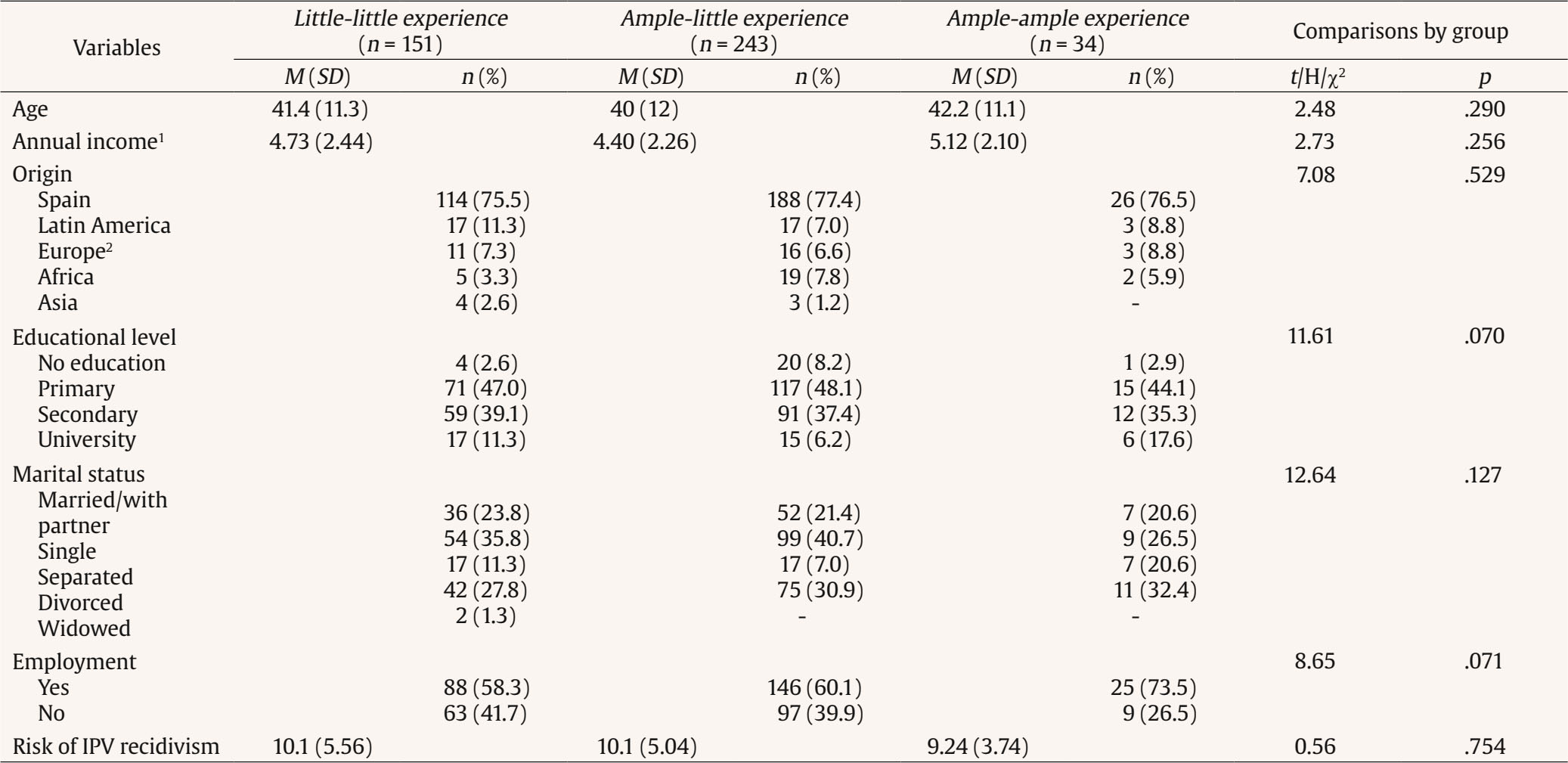 Process Outcomes Table 3 presents the differences in participants’ key intervention process variables based on facilitators’ level of work experience. Significant differences between groups were observed on the agreement subscale of the Working Alliance Inventory, F(2, 101.3) = 7.03, p = .001, η2p = .027, and in the total working alliance score, F(2, 99) = 6.35, p = .003, η2p = .027. Specifically, the participants led by the ample-ample experienced facilitators completed the program and reported a statistically significant higher level of agreement than those led by the ample-little experienced facilitators (ΔM = 0.41, p = .002, 95% CI [0.13, 0.70]) and those led by the little-little experienced facilitators (ΔM = 0.42, p = .006, 95% CI [0.10, 0.73]). Similarly, they reported a stronger general working alliance than the participants in the groups led by the ample-little experienced facilitators (ΔM = 0.37, p = .003, 95% CI [0.11, 0.63]) and by the little-little experienced facilitators (ΔM = 0.35, p = .011, 95% CI [0.07, 0.62]). Table 3 Differences in Participants’ Intervention Process Variables based on Facilitators Work Experience 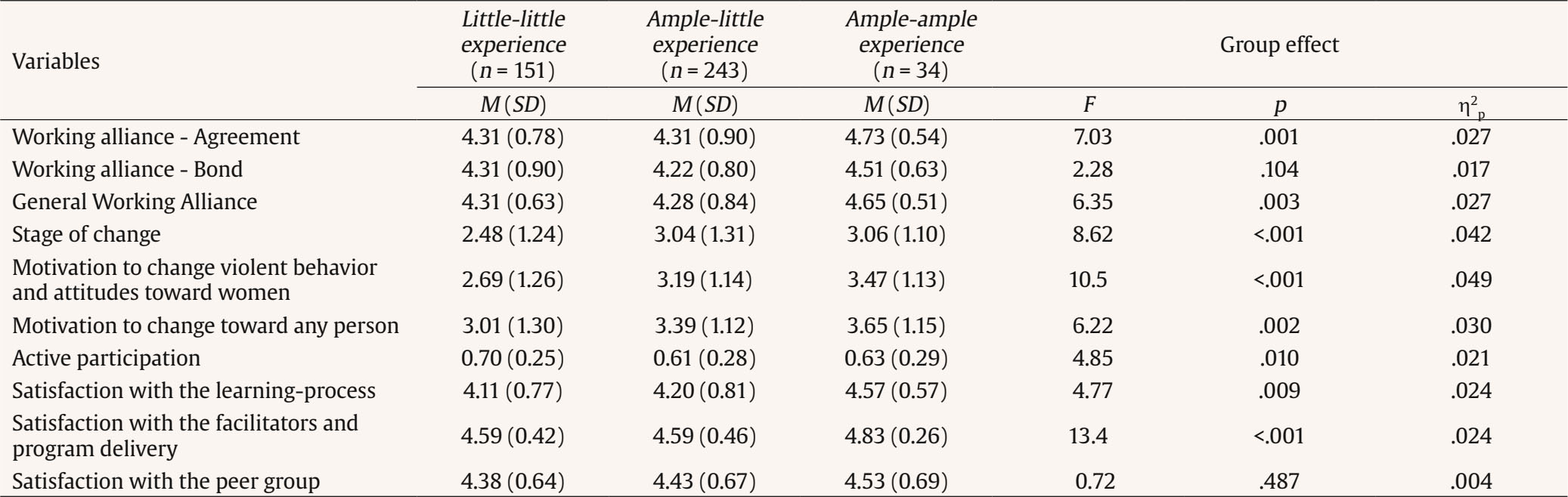 Note. IPV = intimate partner violence; M = mean, SD = standard deviation. Significant group differences were found in participants’ stage of change (F2, 395 = 8.62, p < .001, η2p = .042). Specifically, those led by the ample-ample experienced facilitators, and those by the ample-little experienced facilitators were in a significantly more advanced stage of change than those led by the little-little experienced facilitators at the end of the intervention (ΔM = 0.58, p = .048, 95% CI [0.01, 1.15], and ΔM = 0.55, p < .001, 95% CI [0.23, 0.88], respectively). For motivation to change, significant differences emerged between groups for both violent attitudes and behaviors toward women, F(2, 407 ) = 10.5, p < .001, η2p = .049, and toward others, F(2, 407) = 6.22, p = .002, η2p = .030. The participants led by the ample-ample experienced facilitators reported greater motivation to change for both types of violence than those led by the little-little experienced facilitators (ΔM = 0.78, p = .002, 95% CI [0.25, 1.31]; and ΔM = 0.63, p = .015, 95% CI [0.10, 1.17], respectively). Similarly, the participants led by the ample-little experienced facilitators also reported significantly higher motivation to change violent behaviors toward both women and others than those led by the little-little experienced facilitators at the end of the intervention (ΔM = 0.50, p < .001, 95% CI [0.20, 0.79] and ΔM = 0.37, p = .009, 95% CI [0.08, 0.67], respectively). There were also significant differences between groups for active participation, F(2, 90.4) = 4.85, p = .010, η2p = .021. Interestingly, the participants in the groups facilitated by the little-little experienced facilitators obtained greater active participation levels than those led by the ample-little experienced facilitators (ΔM = 0.09, p = .006, 95% CI [0.02, 0.15]). Significant differences were found between groups for participants’ satisfaction with the learning process, F(2, 392) = 4.77, p = .009, η2p = .024, and their satisfaction with the facilitators and program delivery, F(2, 123.5) = 13.4, p < .001, η2p = .024. The participants led by the ample-ample experienced facilitators reported feeling significantly higher satisfaction with the learning process than those led by the ample-little (ΔM = 0.37, p = .030, 95% CI [0.03, 0.70]) and little-little experienced facilitators (ΔM = 0.46, p = .006, 95% CI [0.11, 0.80]). Likewise for satisfaction with the facilitators and program delivery, the participants led by the ample-ample experienced facilitators felt significantly higher satisfaction than those led by both the ample-little (ΔM = 0.24, p < .001, 95% CI [0.12, 0.37]) and little-little experienced facilitators (ΔM = 0.24, p < .001, 95% CI [0.11, 0.37]). Finally, no significant group differences were observed for either the bond subscale of the working alliance or satisfaction with the peer group. This study aimed to examine the impact of facilitators’ work experience on intervention process variables in intervention programs for IPV perpetrators: working alliance, stage of change, motivation to change violent attitudes and behaviors, active participation of perpetrators during the intervention program and participants’ satisfaction with the intervention. To achieve this objective, three distinct groups (i.e., ample-ample, ample-little, and little-little experience) were created based on each facilitator’s work experience, and comparisons were made among the groups across the analyzed variables. Concerning the working alliance, the participants led by the facilitators with ample-ample experience tended to report a stronger overall working alliance and seemed to show more agreement with facilitators on both the tasks and goals of the intervention compared to the participants led by the facilitators with ample-little or little-little experience. This finding is consistent with previous research, which has suggested that more experienced professionals may be better equipped to establish effective communication with participants, thereby increasing the likelihood of reaching mutual agreement and fostering a stronger alliance (Boira et al., 2013; Morrison et al., 2019). For motivation to change and stage of change, the perpetrators in the groups led by both the ample-ample and ample-little experienced professionals tended to show more willingness to modify violent attitudes and behaviors toward women and others. Likewise, the participants in these same groups appeared to reach a more advanced stage of change by the end of the intervention. One possible explanation is that more experienced facilitation teams may have spent more time training in and applying specific motivational strategies with perpetrators, which could enhance their effectiveness in promoting change (Holdsworth et al., 2014). This encouragement of change among perpetrators may, in turn, lead them to complete the intervention in a more advanced stage of change (Expósito-Álvarez, Roldán-Pardo et al., 2024; Lila et al., 2025; Lila et al., 2018). Our results also showed that the group led by the little-little experienced professionals tended to exhibit more active participation in the intervention sessions than those groups in which at least one professional had prior extensive experience in this field. This finding should be interpreted cautiously, as active participation was assessed only through the proportion of homework tasks completed by participants throughout the intervention process. Although one possible hypothesis is that facilitators with less experience may rely more closely on the structured elements of the program, whereas more experienced facilitators may adapt the intervention more flexibly to participants’ needs (Butters et al., 2021; Ferrer-Pérez et al., 2016), this explanation was not directly tested in the present study. Future research should examine whether differences in protocol adherence and flexibility in program delivery help explain this pattern. On participant satisfaction, our findings suggested that the perpetrators in the group led by the ample-ample experienced professionals tended to report higher satisfaction with the facilitators and program delivery, and with the learning process, than those in the groups led by the professionals with ample-little or little-little experience. This finding is consistent with the literature showing that more experienced facilitators may have a firmer command of session content, communicate more effectively and be better able to foster learning among participants (Giesbrecht, Edmonds, Bowns et al., 2023; Morrison et al., 2019). Therefore, the benefits of more professional experience seem to be associated with increased participant satisfaction. This study suggested that the level of work experience may have a significant impact on the key variables during the intervention process. This is important since these variables have been consistently linked with better outcomes in intervention programs for IPV perpetrators, particularly in terms of lowering the risk of recidivism and official reoffending (Roldán-Pardo et al., 2025; Semiatin et al., 2013). Furthermore, our study’s findings carry important implications for highlighting the value of involving professionals with ample experience in working with IPV perpetrators. Such professionals may be better equipped to strengthen the overall working alliance and agreements about tasks and goals (Roldán-Pardo et al., 2023), to encourage the motivation required to change violent attitudes and behaviors, and to foster participants’ satisfaction with the intervention. The results of this study suggest that having experienced professionals is essential for achieving better outcomes in intervention programs for perpetrators. To make this possible, these programs may need adequate financial resources, such as sufficient funding, to enable them to retain professional staff with fair salaries, stable contracts and supportive working conditions. Our results are also aligned with the European standards established by the European Network for Work with Perpetrators of Domestic Violence (WWP EN, 2023), which emphasize the importance of supervision for less experienced professionals. These standards recommend that novice practitioners receive regular internal and/or external supervision to support their ongoing professional development. Our study is not without its limitations. First, the participants in this study were men convicted of IPV who were mandated by a court to participate in an intervention program in Spain. As a result, caution should be exercised when attempting to generalize these findings to different populations or settings (Expósito-Álvarez, Gilchrist et al., 2024; Santirso, Lila et al., 2020). Another limitation is the criterion used to define a high level of experience, as this was based solely on the number of facilitated intervention groups. Although the cutoff used in this study was informed by the distribution of facilitator experience in the sample, it should still be interpreted as an operational decision rather than as an established empirical standard. Therefore, future research should consider alternative ways of operationalizing professional experience, including the use of composite measures that incorporate several relevant indicators, such as years of practice in the field, specialized training received or participation in supervision processes conducted by more experienced professionals (Giesbrecht, Edmonds, & Bruer, 2023; Maciag et al., 2023; Talbot et al., 2019). Such approaches may provide a more comprehensive and nuanced assessment of facilitators’ experience and its potential influence on intervention processes. Another important limitation concerns the potential for shared-source bias. In the present study, key outcome variables such as stage of change and motivation to change were assessed by the facilitators themselves, while facilitator experience was the main independent variable. This overlap in measurement source may have inflated the observed associations, as more experienced facilitators could have been more likely to rate participants’ progress more positively. Importantly, facilitators were not aware that they were participating in this specific study, which may have reduced the likelihood of intentional bias or socially desirable responding. However, this does not fully eliminate the possibility of systematic differences in how facilitators with varying levels of experience perceive and rate participant progress. Additionally, although the facilitators’ ratings were discussed until consensus was reached, no information was collected or reported regarding initial agreement levels or interrater reliability prior to consensus. Therefore, the reliability and independence of these assessments cannot be fully established. Future research should incorporate independent evaluators or multi-informant approaches to reduce potential bias and strengthen the validity of findings. Furthermore, active participation was assessed solely through the proportion of homework assignments completed by participants. Although this indicator provided an objective and feasible measure of engagement, it may not fully capture the multidimensional nature of active participation in intervention contexts. Other relevant aspects, such as attentiveness during sessions, involvement in group discussions, or spontaneously requesting speaking time to share one’s perspective, were not assessed through observational or external evaluation measures. Future research could benefit from incorporating complementary indicators, including observational and externally rated measures, to provide a more comprehensive assessment of active participation. Finally, group sizes were unequal, particularly with respect to the relatively small size of the ample-ample experience group. Although the Welch test was conducted to account for these differences, this statistical adjustment does not fully address potential issues related to the stability and precision of the estimates in comparisons involving unequal groups. Therefore, findings should be interpreted with caution and replicated in future studies with more balanced samples to ensure more robust comparisons. In conclusion, work experience appears to be a relevant factor in the intervention process with IPV perpetrators, as it may be associated with several process-related variables that are considered important for improving the effectiveness of programs targeting this population. The present study suggests that involving professionals with substantial experience in working with IPV perpetrators may be beneficial for some intervention processes. In this regard, practice-oriented training and regular supervision may help facilitators develop specific intervention skills. These findings may also have implications for policy and program management, as they suggest that strengthening specialized facilitator training and promoting stable, long-term employment conditions could contribute to professional retention and continuity in group intervention delivery, in line with current European standards for perpetrator programs (WWP EN, 2023). At the same time, scientific literature has highlighted the relevance of other facilitator-related characteristics, such as leadership and interpersonal skills (Morrison et al., 2019; Waldo et al., 2007). Therefore, additional research is needed to examine which dimensions of facilitators’ profiles may be most strongly associated with program outcomes, in order to better inform recruitment, training, and supervision policies and, ultimately, to contribute to the improvement of intervention programs and to the fight against IPV through direct work with perpetrators. Conflict of Interest The authors of this article declare no conflict of interest. Cite this article as: Pérez-Sabater, R., Roldán-Pardo, M., Expósito-Álvarez, C., & Lila, M. (2026). Effect of facilitators’ work experience on process outcomes in an intervention for intimate partner violence perpetrators. European Journal of Psychology Applied to Legal Context, 18, Article e260181. https://doi.org/10.5093/ejpalc2026a6 Funding information: This study was supported by PROMETEO 2022: Projects for Research Excellence Groups (CIPROM/2021/46) and by “Profesionales en la intervención con hombres que ejercen violencia de género: un análisis comparado de necesidades y desafíos (PROF-VG)” - Prisms & Problems Program of the BBVA Foundation 2023 (EIC23-1-14483). Rocío Pérez-Sabater was supported by the ACIF Program of the Generalitat Valenciana (CIACIF/2023/286). |
Cite this article as: Pérez-Sabater, R., Roldán-Pardo, M., Expósito-Álvarez, C., & Lila, M. (2026). Effect of Facilitators’ Work Experience on Process Outcomes in an Intervention for Intimate Partner Violence Perpetrators. The European Journal of Psychology Applied to Legal Context, 18, Article e260181. https://doi.org/10.5093/ejpalc2026a6
Correspondence: marisol.lila@uv.es (M. Lila).Copyright © 2026. Colegio Oficial de la Psicología de Madrid


 PDF
PDF e-PUB
e-PUB CrossRef
 JATS
JATS Print
Print Send
SendEMAIL ALERT
The European Journal of Psychology Applied to Legal Context is licensed under a Creative Commons Attribution-NonCommercial-NoDerivatives 4.0 International License