Sexual Cognitions of Dominance and Submission: Effects of Gender and Sexual Orientation
[Los pensamientos sexuales de dominación y sumisión: los efectos del género y la orientación sexual]
Juan Carlos Sierra, Liseth G. Diaz-Rodríguez, & Carlos Pérez-Amorós
Mind, Brain and Behavior Research Center (CIMCYC), University of Granada, Spain
https://doi.org/10.5093/ejpalc2026a5
Received 25 November 2025, Accepted 20 March 2026
Abstract
Background/Aim: Sexual cognitions may differ depending on gender and sexual orientation. This study aimed to examine the effect of gender, sexual orientation, and their interaction on the frequency of positive sexual cognitions (PSC) and negative sexual cognitions (NSC) of dominance and submission. This is a seminal study to differentiate between PSC and NSC across diverse sexual orientations. Method: Participated in the study a total of 1,308 cisgender Spanish adults aged 18 to 79 years (M = 31.66, SD = 11.42), divided into four groups: heterosexual men (n = 394), heterosexual women (n = 397), gay men (n = 355), and lesbian women (n = 162). Results: Regarding gender, men reported higher frequencies of both dominance and submission PSC, whereas women reported higher frequencies of submission NSC. Concerning sexual orientation, significant differences emerged only for submission NSC, with lesbian and gay participants reporting higher frequencies. The gender x sexual orientation interactions revealed several counterintuitive patterns across dominance and submission PSC as well as dominance NSC. Lesbian women and heterosexual men resembled each other, and gay men resembled heterosexual women, more than their gender counterparts. Conclusions: These findings underscore the importance of considering gender and sexual orientation differences when examining sexual cognitions concerning dominance and submission.
Resumen
Antecedentes/objetivo: Las cogniciones sexuales pueden diferir en función del género y la orientación sexual. Este estudio tiene como objetivo examinar el efecto del género, la orientación sexual y la interacción de ambas variables en la frecuencia de pensamientos sexuales positivos (PSP) y negativos (PSN) de dominación y sumisión. Este es el primer estudio en diferenciar PSP y PSN en diversas orientaciones sexuales. Método: Participaron en el estudio un total de 1,308 adultos cisgénero españoles con edades comprendidas entre 18 y 79 años (M = 31.66, DT = 11.42), divididos en hombres heterosexuales (n = 394), mujeres heterosexuales (n = 397), hombres gais (n = 355) y mujeres lesbianas (n = 162). Resultados: Con respecto al género, los hombres presentaron una mayor frecuencia de PSP de dominación y sumisión, mientras que las mujeres mostraron una mayor frecuencia de PSN de sumisión. En orientación sexual se observaron diferencias significativas únicamente en los PSN de sumisión, más frecuentes entre participantes gais y lesbianas. Las interacciones género x orientación sexual revelaron patrones contraintuitivos en PSP de dominación y sumisión, así como en PSN de dominación. Las mujeres lesbianas y los hombres heterosexuales se asemejaron entre sí, y los hombres gais se asemejaron a las mujeres heterosexuales, más que a sus pares de género. Conclusiones: Se concluye resaltando la importancia de considerar las diferencias de género y orientación sexual al examinar los pensamientos sexuales de dominación y sumisión.
Keywords
Positive sexual cognitions, Negative sexual cognitions, Sadomasochism, Gender-differences, Sexual diversityPalabras clave
Cogniciones sexuales positivas, Cogniciones sexuales negativas, Sadomasoquismo, Diferencias de género, Diversidad sexualCite this article as: Sierra, J. C., Diaz-Rodríguez, L. G., & Pérez-Amorós, C. (2026). Sexual Cognitions of Dominance and Submission: Effects of Gender and Sexual Orientation. The European Journal of Psychology Applied to Legal Context, 18, Article e260180. https://doi.org/10.5093/ejpalc2026a5
Correspondence: jcsierra@ugr.es (J. C. Sierra).Sexual fantasies are cognitions experienced as sexually arousing (Leitenberg & Henning, 1995) and are considered an indicator of sexual health, as they stimulate sexual response (Birnbaum et al., 2019; Moyano et al., 2016). Although the terms “sexual fantasy” and “sexual cognition” have sometimes been used interchangeably, they present important conceptual differences. According to Renaud and Byers (1999, 2001), “sexual cognition” is a broader term than “sexual fantasy”, encompassing the full spectrum of mental activity related to sex—whether elaborated or fleeting, voluntary or intrusive, and experienced as either pleasant or unpleasant. In contrast, sexual fantasies typically refer to deliberate and voluntary thoughts that are assumed to be pleasurable (Renaud & Byers, 1999). From this theoretical perspective, the content of a sexual cognition alone is insufficient to determine its affective appraisal (positive vs. negative), as the same thematic material may be appraised differently depending on the individual, the context, and the specific content (Little & Byers, 2000; Renaud & Byers, 1999, 2001). Thus, by accounting for affective appraisal, the sexual cognitions approach captures the complexity of mental experiences—such as dominance and submission sexual cognitions—that the traditional concept of “fantasy” tends to overlook. For this reason, the present study focuses on sexual cognitions, assessed in terms of frequency, content, and affective appraisal. Building on this theoretical framework, sexual cognitions can be categorized according to their affective appraisal into positive sexual cognitions (PSC) and negative sexual cognitions (NSC), with both types capable of eliciting sexual arousal (Byers et al., 1998). PSC are experienced as egosyntonic, pleasurable, and acceptable, and are typically internally generated rather than involuntary, whereas NSC are egodystonic, unwanted, unacceptable, and often experienced as intrusive (Renaud & Byers, 1999, 2001). This distinction is particularly relevant when examining themes such as dominance and submission, where findings suggest that the positive or negative valence can fundamentally alter the meaning of the cognition (Renaud & Byers, 2005, 2006). A widely used classification of sexual fantasies is Wilson’s (1988), which categorizes them into four types based on content: (a) Intimate, involving the pursuit of pleasure and enjoyment through commitment to a sexual partner; (b) Exploratory, referring to the search for sexual variety and novelty; (c) Sadomasochistic, encompassing sexual behaviors that involve dominance and submission; and (d) Impersonal, related to sexual interests that involve little emotional engagement, such as fetishes. Moyano and Sierra (2012) applied this framework to categorize PSC and NSC by content, with subsequent studies examining associations with sociodemographic factors (Moyano & Sierra, 2013, 2014; Pérez-Amorós et al., 2025, 2026), personality traits (Moyano & Sierra, 2013), sexual functioning (Moyano et al., 2016; Pérez-Amorós et al., 2025, 2026), sexual victimization (Moyano & Sierra, 2015), and sexual aggression (Moyano & Sierra, 2016). In some of these studies (i.e., Moyano & Sierra, 2014, 2015, 2016), sadomasochistic sexual cognitions were further subdivided into dominance and submission cognitions, according to the sexual role adopted. Dominance-related sexual thematics refer to erotic mental representations in which an individual forces someone else into various sexual activities (Leitenberg & Henning, 1995). Previous research has linked dominance-related PSC and sexual fantasies to sexual coercion, as they reinforce the positive perception of a dominant role as pleasurable or acceptable (Birke et al., 2024; Moyano & Sierra, 2016; Renaud & Byers, 2005). Research on sexual fantasies has shown that coercive fantasies in the general population are directly associated with sexual aggression (Bártová et al., 2021; Bondü & Birke, 2021; Riberas-Gutiérrez et al., 2025). Even after controlling for risk factors for sexual coercion, aggressive sexual fantasies remain a significant predictor of sexual aggression (Birke et al., 2024; Bondü & Birke, 2021; Riberas-Gutiérrez et al., 2025) and their frequency is considered one of the most valid and reliable indicators (Bondü, 2023). Moreover, individuals with a history of sexual offending report masturbating to fantasies involving forcing someone to have sex (Looman, 1995; Marshall et al., 1991) and exhibit difficulties inhibiting aggressive fantasies (Curnoe & Langevin, 2002). In the sexual cognitions field, individuals who perpetrated sexual aggression exhibit a higher frequency of dominance PSC than those without such a history (Moyano & Sierra, 2016). Indeed, a positive affective appraisal toward coercive sexual cognitions may constitute a trigger for sexual offenses (Renaud & Byers, 2005; Wheeler, 2003), highlighting the added value of considering the PSC and NSC framework. Submission-related sexual content refers to erotic mental representations in which an individual imagines being forced or sexually subdued, relinquishing control, or adopting a passive role that entails vulnerability and surrender. Individuals with a history of childhood sexual abuse tend to report a higher number of sexual fantasies—particularly those involving coercion or vulnerability—than those without such experiences (Leitenberg & Henning, 1995). Among them, women experience greater psychological harm (see Cea et al., 2025) and report sexual fantasies of being forced more frequently (Briere et al., 1994; Canivet et al., 2026; Shulman & Home, 2006), as well as humiliation-related fantasies in some cases (Pocknell & King, 2020). Moreover, victims of childhood sexual abuse report, compared to individuals without such a history, a higher frequency of atypical, uninhibited sexual fantasies related to submission and dominance, which they tend to experience more intrusively (Gewirtz-Meydan & Opuda, 2023), as well as greater difficulty inhibiting them (Rellini, 2008). In the sexual cognitions field, Renaud and Byers (2006) observed a high frequency of submission PSC in victims of childhood sexual abuse, whereas NSC were more frequent when the abuse occurred in adulthood. Moyano and Sierra (2015) found that male victims of sexual abuse reported a higher frequency of submission PSC, while female victims reported more dominance PSC, contrary to expectations based on traditional gender roles. Overall, the findings suggest a relationship between dominance- and submission-related PSC and NSC and experiences of sexual aggression and victimization. The frequency of dominance- and submission-related PSC and NSC may be influenced by different sociodemographic factors, including gender, sexual orientation, and age. Women tend to experience more sexual cognitions and fantasies with romantic and submissive content, whereas men report a higher frequency of impersonal and dominance-related content (Joyal, 2017; Moyano & Sierra, 2014; Pérez-Amorós et al., 2025; Shekarchi & Nimbi, 2025). Significant gender differences have also been observed in the frequency of sadomasochistic sexual cognitions, with men reporting more PSC and women more NSC (Pérez-Amorós et al., 2025, 2026). In addition, differences across sexual orientation have been reported for PSC related to sadomasochistic content, with bisexual participants showing a higher frequency of sadomasochistic PSC than heterosexual, lesbian, and gay participants (Pérez-Amorós et al., 2026). Similar trends are observed in sexual fantasies research, where gay, lesbian, and bisexual persons appear to fantasize more frequently about taboos and BDSM (Lehmiller & Gormezano, 2023). Regarding age, adults aged 18-34 and 35-49 reported higher frequencies of sadomasochistic PSC than those aged 50 or older (Pérez-Amorós et al., 2025). In the domain of sexual cognitions of dominance and submission, Moyano and Sierra (2014) found in a sample of 1,322 Spanish adults that 83.3% and 48.3% of men reported dominance PSC and NSC, respectively, compared to 63.1% and 35.9% of women. For submission cognitions, 64.5% and 58% of men and 66.1% and 66.7% of women reported experiencing them as PSC and NSC, respectively. Overall, men reported higher frequencies of both dominance cognitions, whereas women reported more submission NSC. Similar results were subsequently observed in men and women who had perpetrated sexual aggression (Moyano & Sierra, 2016). Byers et al. (1998) had previously reported that men more frequently experience intrusive sexual cognitions of an aggressive nature, while women more often report intrusive cognitions of being sexual victims. More recently, in research on sexual fantasies, Canivet et al. (2022) concluded that both women and men tend to fantasize according to traditional roles. In the same vein, Shekarchi and Nimbi (2025) found a higher frequency of active and dominance sexual fantasies in men, and passive and romantic fantasies in women—differences that may be explained by evolutionary, hormonal, and psychological factors (Leitenberg & Henning, 1995). The female tendency for submissive fantasies is a complex phenomenon. On one hand, it has been criticized for reflecting the internalization of traditional sexual norms and scripts (Ziegler & Conley, 2016). On the other hand, it may be interpreted as a comprehensible and even adaptive response, in certain respects, to a social context that normalizes and eroticizes female submission (Fahs, 2011; Ziegler & Conley, 2016). Some interpretations suggest that such fantasies may allow women to feel blameless for imagined sexual behavior, as male force or dominance is depicted as initiating the act, enabling women to enjoy it without guilt (Leitenberg & Henning, 1995). In contrast, other perspectives emphasize that, for some women, these fantasies may serve as a source of power, allowing them to manage their desirability and symbolically control sexual interaction (Hawley y Hensley, 2009; Ziegler & Conley, 2016). For their part, dominant roles grant greater autonomy and capacity for action (Ziegler & Conley, 2016), which may lead men to fantasize about dominance as a means of evoking power and control, thereby reinforcing their sexual self-concept (Leitenberg & Henning, 1995). In addition to the evidence regarding gender, differences have been reported in the frequency of dominance and submission content based on sexual orientation and its interaction with gender. However, the literature on both aspects remains limited and has only been addressed from the perspective of sexual fantasies. Price et al. (1985) found that gay men, compared to heterosexual men, more frequently experience fantasies about being restrained or touched. Nese et al. (2021) noted that gay men report more dominant fantasies than heterosexual men, whereas bisexual women exhibit more submission-related fantasies than lesbian and heterosexual women. Similarly, Brown et al. (2023) found that non-heterosexual participants reported higher arousal toward rough sex, submission/masochism, degradation/humiliation, and general fantasies. Tortora et al. (2020) documented that both gay men and lesbian women experience more sexual fantasies of dominance and submission than heterosexual individuals. Extending this evidence, Canivet et al. (2026) observed that bisexual participants were significantly more likely to belong to profiles characterized by either submissive and victimization fantasies or domination and violent perpetration fantasies, both accompanied by high levels of shame. In contrast, gay and queer participants were specifically more likely to belong to the profile marked by domination and violent perpetration fantasies associated with high shame. Given the limited findings—particularly concerning sexual orientation—and the frequent lack of distinction between PSC and NSC in existing studies, the present study focuses on examining and identifying the effect of gender, sexual orientation, and their interaction on the frequency of dominance and submission PSC and NSC. We hypothesized a higher frequency of dominance-related sexual cognitions in men and of submission-related sexual cognitions in women (Moyano & Sierra, 2014; Renaud & Byers, 2005, 2006). Regarding sexual orientation and the gender x sexual orientation interaction, and considering the limited prior evidence, we formulated two research questions: (1) will sexual orientation have a significant effect on the frequency of dominance and submission PSC and NSC? and (2) will the gender x sexual orientation interaction have a significant effect on the frequency of dominance and submission PSC and NSC? Participants The sample consisted of 1,308 Spanish cisgender adults aged between 18 and 79 years (M = 31.66, SD = 11.42). Participants were allocated into four groups based on gender (men vs. women) and the type of sexual relationships they reported (exclusively heterosexual vs. exclusively gay): 394 heterosexual men, 397 heterosexual women, 357 gay men, and 162 lesbian women. For this study, sexual orientation was assessed via self-reported current sexual behavior, a key and observable dimension of this multidimensional and potentially fluid construct (Katz-Wise & Hyde, 2015). This approach is also supported by research indicating that sexual behavior does not always correspond with one’s self-described sexual orientation (Diamond, 2016). The inclusion criteria were being 18 years of age or older, holding Spanish nationality and identifying as cisgender. Sociodemographic characteristics are summarized in Table 1. Table 1 Sociodemographic Characteristics of the Participants 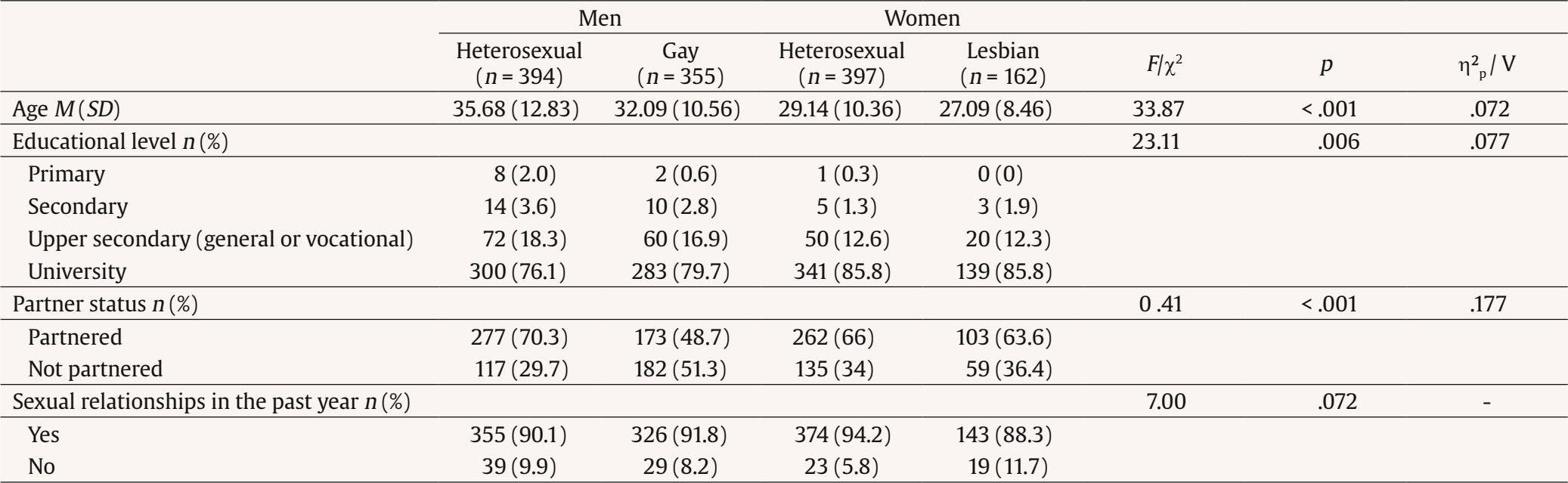 Note. Chi-square were used for categorical variables; one-way ANOVA was used for the continuous variable. M = mean; SD = standard deviation; F = F-statistic; χ2 = chi-square statistic; p = level of significance; η²p = partial eta-squared; V = Cramér’s V. Instruments Sociodemographic and Sexual History Questionnaire Assessed sex assigned at birth, gender, age, nationality, educational level, type of sexual relationships (from exclusively heterosexual to exclusively gay), partner status, and sexual relationships during the past year. Sadomasochistic sexual cognitions subscale of the Spanish version of the Sexual Cognitions Checklist (SCC; Moyano & Sierra, 2012). This subscale assesses the frequency and affective appraisal (i.e., positive and negative) of sexual cognitions related to dominance and submission. Items are rated on a 7-point Likert scale ranging from 0 (“I have never had this thought”) to 6 (“I had [have] this thought frequently throughout the day”). Following the recommendations of Pérez-Amorós et al. (2026) the following items were removed for gender comparisons: being whipped or spanked, from the PSC, and being pressured to do something sexually, from NSC. As a result, the subscale consisted of three dominance-related items (e.g., forcing someone to do something sexually) and three submission-related items (e.g., being forced to do something sexually), each evaluated as positive or negative, except for the aforementioned items, wich were exclused only where they were non comparable. Higher scores indicate a greater frequency of sexual cognitions. Moyano and Sierra (2012) reported internal consistency reliability coefficients of .81 for PSC and .85 for NSC. In the present study, after removing the previously mentioned items, Cronbach’s alpha coefficients of .67 and .88 were obtained for PSC and NSC, respectively. Procedure Participants were recruited between March 2024 and April 2025 through an online survey created using LimeSurvey® software. The survey was disseminated via social media and virtual platforms (i.e., X®, Instagram®, Facebook®, Telegram®, and Reddit®) through periodic posts and promoted advertisements, as well as on websites and mailing lists targeting the LGBTIQA+ community. In addition, printed posters including a QR code linking to the survey were distributed across various physical locations (e.g., public and private venues and establishments), to reach participants less active online. In both dissemination modalities, participants were provided with contact information for the research team to resolve questions and ensure informed and adequate participation. Several quality-control procedures were implemented to prevent duplicate, fraudulent, or bot-generated responses, including a CAPTCHA with a randomized arithmetic calculation placed at the beginning of the survey. Additionally, a control item was included to assess response validity, and the data were carefully reviewed to identify anomalous response patterns. Participation was voluntary, anonymous, and confidential. The survey was self-administered with no direct interaction with the researcher, and items were presented using neutral wording. Participants were explicitly instructed to respond honestly and attentively. The instructions emphasized the importance of providing valid data, clarified that there were no right or wrong answers, and assured participants that their responses would remain strictly anonymous, confidential, and used exclusively for research purposes. Before completing the survey, participants read and agreed to an informed consent form outlining the nature and implications of the study, as well as detailed privacy and confidentiality measures. Participation was not compensated, and the estimated survey duration was approximately 20 minutes. The study was approved by the Ethics Committee on Human Research of the University of Granada (Reference No. 3150/CEIH/2023). Data Analysis A priori power analysis was conducted using G*Power (Version 3.1.9.7; Faul et al., 2007) based on the factorial MANOVA. Considering the power calculation (α = .05, power = 0.90, effect size f2(V) = 0.0625, number of groups = 4), a total sample size = 140 was established. Missing values represent 1.35% of the data and were imputed using the missForest package (Version 1.5; Stekhoven & Bühlmann, 2012) in R® (Version 4.4.2; R Core Team, 2024), with the RStudio® interface (Version 2024.09.1 + 394; Posit Team, 2024). All other analyses were conducted using IBM® SPSS® Version 28. Multivariate analyses of covariance (MANCOVAs) were conducted to examine the effects of gender, sexual orientation, and their interaction on PSC and NSC frequencies. Analyses were conducted separately for (a) the total scores of the four dimensions (two MANCOVAs: one for PSC dominance and PSC submission, and another for NSC dominance and NSC submission) and (b) the individual items (two MANCOVAs: one for the six PSC items—three dominance and three submission—and another for the six NSC items—three dominance and three submission). In all models, covariates that could potentially confound the relationship between the independent and dependent variables were controlled for, including the frequency of sexual cognitions with the other affective appraisal (positive or negative), age, educational level, and partner status. These covariates were selected based on two considerations: (1) prior evidence showing significant correlations between PSC and NSC frequencies (Moyano & Sierra, 2013) and (2) documented differences in these cognitions according to the sociodemographic covariates (e.g., Hicks & Leitenberg, 2001; Moyano & Sierra, 2014; Pérez-Amorós et al., 2025), as well as the differences observed in the current sample. When multivariate homogeneity was violated (Box’s test), Pillai’s trace was used, as it is slightly more robust than Hotelling-Lawley’s trace and Wilks’ lambda (Olson, 1976). In cases of multivariate non-homogeneity, univariate homogeneity was assessed using Levene’s test. Age and sexual cognitions of dominance (PSC or NSC, depending on the specific MANCOVA) emerged as significant covariates in all analyses (p < .05), whereas educational level showed no significant effects in any model (p > .05). Finally, partner status and submission NSC (p = .002 and p = .014, respectively) were significant covariates only in the analysis of the six PSC items, with no significant effects of partner status and submission PSC or NSC (p > .05) observed in the remaining models. Gender Comparison The MANCOVA for the total scores of dominance and submission PSC showed a main effect of gender, Pillai’s trace = .07, F(2, 1298) = 49.85, p < .001, η²p = .071, with men scoring higher on both types of sexual cognitions. Similarly, a significant gender effect was also found for the total scores of dominance and submission NSC, Pillai’s trace = .07, F(2, 1298) = 49.47, p < .001, η²p = .071, with differences observed only in total submission scores, where women scored higher. See Table 2. Table 2 Gender Differences in the Total Frequency of Dominance and Submission PSC and NSC 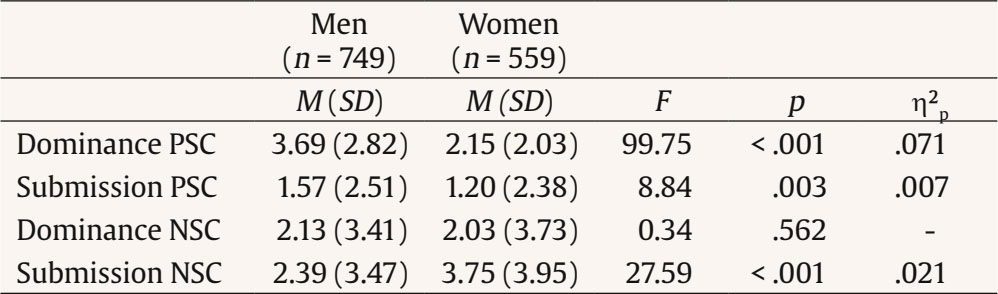 Note. PSC = positive sexual cognitions; NSC = negative sexual cognitions; M = mean; SD = standard deviation; F = F-statistic; p = level of significance; η²p = partial eta-squared. The MANCOVA for each of the six PSC items also revealed a significant gender effect, Pillai’s trace = .08, F(6, 1294) = 18.68, p < .001, η²p = .080. Specifically, differences were found in all three dominance PSC items and in two submission PSC items, with men scoring higher in all cases. Regarding the six NSC items, a significant gender effect was also found, Pillai’s trace = .08, F(6, 1294) = 19.64, p < .001, η²p = .083, with women obtaining higher scores than men in two submission items. See Table 3. Table 3 Gender Differences in the Frequency of Individual Dominance and Submission PSC and NSC Items 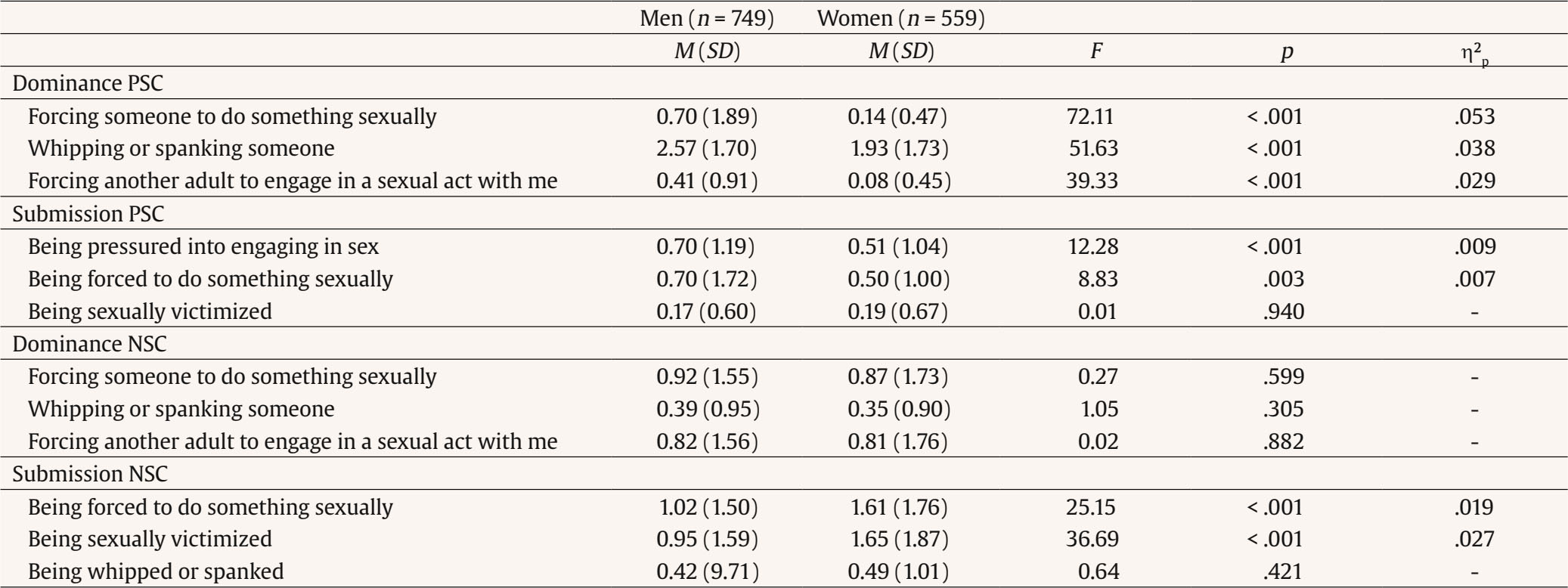 Note. PSC = positive sexual cognitions; NSC = negative sexual cognitions; M = mean; SD = standard deviation; F = F-statistic; p = level of significance; η²p = partial eta-squared. Sexual Orientation Comparison No significant main effect of sexual orientation was observed, Pillai’s trace = .00, F(2, 1298) = 0.72, p = .485, nor were significant differences found in the total scores of dominance and submission PSC. Regarding the total NSC scores, the MANCOVA revealed a significant main effect of sexual orientation. Pillai’s trace = .01, F(2, 1298) = 8.16, p < .001, η²p = .012, with significant differences observed only in the submission score, where lesbian and gay participants scored higher than heterosexual participants. See Table 4. Table 4 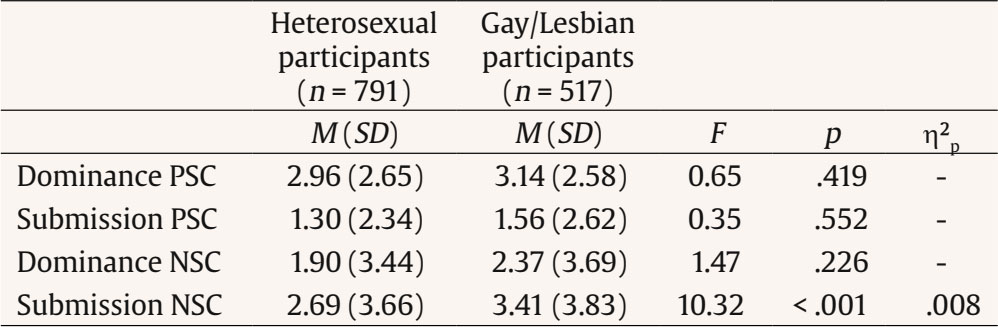 Note. PSC = positive sexual cognitions; NSC = negative sexual cognitions; M = mean; SD = standard deviation; F = F-statistic; p = level of significance; η²p = partial eta-squared. The MANCOVA for the six PSC items showed a main effect of sexual orientation, Pillai’s trace = .01, F(6, 1294) = 2.44, p = .024, η²p = .011, although no significant differences were found between heterosexual and lesbian and gay participants for any individual item. The analysis of the six NSC items likewise showed a main effect of sexual orientation, Pillai’s trace = .01, F(6, 1294) = 3.06, p = .006, η²p = .014, with differences observed in two submission NSC items, in which lesbian and gay individuals scored higher. See Table 5. Table 5 Sexual Orientation Differences in the Frequency of Individual Dominance and Submission PSC and NSC Items 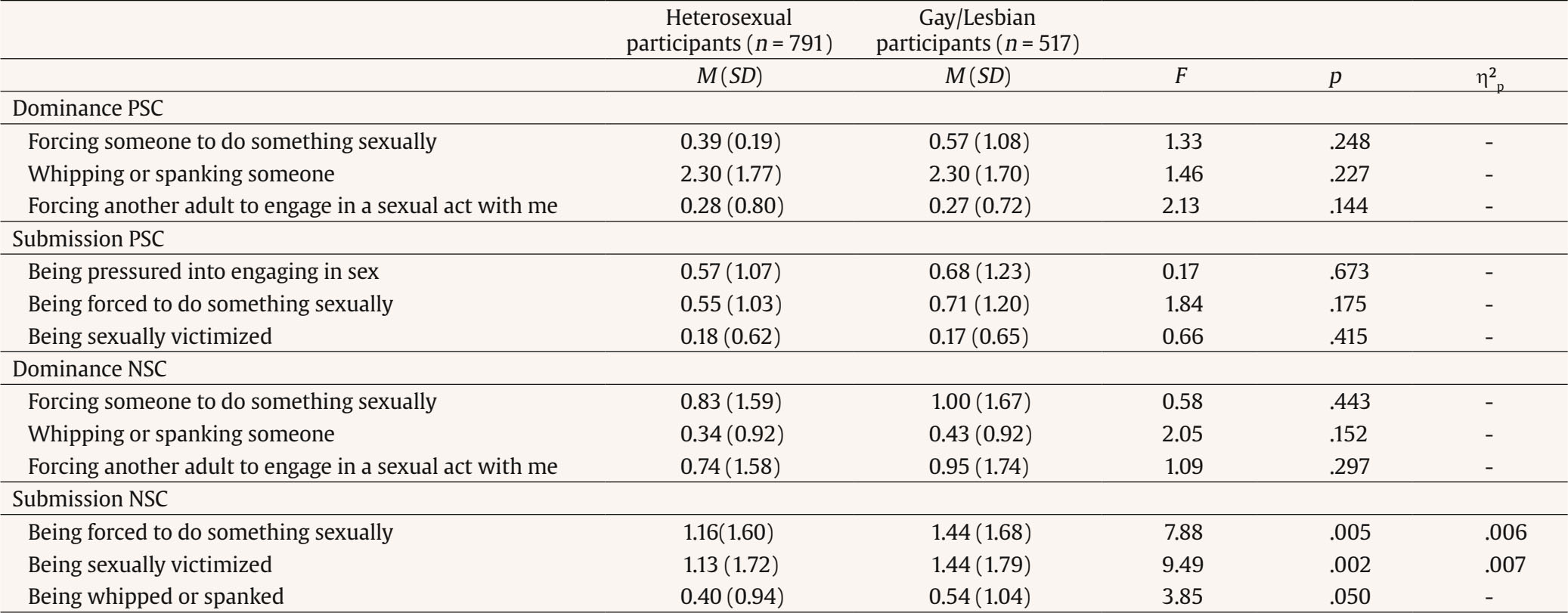 Note. PSC = positive sexual cognitions; NSC = negative sexual cognitions; M = mean; SD = standard deviation; F = F-statistic; p = level of significance; η²p = partial eta-squared. Table 6 Interaction Effect of Gender and Sexual Orientation on the Total Frequency of Dominance and Submission PSC and NSC  Note. PSC = positive sexual cognitions; NSC = negative sexual cognitions; M = mean; SD = standard deviation; F = F-statistic; p = level of significance; η²p = partial eta-squared. Figure 1 Interaction Effect of Gender and Sexual Orientation on the Total Frequency of Dominance and Submission PSC. 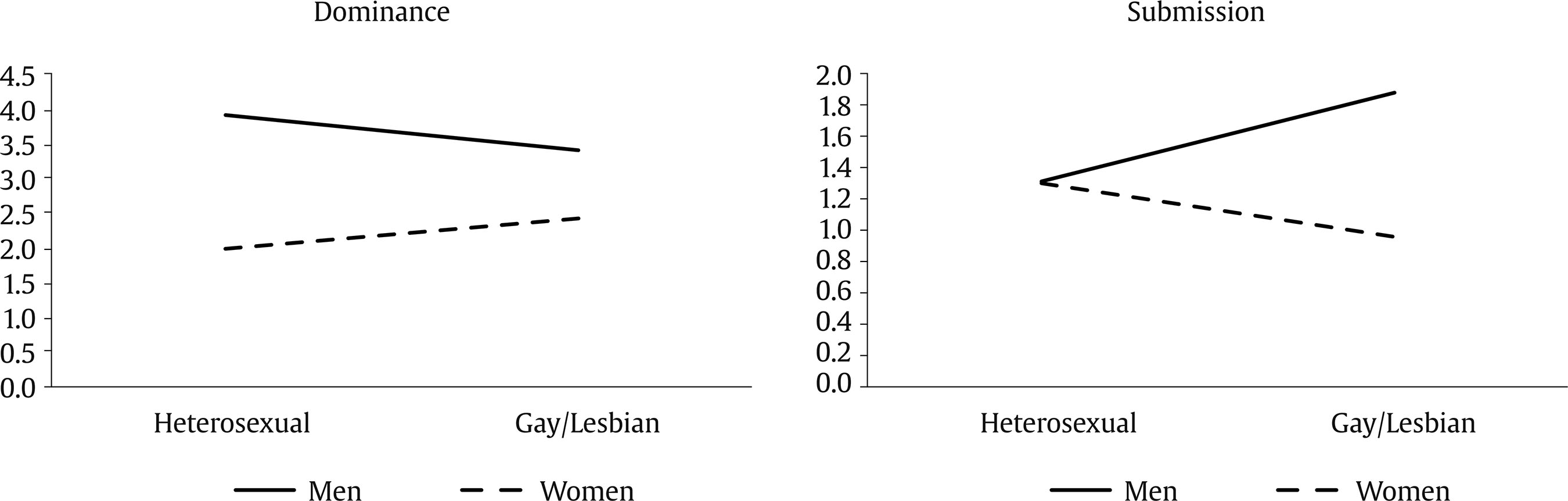 Figure 2 Interaction Effect of Gender and Sexual Orientation on the Total Frequency of Dominance and Submission NSC. 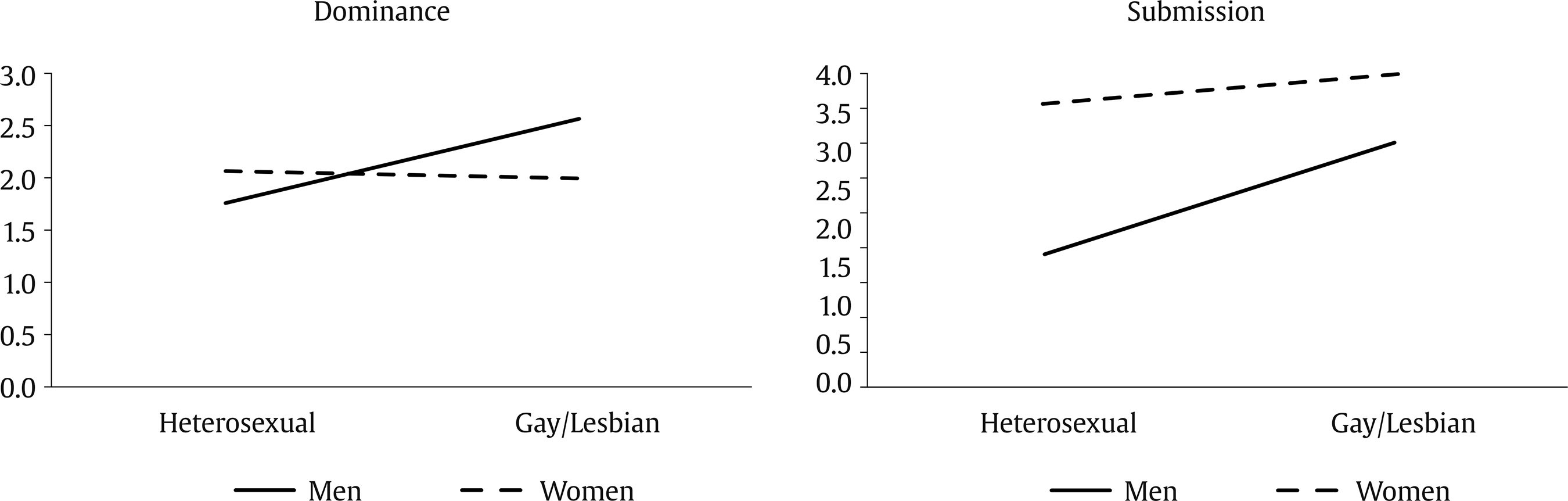 Table 7 Interaction Effect of Gender and Sexual Orientation on the Frequency of Individual Dominance and Submission PSC and NSC Items 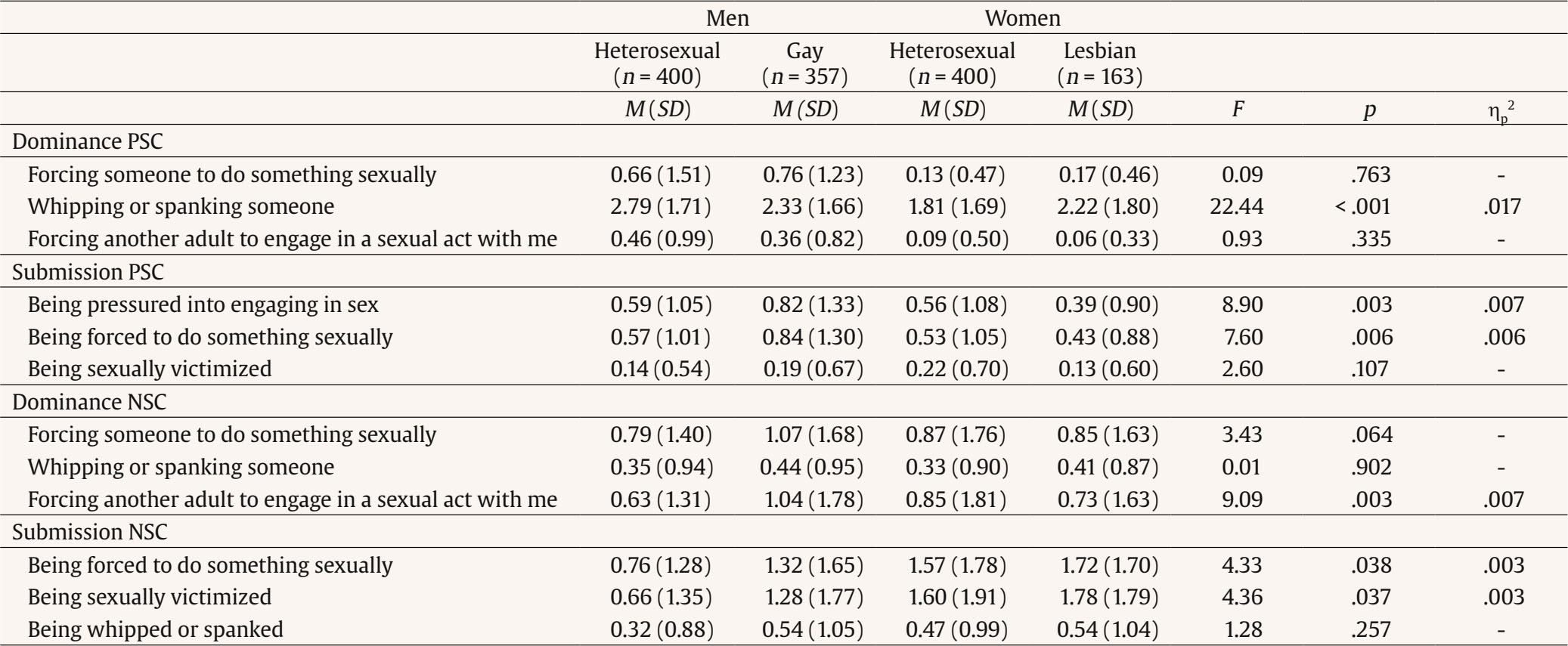 Note. PSC = positive sexual cognitions; NSC = negative sexual cognitions; M = mean; SD = standard deviation; F = F-statistic; p = level of significance; η²p = partial eta-squared. Gender x Sexual Orientation Interaction For the total scores of dominance and submission PSC, a significant gender x sexual orientation interaction effect was observed, Pillai’s trace = .02, F(2, 1298) = 14.80, p < .001, η²p = .022, with significative differences found in both dominance and submission total scores. In contrast, no interaction effect was found for the total NSC scores, Pillai’s trace = .00, F(2, 1298) = 2.67, p = .069, although significant differences were observed for both dominance and submission. See Table 6 and Figures 1 and 2. The MANCOVA for the six PSC items also showed a significant interaction effect, Pillai’s trace = .03, F(6, 1294) = 6.36, p < .001, η²p= .029, reaching significance in one dominance PSC item and two submission PSC items. The MANCOVA for the six NSC items did not yield a significant interaction effect, Pillai’s trace = .01, F(6, 1294) = 2.10, p = .051, although significant differences were identified in one dominance NSC item and two submission NSC items. See Table 7. This study aimed to examine the frequency of dominance and submission PSC and NSC according to gender, sexual orientation, and their interaction. Previous research on both sexual cognitions and sexual fantasies has examined contents related to sexual dominance and submission (e.g., Bártová et al., 2021; Bondü & Birke, 2021; Briere et al., 1994; Moyano & Sierra, 2015, 2016; Renaud & Byers 2006; Shulman & Home, 2006). Moreover, research has documented gender and sexual orientation differences in the frequency of some sadomasochistic contents (e.g., Lehmiller & Gormezano, 2023; Nese et al., 2021; Pérez-Amorós et al., 2026; Ruiz-Zorrilla et al., 2025). However, to our knowledge, no study has examined dominance- and submission-related cognitions as independent constructs within the theoretical framework proposed by Renaud and Byers (1999, 2001)—distinguishing between PSC and NSC—among individuals with diverse sexual orientations. All of this highlights the need for the present study. When examining the effect of gender and sexual orientation on the frequency of dominance and submission PSC and NSC, age emerged as a significant covariate—an expected finding given the variations in their frequency across the lifespan (Moyano & Sierra, 2014; Pérez-Amorós et al., 2025). Partner status was also a significant covariate in the analysis of the six PSC items, consistent with previous research indicating its influence on the content of sexual fantasies (Hicks & Leitenberg, 2001). However, Pérez-Amorós et al. (2025) did not find differences in the frequency of sadomasochistic PSC and NSC between individuals with and without a partner, although they did observe higher frequencies among those in newer relationships. Finally, except for submission PSC—which effects as covariate were not significant—and submission NSC—which showed no effects in the analysis of total PSC scores—both PSC and NSC emerged as significant covariates in most analyses. These findings are consistent with previous studies (Moyano et al., 2016; Moyano & Sierra, 2014; Renaud & Byers, 1999, 2001), in which PSC and NSC were included as covariates due to significant correlations between them, with each type of cognition serving as the main predictor of the overall frequency of the other (Moyano & Sierra, 2013). The results regarding the effect of gender partially confirmed our hypothesis, with men reporting a higher frequency of dominance PSC and women reporting a higher frequency of submission NSC. However, contrary to expectations, men also reported a higher frequency of submission PSC, and no gender differences were observed in dominance NSC. Several studies in the sexual fantasies field have documented a greater prevalence of sexual fantasies involving dominance among men and submission among women (Briere et al., 1994; Nesse et al., 2021; Shekarchi & Nimbi, 2025). However, few studies have explored the affective appraisal of these sexual cognitions. In this regard, Pérez-Amorós et al. (2025) found a higher frequency of sadomasochistic PSC in men than in women, a pattern that reversed for NSC. As in the present study, Moyano and Sierra (2014) also found a higher frequency of dominance PSC in men and submission NSC in women. Higher frequencies of dominance PSC (i.e., forcing someone to do something sexually, whipping or spanking someone, and forcing another adult to engage in a sexual act with me) and submission PSC (i.e., being pressured into engaging in sex and being forced to do something sexually) among men may reflect by their generally greater engagement in PSC (Moyano & Sierra, 2014; Pérez-Amorós et al., 2025, 2026; Renaud & Byers, 1999) and in sexual fantasies (Leitenberg & Henning, 1995). The predominance of dominance PSC among men could also be linked to traditional gender stereotypes that encourage the assertion of sexual power through control, which may lead them to fantasize about dominance to affirm their sexual power and irresistibility (Leitenberg & Henning, 1995; Simon & Gagnon, 1986). This is particularly relevant because a positive perception of sexual dominance cognitions and fantasies could be considered a risk factor for sexual aggression (Birke et al., 2024; Renaud & Byers, 2005). Zurbriggen and Yorst (2004) reported that, among men, sexual dominance fantasies were associated with greater acceptance of rape myths. Additionally, within the sexual cognitions’ framework, Moyano and Sierra (2016) observed that both men and women who reported committing sexual aggression exhibited higher frequencies of dominance PSC compared with non-offenders. For their part, the higher frequency of submission PSC in men may be associated with previous evidence regarding their tendency to experience these cognitions more often with a positive rather than a negative appraisal, which has been suggested as reflecting a search for eroticism through passive sexual cognitions and behaviors (Renaud & Byers, 2006). Along these lines, sexual submission behaviors have been associated with better erectile function and improved ejaculatory control in men, suggesting that, in the context of sexual mental activity, such submissive behaviors may serve to moderate self-consciousness and reduce sexual performance anxiety (Huang et al., 2025). Bearing in mind that the occurrence of a sexual fantasy does not necessarily imply its enactment (Lehmiller & Gormezano, 2023; Ruiz-Zorrilla et al., 2025), submission PSC in men may represent cognitions that, by departing from traditional sexual scripts (Simon & Gagnon, 1986), could function as novel sexual stimuli, which in turn might elicit stronger sexual arousal than more habitual stimuli (O’Donohue & Plaud, 1991; Sierra et al., 2026). In this regard, and contrary to the traditional script, Renaud and Byers (2006) emphasize that many men find sexual submission cognitions pleasurable, whereas women may experience them as aversive. The higher frequency of submission NSC in women (i.e., being forced to do something sexually and being sexually victimized) is consistent with previous findings showing a female predominance both in NSC overall (Pérez-Amorós et al., 2025) and in submission NSC specifically (Moyano & Sierra, 2014). Given that NSC are often intrusive and that approximately one in three women has experienced sexual violence in their lifetime (Li et al., 2023), our results may be consistent with previous sexual fantasies research suggesting that prior experiences of sexual abuse can be linked both to forceful sexual fantasies (Shulman & Home, 2006) and to sexual fantasies experienced as intrusive or shameful (Hasson & Ginzburg, 2025). Furthermore, the high frequency of submission NSC in women may be consistent with cognitive dissonance theory, as these sexual cognitions—often stemming from the internalization of traditional sexual norms and scripts (Ziegler & Conley, 2016)—may be at odds with normative ideals of egalitarian sexual desire (Yurtsever et al., 2021). This potential tension may be further reinforced by social punishment for behaving incongruently with their gender (Ziegler & Conley, 2016) and by the observed associations of submission with reduced sexual arousal and difficulties achieving orgasm (Bonell et al., 2022; Kiefer et al., 2006), which may contribute to a more negative appraisal of these cognitions. Given the limited evidence on the association between sexual orientation and the frequency of PSC and NSC, a research question was posed. The results indicate that lesbian and gay participants, compared with heterosexual participants, report a higher frequency of submission NSC (i.e., being forced to do something sexually and being sexually victimized). In line with prior evidence, Tortora et al. (2020) found that lesbian and gay individuals experience more sexual fantasies involving submission than heterosexual individuals, although they did not distinguish between positive and negative sexual cognitions. One possible interpretation of our findings relates to the association between submission NSC and experiences of sexual victimization (Gewirtz-Meydan & Opuda, 2023; Moyano & Sierra, 2015), a phenomenon with relatively high prevalence among individuals with diverse sexual orientations (Ho et al., 2021; Rothman et al., 2011). Additionally, homonegativity and internalized homonegativity have been described as sources of tensions related to gender and sexuality (Thepsourinthone et al., 2021), which may in turn be associated with feelings of guilt or discomfort toward one’s sexual cognitions, particularly when they involve vulnerability or lack of control, as in submission. Furthermore, given that their sexual orientation and experiences often challenge traditional roles, these individuals may engage in more critical reflection on their desires, which may in turn be associated with a more negative appraisal of submission sexual cognitions. Regarding the interaction between gender and sexual orientation, the findings revealed differences in the total frequency of dominance and submission PSC and NSC. With respect to dominance PSC (i.e., whipping or spanking someone), it is observed that whereas heterosexual men report a higher frequency than gay men, the opposite occurs among women. These results are consistent with those reported by Nese et al. (2021) for the sexual fantasy of “strangling the partner while having sex”. The findings in heterosexual men and women were expected, as they are consistent with traditional sexual scripts that assign men a more active and dominant role in sexual interactions and women a more passive one (Simon & Gagnon, 1986; Ziegler & Conley, 2016). However, this role may be less pronounced among gay men (Waldis et al., 2021), who also display greater sexual versatility (Blanc et al., 2023), which may be associated with a lower tendency toward sexual dominance. This may be consistent with evidence suggesting that gay men report fantasies about being restrained or touched (Price et al., 1985) and show higher arousal toward themes such as submission or degradation (Brown et al., 2023). In turn, the higher frequency of dominance PSC among lesbian women compared to heterosexual women is in line with prior research showing that they tend to identify with more egalitarian romantic relationships than their heterosexual counterparts (Diamond, 2006; Holmberg & Blair, 2009), which may be associated with a more positive appraisal of these sexual cognitions and roles. This appraisal would be similar to what is observed in contexts such as clinical settings, where dominance-related fantasies can be considered a therapeutic tool (Gewirtz-Meydan & Opuda, 2023), or in practices such as BDSM, characterized by explicit and negotiated consent (Dunkley & Brotto, 2020), and in which participation of individuals with diverse sexual orientations tends to be higher than among heterosexual individuals (Paarnio et al., 2022). The association between sexual consent and sexual violence is well documented (see Gómez-Pulido et al., 2024; Moyano et al., 2025). Moreover, LGBTIQA+ populations often present sexual expressions that do not easily fit within heteronormative sexual standards (Nimbi et al., 2020), which aligns with findings that lesbian women, in particular, report more transgressive fantasies than heterosexual women (Tortora et al., 2020). With respect to submission PSC (i.e., being pressured into engaging in sex and being forced to do something sexually), gay men report a higher frequency than heterosexual men, whereas the opposite occurs among women. This pattern aligns with prior observations suggesting that power dynamics in preferences for sexual submission may extend beyond gender (Conley & Satz-Kojis, 2024), particularly when considering their interaction with sexual orientation. In the case of gay men, this finding may be linked to a greater distancing from traditional gender roles, which prescribe men an active and initiating role in sexual interactions (Simon & Gagnon, 1986), as suggested by their increased openness to exploring diverse sexual roles (Nese et al., 2021; Nimbi et al., 2020). This aligns with earlier findings indicating higher subjective arousal to a broader range of sexual interests in the fantasies of gay men compared with heterosexual men (Brown et al., 2023), as well as frequent fantasies about submission and related themes (Brown et al., 2023; Price et al., 1985). Among women, however, the results suggest that heterosexual women may tend to follow the traditional gender roles outlined in the sexual script (Simon & Gagnon, 1986), while lesbian women may display patterns that do not neatly fit within heteronormative standards (Nimbi et al., 2020). Nonetheless, these results should be interpreted considering the complexity of women’s tendency to report submissive themes, which has been discussed both as a reflection of internalized sexual norms and as a context in which women can explore sexual enjoyment without guilt (Ziegler & Conley, 2016). In this sense, and given their positive affective appraisal, submission PSC may serve as an erotic pathway through which women can explore relinquishing control and the social self-demands placed on them (Hawley & Hensley, 2009) or even as a source of symbolic power and control (Ziegler & Conley, 2016). It should also be noted that, in some cases, higher frequencies of submission content are observed among individuals with histories of childhood sexual abuse, as reported in studies on sexual fantasies (Briere et al., 1994; Canivet et al., 2026), which have been suggested to reflect a conditioned sexual arousal to experiences involving sexual submission (Renaud & Byers, 2006), and thus may be a factor to consider. In the case of NSC, sexual dominance cognitions (i.e., forcing another adult to engage in a sexual act with me) are reported more frequently by gay men than by heterosexual men, and by heterosexual women than by lesbian women; that is, the pattern observed for PSC is reversed. In gay men, this pattern may be consistent with the pressure associated with heteronormative sexual norms and the potential tension arising from transgressing traditional expectations related to masculinity (Thepsourinthone et al., 2022), which may be associated with a more negative affective appraisal of dominance-related sexual cognitions. In this sense, Canivet et al. (2026) found that gay participants, regardless of whether they have experienced sexual abuse, more frequently reported domination and violent perpetration fantasies accompanied by high levels of shame, which the authors link to the potential impact of internalized homophobia and cisheteronormative social stigmas (see Nimbi et al., 2020). In heterosexual women, dominance-related sexual cognitions are also experienced more frequently as NSC, a pattern that is consistent with literature highlighting the tension between traditional sexual roles—observing that women are more likely to report submissive and victimization themes in their fantasies (Ziegler & Conley, 2016)—and the desire for sexual empowerment (Yurtsever et al., 2021). Finally, regarding submission NSC (i.e., being pressured into engaging in sex and being sexually victimized), although the overall pattern is similar (i.e., higher scores in women than in men and in lesbian and gay individuals than in heterosexual individuals), the increase in the frequency of these cognitions among lesbian and gay individuals is more pronounced in men than in women, consistent with the only significant result obtained in the comparisons by sexual orientation. In gay men, this pattern could reflect a potential conflict arising from the greater sexual versatility and distancing from traditional gender roles previously noted, in contrast to heteronormative gender and sexual norms (Thepsourinthone et al., 2022). This potential conflict may be interpreted within the framework of gender role conflict, defined as the psychological state that emerges when restrictive definitions of masculinity constrain one’s experiences (O’Neil, 2015). Given that sexuality constitutes a central element in the construction of masculinity (Fleming et al., 2019; Poteat & Anderson, 2012), such potential conflict may in some cases be linked to a more negative appraisal of submission. These patterns could be particularly relevant for gay men, given their greater exposure to cultural homophobia (Diamond, 2008). In contrast, although LGBTIQA+ populations generally present sexual expressions that do not easily conform to heteronormative roles (Nimbi et al., 2020), lesbian women might experience submission NSC with less tension. It is worth noting that both types of sexual cognitions can coexist (Renaud & Byers, 2001), so the presence of one does not necessarily imply a lower presence of the other. Sexual fantasies—and by extension, sexual cognitions—do not necessarily translate into manifest behavior. In fact, research has shown that both men and women exhibit a significant discrepancy between desire and behavior in relation to sadomasochistic sexual fantasies (Ruiz-Zorrilla et al., 2025). Importantly, research also shows that individuals who have perpetrated sexual aggression tend to report higher frequencies of PSC of dominance (Moyano & Sierra, 2016; Renaud & Byers, 2005), whereas those with histories of childhood or adult sexual victimization report higher frequencies of PSC or NSC of submission, respectively (Renaud & Byers, 2006). As noted in the present study, NSC—reported more frequently by women than men, and by lesbian and gay individuals, particularly gay men—should not be dismissed as potential consequences of sexual trauma (Renaud & Byers, 2006), whereas PSC—predominant among men, mainly heterosexual—may be associated with sexual aggression (Birke et al., 2024; Moyano & Sierra, 2016; Riberas-Gutiérrez et al., 2025) and/or sexual victimization (Gewirtz-Meydan & Opuda, 2023; Moyano & Sierra, 2015). Therefore, the study of dominance- and submission-related PSC and NSC across different sociodemographic characteristics, such as gender and sexual orientation, may yield relevant insights in legal and forensic contexts. Understanding these different patterns of sexual cognition and their affective appraisal may be useful for forensic assessments and case formulations, for example, helping evaluators to recognize and contextualize intrusive or distressing cognitions, identify potential risk factors or prior victimization, re-signify dominance or submission content, and promote healthy sexual expression. Results can also inform interventions related to sexual aggression (e.g., Riberas-Gutiérrez et al., 2025) or experiences of trauma (e.g., Maniglio et al., 2011), without implying causality or stigmatizing the individual, while always emphasizing that these sexual cognitions should never be enacted in non-consensual ways. Nevertheless, future studies and forensic evaluations should complement these findings and the application of the SCC with qualitative information on how different individuals interpret these sexual cognitions, including their affective appraisal. Previous research has suggested that the meaning and interpretation of dominance- and submission-related cognitions depend not only on their thematic content but also on how they are affectively appraised (e.g., Little & Byers, 2000; Renaud & Byers, 2005, 2006); for example, these studies proposed that dominance-related content may be experienced as a sense of power or irresistibility when positively appraised, whereas negatively appraised they may resemble coercive or violent sexual scenarios. Future research could incorporate measures of sexual consent that could help clarify whether dominance- and submission-related PSC and NSC are understood within consensual power-exchange dynamics (e.g., BDSM practices) or in relation to non-consensual or aggressive sexual scenarios. Regarding limitations, the absence in this study of explicit variables on experiences of sexual abuse or victimization, the perpetration of sexual aggression, or sexual consent, together with the cross-sectional design employed, limits the scope of interpretations. Consequently, potential associations with sexual victimization or aggression, as suggested by previous research, cannot be directly examined in the present study and should therefore be interpreted with caution. As discussed above, a related limitation is that the SCC does not differentiate whether dominance- and submission-related sexual cognitions occur in consensual or non-consensual contexts. Although limited preliminary evidence on the sexual fantasies field suggests that whether aggressive sexual fantasies are experienced as consensual or not is not a significant predictor of sexual aggression (Bondü, 2023), other findings indicate that certain intrusive or courtship-related paraphilic fantasies are associated with less positive attitudes toward consent (Brown et al., 2023). Therefore, incorporating measures of sexual consent, contextualized item versions, and qualitative assessments of meaning-making would be recommended in future studies. Other limitations include the non-probabilistic sampling and online assessment, which may have introduced self-selection and under-coverage biases, thereby limiting the generalizability of the findings. All measures relied on self-report, which is susceptible to memory and social desirability biases. Additionally, no formal social desirability scale was included, so this source of bias could not be directly controlled, although procedural features such as the self-administered and fully anonymous questionnaire, neutral wording of items, and absence of direct interaction with the researcher may have helped reduce this bias. On a separate note, the internal consistency of the PSC scale was modest, so results involving this scale should be interpreted with caution. Finally, the sample consisted only of cisgender Spanish adults and did not include other sexual orientations (e.g., bisexual individuals), highlighting the need for future research to incorporate additional identities within the LGBTIQA+ community and cover diverse cultural, socioeconomic, and geographic contexts. These studies should also incorporate measures of past sexual violence experiences as well as tools to directly assess social desirability. In conclusion, the results obtained show differences in the frequency of PSC and NSC of dominance and submission according to gender, sexual orientation, and their interaction—findings that are consistent with traditional gendered sexual scripts, as well as by factors suggested in prior research, such as experiences of sexual aggression or victimization. Whereas men report a higher frequency of PSC, women report more NSC, specifically of submission. Likewise, lesbian and gay individuals report a higher frequency of submission NSC than heterosexuals. Finally, the gender x sexual orientation interaction reveals distinct patterns in PSC and NSC frequencies depending on the specific combination of gender and sexual orientation. Conflict of Interest The authors of this article declare no conflict of interest. Cite this article as: Sierra, J. C., Diaz-Rodríguez, L. G., & Pérez-Amorós, C. (2026). Sexual cognitions of dominance and submission: Effects of gender and sexual orientation. European Journal of Psychology Applied to Legal Context, 18, Article e260180. https://doi.org/10.5093/ejpalc2026a5 This study has been funded by MICIU/AEI/10.13039/501100011033 and ERDF/UE, through the Research Project PID2022-136242OB-I00, and by MICIU/AEI/10.13039/501100011033 and ESF+ through the grant PREP2022-001030 for University Professor Training of the last author. Additionally, this activity is part of the grant CEX2023-001312-M, funded by MICIU/AEI/10.13039/501100011033 and UCE-PP2023-11/UGR. Dataset generated by the survey research are available at: https://doi.org/10.6084/m9.figshare.31795009. References |
Cite this article as: Sierra, J. C., Diaz-Rodríguez, L. G., & Pérez-Amorós, C. (2026). Sexual Cognitions of Dominance and Submission: Effects of Gender and Sexual Orientation. The European Journal of Psychology Applied to Legal Context, 18, Article e260180. https://doi.org/10.5093/ejpalc2026a5
Correspondence: jcsierra@ugr.es (J. C. Sierra).Copyright © 2026. Colegio Oficial de la Psicología de Madrid


 PDF
PDF e-PUB
e-PUB CrossRef
 JATS
JATS Print
Print Send
SendEMAIL ALERT
The European Journal of Psychology Applied to Legal Context is licensed under a Creative Commons Attribution-NonCommercial-NoDerivatives 4.0 International License