Identifying Predictors of Satisfaction with the Intervention among Intimate Partner Violence Perpetrators
Manuel Roldán-Pardo, Cristina Expósito-Álvarez, Rocío Pérez-Sabater, & Marisol Lila
Department of Social Psychology, Faculty of Psychology and Speech Therapy, University of Valencia, Spain
https://doi.org/10.5093/pi2026a5
Received 26 November 2025, Accepted 10 December 2025
Abstract
Objective: Satisfaction is a critical predictor of adherence, engagement, and outcomes across health and social interventions. While widely studied in clinical contexts, it remains underexplored in intimate partner violence (IPV) perpetrator programs. Evidence suggests that enhancing satisfaction through individualized and responsive approaches may reduce dropout, increase motivation, and prevent recidivism. This study seeks to identify the factors that predict greater participant satisfaction in an intervention program for IPV perpetrators. Method: A sample of 761 male IPV perpetrators participating in a court-mandated intervention program was used. Participants were classified according to their satisfaction level, and group differences were examined. A multivariate logistic regression was then performed to identify the strongest predictors. Results: Our findings showed that immigrant status, cocaine use, sexism, community participation, and working alliance significantly predicted satisfaction. Notably, higher-risk participants, including those with substance use problems, reported greater satisfaction. Conclusions: These findings underscore the importance of addressing participant diversity and risk factors to strengthen satisfaction and, ultimately, improve the overall effectiveness of IPV perpetrator programs.
Keywords
Intimate partner violence, Male perpetrators, Satisfaction with the intervention, Predictors, Intervention programsCite this article as: Roldán-Pardo, M., Expósito-Álvarez, C., Pérez-Sabater, R., & Lila, M. (2026). Identifying Predictors of Satisfaction with the Intervention among Intimate Partner Violence Perpetrators. Psychosocial Intervention, 35, Article e260813. https://doi.org/10.5093/pi2026a5
Correspondence: marisol.lila@uv.es (M. Lila), Correspondence: marisol.lila@uv.es (M. Lila)Satisfaction with the intervention is often defined as the extent to which program participants or patients perceive that healthcare services received meet their expectations and needs (Harris et al., 2024). This variable encompasses both the quality of care received and the overall therapeutic experience (Batbaatar et al., 2017; Kalaja, 2023). Previous studies show that higher patient satisfaction is associated with stronger therapeutic alliances and greater treatment adherence (Velasco-Durántez et al., 2023; Zhang et al., 2025). Similar findings were reported in interventions targeting patients with mental health conditions, in which individuals who report higher levels of satisfaction are more likely to complete the program, demonstrate greater engagement, and achieve better outcomes (Elgendy et al., 2023; Miglietta et al., 2018; Woodward et al., 2017). Patients’ satisfaction with treatment has been widely researched in clinical settings since it has been consistently associated with better adherence to treatment plans within this context. For example, Ferreira et al. (2023) conducted a systematic review of predictors of high patient satisfaction with healthcare services. They found that the quality of care received and providers’ communication are key factors in patient satisfaction. Another review noted that patients highly value their relationship with healthcare professionals, as well as the quality of communication and the coordination among providers (Black et al., 2021). In the social intervention context, several authors examined the impact of satisfaction on the outcomes of programs that target abused women and individuals with substance use disorders. Their findings indicated that satisfaction with intervention is a key factor in treatment adherence and in achieving positive outcomes within these programs (Choo et al., 2016; Sidani et al., 2017). While most research on satisfaction was conducted in clinical settings, a smaller body of studies began to explore this variable in the context of intervention programs for intimate partner violence (IPV) perpetrators. Recent research on participant satisfaction in these interventions found that individuals who report the highest levels of satisfaction are those who positively view group activities, recognize the competence of facilitators, build supportive relationships with peers, and perceive the learning process as personally meaningful (Hamel et al., 2022; Vargas et al., 2020). Similarly, qualitative studies with IPV perpetrators highlight the role of interpersonal dynamics and culturally relevant content in fostering engagement and satisfaction (Parra-Cardona et al., 2013; Roy et al., 2013). These findings underscore the importance of considering relational and contextual factors when assessing satisfaction within perpetrator programs. Despite evidence supporting satisfaction as a predictor of intervention outcomes in clinical settings and findings identifying factors that enhance satisfaction in IPV intervention programs, this variable remains largely understudied in programs for IPV perpetrators (Roldán-Pardo et al., 2025). This gap is relevant because, although intervention programs for IPV perpetrators show positive effects in reducing recidivism, effect sizes are generally small to moderate (Cheng et al., 2021; Travers et al., 2021). Research identified multiple participant-related risk factors that undermine treatment outcomes, such as substance use, history of trauma, acceptance of partner violence, lack of accountability, and little motivation to change (Expósito-Álvarez et al., 2021; Martín-Fernández et al., 2022a). These factors are closely linked to low treatment adherence and high dropout rates, both of which increase the risk of reoffending (Carbajosa, Catalá-Miñana, Lila, & Gracia, 2017; Lila & Gilchrist, 2023). Considering satisfaction in this context is crucial, as it not only enhances participants’ engagement with the program but also contributes to reducing dropout and recidivism. Recent evidence indicates that individualized approaches, particularly those that integrate motivational strategies, like Motivational Interviewing (Miller & Rollnick, 2022) and the Risk-Need-Responsivity (RNR) model (Andrews & Bonta, 2010), address participants’ criminogenic needs and readiness to change while also improving their overall intervention experience. These approaches were shown to increase satisfaction, which in turn supported adherence and positive program outcomes (Lila et al., 2025; Pinto e Silva et al., 2023; Roldán-Pardo et al., 2025). Therefore, examining predictors of satisfaction is essential to improve IPV intervention programs. In particular, if socio-demographic characteristics, psychological adjustment, substance use, attitudes toward IPV, violence-related variables, social-relational variables, and intervention process-related variables predict participant satisfaction with the intervention. Regarding socio-demographic characteristics, previous studies found that younger perpetrators, those with lower levels of education, immigrant individuals, and the unemployed are more likely to reoffend (Feder & Dugan, 2002; Fitzgerald & Graham, 2016; Gracia, Escobar-Hernández, et al., 2025; Gracia, et al., 2023; Lila et al., 2019; Wooldredge & Thistlethwaite, 2002). In addition to socio-demographic characteristics, other studies identified psychological adjustment factors, such as poor emotional regulation and low empathy, as contributing to poorer outcomes in intervention programs for IPV perpetrators. These factors are particularly associated with higher dropout rates and an increased risk of recidivism (Lila et al., 2012; Romero-Martínez et al., 2019a, 2023b). Similar results were found in relation to alcohol and/or other drug use problems (Expósito-Álvarez, Roldán-Pardo, et al. 2024; Expósito-Álvarez et al., 2023; Lila et al., 2020). Concerning attitudes toward IPV, variables like victim blaming and sexism were found to be associated with greater justification of violence and poorer outcomes in IPV intervention programs (Eckhardt & Crane, 2014; Gracia et al. 2020; Gracia, López-Quílez, et al., 2025). In a similar vein, some other studies found that violence-related variables and social-relational variables also impact the effectiveness of these programs. For example, a study by Expósito-Álvarez, Gilchrist, et al. (2024) found that participants at a higher risk of recidivism at intake and lower perceived formal and informal community support are more likely to drop out. Similar results were observed when perpetrators themselves report having a history of IPV (Lila & Gilchrist, 2023). Lastly, intervention process-related variables, such as professional experience, stage of change, motivation for change, and working alliance, also influence program outcomes. Specifically, facilitators with more professional experience were shown to help to reduce initial resistance to the intervention (Morrison et al., 2019). Similarly, previous studies reported that participants who are in a more advanced stage of change demonstrate more motivation to change violent attitudes and behaviors and maintain a stronger working alliance with their facilitators are less likely to drop out of the program and to reoffend after its completion (Carbajosa, Catalá-Miñana, Lila, Gracia, et al., 2017; Hamel et al., 2022; Lila et al., 2018; Taft & Murphy, 2007). Given the impact of the aforementioned variables on the effectiveness of IPV programs and the evidence linking participant satisfaction with obtaining better outcomes during the intervention process (Choo et al., 2016; Roldán-Pardo et al., 2025; Sidani et al., 2017), it is essential to analyze how these variables influence participants’ level of satisfaction in the context of intervention programs for IPV perpetrators. Therefore, the present study aims to identify the variables that predict higher levels of participant satisfaction in an intervention program for IPV perpetrators. It specifically focuses on identifying differences between the IPV perpetrators who report high satisfaction and perpetrators with moderate satisfaction, and on examining the main predictors of participant satisfaction with the intervention. To the best of our knowledge, this is the first study to jointly examine the influence of socio-demographics characteristics, psychological adjustment, substance use, attitudes toward IPV, violence-related variables, social-relational variables, and intervention process-related variables on participant satisfaction with the intervention. Understanding this relation will help to identify the factors that promote stronger treatment adherence and a more favorable attitude toward change, which may, in turn, lead to more effective interventions and lower recidivism rates (Hamel et al., 2022; Vargas et al., 2020). Table 1 Socio-demographic Characteristics 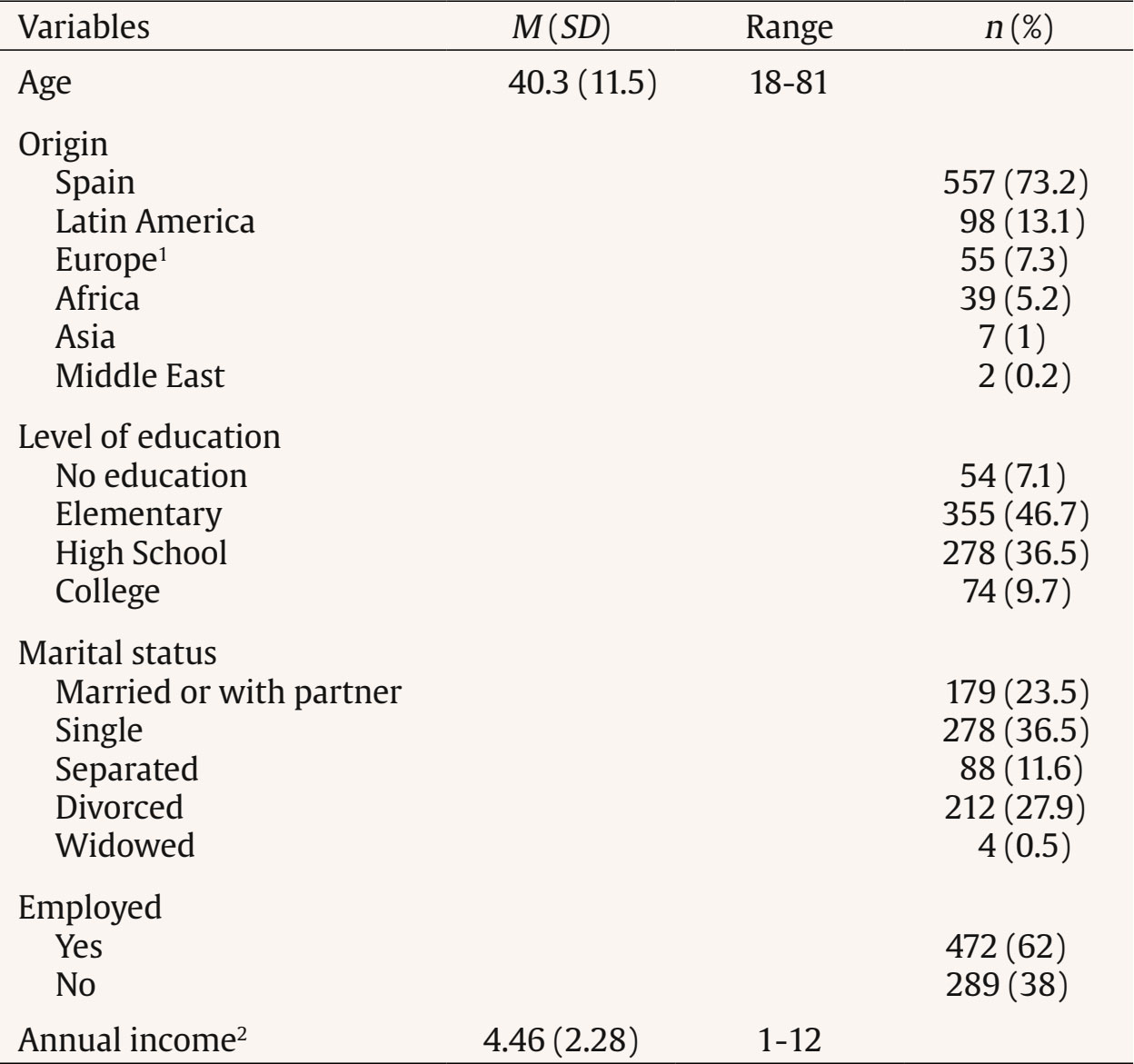 Note. M = mean, SD = standard deviation. 1European countries except Spain. 2Annual income: 1: < €1800, 2: €1800-€3600, 3: €3600-€6000, 4: €6000-€12000, 5: €12000-€18000, 6: €18000-€24000, 7: €24000-€30000, 8: €30000-€36000, 9: €36000-€60000, 10: €60000–€90000, 11: €90000–€120000, and 12: > €120000. Participants The sample consisted of 761 male participants in a community-based intervention program for IPV perpetrators at the University of Valencia, Spain (Contexto Program; Lila et al., 2018). The inclusion criteria were men: (a) over the age of 18, (b) with a conviction of IPV against a current or former partner and court-mandated to participate in an intervention program for IPV perpetrators, (c) who signed informed consent, (d) who lack severe physical and/or mental health conditions, and (e) who have completed the intervention program. Participants were assigned to intervention groups, each consisting of 9-12 participants and two facilitators. Overall, participants took part in 96 groups conducted between April 2009 and July 2024. Table 1 presents a comprehensive overview of the sample’s socio-demographic characteristics. Instruments Satisfaction with the Intervention The Satisfaction with the Intervention for Intimate Partner Violence Scale (SIIPVS; Roldán-Pardo et al., 2025) was utilized to evaluate participant satisfaction with various components associated with the intervention process. The scale encompasses 17 items, which are measured on a 5-point Likert-type scale (from 1 = strongly disagree to 5 = strongly agree). In the present study, only the total scale score was considered and its Cronbach alpha reliability coefficient was .90. The SIIPVS has demonstrated its reliability and validity as a psychometric sound instrument for assessing participant satisfaction (Roldán-Pardo et al., 2025). Socio-demographic Characteristics Information on socio-demographic characteristics was gathered, including age, relationship status (1 = with a partner, 2 = without a partner), immigrant status (0 = no, 1 = yes), level of education (1 = no education, 2 = elementary studies; 3 = high school studies, 4 = college studies), employment status (0 = unemployed, 1 = employed), and household annual income (from 1 = under €1800 to 12 = above €120000). Individual Variables: Psychological Adjustment Depressive Symptomatology. The Center for Epidemiologic Studies Depression Scale-7 (CESD-7; Radloff, 1977, Spanish version by Herrero & Gracia, 2007) was used. The CESD-7 is a 7-item scale that utilizes a 4-point Likert-type scale (from 1 = rarely to 4 = all the time or most of the time) to assess the intensity and frequency of depressive symptomatology experienced over the past week. The scale has been previously employed in Spanish IPV perpetrators samples (Expósito-Álvarez et al., 2025; Lila et al., 2019). Its Cronbach’s α coefficient was .88 in the present study. Alexithymia. The Toronto Alexithymia Scale-20 Items (TAS-20; Bagby et al., 1994, Spanish version by Martínez-Sánchez, 1996) was used. The TAS-20 is composed of 20 items, which are evaluated on a 6-point Likert-type scale (from 1 = strongly disagree to 6 = strongly agree). These items are grouped into three subscales: difficulty identifying feelings, difficulty describing feelings and externally oriented thinking. The Spanish version has been utilized extensively in IPV male perpetrators samples (Comes-Fayos et al., 2022; Romero-Martínez et al., 2019a). The Cronbach’s α coefficients for difficulty identifying feelings, difficulty describing feelings and externally oriented thinking subscales were .90, .76, and .60, respectively. Anger. The State-Trait Anger Expression Inventory (STAXI-2; Spielberger, 1999, Spanish version by Miguel-Tobal et al., 2001) was utilized. The inventory comprises 49 items on a 4-point Likert-type scale (from 1 = not at all to 4 = very much). STAXI-2 assesses the state and trait anger, as well as an overall Anger Expression Index (AEI). It has been previously employed in Spanish IPV perpetrators samples (Osa-Subtil et al., 2024; Siria et al., 2021). Its Cronbach’s α coefficients for state anger, trait anger and the AEI subscales were .89, .82, and .70, respectively. Empathy. The Interpersonal Reactivity Index (IRI; Davis, 1983, Spanish version by Mestre et al., 2004) was administered. The IRI includes 12 items rated on a 5-point Likert-type scale (from 1 = doesn’t describe me to 5 = describes me very well). In the present study, only two subscales were included: Fantasy, defined as the tendency to identify with characters in movies, novels, plays and other fictional situations, and Personal Distress, referring to personal feelings of anxiety and discomfort that arise when observing others’ negative experiences. Previous studies with IPV perpetrators have employed the Spanish version of the IRI (Expósito-Álvarez, Gilchrist, et al., 2024; Romero-Martínez et al., 2013). Cronbach’s coefficients for fantasy and personal distress were .60 and .61, respectively. Substance Use Alcohol Use. The Alcohol Use Disorders Identification Test (AUDIT; Babor & Grant, 1989, Spanish version by Contel et al., 1999) was utilized to assess the frequency and quantity of alcohol use. The AUDIT is a 10-item instrument that uses a 5-point Likert-type scale (from 0 = no to 4 = yes, in the last year). The AUDIT has been used in previous studies involving Spanish IPV perpetrators samples (Catalá-Miñana et al., 2013; Romero-Martínez et al., 2023b). Its Cronbach’s α coefficient was .79 in the present study. Cannabis and Cocaine Use. The cannabis and cocaine versions of the Severity of Dependence Scale (SDS; Gossop et al., 1995, Spanish version by González-Saiz & Salvador-Carulla, 1998) were employed to assess participants’ dependence on both drugs. Each version comprises five items rated on a 4-point Likert-type scale (from 0 = never to 3 = always). It is noteworthy that both SDS versions have been used with Spanish male IPV perpetrators (Romero-Martínez et al., 2023b; Sarrate-Costa et al., 2022). Cronbach’s α reliability coefficients for cannabis and cocaine use were .88 and .85, respectively. Attitudes toward IPV Victim Blaming. The Victim-Blaming Attitudes in cases of Intimate Partner Violence against Women (VB-IPVAW; Martín-Fernández et al., 2018) was used. The instrument includes 12 items, which are evaluated on a 4-point Likert-type scale (from 1 = strongly disagree to 4 = strongly agree). Former research has applied the VB-IPVAW in Spanish IPV perpetrators samples (Martín-Fernández et al., 2022b). In the present study, its Cronbach’s α coefficient was .89. Sexism. The Ambivalent Sexism Inventory (ASI; Glick & Fiske, 1997, Spanish version by Expósito et al., 1998) was utilized to assess both ambivalent and hostile sexism. The ASI includes 22 items rated on a 6-point Likert-type scale (from 0 = strongly disagree to 5 = strongly agree). The Spanish version has been utilized extensively in male IPV perpetrators samples (Juarros-Basterretxea et al., 2018; Martín-Fernández et al., 2018, 2022a, 2022b). Cronbach’s coefficients for the ambivalent and hostile subscales were .86 and .90, respectively. Violence-related Variables Self-reported IPV. The Revised Conflict Tactics Scale (CTS-2; Straus et al., 1996, Spanish version by Loinaz et al., 2012) was applied. The CTS-2 assesses the prevalence of violence perpetrated against intimate partners in the past year. The present study included the physical and psychological violence subscales. The frequency-based scoring method, initially developed by Straus et al. (1996), was employed. This method utilizes an 8-point Likert-type scale (from 0 = this has never happened to 6 = more than 20 times in the past year, and 7 = never in the past year, but it has happened before). To address the impact of asymmetric and skewed distributions, extreme outliers were subjected to truncation (Smamash, 1981). This scoring method has been widely employed (Expósito-Álvarez, Roldán-Pardo, et al., 2024; Lee et al., 2022; Marshall et al., 2021). The CTS-2 has been previously used in Spanish IPV perpetrators samples (Lila et al., 2018; Loinaz et al., 2012; Osa-Subtil et al., 2024). Cronbach’s α coefficients for the physical and psychological violence subscales were .60 and .72, respectively. Risk of IPV Recidivism. The facilitators assessed the risk of IPV recidivism using the Spousal Assault Risk Assessment Guide (SARA; Kropp et al., 1999, Spanish version by Andrés-Pueyo et al., 2008). The protocol utilizes a 20-item clinical checklist format that encompasses the primary risk factors for IPV. In the present study, only the two independent items designed to evaluate the risk of recidivism toward a current or former partner, and toward others, were used. These items appraise the risk on a 3-point Likert-type scale (0 = low risk, 1 = moderate risk and 2 = high risk). The SARA has demonstrated its capacity for predictive validity (Messing & Thaller, 2013), and its Spanish version has been extensively employed in IPV male perpetrators samples (Lila et al., 2025; Llor-Esteban et al., 2016). Social-relational Variables Community Support. The Perceived Community Support Questionnaire (PCSQ; Gracia & Herrero, 2006) was utilized. The PCSQ comprises four subscales designed to assess participants’ community support: community integration, community participation, support from informal organizations and support from formal organizations. The instrument comprises 18 items, which are rated on a 5-point Likert-type scale (from 1 = totally disagree to 5 = totally agree). The PCSQ has been utilized in previous studies with Spanish IPV perpetrators samples (Expósito-Álvarez, Gilchrist, et al., 2024; Juarros-Basterretxea et al., 2018). Its Cronbach alpha reliability coefficients for community integration, community participation, support from informal organizations, and support from formal organizations were .62, .78, .86, and .73, respectively. Intervention Process-related Variables Work Experience Coordinating IPV Intervention Groups. The mean number of intervention groups for IPV perpetrators previously conducted by the two facilitators was recorded. Stage of Change. Facilitators assessed participants’ stage of change using a single item on a 5-point Likert-type scale (1 = precontemplation, 2 = contemplation, 3 = preparation, 4 = action, and 5 = maintenance) according to the Transtheoretical Model of Change (Prochaska & DiClemente, 1982). The assessment was discussed between both facilitators until they reached an agreement. For a similar procedure, see Carbajosa, Catalá-Miñana, Lila, Gracia, et al. (2017). Motivation to Change. Both facilitators evaluated participants’ motivation to change using two independent items: Motivation to change in their violent attitudes and behaviors toward women and Motivation to change in their violent attitudes and behaviors toward any person on a 5-point Likert-type scale (from 1 = very low to 5 = very high). Facilitators discussed the assessment until they reached an agreement. For a similar procedure, refer to Lila et al. (2019). Working Alliance. The Working Alliance Inventory – Short Revised (WAI-SR; Hatcher & Gillaspy, 2006) was applied to assess the working alliance. The WAI-SR consists of two subscales: the agreement and bond subscales. The WAI-SR comprises 12 items rated on a 5-point Likert-type scale (from 1 = rarely to 5 = always). In the present study, only the therapist version was utilized. As each intervention group was conducted by two facilitators, the average score for each item was calculated to obtain an overall score. The WAI-SR has demonstrated adequate internal consistency and validity (Hatcher & Gillaspy, 2006), and its Spanish version has been previously used in IPV perpetrator sample (Roldán-Pardo et al., 2025). Cronbach’s alpha reliability coefficients for agreement and bond were .97 and .88, respectively. Procedure The present study was conducted in accordance with the 1964 Declaration of Helsinki and approved by the Ethics Committee of the University of Valencia (H1537520365110). In the assessment and motivation phase, and prior to the group-based intervention, participants were informed of the nature of the study. They were assured that neither participation nor refusal would affect their legal status. All the participants provided written informed consent and confidentially was ensured. Data on socio-demographic characteristics, individual variables, substance use, attitudes toward IPV, self-reported IPV and social-relational variables were collected as a part of the initial assessment for the participants attending the Contexto Program (Lila et al., 2018). These data were collected using a self-report assessment battery, which was administered by facilitators during two 2-hour sessions. Data on the intervention process-related variables and risk of IPV recidivism were provided by facilitators at the end of the assessment and motivation phase within a maximum 15-day period. Finally, data on participant satisfaction with the intervention were collected at the end of the group-based intervention phase, during the final group session. Data Analysis Once all the data had been collected, the participants in the present study were divided into two distinct groups for analytical purposes: moderately satisfied and highly satisfied. Participants were classified as moderately satisfied (n = 370) if their total score on the SIIPVS (Roldán-Pardo et al., 2025) fell below the median (Mdn = 4.41), while participants who scored above the median were classified as highly satisfied (n = 391). The median was used due to the right-skewed distribution of the SIIPVS data (Sk = -0.958, SES = 0.088, K = 0.968, SEK = 0.175). The multiple imputation method (MI) was applied to handle missing data, if so. Although any imputation method used to manage missing data is subject to criticism (Tan et al., 2021), MI by fully conditional specification is considered a valid method for datasets with both categorical and continuous variables (Y. Liu & De, 2015). Subsequently, a multivariate binary logistic regression analysis was conducted by following a backward elimination stepwise selection method, guided by the likelihood ratio (LR) criterion to identify the most effective subset of predictors for satisfaction with the intervention. To ensure the inclusion of the relevant variables, only those with a p-value < .25 in the independent t-test for the continuous variables and the chi-square test for the categorical variables were considered eligible for the multivariate model. The model’s explanatory power regarding variance in the outcome variable was evaluated using Nagelkerke’s R2, while its overall fit was assessed with the Hosmer and Lemeshow test. A nonsignificant Pearson chi-square test result indicated that the model adequately fit the data. This analytical approach is consistent with well-established practices, as demonstrated by similar methodologies in previous research in this field (Expósito-Álvarez, Gilchrist, et al., 2024; Gilchrist et al., 2017; Sonis & Langer, 2008) and across various disciplines (Brough et al., 2015; Lim et al., 2017; Vaporciyan et al., 2004). Moreover, this variable selection strategy in logistic regression analyses (Hosmer et al., 2013) has been extensively documented in former studies (Bursac et al., 2008; Chowdhury & Turin, 2020; Vaporciyan et al., 2004). All the statistical analyses were performed using IBM SPSS, version 28.0.1.1. The descriptive statistics for the participants classified as moderately satisfied and highly satisfied are presented in Table 2. Table 2 Participants’ Descriptive Statistics 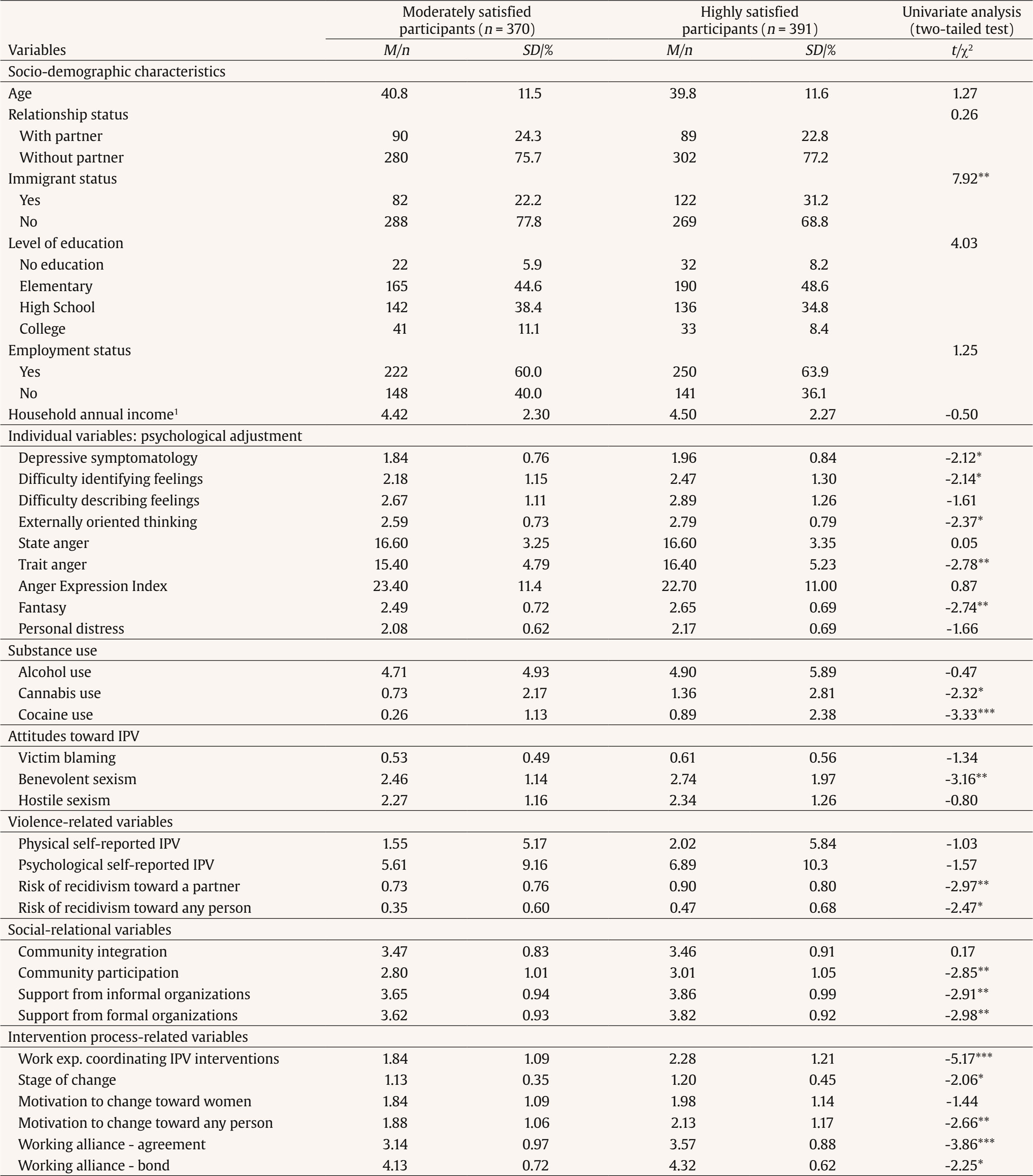 Note. M = mean; SD = standard deviation; t = independent t-test; χ2 = chi-square test; exp. = experience; IPV = intimate partner violence. 1Household annual income: 1: < €1800, 2: €1800-€3600, 3: €3600-€6000, 4: €6000-€12000, 5: 12000-€18000, 6: €18000-€24000, 7: €24000-€30000, 8: €30000-€36000, 9: €36000-€60000, 10: €60000–€90000, 11: €90000-€120000, and 12: > €120000. *p < .05, **p < .01, ***p < .001. How Do Highly Satisfied Participants Differ from Moderately Satisfied Ones? Regarding the socio-demographic characteristics, the highly satisfied participants were more likely to be immigrants (χ2 = 7.92, p = .005), whereas no significant differences were found in age, relationship status, level of education, employment status or annual income (p > .05). At the individual level, highly satisfied participants reported worse psychological adjustment at intake. Specifically, these participants reported higher levels of depressive symptomatology (t = -2.12, p = .035), difficulty identifying feelings (t = -2.14, p = .033), externally oriented thinking (t = -2.37, p = .018), trait anger (t = -2.78, p = .006), and fantasy (t = -2.74, p = .006). However, no differences were observed in difficulty describing feelings, state anger, anger expression index or personal distress (p > .05). They also reported higher levels of cannabis (t = -2.32, p = .021) and cocaine use (t = -3.33, p < .001), but no differences were found for alcohol use (p > .05). The highly satisfied participants also exhibited higher levels of benevolent sexism (t = -3.16, p = .002) and risk of recidivism, both toward an intimate partner (t = -2.97, p = .003) and any person (t = -2.47, p = .014). Nevertheless, no differences were observed in victim blaming, hostile sexism or self-reported physical and psychological IPV (p > .05). Regarding the social-relational variables, the highly satisfied participants reported higher levels for not only community participation (t = -2.85, p = .004), but also for support from both informal (t = -2.91, p = .004) and formal (t = -2.98, p = .003) organizations. No significant differences were found in community support (p > .05). Finally for the intervention process-related variables, these participants showed higher levels of motivation to change toward any person (t = -2.66, p = .008), stage of change (t = -2.06, p = .040), agreement (t = -3.86, p < .001) and bond (t = -2.25, p = .025). They participated in intervention groups coordinated by facilitators with more work experience in coordinating IPV interventions (t = -5.17, p < .001). However, no significant differences were found in motivation to change toward women (p > .05). What are the Main Predictors of Participant Satisfaction with the Intervention? The multivariate logistic regression analysis identified several predictors of participant satisfaction with the intervention. The model fitted the data well (see Table 3) by correctly classifying 85.5% of cases. The variables that remained in the last step of the multiple logistic regression model included: immigrant status, benevolent sexism, community participation, agreement (working alliance) and cocaine use. Most notably, being an immigrant was associated with a markedly greater likelihood of reporting satisfaction (OR = 5.09), and corresponded to an estimated probability of approximately 83.6%. In addition, higher levels of cocaine use (OR = 1.32), benevolent sexism (OR = 1.48), community participation (OR = 1.64) and agreement (OR = 1.72) were all positively associated with satisfaction, with estimated probabilities of 56.9%, 59.7%, 62.1%, and 63.2%, respectively. Table 3 Multivariate Factors Associated with Participant Satisfaction with the Intervention  Note. SE = standard error; OR = odds ratio; CI = confidence interval; χ2 = chi-square test; IPV = intimate partner violence. 1Variables included in the model in step 1: Age, Immigrant status, Depressive symptomatology, Difficulty identifying feelings, Difficulty describing feelings, Externally oriented thinking, Trait anger, Fantasy, Personal distress, Cannabis use, Cocaine use, Victim blaming, Benevolent sexism, Psychological self-reported IPV, Risk of recidivism toward a partner, Risk of recidivism toward any person, Community participation, Support from informal organizations, Support from formal organizations, Work experience coordinating IPV interventions, Stage of change, Motivation to change toward women, Motivation to change toward any person, Working alliance - agreement, Working alliance - bond. *p < .050, **p < .01, ***p < .001. The present study aimed to examine differences between men who reported high satisfaction with the intervention program for IPV perpetrators and those with moderate satisfaction. It also aimed to identify the main predictors of participant satisfaction with the intervention. To our knowledge, this is the first study to comprehensively examine how socio-demographic factors, psychological adjustment, substance use, attitudes toward IPV, violence-related variables, social-relational aspects and intervention process-related factors contribute to satisfaction with the program. In relation to the socio-demographic characteristics, the highly satisfied participants were more likely to be immigrants. This aligns with Vargas et al. (2020), who found that immigrant participants expressed more satisfaction than Spanish participants at the end of the intervention. This may reflect the value of forming supportive relationships in the intervention group, particularly for those experiencing acculturation stress and limited social support (Gracia et al., 2009; Mancera et al., 2017). Additionally, immigrants often received enhanced support from facilitators, especially when facing language barriers, which may have further increased their satisfaction. Interestingly, the highly satisfied participants demonstrated poorer psychological adjustment at the beginning of the intervention. These participants specifically reported higher levels of depressive symptomatology, difficulty identifying feelings, externally oriented thinking, trait anger and the fantasy dimension of empathy. This could be explained by the fact that participants in a supportive group feel understood and relieved when they feel they are not alone to face their struggles, which may alleviate their psychological distress (Gracia et al., 2026; Holtrop et al., 2017; Roldán-Pardo et al., 2024). In addition, high-risk IPV perpetrators may have more room for improvement and tend to show more marked positive changes than lower-risk participants (Lilley-Walker et al., 2016). This self-perceived growth may contribute to higher satisfaction with the perpetrator intervention program (Chovanec, 2012). Although nonsignificant differences between groups were found for alcohol use, the highly satisfied IPV perpetrators reported higher levels of cannabis and cocaine use at intake compared to those who were moderately satisfied. This may suggest that the individuals reporting more cannabis and cocaine use at intake may represent a high-risk subgroup, whose complex needs, when addressed during the intervention, can result in a bigger perceived benefit and more satisfaction with the program (Sousa et al., 2024). As for alcohol, given its high prevalence among court-mandated IPV perpetrators, future intervention programs would benefit from integrating targeted components that address men’s specific alcohol-related needs. Indeed, such tailored strategies yielded better outcomes than standard interventions (Easton et al., 2018; Expósito-Álvarez, Roldán-Pardo, et al., 2024). With regards to attitudinal variables, although nonsignificant differences were found for hostile sexism, participants who were highly satisfied with the intervention program reported higher benevolent sexism than those who were moderately satisfied. This pattern may be explained by the possibility that participants who endorse benevolent rather than hostile sexism may feel less resistant to engaging in discussions about gender norms, which in turn may facilitate a greater sense of connection and satisfaction with the program (Bareket & Fiske, 2023). However, it is important to note that their openness may be superficial rather than substantive, and promoting meaningful attitudinal change in all participants remains crucial (Casey et al., 2013). Although nonsignificant differences emerged between groups in self-reported physical and psychological violence, facilitators rated the high satisfaction individuals as being at a higher risk of recidivism at intake, both toward an intimate partner and others, than those with moderate satisfaction. Consistently with our previous findings, this may reflect a high-risk profile among the perpetrators who complete the intervention and feel more satisfaction, which may be due to a stronger sense of personal growth deriving from the program (Chovanec, 2012). Notably, higher satisfaction with the program was associated with a more marked reduction in IPV recidivism after program completion (Roldán-Pardo et al., 2025), which highlights the potential value of fostering program satisfaction to prevent future IPV perpetration. Notably as for the social-relational variables, the highly satisfied participants reported higher levels of community participation and received more support from both formal and informal organizations. This finding may be understood by considering that their prior engagement with social organizations could facilitate a stronger commitment to the program (Roy et al., 2013). In addition, these participants may exhibit more developed relational skills and more active help-seeking behaviors, both in initiating support and being open to receive it during the intervention. This attitude may enhance their ability to connect with the program and, thereby, increase their perception of its usefulness and relevance (Holtrop et al., 2017). In terms of the intervention process-related variables, the participants who completed the program with high satisfaction levels, compared to those with moderate satisfaction levels, did not differ significantly in their initial motivation to change toward women. However, they did report higher levels of motivation to change their violent behavior toward any person and were in a significantly more advanced stage of change at intake. These findings align with previous research, which suggested that treatment-responsive IPV perpetrators tend to demonstrate a more advanced stage of change in all intervention modules compared to treatment-resistant participants (Carbajosa, Catalá-Miñana, Lila, Gracia, et al., 2017). In addition, regarding the working alliance, participants who completed the program with high satisfaction were rated by their facilitators as demonstrating significantly higher levels of therapeutic agreement and bond than those who completed the program with moderate satisfaction. These results are consistent with the findings by Boira et al. (2013), who reported a significant association between a stronger therapeutic alliance and more favorable evaluations of the intervention by group members. Likewise, Hamel et al. (2022) identified a robust correlation between participants’ ratings of facilitators and their perceived benefits from the group intervention. The participants who reported high satisfaction levels vs. those with moderate satisfaction attended intervention groups facilitated by professionals with more extensive experience in coordinating IPV programs. These results are consistent with previous studies which indicate that more experienced facilitators demonstrate more effective communication and rapport-building skills, and are more able to foster participant learning (Giesbrecht et al., 2023; Morrison et al., 2019). The multiple logistic regression model identified the main predictors of participant satisfaction, namely immigrant status, benevolent sexism, community participation, therapeutic agreement and cocaine use. These findings suggest that socio-demographic factors (i.e., immigrant status), substance use factors (i.e., cocaine use), and social-relational (i.e., community participation), attitudinal (i.e., benevolent sexism) and process-related (i.e., therapeutic agreement) factors significantly influence participant satisfaction with the program. In line with the RNR model (Andrews & Bonta, 2010), understanding the factors that predict participant satisfaction can inform the adjustment of IPV intervention programs to better address participants’ specific needs to, thereby, enhance engagement and overall program effectiveness. Interestingly, high-risk perpetrators reported greater satisfaction with the intervention. As discussed, one possible explanation is that participants with poorer psychological adjustment or more complex needs may experience a stronger sense of support within the group, feel less alone in facing their difficulties, and therefore perceive greater personal growth during the intervention. Moreover, individuals with higher levels of risk may have more room for improvement, which could enhance their subjective evaluation of the program (Expósito-Álvarez et al., 2025). However, these interpretations should be considered alongside plausible alternative explanations. Given the court-mandated nature of the sample, social desirability bias may have influenced participants’ responses, leading some individuals, particularly those facing more severe circumstances, to report higher satisfaction (Daly et al., 2001). It is also possible that high-risk participants perceived the program as more relevant or beneficial because it directly targets needs that are especially salient for them. Additionally, satisfaction may partly reflect the strength of the working alliance rather than objective intervention gains, suggesting potential reverse-causality effects whereby participants who developed stronger rapport with facilitators later described the program more positively. Taken together, these interpretations highlight the need for further research to clarify the mechanisms underlying this counterintuitive finding. Our results have implications for practice. Notably, our findings suggest that the participants at a higher risk profile at intake, such as those with substance use problems or high benevolent sexism levels, may perceive more benefits from the program and, consequently, report higher satisfaction levels upon its completion. Combined with the critical role of a strong therapeutic alliance, particularly agreement about goals and tasks, these results emphasize the need for facilitators to actively reinforce participants’ progress, adjust interventions to be responsive to participants’ needs, and support meaningful behavioral and attitudinal change throughout the intervention process (Richards et al., 2022; Travers et al., 2021). Although often overlooked in the literature, participant satisfaction with intervention programs for IPV perpetrators may serve as a meaningful indicator of program success, particularly given its documented association with lower recidivism rates (Roldán-Pardo et al., 2025; Sidani et al., 2017; Walsh & Lord, 2004). Evaluating satisfaction can, thus, provide valuable insights into program effectiveness, and contributes to the development of tailored intervention strategies, such as motivational strategies to promote participants’ engagement and evidence-based practices whose aim is to foster a safe, supportive environment that encourages participants’ perception of self-growth throughout the intervention process (Parra-Cardona et al., 2013). This study also presents several limitations. Satisfaction with the intervention was assessed only upon program completion, which means that the participants who dropped out were not evaluated on this variable. Future research should aim to assess their satisfaction when they drop out because these participants may exhibit lower levels of satisfaction with the intervention (Roldán-Pardo et al., 2025). Gaining insight into the factors that contribute to their dissatisfaction and dropout could provide valuable guidance for improving retention strategies and promoting engagement. Furthermore, analyses to control potential cohort effects could have been conducted. Although the program content and facilitator training remained consistent over time, changes in contextual factors may have influenced the results. In addition, the clustered nature of the data warrants attention, given that participants were nested within 96 intervention groups facilitated by different professionals. This clustering structure implies that group-level characteristics, such as facilitator style, group dynamics, or the composition of participants, may have influenced individual satisfaction ratings (Roldán-Pardo et al., 2024). Because multilevel analyses were not conducted, we cannot rule out the possibility that part of the variance attributed to individual predictors may instead reflect unmeasured group-level effects. Future studies should incorporate hierarchical or multilevel modeling approaches to more accurately account for clustering and determine the extent to which satisfaction is shaped by both individual and group-level factors. Moreover, our findings should be interpreted with caution because the sample was composed exclusively of men convicted of IPV against women and court-mandated to participate in a perpetrator program in Spain (Lila et al., 2018). All participants were also drawn from a single institutional program, which may limit the applicability of the findings to other jurisdictions or intervention models with different structures, populations, or implementation practices (Gilchrist et al., 2023; M. Liu et al., 2021). Additionally, other factors limit the generalizability of the findings. First, because satisfaction was assessed only among program completers, the absence of data from participants who dropped out may bias the results toward individuals already predisposed to report higher levels of satisfaction (Lila et al., 2019; Olver et al., 2011). Second, although immigrant status emerged as an important predictor, the cultural heterogeneity within the immigrant subgroup was not examined, restricting the depth of interpretation regarding cross-cultural differences in program engagement or perception (Vargas et al., 2020). Finally, although participants were clearly informed that their responses would not influence their legal status, the possibility of social desirability bias cannot be ruled out, particularly in their reports of high satisfaction with the intervention (Gracia et al., 2015). In conclusion, our findings underscore the importance of evaluating participant satisfaction and its predictors across multiple levels, including socio-demographic characteristics, psychological adjustment, substance use, attitudes toward IPV, violence-related variables, social-relational factors, and intervention process-related variables. These results shed light on the key areas that should be addressed in intervention programs to strengthen this indicator of success and to ultimately enhance program effectiveness (Hamel et al., 2022; Roldán-Pardo et al., 2025). Conflict of Interest The authors of this article declare no conflict of interest. Cite this article as: Roldán-Pardo, M., Expósito-Álvarez, C., Pérez-Sabater, R., & Lila, M. (2026). Identifying predictors of satisfaction with the intervention among intimate partner violence perpetrators. Psychosocial Intervention, 35, Article e260813. https://doi.org/10.5093/pi2026a5 Data and research materials are not available because the participants are under a court order, and their confidentiality must be always maintained. SPSS 28.0.1.1 syntax is available upon request from the first author. |
Cite this article as: Roldán-Pardo, M., Expósito-Álvarez, C., Pérez-Sabater, R., & Lila, M. (2026). Identifying Predictors of Satisfaction with the Intervention among Intimate Partner Violence Perpetrators. Psychosocial Intervention, 35, Article e260813. https://doi.org/10.5093/pi2026a5
Correspondence: marisol.lila@uv.es (M. Lila), Correspondence: marisol.lila@uv.es (M. Lila)Copyright © 2026. Colegio Oficial de la Psicología de Madrid


 PDF
PDF e-PUB
e-PUB CrossRef
 JATS
JATS Print
Print Send
Send