Professionals on the Front Line: A Mixed-methods Study of Perceived Needs, Challenges, and Emotional Well-being in Intimate Partner Violence Intervention Programs
Rocío Pérez-Sabater1, Cristina Expósito-Álvarez1, Manuel Roldán-Pardo2, Raquel Conchell3, Aritz Pérez4, Elena Terreros4, Viviana Vargas1, Aída M. Villagrán1, & Marisol Lila1
1Department of Social Psychology, Faculty of Psychology and Speech Therapy, University of Valencia, Spain; 2Department of Basic Psychology, Neuropsychology, and Social Psychology, Faculty of Psychology, Catholic University of Valencia, Spain; 3Department of Comparative Education and Education History, Faculty of Philosophy and Education Sciences, University of Valencia, Spain; 4Asociación PSIMA, Valencia, Spain
https://doi.org/10.5093/pi2026a7
Received 28 November 2025, Accepted 12 December 2025
Abstract
Objective: Little is known about the professional profile, perceived needs, challenges, and emotional impact of practitioners’ work in intimate partner violence (IPV) perpetrator programs. Evidence on these aspects is needed to inform recruitment, training, supervision, and organizational support. This study examined (1) facilitators’ professional profile, (2) their perceived needs and challenges when working with IPV perpetrators, and (3) the emotional impact of this work on professionals’ well-being. Method: A mixed-methods design was used with 49 professionals delivering community-based IPV perpetrator interventions in Spain. Quantitative data were analyzed descriptively, and qualitative data from focus groups were examined using thematic analysis. Results: Most facilitators were psychologists with substantial experience and responsibility for delivering several intervention groups per year, while only a small minority received regular supervision. The main perceived training needs concerned managing perpetrators’ resistance and increasing their motivation to change. The greatest facilitation difficulties involved securing active contribution and constructive interaction among group members. The most frequent co-facilitation challenge was the appearance of different perspectives among professionals during group sessions. Although participants reported moderately high job satisfaction and generally low global burnout, qualitative findings revealed substantial emotional strain, including frustration, overload, and safety concerns in a context of program-related and institutional barriers, underscoring the central role of personal, group-management, and technical competencies for sustaining this work. Conclusions: Working with IPV perpetrators is complex and emotionally demanding. Strengthening ongoing training, supervision, and multi-agency coordination appears essential to protect facilitators’ well-being and to promote effective IPV perpetrator programs.
Keywords
Professionals, Perpetrators, Mixed methods, Intimate partner violence, Intervention programsCite this article as: Pérez-Sabater, R., Expósito-Álvarez, C., Roldán-Pardo, M., Conchell, R., Pérez, A., Terreros, E., Vargas, V., Villagrán, A. M., & Lila, M. (2026). Professionals on the Front Line: A Mixed-methods Study of Perceived Needs, Challenges, and Emotional Well-being in Intimate Partner Violence Intervention Programs. Psychosocial Intervention, 35, Article e260815. https://doi.org/10.5093/pi2026a7
Correspondence: rocio.p.perez@uv.es (R. Pérez-Sabater).Intimate partner violence (IPV) against women is a major social and public health problem of pandemic proportions (Devries et al., 2013; World Health Organization [WHO, 2025]). According to the WHO’s (2025) most recent report, approximately 25.8% of women aged 15-49 years worldwide have experienced physical and/or sexual IPV. In Spain, where the present study was conducted, 12.7% of women aged 16 years and older have experienced physical and/or sexual IPV at some point in their lifetime (Government Delegation against Gender Violence, 2025). Moreover, reports of IPV against women have increased notably over the last 10 years in this country (Gracia et al., 2025). In this context, one of the main strategies to combat IPV is the implementation of intervention programs with perpetrators. Although evidence on IPV intervention programs has increased in recent years, the characteristics, competencies, and challenges of the professionals who deliver these programs, as well as the emotional impact that this work may have on facilitators, have remained largely underexplored in empirical research (Morrison, Cluss et al., 2019; Tyagi, 2006). Therefore, it is particularly important to define their professional profile, identify the competencies they require, and gain a deeper understanding of the challenges they encounter and the impact that this work has on their well-being. The scientific literature rarely specifies quality assurance procedures, although some studies suggest that having qualified facilitators (e.g., with a degree in psychology), regular supervision, and strong facilitation skills is associated with better program outcomes (Gannon et al., 2019; Holma et al., 2006). Facilitators may play a central role in delivering IPV perpetrator programs and engaging men in processes of change. Hence, producing empirical knowledge in this area can inform recruitment, practice-oriented training, supervision and organizational support for professionals (Hamel et al., 2022). With regard to professional profiles, previous studies describe a heterogeneous pattern in terms of the training and professional experience considered necessary for effective intervention with IPV perpetrators. The European standards for perpetrator programs (European Network for the Work with Perpetrators of Domestic Violence [WWP EN, 2023]) state the ideal professional profile. This profile includes specific training in the implementation of the program that facilitators will deliver. It further requires at least 84 additional hours of specialized training in related areas, such as motivation and interviewing, risk assessment, child protection, and substance use. These standards also emphasize the need for supervision during program delivery and ongoing professional development throughout the years of practice in this field. However, they do not specify the formal qualifications required to work with IPV perpetrators, such as the type of university degree, postgraduate training or specific certified courses (WWP EN, 2023). In addition to the need to define a clear professional profile, research in this field underscores the importance of a set of key skills and competencies for effective practice. Specifically, these include the ability to confront or challenge perpetrators’ behaviors while maintaining a nonjudgmental attitude, skills to foster a climate of safety, honesty, and openness, and the capacity to tailor the intervention to the specific needs of each participant (Michailovič et al., 2024; Morrison, Hawker et al., 2019). Practitioners themselves emphasize the importance of receiving specialized training, developing competencies that enable them to establish a strong therapeutic alliance, and having access to ongoing supervision and support to carry out their work effectively (Giesbrecht et al., 2023; Holdsworth et al., 2019; Renehan & Gadd, 2024). Furthermore, they highlight that one of the key strategies for enhancing offenders’ motivation to change is to adopt an empathic and nonjudgmental stance throughout the intervention (Boira et al., 2013). Similarly, facilitators have identified several obstacles they face when intervening with IPV perpetrators. For example, in a qualitative study conducted by Boira et al. (2013), professionals working with perpetrators emphasized that it is not possible to fully understand or effectively address IPV without exploring the perpetrator’s relationship with the victim during the intervention process. They also highlighted the importance of analyzing each perpetrator’s individual characteristics, beliefs, and specific circumstances in order to assess their readiness to change and the risk of recidivism. In addition, practitioners stressed the need to adjust the intervention to the specific needs of each perpetrator. Moreover, Ferrer-Pérez et al. (2016) reported that professionals identified perpetrators’ lack of voluntary engagement, low motivation to change, and tendency to minimize or justify their violent behavior as key obstacles in the intervention process. In addition, other studies suggest that insufficient material and human resources, together with a possible shortage of adequately qualified staff, may represent important barriers to the successful implementation of these programs (Michailovič et al., 2024; Morrison, Hawker et al., 2019). The difficulties and challenges that practitioners face in this field may have a significant impact on their emotional well-being. Several studies suggest that working with IPV perpetrators can generate high levels of anxiety and stress, which may hinder the intervention process. Therefore, professional supervision and support become key mechanisms not only for enhancing the quality of interventions, but also for preventing burnout and promoting practitioners’ emotional well-being (Morran, 2008; van Rensburg et al., 2023). The Present Study As noted above, there is limited literature addressing the most appropriate professional profile for this work, the needs and challenges faced by practitioners, and the impact that working with IPV perpetrators may have on their emotional well-being. To fill this gap, the present study aimed to comprehensively examine the professional profile, perceived needs, challenges, and emotional impact of intervening with IPV perpetrators among facilitators delivering community-based intervention programs in Spain. Specifically, three objectives were addressed: (1) to describe facilitators’ professional profile, (2) to analyze their perceived needs, including the competencies considered necessary for working with IPV perpetrators, and the challenges experienced in the intervention process, and (3) to explore the emotional impact of this work on professionals’ well-being. To address these objectives, a mixed-methods design was employed, as it allows for the integration of quantitative and qualitative data to provide a more comprehensive understanding of the research problem. Participants The sample comprised 49 professionals from the Senior Corps of Prison Institution Technicians, all of whom were actively employed and assigned to The Penalties and Alternative Measures Management Services where they deliver the PRIA-MA program (Technical General Secretariat of the Ministry of Home Affairs, 2015). The PRIA-MA is the standardized rehabilitation and reeducation program implemented throughout Spain with men convicted of IPV who are serving community-based alternative sanctions instead of prison. The professionals who participated in this study were located in various regions across Spain, specifically distributed across 15 of the 17 regions that make up the country. Of the total participants, 37 were women and 12 were men. The average age was 41.1 years (SD = 11.5), with a range of 26 to 65 years, and all participants were Spanish (for a detailed overview of the participants’ socio-demographic characteristics, see Table 1). The inclusion criteria for participating in the study were: (1) being at least 18 years old, (2) having facilitated or currently facilitating at least one intervention group for IPV perpetrators in an open setting, and (3) having signed the informed consent form. Table 1 Facilitators’ Socio-demographic Characteristics 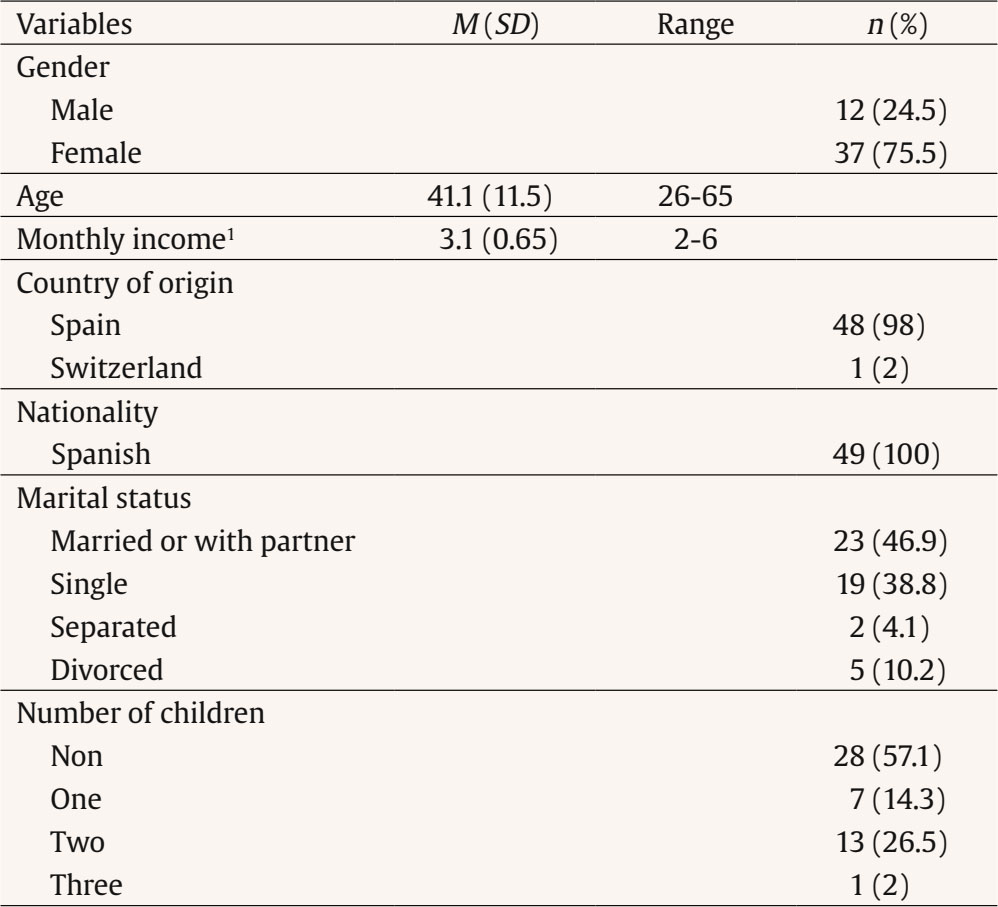 Note. M = mean; SD = standard deviation. 1Monthly income: 1: < €1,000, 2: €1,000-€2,000, 3: €2,000-€3,000, 4: €3,000-€4,000, 5: €4,000-€5,000, 6: > €5,000. Recruitment and Procedure The sample was recruited within the framework of a collaboration agreement between the General Secretariat of Penitentiary Institutions (Ministry of Home Affairs, Government of Spain), the University of Valencia (Spain), and the PSIMA Association, a non-profit organization composed of a multidisciplinary team of professionals (i.e., psychology, criminology, and law) specialized in preventing IPV, intervening with perpetrators, conducting related research, and promoting safe and equitable relationships free of violence. Within the framework of this collaboration agreement, the professionals attended a seminar held in February 2025 at the Faculty of Psychology and Speech Therapy (University of Valencia). During this seminar, data collection was carried out. Quantitative data was collected through the administration of a self-report assessment battery during a two-hour session. This battery included measures on sociodemographic variables, professional background, employment status, perceived competencies, challenges related to group co-facilitation (in cases where professionals conducted sessions jointly), perceived needs and difficulties in working with IPV perpetrators, as well as the impact of this work on professionals' emotional well-being. Qualitative data were gathered through five focus groups, each composed of nine to eleven professionals. Participants were randomly assigned to each focus group. The groups were conducted simultaneously in separate rooms and lasted approximately 90 minutes. Each focus group was facilitated by two members of the research team, who followed a preestablished discussion guide and used an audio recorder to document the session. The discussions were structured around three main areas: (1) skills, aptitudes, behaviors, and technical knowledge required for effective intervention with IPV perpetrators, (2) challenges and difficulties faced by professionals working in IPV interventions, and (3) professionals’ emotional well-being. Therefore, all data except information on participants’ professional profile (i.e., training background and employment characteristics), which was collected exclusively through quantitative methods, were obtained using both quantitative and qualitative approaches. All participants received detailed information about the aims and procedures of the study and provided their written informed consent prior to participation. They were also informed that confidentiality was ensured. The study was reviewed and approved by the University of Valencia Ethics Committee (2025-PSILOG-3843552) and complied with the ethical principles outlined in the Declaration of Helsinki (World Medical Association, 1964). Quantitative Measures Socio-demographic Characteristics Information on professionals’ socio-demographic characteristics was collected, including gender (0 = male, 1 = female), age, monthly income (1 = less than €1,000, 2 = between €1,000 and €2,000, 3 = between €2,000 and €3,000, 4 = between €3,000 and €4,000, 5 = between €4,000 and €5,000, and 6 = more than €5,000), country of origin, nationality, marital status (1 = married or with partner, 2 = single, 3 = separated, 4 = divorced), and number of children. Participants’ Professional Profile Training-related Variables. Participants completed a set of questions designed to assess their educational background and training in areas relevant to IPV intervention. Specifically, they were requested to indicate: (1) their highest level of completed education (i.e., Bachelor's Degree, Master's Degree, or PhD), (2) the academic field or degree studied at the university level, (3) whether they had completed a Master’s program related to IPV or related topics (e.g., trauma, gender-based violence), (4) whether they had completed any additional courses or non-formal training related to the intervention with IPV perpetrators or associated topics (e.g., substance use, trauma), and (5) whether they had participated in any relevant training in the last two years. Employment-related Variables. Participants were asked to report the number of years they had been working in the field of intervention with IPV perpetrators. They were also requested to indicate the type of employment contract they currently held (i.e., temporary, permanent, or other), as well as their working schedule (i.e., full-time, part-time, or hourly-based). Additional questions focused on their current professional activity, including the number of intervention groups they were currently facilitating and the average number of groups they facilitated per year. They were also queried about the number of groups they facilitated in other programs (e.g., Program for the Control of Sexual Aggression [PECAS] and Psychoeducational Intervention Program on Road Safety [PROSEVAL]). Finally, participants indicated whether they received regular supervision related to their professional performance, and whether they used formal assessment tools with program perpetrators. In cases where they reported using such instruments, they were invited to specify which ones and to indicate at what stages of the intervention process they used them. The following options were provided: (a) during the initial motivation phase, (b) mid-intervention, (c) at the end of the intervention phase, and (d) during the follow-up phase. Needs and Challenges in Facilitation Perceived Professional Competencies. An ad hoc checklist was developed to assess which professional competencies facilitators perceived as needing improvement in order to enhance their work with IPV perpetrators. The instrument consisted of a list of 17 competency areas, and participants were asked to mark those they considered important to strengthen for their professional performance. The competencies included skills such as emotional regulation, stress management, assertive communication, active listening, conflict resolution, group facilitation, validation of participants’ emotions, promotion of behavioral change, diversity and inclusion management, and knowledge of gender-based violence legislation, among others. An open-ended response option (“Other: ____”) was also provided to allow participants to include additional competencies not listed. Competencies, Needs and Difficulties in Facilitation Questionnaire (CNDF). An ad hoc self-report questionnaire was developed to assess the challenges and professional development needs of facilitators who work with IPV perpetrators in group intervention settings. The instrument consists of 37 items rated on a 5-point Likert scale (from 1 = strongly disagree to 5 = strongly agree) and is designed to capture perceived difficulties across four key domains: 1) attendance and time management, 2) participant contribution, 3) facilitation of participant interaction, and 4) professional competencies. Higher scores indicate greater perceived difficulties in each domain. Cronbach alpha coefficients for attendance and time management, participant contribution, facilitation of participant interaction, and professional competencies subscales were .61, .62, .60, and .87, respectively. Group Co-facilitation Questionnaire (CCG). An ad hoc questionnaire was designed to assess professionals’ experiences and perceived difficulties related to co-facilitation in intervention groups for IPV perpetrators. The instrument begins with two dichotomous (yes/no) screening questions: (1) whether the professional has ever co-facilitated an intervention group with another facilitator and (2) whether co-facilitation is a common practice within their organization. Professionals who reported current or past experience with co-facilitation were asked to complete five items assessing specific challenges associated with collaborative facilitation. These items are rated on a 5-point Likert scale ranging from 1 (strongly disagree) to 5 (strongly agree), and address areas such as equitable distribution of facilitation roles and expressing differing perspectives during sessions. Higher scores indicate greater perceived difficulties in co-facilitation dynamics. Cronbach alpha coefficient was .60. Professionals’ Emotional Well-being Work Satisfaction. The Job Satisfaction Scale (Warr et al., 1979) was used to assess participants’ job satisfaction in their work with IPV perpetrators. A Spanish translation of the instrument was administered. The scale includes 15 items, and participants were requested to rate their level of satisfaction with various aspects of their job on a 7-point scale, ranging from 1 (very dissatisfied) to 7 (very satisfied). A higher score indicated greater job satisfaction. Cronbach alpha coefficient was .89. Burnout. The Maslach Burnout Inventory (MBI; Maslach et al., 1996) was used to assess how frequently participants experienced symptoms of burnout related to their professional work. The instrument consists of 22 items rated on a 7-point Likert scale (from 0 = never to 6 = every day). These items are grouped into three subscales: emotional exhaustion, depersonalization, and personal accomplishment. Scores of 27 or higher on emotional exhaustion, 10 or higher on depersonalization, and 30 or lower on personal accomplishment are indicative of high burnout levels. Cronbach alpha coefficients for emotional exhaustion, depersonalization, and personal accomplishment subscales were .89, .60, and .78, respectively. Qualitative Measures To explore the perceptions, professional needs, and challenges experienced by practitioners working with IPV perpetrators, qualitative data were collected through focus groups. Each focus group lasted approximately 90 minutes and was facilitated by two trained researchers. All sessions were conducted in person and audio-recorded. A structured discussion guide was used to ensure consistency across groups, organized into three thematic areas, each introduced by a key open-ended question to encourage reflection and dialogue:
Data Analysis A mixed-methods approach was employed to analyze, interpret, and report the data, integrating both quantitative and qualitative components (Fetters et al., 2013). The study followed the Good Reporting of A Mixed Methods Study recommendations (GRAMMS; O’Cathain et al., 2008), which promote comprehensive and structured reporting in mixed-methods research. This approach was particularly suitable for capturing both the measurable aspects of facilitators’ professional profile and the in-depth insights into their experiences, perceptions, and emotional well-being that cannot be fully understood through quantitative measures alone. Thus, findings were interpreted through integrated quantitative and qualitative data. The analysis followed a sequential design in which the quantitative data were analyzed first, followed by the qualitative analysis. Quantitative analyses were performed using IBM SPSS Statistics (version 29.0.2.0), while NVivo 15 was used for the qualitative analyses. First, professionals’ profile was examined using descriptive quantitative analyses. Second, a mixed-methods strategy was employed to explore professionals’ perceived competencies, needs, and difficulties in their intervention work with IPV perpetrators, as well as their emotional well-being. Quantitative data were analyzed descriptively, and qualitative data from focus groups were examined using thematic analysis (Braun & Clarke, 2006). To conduct this analysis, the focus group sessions were transcribed verbatim. The transcripts were then anonymized and checked for accuracy. Subsequently, meaningful textual units were identified, grouped, and coded into emergent categories and subcategories. To ensure analytical rigor, five researchers (R.C., E.T., A.P., C.E.A., and M.R.P.) independently analyzed the transcripts. Each transcription was assigned to two researchers, in order to minimize potential bias. Then, additional researchers (R.P.S. and A.M.V.) reviewed and validated the analyses to ensure the confirmability of the codification. For a similar procedure, see Roldán-Pardo et al. (2023). Quantitative Results Participants’ Professional Profile Most professionals were psychologists (n = 45, 91.8%). On average, they reported 8.6 years of professional experience (SD = 7.8) and facilitated approximately four PRIA-MA groups per year (M = 3.88, SD = 1.93). Notably, only 8.2% (n = 4) reported receiving regular professional supervision. A detailed description of participants’ professional profile is provided in Table 2. Table 2 Participants’ Professional Profile 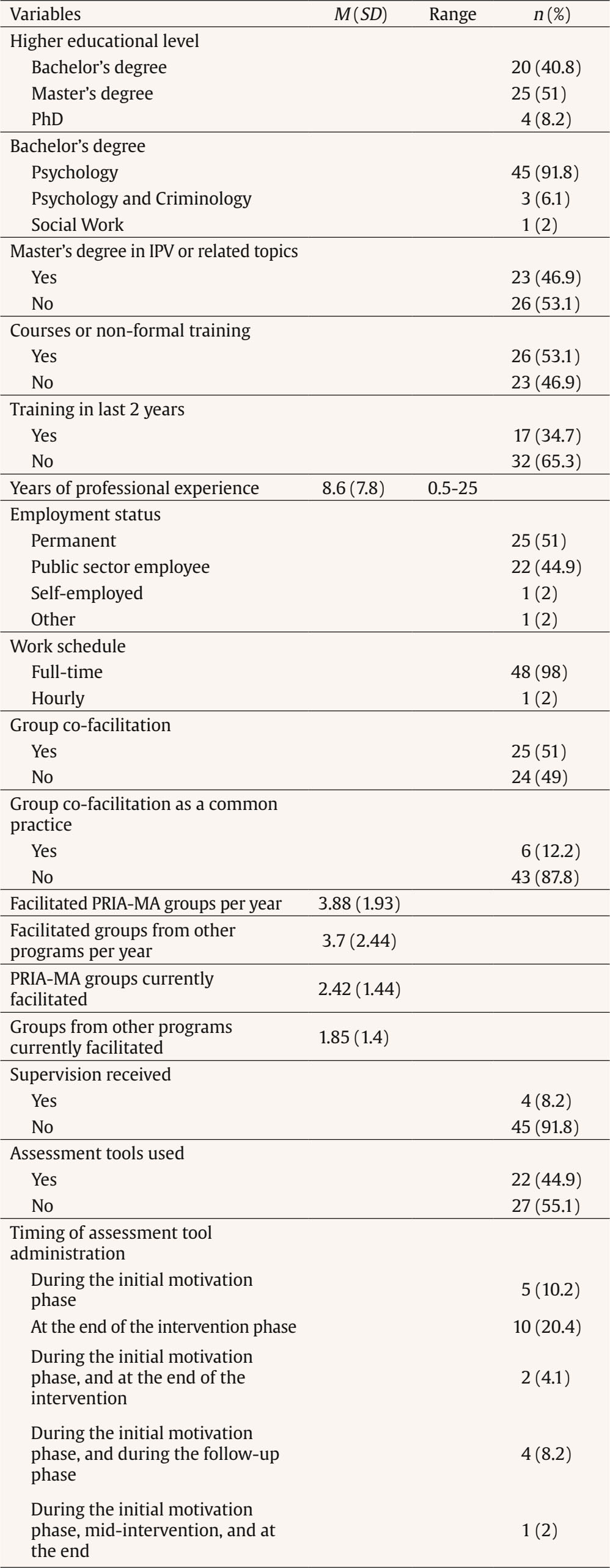 Note. M = mean; SD = standard deviation; IPV = intimate partner violence; PRIA-MA = intervention program for intimate partner violence perpetrators in alternative sentencing settings. Needs and Challenges in Facilitation Regarding the professional competencies that participants perceived as needing to be strengthened to improve their effectiveness in working with IPV perpetrators, the most frequently selected areas for improvement were resistance management (65.3%) and motivating perpetrators to change (55.1%). The least frequently mentioned areas were active listening (4.1%), and empathy and kindness (2%). Concerning the difficulties in facilitating intervention with IPV perpetrators, the highest level of perceived challenge was related to participant contribution (M = 2.55, SD = 0.54), suggesting that professionals face significant obstacles in fostering active engagement and commitment from group members. The second most reported difficulty involved facilitating interaction between perpetrators (M = 2.36, SD = 0.61), highlighting challenges in promoting positive and constructive group dynamics. Table 3 Needs and Challenges in Facilitation 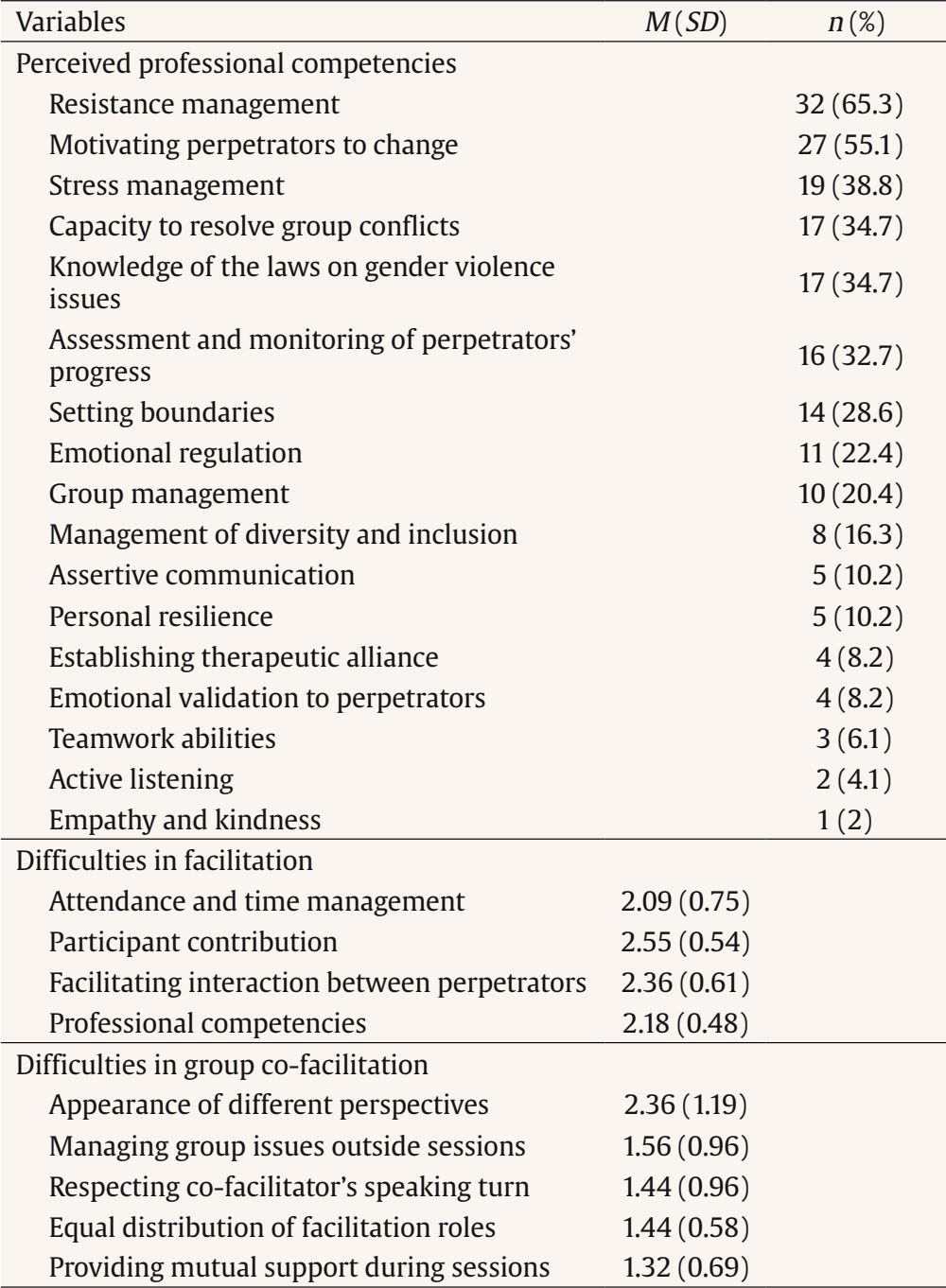 Note. M = mean; SD = standard deviation. In terms of specific challenges related to co-facilitation, the most frequently reported difficulty was the appearance of different perspectives among professionals during group sessions (M = 2.36, SD = 1.19). The quantitative findings regarding the needs and challenges in facilitation are detailed in Table 3. Professionals’ Emotional Well-being Concerning job satisfaction, participants reported a moderately high overall level, with a mean score of 4.89 (SD = 1.05) on a 7-point scale. Regarding burnout, most professionals reported a low level of emotional exhaustion (M = 2.11, SD = 1.25), a higher level of depersonalization (M = 4.5, SD = 0.84), and a low score on personal accomplishment (M = 1.73, SD = 1.04). When analyzing burnout globally, 89.8% of participants reported no symptoms associated with the syndrome, while 10.2% showed signs consistent with burnout. The quantitative emotional well-being outcomes (i.e., job satisfaction and burnout) are detailed in Table 4. Table 4 Professionals’ Emotional Well-being 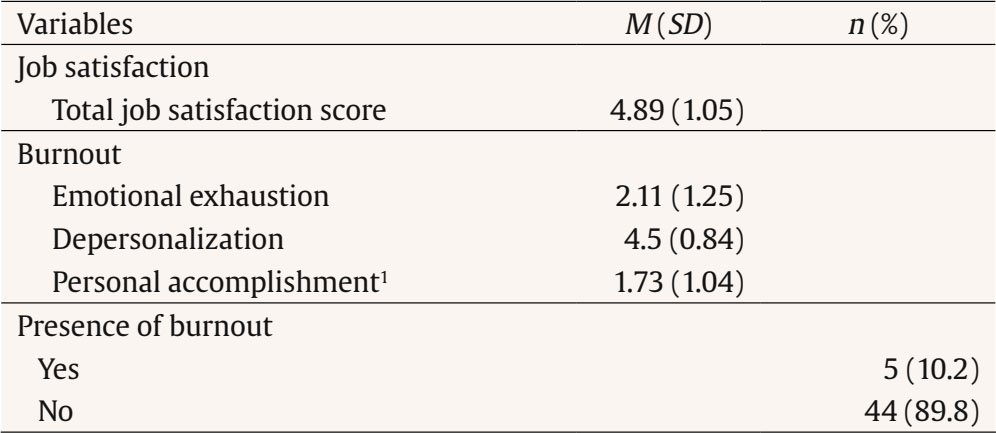 Note. M = mean; SD = standard deviation. 1The personal accomplishment subscale is reverse-scored, so lower scores indicate greater symptoms of burnout. Qualitative Results For an overall view of all thematic areas and their corresponding categories and subcategories, see Table 5. Table 5 Thematic Areas, Categories and Subcategories Identified in the Qualitative Analysis 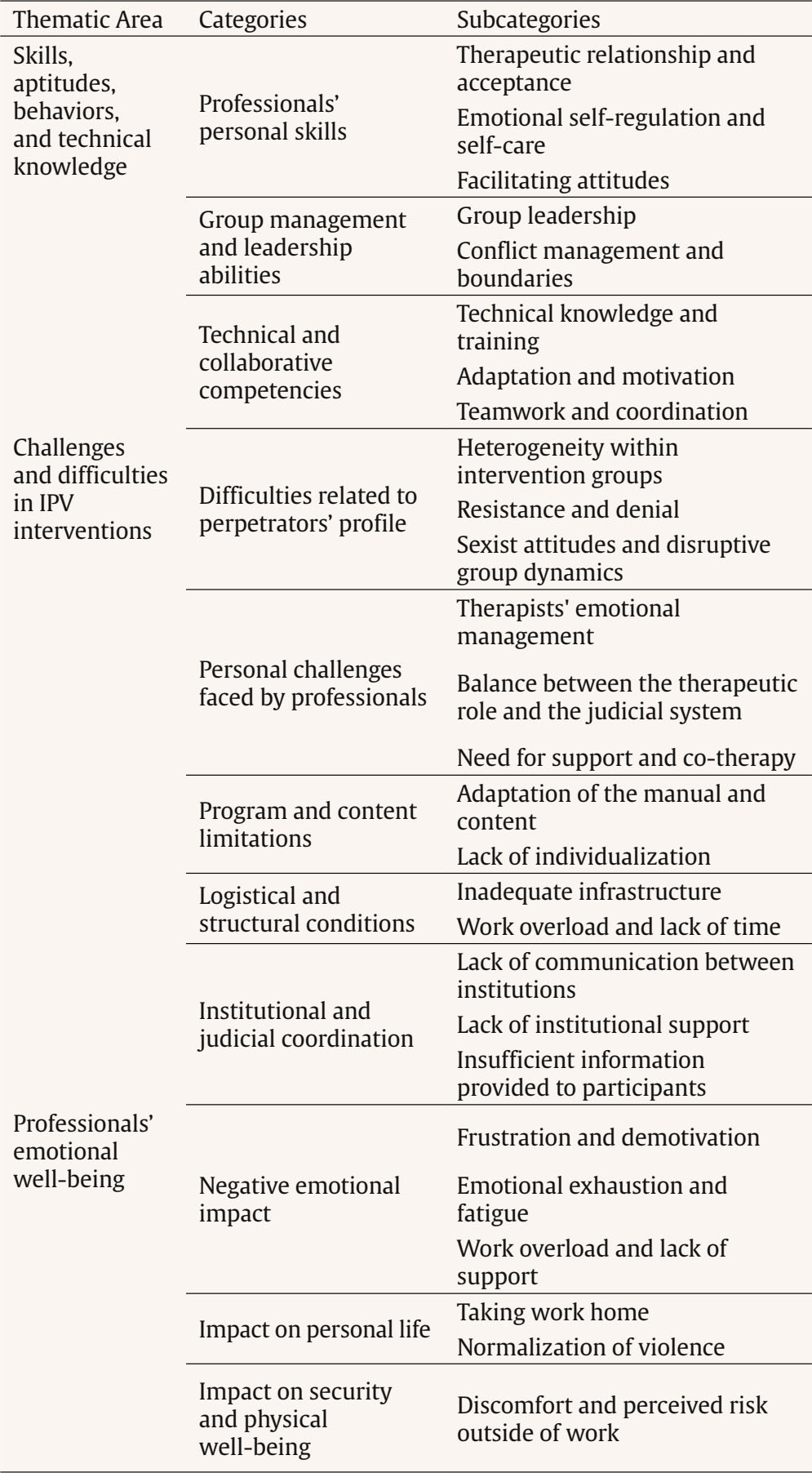 Skills, Aptitudes, Behaviors, and Technical Knowledge Regarding professional competencies, the thematic analysis of textual units extracted from the transcripts identified three main categories perceived by facilitators as essential for effective intervention with IPV perpetrators: professionals’ personal skills, group management and leadership abilities, and technical and collaborative competencies. Professionals’ Personal Skills. This category included all the textual units that referred to intrapersonal and interpersonal abilities which help create a supportive and nonjudgmental climate that fosters participant engagement in the intervention process. This category comprises the following subcategories: therapeutic relationship and acceptance, emotional self-regulation and self-care, and facilitating attitudes. In the therapeutic relationship and acceptance subcategory, professionals emphasized the need to establish a bond based on empathy, active listening, and an attitude of acceptance and non-judgment. They also highlighted the importance of validating participants’ emotions and presenting themselves as authentic and approachable, so that the group climate fosters openness and engagement in the therapeutic process: "It is important to have empathic capacity, in the sense of knowing how to set aside the prejudices we may have about this type of perpetrators perpretators." (G3F09) In the emotional self-regulation and self-care subcategory, professionals underscored the importance of having personal resources to manage the emotional impact of working with perpetrators. These resources included having engaged in their own therapeutic process, having strategies to manage stress, maintaining a self-critical attitude oriented toward improvement, and establishing clear boundaries between personal and professional life: "One important thing is knowing how to adapt and having self-criticism in order to improve (…). You can’t cross that line of ‘I’m going to take this home with me’ and personalize what they’ve told me." (G2F07) Finally, in the facilitating attitudes subcategory, participants highlighted the importance of maintaining an optimistic stance regarding the possibility of change and being flexible, both cognitively and logistically, in order to adapt to the characteristics of each group and to the conditions of the intervention context: I think it is very important to be flexible in groups because the same strategy is not going to work equally well with everyone (…). A lot of knowledge is needed to be able to face situations that are completely different at any moment. (G5F04) Group Management and Leadership Abilities. This category refers to the facilitator’s abilities to guide group processes effectively, foster a safe environment and group cohesion, and maintain conditions that support constructive interaction, engagement, and behavioral change. This category comprises the following subcategories: group leadership and conflict management and boundaries. In relation to the group leadership subcategory, professionals emphasized the need to manage and energize groups, create a safe and trusting climate, adjust language and communication style to the characteristics of the group, serve as a behavioral and leadership role model, and use humor to handle potential tensions that may arise during group sessions: "I understand leadership as being a role model (…) when they gain trust, they see me as a model (…) if you are a good example, a good model, a good leader for them, that improves (the intervention) a lot." (G2F04) Regarding the conflict management and boundaries subcategory, facilitators highlighted the importance of knowing how to manage conflicts within the group, establish appropriate boundaries, and communicate assertively with participants: "One competence would be setting boundaries (…) not only the ability to set them, but knowing how far, what boundaries, and in what manner." (G5F01) Technical and Collaborative Competencies. This category encompasses facilitators’ need for specialized training in IPV, the ability to adapt and motivate participants throughout the intervention process, and the capacity to coordinate and collaborate effectively with other professionals. This category comprises the following subcategories: technical knowledge and training, adaptation and motivation, and teamwork and coordination. In relation to the technical knowledge and training subcategory, professionals highlighted the need for specialized training in intervention with men who perpetrate IPV, training from a gender perspective, psychotherapeutic knowledge, and the use of assessment tools: "Training from a gender perspective seems essential to me to effectively address and refute counterarguments, particularly in the gender and new masculinities module, where the greatest resistance arises." (G2F05) Regarding the adaptation and motivation subcategory, facilitators emphasized the importance of adjusting intervention content and strategies to the group’s characteristics and needs, as well as knowing how to manage and foster members’ motivation throughout the therapeutic process: "As professionals, you also know which contents are most important, how to do it, how to adapt it, and that’s also good, having that ability." (G5F11) Finally, in the teamwork and coordination subcategory, practitioners highlighted the importance of maintaining fluid communication and ongoing contact with other professionals, as well as working together with a co-therapist during group sessions: I think having a co-therapist is very important, not being alone, because there are things you miss in terms of information about the group when you are focused on the theory or you are focusing only on one person, so with another person next to you that work becomes much easier. (G2F07) Challenges and Difficulties in IPV Interventions Concerning professionals’ difficulties and challenges in IPV interventions, the thematic analysis of textual units extracted from the transcripts identified five categories: difficulties related to perpetrators’ profile, personal challenges faced by professionals, program and content limitations, logistical and structural conditions, and institutional and judicial coordination. Difficulties Related to Perpetrators’ Profile. This category included all textual units that referred to challenges arising from participants’ characteristics, such as group heterogeneity, their resistance and denial, and sexist or disruptive behaviors that hinder engagement and the group climate. This category comprises the following subcategories: heterogeneity within intervention groups, resistance and denial, and sexist attitudes and disruptive group dynamics. Regarding the heterogeneity within intervention groups subcategory, professionals emphasized the complexity of working with perpetrators who differ in offense severity, educational level, age, language barriers, or the presence of mental health disorders or substance use problems: We have a very large number of convicted individuals, and it’s true that a distinction could be made, and I think it would be helpful. Because there’s everything: there are typical mutual insults or verbal aggression, but then there are also cases involving physical violence. (G3F01) Concerning the resistance and denial subcategory, facilitators reported that participants tended to adopt a victimizing narrative, showed little acknowledgment of responsibility for their violent behavior in their intimate relationships, and often displayed high resistance to the intervention: "They come in with that learned narrative that everything is a lie, ‘I am the victim’ (…) it’s interesting how this pattern is repeated in many of them." (G2F08) In the sexist attitudes and disruptive group dynamics subcategory, facilitators noted the difficulties in managing participants’ hostility toward female therapists, as well as handling the disruptive dynamics that could emerge among participants during group intervention sessions: If the therapist is a man, it’s much easier for them to identify with him and see him as having greater leadership capacity, as in ‘this man is telling me that what I’m doing might need to change, that it’s not okay’ (…). But if you’re a woman, then you’re automatically from the other side; you’re always seen as being on the victims’ side. (G4F07) Personal Challenges Faced by Professionals. This category included all textual units that referred to the emotional and relational difficulties experienced by facilitators, including the strain associated with managing emotional fatigue and the impact of manipulative or violent perpetrator profiles, the challenge of maintaining a therapeutic role when perceived as part of the judicial system, and the lack of professional support or co-therapy structures to share the emotional and operational burden of the work. This category comprises the following subcategories: therapists' emotional management, balance between the therapeutic role and the judicial system, and need for support and co-therapy. In the therapists' emotional management subcategory, facilitators reported difficulties in dealing with emotional strain and professional fatigue, as well as in coping with the impact of the most manipulative or violent perpetrator profiles: The profile is very complicated, it is very violent and we have to deal with that type of profile. And they are very impulsive and maybe you are presenting a topic that they do not like and they start yelling at you. (G3F08) Regarding the balance between the therapeutic role and the judicial system subcategory, professionals described the difficulties they experienced when participants perceived them as part of the punitive system: I find it difficult to distance myself from being identified as part of the judicial side of the system, especially in the early stages of the group (…) when we started the groups, they identified me as one more extension of that system that comes here in a punitive way, to punish. Knowing how to distance yourself a bit from that role I also think is important. (G5F05) In the need for support and co-therapy subcategory, facilitators emphasized the lack of colleagues with whom to share the emotional burden of the work and with whom to jointly reflect on their professional practice: One difficulty, one more obstacle, is the lack of a co-therapist or a colleague or a psychologist with you so that you, at least, arrive from the session (…) and say ‘for God’s sake help me, let’s tell each other what has happened to us’ and you breathe, even if it is only for 10 minutes (…) sometimes having other colleagues who are not necessarily psychologists, but who do have some training in social intervention (…) it is true that this should also be considered. (G5F01) Program and Content Limitations. This category reflects practitioners’ perceptions of the structural and content-related limitations of the intervention program, including the lack of alignment between program content and participants with lower-severity offenses, the need to update the manual, concerns regarding the program’s length, and difficulties tailoring the intervention to participants’ specific needs and stages of change. This category comprises the following subcategories: adaptation of the manual and content, and lack of individualization. In relation to the adaptation of the manual and content subcategory, professionals reported difficulties in adjusting the program contents to participants with lower-severity offenses, highlighted the need to update the intervention manual, and expressed concern about the program’s duration, which some considered excessive and others insufficient: "The duration of the course is excessive (…) so I would reduce the program to 6 months." (G4F08) I actually think the opposite, to me it feels too short (…) I would like, for example, to be able to focus much more on emotional dependence, which I think is a completely necessary variable to take into account and dedicate much more time to than the program currently does. (G4F07) In the lack of individualization subcategory, facilitators reported difficulties in addressing each participant’s specific characteristics and in managing, within the same group, perpetrators who are in different stages of the change process: "Being able to address the specific characteristics or risk factors of each person with a program that is standardized." (G4F07) Logistical and Structural Conditions. This category encompasses practitioners’ perceptions of the material and organizational constraints that hinder the intervention process, including inadequate physical infrastructure, technical difficulties, oversized groups, excessive workloads, and limited time to prepare sessions or provide individualized follow-up. This category comprises the following subcategories: inadequate infrastructure, and work overload and lack of time. In the inadequate infrastructure subcategory, professionals reported that certain material conditions of the rooms hindered the implementation of group interventions, such as insufficient ventilation at times, worn or damaged furniture, and occasional problems with audiovisual equipment or internet access:"The classrooms usually do not have air conditioning systems either, so in summer you roast (…) and in winter you freeze." (G5F04) Regarding the work overload and lack of time subcategory, facilitators highlighted the difficulties arising from working with groups that are too large, simultaneously managing a high number of groups, assuming an excessive workload and numerous administrative tasks, as well as the difficulties in adequately preparing sessions and individual follow-ups due to lack of time: "One difficulty is implementing or finding time (…) depending on the number of groups you lead, it is impossible. And reducing administrative work. Likewise, if we cut down on paperwork, we can devote more time to providing care." (G2F07) Institutional and Judicial Coordination. This category included all textual units that referred to coordination challenges between judicial and correctional systems, including insufficient communication between courts and penitentiary services, limited institutional support for addressing disruptive participants, and inadequate information provided to participants about the program’s duration, objectives, and requirements prior to participation. This category comprises the following subcategories: lack of communication between institutions, lack of institutional support, and insufficient information provided to participants. Regarding the lack of communication between institutions subcategory, professionals indicated that the limited coordination between the judicial system and penitentiary services complicates both program management and adequate case follow-up: "As a challenge and as a major difficulty, better coordination would be helpful (…). Each penalties management service in each region or province works differently. The courts do as well." (G3F03) In the lack of institutional support subcategory, facilitators indicated that they had little backing from institutions when expelling disruptive participants who hinder the dynamics of intervention groups: I think an important challenge is having the institution's backing, so that if we, as therapists, see that a person does not have appropriate behavior (...), then we can write the corresponding report and that person can be expelled, although it is true that sometimes, well, they put some pressure on you, at least in my experience, saying, 'No, we have to give him another chance.' (G4F02) Regarding the insufficient information provided to participants subcategory, practitioners indicated that participants received little information about the program’s objectives and requirements before beginning their participation: The lack of information they receive from their lawyers. I do not know what they tell them, because it turns out that they think they are coming for a one-week or two-week course. ‘No, sir, you are coming for ten months.’ ‘Well, the court didn’t inform me of that.’ (G2F05) Professionals’ Emotional Well-being On professionals’ emotional well-being, the thematic analysis of textual units extracted from the transcripts identified three categories: negative emotional impact, impact on personal life, and impact on security and physical well-being. Negative Emotional Impact. This category reflects professionals’ perceptions that their work with perpetrators leads them to feel emotionally strained, tired, and less motivated in their professional role. This category comprises the following subcategories: frustration and demotivation, emotional exhaustion and fatigue, and work overload and lack of support. In the frustration and demotivation subcategory, professionals described feelings of discouragement when they did not perceive significant progress in the attitudes and behaviors of perpetrators throughout the intervention, as well as demotivation associated with the lack of recognition and validation of their work by colleagues, supervisors, institutions, or society: "That mental load, that emotional load, that frustration from the environment not valuing what you do, not valuing your effort to try to do things the best way possible." (G1F09) In the emotional exhaustion and fatigue subcategory, facilitators reported accumulated mental and emotional fatigue derived from continuous exposure to cases of violence and intense group dynamics, the experience of burnout, and the impact that hostile attitudes and conflicts emerging within intervention groups had on their emotional well-being: "Another one of the biggest personal impacts, the severe cases (…) for me, that’s where it is really harder to disconnect." (G3F07) In the work overload and lack of support subcategory, facilitators reported a high degree of work overload associated with the simultaneous facilitation of multiple programs and numerous administrative responsibilities. This sustained workload negatively impacted their self-care and emotional well-being, often leading them to continue working from home. They also expressed feelings of isolation and a lack of support from the institution and colleagues in the face of the emotional and operational demands of the work: "We don’t just have a PRIAMA; we have a PRIA-MA, a PECAS, a PROSEVAL (…), individual follow-ups. So, in the end, many times you end up taking it home with you." (G3F08) Impact on Personal Life. This category reflects practitioners’ perceptions of how intervention work affected their lives outside the workplace, particularly their ability to disconnect emotionally and their sensitivity to violent narratives. This category comprises the following subcategories: taking work home and normalization of violence. In the taking work home subcategory, professionals described difficulties disconnecting after intervention sessions, noting that the emotional impact of the work extended beyond working hours. They also indicated that they frequently discussed their experiences in the groups with family members and close others as a way of releasing tension, which made it harder to maintain separation between their professional and personal lives: "On a personal level, I also take it home with me. I take it into my relationships, my friendships (…) I vent to them and tell them about the difficulties I have at work." (G3F03) In relation to the normalization of violence subcategory, facilitators reported that continuous exposure to violent or sexist narratives during the sessions gradually led to habituation. They also noted an increasing desensitization to violent discourse or actions: "Normalizing certain kinds of things (…) in the end you kind of normalize comments or things that you let slide (…) that really does weigh on me in terms of frustration." (G3F06) Impact on Security and Physical Well-being. This category included all textual units that referred to perceived threats to practitioners’ personal safety and physical well-being arising from their professional role. In this category, only the discomfort and perceived risk outside of work subcategory was identified, in which professionals described a sense of vulnerability and exposure in their daily lives, especially when they had encountered participants in social settings, which affected their perception of safety and physical well-being: The loneliness within the alternative measures (…). The reports are always identified with you (…). That report that comes out negative and goes to court is identified with your name (…); at some point that has made me feel very unprotected (…). The participants are also out there; they know or can easily identify you, know where you live. (G1F09) This study examined the professional profile and perceptions of 49 facilitators delivering IPV perpetrator programs, focusing on their practice-related needs and challenges, and the emotional impact of their work on their well-being. To this end, a mixed-methods design was employed. With regard to the facilitators’ professional profile, most PRIAMA facilitators were highly qualified: predominantly psychologists with postgraduate training, several years of experience, and stable full-time contracts. This reflects a high level of professionalization in PRIA-MA delivery, consistent with European standards that emphasize competent, specifically trained and well-supported staff as a minimum requirement for safe and effective perpetrator programs (WWP EN, 2023) and represents a relative strength in a European landscape marked by variability in staff qualifications and specialist training (Belotić et al., 2024). However, although around half had completed specialized IPV-related training and additional courses, recent ongoing training was limited, only a small minority received regular professional supervision, co-facilitation was not systematically implemented, and standardized assessment tools were used inconsistently. This pattern contrasts with European guidance, which highlights ongoing in-service training, structured supervision and routine risk assessment as core components of safe and effective perpetrator work (Belotić et al., 2024; WWP EN, 2023). These findings therefore point to a critical need to strengthen organizational structures for continuing training, supervision and assessment (Ginés-Canales et al., 2015; Slattery & Goodman, 2009). With respect to the skills that facilitators identified as needing to be strengthened, quantitative findings highlighted managing perpetrators’ resistance and motivating them to change as the main areas, followed by stress management, capacity to resolve group conflict, legal knowledge on gender-based violence and assessing and monitoring participants’ progress. Qualitative results deepened this picture and showed that these needs cluster around three categories: professionals’ personal skills (therapeutic relationship and acceptance, emotional self-regulation and self-care, and facilitating attitudes), group management and leadership abilities (group leadership, and conflict management and boundaries), and technical and collaborative competencies (technical knowledge and training, adaptation and motivation, and teamwork and coordination). Taken together, these findings suggest that facilitators see their core developmental needs not only in specific techniques, but in strengthening the relational, motivational and group-process dimensions of their work. Emphasizing the therapeutic relationship and adopting an accepting, empathic, respectful, nonjudgmental approach are key factors in promoting change (Curwood et al., 2011; Romero-Martínez et al., 2019). Likewise, the focus on group leadership, conflict management and boundaries aligns with research showing that skilled leadership and clear limits are crucial for safety and prosocial behaviour in perpetrator groups (Murphy et al., 2020; Roldán-Pardo et al., 2024). Finally, the need for specialized training, adaptation and motivation strategies and teamwork reflects current evidence on the usefulness of motivational interviewing techniques to enhance engagement in IPV perpetrator programs (Expósito-Álvarez et al., 2024; Lila et al., 2018; Lila et al., 2025) and on coordinated teamwork as a core component of safe and effective perpetrator programs in European standards (WWP EN, 2023). With regard to the challenges faced by facilitators, quantitative analyses indicated that facilitation difficulties in daily practice were mainly related to securing active participant contribution and facilitating constructive interaction between perpetrators, whereas logistical aspects such as attendance and time management were less problematic. Co-facilitation challenges were linked above all to divergent perspectives between professionals during sessions, rather than to role distribution or lack of mutual support. Qualitative findings provided a more in depth-analysis and were organized into five categories. Difficulties related to perpetrators’ profile (heterogeneity within intervention groups, resistance and denial, and sexist attitudes and disruptive group dynamics) reflected the complexity of working with diverse, court-mandated men who often minimize responsibility and may show hostility toward female therapists (Cramer et al., 2025). Personal challenges faced by professionals (therapists' emotional management, balance between the therapeutic role and the judicial system, and need for support and co-therapy) underlined emotional strain and the importance of supervisory support structures. Program and content limitations (adaptation of the manual and content, and lack of individualization) highlighted the difficulty of adjusting a standardized program to different risk levels and needs (Expósito-Álvarez et al., 2025), even though evidence points to individually tailored approaches as a promising approach for enhancing intervention effectiveness (Butters et al., 2021). Logistical and structural conditions (inadequate infrastructure and work overload and lack of time) showed how poor settings, oversized groups and heavy administrative demands may constrain delivery quality. Finally, institutional and judicial coordination (lack of communication between institutions, lack of institutional support, and insufficient information provided to participants) pointed to fragmented communication between courts and services, in line with evidence calling for stronger multi-agency work and clearer referral and information procedures in court-mandated perpetrator programs (Davies et al., 2024). Taken together, these results highlight how central issues of motivation, group dynamics and facilitation remain for practitioners, echoing previous work in Spain where professionals stressed the need for better strategies to enhance motivation and treatment compliance among court-mandated participants, tailor interventions to different perpetrator profiles and improve coordination between professionals (Boira et al., 2013; Roldán-Pardo et al., 2024; Vargas et al., 2020). With regard to professionals’ emotional well-being, facilitators reported a moderately high overall level of job satisfaction, suggesting that, despite the challenges of working with IPV perpetrators, this work could also be a source of satisfaction, as it may have societal impact and may serve the crucial goal of reducing IPV. Qualitative findings, however, showed that relevant emotional costs were also present, organized into three categories: negative emotional impact (frustration and demotivation, emotional exhaustion and fatigue, and work overload and lack of support), impact on personal life (taking work home and normalization of violence), and impact on security and physical well-being (discomfort and perceived risk outside of work). Specifically, facilitators could feel discouraged by limited change, emotionally drained by severe cases and hostile dynamics, and overloaded by delivering multiple groups and administrative tasks. Thus, workload distribution could be optimized to support facilitators’ well-being by routinely monitoring workload indicators such as number of groups and administrative tasks, and adjusting caseloads and responsibilities accordingly (Morrison, Hawker et al., 2019). Our results also highlighted facilitators’ feelings of vulnerability when encountering participants in everyday settings and when being identifiable in official reports, underscoring the need for clear institutional protection measures (Slattery & Goodman, 2009). These patterns are consistent with evidence that staff working in IPV settings may be exposed to burnout, secondary traumatic stress and vicarious trauma when they face high demands, repeated exposure to violence narratives and limited organizational support (Baird & Jenkins, 2003; Kulkarni et al., 2013; Silvergleid & Mankowski, 2006). Regarding burnout, mean levels of emotional exhaustion were low and only a small subgroup showed a profile compatible with global burnout. However, depersonalization scores were relatively higher, and personal accomplishment was low, suggesting that some facilitators may cope through emotional distancing and may struggle to experience their work as effective or rewarding. Similar patterns have been reported among staff in IPV perpetrator programs, where burnout dimensions were closely linked to job-setting conditions and poor supervisory support (Bahner & Berkel, 2007), indicating that organizational factors play a central role in preventing burnout and sustaining a sense of efficacy among facilitators (Kulkarni et al., 2013). This study has several strengths and implications for practice. First, the mixed-methods design allowed us to combine quantitative indicators with a more in-depth understanding of facilitators’ perspectives. Second, by explicitly listening to the voice of professionals, a dimension often neglected in a field mainly focused on participants’ outcomes (Roy et al., 2020), the study highlights how those who accompany men throughout their change process perceive their own needs, challenges and emotional well-being as professionals. Our findings have implications for practice, underscoring the need to strengthen organizational supports that sustain facilitators’ motivation and ensure safe and effective IPV perpetrator programs (Belotić et al., 2024). For example, group-based supervision led by a professional with extensive experience and specialized training in working with IPV perpetrators could be especially valuable. This format may provide a structured space for facilitators to share experiences, reflect on challenges, and collaboratively address difficulties that arise in practice (Slattery & Goodman, 2009). However, this study is not without its limitations. First, quantitative analyses were descriptive, and some scales showed reliability indices that indicated modest internal consistency. Thus, future research would benefit from more robust analytical approaches, which, for instance, would allow the examination of relationships between variables. Second, although the mixed-methods design enriched the interpretation of findings, it also introduced methodological constraints: the qualitative focus on facilitators’ experiences may have influenced how quantitative results were interpreted, and, conversely, the descriptive quantitative profile may have shaped the lens through which qualitative themes were examined, as noted in GRAMMS recommendations (O’Cathain et al., 2008). Third, the study sample consisted exclusively of facilitators delivering a specific IPV intervention program (i.e., PRIA-MA) in Spain. Therefore, the findings should be interpreted with caution regarding their generalizability. Future studies should examine these professional competencies, challenges, and well-being in other European contexts and program settings to assess external validity and identify potential cross-country differences. Despite these limitations, the study offers a meaningful contribution to understanding the experiences and needs of professionals delivering IPV perpetrator programs. In conclusion, this study, conducted in Spain, highlights the complexity of working with men convicted of IPV and underscores the central role of facilitators in the effective delivery of interventions for IPV perpetrators. The findings show that practitioners require a broad set of competencies that combine personal skills, group management abilities and specialized technical knowledge, while working in contexts marked by participants’ resistance, program limitations, work overload and insufficient institutional support. These conditions, together with the limited recognition of their work and the perceived lack of social and organizational support, contribute to emotional strain and place facilitators at risk of psychological burden. The results also reveal ongoing challenges in institutional and judicial coordination, and they suggest that insufficient collaboration between perpetrator programs and victim support services may hinder coherent responses to IPV. In this context, strengthening training, supervision, and multi-agency work appears essential to sustain practitioners’ well-being and to guarantee the quality of interventions. Overall, the study reinforces the importance of integrating the needs and experiences of facilitators into program development and policy planning. Recognizing their central role, ensuring adequate resources and institutionalizing supervision are key conditions for advancing towards more effective and sustainable IPV perpetrator programs that contribute to the wider goal of preventing IPV and supporting meaningful change in perpetrators. Conflict of Interest The authors of this article declare no conflict of interest. Acknowledgments We would like to express our sincere appreciation to the General Secretariat of Penitentiary Institutions for their interest in this project and their commitment to promoting the well-being of professionals working with IPV perpetrators in the Penalties and Alternative Measures Management Services. We are also grateful for the support, facilities, and flexibility provided for the coordination and management of the project, which greatly contributed to its successful implementation. In addition, we would like to thank the professionals responsible for implementing the PRIA-MA program for their active participation and strong involvement in the study, as well as for their willingness to share their experience and insights. Cite this article as: Pérez-Sabater, R., Expósito-Álvarez, C., Roldán-Pardo, M., Conchell, R., Pérez, A., Terreros, E., Vargas, V., Villagrán, A. M., and Lila M. (2026). Professionals on the front line: A mixed-methods study of perceived needs, challenges, and emotional well-being in intimate partner violence intervention programs. Psychosocial Intervention, 35, Article e260815. https://doi.org/10.5093/pi2026a7 Funding This study was supported by PROMETEO 2022: Projects for Research Excellence Groups (CIPROM/2021/46), by Profesionales en la intervención con hombres que ejercen violencia de género: un análisis comparado de necesidades y desafíos (PROF-VG)” - Prisms & Problems Program of the BBVA Foundation 2023 (EIC23-1-14483), and by a Collaboration agreement with General Secretariat of Penitentiary Institutions (Ministry of Home Affairs, Government of Spain; SB116470657). Rocío Pérez-Sabater was supported by the ACIF Program of the Generalitat Valenciana (CIACIF/2023/286). Correspondence: rocio.p.perez@uv.es (R. Pérez-Sabater). |
Cite this article as: Pérez-Sabater, R., Expósito-Álvarez, C., Roldán-Pardo, M., Conchell, R., Pérez, A., Terreros, E., Vargas, V., Villagrán, A. M., & Lila, M. (2026). Professionals on the Front Line: A Mixed-methods Study of Perceived Needs, Challenges, and Emotional Well-being in Intimate Partner Violence Intervention Programs. Psychosocial Intervention, 35, Article e260815. https://doi.org/10.5093/pi2026a7
Correspondence: rocio.p.perez@uv.es (R. Pérez-Sabater).Copyright © 2026. Colegio Oficial de la Psicología de Madrid


 PDF
PDF e-PUB
e-PUB CrossRef
 JATS
JATS Print
Print Send
Send