Digital Triple-Code Model Game Intervention for Enhancing Mathematical Achievement and Working Memory in Children at Risk of Mathematical Difficulties
[La intervención con juegos del modelo digital de triple código para mejorar el rendimiento matemático y la memoria de trabajo en niños con riesgo de tener dificultades matemáticas]
Kanok Panthong1, Piyathip Pradujprom1, Peera Wongupparaj2,3
1Burapha University, Thailand; 2Faculty of Psychology, Chulalongkorn University, Bangkok, Thailand; 3Center of Excellence in Cognitive Fitness and Biopsychiatry Technology, Faculty of Medicine, Chulalongkorn University, Bangkok, Thailand
https://doi.org/10.5093/psed2026a17
Received 24 October 2025, Accepted 11 March 2026
Abstract
Children at risk of mathematical difficulties (MD) are increasingly prevalent worldwide. This study developed a digital game–based intervention grounded in the Triple-Code Model (TCM) and aligned with the standardized mathematics curriculum and learning indicators. The intervention design followed the ADDIE and digital game-based learning frameworks. Instruments were validated by experts and piloted with 45 children at risk of MD. Seventy primary school students aged 9–11 years were randomly assigned to experimental or control groups. Computerized tests of mathematical achievement, verbal working memory, and spatial working memory were administered. Results revealed significantly greater post-training improvements in the experimental group across all measures, with large effect sizes. The findings suggest that the digital TCM game effectively enhances mathematical performance and cognitive functioning, possibly through mechanisms involving positive emotion, goal-directed processing, and reduced cognitive load, supporting its potential as a supplementary educational tool for children at risk of MD.
Resumen
En todo el mundo predominan los niños con riesgo de dificultades matemáticas. Este estudio desarrolla una intervención que utiliza juegos digitales según el modelo de triple código (MTC) acorde con el programa normalizado de matemáticas e indicadores del aprendizaje. El diseño de la intervención son las estructuras de aprendizaje ADDI y se sirve de juegos. Los expertos validaron los instrumentos y los pilotaron con 45 niños con riesgo de problemas en matemáticas. Se asignó al azar a 70 alumnos de escuela primaria entre 9 y 11 a los grupos experimental y control, a los que se aplicó tests informatizados de logro en matemáticas y de memoria de trabajo tanto verbal como espacial. Los resultados mostraron mejoras significativamente mayores después del entrenamiento en el grupo experimental en todas las medidas, con mayor tamaño del efecto, lo que indica que el juego digital del MTC mejora eficazmente el desempeño matemático y el funcionamiento cognitivo posiblemente por medio de mecanismos que implican emociones positivas, procesamiento orientado a metas y una baja carga cognitiva, lo que confirma su potencial como instrumento educativo complementario para los niños con riesgo de dificultades matemáticas.
Palabras clave
Sentido numérico, Función cognitiva, Educación primaria, Teorías cognitivas
Keywords
Number sense, Cognitive function, Primary education, Cognitive theories
Cite this article as: Panthong, K., Pradujprom, P., & Wongupparaj, P. (2026). Digital Triple-Code Model Game Intervention for Enhancing Mathematical Achievement and Working Memory in Children at Risk of Mathematical Difficulties. Psicología Educativa, 32, Article e260460. https://doi.org/10.5093/psed2026a17
Correspondence: Peera.1.wongupparaj@kcl.ac.uk; peera.w@chula.ac.th (P. Wongupparaj).
Mathematics lessons are introduced to primary school students at the age around seven for three key reasons. First, cognitive readiness occurs during the concrete operational stage (ages 7 to 11), during which children develop the ability to use logic in concrete ways (e.g., applying rules for sorting and classifying physical objects) (Lemoyne & Favreau, 1981; Piaget, 1953). Second, brain activity at age seven is elevated in the prefrontal cortex during numerical processing, facilitating the understanding of approximate magnitudes and novel mathematical concepts (Clark et al., 2020; Geary & Moore, 2016). Third, mathematics has practical applications in various real-life situations, such as handling money, measuring objects, and understanding time. Although number sense or numerosity is inherent in the general population (Dehaene et al., 2003; Wynn, 1992; Xu & Spelke, 2000) and early mathematics can be taught in primary school, some primary school students experience mathematical difficulties (MD). According to existing studies on MD among primary school students in various countries, the estimated prevalence rates are as follows: 8.97% in mainland China (Y. Wang et al., 2024), 5.70% (Morsanyi et al., 2018) and 6% (Shalev, 2007) in the UK, 5-9% in the US (Geary, 2011), 7.70% in Pakistan (Kausar et al., 2021), 8% in India (Scaria et al., 2023), 4-5% in Malaysia (Aquil & Ariffin, 2020), and 11.90% in Thailand (Khangdee et al., 2017). Early mathematics skills in formal schooling have a positive and cumulative influences on later advanced mathematics skills, though poor mathematics development over time may exert a long-term and negative impact on mathematical achievement for students (Liu et al., 2025). In response to these challenges, various intervention programs have been developed to support children with MD. Overall, both computer-based and face-to-face mathematical interventions—grounded in instructional, neurological, empirical-pragmatic, or developmental psychology frameworks—have been found effective in meta-analytic studies (Chodura et al., 2015; Filiz, 2023). Notably, interventions targeting children at risk of MD demonstrated greater improvements in mathematical achievement (MA) when implemented in single-subject settings and through computer- or digital-based formats (Benavides-Varela et al., 2020; Chodura et al., 2015). Nonetheless, few studies have employed theory-based interventions and the findings regarding their effectiveness compared to non-theory-based approaches remain inconsistent (Chodura et al., 2015). Moreover, interventions specifically designed to enhance mathematical competence based on strong neurodevelopmental perspectives on mathematical learning remain under-investigated (H. Chang et al., 2022; Menon, 2010; Menon & Chang, 2021). The Triple-Code Model (TCM) of developmental numerical cognition posits the existence of three distinct representational codes for number: a visual symbolic code (e.g., Arabic numerals like “7”), a verbal symbolic code (e.g., spoken number words like “Seven”), and a non-symbolic analogue magnitude code (e.g., approximate quantities such as “■■■■■■■”). These numerical systems enable individuals to process numerical information through different modalities depending on the task and context (Dehaene, 1992; Dehaene et al., 2005). The TCM framework has also been partially supported by empirical fMRI-based investigations, which have identified distinct but overlapping neural networks associated with each code (Arsalidou et al., 2018; Skagenholt et al., 2021; Skagenholt et al., 2018; Dehaene et al., 2003). Furthermore, the TCM framework has been shown to predict MA through studies employing both individual differences (Bugden & Ansari, 2011; Lyons et al., 2014; Schleepen et al., 2016; Wongupparaj & Kadosh, 2022) and neuroimaging approaches (De Smedt et al., 2013). Although the link between the TCM and MA has been observed, few studies have explicitly designed interventions based on the TCM framework for children with MD. Additionally, digital game-based interventions have been shown to enhance brain activation in numerical processing regions among children with developmental dyscalculia (F. Wang & Jamaludin, 2025). Hence, computer-based interventions have also demonstrated greater effectiveness in improving mathematical competence compared to other modes of delivery in children with MD (Chodura et al., 2015; Ren et al., 2023). Apart from MD, working memory (WM) deficits are another major concern for this population, as the visuospatial sketchpad is associated with processing mathematical symbols and performing mental computations, while the phonological loops is linked to word problems and retrieving arithmetic facts (Kroesbergen et al., 2023; Matejko et al., 2023; Mohammed et al., 2024; Peng & Fuchs, 2016). Rigorous intervention studies that integrate established theoretical frameworks and align with national school curricula are still needed to determine their effectiveness in addressing MD among children. The ADDIE model—an acronym for Analysis, Design, Development, Implementation, and Evaluation—is a robust and widely used framework that has significantly influenced the fields of education and psychology (Allen, 2006). It offers a systematic and dynamic approach to instructional design and development through its five structured stages, facilitating the creation of effective and learner-centered educational interventions (Abuhassna et al., 2024; L. Chang & Abidin, 2024). Accordingly, the present investigation aims to design a digital game-based intervention grounded in the TCM and ADDIE frameworks, with the goal of enhancing both MA and WM in children at risk of MD. The conceptual framework and relevant theories of the current study is demonstrated in Figure 1. Figure 1 Conceptual Framework and Theoretical Design of Digital TCM Game Intervention for Enhancing Mathematical Achievement and WM in Children at Risk of MD in Thailand. 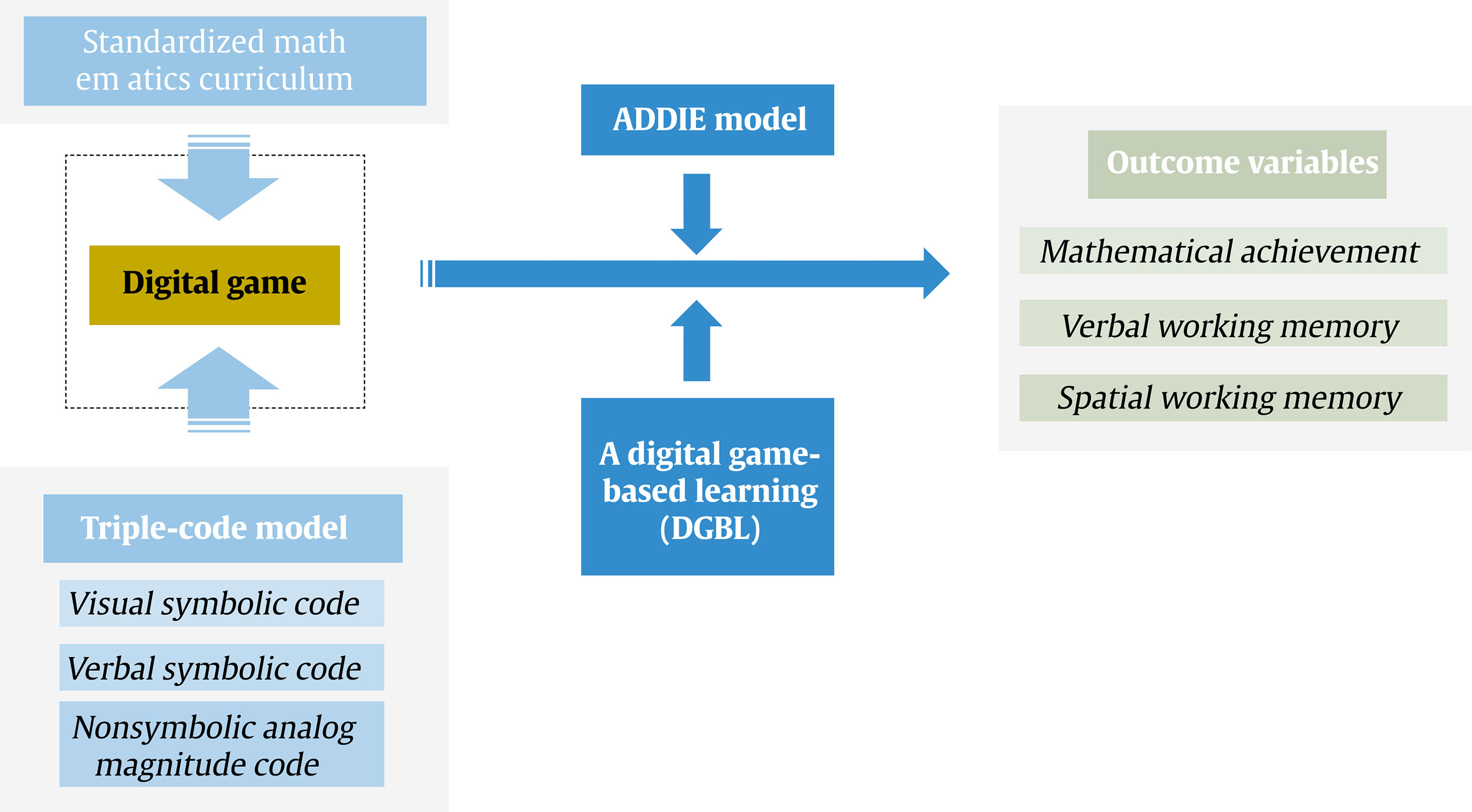 The present study comprised two main phases: the development of the intervention and the evaluation of its effectiveness. The ADDIE framework was employed to guide the intervention development, while a pretest–posttest control group design (Edmonds & Kennedy, 2017) was utilized to assess the effectiveness of the developed intervention. Participants The sample comprised 70 children aged 9 to 11 years who were identified as being at risk of MD and were enrolled in 10 primary schools in Chonburi Province, Thailand. The sample size was determined using G*Power 3.1.9.7 (Faul et al., 2007) for ANOVA: repeated measures, within-between interaction, targeting the interaction effect between group and time. The parameters were set at a significance level of α = .05, power = .80, and a moderate effect size (f = 0.25), with two groups and two measurement points. The sample size calculation indicated that a minimum of 64 participants was required. Considering an anticipated attrition rate of 17%, which is typical for psychological experiments (Prior et al., 2024), the final target sample size was set at 78 participants prior to the data collection phase. A total of 70 participants met the eligibility criteria and agreed to participate in the study. They were randomly and equally assigned to either the experimental group (n = 35) or the control group (n = 35). No participants withdrew from the study, and all completed both the testing and intervention phases. The majority of the sample were 10 years old (70.0%), followed by those aged 9 years (18.6%) and 11 years (11.4%). The distribution was similar across both groups, with 71.5% of the experimental group and 68.6% of the control group being 10 years old. Overall, 47.1% of participants were boys and 52.9% were girls. In the experimental group, 57.1% were boys and 42.9% were girls, whereas in the control group, 37.1% were boys and 62.9% were girls. The mean IQ scores for the experimental and control groups were 96.97 (SD = 4.16) and 97.06 (SD = 5.88), respectively. The overall mean IQ score was 97.01 (SD = 5.05). No significant differences were found between the two groups in age groups, χ2(2, N = 70 ) = 0.10, p = .95, sex, χ2(1, N = 70 = 2.81, p = .09), and IQ scores (t = 0.07, p = .94). Instruments Three computerized tests were administered to assess MA, verbal and spatial WMs among 70 children at risk of MD. The MA test was developed and delivered by using OpenSesame version 4.1 (Mathôt et al., 2012) and was also validated specifically for the current investigation. Verbal and spatial WMs were measured using the Backward Digit Span (BDS) and Corsi-block-tapping (CBS) tasks from the Psychology Experiment Building Language (PEBL) version 2.1 for Windows (Mueller & Piper, 2014). Computerized MA Test This test was designed in accordance with the standardized mathematics curriculum content and learning indicators for primary school students as prescribed by the Ministry of Education. The test initially consisted of 40 multiple-choice items, each with four response options. One point was awarded for each correct response and zero points for an incorrect response. Content validity of the developed items was evaluated using the content validity index (CVI). Five experts in mathematics education, educational statistics and assessment, educational psychology, and special education reviewed and rated the items. Based on their evaluations, two items were removed, and the remaining items yielded a CVI value of .98, indicating excellent content validity (Polit et al., 2007). The 38-item version of the computerized MA test was piloted with 45 children at risk of MD who shared characteristics similar to those of the participants in the main study. In addition to assessing content validity, item analysis was conducted to evaluate test reliability using the Kuder–Richardson Formula 20 (KR-20) and to examine item difficulty and discrimination indices. The test score demonstrated good internal consistency (KR-20 = .88), with item difficulty values ranging from .24 to .91 and discrimination indices ranging from .20 to .67. Based on these analyses, 35 items were retained in the final test bank (total score range: 0-35), and the average completion time was approximately 48 minutes. Verbal WM (VWM) It was assessed using BDS task, administered through the PEBL test battery. During the task, sequences of digits of increasing length—ranging from three to ten digits—were presented on the computer screen. Each sequence length included two trials, with an inter-stimulus interval (ISI) of 1,000 milliseconds (ms) and an inter-trial interval (ITI) of 1,500 ms. Each trial was scored as either 0 or 1 point. Participants were instructed to reproduce the digit sequences in reverse order by pressing the corresponding number keys on the computer keyboard. The task was discontinued when a participant failed both trials (scoring 0 on both) within the same sequence length. No time limit was imposed. The primary outcome measure was the total number of correctly completed trials (i.e., memory span). The average duration of the BDS task was approximately 14 minutes. Spatial WM (SWM) It was assessed by using the computerized version of the BCB tapping task, also administered using the PEBL test battery. During the task, nine square blocks were displayed on a 19-inch computer monitor. The test parameters—block positioning, number of blocks, and sequence order—were combined to form a visuospatial sequence. Participants were required to observe and memorize the sequence in which the blocks lit up and then reproduce the same sequence by clicking the corresponding blocks on the screen using a computer mouse. The sequences ranged from two to nine blocks in length, with each sequence length comprising two consecutive trials. Both the ISI and ITI were set at 1,000 ms. The total score was computed as the product of the maximum block span achieved and the number of correctly completed trials. Procedure The study protocol was approved by the Burapha University Research Ethics Committee (BUU IRB2-165/2564). All procedures were conducted in accordance with the Good Clinical Practice (GCP) guidelines and the ethical principles outlined in the Declaration of Helsinki. Written informed consent was obtained from the parents of all participants. In addition, school administrators (gatekeepers) and participating children were fully informed about the study’s objectives and procedures. Ten primary schools were sampled from a total of 174 primary schools in the Chonburi Primary Educational Service Area 1. A coordination meeting was held with teachers from the ten selected schools, all of which agreed to participate. Initially, 351 primary school students volunteered to take part in the study. Of these, 97 students met the eligibility criteria—namely, (i) normal IQ scores on the Standard Progressive Matrices (Raven & Raven, 2003); (ii) scoring 5 out of 10 on the teacher-rated dyscalculia screening test developed by the Thai Office of the Basic Education Commission; and (iii) achieving a score at least two standard deviations (SDs) below the mean in arithmetic performance based on bi-semester assessments in primary school (Haberstroh & Schulte-Körne, 2019). Parental consent was obtained for 70 eligible participants, as summarized in Table 1. To ensure confidentiality, school acronyms were used to anonymize participating institutions and protect student identities. Table 1 Numbers of students who met the eligibility criteria and participated in the study. 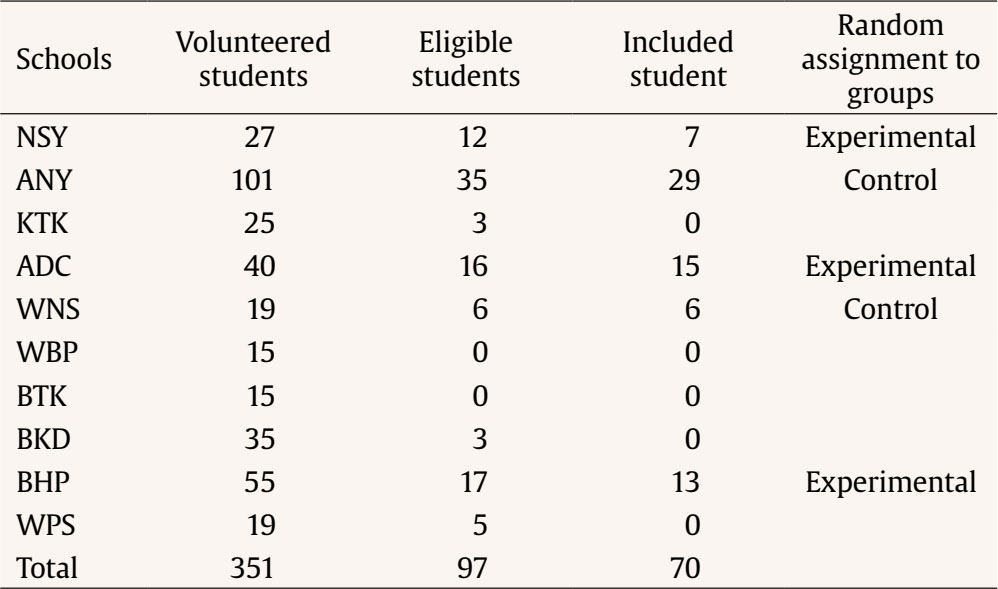 The consort flowchart of the main study is indicated in Figure 2. The intervention was implemented over four weeks, with participants in the experimental group attending three sessions per week, each lasting approximately one hour. The digital TCM game was installed in the computer rooms of the participating schools, and participants in the experimental group were invited to play during after-school programs or homeroom activities. Figure 2 CONSORT (Consolidated Standards of Reporting Trials) Flow Diagram of the Progress through the 2nd Phase of the Experiment (Hopewell et al., 2011). 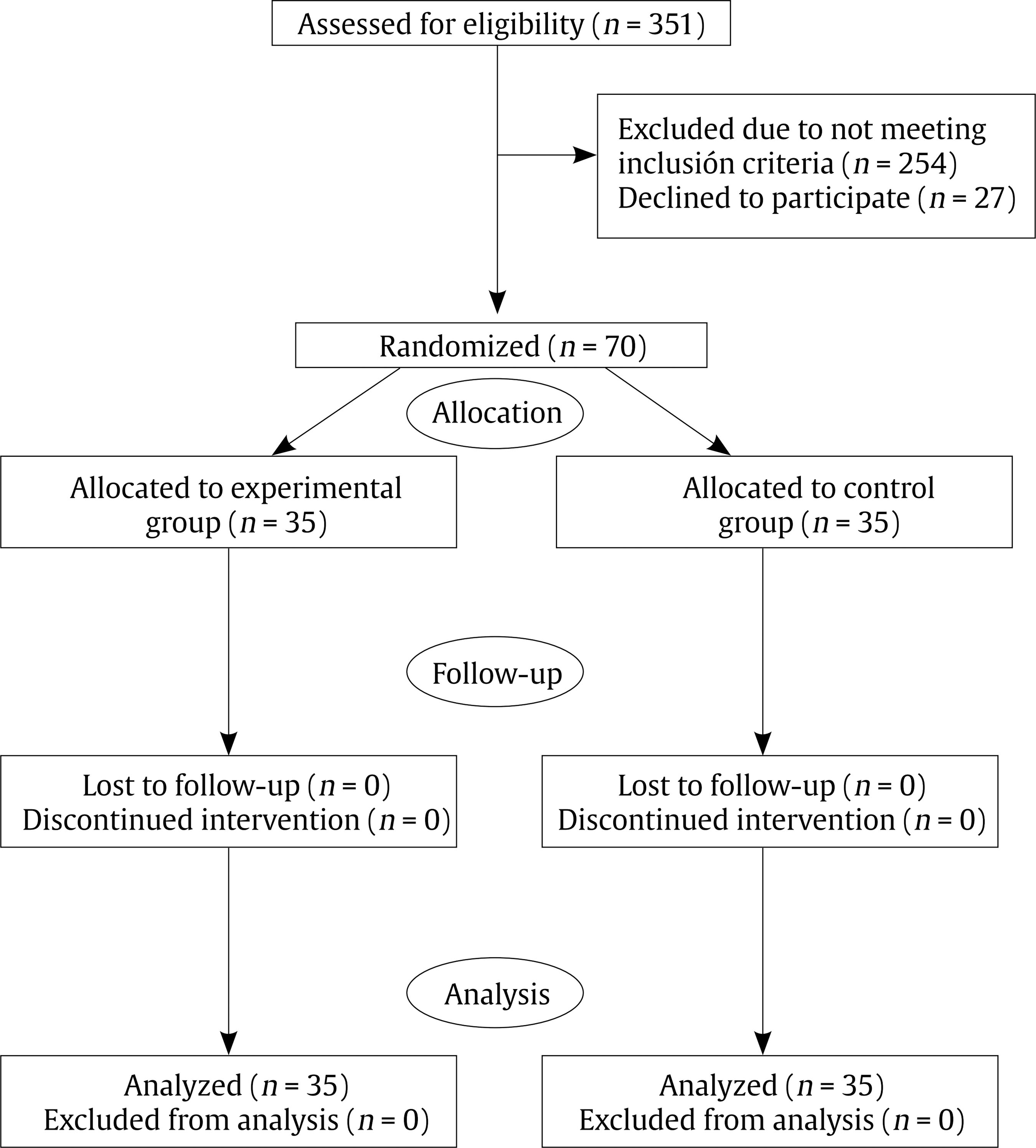 Intervention The intervention was developed in line with the ADDIE framework (Allen, 2006) and TCM (Dehaene, 1992; Dehaene et al., 2005). The research team conducted the analysis stage of the digital TCM game development, which comprised the following components:
The digital TCM game consisted of three modules: the Numerical Fact, Fraction, and Quantity modules. The Numerical Fact module included concepts related to counting numbers, place value and digit value, comparison and ordering, equal increments and decrements, as well as basic arithmetic operations such as addition, subtraction, multiplication, and division. The Fraction module covered concepts of representing fractions, understanding numerators and denominators, comparison and ordering of fractions, and performing addition and subtraction with fractions. The Quantity module focused on concepts of length, weight, volume, capacity, money, and time. It also included comparison tasks such as comparing lengths, weights, volumes, capacities, monetary values, and durations. The three modules comprised a total of 2,139 mathematical problems: 1,193 in the Numerical Fact module, 547 in the Fraction module, and 399 in the Quantity module. These items were developed to align with both mathematical concepts and the principles of the TCM. The items were evaluated by five experts in mathematics education, educational statistics and assessment, educational psychology, and special education. Based on the experts’ ratings using the CVI, 31 items were removed, resulting in 2,108 validated items included in the digital TCM game. The remaining items were piloted with 45 children at risk of MD, who shared similar characteristics with those in the main study. The protocol for the pilot study was the same as that of the main study: the 45 participants played the TCM game over four weeks, with three sessions per week and one hour per session. Following analyses of reliability, item difficulty, and item discrimination, 613 items were retained for the Numerical Fact module (KR-20 = .97, item difficulty = .29-.80, discrimination index = .21-.78), 392 items for the Fraction module (KR-20 = .94, item difficulty = .33-.80, discrimination index = .20-.66), and 210 items for the Quantity module (KR-20 = .87; item difficulty = .38-.80, discrimination index = .20-.66). PHP and HTML were used to develop the digital TCM game, while JavaScript was employed to enhance the interactivity and dynamic functionality of the web pages. MySQL served as a database-driven application for storing 1,215 mathematical problems across three modules. Cascading Style Sheets (CSS), together with JavaScript, were utilized to design and enhance the visual appeal of the game. Participants in the experimental group accessed the game through the following website: http://math-ability.com/. Figure 3 Screenshots of the Digital TCM Game: (A) character selection screen; (B) layout of each mission (i.e., mathematical problem); (C) module selection menu; (D) stage selection interface, ranging from easy to difficult levels; (E) instruction screen prompting players to remember a sequence of digits for later recall; (F) random pop-up window requiring input of the recalled digit sequence; (G) example of a mathematical problem combining counting concepts with the TCM; and (H) feedback screen displaying remaining lives, armor items, and indicators of correct and incorrect responses. 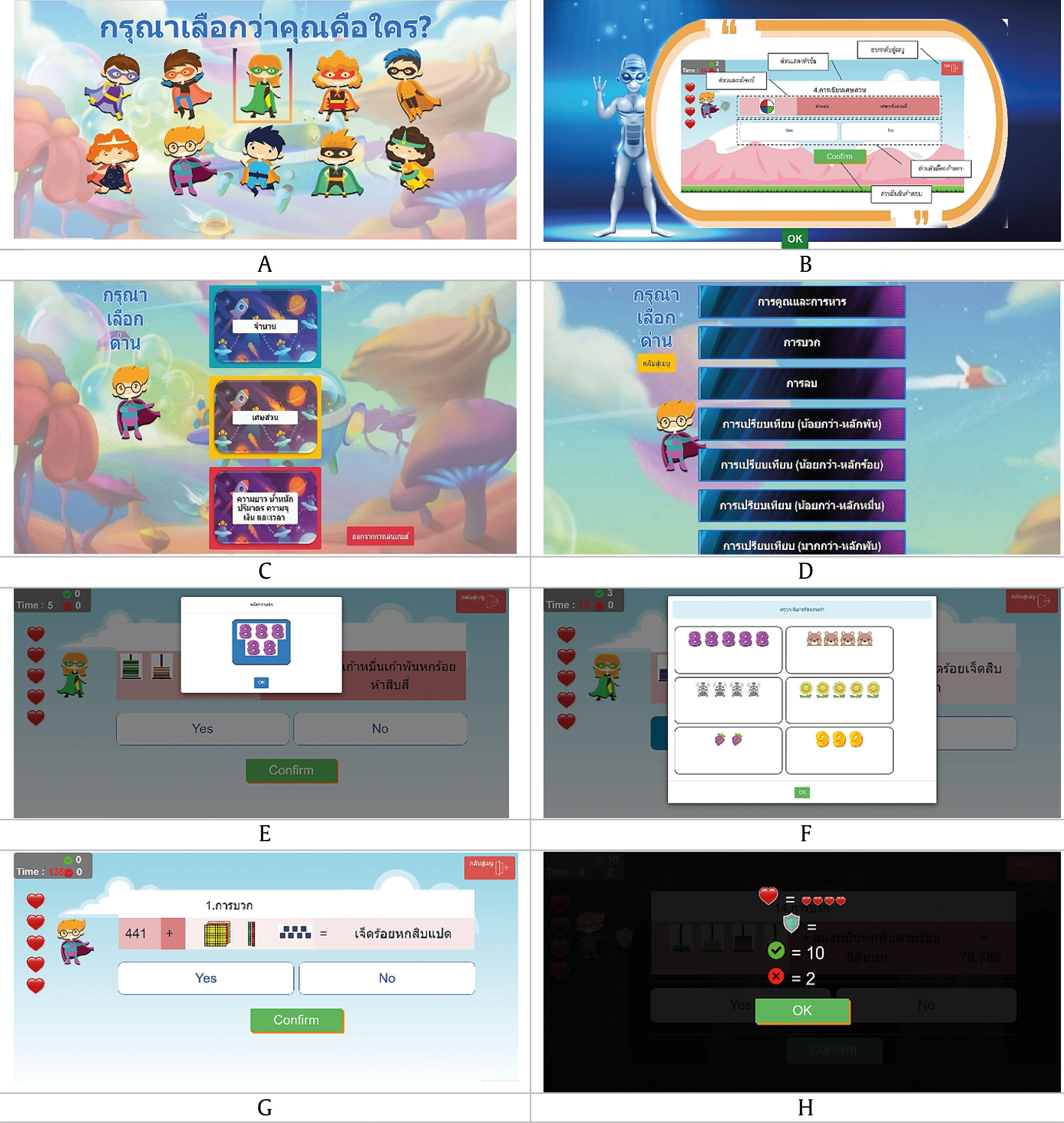 Table 2 Descriptive statistics for outcome measures across groups.  Note. MA = mathematical achievement; VWM = verbal working memory; SWM = spatial working memory. 1Box’s M = 1.52, F(3, 832320) = 0.49, p = .69; 2Box’s M = 7.66, F(3, 832320) = 7.66, p = .06; 3Box’s M = 1.95, F(3, 832320) = 0.63, p = .59. The digital TCM game was designed by integrating learning content into various problem-based scenarios, arranged according to levels of difficulty. Each scenario included text, sound, and images that systematically conveyed meaning through the digital TCM game. The storyline incorporated key digital game elements such as character selection, instructions, gameplay procedures, and sequences (see Figure 3). It also fostered a learning environment that was challenging, imaginative, enjoyable, and engaging. Feedback, outcomes, interactivity, emotional responses, and game control were all considered in developing the digital game framework. The language used was simple, easy to understand, and appropriate for the learners’ level, with sentences kept concise to maintain motivation. This approach encouraged learning, improved arithmetic skills, and enhanced WM as players progressed through different levels or challenges, without including violent or combat-related content. Statistical Analyses Descriptive statistics (i.e., mean, SD, skewness, kurtosis, and effect size) and inferential statistics (i.e., repeated-measures ANOVAs) were employed to (i) summarize participant characteristics, including MA, VWM and SWM parameters; (ii) assess the normal assumptions of the dependent variables across these parameters; and (iii) examine within- and between-group differences. In addition, the group × time interaction effect was analyzed to explore the pattern of change between the experimental and control groups. When a significant interaction effect was observed, follow-up simple effects analyses were conducted to further investigate the nature of these differences. Partial eta-squared () was calculated to estimate the effect size, representing the magnitude of improvement in arithmetic ability and WM performance from pretraining to posttraining, as well as the posttraining scores of the control and experimental groups. According to Lakens (2013), values of .01, .06, and .14, and Cohen’s d values of 0.20, 0.50, and 0.80, represent small, moderate, and large effects, respectively. All descriptive and inferential statistical analyses were conducted using IBM SPSS Statistics version 31 (IBM Corp., Chicago, IL, USA). Table 2 presents the means, SDs, minimum and maximum scores, and skewness and kurtosis values across the three outcome parameters—MA, VWM, and SWM—for both the control and experimental groups. The skewness and kurtosis values for all variables were within the acceptable range for normality (i.e., ≤ ±2; Kim, 2013), and Box’s test indicated equality of covariance matrices of the dependent variables across groups. MA, VWM, and SWM pretest scores were similar between the two groups (see Figure 4). A significant main effect of time was observed for MA, indicating that the average posttest scores were significantly higher than the pretest scores, F(1, 68) = 63.05, p < .01, = .48. In addition, a significant group × time interaction was found, F(1, 68) = 7.31, p < .01, = .10. Simple effects analysis revealed that the gain in MA scores was greater for the experimental group, t(34) = 7.85, p < .01, Cohen’s d = 1.33, compared with the control group, t(34) = 3.56, p < .01, Cohen’s d = 0.60 (see Table 3 and Figure 4A). Table 3 ANOVA results for outcome measures. 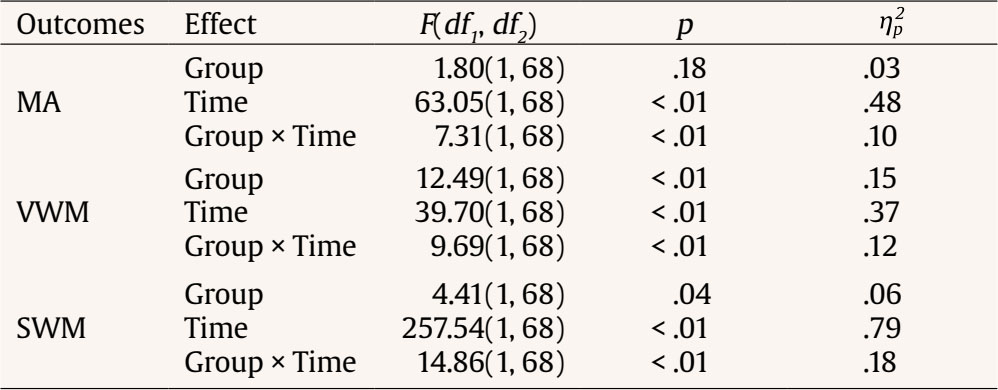 Figure 4 Significant Interaction Effects (i.e., group × time) for MA (A), VWM (B), and SWM (C). 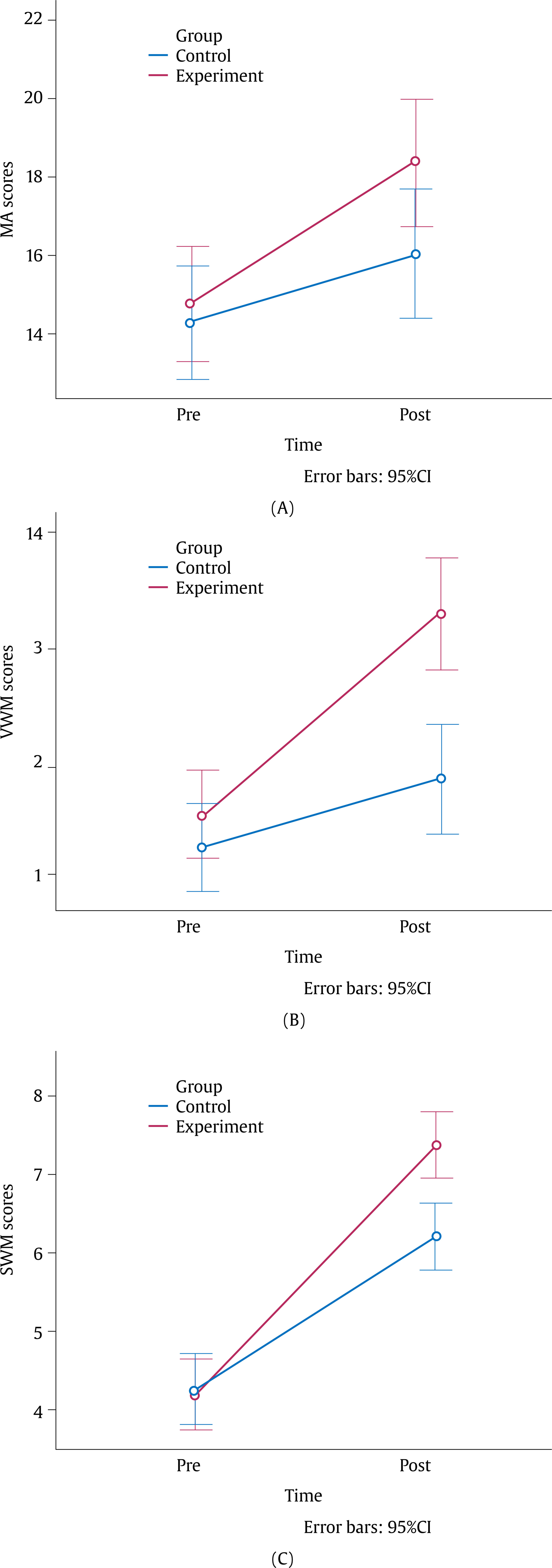 For both VWM and SWM, significant main effects of group and time were also found. Specifically, for VWM, F(1, 68) = 12.49, p < .01, = .15 (group) and F(1, 68) = 39.70, p < .01, = .37 (time); and for SWM, F(1, 68) = 4.41, p = .04, = .06 (group) and F(1, 68) = 257.54, p < .01, = .79 (time). Moreover, significant group × time interaction effects were found for both VWM, F(1, 68) = 9.69, p < .01, = .12, and SWM, F(1, 68) = 14.86, p < .01, = .18. Simple effects analyses indicated that the gains in both VWM and SWM were greater in the experimental group, tVWM(34) = 5.77, p < .01, Cohen’s d = 0.97; tSWM(34) = 13.17, p < .01, Cohen’s d = 2.23, than in the control group, tVWM(34) = 2.76, p < .01, Cohen’s d = 0.47; tSWM(34) = 9.30, p < .01, Cohen’s d = 1.57 (see Table 3 and Figures 4B and 4C). The primary aims of the present study were to develop and evaluate the effectiveness of a digital TCM game intervention for children at risk of MD in primary school settings. The intervention was grounded in the TCM and aligned with the standardized mathematics curriculum, incorporating the ADDIE and DGBL frameworks. Focus group discussions were conducted with key stakeholders and domain experts to guide the development process. A feasibility study involving 45 children was undertaken to validate the MA measure and the stimuli used in the digital TCM game. Expert evaluations indicated very high satisfaction ratings across all aspects of the intervention, which were further supported by positive feedback from 35 participating students in the experimental group. The main findings demonstrated that the digital TCM game intervention effectively enhanced cognitive functions, particularly verbal and spatial WMs, and promoted achievement of learning objectives. This educational intervention, which integrates elements of challenge, complexity, and entertainment through digital gamification, successfully fostered motivation, engagement, and measurable learning gains. The greater improvement in MA observed in the experimental group indicated a transfer effect of the intervention beyond regular classroom instruction. Furthermore, the enhanced WM performance appeared to indirectly facilitate learning processes in the experimental group, surpassing the typical developmental trajectory observed in the control group. Furthermore, the finding of the current study was in line with the previous review suggesting that the DGBL can improve learning outcomes while reducing cognitive load in young children (Behnamnia et al., 2023). From the perspective of the Cognitive Load Theory (Sweller, 2011), the interactive and adaptive nature of DGBL can optimize intrinsic and germane cognitive loads by presenting information in engaging and meaningful contexts. This digital TCM game intervention helps participants in the experimental group allocate cognitive resources more efficiently during mathematical problem-solving. Moreover, according to the Control-Value Theory of Achievement Emotions (Pekrun, 2006), positive emotions as the arousal of achievement emotions such as enjoyment, interest, and values, which are often elicited during gameplay, may enhance WM functioning by facilitating goal-relevant processing and sustained attention (Figueira et al., 2018; Hou & Cai, 2022; Yüvrük et al., 2020). Consequently, the dynamic interplay among emotion, domain-general cognitive processes, and domain-specific mathematical cognition may underlie the observed improvements in mathematical learning among children at risk of MD (Wongupparaj & Kadosh, 2022). Additionally, the sense of engagement and challenge embedded in the digital TCM game could induce a flow state (Pan et al., 2025), particularly when task difficulty is optimally matched to players’ skill levels (Pujol et al., 2024), thereby further supporting motivation and learning gains. Empirically, the mean MA scores significantly increased from 14.77 to 18.37 points following the intervention, representing an improvement of approximately +1 SD. A gain of 1 SD reflects a meaningful enhancement equivalent to performance at around the 84th percentile, indicating that participants outperformed roughly 84% of their baseline distribution. Although a post-intervention mean of 18.37 out of 35 points suggests that the digital TCM game effectively strengthened arithmetic ability, it also implies that this supplementary intervention could be used to complement regular classroom instruction for children at risk of MD. Nonetheless, the findings leave scope for the integration of additional targeted interventions or instructional activities to further accelerate mathematical learning and consolidate long-term skill retention. Limitations and Recommendations for Future Studies Although the main findings supported the benefits of the digital TCM game intervention for children at risk of MD in primary school settings, the present investigation has several limitations and provides directions for future research. First, this study did not examine potential gender differences in the effectiveness of the intervention. Given the documented gender gaps in mathematical performance and cognition, this issue warrants further exploration (Breda et al., 2023; Girelli, 2023). Second, the digital TCM game intervention was implemented on an individual basis and did not incorporate collaborative learning. Future designs may consider group-based or cooperative gameplay, as such approaches could enhance engagement and promote dynamic problem-solving skills in complex or unexpected contexts (Behnamnia et al., 2023). Third, recent evidence suggests that transcranial electrical stimulation may hold promise for supporting children with MD (Azar et al., 2025). Thus, integrating brain stimulation techniques with digital TCM game-based training could represent an innovative multimodal approach. Fourth, the present study focused on immediate post-intervention effects; the durability of these gains over time remains unclear. Longitudinal research with larger and more diverse samples is therefore recommended to assess the long-term efficacy and generalizability of the intervention. Finally, further investigation should replicate these findings in a larger sample (at least 100 participants) to establish the psychometric properties of the tests and the effectiveness of the intervention. Conflict of Interest The authors of this article declare no conflict of interest. Funding This work is part of the project entitled “Enhancing arithmetic abilities and working memory of grade three primary school students at risk of learning disabilities using digital games” and was supported by a Research grant from College of Research Methodology and Cognitive Science (RMCS 01/2564). Cite this article as: Panthong, K., Pradujprom, P., & Wongupparaj, P. (2026). Digital triple-code model game intervention for enhancing mathematical achievement and working memory in children at risk of mathematical difficulties. Psicología Educativa, 32, Article e260460. https://doi.org/10.5093/psed2026a17 References |
Cite this article as: Panthong, K., Pradujprom, P., & Wongupparaj, P. (2026). Digital Triple-Code Model Game Intervention for Enhancing Mathematical Achievement and Working Memory in Children at Risk of Mathematical Difficulties. Psicología Educativa, 32, Article e260460. https://doi.org/10.5093/psed2026a17
Correspondence: Peera.1.wongupparaj@kcl.ac.uk; peera.w@chula.ac.th (P. Wongupparaj).
Copyright © 2026. Colegio Oficial de la Psicología de Madrid


 PDF
PDF e-PUB
e-PUB CrossRef
 JATS
JATS Imprimir
 Enviar
ALERTA POR E-MAIL
La Revista de Psicología Educativa está distribuida bajo una licencia de Creative Commons Reconocimiento-NoComercial-SinObra Derivada 4.0 Internacional.com