Cognitive and Motivational VR Processes for Hearing-Impaired Language Learners
[Los procesos de realidad virtual cognitivos y motivacionales en los aprendices discapacitados auditivos de lenguaje]
Pattrawadee Makmee1, Peera Wongupparaj2, 4, Rangsirat Wongupparaj1, & Withawat Penphu3
1Burapha University, Chonburi, Thailand; 2Faculty of Psychology, Chulalongkorn University, Bangkok, Thailand; 3Rajamangala University of Technology Thanyaburi, Pathum Thani, Thailand; 4Center of Excellence in Cognitive Fitness and Biopsychiatry Technology, Faculty of Medicine, Chulalongkorn University, Bangkok, Thailand
https://doi.org/10.5093/psed2026a15
Received 22 September 2025, Accepted 8 January 2026
Abstract
This study aimed to examine the effects of a virtual reality (VR) innovation training program on response time and accuracy of verbal ability among students with hearing impairments, using a pretest-posttest control group design. Fifty participants were randomly divided equally into an experimental and a control group. The experimental group received eight sessions of VR training, each lasting 30-45 minutes over four consecutive weeks. The training consisted of various immersive scenarios where students engaged in interactive language-related tasks with immediate feedback. The experimental group showed significant improvements between pretest and posttest in accuracy (t = 2.51, p 0.05, d = 0.50) and response time (t = -2.38, p 0.05, d = 0.49). Post-test comparisons between groups revealed that the experimental group achieved significantly higher accuracy scores than the control group, F(1, 45) = 5.92, p = .02, η2 = .12, after controlling for grade level as a covariate.
Resumen
Es estudio se propone analizar los efectos de un programa innovador en realidad virtual sobre el tiempo de respuesta y la precisión de la aptitud verbal en alumnos con discapacidad auditiva, mediante un diseño pretest-postest de grupo de control. Se distribuyó a los 50 participantes por igual en un grupo experimental y otro control. El grupo experimental recibió ocho sesiones de formación de realidad virtual de 30-45 minutos cada una durante cuatro semanas seguidas. El entrenamiento constaba de diversos escenarios de inmersión en los que los alumnos se enfrascaban en tareas de lenguaje interactivas con retroalimentación inmediata. El grupo experimental tuvo avances significativos entre el pretest y el postest en cuanto a precisión (t = 2.51, p 0.05, d = 0.50) y tiempo de respuesta (t = -2.38, p 0.05, d = 0.49). Las comparaciones postest entre grupos mostraban que el grupo experimental tenía una precisión netamente superior que el grupo control, F(1, 45) = 5.92, p = .02, η2 = .12, después de controlar el nivel de calificación como covariable.
Palabras clave
Innovación en realidad virtual, Aptitud verbal, Alumnos con discapacidad auditiva, Precisión, Tiempo de respuesta
Keywords
Virtual reality innovation, Verbal ability, Students with hearing impairment, Accuracy, Response time
Cite this article as: Makmee, P., Wongupparaj, P., Wongupparaj, R., & Penphu, W. (2026). Cognitive and Motivational VR Processes for Hearing-Impaired Language Learners. Psicología Educativa, 32, Article e260458. https://doi.org/10.5093/psed2026a15
Correspondence: pattrawadee@gmail.com (P. Makmee).
In Thailand, children with hearing impairments represent a significant population within the broader category of students with special educational needs. National policies, such as the Education for Persons with Disabilities Act 2008 and the Fourth Education Plan for Persons with Disabilities 2023-2027, emphasize equitable access to quality education and the development of linguistic skills for learners with disabilities (Ministry of Education, 2025). However, despite these policies, gaps in language processing, especially in terms of response efficiency, remain a pressing challenge (National Association of the Deaf, 2023). Recent advances in educational technology highlight virtual reality (VR) as a promising intervention to support language development among students with hearing impairments. VR offers immersive environments that rely heavily on visual-spatial engagement rather than auditory input, allowing learners to process linguistic stimuli through multiple sensory channels (Parmaxi & Demetriou, 2020). This multimodal approach is particularly relevant for learners with limited auditory access, as it leverages visual learning strengths while promoting language comprehension and production (Hua & Wang, 2023). Research in Thai educational contexts has emphasized the critical role of visual perception in early learning (Ammawat et al., 2022), suggesting that visually-oriented interventions may be especially effective for Thai students with sensory impairments. The effectiveness of VR in language learning can be theoretically grounded in Mayer’s Multimedia Learning Theory (Mayer, 2014), which posits that people learn more effectively when information is presented through multiple modalities simultaneously. According to this theory, meaningful learning occurs when learners actively select relevant visual and auditory information, organize it into coherent mental representations, and integrate these representations with prior knowledge. For students with hearing impairments, VR environments capitalize on the visual processing channel while potentially reducing cognitive load through well-designed instructional presentations that align with multimedia learning principles such as the modality effect, the redundancy principle, and the coherence principle. Evidence suggests that VR-based interventions not only increase motivation and engagement but also improve the efficiency of language learning. Studies have shown that immersive VR can accelerate the speed of cognitive processing by simulating authentic communication contexts where learners must recognize, interpret, and respond rapidly to linguistic cues (Bailenson, 2018; Schorr et al., 2024). For students with hearing impairments, these simulated environments reduce reliance on auditory channels and instead encourage faster recognition of visual signs, written texts, and symbolic representations (Rakhmadi et al., 2024). Furthermore, VR allows for repeated practice within controlled, context-rich scenarios, which facilitates the transition from effortful, conscious language processing to more automatic responses. This process is consistent with theories of motor adaptation and spatial working memory, in which repeated interaction with stimuli fosters quicker encoding, retrieval, and response (Kagerer et al., 2004; Makmee & Wongupparaj, 2022). Thus, VR does not simply improve accuracy in verbal tasks but has the potential to significantly reduce response time, reflecting more fluent and efficient processing (Makmee & Wongupparaj, 2025). Although many studies have demonstrated the potential of VR in supporting language learning, most studies have focused primarily on accuracy outcomes, such as vocabulary acquisition, reading comprehension, or grammar (T. J. Lin & Lan, 2015; Peixoto et al., 2021). While these findings are valuable, they overlook an equally critical dimension of verbal proficiency: response time. Processing speed is not only an indicator of linguistic fluency but also directly influences the ability of learners to participate in real-time communication, whether in classroom discussions or everyday interactions (Gardner, 2011; McGrew, 2009). Response time in verbal tasks has long been regarded as a vital measure of cognitive processing, reflecting the efficiency with which learners could access, retrieve, and apply linguistic information (McGrew, 2009). While accuracy captures whether a response is correct, response time offers insight into the underlying automaticity and fluency of language use. For students with hearing impairments, slower response times are often due to limited auditory input during critical periods of language acquisition, reduced exposure to phonological structures, and reliance on compensatory communication strategies such as sign language or visual cues (Marschark et al., 2014; Zhang et al., 2024). These delays in processing can impede classroom participation, slow reading comprehension, and contribute to persistent educational disparities (Rosfiani et al., 2022; Schick et al., 2007). Despite this, empirical evidence on whether VR-based interventions can reduce response times in verbal tasks remains scarce. Most available research has been conducted in contexts emphasizing English language acquisition or American Sign Language (ASL), with limited attention to non-English-speaking settings such as Thailand (Serafin et al., 2023). In addition, differences in educational policies, classroom practices, and the use of Thai Sign Language, which is shaped by local linguistic and cultural conventions, may influence how students with hearing impairments process and respond to language compared to learners in Western contexts (Mirzaei et al., 2020). These differences highlight the need for context-specific empirical research. Given the limitations of existing research, the present study aims to investigate the effects of a VR innovation on verbal abilities, with a particular focus on accuracy and response time, among elementary students with hearing impairments in Thailand. Using a pretest-posttest control group design, the study compares performance between experimental and control groups before and after VR training to determine whether immersive VR can facilitate faster recognition, interpretation, and responses to linguistic stimuli. This design allows for the identification of causal effects of VR on processing speed, complementing prior research that has primarily emphasized accuracy outcomes (Makmee, 2022; Schorr et al., 2024). By incorporating response time as an outcome measure, the study adopts a broader conceptualization of verbal ability that encompasses both correctness and fluency of response (Gardner, 2011; McGrew, 2009). Ultimately, this research contributes to the field of special education by addressing a dimension of verbal development in students with hearing impairments. Evidence from this study may provide practical insights for educators, curriculum developers, and policymakers on the role of VR in promoting not only accurate but also rapid and fluent language processing. Such findings are expected to support the development of inclusive, technology-enhanced learning environments that reduce educational inequality and promote equality in linguistic competence (Marschark et al., 2014; Ministry of Education, 2025). Objectives The objective of this study is to investigate the impact of virtual reality innovations on enhancing the verbal abilities of students with hearing impairments. Specifically, the study aims to:
Theoretical Framework: Multimedia Learning Theory and Hearing Impairments The Multimedia Learning Theory (Mayer, 2014) provides a robust framework for understanding how VR-based interventions can enhance language learning among students with hearing impairments. The theory’s three assumptions—dual channels (visual-spatial and auditory-verbal processing), limited capacity (each channel has finite processing capacity), and active processing (learning requires cognitive engagement)—are particularly relevant for this population. Students with hearing impairments primarily rely on the visual-spatial channel, potentially creating both opportunities and challenges for multimedia learning design. Well-designed VR environments can optimize visual channel utilization while avoiding cognitive overload through adherence to multimedia design principles. This study employed a quantitative experimental design using a pretest-posttest control group design, which is widely recognized as a rigorous experimental method for examining causal relationships between interventions and outcomes (Edmonds & Kennedy, 2017). Participants were randomly assigned into an experimental group, which received training through the VR-based application, and a control group, which received traditional instruction without VR. Both groups completed a computerized verbal ability test before (pretest) and after (posttest) the intervention. Figure 1 Developed Virtual Reality Innovation for Students with Hearing Impairments. 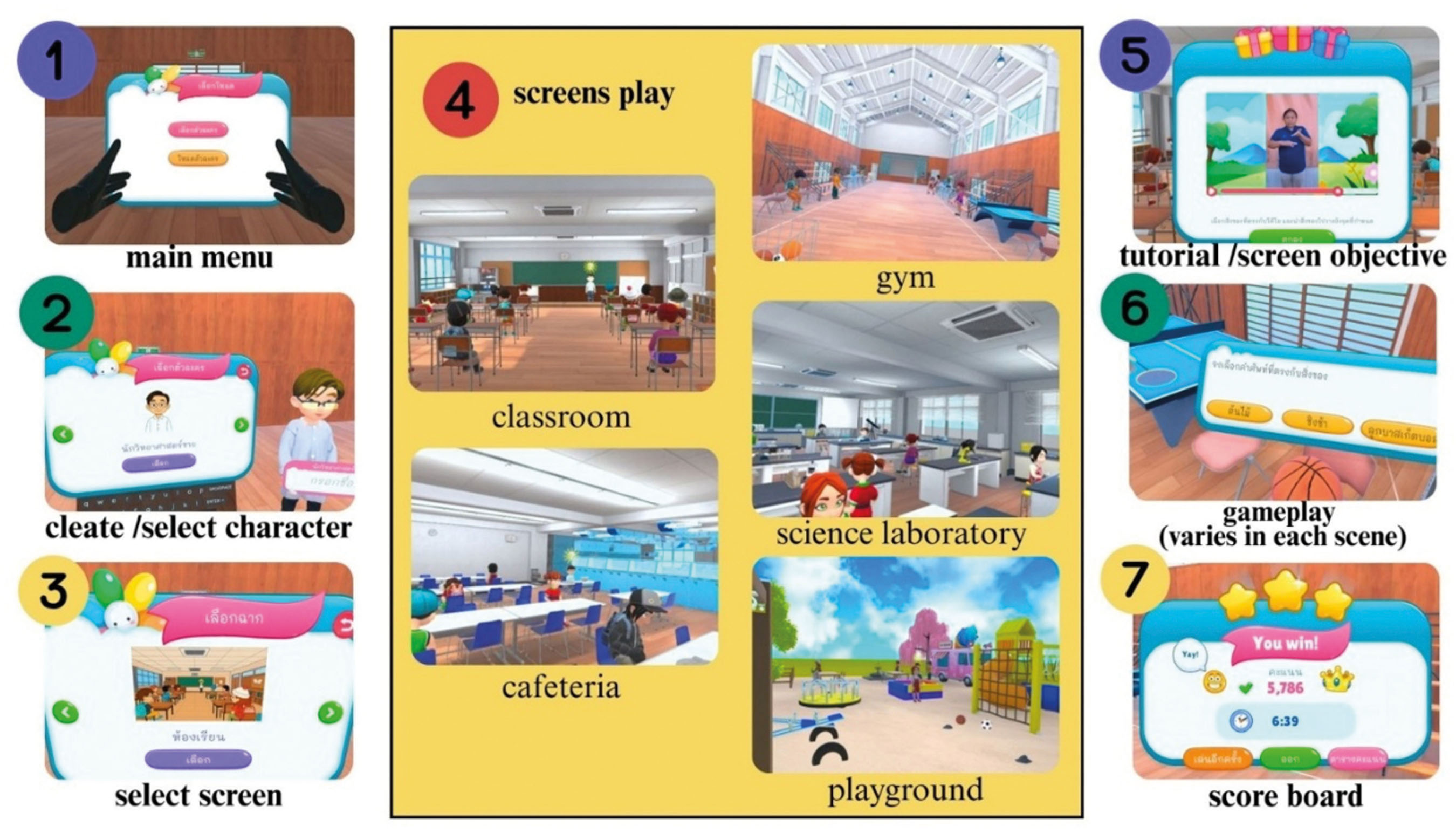 Participants The participants in this study were 50 elementary school students with hearing impairments, enrolled in a special education school in Chonburi Province, Thailand. All participants were officially diagnosed with hearing loss of varying degrees, ranging from mild to profound, according to audiometric assessments (≥ 25 decibels in at least one ear). Inclusion criteria required that participants: (1) were currently enrolled in grades 1-6, (2) had no additional cognitive or physical disabilities beyond hearing impairment, (3) demonstrated basic literacy skills in Thai, and (4) had parental or guardian consent to participate. Students with co-occurring neurological disorders, visual impairments, or severe behavioral problems were excluded. As a rule of thumb, an adequate sample size for experimental research should include at least 15 participants per group. However, to enhance reliability and precision, a sample size of 25 participants per group is recommended (McMillan & Schumacher, 2014). Participants were randomly assigned into two groups of equal size: the experimental group (n = 25), which received training with the virtual reality (VR)-based verbal program, and the control group (n = 25), which received conventional instruction without VR. Instruments Developed Virtual Reality Innovation The intervention tool was a VR application specifically developed to enhance verbal abilities among students with hearing impairments. The application was deployed using a Meta Quest 3 headset, enabling students to interact with immersive, three-dimensional learning environments. The design of the VR program was informed by the ADDIE instructional model, Gardner’s theory of multiple intelligences, and cognitive frameworks such as spatial working memory and motor adaptation (Gardner, 2011; Kagerer et al., 2004; Makmee & Wongupparaj, 2022). The VR application design also incorporated Mayer’s (2014) multimedia learning principles to optimize cognitive processing. Specifically, the coherence principle was applied by eliminating extraneous visual and auditory elements that might distract from learning objectives. The spatial contiguity principle guided the placement of related visual elements (e.g., sign language videos and corresponding text) in close proximity. The temporal contiguity principle ensured that corresponding visual and textual information was presented simultaneously rather than successively, facilitating integrated mental model construction for students with hearing impairments. For the ADDIE instructional model used to develop the VR innovation, the following steps were applied: 1. Analysis: This step focused on identifying the learning needs, challenges, and characteristics of hearing-impaired students. Researchers examined relevant documents and consulted special education experts to understand language difficulties, technological familiarity, and communication preferences. These findings guided the selection of appropriate content and teaching strategies. 2.Design: Learning objectives, content structure, types of interaction, and VR environment scenarios were established in this phase. Real-life settings such as classrooms, canteens, and playgrounds were simulated to enhance contextual language learning. Interactive activities, including word challenges, sentence sequencing exercises, and illustrated puzzles, were designed to support verbal development. 3.Development: The VR application was created using Unity 3D, incorporating animations, graphical elements, sign language video prompts for tutorial and tasks, and feedback system. The prototype was refined based on expert recommendations and preliminary technical testing, ensuring accessibility, usability, and age appropriateness. 4. Implementation: A pilot study was conducted with 15 hearing-impaired students to observe their interactions with the VR system to evaluate user engagement, ease of navigation, and content relevance. 5. Evaluation: The innovation was reviewed by five experts using a structured questionnaire with a 4-point scale to assess content accuracy, usability, and suitability for the target sample. Content validity was assessed by calculating the content validity index (CVI). Complete agreement was obtained across all items, with both the overall CVI and all Item-level CVI (I-CVI) values achieving 1.00, which indicated excellent content validity (Makmee, 2023; Polit & Beck, 2017). Revisions were made accordingly. The completed VR application shown in Figure 1 comprised five interactive scenarios, each simulating everyday contexts where language use is essential:
After completing each training scenario, students were presented with a summary screen displaying their score and the time spent on the task. Higher scores were awarded when students completed the scenario accurately and in less time. In addition, a “scoreboard” feature was available to show the ranking of individual students. However, it is important to note that these scores were not included in the formal evaluation conducted by the researchers. Data Collection Instrument The instrument for data collection was a computerized verbal ability test developed to assess both response accuracy and response time. Accuracy was calculated as the total number of correct responses, with a maximum possible score of 20 points. The test consisted of language comprehension and vocabulary recognition tasks presented on a computer screen, where students were instructed to select or arrange words according to semantic and grammatical rules. Accuracy and response time was recorded automatically using the built-in software, with response time measured in milliseconds (ms). The instrument was reviewed by five experts in special education and psycholinguistics to ensure content validity. The researcher piloted the virtual reality innovation for enhancing language abilities of students with hearing impairments. The researcher conducted a pilot study with 15 elementary school students with hearing impairments who were not part of the sample (Bangor et al., 2008; Nielsen, 2000) to measure the usability of the virtual reality innovation using the System Usability Scale (SUS) questionnaire (Brooke, 1996; Sauro, 2011) before actual implementation. The innovation was refined until the desired outcomes were achieved. The results showed that the usability score using the System Usability Scale (SUS) (Brooke, 1996) had a mean of 82.00 (SD = 8.50, range = 70-100), which was at the highest acceptable level when the score was ≥ 80.3 (Sauro & Lewis, 2016). Separately, a tryout study was conducted with 30 elementary school students with hearing impairments who were not included in the main sample to assess the reliability and item quality of the computerized verbal ability test. The analysis yielded a KR-20 of .82, indicating good internal consistency, when KR-20 ≥ .70 was considered acceptable (George & Mallery, 2020). Item analysis revealed that the item difficulty index ranged from .35 to .68 (M = .52, SD = .09), and the item discrimination index ranged from .32 to .74 (M = .48, SD = .12), both within acceptable ranges (Crocker & Algina, 2008). Procedure The study employed a pretest-posttest control group design. Both groups completed the computerized verbal ability pretest. The experimental group then participated in eight VR-based training sessions, each lasting 30-45 minutes, conducted over four consecutive weeks (two times per week). Training scenarios were delivered through a VR headset (Meta Quest 3) and consisted of interactive, context-rich environments such as classrooms, cafeterias, and playgrounds. Each session required students to complete language-related tasks (e.g., word recognition, sentence construction, comprehension of visual prompts) with immediate feedback provided within the VR environment. In contrast, the control group received traditional training without VR immersion. This training was delivered by a special education teacher using conventional instructional methods, including teacher-led explanation, textbook-based exercises, worksheets, and visual aids commonly used in hearing-impaired classrooms. The content covered vocabulary recognition, sentence construction, and basic language comprehension, and the duration and frequency of instruction were matched to those of the experimental group. Table 1 Basic Statistics Classified by Group 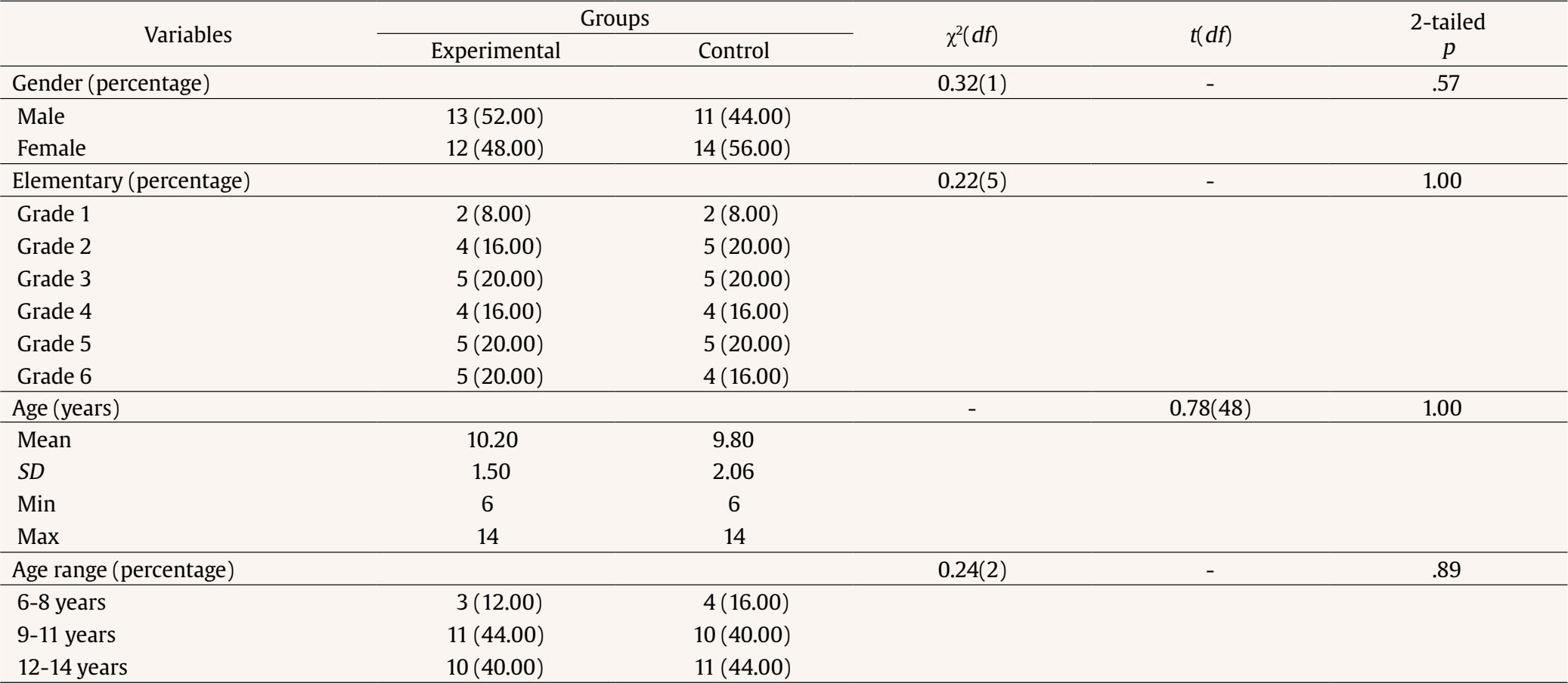 Table 2 Descriptive Statistics of Verbal Ability 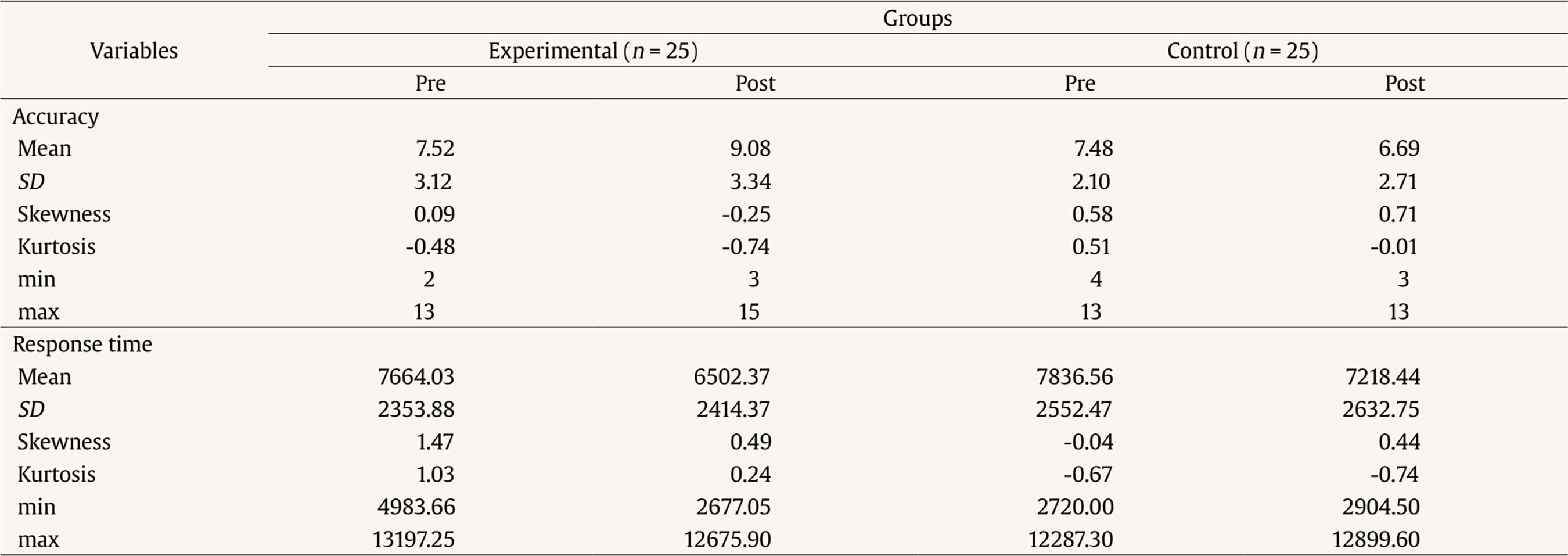 Following the intervention, both groups completed the same computerized posttest. The difference in accuracy and response time between pretest and posttest results was analyzed to determine the effect of the VR-based training on processing speed in verbal tasks. Data Analysis To evaluate the effect of the VR-based intervention and ensure baseline equivalence between groups, the following statistical analyses were employed: Baseline Equivalence Testing Chi-square tests (χ²) were used to examine demographic equivalence between the experimental and control groups for categorical variables, including gender distribution, grade level distribution, and age range distribution. An independent samples t-test was conducted to compare mean age between groups. Within-Group Comparisons Paired-sample t-tests were conducted within each group (experimental and control) to determine whether significant differences existed between pretest and posttest scores in accuracy and response times. This analysis allowed for assessment of improvement (or change) over time within each group. Between-Group Comparisons The differences between the experimental and control groups after the training were analyzed using multivariate analysis of covariance (MANCOVA), with gender, grade level, and age as covariate variables. Age was reported using both continuous indicators (mean, standard deviation, and range) and categorical groupings. Continuous age data were retained to preserve statistical power in parametric analyses, whereas age categories were used for chi-square analyses and aligned with established developmental frameworks (Knafo-Noam et al., 2023). Effect Size Estimation Effect sizes were calculated to evaluate the magnitude of observed differences. Cohen’s d was computed for paired-sample t-tests, and partial eta-squared (η²) was reported for MANCOVA analyses. According to Cohen’s (1988) guidelines, d values of 0.20, 0.50, and 0.80 represent small, medium, and large effects, respectively, while η² values of .01, .06, and .14 represent small, medium, and large effects, respectively. The level of statistical significance was set at p < .05 for all analyses. In this section, the researcher presents the experimental results, which basic statistics of participants classified by group shown below. As shown in Table 1, this experimental study involved a total of 50 participants, divided equally into an experimental group and a control group, with 25 participants in each. Within the experimental group, the majority were males (13 participants, 52%), whereas in the control group, the majority were females (14 participants, 56%). However, Preliminary analyses examined baseline equivalence between experimental and control groups. Chi-square tests revealed no significant differences in gender distribution, χ² = 0.32, df = 1, p = .57, or grade level distribution, χ² = 0.22, df = 5, p = 1.00. An independent samples t-test showed no significant difference in mean age between the experimental group (M = 10.20, SD = 1.50) and control group (M = 9.80, SD = 2.06), t(48) = 0.78, p > .05. Additionally, no significant differences were found in age range distribution, χ² = 0.24, df = 2, p = .89. These results confirm that both groups were comparable on all demographic variables prior to the intervention. Table 2 shows the mean scores, standard deviations, skewness, kurtosis, minimum, and maximum values of language ability variables, divided into two dimensions: (1) accuracy and (2) response time. Before conducting the MANCOVA, the assumptions of the analysis were rigorously examined. Multivariate normality was tested through Kolmogorov-Smirnov test, with a p > .05 indicating that the data were normally distributed. The assumption of homogeneity of covariance matrices was satisfied, as indicated by a non-significant Box’s M test (Box’s M = 2.17, F = 0.69, p = .56). Linearity was verified through scatterplots, which revealed no curvilinear patterns. Furthermore, the homogeneity of regression slopes was confirmed, with the interaction term yielding a non-significant result (p > .05), suggesting consistent relationships between covariates and dependent variables across groups. Moreover, the correlation between accuracy and response time was r = -.16, which is below the threshold of .80, indicating that the dependent variables are moderately correlated and free from multicollinearity. Therefore, the data were suitable for analysis using the paired-sample t-test and MANCOVA, as presented in Tables 3 and 4. Table 3 Results of the Comparative Analysis of Verbal Ability Scores within Group 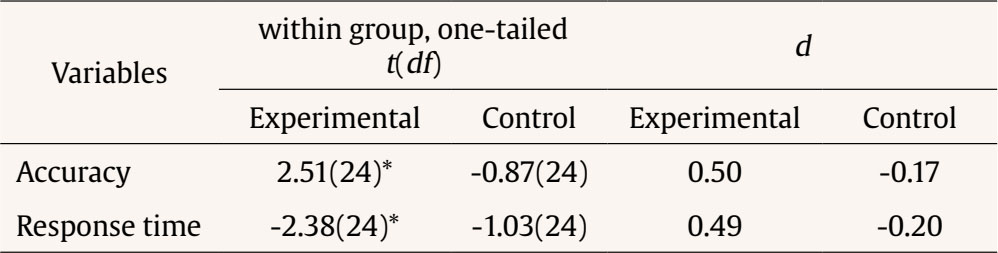 *p < .05. Table 4 Results of the Comparative Analysis of Verbal Ability Scores between Groups 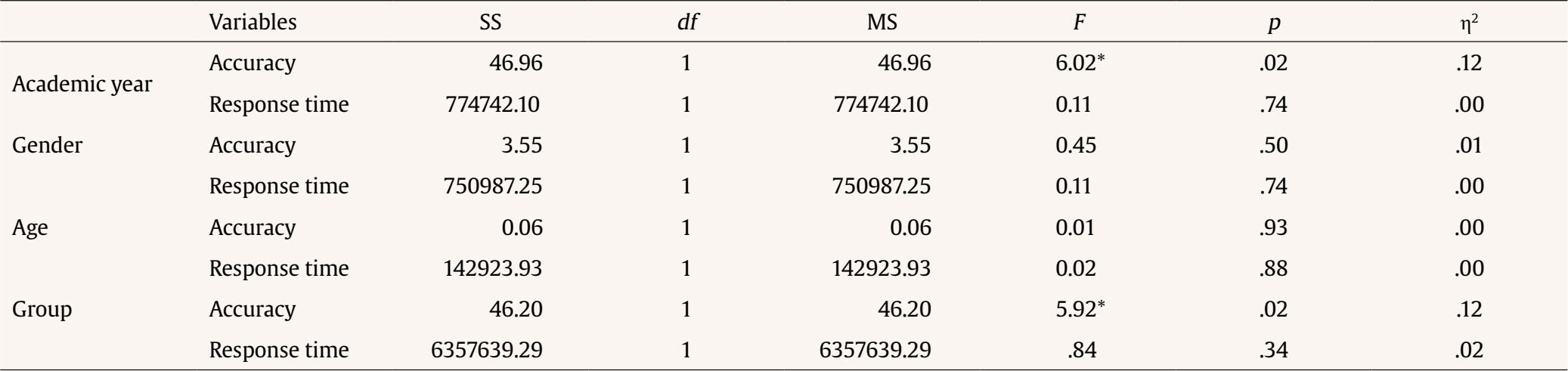 *p < .05. Figure 2 Mean Accuracy Scores on Verbal Ability Tasks for Experimental and Control Groups. 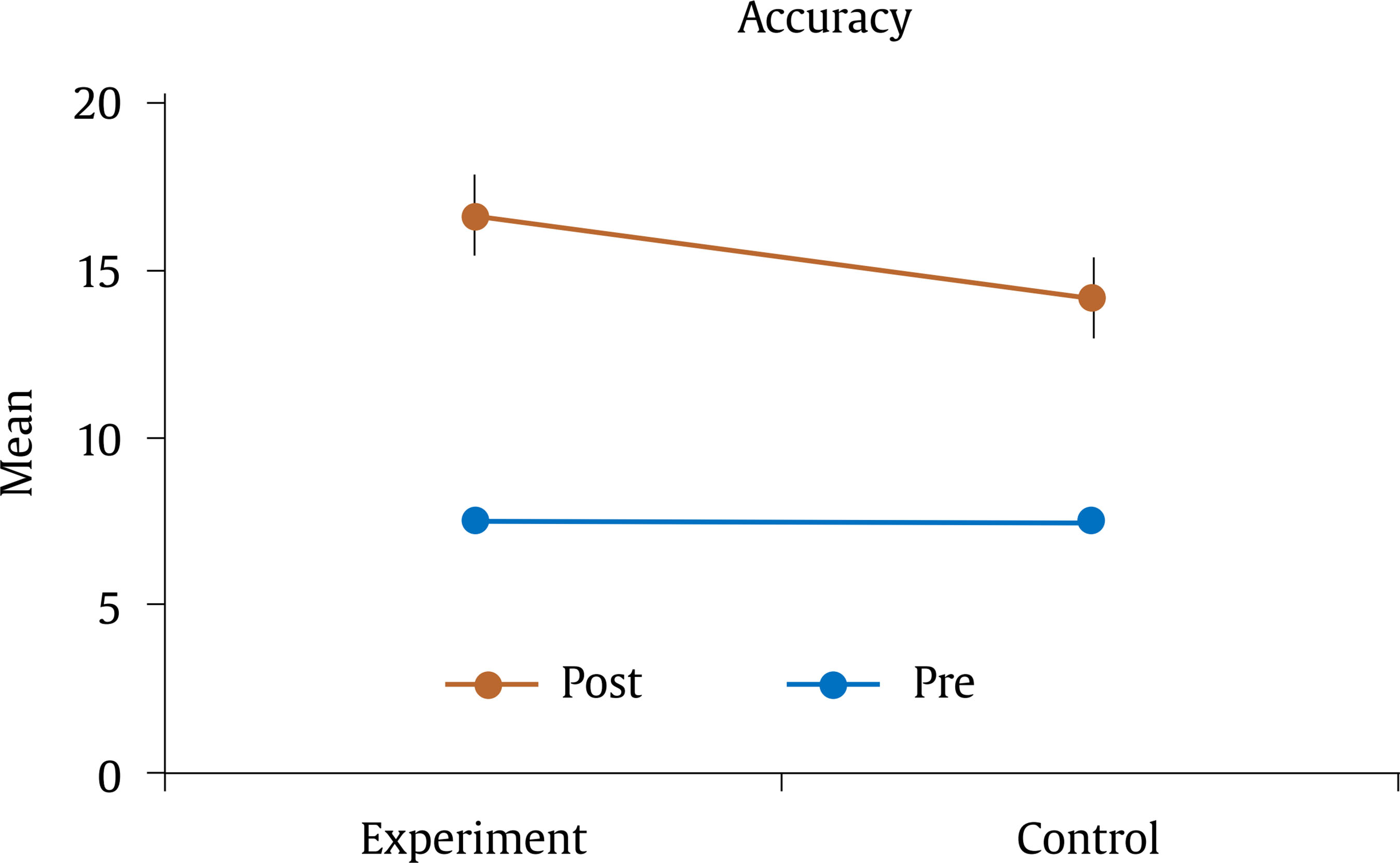 In Table 3, the results of the comparative analysis of language ability scores within and between groups are summarized. For the experimental group, significant differences were found between the pretest and posttest in both accuracy, t(24) = 2.51, p < .05, and response time, t(24) = –2.38, p < .05. The effect sizes were at a medium level (d = 0.50 and 0.49, respectively). In contrast, the control group showed no significant differences between pretest and posttest. Several previous studies indicating that variables such as academic year, gender, and age may act as confounding factors affecting research outcomes; the researchers therefore conducted a statistical analysis using MANCOVA, as shown in Table 4. Table 4 shows the comparison of language ability scores between the experimental and control groups after the training showed that academic year acted as a covariate affecting the analysis of the training outcomes in accuracy scores for students with hearing impairments. After controlling this covariate, the post-training comparison between the experimental and control groups revealed a significant difference, F(1) = 5.92, p = .02, with a medium effect size (η² = .12). However, for response time, no covariates were identified, and no significant difference was found between the two groups, F(1) = 0.84, p = .34. The comparison of mean scores between groups after the experiment is presented in Figures 2 and 3 below. Figure 3 Mean Response Times on Verbal Ability Tasks for the Experimental and Control Groups. 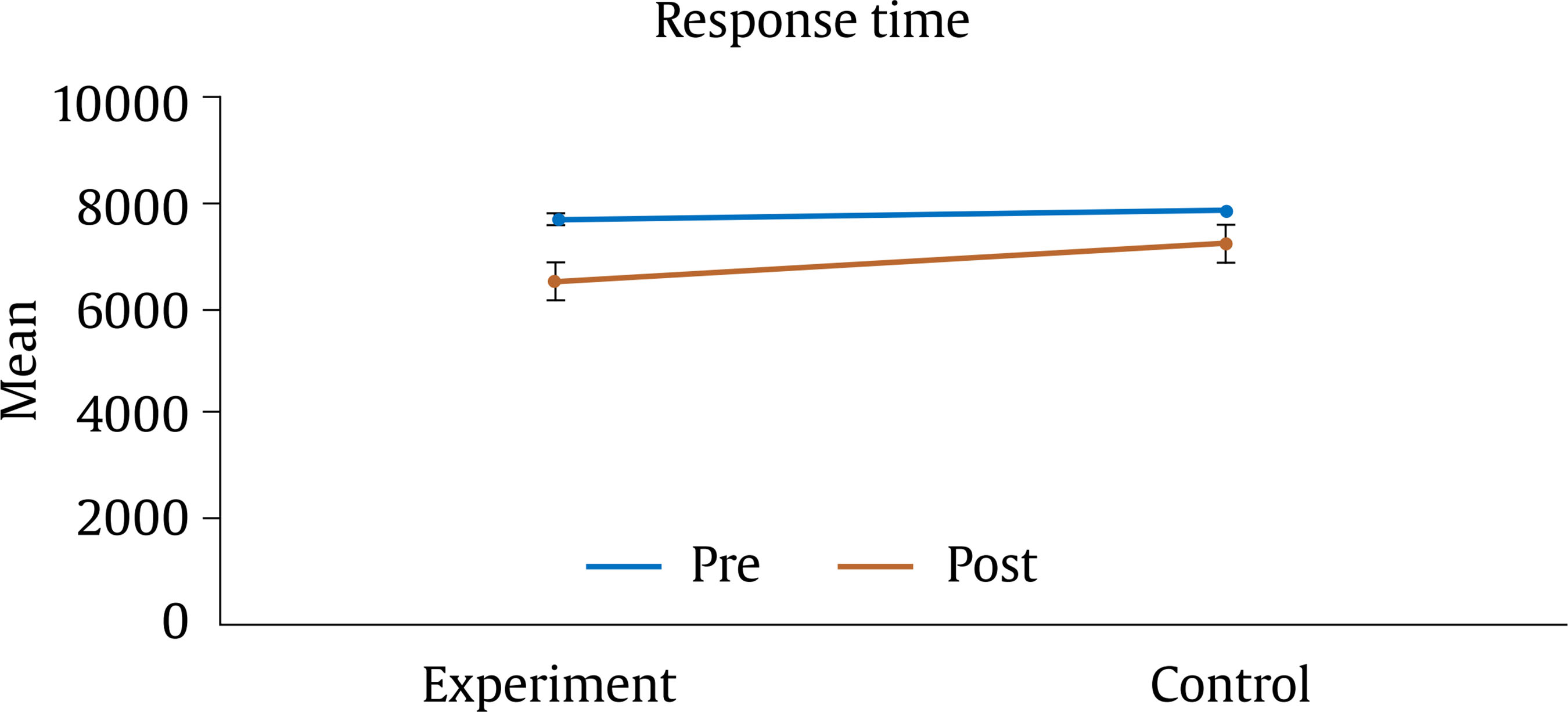 Comparisons within Group The results indicated that after training with the VR innovation, students achieved higher accuracy scores and demonstrated shorter response times compared to before the training. This suggests effective learning and skill development. During the VR-based training, students with hearing impairments were exposed to new vocabulary and expressions embedded across different scenarios. As a result, their lexical knowledge increased. Each activity required students to respond interactively, which encouraged active participation and attention, enhancing their motivation to learn (Berrezueta-Guzman et al., 2025; Lampropoulos & Kinshuk, 2024; Shen et al., 2024). Multiple instructional media such as dynamic visuals, interactive tasks, and feedback in the form of accuracy and response time scores supports faster and more efficient learning. This aligns with Moreno and Mayer (2007), who suggested that VR could function as a multimedia learning tool, supporting greater comprehension and the speed of language processing. Similarly, Borna et al. (2024) reviewed studies on AR and VR, concluding that these technologies facilitate learning and cognitive skill development. Studies focusing on learners with hearing impairments reported that VR improved language perception and reduced hesitation in responses. Berrezueta-Guzman et al. (2025) also highlighted that VR, when combined with real-time feedback mechanisms, increased learner engagement and significantly enhanced sign language skills. Likewise, Alam et al. (2024) developed a VR game for learning American Sign Language (ASL) and found that it provided responsive practice and improved sign language proficiency. Novaliendry et al. (2023) further supported these findings, while Vallarino et al. (2025) showed that learners in VR-based environments, compared to traditional screen-based instruction such as MOOCs, achieved better results with higher scores and lower variance, reflecting the benefits of focused attention and immediate feedback. The improvements in both accuracy and response time within the experimental group align with predictions from Multimedia Learning Theory. According to Mayer’s (2014) dual-channel processing model, the VR environment allowed students to process linguistic information through both visual-spatial and verbal channels simultaneously, even though the verbal channel was primarily accessed through visual text rather than auditory input. This dual processing reduced cognitive load and enhanced learning efficiency. The immediate feedback and interactive elements in the VR scenarios likely facilitated the integration of new linguistic information with existing knowledge structures, consistent with the multimedia learning principle of active processing. Comparisons between Groups Gender, age, and academic year were considered as covariates influencing the language ability of students with hearing impairments. This may be because students in higher academic years generally have more learning experience, which contributes to a larger vocabulary (Luckner & Cooke, 2010). Therefore, when trained using VR innovation aimed at developing vocabulary skills, students in higher academic years were likely to perform better. Consequently, academic year is regarded as a relevant covariate that should be controlled in the study. However, this analysis revealed that only accuracy scores were affected by academic year as a covariate, whereas response time was not. It might be because accuracy typically reflects language comprehension, vocabulary knowledge, and the ability to correctly process content, which can be influenced by learning experience. In contrast, response time is more related to processing speed and decision-making, which may not be strongly affected by academic experience. Gender and age were not found to significantly affect language ability. Although older students might be expected to have greater vocabulary knowledge, the age distribution in this study did not correspond consistently with students’ academic levels. For instance, in the first-grade group, some students were 7 years old while others were 9 and, conversely, some 9-year-old students were in third grade. This variability may result from delayed school enrollment or other factors affecting students’ readiness, leading to age not aligning reliably with learning experience or vocabulary knowledge. Comparisons between the experimental and control groups revealed that the experimental group scored significantly higher in accuracy than the control group, consistent with Radianti et al. (2020) and X. P. Lin et al. (2024), who confirmed that VR positively influences learning outcomes relative to traditional approaches. Berrezueta-Guzman et al. (2025) further emphasized that VR integrated with gamification elements such as points, badges, and leaderboards could stimulate motivation, emotional engagement and learning achievement. These features raise competence, autonomy, and relatedness, which promote intrinsic motivation according to Self-Determination Theory (SDT). Similarly, Liu (2025) demonstrated that the integration of AR and VR in classroom learning not only enriched learning experiences but also improved overall learning outcomes. However, this study found no significant differences between the experimental and control groups in terms of response time. This finding may be explained by the fact that while VR supports improvements in verbal ability like response time may be influenced by other factors such as learners’ prior skills, familiarity with VR equipment or individual cognitive differences (Paolanti et al., 2023). Whether students solved the tasks based on actual vocabulary knowledge or by guessing, their response times did not differ significantly. Mikropoulos and Natsis (2011) also noted that VR-based learning may require an initial adjustment period, during which response times may not differ significantly from those of control groups. The lack of significant difference in response time between groups, despite within-group improvements, may reflect the complex relationship between multimedia processing and automaticity development described in Multimedia Learning Theory. While the experimental group benefited from enhanced encoding through multiple modalities, the development of automatic processing speed may require extended practice beyond the eight-session intervention period. Additionally, individual differences in multimedia processing capacity and prior experience with visual-linguistic integration may have influenced response time outcomes, suggesting that cognitive load management varies among learners with hearing impairments. This study examined the effectiveness of a VR innovation in enhancing the verbal abilities of elementary students with hearing impairments, with a focus on accuracy and response time. Using a pretest-posttest control group design, the results showed that students who received VR training demonstrated significant improvements in both accuracy and response time from pretest to posttest, whereas no significant changes were observed in the control group. Posttest comparisons further indicated that the experimental group achieved significantly higher accuracy scores than the control group, although no significant between-group difference was found for response time. These findings indicate that VR-based interventions can effectively support the development of accurate verbal responses in students with hearing impairments. Immersive and interactive VR environments provide opportunities for contextualized language practice, visual engagement, and immediate feedback, which together promote vocabulary acquisition, comprehension, and learner motivation. While improvements in response time were evident within the experimental group, the absence of significant between-group differences suggests that gains in processing speed may require longer or more intensive exposure to VR-based training. Overall, the results highlight the potential of VR as a pedagogical tool for supporting verbal development in learners with hearing impairments, particularly in visually oriented learning contexts. Future research should explore the long-term effects of VR on language fluency, examine the role of individual differences and prior experience with technology, and investigate the scalability of VR-based interventions across diverse educational settings. Conflict of Interest The authors of this article declare no conflict of interest. Cite this article as: Makmee, P., Wongupparaj, P., Wongupparaj, R., & Penphu, W. (2026). Cognitive and motivational VR processes for hearing-impaired language learners. Psicología Educativa, 32, Article e260458. https://doi.org/10.5093/psed2026a15 Funding This study is part of the research project titled “Development of Virtual Reality Innovation for Enhancing Verbal Ability for Students with a Hearing Impairment: Behavior with Mixed Methods Research.” The project was funded by the Thailand Science Research and Innovation (TSRI) under the Fundamental Fund for the fiscal year 2025, Grant Number 2.53/2025, Burapha University. The datasets generated and analyzed during the current study are available from the corresponding author upon reasonable request, subject to ethical approval and participant consent agreements. References |
Cite this article as: Makmee, P., Wongupparaj, P., Wongupparaj, R., & Penphu, W. (2026). Cognitive and Motivational VR Processes for Hearing-Impaired Language Learners. Psicología Educativa, 32, Article e260458. https://doi.org/10.5093/psed2026a15
Correspondence: pattrawadee@gmail.com (P. Makmee).
Copyright © 2026. Colegio Oficial de la Psicología de Madrid


 PDF
PDF e-PUB
e-PUB CrossRef
 JATS
JATS Imprimir
 Enviar
ALERTA POR E-MAIL
La Revista de Psicología Educativa está distribuida bajo una licencia de Creative Commons Reconocimiento-NoComercial-SinObra Derivada 4.0 Internacional.com