Self-Regulated Learning and Discussion-Post Behaviors as Predictors of Learning Outcomes: Evidence from nStudy Trace Data
[El aprendizaje autorregulado y la aportación en los foros de discusión como predictores de los resultados del aprendizaje: los datos de seguimiento del nStudy]
Hui-Tzu Chang
Center for Institutional Research and Data Analytics, National Yang Ming Chiao Tung University, Taipei, Taiwan
https://doi.org/10.5093/psed2026a20
Received 21 December 2025, Accepted 28 April 2026
Abstract
This study examined how disciplinary background and assignment type were associated with intrinsic motivation, discussion-post behaviors, self-regulated learning (SRL), and learning outcomes in higher education. A total of 171 university students from computer science and humanities and social sciences completed either implementation or written assignments. Learning processes were recorded using nStudy, and questionnaires on motivation, discussion-post behaviors, and critical thinking were administered; course grades were collected. Results showed significant differences by disciplinary background and assignment type in motivation, selected discussion-post behaviors, and critical thinking, whereas fewer differences were found in trace-based SRL behaviors. No significant interaction effects were found. Regression analyses further showed that discussion-post behaviors were more consistent predictors of critical thinking and course grade than intrinsic motivation or SRL behaviors. These findings highlight the importance of considering disciplinary background and assignment type when interpreting students’ learning processes and outcomes.
Resumen
El estudio analiza de qué modo se asocian los antecedentes disciplinarios y el tipo de tarea con la motivación intrínseca, la aportación en los foros de discusión, el aprendizaje autorregulado y los resultados del aprendizaje en la educación superior. Un total de 171 alumnos universitarios de ciencias informáticas y de humanidades y ciencias sociales llevaron a cabo la aplicación o cumplimentaron tareas escritas. Los procesos de aprendizaje se registraron utilizando nStudy así como cuestionarios sobre motivación, la aportación en foros de discusión y el pensamiento crítico. Se recogieron igualmente las notas de los cursos. Los resultados mostraron diferencias significativas en cuanto a antecedentes disciplinarios y tipo de tarea en motivación, la aportación selectiva en las discusiones y el pensamiento crítico, mientras que las diferencias eran menores en el aprendizaje autorregulado basado en el seguimiento. No se hallaron efectos de interacción significativos. Los análisis de regresión abundaron en que la aportación en los foros de discusión era un predictor más estable del pensamiento crítico y las notas del curso que la motivación intrínseca o los comportamientos de aprendizaje autorregulado. Los resultados destacan la importancia de tener en cuenta los antecedentes disciplinarios y el tipo de tarea al interpretar los procesos de aprendizaje de los alumnos y los resultados.
Palabras clave
Aportación a la discusión, Motivación de aprendizaje, Resultados del aprendizaje, Aprendizaje autorregulado
Keywords
Discussion posts, Learning motivation, Learning outcomes, Self-regulated learning
Cite this article as: Chang, H. (2026). Self-Regulated Learning and Discussion-Post Behaviors as Predictors of Learning Outcomes: Evidence from nStudy Trace Data. Psicología Educativa, 32, Article e260463. https://doi.org/10.5093/psed2026a20
Correspondence: simple@nycu.edu.tw (H.-T. Chang).
Self-regulated learning (SRL) has been widely recognized as a critical determinant of academic success because it emphasizes learners’ active management of goals, strategies, monitoring, and reflection throughout the learning process (Araka et al., 2020; Guan et al., 2025; Zimmerman, 2013). Despite its strong theoretical foundation, challenges remain in understanding how SRL operates across different disciplinary domains and task contexts. Existing models have not always fully captured the dynamic ways in which learners adapt strategies to discipline-specific demands or interactive learning environments (Saint et al., 2022). One important but still underexplored aspect of these interactive learning environments is the role of discussion-post behaviors. Mainstream theories of individual SRL have primarily emphasized learners’ goal setting, strategy use, monitoring, and reflection (Winne, 2021; Zimmerman, 2013). At the same time, related research has examined regulation in collaborative contexts through concepts such as co-regulation and socially shared regulation of learning (Hadwin et al., 2017; Isohätälä et al., 2017). However, the present study does not aim to model shared regulation at the group level. Instead, it treats discussion-post behaviors as socially situated indicators related to individual regulation and examines their associations with trace-based SRL indicators and learning outcomes. In addition, recent studies suggest that the quality of students’ discussion contributions, such as asking questions, elaborating ideas, or justifying claims, is related to cognitive engagement and the development of critical thinking (Marnola et al., 2024; Yen et al., 2022). Accordingly, the gap addressed in this study is not the absence of research on social regulation per se, but the limited inclusion of discussion-post behaviors as explicit variables in studies of individual SRL. Methodologically, many SRL studies have relied on retrospective self-report questionnaires. Although such measures are useful for capturing learners’ perceptions and reported experiences, relying on them alone may be insufficient for examining the real-time and dynamic enactment of SRL strategies (Rovers et al., 2019). Recent technological advances, such as the nStudy system (Winne, Teng, et al., 2017), make it possible to unobtrusively collect fine-grained behavioral trace data during authentic learning tasks. These data allow researchers to examine how learners’ strategies unfold in real time and how social interaction is related to cognitive and regulatory processes. Building on these gaps, the present study integrates intrinsic learning motivation, discussion-post behaviors, and SRL within a unified framework. Specifically, it examines whether disciplinary background (computer science vs. humanities and social sciences) and assignment type (implementation vs. written) are associated with, and interact in shaping, motivation, strategy use, and learning outcomes, including critical thinking and course grades. Rather than modeling socially shared regulation at the group level, the study focuses on whether learners’ reported discussion-post behaviors, together with trace-based SRL indicators captured by nStudy, are associated with learning outcomes. By conceptualizing discussion-post behaviors as socially situated behaviors related to individual regulation, this study extends current SRL research while maintaining an analytic focus on individual learners’ regulatory processes. Literature Review Self-regulated Learning SRL is a multidimensional construct involving cognitive, motivational, and behavioral processes through which learners actively manage and direct their learning (Cenka et al., 2024). Major SRL models have conceptualized this process in different but complementary ways. Pintrich (2000), for example, described SRL as a dynamic and constructive process involving phases such as goal setting, strategic planning, monitoring, and reflection, whereas Zimmerman (2013) emphasized learners’ proactive regulation of cognition, motivation, and behavior. In addition to these perspectives, Boekaerts’ (1999; Boekaerts & Niemivirta, 2000) model highlights the role of motivational and emotional processes in self-regulation, particularly how learners balance learning goals with concerns about well-being and self-protection. From this perspective, motivational beliefs are central to SRL, as they shape learners’ engagement and their selection and use of learning strategies (Bandura, 2001; Poluektova et al., 2023). Across these perspectives, SRL is consistently associated with academic success and effective adaptation to learning demands. In the present study, these models are treated as complementary theoretical foundations for examining intrinsic motivation, trace-based SRL behaviors, and discussion-post behaviors, rather than as a single unified framework. At the same time, the enactment of SRL strategies is shaped by learning context. Learners’ needs vary across disciplines and task types, and different activities may require different forms of regulation (Zhihong et al., 2023). Accordingly, disciplinary and task-related differences may shape learners’ motivation and regulatory behaviors across learning settings. Although strategic learning is generally beneficial, students often face constraints related to time, cognitive load, and motivational readiness, which may limit their ability to implement demanding strategies effectively. For example, some learners resort to surface-level tactics such as online searches or copy-paste methods to save time, which may be less conducive to deep learning (López-Pernas et al., 2021). By contrast, cognitively demanding strategies such as highlighting, summarizing, and note-taking have been shown to support comprehension and retention, but they require greater autonomy and cognitive engagement (Ponce et al., 2022; Rahiem, 2020). These observations suggest that the effectiveness and enactment of SRL strategies may vary across disciplines and task types. These contextual differences also make it important to consider how SRL is assessed, particularly when the aim is to capture strategy use as it unfolds in authentic learning settings. Given this context-dependent nature of SRL, a related challenge concerns how self-regulation is assessed. Predominant approaches such as Likert-scale questionnaires and think-aloud protocols remain valuable tools for examining learners’ perceived cognitive, motivational, and emotional experiences (Fernández-Michels & Fornons, 2021; Sheats et al., 2024). However, when used alone, these methods may be less well suited to capturing the real-time and dynamic nature of learners’ strategy use, because they rely on learners’ ability to accurately recall and articulate their experiences, which may be constrained by limitations in self-awareness, memory, and verbal expression (Winne, Nesbit, et al., 2017a; Yang et al., 2023). Accordingly, real-time behavioral data may provide a useful complement to self-report measures when examining self-regulation processes in authentic learning contexts. Trace-based Assessment of Self-regulated Learning and the nStudy System Conventional approaches to studying SRL, such as self-report questionnaires, interviews, and think-aloud protocols, provide useful information about learners’ perceived goals, strategy use, and reflections, but they are less well suited to capturing SRL as it unfolds in real time (Perry & Winne, 2006). In this regard, nStudy offers an important methodological advantage by recording learners’ time-stamped actions as they interact with information, tasks, and digital tools in authentic learning contexts (Winne, 2020; Winne et al., 2019). Rather than relying solely on retrospective accounts, nStudy makes it possible to examine what learners do, when they do it, and how they operate on information across learning episodes. This process-oriented evidence provides a stronger basis for investigating the dynamic and event-based nature of SRL than self-perception measures alone (Winne, 2019, 2020). Earlier work in the gStudy environment, which served as a precursor to nStudy, laid important groundwork for this approach. The gStudy was designed as a multimedia learning environment that provided learners with cognitive tools such as note-taking, highlighting, concept mapping, searching, and glossary construction while simultaneously recording their actions in fine detail (Winne et al., 2006). Research using gStudy showed that trace data can reveal not only the frequency of study tactics but also how those tactics are sequenced and coordinated across learning activities (Malmberg et al., 2010; Perry & Winne, 2006). This line of work helped shift SRL research from viewing strategy use primarily as a self-reported construct toward examining SRL as an unfolding process embedded in learning activity. Building on this trajectory, the nStudy was developed as a web-based system for researching information problem solving, learning processes, and SRL in naturalistic digital environments. Winne, Nesbit, et al. (2017b) described the nStudy as a system that gathers fine-grained, time-stamped trace data about how learners search for, select, analyze, organize, and revise information while working online. Similarly, Winne et al. (2019) characterized nStudy as software for learning analytics that captures learners’ interactions with information and tools and provides trace data that can be used to infer cognitive, metacognitive, and motivational processes. In practical terms, nStudy records actions such as visiting pages, selecting content, creating and editing notes, highlights, bookmarks, and terms, linking artifacts, and revisiting saved materials across work sessions. Such records enable researchers to move beyond static indicators of SRL and toward a process-oriented account of how learning unfolds over time. An important contribution of the nStudy-based research is that it has advanced not only data collection but also the theoretical interpretation of learning analytics. Winne (2020) argued that trace data should not be treated as self-evident indicators of learning; rather, their value depends on reliability, validity, and theory-guided interpretation. In this sense, the nStudy is valuable not simply because it logs behavior, but because it supports the representation of theoretically relevant learning events in real time and in authentic contexts. For the present study, the nStudy provides a methodological bridge between learners’ reported experiences and their trace-based behaviors. The system was used to record time-stamped learner actions in a web-based environment, and these traces were used to derive indicators of SRL that complement questionnaire-based measures of motivation, critical thinking, and discussion-post behaviors. Thus, the nStudy is positioned as a process-sensitive approach that strengthens the assessment of the SRL in higher education contexts (Winne, Nesbit, et al., 2017b). The Relationship between SRL and Discussion Posts In the present study, discussion-post behaviors are conceptualized as learners’ self-reported engagement in different types of written contributions in online course-related discussions, including questions, responses, claims, elaborations, and other forms of interaction with peers or instructors. This conceptualization is consistent with prior work examining the quality and functions of online discussion contributions (e.g., Bender, 2023; Rakovic et al., 2020). In online learning environments, such behaviors may support student engagement, peer interaction, and opportunities for reflection, but their educational value depends on how discussion activities are designed and facilitated rather than being uniformly positive (Bender, 2023; Neuwirth et al., 2020). In this context, high-quality discussion refers to contributions that go beyond simple participation or agreement and instead involve cognitively engaging moves such as asking questions, giving reasons, elaborating on others’ ideas, comparing perspectives, and making claims (Chi & Wylie, 2014; Rakovic et al., 2020). Such discussion behaviors may provide opportunities for learners to articulate understanding, monitor their thinking, and respond to others’ perspectives, thereby supporting SRL processes (Marnola et al., 2024; Rakovic et al., 2020). Students with stronger SRL abilities typically demonstrate higher levels of engagement and more effective problem-solving in online discussions, drawing on metacognitive strategies such as goal setting, self-monitoring, and reflection to enhance learning outcomes (Marnola et al., 2024; Paul & Criado, 2020). Related research has also examined regulation in collaborative contexts through co-regulation and socially shared regulation of learning, which emphasize how regulation may emerge through interaction among learners (Hadwin et al., 2017; Isohätälä et al., 2017). However, the present study does not model shared regulation at the group level; instead, it focuses on discussion-post behaviors as socially situated indicators related to individual regulation. The effectiveness of discussion posts is influenced by several instructional and contextual factors, including the quality of instructor guidance, the structure of participation, and the provision of feedback (Neuwirth et al., 2020). Distinguishing between mandatory and voluntary participation may also affect student engagement and the development of SRL skills (Jin et al., 2023). Structured discussion activities, particularly those guided by instructors, can help students cultivate goal-setting and self-assessment skills while encouraging reflection on both learning processes and outcomes (Gikandi & Morrow, 2016; Schultz & Sandidge, 2022). These findings suggest that discussion posts are most beneficial when they are embedded in supportive instructional designs that promote meaningful engagement. To better understand the learning processes embedded in online discussions, researchers have increasingly drawn on analytical frameworks such as the ICAP model (interactive, constructive, active, passive), which categorizes students’ learning behaviors into four types of cognitive engagement (Chi & Wylie, 2014). This framework provides a basis for analyzing message content and examining how the nature of students’ contributions relates to learning outcomes. Using ICAP, Rakovic et al. (2020) coded students’ online posts and responses to peers and found that more elaborated and well-developed contributions were associated with stronger performance on course assessments. Their findings also indicated that posts characterized by comparison, justification, and perspective-taking were associated with stronger learning outcomes than posts that primarily expressed disagreement. In the present study, ICAP is used only as a conceptual reference for understanding discussion quality rather than as a direct coding framework for students’ actual posts. Although prior research has shown that online discussion can support engagement and higher-order learning, relatively few studies have examined SRL strategies and discussion-post behaviors together within the same analytic framework, particularly when discussion-post behaviors are treated as explicit behavioral variables. This gap warrants further attention because discussion-post behaviors may reflect how learners regulate their understanding, respond to peers, and engage in cognitively demanding exchanges. The present study addresses this gap by examining discussion-post behaviors together with intrinsic motivation, trace-based SRL indicators, and learning outcomes in authentic higher education contexts. Intrinsic Learning Motivation and Learning Outcomes Intrinsic learning motivation, as conceptualized by the Self-Determination Theory (Deci & Ryan, 2000), refers to the internal drive that encourages learners to engage in educational activities out of genuine interest, curiosity, and a desire for self-fulfillment. Unlike extrinsic motivation, which relies on external rewards or pressures, intrinsic motivation has often been associated with sustained engagement and deeper learning. Research has consistently shown that intrinsic motivation enhances persistence, creativity, and enjoyment in the learning process (Yin et al., 2020). This effect is particularly pronounced in tasks requiring high cognitive engagement, such as participating in discussions and articulating personal viewpoints, where intrinsic motivation encourages active thinking and meaningful interaction. Moreover, when learning environments satisfy the three basic psychological needs identified by the Self-Determination Theory, learners tend to show stronger intrinsic motivation and higher levels of learning engagement (Kilinc & Buyuk, 2022). Intrinsic motivation is closely related to learning outcomes, as intrinsically motivated students are more likely to invest effort in challenging tasks, persist through difficulty, and engage deeply with learning materials, which in turn support academic performance and higher-order learning (Deci & Ryan, 2000; Kilinc & Buyuk, 2022; Yin et al., 2020). In this sense, intrinsic motivation is an important factor associated with learners’ engagement and achievement across learning contexts (Deci & Ryan, 2000; Yin et al., 2020). In the present study, intrinsic motivation is examined in relation to discussion-post behaviors, critical thinking, and course grades. Integrating Discussion Posts, SRL, and Learning Outcomes In digital learning contexts, discussion posts can serve as an important medium through which students construct knowledge and develop cognitive skills. This interactive format facilitates collaboration, promotes the exchange of ideas, and stimulates critical thinking and conceptual integration through writing and reflection (Ferrer et al., 2022). High-quality discussion posts often reflect deep information processing and knowledge reconstruction, contributing to more comprehensive understanding and application of learning content. In the present study, critical thinking is treated as an important learning outcome because cognitively engaging discussion and self-regulated processing are expected to support learners’ evaluation of ideas, justification of claims, and integration of perspectives (Chi & Wylie, 2014; Ferrer et al., 2022). From an SRL perspective, participation in online discussion may involve regulatory processes such as goal setting, monitoring, reflection, and strategy adjustment (Marnola et al., 2024; Paul & Criado, 2020). Learners who engage more actively and strategically in discussion may use these opportunities to articulate understanding, evaluate alternatives, and refine their responses (Marnola et al., 2024; Rakovic et al., 2020). Prior research has shown that high-achieving students tend to employ more effective learning strategies, manage their time more successfully, and show lower levels of procrastination (Moustakas & Gonida, 2023). In addition, learners’ self-monitoring and learning control abilities have been positively associated with improved academic outcomes (Lestari & Zahra, 2024). Taken together, these findings suggest that discussion-post behaviors may be meaningfully linked to SRL processes and learning outcomes. Taken together, these findings suggest that intrinsic motivation, SRL, and discussion-post behaviors may be meaningfully interconnected. Learners with stronger intrinsic motivation may be more willing to engage in cognitively demanding discussion activities, whereas learners with stronger SRL may engage more strategically by articulating understanding, evaluating alternatives, and refining their responses. Related research, particularly on co-regulation and socially shared regulation of learning (Hadwin et al., 2017; Isohätälä et al., 2017), has examined how interaction may support regulatory processes in collaborative contexts. However, relatively few studies have examined discussion-post behaviors together with individual SRL, intrinsic motivation, and learning outcomes within the same analytic framework in digital learning environments. This gap warrants further attention because discussion-post behaviors provide a context in which learners’ regulatory processes may be expressed through interaction, reflection, and response to others in cognitively demanding exchanges. Purpose and Hypotheses Building on the theoretical and methodological gaps identified above, this study investigates how intrinsic learning motivation, SRL, and discussion-post participation are associated with learning outcomes in higher education contexts. Prior research suggests that learners’ motivation, regulatory behavior, and discussion participation may vary across disciplines and task types. In addition, SRL and motivation research suggests that intrinsic motivation, SRL, and discussion-post participation may be associated with critical thinking and academic performance. Specifically, the study pursues the following objectives and hypotheses: Objective 1 To examine whether students from different disciplinary backgrounds differ in intrinsic motivation, SRL, discussion-post behaviors, and learning outcomes. H1: Students from different disciplinary backgrounds differ in intrinsic motivation, SRL, discussion-post behaviors, and learning outcomes. Objective 2 To examine whether students completing different assignment types (implementation vs. written) differ in intrinsic motivation, SRL, discussion-post behaviors, and learning outcomes. H2: Students completing implementation versus written assignments differ in intrinsic motivation, SRL, discussion-post behaviors, and learning outcomes. Objective 3 To examine whether disciplinary background and assignment type interact in shaping students’ intrinsic motivation, SRL, discussion-post behaviors and learning outcomes and whether intrinsic motivation, SRL, and discussion-post behaviors are associated with critical thinking and academic performance. H3: Disciplinary background and assignment type jointly influence students’ intrinsic motivation, SRL, discussion-post behaviors, and learning outcomes. H4: Intrinsic motivation, SRL, and discussion-post behaviors are positively associated with critical thinking and academic performance. Participants and Procedure This study targeted students from a university in northern Taiwan, recruiting participants from the Department of Computer Science and the Department of Humanities and Social Sciences between 2023 and 2025. After excluding individuals who did not properly log in or out of the nStudy system during the study period, a total of 171 students met the research criteria and completed the study. Among them, 81 students were from the Department of Computer Science (45 undergraduates and 36 master’s students), and 90 students were from the Department of Humanities and Social Sciences (51 undergraduates and 39 master’s students). The participants’ college entrance examination scores ranked at the 88th percentile nationally (i.e., among the top scorers). This study received approval from the Institutional Review Board (Approval No. NYCU-REC-110-130F). Participants were recruited through online social platforms and campus bulletin boards. Registered students were required to attend an information session that provided a detailed overview of the research procedure, informed consent, and instructions on the installation and use of the nStudy system. At the outset of the study, participants completed the intrinsic learning motivation questionnaire, which was measured using two validated subscales of the Intrinsic Motivation Inventory (IMI). Each student was then asked to select one assignment from one of their enrolled courses as the focal task for learning-process tracking. The entire learning process was recorded using the nStudy real-time tracking system, from which SRL indicators were derived based on behavioral trace data. After completing the assignment, participants responded to a study-developed discussion post questionnaire based on Rakovic et al. (2020) and the ICAP framework, as well as the validated critical thinking subscale of the Motivated Strategies for Learning Questionnaire (MSLQ), which served as post-test measures. In addition, pre-course average grade was obtained from the university’s academic records system and was included as a control variable in the regression analyses. Table 1 Discussion-post Categories, Operational Definitions, and Example Indicators/Items 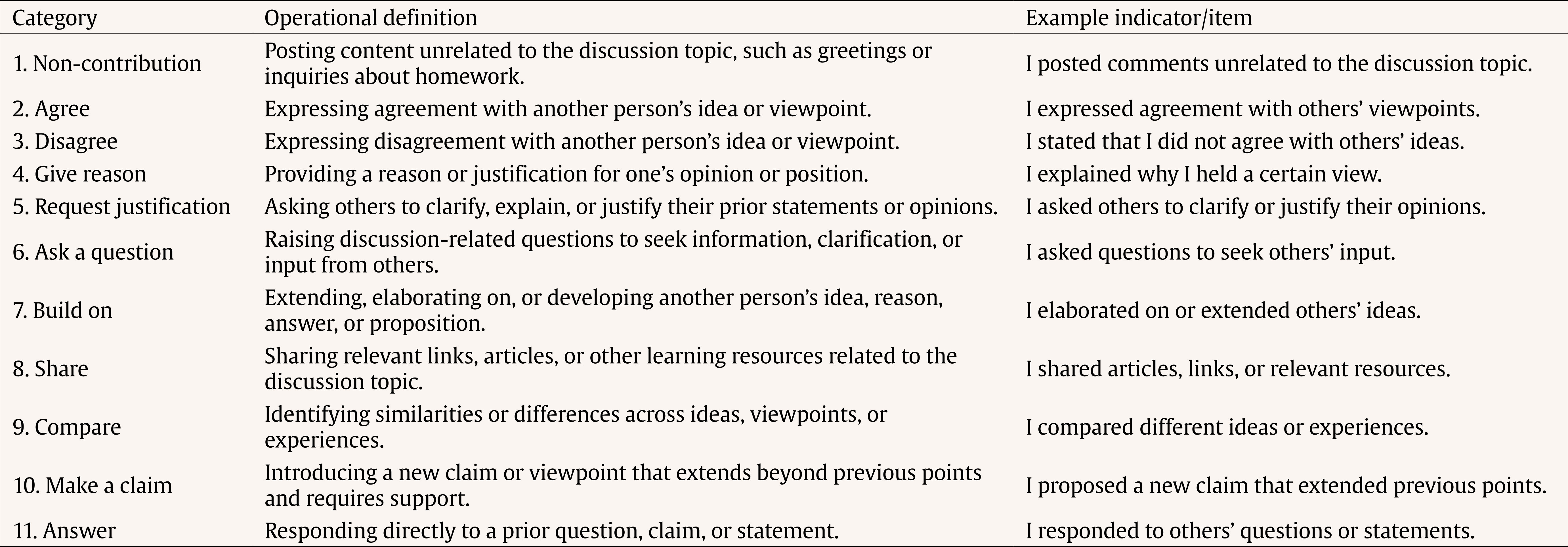 To account for variation in task demands, the selected assignments were classified into two types: implementation assignments, which required students to apply, execute, or produce a concrete solution or product (e.g., implementing a reinforcement learning algorithm in OpenAI Gym), and written assignments, which required students to organize, analyze, and present ideas in written form (e.g., a research paper on attachment relationships). This classification was adopted because different types of assignments may shape students’ motivation, discussion behaviors, and SRL strategies in different ways. Importantly, assignment type was not determined by disciplinary background; rather, students from both disciplinary groups could engage in either type of assignment depending on the requirements of their enrolled course. Measures Pre-course Average Grade Pre-course average grade referred to students’ cumulative academic average prior to taking the target course. This variable was obtained from the university’s academic records system rather than from a self-report scale or questionnaire. In the regression analyses, pre-course average grade was included as a control variable to account for students’ prior academic performance. Intrinsic Learning Motivation Intrinsic learning motivation was assessed using two validated subscales (effort/importance and value/usefulness) from the Intrinsic Motivation Inventory (IMI). The inventory is based on the research by Ryan (1982) and Ryan et al. (1983). It is a multidimensional measurement tool that includes seven dimensions: interest/enjoyment, perceived competence, effort/importance, pressure/tension, perceived choice, value/usefulness, and relatedness. The purpose of the IMI is to assess participants’ subjective experiences related to target activities in laboratory experiments. This study selected two subscales effort and value/usefulness which are emphasized by the school, as measurement tools for intrinsic learning motivation. The effort/importance scale evaluates the degree of effort a person invests in an ongoing activity. It consists of 5 items, such as “I put a lot of effort into this.” The value/usefulness scale measures the extent to which people engage in more self-regulatory activities when they perceive an activity as personally valuable and useful. It includes 5 items, such as “I believe this activity could be of some value to me.” Both scales use a seven-point Likert scale (1 = not at all true, 7 = very true). The Cronbach’s α coefficient for the effort scale was .90, and for the value/usefulness scale, it was .89. Discussion Posts Discussion posts were assessed using a study-developed 11-item self-report questionnaire adapted from Rakovic et al. (2020) and informed by the ICAP framework proposed by Chi and Wylie (2014). In this study, ICAP served as a conceptual lens for distinguishing discussion behaviors by levels of cognitive engagement; it was not used as a direct coding protocol for analyzing students’ actual online messages. Rather than coding discussion transcripts, we transformed discussion characteristics identified in prior research into questionnaire items that asked students to retrospectively report how frequently they engaged in each type of discussion behavior during the course. The questionnaire included 11 categories (Table 1): non-contribution, agree, disagree, give reason, request justification, ask a question, build on, share, compare, make a claim, and answer. Each category was represented by one item describing a specific discussion behavior. For example, the category agree was represented by an item asking whether the student affirmed a peer’s idea (e.g., “I agreed with others’ viewpoints”). Responses were rated on a 7-point Likert scale ranging from 0 (never) to 6 (always). Higher scores indicated more frequent engagement in the corresponding discussion behavior. Table 1 presents the categories, operational definitions, and sample item wording. The Cronbach’s alpha coefficient for the 11-item scale was .76, indicating acceptable internal consistency. Students were asked to reflect on their experiences during the course and assess whether these discussion characteristics appeared when they interacted with classmates, group members, teaching assistants, or instructors. Although retrospective self-report data may be subject to recall bias, this approach was adopted as a complementary measure alongside the nStudy trace data in order to capture students’ perceived patterns of discussion participation. Figure 1 Study Platform: User Login and Logout Events. 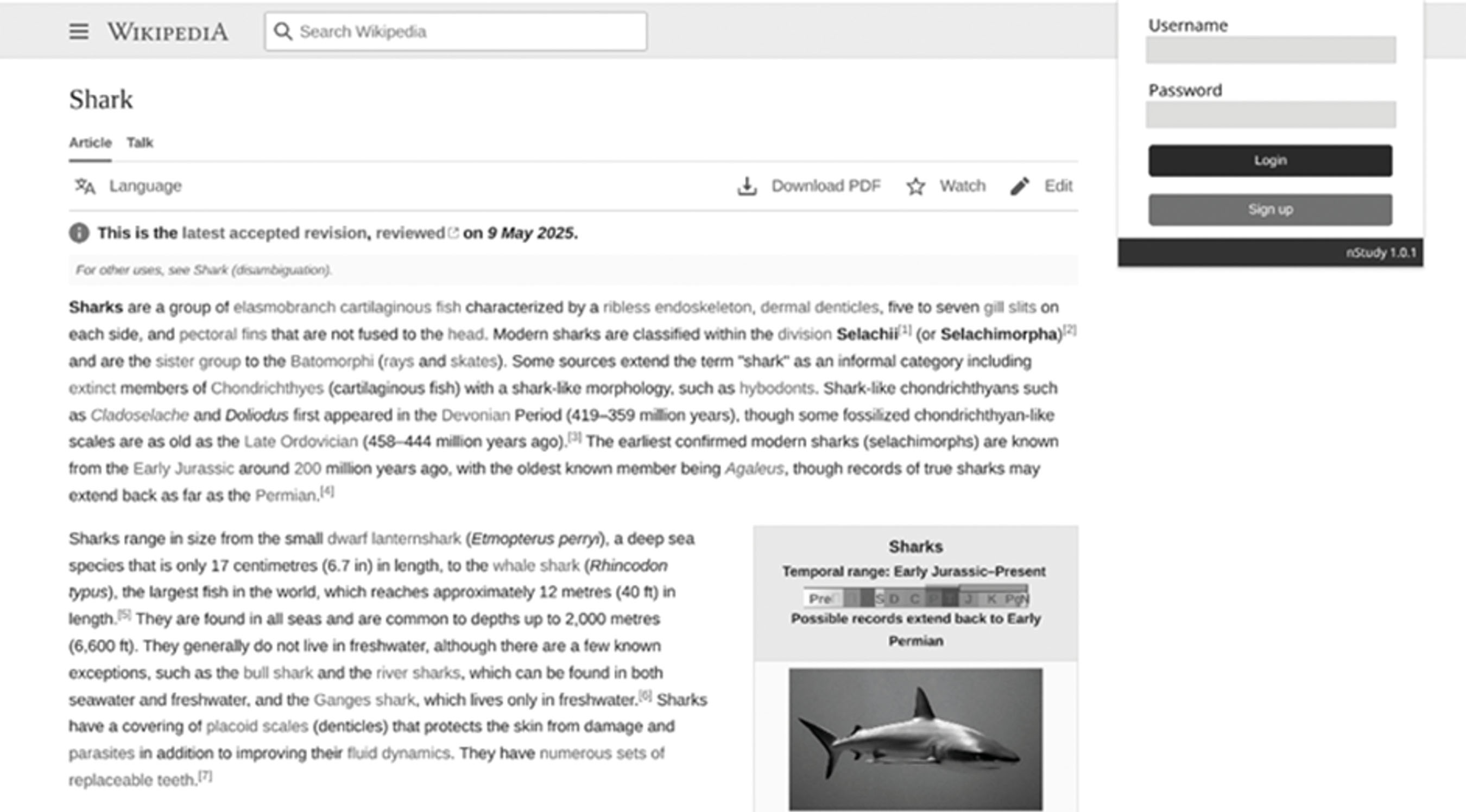 Figure 2 User Creating Bookmarks, Highlights, Notes, Terms. 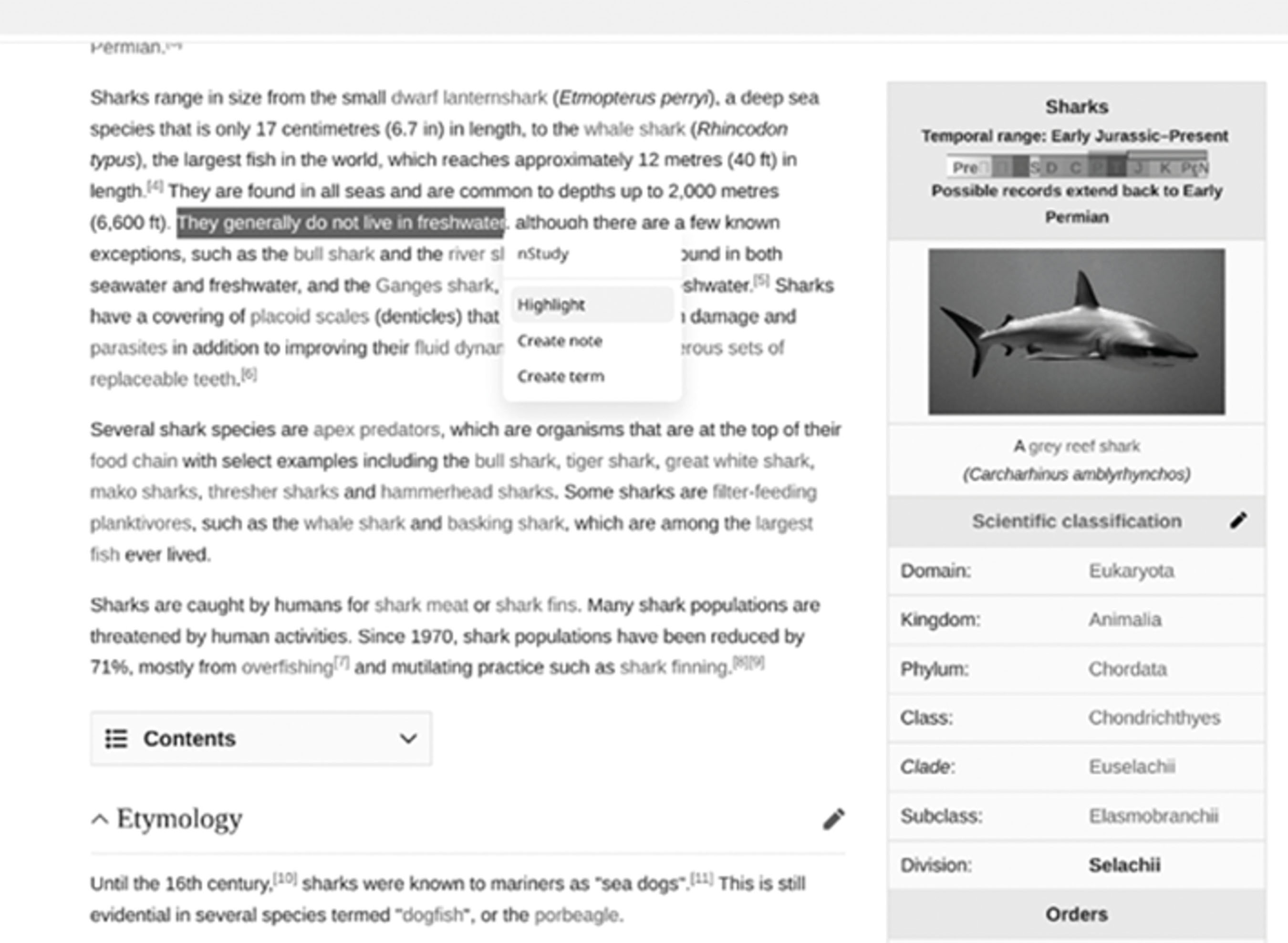 Self-regulated Learning SRL was assessed using behavioral trace data collected through the nStudy real-time tracking system (Winne, Teng, et al., 2017). Figure 1 presents the nStudy system architecture, and Figure 2 illustrates examples of learner-generated artefacts recorded in the system. nStudy records timestamped learner actions in a web-based environment, including logins and logouts, page visits, the creation and editing of bookmarks, highlights, notes, and terms, tagging and accessing of these artefacts, searches, and browser tab switching. To protect participants’ privacy, all event data were linked to randomly generated identifiers, and analyses were conducted on anonymized records. Students who did not correctly log in to or log out of the nStudy system during the study period were excluded from the analysis to ensure the completeness of session records. Five trace-based behaviors recorded by nStudy were selected as SRL indicators: bookmarking, highlighting, note-taking, accessing saved artefacts/links, and interacting with the interface. These indicators were chosen because they represent observable manifestations of regulatory activity in digital learning environments and have been used in prior trace-based SRL research (Winne, 2021; Winne, 2023; Winne, Nesbit, et al., 2017a). Specifically, bookmarking and highlighting were treated as indicators of information selection and organization, note-taking as an indicator of externalization and elaboration, accessing saved artefacts or links as an indicator of monitoring and resource revisiting, and interface interactions such as tagging, searching, and editing fields as indicators of task management and strategic interaction with the learning environment. Following prior nStudy research, each behavior was transformed into a quantitative indicator for analysis. Time on task was calculated as the duration of a learner’s recorded nStudy session, from login to logout. Learning Outcomes Learning outcomes were assessed using two indicators: critical thinking and course grade. Critical thinking was measured using the validated critical thinking subscale of the Motivated Strategies for Learning Questionnaire (MSLQ) developed by Pintrich et al. (1991). This subscale assesses the extent to which students apply prior knowledge to new situations in order to solve problems, make decisions, or evaluate ideas according to standards of excellence. It consists of five items, such as “I treat the course material as a starting point and try to develop my own ideas about it.” Responses were rated on a 7-point Likert scale ranging from 1 (not at all true of me) to 7 (very true of me). In the present study, the Cronbach’s α coefficient for the critical thinking subscale was .80. Course grade served as the second indicator of learning outcomes. Because the course adopted a multi-evaluation approach, course grade was considered to reflect students’ overall performance across multiple abilities (Luo et al., 2024). Therefore, course grade was recorded on a 100-point scale (0-100) and included as an additional indicator of learning outcomes. Data Analysis Data analysis was conducted in four stages. First, descriptive statistics were calculated for all variables, and the assumptions of normality and homogeneity of variance were examined before inferential analyses. Second, independent-samples t-tests were used to compare students from different disciplinary backgrounds and students completing different assignment types in terms of intrinsic learning motivation, discussion posts, SRL, and learning outcomes. Cohen’s d was reported as the effect size for group comparisons. Third, a 2 × 2 analysis of variance (ANOVA) was conducted to examine the interaction effect between disciplinary background (computer science vs. humanities and social sciences) and assignment type (implementation vs. written). Finally, Pearson correlation analyses and hierarchical multiple regression analyses were performed to examine whether intrinsic learning motivation, discussion posts, and SRL predicted critical thinking and grade. In the regression models, pre-course average grade was entered in the first step as a control variable, followed by intrinsic learning motivation, discussion posts, and SRL variables in the second step. Tolerance and variance inflation factor (VIF) values were examined to assess multicollinearity. Statistical significance was set at p < .05. Table 2 Means, Standard Deviations, and t-test Results for Research Variables by Disciplinary Background 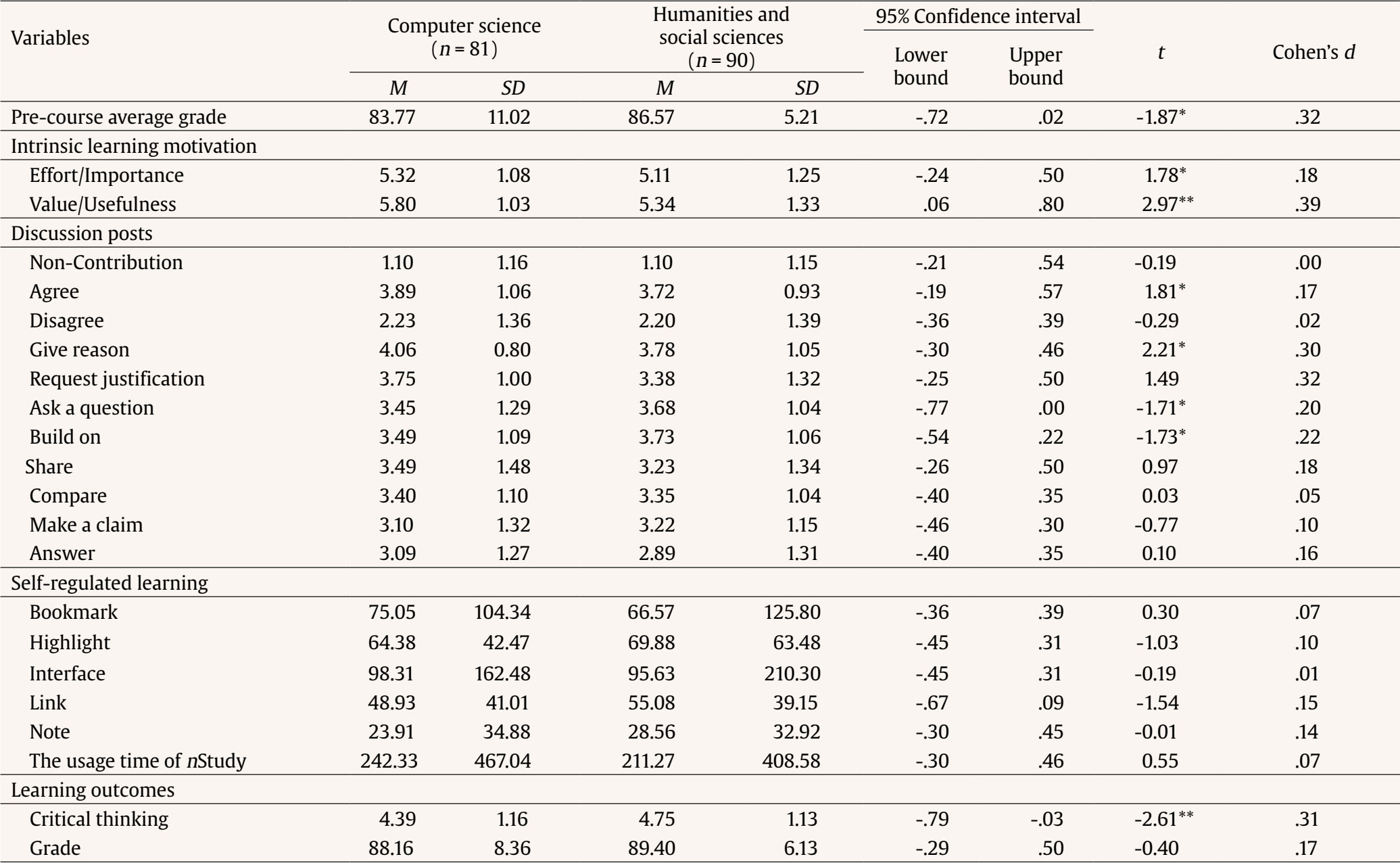 *p < .05, **p < .01. Table 3 Means, Standard Deviations, and t-test Results for Research Variables by Assignment Type 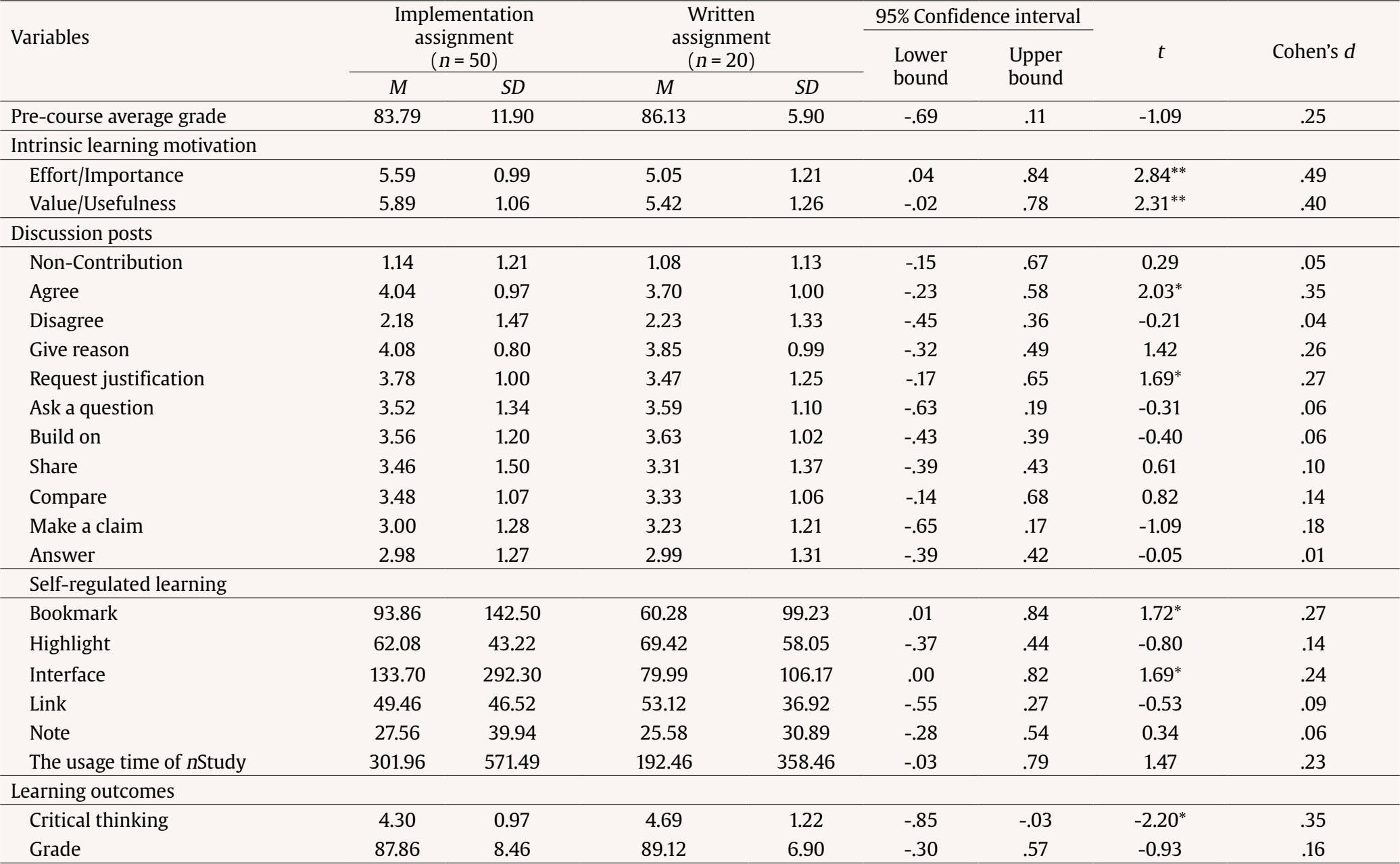 *p < .05, **p < .01. Differences by Disciplinary Background Prior to the independent-samples t tests, the assumptions of normality and homogeneity of variance were examined. The data met both assumptions (skewness = -1.58 to 2.99; kurtosis = -0.22 to 9.98; F = 0.01-1.55, p > .05; Hair et al., 2019). Table 2 presents the t-test results comparing students from computer science and humanities and social sciences across baseline variables, intrinsic motivation, discussion post attributes, SRL behaviors, and learning outcomes. Intrinsic motivation was analyzed as a continuous baseline measure. Students in the humanities and social sciences had significantly higher pre-course average grades than students in computer science (t = -1.87, p < .05, Cohen’s d = 0.32). In contrast, students in computer science reported significantly higher intrinsic motivation on Effort/Importance (t = 1.78, p < .05, Cohen’s d = 0.18) and Value/Usefulness (t = 2.97, p < .01, Cohen’s d = 0.39). For discussion post attributes, computer science students reported significantly higher frequencies of Agree (t = 1.81, p < .05, Cohen’s d = 0.17) and Give reason (t = 2.21, p < .05, Cohen’s d = 0.30), whereas humanities and social sciences students reported significantly higher frequencies of Ask a question (t = -1.71, p < .05, Cohen’s d = 0.20) and Build on (t = -1.73, p < .05, Cohen’s d = 0.22). No significant disciplinary differences were found for SRL behaviors, total usage time of nStudy, or course grade. Humanities and social sciences students scored significantly higher on critical thinking (t = -2.61, p < .01, Cohen’s d = 0.31). Overall, disciplinary background was associated with differences in pre-course average grade, intrinsic motivation, selected discussion post attributes, and critical thinking, but not with SRL behaviors or course grade. Differences by Assignment Type Table 3 presents the t-test results comparing students in the implementation assignment and written assignment groups across baseline variables, intrinsic motivation, discussion post attributes, SRL behaviors, and learning outcomes. No significant difference was found in pre-course average grade between the two assignment groups. However, students in the implementation assignment group reported significantly higher intrinsic motivation on Effort/Importance (t = 2.84, p < .01, Cohen’s d = 0.49) and Value/Usefulness (t = 2.31, p < .01, Cohen’s d = 0.40). For discussion post attributes, students in the implementation assignment group reported significantly higher frequencies of Agree (t = 2.03, p < .05, Cohen’s d = 0.35) and Request justification (t = 1.69, p < .05, Cohen’s d = 0.27). For SRL behaviors, students in the implementation assignment group reported significantly higher frequencies of Bookmark (t = 1.72, p < .05, Cohen’s d = 0.27) and Interface use (t = 1.69, p < .05, Cohen’s d = 0.24). With respect to learning outcomes, students in the written assignment group scored significantly higher on critical thinking than students in the implementation assignment group (t = -2.20, p < .05, Cohen’s d = 0.35), whereas course grade did not differ significantly. Overall, assignment type was associated with differences in intrinsic motivation, selected discussion post attributes, selected SRL behaviors, and critical thinking, but not with pre-course average grade or course grade. Interaction Effects of Disciplinary Background and Assignment Type To further examine whether disciplinary background and assignment type jointly influenced the study variables, a two-way ANOVA with a 2 (disciplinary background) × 2 (assignment type) design was conducted. No significant interaction effects were found between disciplinary background and assignment type (p > .05). Overall, the results did not support an interaction effect between these two factors. Associations with Learning Outcomes Prior to the regression analyses, correlation matrices were examined separately by disciplinary background and assignment type to explore relationships among the measured variables and assess the suitability of the data for regression analysis. Overall, intrinsic motivation, discussion post attributes, SRL behaviors, and learning outcomes were positively correlated in most groups, providing preliminary support for the subsequent regression analyses. Table 4 presents the regression analyses predicting the two learning outcomes, critical thinking and course grade, separately by disciplinary background and assignment type. Table 4 Regression Analyses of Associations with Learning Outcomes across Disciplinary Background and Assignment Type 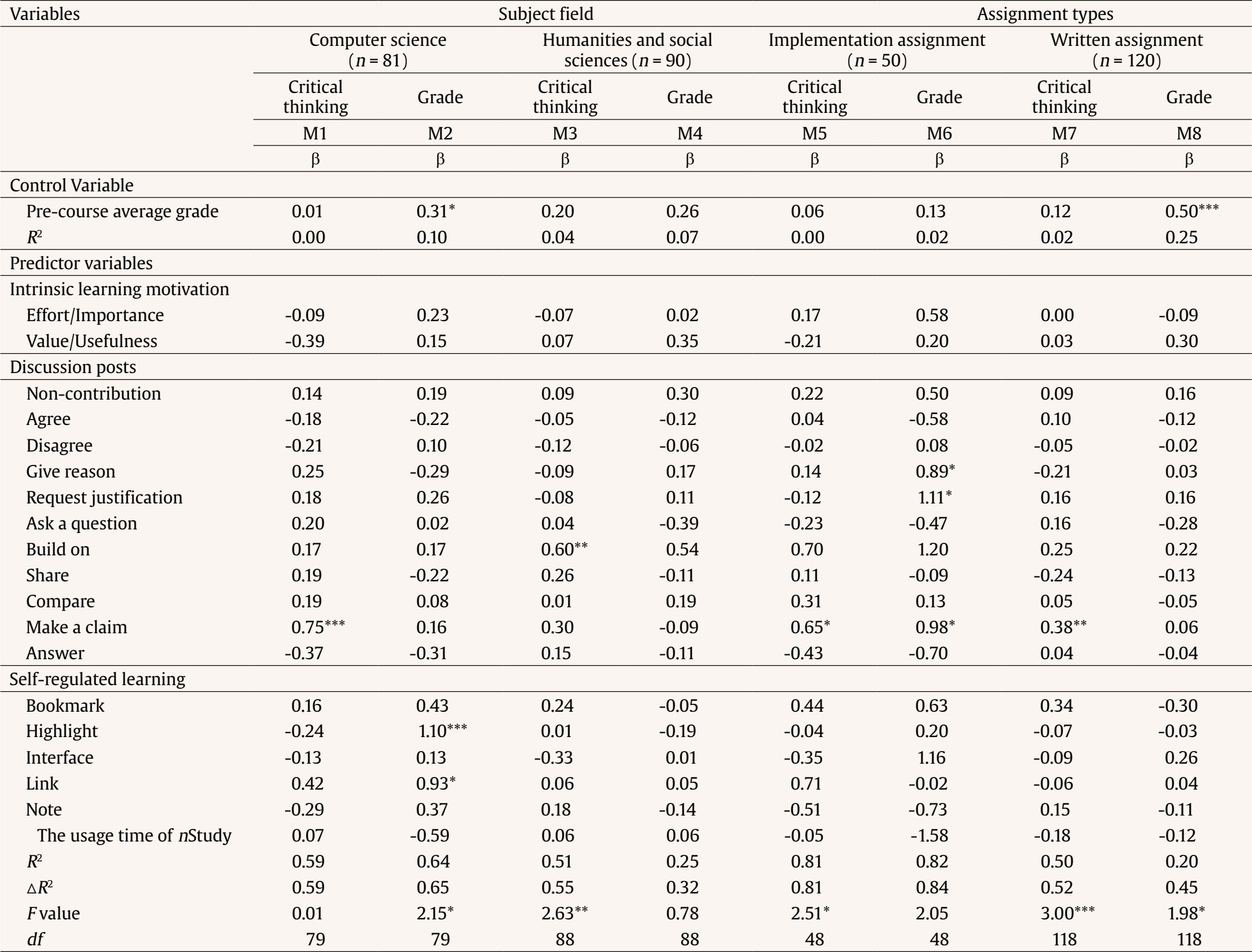 *p < .05, **p < .01, ***p < .001. For critical thinking, different discussion post attributes emerged as significant predictors across groups. Among computer science students, Make a claim positively predicted critical thinking (β = .75, p < .001). Among humanities and social sciences students, Build on was a significant positive predictor (β = .60, p < .01). By assignment type, Make a claim positively predicted critical thinking in both the implementation assignment group (β = .65, p < .05) and the written assignment group (β = .38, p < .01). No intrinsic motivation or SRL variables significantly predicted critical thinking. For course grade, the significant predictors varied by group. Among computer science students, Pre-course average grade (β = .31, p < .01), Highlight (β = 1.10, p < .001), and Link (β = .93, p < .05) positively predicted grade. No significant predictors of grade were found among humanities and social sciences students. In the implementation assignment group, Give reason (β = .89, p < .01) and Make a claim (β = .98, p < .05) positively predicted grade. In the written assignment group, pre-course average grade was the only significant predictor of grade (β = .50, p < .001). Overall, the predictors of learning outcomes differed across disciplinary background and assignment type, with discussion post attributes showing more consistent associations with learning outcomes than intrinsic motivation or SRL variables. This study examined how disciplinary background and assignment type were associated with students’ intrinsic learning motivation, discussion-post behaviors, SRL behaviors, and learning outcomes in online learning contexts. By combining nStudy trace data with questionnaire-based measures, the study addressed a key methodological concern in prior SRL research, namely that self-report measures alone may not adequately capture the dynamic enactment of regulation in authentic learning settings. Overall, the findings partially supported Hypotheses 1, 2, and 4, whereas Hypothesis 3 was not supported. First, disciplinary background was associated with differences in intrinsic motivation, selected discussion-post behaviors, SRL behaviors, and learning outcomes, partially supporting Hypothesis 1. Computer science students reported higher Effort/Importance and Value/Usefulness, whereas humanities and social sciences students scored higher on critical thinking. The two groups also differed in discussion-post behaviors, with computer science students reporting higher Agree and Give reason, whereas humanities and social sciences students reported higher Ask a question and Build on. These findings suggest that disciplinary background may be associated with differences in perceived task value and cognitive engagement. This interpretation is consistent with SRL theory, which emphasizes that regulation is context sensitive rather than uniform across learning situations (Pintrich, 2000; Winne, 2021; Zimmerman, 2013), and with research showing that motivational orientations and regulatory behaviors vary across disciplinary and task contexts (Ryan & Deci, 2020; Zhihong et al., 2023). Rather than suggesting that one disciplinary group was generally more effective, these findings indicate that different disciplinary contexts may foreground different forms of engagement and learning. Second, assignment type was associated with distinct patterns of motivation, discussion-post behaviors, selected SRL behaviors, and learning outcomes, partially supporting Hypothesis 2. Students completing implementation assignments reported higher intrinsic motivation and higher frequencies of selected discussion-post behaviors, particularly Agree and Request justification, whereas students completing written assignments showed higher critical thinking scores. In the trace data, students in the implementation group also showed higher Bookmark and interface interactions (e.g., tagging, searching, and editing fields). These findings support the argument that SRL is shaped by task demands and learning context (Winne, 2021, 2023; Zhihong et al., 2023). More specifically, the trace-based differences should not be interpreted as broad metacognitive gains, but rather as more frequent use of specific task-management and information-handling behaviors recorded by nStudy. By contrast, written assignments may provide greater opportunities for elaboration, reflection, and organization of ideas, which are more directly related to critical thinking. This interpretation is also consistent with previous research suggesting that cognitively demanding writing and discussion activities can support higher-order learning (Chi & Wylie, 2014; Ferrer et al., 2022; Klisc et al., 2017; Ponce et al., 2022). Hypothesis 3 was not supported, as no significant interaction effects were found between disciplinary background and assignment type. This suggests that the differences associated with assignment type were broadly similar across disciplinary groups. Although this result should be interpreted cautiously, it is still informative. Given previous research emphasizing that SRL is shaped by contextual demands (Winne, 2021; Zhihong et al., 2023), one interpretation is that task structure may have exerted a relatively consistent influence across groups in this sample. At the same time, this finding does not imply that regulatory processes operate identically across disciplines; rather, it indicates that the present study did not detect statistically reliable evidence that the effects of assignment type differed by disciplinary background. Finally, the findings partially supported Hypothesis 4 and provide the most important theoretical implication of the study. Across disciplinary backgrounds and assignment types, discussion-post behaviors showed more consistent associations with learning outcomes than intrinsic motivation or SRL variables. For critical thinking, Make a claim predicted performance among computer science students and in both assignment groups, whereas Build on predicted critical thinking among humanities and social sciences students. For course grade, the pattern was more variable, but discussion-post behaviors again appeared prominently, especially Give reason and Make a claim in the implementation assignment group. By contrast, no intrinsic motivation or SRL variables significantly predicted critical thinking, and only a limited number of SRL indicators were associated with course grade, most notably Highlight and Link among computer science students. These findings are consistent with prior research showing that elaborative, justificatory, and perspective-building forms of discussion are associated with higher-order learning (Chi & Wylie, 2014; Klisc et al., 2017; Rakovic et al., 2020). They also support the view that online discussion can function as a context in which regulatory processes become visible through interaction, reflection, and response to others (Marnola et al., 2024; Paul & Criado, 2020; Yen et al., 2022). The relatively limited predictive role of intrinsic motivation and SRL variables also deserves attention. Prior research has linked intrinsic motivation to engagement and achievement (Deci & Ryan, 2000; Kilinc & Buyuk, 2022; Yin et al., 2020) and has highlighted the value of trace data for examining regulatory activity in authentic settings (Winne, 2020; Winne et al., 2019). However, in the present study, intrinsic motivation did not emerge as a direct predictor of critical thinking or course grade, and only a small number of SRL indicators were significantly associated with grade. One possible explanation is that broad motivational beliefs and general trace-based activity indicators may be more distal measures of learning than discussion-post behaviors, which more directly capture how students justify ideas, elaborate on claims, and respond to peers. Another possibility is that the SRL indicators used here represented only selected manifestations of regulatory activity and therefore did not fully capture the depth or quality of self-regulation. Thus, the present findings do not suggest that motivation or SRL are unimportant; rather, they indicate that their relationships with learning outcomes may depend on how these constructs are operationalized and how closely the measures align with the target outcomes. Taken together, the findings support the value of integrating intrinsic motivation, discussion-post behaviors, and trace-based SRL indicators within a single analytic framework. The present study contributes to the literature by showing that discussion-post behaviors may be especially informative indicators of learning outcomes in digital higher education contexts. Theoretically, these findings support a cautious extension of SRL research: discussion-post behaviors may be understood as socially situated expressions of individual regulation, without conflating them with group-level shared regulation. Conclusions, Limitations, and Future Work In conclusion, this study showed that disciplinary background and assignment type were associated with students’ intrinsic learning motivation, selected discussion-post behaviors, SRL behaviors, and learning outcomes in online learning contexts. Different disciplinary groups and task types were associated with different patterns of motivation, discussion-post behaviors, and critical thinking, whereas fewer differences were observed in trace-based SRL behaviors and no significant interaction effects were found between disciplinary background and assignment type. In addition, the regression analyses showed that several discussion-post behaviors were significantly associated with learning outcomes across disciplinary background and assignment type, whereas fewer significant associations were observed for intrinsic learning motivation and SRL behaviors. The study contributes to SRL research by showing the value of combining trace-based data with questionnaire-based measures to examine learning processes in digital environments. The use of the nStudy system made it possible to capture learners’ trace-based behaviors in real time, while the questionnaire data provided complementary information about students’ motivational perceptions and self-reported discussion-post behaviors. Taken together, these measures offered a more contextually grounded view of how motivation, discussion-post behaviors, learning strategies, and outcomes were related across disciplinary and task contexts. From a practical perspective, the findings suggest that instructors may need to consider both disciplinary background and assignment type when designing learning activities, discussion tasks, and strategy support in online environments. Despite these contributions, several limitations should be noted. First, although the nStudy system was used to capture trace-based learning behaviors, discussion-post behaviors were measured using retrospective Likert-scale self-reports rather than direct coding of discussion transcripts. These measures therefore captured students’ perceived participation patterns rather than objectively coded message features. This does not mean that self-report measures are uninformative; rather, consistent with the position stated in the Introduction and Literature review, they are useful for capturing learners’ perceptions and reported experiences, but insufficient on their own for representing the real-time and dynamic enactment of learning processes. For this reason, the present study adopted a complementary measurement approach by combining questionnaire data with nStudy trace data. Second, the participants were students with relatively high academic ability, which limits the generalizability of the findings to broader populations. Third, although the integration of trace data and questionnaires provided a multidimensional view of learning processes, some contextual factors and longer-term developmental changes may not have been fully captured. Finally, the requirement to install and use nStudy created practical barriers for some students, and incomplete login or logout records further reduced the usable sample. Future research should extend this work by including students with more diverse backgrounds and levels of academic ability, as well as by examining learning processes over longer periods of time. Additional methods, such as transcript-based discourse analysis, qualitative interviews, or other learning analytics approaches, may also help capture aspects of learning processes that were not fully represented in the present study. Moreover, future studies could further examine how contextual factors, such as course design and task features, are associated with discussion-post behaviors, strategy use, and learning outcomes in digital learning environments. Conflict of Interest The author of this article declares no conflict of interest. Cite this article as: Chang, H-T. (2026). Self-regulated learning and discussion-post behaviors as predictors of learning outcomes: Evidence from nStudy trace data. Psicología Educativa, 32, Article e260463. https://doi.org/10.5093/psed2026a20 References |
Cite this article as: Chang, H. (2026). Self-Regulated Learning and Discussion-Post Behaviors as Predictors of Learning Outcomes: Evidence from nStudy Trace Data. Psicología Educativa, 32, Article e260463. https://doi.org/10.5093/psed2026a20
Correspondence: simple@nycu.edu.tw (H.-T. Chang).
Copyright © 2026. Colegio Oficial de la Psicología de Madrid


 PDF
PDF e-PUB
e-PUB CrossRef
 JATS
JATS Imprimir
 Enviar
ALERTA POR E-MAIL
La Revista de Psicología Educativa está distribuida bajo una licencia de Creative Commons Reconocimiento-NoComercial-SinObra Derivada 4.0 Internacional.com