A Bibliometric Analysis of Generative Artificial Intelligence (GenAI) in Education: Trends and Global Research Patterns (2023-2025)
[Análisis bibliométrico de la inteligencia artificial generativa en educación: tendencias y patrones generales de investigación]
Yusuf Kızıltaş
Van Yuzuncu Yil University, Tuşba/Van, Türkiye
https://doi.org/10.5093/psed2026a23
Received 15 April 2026, Accepted 19 May 2026
Abstract
The use of generative artificial intelligence (GenAI) in education is rapidly expanding and attracting growing research interest. This study aims to identify current trends and the overall structure of the field by analyzing Web of Science (WoS) publications using VOSviewer. A total of 1,184 English-language articles published between 2023 and 2025 were examined. The analysis revealed leading authors, journals, institutions, and countries contributing to the field, as well as the most cited studies and frequently used keywords. Findings indicate that research output peaked in 2025, with “artificial intelligence” being the most common keyword. China ranks first in publication output, followed by the United States. The study provides insights into key research trends, collaboration opportunities, and future directions. Overall, GenAI in education is still an emerging field with significant potential for development.
Resumen
La utilización de la inteligencia artificial generativa (GenAI) en educación se extiende con rapidez y suscita un interés en aumento por la investigación. El estudio intenta desvelar las tendencias actuales y la estructura general del campo analizando las publicaciones de Web of Science utilizando VOSviewer. El análisis descubre los principales autores, revistas, instituciones y países que han aportado a este campo, así como los estudios más citados y las palabras clave utilizadas con mayor frecuencia. Los resultados indican que la investigación alcanzó un pico máximo en 2025, en el que la palabra clave más común fue “inteligencia artificial”. China es la primera en publicaciones, seguida de Estados Unidos. El estudio indaga en las tendencias más importantes en investigación, las oportunidades de colaboración y las tendencias futuras. En general la inteligencia artificial generativa en educación aún es un campo emergente con un gran potencial de desarrollo.
Palabras clave
Inteligencia artificial generativa, ChatGPT, Medios de comunicación en educación, Análisis bibliométricoKeywords
Generative artificial intelligence, ChatGPT, Media in education, Bibliometric analysisCite this article as: Kızıltaş, Y. (2026). A Bibliometric Analysis of Generative Artificial Intelligence (GenAI) in Education: Trends and Global Research Patterns (2023-2025). Psicología Educativa, 32, Article e260466. https://doi.org/10.5093/psed2026a23
Correspondence: yusufkiziltas@yyu.edu.tr (Y. Kızıltaş).The use of generative artificial intelligence (GenAI) is becoming increasingly widespread. Especially since OpenAI released its generative AI tool ChatGPT in November 2022, the GenAI ecosystem has expanded. By March 2024, various tools had attracted over 3 billion visits (Liu & Wang, 2024). Consequently, interest and demand for the use of generative AI have increased across various fields and industries. The emergence of artificial intelligence, particularly generative AI, is rapidly transforming various sectors, including education. Artificial technologies such as natural language processing, machine learning, and adaptive learning platforms are increasingly being integrated into educational activities, offering many more features such as personalized learning experiences, automatic grading, and smart tutoring systems (Memon & Kwan, 2025). Artificial intelligence in education (AIEd) is an interdisciplinary field dedicated to the development and research of artificial intelligence applications that support teaching and learning practices (Otto et al., 2025). In this context, rapid developments in artificial intelligence (AI), particularly in the field of generative artificial intelligence (GenAI), hold promise for transforming the world of education. Considering that discourse and language shape how educators, administrators, and policymakers perceive and integrate technology into educational institutions, it is crucial to critically examine how these technologies are conceptualized and articulated as they become increasingly embedded in educational practices (Heinsfeld & Veletsianos, 2025). This is because there are as many concerns as there are interests and demands regarding the use of generative AI. In other words, generative AI in education can have both transformative and disruptive effects. Furthermore, generative AI has the potential to both create misinformation and correct information. Considering the potential of generative AI in this field as both a problem and a solution, a deeper understanding of these risks and benefits can better inform research and applications (Fulsher et al., 2025). In this regard, it can be argued that there are uncertainties regarding the integration of generative AI into the teaching process. Therefore, there are many aspects that need to be researched and explored regarding how students use GenAI in their learning and assessment processes and what their views are on these tools (Heil et al., 2025). Concerns regarding the Use of Generative Artificial Intelligence in Education Concerns and criticisms regarding the integration of generative artificial intelligence into education must be explained from various perspectives. Some educators have expressed concerns that the ability to generate reports so quickly using artificial intelligence could encourage plagiarism or hinder the development of critical thinking skills in students (Hua Hsiao & Yu Tang, 2025). GenAI tools, especially ChatGPT, can generate human-like responses that are difficult to distinguish from student-written work. This creates a gray area where students may submit content generated by GenAI without realizing or accepting that they are violating academic norms (Yi Tan et al., 2025). In this context, one of the fundamental concerns regarding the use of generative AI in education is its impact on academic integrity. As generative AI tools gain popularity, concerns arise about students’ autonomy in completing assignments (such as homework, essays, and exams) and the potential for AI to circumvent traditional methods of knowledge assessment. Another fundamental concern is the impact of AI on critical thinking and creativity. This is because ready-made answers generated by language models can lead to superficial knowledge acquisition and limit student’ ability to independently analyze and interpret information (Jukiewicz, 2025). In addition, ethical and privacy concerns regarding generative artificial intelligence continue to be of critical importance (Ayyoub et al., 2025). One concern related to generative artificial intelligence literacy concerns educators. Today, many teachers do not have sufficient training in artificial intelligence literacy. This problem also highlights the importance of professional development for teachers (Khlaif et al., 2025). Similarly, it is necessary to note that teachers need classroom-level ethical guidelines that align GenAI use with pedagogical goals and institutional requirements (Vetter et al., 2024). Another concern regarding generative AI is GenAI hallucinations. GenAI hallucinations are defined as GenAI occasionally producing content that contains biases or inaccuracies. GenAI hallucinations may stem from the data used to train the GenAI model. Similarly, these hallucinations may also stem from flaws in probabilistic techniques that enable the model to generate the most probable answer, which may not always be correct (Ringman, 2023). Advantages of Using Generative Artificial Intelligence in Education As a groundbreaking tool in education, GenAI signals significant transformations in how citizens, educators, and policymakers approach educational practices and ideas (Costa & Murphy, 2025). GenAI technologies are being evaluated to expand learning and creativity and to alleviate educators’ administrative workloads through automated solutions (Sok & Heng, 2023). In this context, the integration of generative artificial intelligence technology into education is poised to transform traditional teaching and learning models. The era of teacher-led pedagogy, where teachers were solely providers of information and students were merely recipients, is long gone. Teachers are faced with the choice of either embracing new artificial technologies or risking obsolescence by falling behind educators with next-generation artificial intelligence skills. To maximize the benefits, teachers and new-generation artificial intelligence tools must coexist in a collaborative relationship, underlining a new pedagogy model for the new era (Memon & Kwan, 2025). In particular, the feedback mechanism of ChatGPT, a generative artificial intelligence tool, is advancing to a level that rivals the traditional role of teacher feedback. With ChatGPT’s feedback mechanism, students can structure their knowledge and correct their mistakes. Perhaps one of the most important benefits of generative artificial intelligence is its ability to provide customized feedback and support by adapting to individual learning needs. This allows learning to be personalized (Khlaif et al. 2024). To put it more clearly, GenAI significantly supports personalized learning and assessment by transforming traditional, standardized classrooms into dynamic, student-centered environments. Similarly, GenAI enables continuous virtual teaching across multiple devices, languages, and formats by processing large-scale data and integrating various methods (Z. Zhu et al., 2024). It is noted that ChatGPT can significantly improve the English writing skills of language learners. Furthermore, thanks to ChatGPT’s influence, students feel more comfortable, happy, and at ease with their writing during this process (Boudouaia et al., 2024). Furthermore, it emphasizes that ChatGPT, as a generative AI tool, supports student engagement by answering and explaining questions and generating learning materials for students (Bhatt & Muduli, 2024). In this context, providing students with opportunities to learn ethical rules, access licensed AI tools, and learn how to use these technologies thoughtfully and without unnecessary use can alleviate many of the concerns raised without compromising the educational benefits that AI can provide (Fine Licht, 2025). Ultimately, educators need to develop the appropriate understanding and skills to teach effectively in the AI-focused era (Ayyoub et al., 2025). The Use of Generative Artificial Intelligence at Different Levels of Education Generative artificial intelligence can now be used in almost every level of education. Today’s schools have come to fully realize the importance of integrating GenAI into education. Therefore, they have eagerly begun offering artificial intelligence courses (Y. Zhu & Yang, 2023). Schools can revolutionize traditional teaching and learning scenarios by using generative AI tools such as ChatGPT to expand teacher-student interaction methods, diversify approaches to knowledge acquisition, and implement personalized learning through deep learning and machine learning technologies. Furthermore, machine learning-based technologies, such as automated composition scoring, enhance the accuracy and validity of school education by enabling dynamic and accurate assessment and diagnosis of education and teaching. In addition, ChatGPT promotes interactive education, improving management methodologies and increasing the efficiency of school administration (Liu et al., 2023). For example, within this scope, the literature reveals a consensus on the importance of incorporating GenAI into higher education (Tillmanns et al., 2025). Some researchers have suggested that the use of GenAI in higher education can increase the learning and productivity of university students, teachers, and researchers (Hua Hsiao & Yu Tang, 2025). Although still in its early stages, GenAI’s potential to increase knowledge production and dissemination suggests that it will play an important role in the development of higher education. GenAI has been widely adopted by faculty and students as a vital learning and research tool. Higher education must embrace this technological change and adapt to it to remain relevant and keep pace with changing global demands (Li et al., 2025). The use of generative artificial intelligence is also becoming widespread in elementary, middle, and high schools. According to Riser (2025), while artificial intelligence systems were once primarily associated with tertiary education, they are now becoming increasingly common in elementary and middle schools. For example, AI-based reading platforms in elementary schools provide instant feedback on pronunciation and fluency, while essay analyzers in middle schools help students improve their writing structure and consistency. Tate and Warschauer (2025) and Graham et al. (2025) highlight the importance of using GenAI in middle schools. Tate and Warschauer highlight important points in this context. They offer recommendations regarding the use of GenAI in middle schools. In this context, some of these points include generating possible writing assignments, producing model texts that students can imitate, preparing a writing lesson to be reviewed and presented by the teacher, improving lessons, providing individualized writing instruction to students, grading written assessments or assignments, and making recommendations on which writing skills and processes should be taught. Du and Lv (2024) point out the need to gain a deeper understanding of elementary school students’ attitudes toward GenAI, their perceptions of its usefulness, and the obstacles they encounter when using it for learning support. Du and Lv also provide practical guidance for effectively integrating GenAI by supporting its adoption and use in elementary schools. Kopecký and Voráč (2025) also emphasize the importance of using generative artificial intelligence in elementary and middle schools. They particularly note that in elementary schools, generative AI can be used to create personalized learning materials and interactive tasks that meet students’ age and individual needs. It should also be noted that generative AI can be integrated into preschool education. It is important that Qiu and Kim (2025) and Nacimiento-García et al. (2024) develop models that will be integrated into the teaching process for preschool-level children with the support of generative AI tools. In conclusion, generative AI tools can be used at many levels of education to achieve various objectives. It should also be noted that studies on the integration of generative AI into educational environments and classrooms are increasing. Originality Value and Importance of the Current Study With the widespread adoption of generative artificial intelligence, its use in education is also becoming more prevalent. The current study focuses on the bibliometric analysis of studies examining the use of generative artificial intelligence at different levels of education. The diversity of research examining the use of generative artificial intelligence in education is noteworthy. On the other hand, studies examining the bibliometric analysis of research investigating the integration of generative artificial intelligence into classrooms and education remain limited. However, bibliometric analyses offer researchers the opportunity to identify trends in specific areas, dominant keywords in related studies, and gaps in certain fields. In other words, bibliometric analyses have the potential to provide researchers with new areas of focus and opportunities for further work. In line with the nature of bibliometric analysis, the present study examines research on the use of generative AI in education, thereby attempting to open new doors for both the literature and researchers. The dimensions that distinguish the current research from studies in the literature and make it unique should be interpreted well from this perspective. It is noteworthy that, unlike the current research, studies on bibliometric analysis in the literature focus on research related to artificial intelligence rather than generative artificial intelligence. We know that generative artificial intelligence entered our lives in 2022 with the introduction of ChatGPT by OpenAI. However, before that date, research was still being conducted on artificial intelligence, not generative artificial intelligence. Although bibliometric analyses in the literature include the dimension of artificial intelligence, research related to generative artificial intelligence, which entered our lives in 2022, is lacking and limited. For example, although Song and Wang’s (2020) study analyzed the development of educational AI research using bibliometric analysis, it is noteworthy that the studies included in the analysis were conducted between 2000 and 2019. Similarly, in Guo et al.’s (2024) study, generative AI research remained in the background. Relevant studies have examined research conducted before the release of generative AI at a more intensive level. The studies by Song and Wang and Guo et al. are far removed from the current study in that they do not include generative AI research and examine studies conducted before 2023. The study by Kartal and Yeşilyurt (2024), which conducted a bibliometric analysis of studies examining the effects of artificial intelligence in applied linguistics between 1995 and 2022, is also quite distant from the focus of the current study. Huiling et al. (2024) also examined studies conducted between 1990 and 2023. The studies by Kartal and Yeilyurt and Ma and Ismail (2025) are relatively more limited and insufficient compared to the current study, as they only examine studies focusing on second language teaching. On the other hand, the studies by Zhang and Umeanowai (2025), Dissanayake et al. (2025), and Avello and Aranguren Zurita (2025) have also conducted bibliometric analyses of studies focusing on specific concepts of education. Furthermore, the productive artificial intelligence dimension is not at the forefront of the relevant studies. Therefore, the relevant studies are also far from the focus of the current studies. Bibliometric studies examining the use of artificial intelligence, and particularly generative artificial intelligence, in education are very limited. In this context, the study by Tao et al. (2025) is noteworthy. The study by Tao et al. examined articles and papers in almost all indices. However, the current study focuses only on scientific articles indexed in WoS that examine the use of generative artificial intelligence in education. In addition, the Tao et al.’s study differs from the current study in that it analyzes conferences and covers studies from 2010 to 2024. In other words, AI research dominates the relevant study, but generative AI research is limited. On the other hand, Bozkurt’s (2023) study is limited to the bibliometric analysis of studies in the Scopus database. Furthermore, the relevant study differs from the current study in that it is designed as both a systematic review and a bibliometric analysis. When looking at bibliometric analyses in the literature, the current research has a unique dimension. The current research is important in that it focuses on research conducted after November 2022, when not only artificial intelligence but also generative artificial intelligence (e.g., ChatGPT, DeepSeek, GEMinAI) entered our world. Therefore, the current study has included research conducted between 2023 and 2025 that examines generative artificial intelligence and the use of artificial intelligence in education. Consequently, all studies subjected to bibliometric analysis in the current study belong to the years following the introduction of generative artificial intelligence into our world. In addition, the current study is not limited to research related to a specific dimension of education, as is the case in various bibliometric analysis studies in the literature. On the contrary, by examining articles in the field of education and at all levels of education, the current study is a candidate for achieving a strong research feature. Identifying research gaps, research trends, and key concepts at all levels of education may make the current research significant in this regard. Furthermore, thanks to these aspects, the current research may offer researchers the opportunity to discover new focal points in the subjects they are interested in and the levels of education they wish to work on. The Present Study The primary objective of the current research is to map the trends and conduct a bibliometric analysis of articles examining the use of generative AI in education. For this purpose, articles published in Web of Science (WoS)-indexed journals between 2023 and 2025 were included in the analysis. Furthermore, the current study aims to shed light on specific areas related to the use of generative AI in education. In line with these objectives, the current research also aims to provide insights that can contribute to the bibliometric discourse and evolving discussions on the use of generative AI in education by answering the following research questions.
Research Methodology The current study uses a bibliometric analysis to determine the scope and quality of scientific articles examining the use of generative AI in education. This bibliometric analysis covers research across all educational levels. The PRISMA diagram (Page et al., 2021) was used for the analysis. The search for studies to be subjected to bibliometric analysis was conducted based on PRISMA’s conceptual framework. Search Strategy The scientific articles included in the bibliometric analysis were retrieved from the Web of Science (WoS) platform as the primary data source. WoS was selected as the reference because it includes high-impact research and peer-reviewed journals. To avoid potential bias caused by daily database updates in the current study, all articles published between 2023 and 2025 were downloaded from the WoS database on September 20, 2025. Because generative AI entered our world in November 2022 and because studies in this field are expected to become widespread by 2023, the beginning of 2023 was taken as the reference. A targeted search query was used to find publications related to generative AI applications on the Web of Science (WoS) platform during the search process. Various search combinations were used during this search. The search terms are as follows: ‘generative artificial intelligence, education’ or ‘artificial intelligence, education’ or ‘GenAI, education’ or ‘AI, education’ or ‘ChatGPT, education’ or ‘ChatGPT, school’ or ‘generative artificial intelligence, school’ or ‘artificial intelligence, school’ or ‘GenAI, school’ or ‘AI, school’ Inclusion and Exclusion Criteria In the current study, various inclusion and exclusion criteria were applied to select articles for bibliometric analysis. First, studies outside the field of education included in the WoS were excluded. The exclusion process then continued with studies published before 2023. Furthermore, reports, book chapters, and proceedings were also excluded. Only scientific articles were included as document types in the analysis. Furthermore, articles written in languages other than English were also excluded. This ensured that the data were relevant, specific, consistent, and reliable. The scientific articles included in the bibliometric analysis were determined according to the inclusion and exclusion criteria and coded as C1, C2, C3, C4, and C5, as seen in Table 1. Table 1 Inclusion and Exclusion Criteria Applied for Bibliometric Analysis  Study Selection An initial search of Web of Science (WoS) using predetermined key terms and combinations yielded 5,554 studies. Exclusion criteria were then applied sequentially. Excluding studies other than those in the field of education, this left 2,039 studies. The final number was then increased to 1,388 by applying the criterion that relevant studies must be articles. When the inclusion and exclusion process was applied based on the year of publication, the number of studies decreased to 1,257. The current research provides an overview of scholarly articles examining the use of generative AI in education. It identifies trends in articles examining the use of generative AI in education, the distribution of publications by country, collaborations, frequently used research words, and conceptual gaps. It also presents potential collaboration opportunities through visuals. All ethical guidelines were adhered to at every stage of the study. Because the current research is a bibliometric analysis, no separate ethical approval document was obtained. As shown in Figure 1, English was selected as the publication language for the studies, and the number of studies subject to bibliometric analysis was determined to be 1,184. The data were then exported as plain text files (.txt) in two separate processes, first as studies 0-1000 and then as studies 1001-1184. Finally, the data were imported into VOSviewer software for statistical analysis. Figure 1 Bibliometric Analysis PRISMA Flowchart. 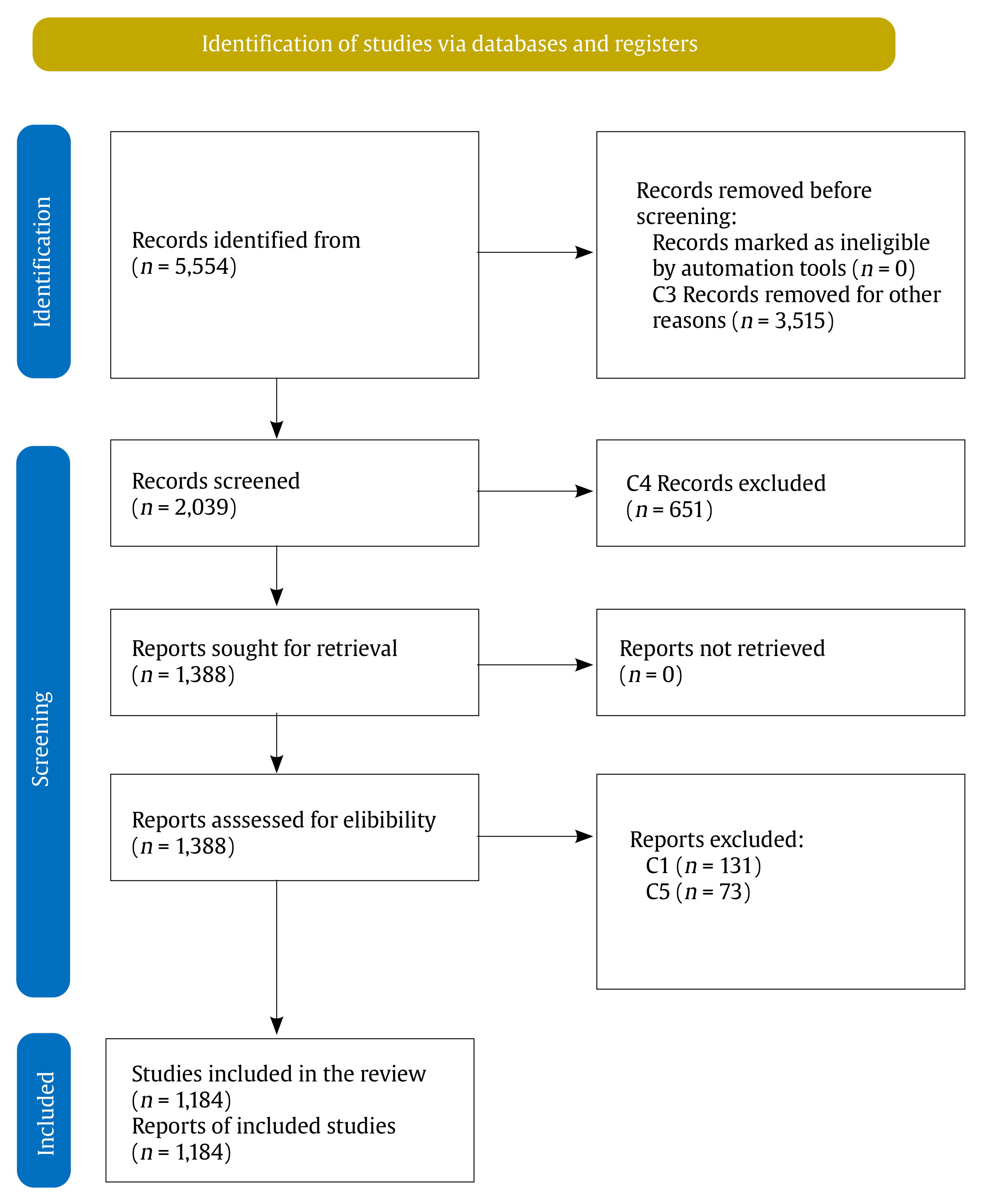 Data Analysis The VOSviewer software tool was used to ensure the accuracy and efficiency of the bibliometric analyses in the current study. The VOSviewer program generated visual maps by analyzing the distribution of publications by year, the most published authors and countries, the most frequently used keywords, and citation analysis. This created conceptual maps and collaboration networks. The selection of studies to be included in the bibliometric analysis was also reviewed by an independent reviewer. A consensus was reached following the review of the independent reviewer. Figure 2 Publication Trends. 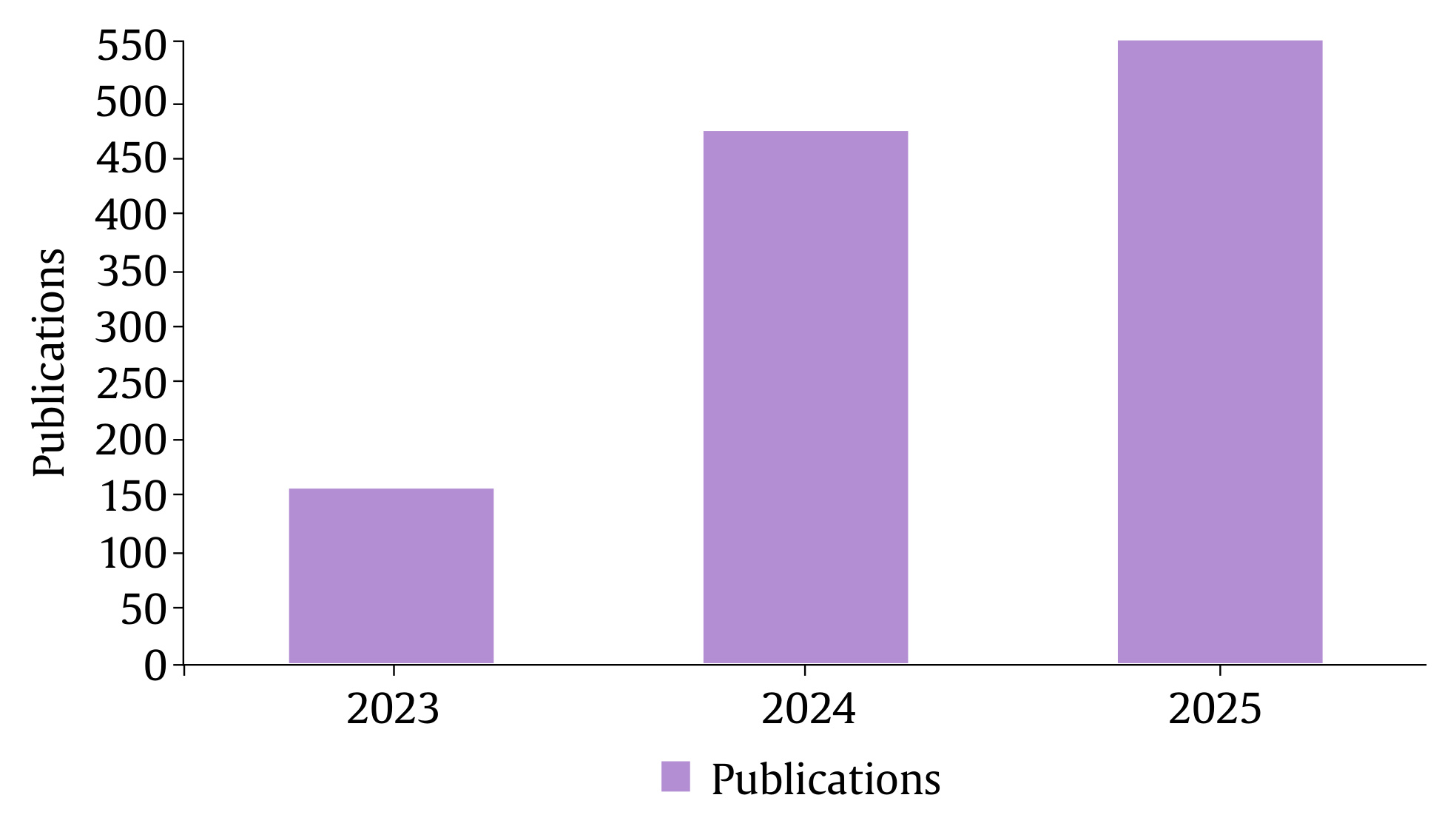 Findings This section contains the findings, presented under separate headings, aligned with the six research questions. RQ 1: Publication Trend Articles examining the use of generative AI in education are showing a steady increase between 2023 and 2025. Figure 2 shows an increasing trend in the number of articles examining the use of generative AI in education, with a very high increase in 2025 (n = 1,184). To better interpret the increasing trend of publications in Figure 2 and to group the relevant increase, it is possible to use three time periods. The first time period is 2023. In 2023, approximately 150 publications were published on the use of generative artificial intelligence in education. The second time period is 2024. The number of publications published in 2024 almost tripled compared to the previous year. More than 450 publications were published on the use of generative artificial intelligence in education in 2024. The third time period is 2025, which is considered a golden age. The number of publications on the use of generative artificial intelligence in education peaked in 2025, reaching approximately 550. Table 2 shows the bibliometric indicators of articles published within the context of research trends. Table 2 Bibliometric Indicators of Research (2023-2025)  According to Table 2, 1,184 articles examining the use of generative AI in education received 14,152 citations. Excluding self-citations, this number is calculated as 12,177, according to Table 2. The average number of citations per article is 12.26. An H-Index of 53 indicates high productivity and impact in articles examining the use of generative AI in education. Furthermore, the fact that the published articles have been cited by 6,190 different studies demonstrates that the field’s international visibility is increasing. RQ 2: Most Frequently Used Keywords in Articles on the Use of GenAI in Education As part of the current research, a map was created based on .txt text data imported into the VOSviewer environment to identify the most frequently used keywords in articles examining the use of generative AI in education. Keyword co-occurrence analysis was used to identify the keywords. The analysis yielded 2,705 keywords. Furthermore, the minimum number of occurrences of a keyword was set at 5. Of these 2,705 keywords, 138 were included in the analysis because they occurred at least 5 times. The resulting concurrent network maps are represented by 11 clusters. The colors of the resulting clusters indicate their degree of similarity. Nodes are represented by circles and represent keywords. The clusters in the maps represent nodes within the cluster and the connections between nodes in different clusters. It is noteworthy that the most prominent node in the network shown in Figure 3 is “Artificial Intelligence.” The analysis shows that the “Artificial Intelligence” node has the highest Total Link Strength (TLS) value (738) and occurrences (n = 368). TLS is a metric used in network analysis to measure a node’s overall connection or influence (e.g., a keyword, concept, or theme) within the network. A higher TLS value indicates that the node has more significant relationships with other nodes. The “Artificial Intelligence” node also reveals numerous strong connections to other key concepts. Therefore, the “Artificial Intelligence” node is already the most prominent and striking node in the network shown in Figure 2. Other frequently used keywords in the research included ‘ChatGPT (n = 260),’ ‘higher education (n = 214),’ ‘generative aı (n = 135),’ ‘education (n = 108),’ ‘generative artificial intelligence (n = 73),’ ‘artificial intelligence (n = 66),’ ‘aı (n = 52),’ ‘aı literacy (n = 46),’ and ‘artificial intelligence (aı) (n = 45).’ The distribution of articles by year according to keyword frequency is shown in Figure 4. Figure 3 Keywords in Studies on the Use of Generative AI in Education. 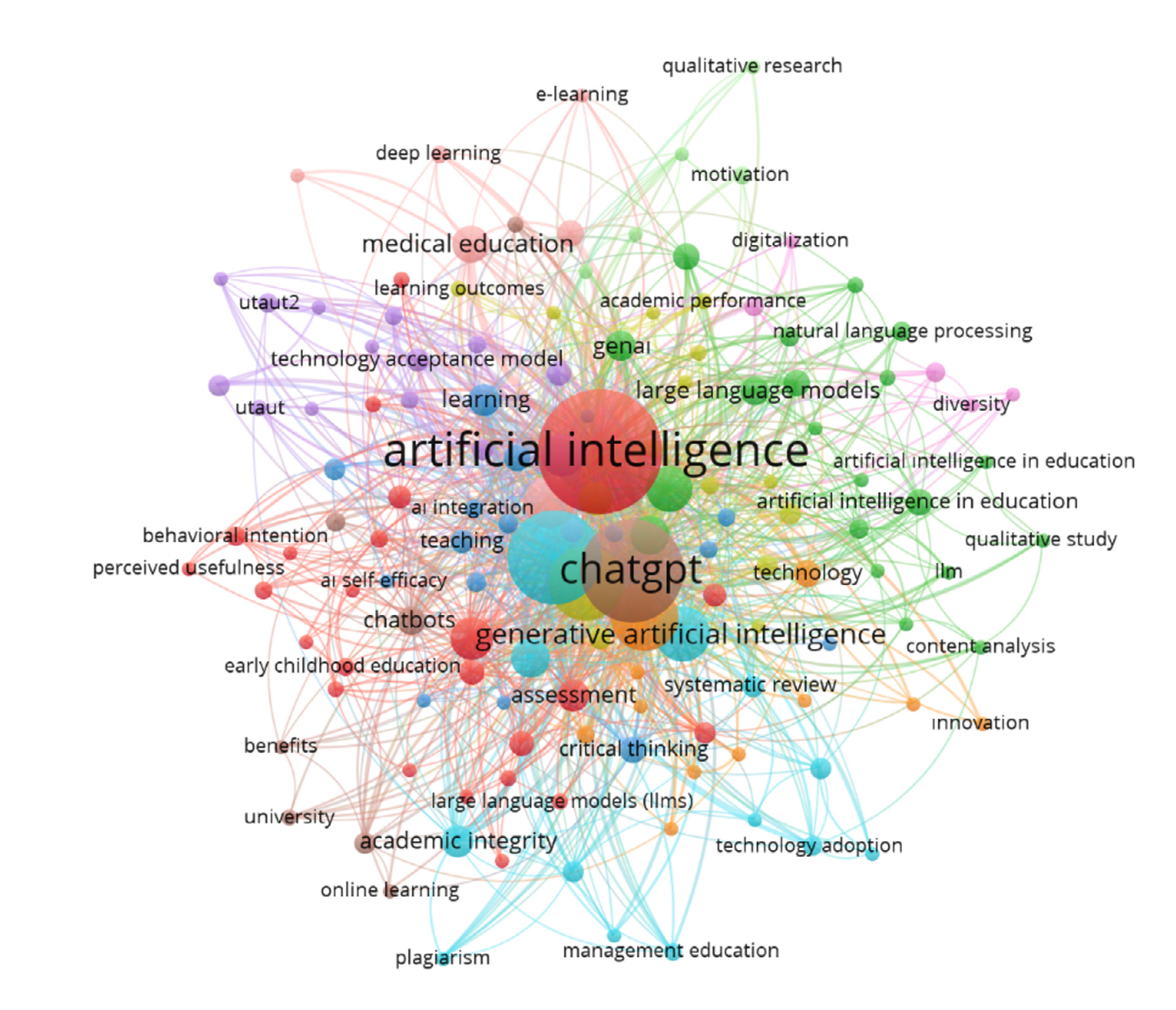 Figure 4 Distribution of Articles Using Keywords by Year. 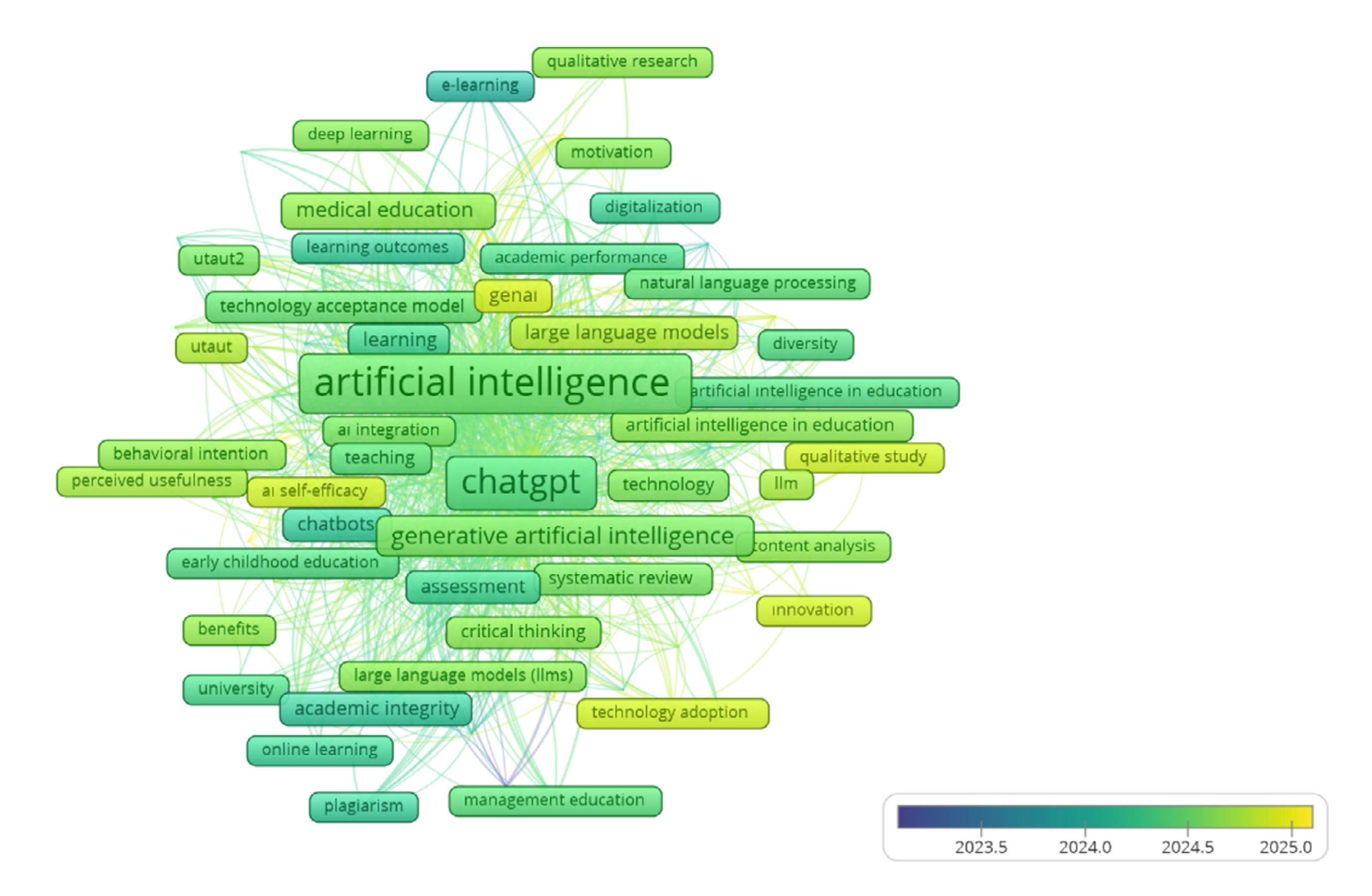 Looking at the distribution of articles by keyword frequency over the years, Figure 3 shows that in research on the use of generative artificial intelligence in education, the terms “e-learning, academic integrity, and plagiarism” were discussed in research in late 2023. In early 2024, the keywords “artificial intelligence, aı literacy, ChatGPT, artificial intelligence education in education, management education” began to become popular. By the end of 2024, the keywords “natural language processing, personalized learning, artificial intelligence (aı), edtech” became widespread. In 2025, the most notable trends were “genaı, perception, curriculum design, technology integration, and qualitative study.” RQ 3: Distribution of Articles by Country Co-authorship analysis was used to identify the countries where research examining the use of generative AI in education was most frequently conducted. Before analysis, a country was required to have at least one publication and, similarly, at least one citation. Of the 103 countries analyzed, 85 exceeded the threshold. VOSviewer provided the option to exclude unconnected countries (i.e., countries with no joint publications or citation ties with any other country). This allowed only the 78 countries that were connected to be included in the analysis. In other words, 7 countries were completely disconnected from the other countries and therefore were excluded from the analysis. The resulting network maps were represented by 13 clusters. Figure 5 shows the output of countries that contributed to the literature with at least one publication, as well as the output of countries that contributed with at least one citation. Figure 5 Bibliometric Map Based on Inter-Country Co-Authorship Analysis. 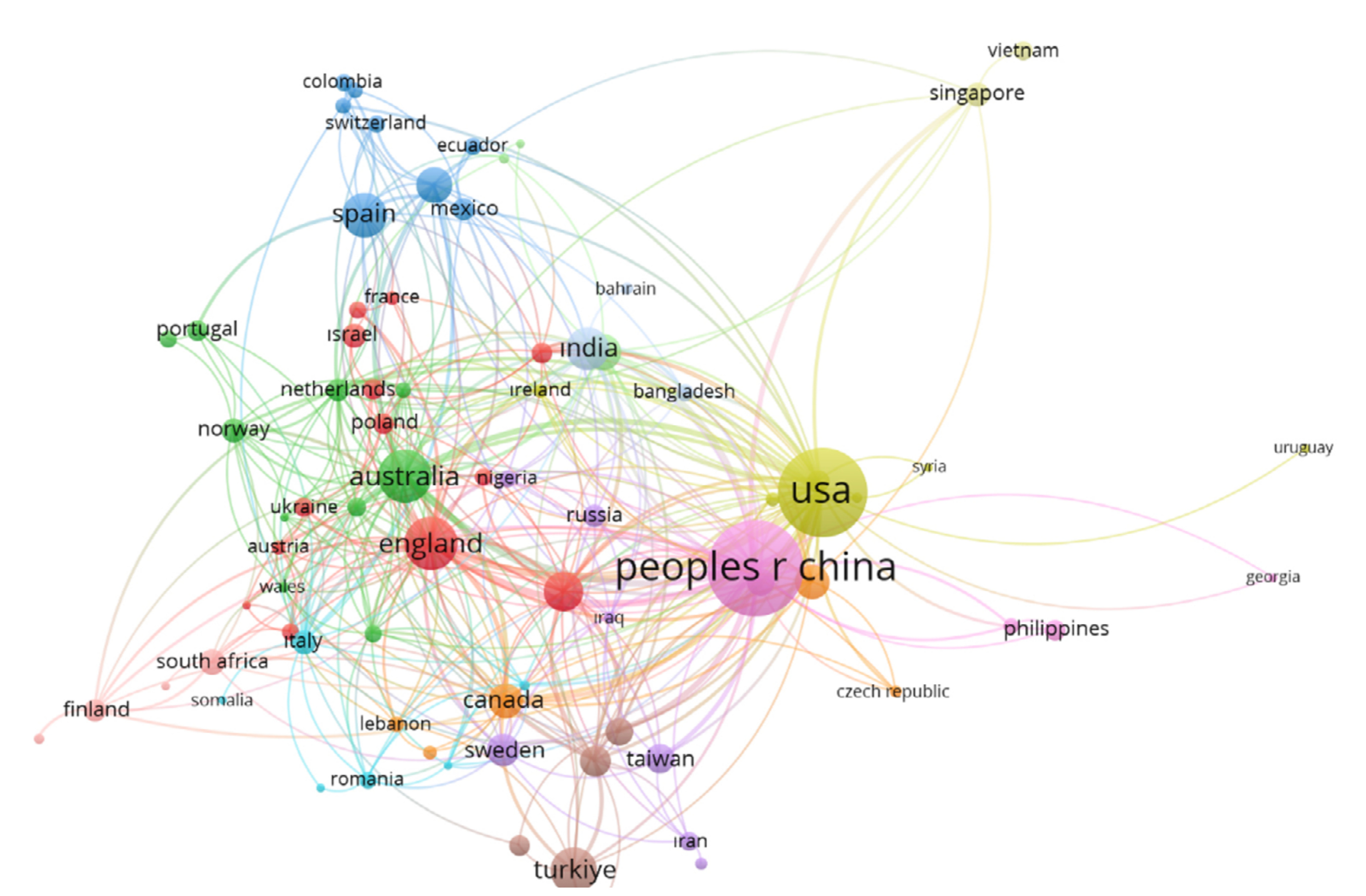 The most prominent node in the network, shown in Figure 5, represents China. China has a Total Link Strength (TLS) of 114 and several studies of 247. Among the countries listed in Table 2, China also has the highest H-index (29), demonstrating a strong influence in the field. Furthermore, the United States, with an H-index of 26, follows China with 112 TLS and occurrences (n =212). Values for the 10 countries are presented in Table 3. Table 3 Top 10 Countries Contributing to GenAI Research in Education Worldwide 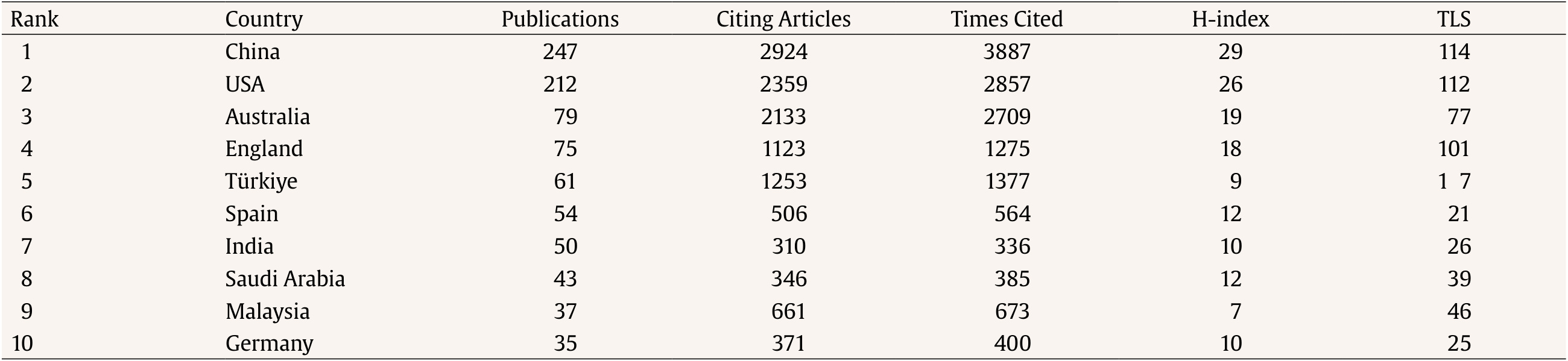 Note. TLS Total Link Strength. The top 10 countries in research examining the use of generative AI in education worldwide are listed in Table 3. Citing articles represents the number of articles citing published articles (excluding self-citations). Times cited shows the total number of citations published articles receive (excluding self-citations). In this context, 247 articles from China were cited by 2,924 articles in total, totaling 3,887 citations. Similarly, 212 articles from the United States received 2,359 articles in total, totaling 2,857 citations. 79 articles from Australia received 2,133 articles in total, totaling 2,709 citations. 75 articles from the United Kingdom were cited by 1,123 articles in total, totaling 1,275 citations. RQ 4: Most Influential Authors in Research As part of the current research, a map was created based on .txt text data imported into VOSviewer to identify the most influential authors in articles examining the use of generative AI in education. Keyword co-occurrence analysis was used to identify the most influential authors. Table 4 shows the 10 most influential authors in studies with at least two publications among 3,407 authors. During the analysis process, VOSviewer provided the option to exclude unconnected authors (i.e., authors with no joint publications or citation ties with any other authors). This allowed only the 19 authors who were connected to be included in the analysis. In other words, 219 authors were excluded from the analysis because they were disconnected from the other authors. The resulting network maps were represented by five clusters. Table 4 The 10 Most Influential Authors in Research 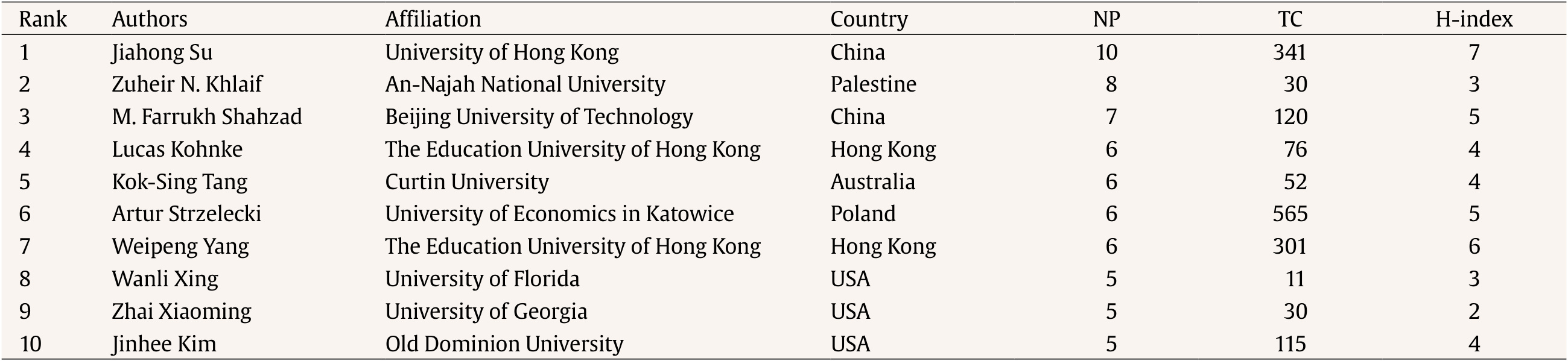 Note. Number of publication (NP); total citation (TC). Among the 19 authors analyzed out of 3,407, the most productive author with at least two publications and at least one citation was Jiahong Su, with an H-index of 7. He has received 341 citations (self-citations not included) with 10 publications. Jiahong Su is followed by Zuheir N. Khlaif (n = 8) with 30 citations and Muhammad Farrukh Shahzad (n = 7) with 120 citations. Despite having a small number of publications, authors with a high number of citations are also noteworthy. Artur Strzelecki (n = 6) with 565 citations, Weipeng Yang (n = 6) with 301 citations, and Jinhee Kim (n = 5) with 115 citations. Conversely, authors with a large number of publications but a low number of citations are also noteworthy. Zuheir N. Khlaif (n = 8) received 30 citations, Lucas Kohnke (n = 6) received 76 citations, and Kok-Sing Tang (n = 6) received 52 citations. Furthermore, the number of authors affiliated with the United States is higher regionally. The number of authors from Hong Kong and China is also significant. The 10 most cited articles in the field are presented in Table 5. Figure 6 shows the co-author network information map. Figure 6 Co-Author Network Information Map. 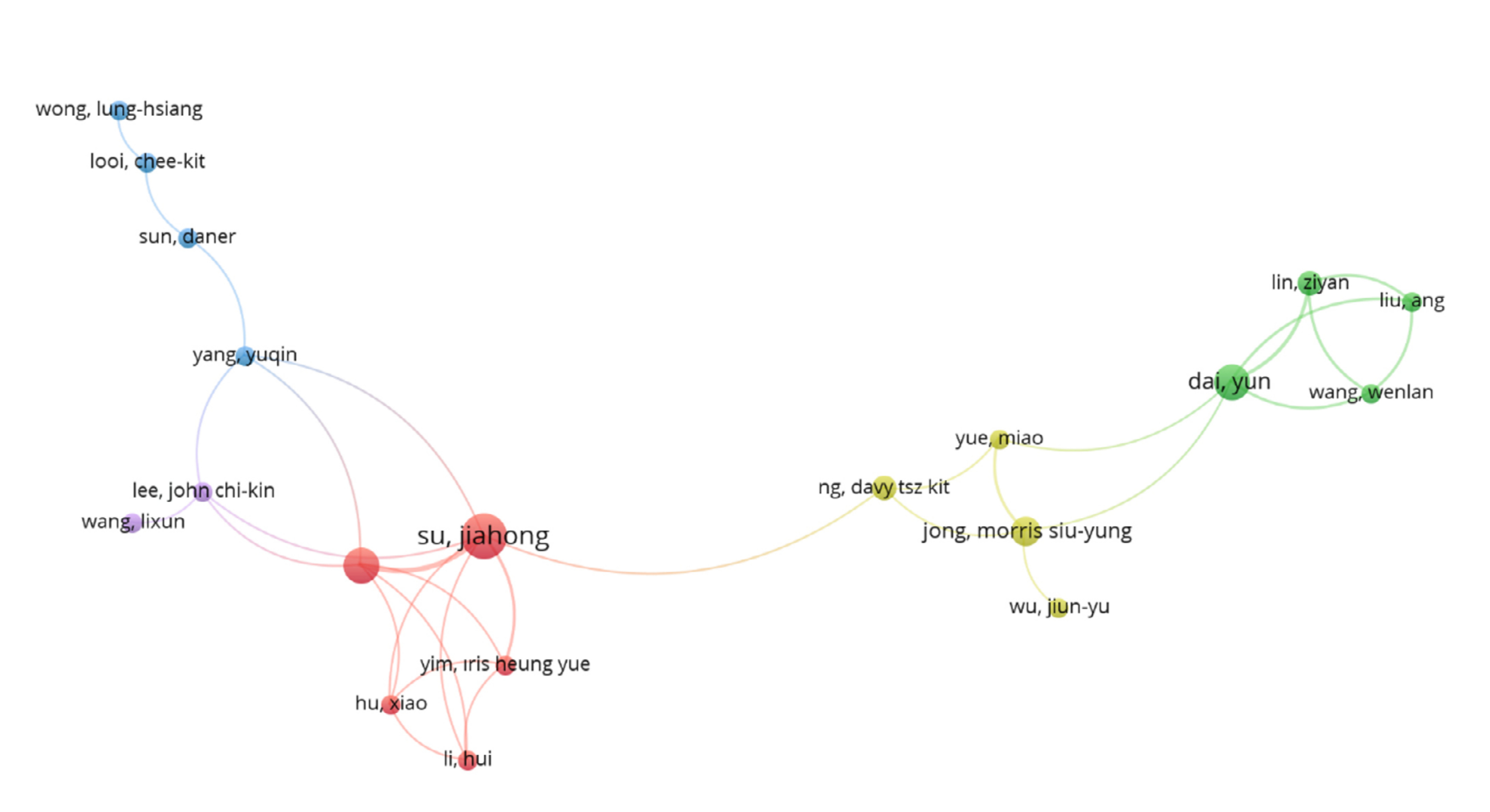 Table 5 The 10 Most Cited Articles 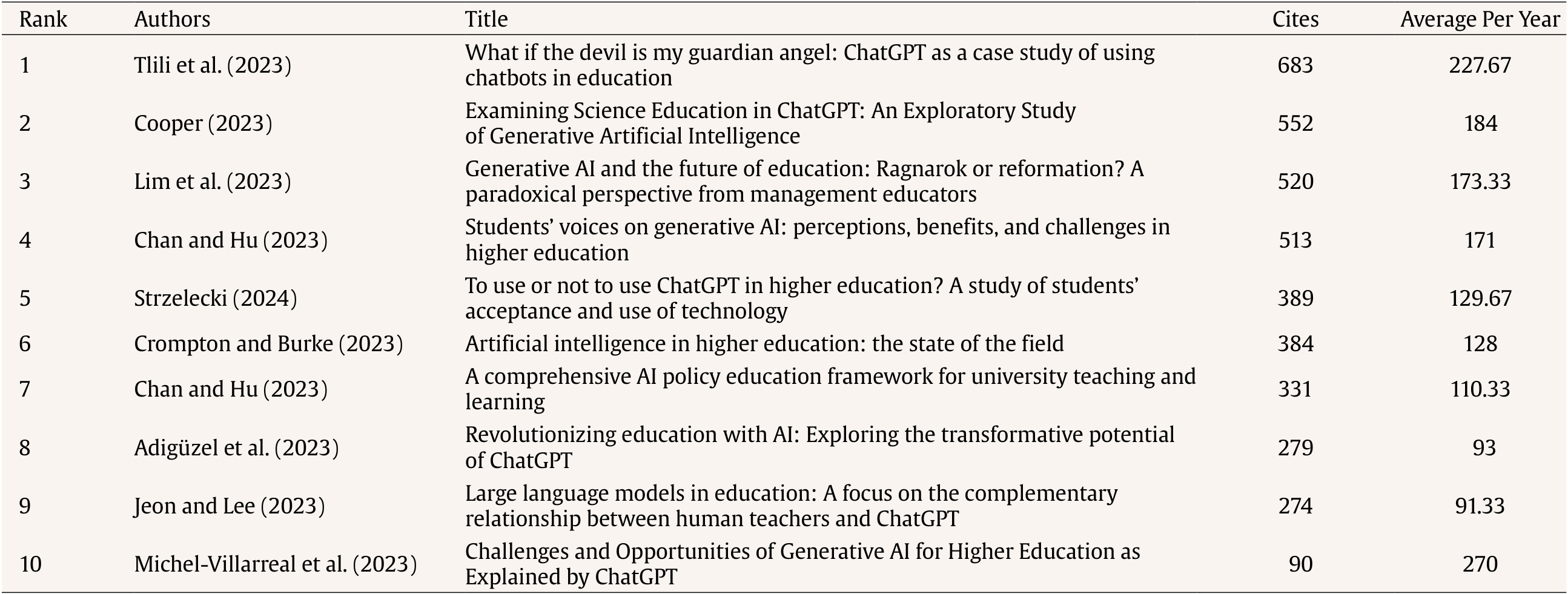 The co-author network knowledge map in Figure 6 helps identify potential collaboration opportunities by revealing relationships between researchers. The co-author network knowledge map is also important in facilitating research community formation and knowledge dissemination. Researchers can leverage this information to encourage future collaborations, improve their work, and better understand the flow of ideas in education. The analysis categorized researchers into five distinct clusters. Each author in Figure 6 is represented by a color, with darker colors indicating a higher frequency of appearance. RQ 5: Most Cited Articles In the context of the fifth research question, the current study examined the most cited articles among those examining the use of generative AI in education. Among the 1,184 articles, the 10 most influential articles, each receiving at least 20 citations, were identified. 152 articles exceeded the threshold. During the analysis, VOSviewer provided the option to exclude unrelated articles. 66 articles that were linked were included in the analysis. According to Figure 7, the most cited article among articles examining the use of generative AI in education is Tlili et al. (2023) titled “What if the devil is my guardian angel: ChatGPT as a case study of using chatbots in education” (n = 683). Cooper (2023)’s “Examining Science Education in ChatGPT: An Exploratory Study of Generative Artificial Intelligence” is the second most influential study, receiving 552 citations. Figure 7 also visualizes the minimum citation threshold of 20, and the most frequently cited articles are visualized accordingly. Figure 7 Most Frequently Cited Articles. 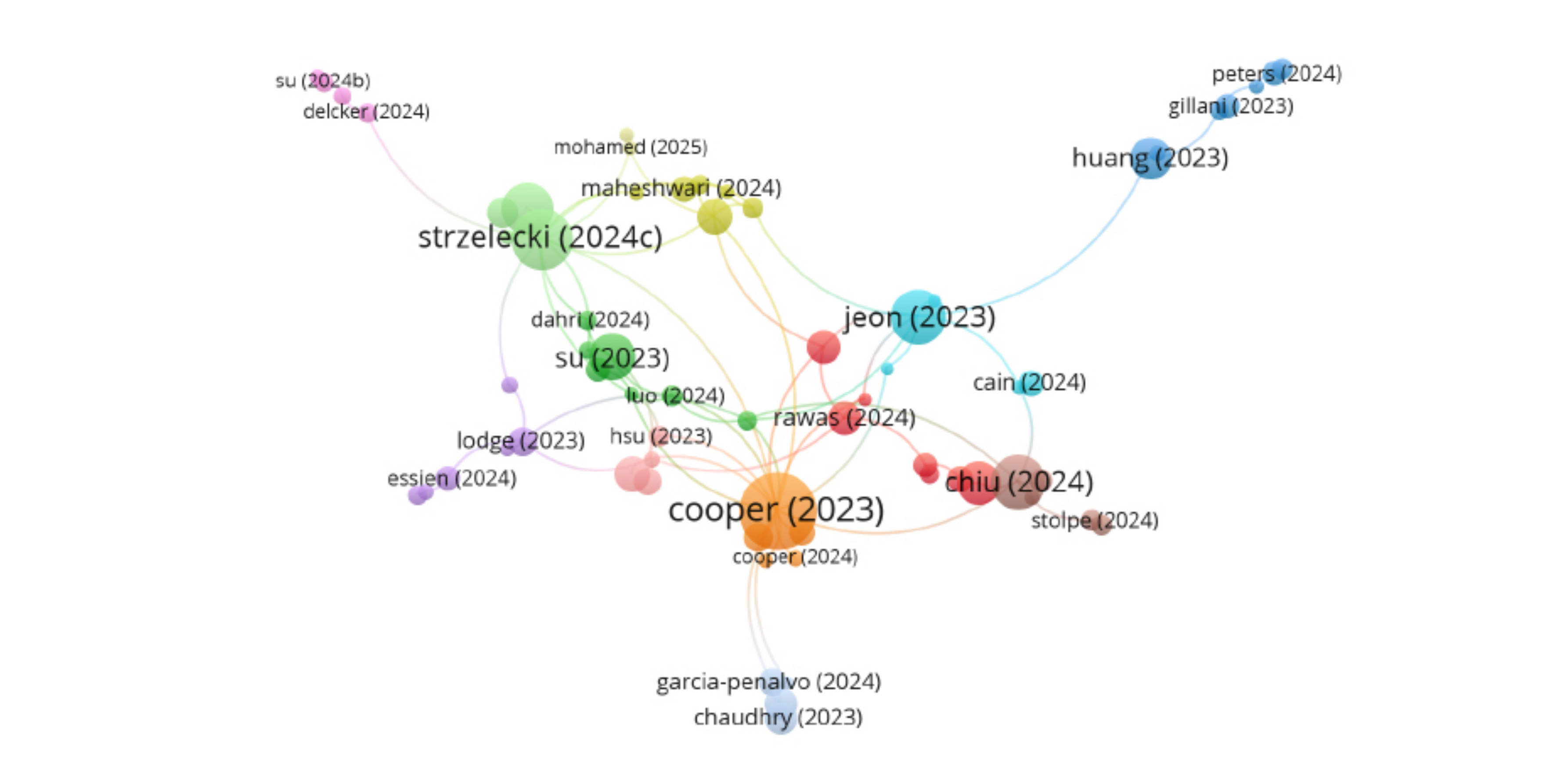 A network visualization of the most cited articles on the use of generative AI in education reveals 13 main clusters. These clusters are separated by distinct colors. The strongest node at the center is Cooper (2023), which establishes strong connections with numerous other studies, indicating that it is one of the most influential articles in the field. Furthermore, the studies by Strzelecki (2023) and Jeon and Lee (2023) are also notable as prominent studies in the field. Clusters marked with different colors represent common research themes and collaborative relationships, highlighting key focus areas in the literature. RQ 6: Contribution of Top Journals In the current study, the top journals were examined among articles examining the use of generative AI in education in the context of the sixth research question. Based on the analysis conducted with VOSviewer, the 10 most influential journals, each of which published at least 5 articles and each article received at least 1 citation, were identified among 274 academic journals. 56 articles exceeded the threshold. Table 6 shows the 10 most productive journals, along with their NC, TC, and Quartile values and H-indices. Most studies on generative AI in education were published in the journal Education and Information Technologies (n = 126), with an H-index of 22. Education Sciences follows with an H-index of 11 (n = 67). Interactive Learning Environments (n = 36), International Journal of Educational Technology in Higher Education (n = 15), and International Journal of Management Education (n = 15) received more citations despite publishing fewer articles. Table 6 Top 10 Journal 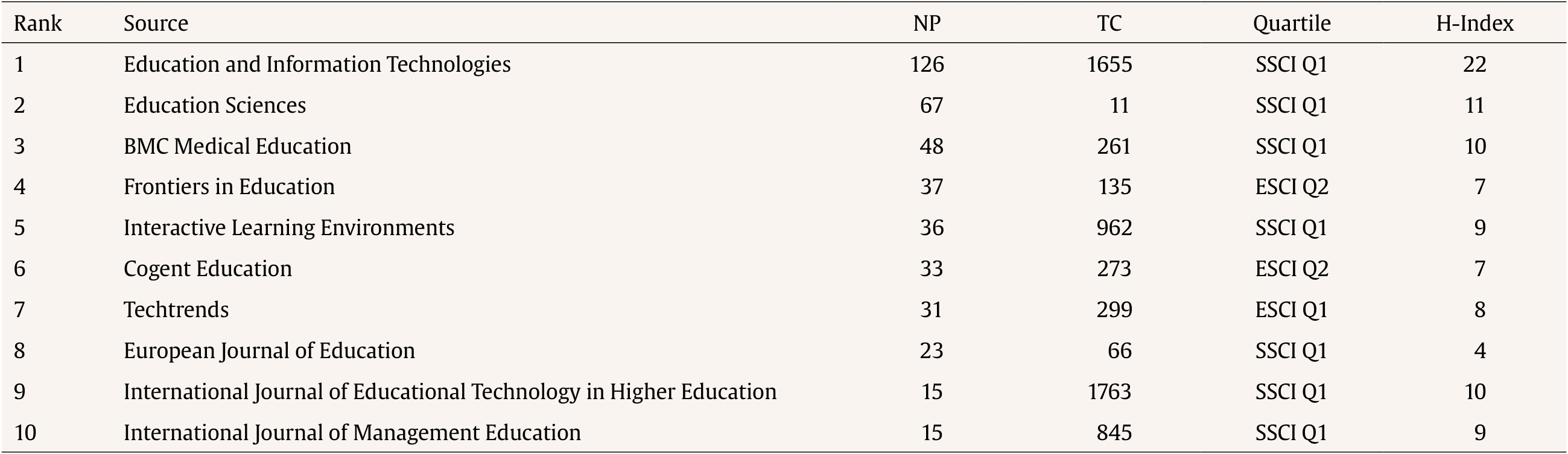 Note. Number of publication (NP); total citation (TC). In the current study, we analyzed 1,184 articles exploring the use of generative AI in education, extracted from the Web of Science (WoS) database, using VOSviewer for bibliometric analysis. The analyzed articles were dated between 2023 and 2025. The findings comprehensively revealed academic productivity, citations, country and author profiles, frequently used keywords, and the distribution of the most influential articles and journals in the field of generative AI in education, using VOSviewer. We sought to address six research questions within the scope of the research. The results for each research question are discussed in separate paragraphs, following the order of the research questions. The results of the current study, in the context of the first problem statement, reveal a rapid and steady increase in research on the use of generative AI in education from 2023 to 2025. It’s worth noting that the number of articles published in 2025 peaked. Following the introduction of ChatGPT as a generative AI tool by OpenAI in November 2022, there was also an increase in research in this area. This finding is fully consistent with the results of a bibliometric analysis conducted by Avello and Zurita (2025). Furthermore, according to Kurday and Vladova (2025), GenA’s potential in literature analysis has been demonstrated. According to the analysis in this study, tools like ChatGPT are reshaping scientific research, presenting both opportunities and challenges. On the positive side, the ability to structure and analyze large amounts of data quickly and efficiently allows researchers to complete routine tasks more quickly and focus more on creativity and problem-solving. However, despite all this, we know that compared to computer science, engineering, linguistics, finance, business, and other fields, artificial intelligence research in education has lagged behind many fields and industries and continues to do so (Taylor & Stan, 2024). According to the results that emerged in line with the second problem statement of this research, the concept of ‘artificial intelligence’ is the most frequently used word in articles on the use of generative artificial intelligence in education. In addition, ‘ChatGPT, higher education, ‘generative aı, education, generative artificial intelligence, artificial intelligence, aı, aı literacy, artificial intelligence (aı)’ are other most frequently used keywords in the research. On the other hand, Kurday and Vladova (2025) also state that the 30 most frequently used keywords in their research findings are divided into three main categories: ‘LA and EDM methods,’ ‘educational environments, technology and platforms,’ and ‘student learning processes and outcomes.’ Similarly, consistent with the existing research findings, the most frequently used concepts in the research of Avello and Zurita (2025) also emerged as ChatGPT and artificial intelligence. Guo et al. (2024) found that AIED technology (i.e., big data mining, algorithms, deep learning, speech recognition, and computer vision), applications (i.e., educational robots, automated grading, recommender systems, intelligent tutoring systems, and learning analytics), and subject area outcomes (computer science education and English language teaching) were the most frequently used keyword clusters. Furthermore, Tian et al. (2024) found that Cluster 1 contained seven keywords through keyword cluster analysis, with ‘Chatbots’ being one of the main keywords in this cluster and closely related to other clusters. Similarly, according to the bibliometric analysis conducted by Polat et al. (2024), the four most frequently used ID keywords in their studies were ‘artificial intelligence,’ ‘human,’ ‘ChatGPT,’ and ‘natural language processing,’ respectively. Similarly, the four most common DE keywords were ‘ChatGPT,’ ‘artificial intelligence,’ ‘large language models,’ and ‘chatbots.’ According to the results revealed in the context of the third problem statement of the current research, the number of articles originating from China is higher among articles published from 2023 to 2025. Articles published in China also have a good level in terms of citations and h-indexes. In addition, the United States, Australia, England, Türkiye, Spain, India, Saudi Arabia, Malaysia, and Germany are among the top 10 countries in research examining the use of generative AI in education worldwide. The number of publications originating from the United States and China is particularly striking. According to Ghazali et al. (2025), the leadership roles of the United States and China in research on the use of AI in education highlight the convergence of strategic investments, historical innovations, and favorable ecosystems, setting a benchmark for the future of educational paradigms. This information can guide policymakers in developing strategies to promote the use of AI in education and suggests that lessons learned from the United States and China can be valuable references for other countries. Similarly, Tian et al. (2024) note that the most successful countries are the United States, China, and Australia. Similar to the findings of the current study, the findings of Kurday and Vladova (2025) highlight the leading roles of countries such as Spain, the United States, China, the United Kingdom, and Australia in terms of publication volume and collaboration strength. Similarly, Guo et al. (2024) conducted a bibliometric analysis and concluded that China, the United States, India, Spain, and Germany lead in research productivity in studies on the use of artificial intelligence in education. On the other hand, according to Avello and Zurita (2025), the wide distribution of publications across institutions in the United States, the country with the highest output, suggests a decentralized approach that could translate into advances from multiple disciplines and perspectives in the future. According to Avello and Zurita, despite the global importance of the topic, scholarly production on this topic remains insufficient in regions such as Latin America and Africa. Indeed, this inadequacy is also highlighted in the current study. According to the result of the fourth problem statement of this research, the most influential author in research on the use of generative artificial intelligence in education is Jiahong Su from the University of Hong Kong. Other influential authors can be listed as Zuheir N. Khlaif, M. Farrukh Shahzad, Lucas Kohnke, Kok-Sing Tang, Artur Strzelecki, Weipeng Yang, Wanli Xing, Zhai Xiaoming, and Jinhee Kim. When the authors’ countries of origin are examined, the United States predominates. However, authors from Hong Kong and China are also in second place. According to the results of the fifth problem statement of the current research, the most cited article among articles on the use of generative artificial intelligence in education is the article titled ‘What if the devil is my guardian angel: ChatGPT as a case study of using chatbots in education’ by Tlili et al. (2023). In addition, Cooper (2023), Lim et al. (2023), Lim et al. (2023, Chan and Hu (2023), Strzelecki (2024), Crompton and Burke (2023), Chan (2023), Adigüzel et al. (2023), Jeon and Lee (2023), and Michel-Villarreal et al. (2023) are other most cited articles. However, the article by Cooper (2023) has become one of the most influential articles in the field by establishing close connections with many other studies. Other most influential articles in the field are the articles by Strzelecki (2023), Jeon and Lee (2023) and Chiu (2024). According to the results in the context of the sixth problem statement of the current research, the journal that has contributed the most to the literature in articles on the use of generative artificial intelligence in education is the journal Education and Information Technologies. Other journals that have contributed the most to the literature in terms of the number of publications and citations can be listed as follows: Education Sciences, BMC Medical Education, Frontiers in Education, Interactive Learning Environments, Cogent Education, Techtrends, European Journal of Education, International Journal of Educational Technology in Higher Education, and International Journal of Management Education. Conlusions According to the results of an examination of articles published in journals indexed in the Web of Science between 2023 and 2025 examining the use of generative AI in education, 2025 is considered a golden age. This finding can be attributed to the rapid adoption of generative AI in education and the growing interest in its applications in the educational context. China and the United States are among the top countries in both publication production and citation impact. Regions such as Latin America and Africa are significantly underrepresented in research on the use of generative AI in education. The most frequently used terms in the research were “artificial intelligence, ChatGPT, higher education, generative AI, education, generative AI, artificial intelligence, AI, AI literacy.” It was concluded that the research agenda is largely shaped around these concepts. The journal Education and Information Technologies stands out as the scientific journal with the highest publication production. Jiahong Su from the University of Hong Kong was found to be the most influential author. Limitations While the current research provides some valuable insights, the authors acknowledge that it has some limitations. The articles subjected to bibliometric analysis in the current study were limited to studies conducted between 2023 and 2025. Furthermore, during the literature review of the articles subjected to bibliometric analysis, the data source included only articles from Web of Science. Similarly, the fact that the analyzed articles were published only in English is a limitation. Furthermore, because fields such as healthcare, engineering, and business require different experience and knowledge, the author(s) in this study limited research examining the use of generative AI to the field of education. Furthermore, the studies subjected to bibliometric analysis included only articles as a document type. Therefore, the exclusion of different document types can be interpreted as a limitation. Furthermore, as the number of studies in the field of GenAI is rapidly increasing, our findings may not be resilient to outdatedness. Recommendations For future research, we recommend that researchers include databases other than Web of Science in their searches. Additionally, we recommend that researchers broaden the search scope of the studies they will analyze. Furthermore, researchers can broaden their scope by including studies examining the use of generative AI in fields other than education. Researchers can conduct analyses that include a variety of document types. Researchers can conduct systematic reviews of studies examining the use of generative AI in education, focusing on different identified research categories. Conflict of Interest The author of this article declares no conflict of interest. Cite this article as: Kızıltaş, Y. (2026). A bibliometric analysis of generative artificial intelligence (GenAI) in education: Trends and global research patterns (2023-2025) . Psicología Educativa, 32, Article e260466. https://doi.org/10.5093/psed2026a23 References The datasets used and/or analysed during the current study are available from the corresponding author on reasonable request. |
Cite this article as: Kızıltaş, Y. (2026). A Bibliometric Analysis of Generative Artificial Intelligence (GenAI) in Education: Trends and Global Research Patterns (2023-2025). Psicología Educativa, 32, Article e260466. https://doi.org/10.5093/psed2026a23
Correspondence: yusufkiziltas@yyu.edu.tr (Y. Kızıltaş).Copyright © 2026. Colegio Oficial de la Psicología de Madrid


 PDF
 e-PUB
 CrossRef
 JATS
 Imprimir
 Enviar
ALERTA POR E-MAIL
La Revista de Psicología Educativa está distribuida bajo una licencia de Creative Commons Reconocimiento-NoComercial-SinObra Derivada 4.0 Internacional.com