Educational Psychology in the European Union in the Twenty-first Century: An Extensive Bibliometric Study
[La Psicología Educativa en la Unión Europea en el siglo XXI: un estudio bibliométrico exhaustivo]
José A. León & José D. Moreno
Universidad Autónoma de Madrid, Madrid, Spain
https://doi.org/10.5093/psed2026a22
Received 21 December 2025, Accepted 28 April 2026
Abstract
This paper reviews recent research in Educational Psychology related to twenty-first century development in the European Union (EU). Over the last two decades, researchers have promoted interdisciplinary and collaborative approaches across areas such as literacy, reading and writing, cognitive disabilities, creativity, motivation, social and individual differences, and academic achievement. The study focuses on the EU due to the limited research examining its specific contribution to Educational Psychology. It addresses key questions regarding the contribution of the EU and its member states, the main topics covered in Web of Science publications, the evolution of research trends, the leading European journals in the field, and the impact of the post-Brexit context. Through bibliometric analysis, the study highlights the EU’s significant contribution to the scientific community and recent advances in Educational Psychology research.
Resumen
Este artículo aborda las investigaciones recientes en Psicología Educativa desarrolladas en el siglo XXI en la Unión Europea (UE). En las últimas dos décadas se ha producido una intensa actividad interdisciplinar y colaborativa orientada a consolidar los fundamentos teóricos y prácticos en áreas como alfabetización, lectura y escritura, diferencias sociales e individuales, discapacidades cognitivas, creatividad, motivación y rendimiento académico. El estudio se centra en la UE ante la escasez de trabajos centrados específicamente en la Psicología Educativa. Asimismo, plantea sobre la contribución de la UE y sus estados miembros, los principales temas tratados en las publicaciones de Web of Science (WoS), la evolución de las líneas de investigación, las principales revistas europeas del área y los cambios producidos tras el Brexit. Mediante un análisis bibliométrico, se pone de manifiesto la importante contribución de la UE a la comunidad científica y al desarrollo reciente de la Psicología Educativa.
Palabras clave
Psicología Educativa, Estudio bibliométrico, Unión Europea, Publicaciones WoS, Tendencias de investigación Siglo XXIKeywords
Educational Psychology, Bibliometric study, European Union (EU), WoS publications, Research trends, Twenty-first centuryCite this article as: León, J. A. & Moreno, J. D. (2026). Educational Psychology in the European Union in the Twenty-first Century: An Extensive Bibliometric Study. Psicología Educativa, 32, Article e260465. https://doi.org/10.5093/psed2026a22
Correspondence: josedavid.moreno@uam.es (J. D. Moreno).Educational Psychology is a discipline with a relatively long history. There is widespread agreement that modern Educational Psychology begins with the birth of psychology in the late 19th century. In this time Europe has extraordinary and distinguished psychologists who have promoted education as an essential aspect of psychology since its inception (León, 2011). Although there has always been a need and justification to further develop the figure of the educational psychologist, it in fact developed in a particular way in each country and in a way adapted to their own needs. For example, United Kingdom was closely linked to the study of individual differences and child orientation dating back to 1860 (Farrell, 2007), because of the implementation of compulsory education in the UK beginning in 1870 (Wooldridge, 1994). Francis Galton (1822-1911) was interested in the scientific study of children, investigating the individual differences of students through interviews he conducted with parents and teachers. France was interested also in introducing psychology in schools. Alfred Binet published his first article on Psychology in primary school (Binet & Vaschide, 1897). In 1905, Binet-Simon created the first intelligence test in Paris, interested in children with special needs to get an idea of what the average capacity was. Perhaps for all these reasons he is considered one the fathers of Educational Psychology. On the other hand, in Spain, Luis Simarro (1851-1921) was interested in educational practices, especially with the problems derived from school fatigue (Simarro, 1889). At the same time, in the USA at the hands of Williams James in the late 19th century and the work of G. Stanley Hall, J. Dewey, and Edward L. Thorndike, among others, Educational Psychology begins with the birth of psychology. However, it is not until 1920 when Educational Psychology is commonly recognized as a separate branch of psychology (J. A. Glover & Ronning, 1987). Over these last 100 years, Educational Psychology has developed and consolidated into a mature science. Educational Psychology is much more than the simple application of already discovered psychological principles to educational systems. Educational has its own discipline with its own goals, research, and infrastructure. In fact, the field of Educational Psychology represents an important area of psychological research, theory, and practice. In terms of dissemination and infrastructure is evident in many educational psychologists that have proposed and tested numerous learning and instructional theories and strategies throughout the history of the field, such as behavioral learning, cognitive and regulatory contributions to learning, development and curriculum, motivation and affective development, individual differences and special needed, statistics and educational measurement, testing and technology. Currently, Educational Psychology participates in early education and curriculum applications, psychology in the schools, educational program, research, and policy (Reynolds & Miller, 2012). Other indicators of the maturity of the discipline include great volume and diversity of specialized journals, the availability of undergraduate and postgraduate and the variety of academic conferences held every year, and the existence of numerous professional organizations in Educational Psychology in many countries of the world, such as the Association of Educational Psychologists (AEP) in the UK or the Division 15 of the American Psychology Association in the USA. State of Art of Educational Psychology in the Twenty-first Century There is a general perception that society and the field of Educational Psychology have changed a great deal since the last century to the second decade of the 21st century spurted, most recently, by the coronavirus disease 2019 (COVID-19) pandemic. Many of these changes have occurred at the hand an acceleration in the use of multimedia technology, social media, and informal learning environments. They are some of them, but not the only ones. We will briefly address these points in the following paragraphs describing more fields that also seem very significant in these two decades of the 21st century. Educational Psychology as “the Science of Learning and Learning Strategies” There is a general assumption that Educational Psychology is considered as “the science of learning”, viewing learning as knowledge construction or figuring out how people learn (Alexander, 2018; Mayer, 2018). This concept was assumed as one of the core original tasks of psychology and education since its founding and this assumption continues as a central issue today. Educational Psychology has contributed to the science of learning in several aspects, from general theories of learning to specialized theories of learning in subject areas (from behaviorist to cognitive and developmental conceptions of learning), increasing pending the last two decades more different types of measures from purely behavioral measures to learning strategies (e.g., measures of cognitive processing during learning, reaction times, physiological measures), to more qualitative measures (e.g., problem-solving questions, thinking aloud protocols, questionnaires or self-report surveys). Learning then is considered as a complex process that relies on development across diverse learners in multiple areas. Whether learning is viewing as core concept, then the learning strategy is viewed as a procedure. Many educational psychologists have proposed and tested numerous instructional strategies throughout the history of the field. A learning strategy is considered as an individual’s way of organizing and using a particular set of skills to learn content or accomplish other tasks more effectively and efficiently in school as well as in non-academic settings (Kine et al., 1992). Also, learning strategies focus on instructional strategies that facilitate the active learning process by teaching students how to learn and how to use what they have learned to solve problems and be successful. The majority of these strategies involve cognitive, as well as motivational and social processes, reaching more than 400 types of strategies (see Hattie & Donoghue, 2016). The influence and impact of research in Educational Psychology on society is best recognized by applications to the education and training of teachers and the development of procedures to enhance classroom instruction and learning, how we motivate learners, and the integration of new technology into the classroom and beyond. Researchers in Educational Psychology address major issues related to the education of learners in regular and special education contexts. The field of Educational Psychology has played a major role in informing policy and educational reform. It is our expectation that this importance will continue and grow in the 21st century (Hattie & Donoghue, 2016). Influence of Psychology in Education Several authors proposed several topics that represent transformational and influential contributions of the Educational Psychology community, such as suggesting a frame of learning as a theoretical and empirical core, a “psychologizing” of education (cf. Alexander, 2018; Harris, 2018; Mayer, 2018). The approach of education to science needs also to ask how this psychologization has affected educational policies in different countries and in organizations as relevant as the OECD. Good examples are the Programme for International Student Assessment (PISA, tests of 15-year-olds in mathematics, reading and science, across 79 countries in 2018), the Trends in International Mathematics and Science Study (TIMSS, tests of 9-year-olds mathematics and science, were 64 countries participated in 2019), or the Progress in International Reading Literacy Study (PIRLS, tests of 9-year-olds in reading competences, across 70 countries in 2021), all born with the new century. The perspective common to all these proposals stems from the different psychology activities, reflecting the numerous theories that analyse them as a constructive and interactive process. Meaning is constructed through the interaction between the participant, the information given, and the context of a concrete experience. Participants are considered to actively construct meaning, reason with the information provided, and know effective strategies and reflect on the task. Before, during, and after the assigned task, participants show their skills using a repertoire of linguistic skills and cognitive and metacognitive strategies, as well as their previous knowledge to construct the meaning, together with the context in which the activity takes place. From a similar perspective, the Survey of Adult Skills, as a product of the OECD entitled Programme for the International Assessment of Adult Competencies (PIAAC), was designed to measure adults’ proficiency (from 16 to 65 years old) in several key information-processing skills, namely literacy, numeracy and problem solving in technology-rich environments. This international survey is conducted in over 40 countries and measures the key cognitive and workplace skills needed for individuals to participate in the society and for economies to prosper. The evidence from these programs has helped countries understand better how education and training systems can nurture these skills. The innovative domain assessments target an interdisciplinary future including competences beyond the core literacies of reading, mathematics, and science in large-scale, international student assessment; and by fostering advances in how students are assessed. In forthcoming PISA cycles, for example, the innovative domain assessments will target creative thinking (PISA 2022) and learning in the digital world (PISA 2025). Interdisciplinarity and Multi-disciplinary among Diverse Disciplines and Researchers Educational Psychology, from its inception, was an interdisciplinary gathering of scholars from such diverse disciplines as philosophy, psychology, medicine, linguistics, neuroscience, or mathematics. Interdisciplinarity is usually linked to a mix of disciplines, which are partially integrated, especially those aspects related to measures, evaluations, and methods of research. But Educational Psychology is also multi-disciplinary, where each discipline maintains its precepts and methods. Multi-disciplinarity is associated with cooperation between disciplines, but not with interactivity between them. But it also refers to collaboration between researchers from different countries working on the same common goal. In this sense there are no frontiers of knowledge. This is an increasingly accentuated distinction in the 21st century, since due to the methodological complexity and scarcity of research technology, knowledge and joint actions are shared in favor of an advance in knowledge. In this way we can point out that, if the 20th century was very prone to generating theories, in this century it seems to be more focused on theoretical o methodology problems (León, 2022). What bound them together was the belief in the value of scientific inquiry in matters pertaining to education, teaching, and learning. Moreover, the interdisciplinary character of Educational Psychology conveyed the belief that the complexity of problems pertaining to education demanded insights from multiple vantage points. For this reason, Educational Psychology as an international, multi-disciplinary field, providing publications of advanced scientific research in the areas of learning, development, cognitive, instruction, social and teaching, may represent a variety of theoretical perspectives and different methodological approaches to reflect that multi-disciplinarity. Lastly, take that the growing fields of neuroscience and neuropsychology are incorporated into educational research, and are interdisciplinary sciences that draw from such fields as cognitive and computer science, medicine, neurology, psychology, and mathematics. Contemporarily, the community of educational psychologists that has been growing gradually and contributing to the relevant knowledge in Educational Psychology, routinely includes scholars trained as cognitive scientists, computer scientists, developmental psychologists, Educational Psychology, neuroscientists, and learning scientists. Methodology and Assessment For a long time, Educational Psychology was immersed in a long and unproductive debate about defining and giving more importance to the applied research method (e.g., conducting observational studies vs. experiments or collecting qualitative vs. quantitative data) rather than research goals (Mayer, 2018). When we have learned that the most important thing has been to complement different research methods depending on the research question being addressed, it is when a considerable increase in research has been observed. Educational Psychology has been at the forefront of assessing cognitive processing during learning using a variety of techniques ranging from self-report surveys to thinking aloud protocols to data mining of button presses in online learning to physiological measures. In short, an important contribution of Educational Psychology has involved assessing a learner’s cognitive processing during learning. Also, brain activity such as fMRI or EEG, and behavioral activity such as eye movements, may prove helpful in supplementing self-reports of cognitive activity during learning. Similarly, another way to supplement self-report measures of cognitive activity during learning involves computer-based technologies that can record relevant activities during learning (such as button presses, pen strokes, or eye movement’s measures such as fixations or regressions). Refinement of online measures of affect during learning represents another important support in the future. Educational Psychology is Diverse and Pluralism Although it is true that significant progress has been made in these contributions, it is no less true that these contributions are homogeneous and univocal, rather than the opposite. There are pluralism and diversity among theoretical points of view. As noted, concern for fragmentation in education and psychology was clear for last century (i.e., Jacobson et al., 2016; León, 2004) and continues today. Thoughtful, effective integration of diverse, validated approaches to learning, regardless of whether the disciplines from which they originated were viewed by some as discordant (such as cognitive and neurocognitive, constructivist, constructionist, connectionism, computational, affective, behavioral, sociocultural, positive, and other approaches to teaching and learning), continues to be one key to the development of Educational Psychology. Also, this concern to epistemological, theoretical, and methodological pluralism too (Jacobson et al., 2016; León, 2004) became vital forces in the development of our field. As many had noted decades earlier and in the 20s, there are no panaceas in teaching and learning, or in research on teaching and learning. Nor could any single theory address all the challenges faced by learners, teachers, families, schools, and curriculum. As it is evident today, good instruction does not require a forced choice between competing theories, but rather a triangulation across and integration of the evidence from various theories, perspectives, and lines of research. Perhaps the relationship between Educational Psychology researchers and school practitioners and policymakers will never be entirely harmonious (Harris, 2018). However, it is an association that remains worthy of whatever efforts toward reconciliation are required. Minimally, it seems essential for those identified as Educational Psychologists and seeking to forge meaningful relationships with members of educational institutions to understand the culture of those institutions and the pressing concerns faced by school leadership and practicing teachers daily. Digital Technology and E-learning Another important characteristic of this new century is the intrusion of digital technology. Many genres of digital technologies are available to help students learn by applying models and principles of learning. Some of these technologies cover subject matter content with conventional media, such as texts, slides, and videos. But there have been several attempts to understand factors that influence digitalization and educational change in schools, including access to digital technologies (e.g., laptops, tablets, and smartphones). Lastly, digital technologies have increased the landscape of Educational Psychology. Educational technologies are destined to play an increasing role in this era of COVID-19 reexamining where and when educational activities are completed. Instead of being confined to a schoolhouse, learning will increasingly occur at home, community centers, and work and in real-world settings. Educational technologies allow more training and education to be tailored to the characteristics and histories of individual learners who live in sociocultural contexts. Technology is increasingly sensitive to motivational and emotional states of the learner in addition to their knowledge, skills, and abilities. Research shows that digitalization is a complex process requiring large-scale transformative changes (Holmgren et al., 2017), and with support from school organizations and leadership (Håkansson-Lindqvist & Pettersson 2019; Pettersson, 2021). According to Zhang (2010), such change calls for a close and dynamic interplay between macro and micro processes. However, regarding complex system thinking, Zhang (2010) suggests that schools work toward and support an interplay between various levels of the organization. Following this line of thought, Hauge (2016) suggested an ecological approach that included several organizational levels. To integrate digitalization in schools, Hauge argued for a shared understanding by school leadership, administrators, and development and learning staff, as well as the need to develop common tools for institutional learning. Researchers have concluded that digitalization in school can be a complicated process (Håkansson Lindqvist 2015; Hauge, 2014). Digitalization initiatives have problems gaining sustainability in schools (Aesaert et al. 2015; Hauge 2014) and the technologies implemented and used tend to support previous practices rather than lead to change and development (D. Glover et al. 2016; Håkansson Lindqvist 2015; Jenkins et al. 2011). The evidence-based research on digital transformation in teaching practices is often small-scale, and the processes are often driven by, and dependent on, individual enthusiasts (Jenkins et al. 2011; Means et al., 2009; see also Cuban, 2013). Cuban (2013) said, for example, that “incremental changes have largely left intact teaching routines that students’ grandparents visiting these schools would find familiar” (p. 112). Most of these science-based efforts have been tested in smaller samples of classrooms or laboratory experiments to pinpoint potential causes of learning gains. For example, instructional games and simulations attempt to enhance motivation and thereby encourage students to spend more time on the material and improve learning (Wouters & van Oostendorp 2017) or analyzing how cognitive models of web navigation (van Oostendorp et al., 2017). Digital technologies have integrated advances in computational and corpus linguistics to the point that they can analyze texts and summaries depending on genre (León et al., 2006; Olmos et al., 2009). There have been several attempts to understand factors that influence digitalization and educational change in schools, including access to digital Hansson (2013), digital competence (e.g., Aesaert et al. 2015; Hatlevik & Christophersen, 2013; Krumsvik et al. 2016; Mishra & Koehler 2006; Pettersson 2021), development of teaching and learning designs (e.g., flipped classrooms; Lund & Hauge 2011), and organizational or institutional change. It is worth asking in the immediate future how teachers, school leaders, and educational technologists will deal with digital problems, and how educational change and new educational and organizational practices infrastructures are changing with the entry of digitization. Approach of this Study and Objectives To address some of these issues, scholars have, for some time, attempted to synthesize the research on Educational Psychology to offer researchers, practitioners, policymakers, and the public insights to support the effective development and application of psychological principles to educational practice. Such syntheses are important because they envision past, present, and future developments of a discipline. In this context, bibliometrics has been proposed as a valuable approach to map vast amounts of research available disciplines and to describe their developmental trends and status in a comprehensive, systematic, and replicable manner (Linnenluecke et al., 2020). Bibliometrics can be generally defined as “a set of quantitative methods used to measure, track, and analyze print-based scholarly literature” (Roemer & Borchardt, 2015, p. 234). Bibliometrics are typically used to describe and assess journal, country/region, institution, and author rankings in terms of productivity, and to reveal patterns of similarity and collaboration (Andres, 2009). In this current age of big data, it is possible to record thousands of quantitative and qualitative measures for each learner and data from millions of learners (Baker, 2020; Dede et al., 2016; Fischer et al., 2020). These large datasets are analyzed with advances in data analytics, educational data mining, and artificial intelligence quantitative methodologies. Sophisticated quantitative methodologies, as well as the traditional ones, assess the scope of strategy effectiveness and expected aptitude-treatment interactions. Bibliometric approaches, for example, have been progressively incorporated into the social sciences to map disciplines. Bibliometric reviews of research in global psychology are available, both exploring the general literature (Ho & Hartley, 2016; Krampen 2016; Krampen et al., 2011) and specialized journals in the discipline (Jennings et al., 2008; Milfont & Page, 2013; Mintegi et al., 2011; Reutzel & Mohr, 2015; Tur-Porcar et al., 2018). Similar procedures have been implemented to map psychological research in particular geographical regions such as Asia (Haslam & Kashima, 2010), Europe (Íñiguez-Rueda et al., 2008; Schui & Krampen, 2007), South America (Fierro et al., 2018), and the post-Soviet countries (Fedorov, 2019; Lovakov & Agadullina, 2019). Researchers have also used bibliometric approaches to map the literature produced in several branches of psychology, such as positive psychology (Schui & Krampen 2010), personality psychology (Allik, 2013), and applied psychology (Romeo et al., 2017) and Educational Psychology (Hernández-Torrano & Ho, 2021). We emphasize the activity in the European Union (EU) because it is due to the absence of research that analyzes these issues. Although currently research has globalized and has been developed in interdisciplinary fields, it is convenient to answer the following questions:
Search Strategy and Data Collection For the present study, Web of Science (WoS) was selected to conform the dataset, as it is the most extended and commonly used database in Social Sciences. In addition, WoS provides extensive information for each document when exporting meta-date for bibliometric analysis. The search for documents was focused on the Web of Science Core Collection and the Social Science Citation Index (SSCI). The WoS category selected was Educational Psychology, and the main filters applied for the initial search were the type of documents, including articles and book chapters, and the publication year, including the last 20 years of research in the field, from 2001 to 2021. The last update was carried on April 23, 2021. No filters were applied for the publication language of the documents. The initial search, including the previous parameters, led to a total of 43,869 documents. After that, following the aim of the present review, an additional filter was applied for the country/region of the published documents, including only documents published by authors from member states of the European Union (EU). This filter included the United Kingdom (UK), as Brexit was carried out in the beginning of 2020, and the years range for this search included UK as a member state of the European Union almost entirely. It is worth highlighting that the country/region filter in the WoS refers to countries or regions in author addresses, and not to countries or regions where research studies were conducted. For this reason, this research could include authors from other countries not included in the EU only if they participated in multiple country collaborations with authors from the EU. This final filter leads to a total sample of 12,831 documents, which conformed the final database to analyze in the present review. Figure 1 presents a flow chart summarizing the main inclusion and exclusion criteria previously mentioned. In addition, Table 2 shows the percentage of documents by continent, based on the initial sample identified (n = 43,389). Complementarily, Table 1 shows the main statistics about the final data collection. Figure 1 Flowchart with Inclusion and Exclusion Criteria. 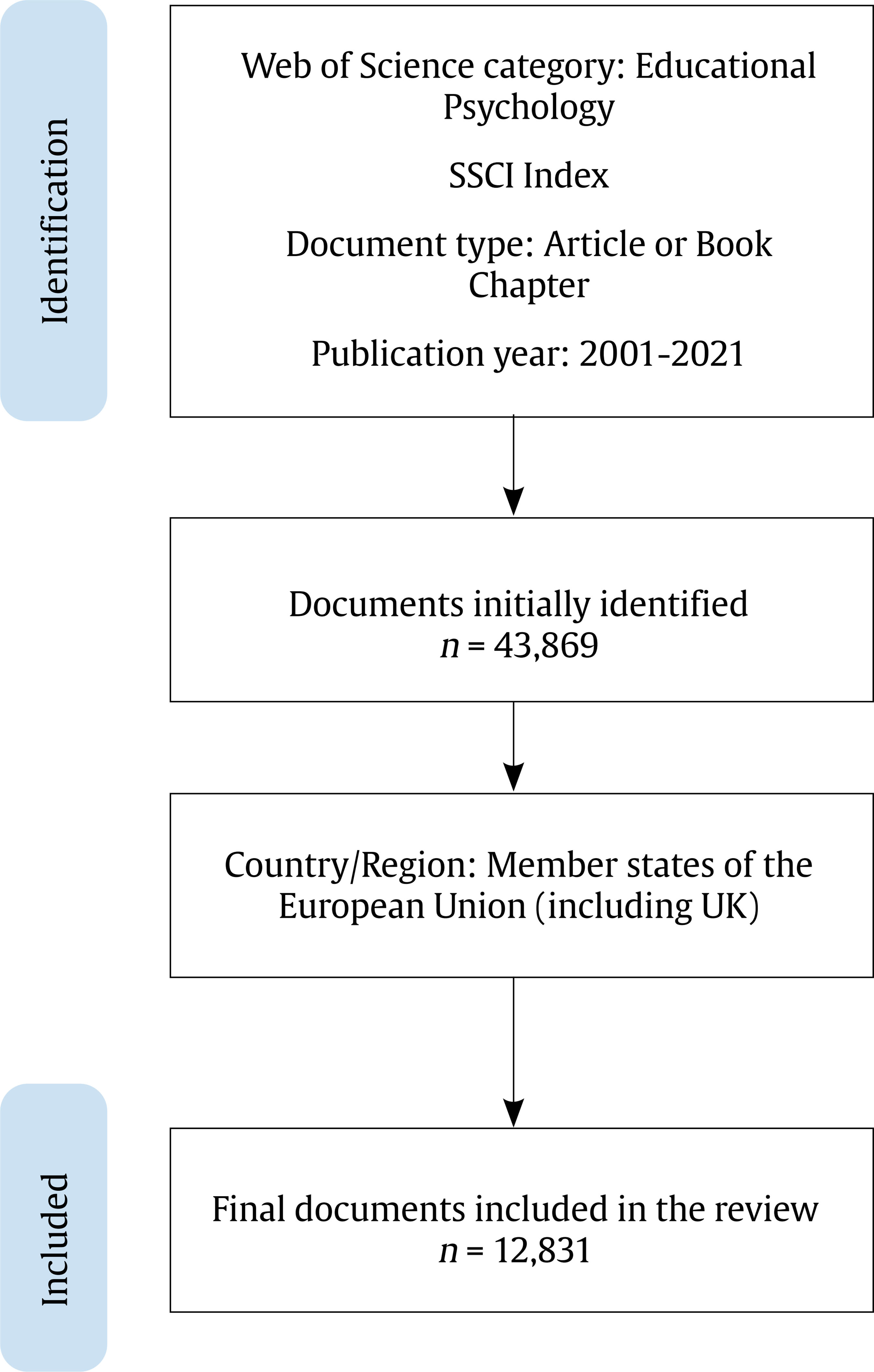 Table 1 Percentage of Documents per Continent 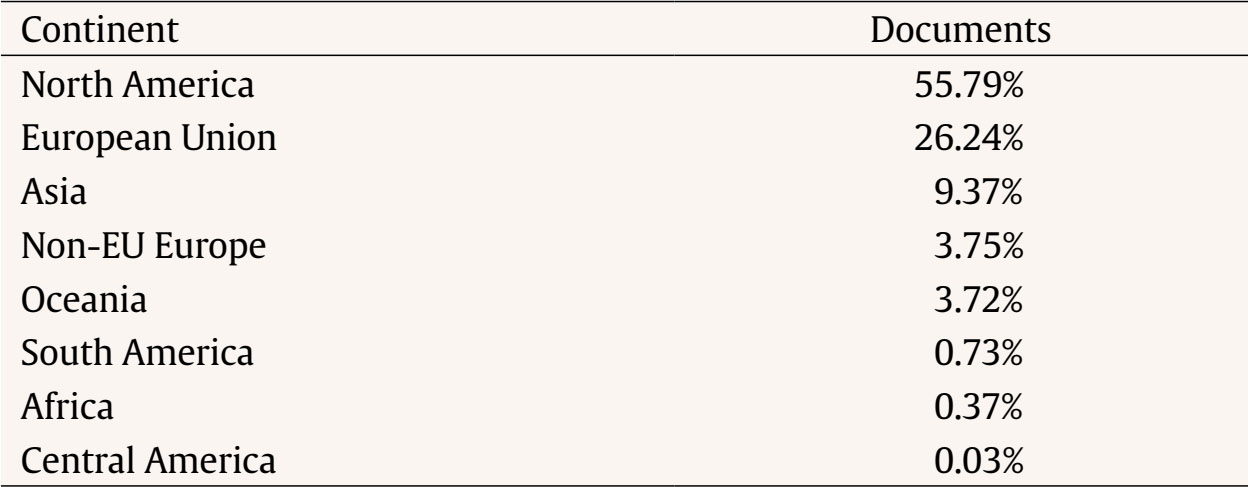 Table 2 Main Statistics about the 2001-2021 Educational Psychology SSCI Collection in the EU 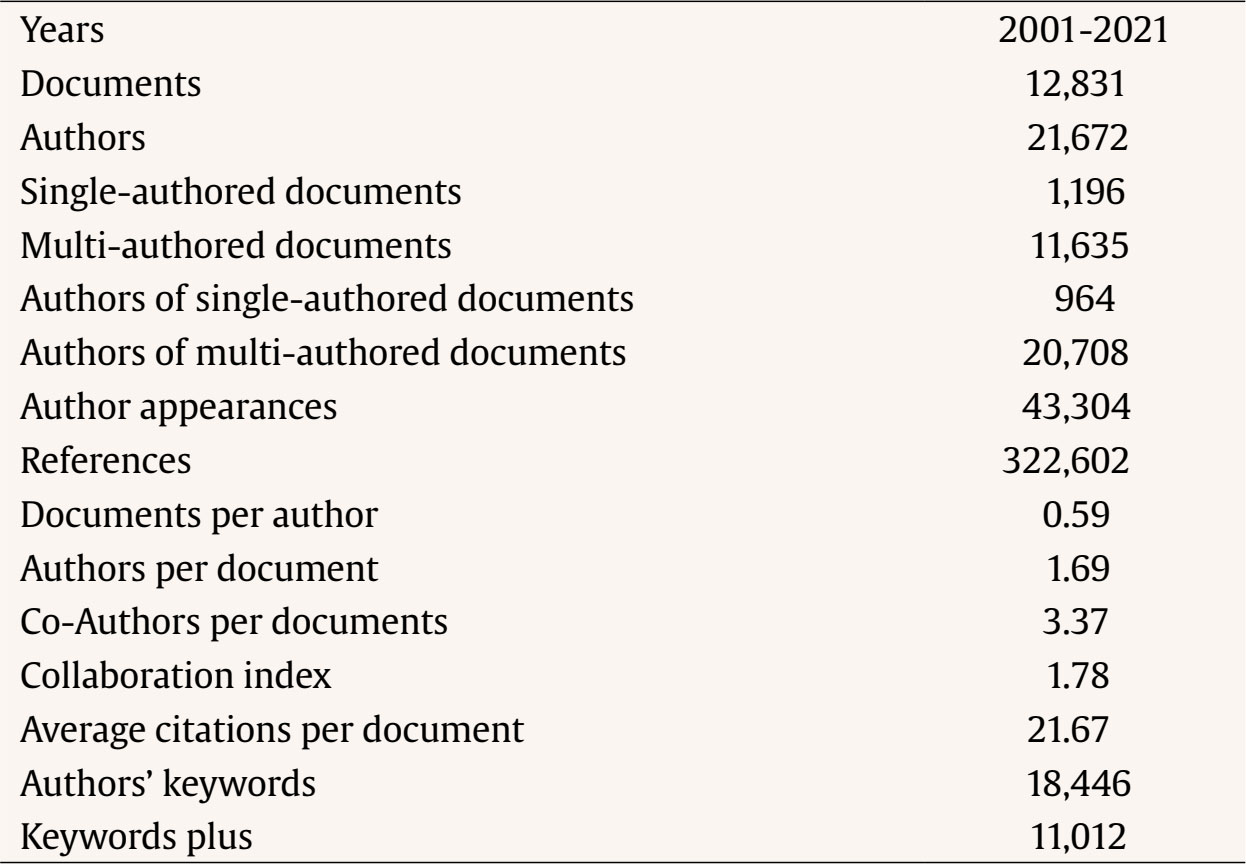 Data Preparation and Statistical Analysis To conform the final dataset, the bibliographic data was downloaded in several files of plain text, as WoS only allows to download meta-data from 500 documents each time. These documents contained detailed meta-data related to each document, such as the author’s names, affiliations, article title, source, references, keywords, abstracts, and additional citation data. Finally, we created a single excel file merging the information from all the documents in a combined dataset. The analyses were based on six main objectives. Firstly, to describe the general annual publication trends within the year’s range included in the study as a recount of the number of documents published in the field per year. Secondly, to describe the publication language of the documents included in the database. Thirdly, analyzing the countries’ productivity following two approaches. On the one hand, the total number of documents produced by each country based on the corresponding author affiliation, differentiating between single country and multiple country publications based on the purposes of the present study. On the other hand, the total and the average document citations for each country, based on the author’s affiliations. Fourthly, the institution’s productivity was analyzed for the number of documents published for each university. Fifthly, the journal’s productivity was also analyzed based on the number of documents published for each journal. Finally, several analyses were conducted based on dimensionality reduction techniques to offer a description of the research themes evolution within the years range included in the present review. These analyses included information for the annual occurrences of the main keywords included in the documents per year, the most relevant words utilized in the documents, the thematic evolution of the main concepts used in the documents within the studied years range, and the keyword co-occurrence mapping and the relations between the main concepts utilized in the documents. All the statistical analyses were performed with R Statistical Software (R Core Team, 2021) in the 4.0.4 version, using the Bibliometrix package (Aria & Cuccurullo, 2017). Publication Trends Figure 2 shows the annual scientific production in the field in terms of number of documents published per year, with an annual growth rate of 7.72%. An upward trend can be appreciated, starting from 238 documents published in the field in 2001, 451 documents published in 2007, 733 documents in 2014, and 978 in 2020. Figure 2 Annual Scientific Production on Educational Psychology Field. 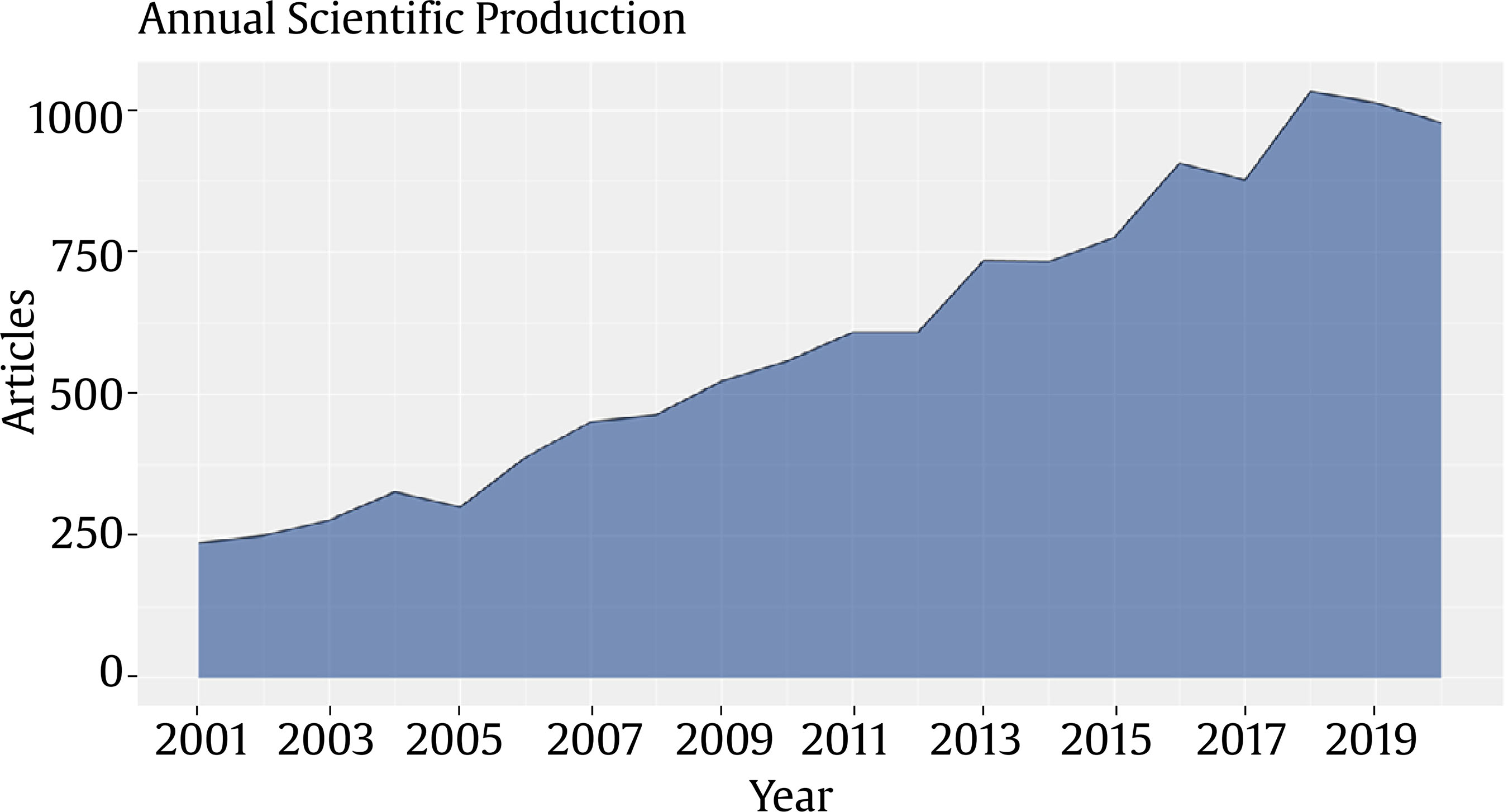 Publication Language From a total amount of 12,831 documents, English was the most popular language used, with 11,360 published documents (88.5%); 1,017 documents (7.9%) were published in German, 427 documents (3.3%) were published in Spanish, 5 documents (0.04%) were published in French, and 3 documents (0.02%) were published in Portuguese. The remaining 19 documents (0.15%) were published in non-EU languages, because of the multiple country publications considered in this review. Countries’ Productivity Table 3 and Figure 3 show the top 20 most productive countries based on the number of documents produced by each country and the number of citations per country based on the corresponding author affiliation. It is noteworthy that “country” is referred to the author’s affiliation country at the time of publication, and not to countries or regions where research studies were conducted. Based on the total number of documents published along 2001-2021 in Educational Psychology, Germany is the European country presenting more documents published (n = 2,863, 22%), followed by United Kingdom (n = 2,345, 18%), and Netherlands (n = 1,513, 12%). Spain is placed on the fourth position (n = 1,146, 9%), followed by Italy (n = 501.4%), Finland (n =494.4%), Belgium (n = 480.4%), France (n = 411, 3%), Sweden (n = 299.2%), and Portugal (n = 241.2%). According to the possibility of multiple country publications, The USA is also placed among the ten more productive countries (n = 543; 4%). Figure 3 Corresponding Author’s Country. 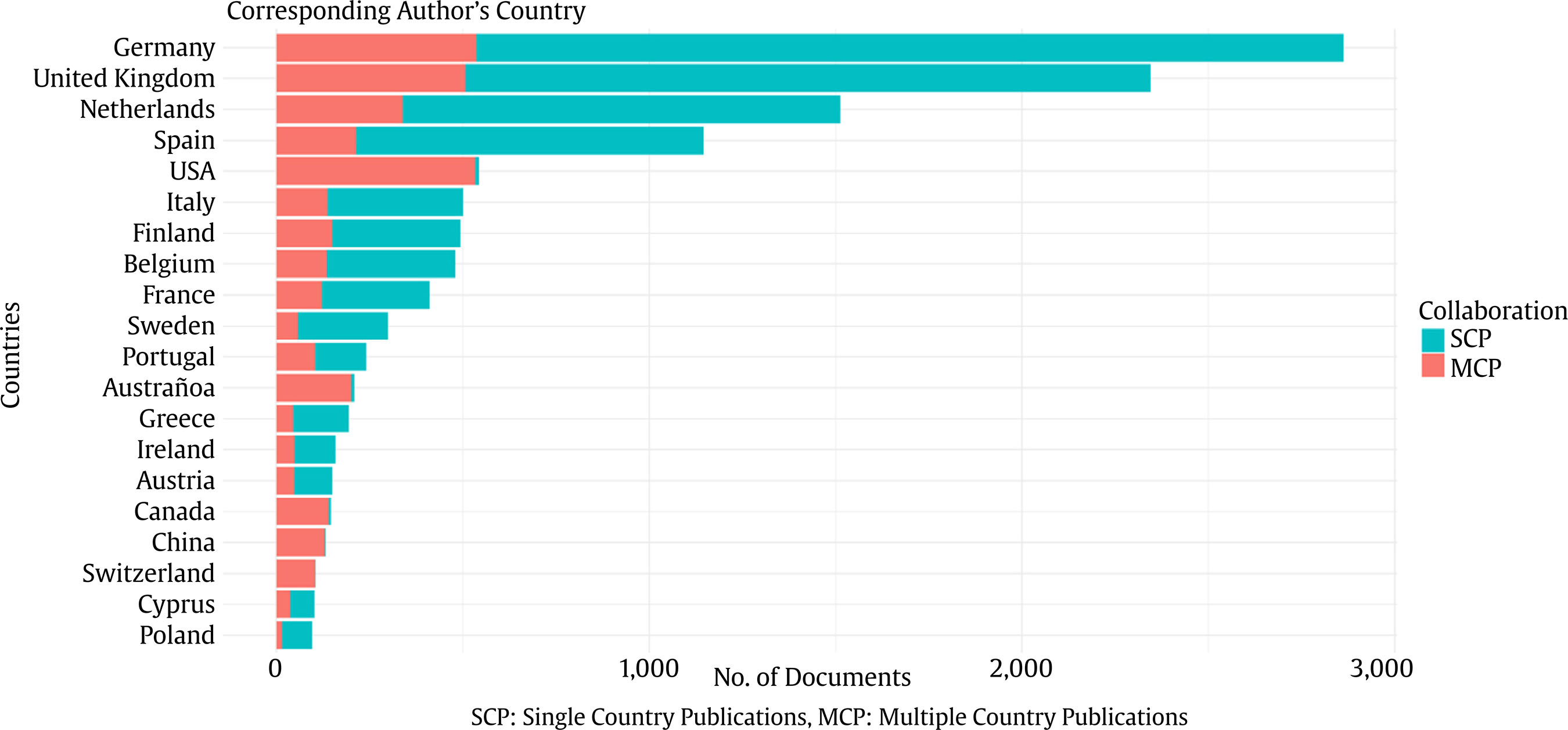 Table 3 Most Productive Countries in the European Union (2001-2021) 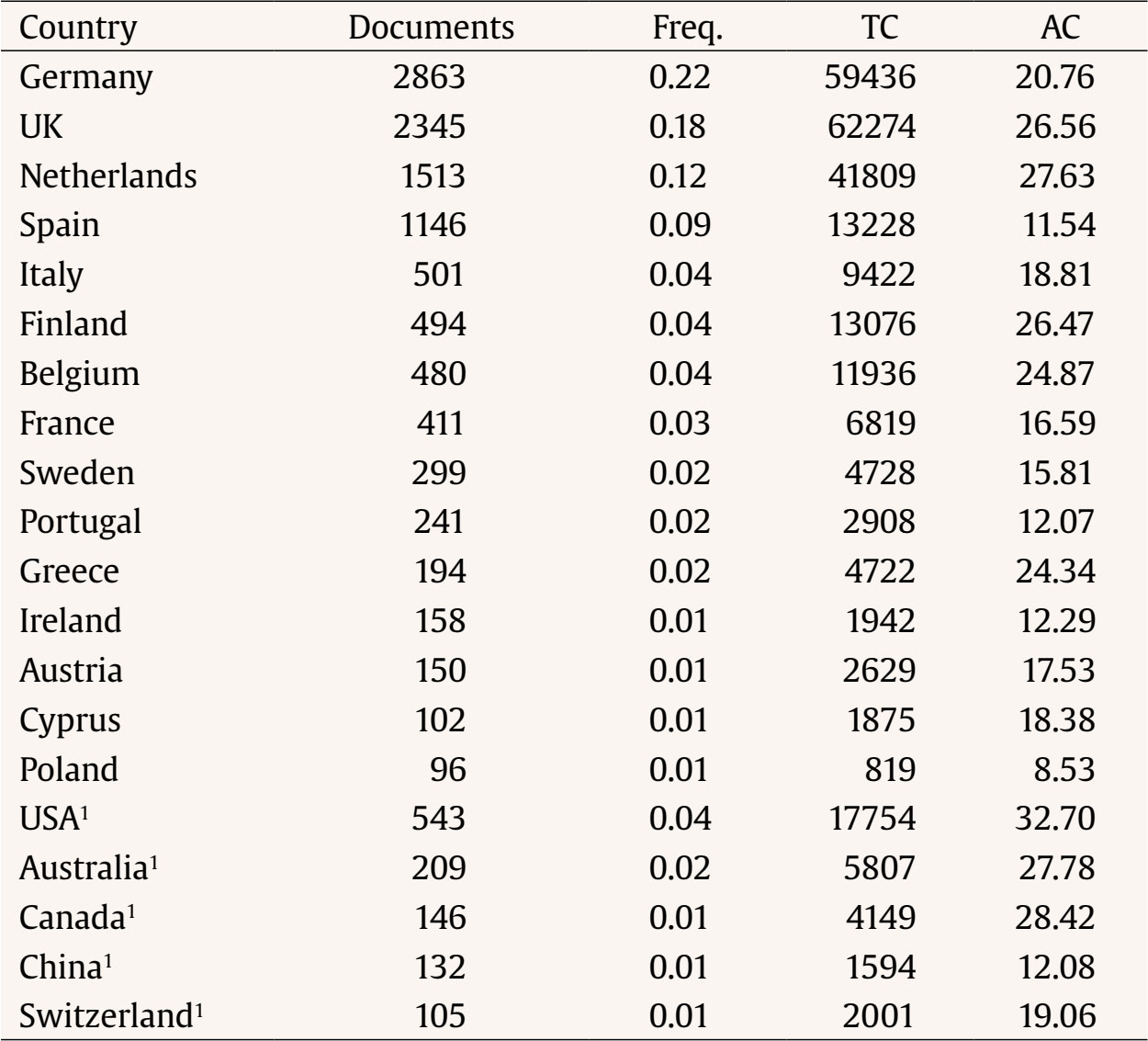 Note. TC = total citation; AC = average citation. 1Non-EU countries included in EU collaborations. Regarding to the total citations per country along 2001-2021 in Educational Psychology, UK is the European country presenting more citations (n = 62,274; AC = 26.56), followed by Germany (n = 59,436; AC = 20.76), Netherlands (n = 41,809; AC = 27.63), and Spain on the fourth position (n = 13,228; AC = 11.54), followed by Finland (n = 13,076; AC = 26.47), Belgium (n = 11,936; AC = 24.87), Italy (n = 9,422; AC = 18.81), France (n = 6,819; AC = 16.59), Sweden (n = 4,728; AC = 15.81), and Greece (n = 4,722; AC = 24.34). Again, according to the possibility of multiple country publications, USA (n = 17,754; AC = 32.70) and Australia (n = 5,807; AC = 27.78) are also placed along the ten more productive countries. Institutions’ Productivity Figure 4 shows the 30 most productive institutions of the European Union based on the number of documents published for each university in Educational Psychology in the last 20 years. As can be appreciated in the figure, University of Jyvaskyla (Finland) is the most productive institution in terms of number of documents published (n = 422), followed by University of Utrecht (Netherlands; n = 414), University of Amsterdam (Netherlands; n = 370), University of Radboud (Netherlands; n = 314), University of Groningen (Netherlands; n = 307), University of Leuven (Belgium; n = 282), University of Leiden (Netherlands; n = 267), University of Oxford (United Kingdom; n = 245), University of Tubingen (Germany; n = 210), and University of Padua in the tenth position (Italy; n = 210). Figure 4 Most Relevant Affiliations in Function of Number of Documents. 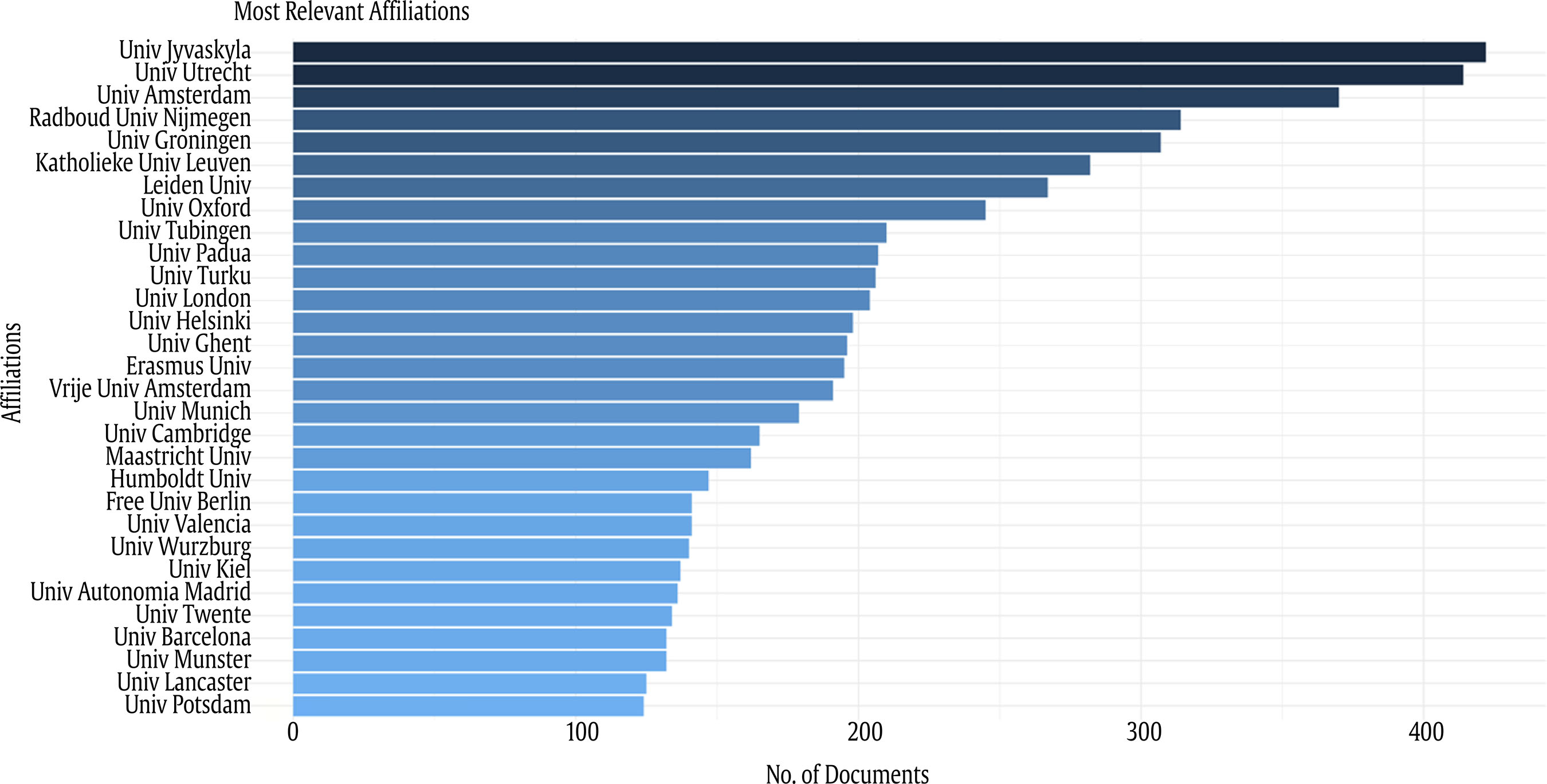 Journals Figure 5 shows the 50 most active journals publishing documents produced by authors in the European Union in the last 20 years. Based on the total number of documents published in the Educational Psychology field, Learning and Individual Differences can be considered the most productive journal (n = 940; Q2, IF2020 = 3.139), followed by Journal of Applied Research in Intellectual Disabilities (n = 826; Q2, IF2020 = 2.700), Child Development (n = 721; Q1, IF2020 = 5.899), Learning and Instruction (n = 703; Q1, IF2020 = 5.146), European Journal of Psychology of Education (n = 604; Q2, IF2020 = 2.663), British Journal of Educational Psychology (n = 566; Q1, IF2020 = 3.241), Psychologie in Erziehung und Unterricht (n = 408; Q4, IF2020 = 0.525), Journal of Educational Psychology (n = 385; Q1, IF2020 = 5.805), Early Child Development and Care (n = 373; Q4, IF2020 = 1.430), Psychology of Music (n = 370; Q3, IF2020 = 2.204), and Reading and Writing (n = 364; Q2, IF2020 = 2.870). As can be seen, journals are not ordered by their current IF, but only by their total number of documents published in the last 20 years in the Educational Psychology field. Figure 5 Most Relevant Sources Relation to Number of Documents. 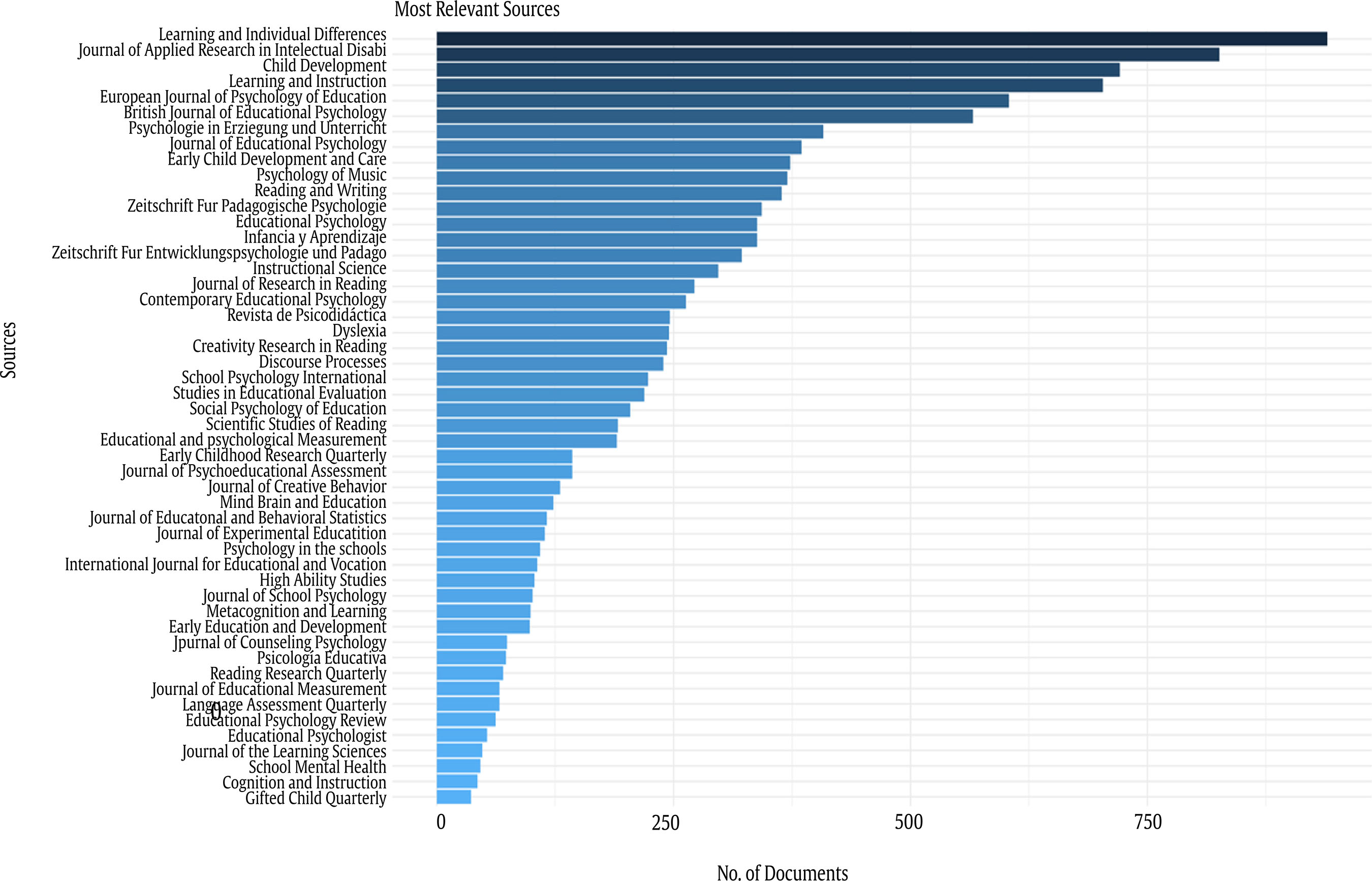 Research Themes Evolved from 2000 to 2021 Based on dimensionality reduction techniques, a description of the research themes evolving within the range included in the present review can be appreciated in Figures 6 and 7. Figure 6 shows the annual occurrences of the main keywords included in the documents per year until 2000. As can be seen in the figure, there are several keywords and concepts presenting a growing tendency from 2001 to 2020 as intellectual disability, motivation, reading comprehension, self-efficacy or bullying, other group of keywords stabilized in their use among the last years as reading, mathematics, higher education, children, adolescence or learning, and a last group of keywords and concepts which present a decreasing trend in their use, as academic achievement, gender, dyslexia, self-concept, self-regulation, working memory or intelligence. These trends can be complemented with the information of the most relevant words utilized in the documents in the last 20 years presented on Figure 7, which shows that motivation is the keyword with higher number of occurrences (n = 309), followed by intellectual disability (n = 266), academic achievement (n = 229), dyslexia (n = 225), reading (n = 213), reading comprehension (n = 207), intellectual disabilities (n = 190), self-regulated learning (n = 173), children (n = 171), and adolescence (n = 165). Complementarily, Figure 7 shows the keyword co-occurrence mapping and the relations between the main concepts utilized in the documents, pointing to two main groups of keyword co-occurrence: one group (blue) formed by school-themed words as students, school, performance, motivation, achievement, classroom, education, strategies or competence, and other group (red) formed by cognitive processes-themed words as comprehension, working memory, knowledge, language, individual differences, acquisition, skills, instruction and also children. Finally, Figure 7 shows the thematic evolution of the main concepts used in the documents within the years studied. In the figure, which offers the main trends of concept evolution by four-time segments (2001-2006, 2007-2012, 2013-2018, and 2019-2021), can be appreciated how some of the main topics studied currently have evolved among the last 20 years. Some noteworthy topic evolutions are reading comprehension, evolving from evaluation, motivation, and dyslexia topics; academic achievement, creativity, metacognition, or self-regulated learning evolving from motivation; item response theory evolving from learning and higher education topics; and intellectual disability/ies, which have maintained stable from the beginning to the present. Figure 6 Annual Word Growth of Topic’s Research in Europe from 2001 to 2021. 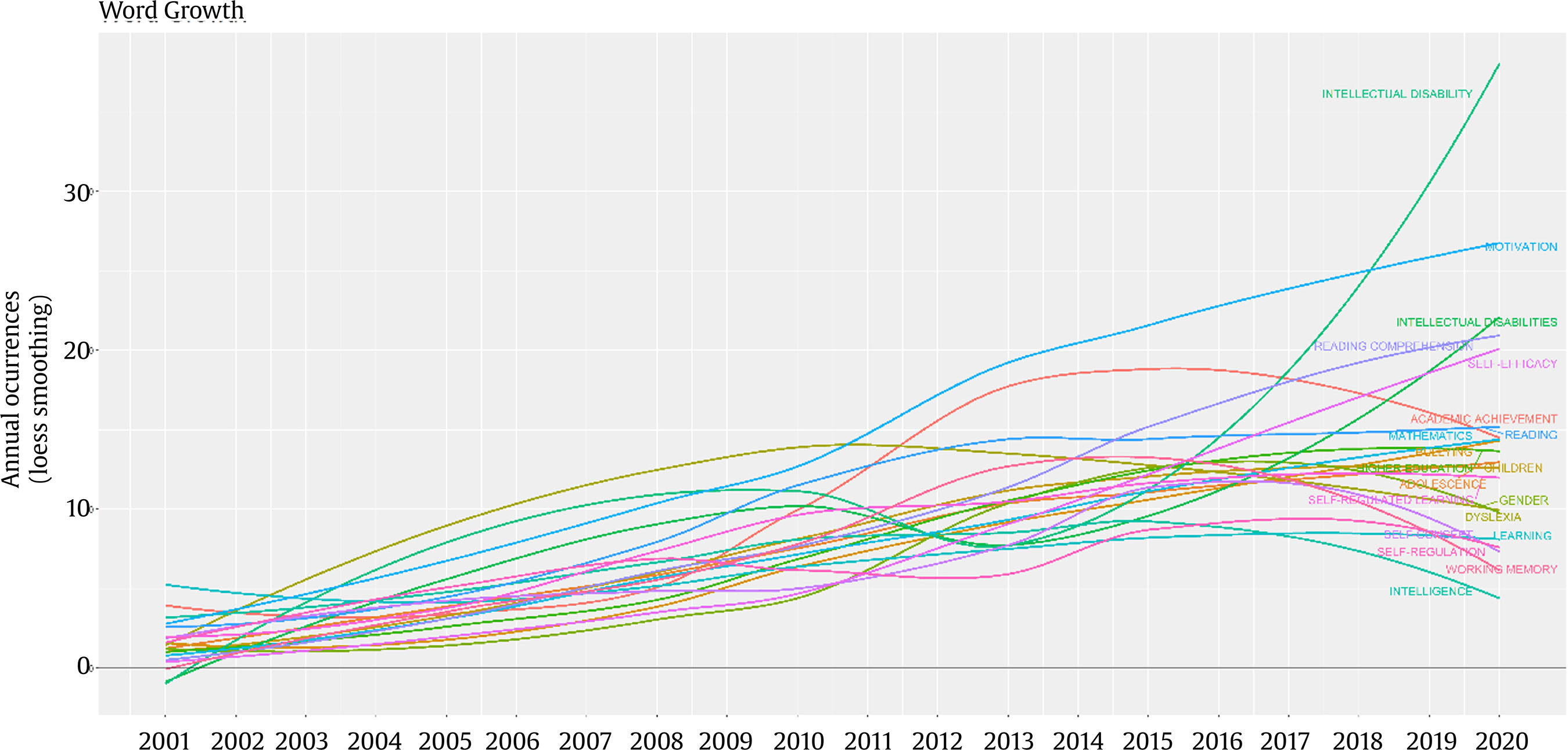 Figure 7 Annual Thematic Evolution. Time Intervals of Thematic Evolutions. Interaction among Topics on Research. 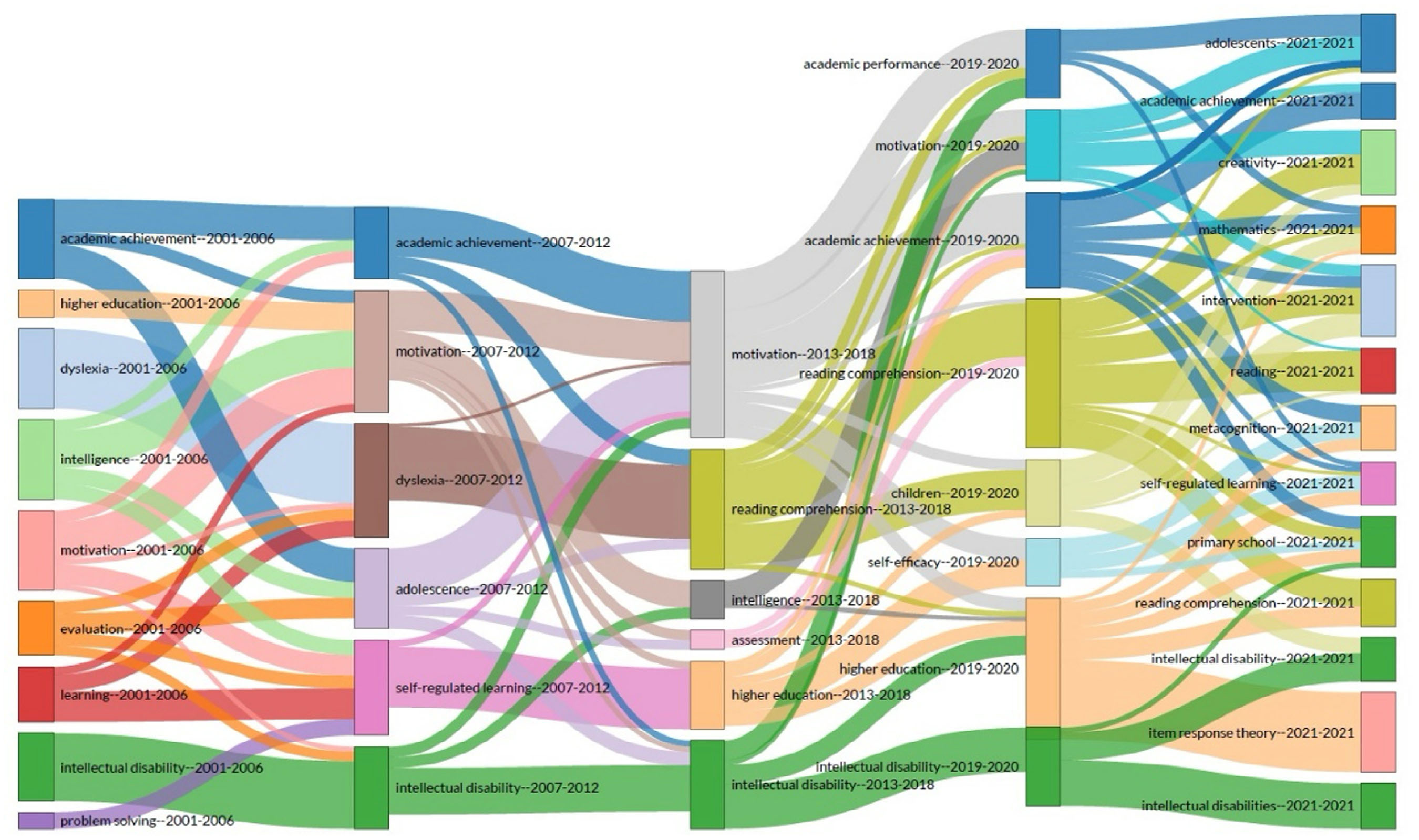 Main Topics Evolution in the Last Two Decades As can be seen in Figure 7, the main themes that settled in the early years of the 20th century have been intermingling and interacting in increasingly specific thematic blocks at the end of the second decade, separating these two decades into four-time intervals: 2000-2006, 2007-2012, 2013-2020, and 2021, to observe this evolution of the main thematic blocks and how it remains in the last year analyzed. We briefly described some of this evolution in this time. Intellectual Disability In these two decades, research on intellectual disability has been one of the fastest growing, being in the last period more diverse, addressing issues related to academic performance and higher education, motivation, experiences of direct support staff, mental health and social support quality of life, or service users’ experiences produced by COVID-19 pandemic and carers (i.e., Embregts et al., 2021), comparing parents of children with and without disabilities (Werner et al., 2022), linking data analysis of learning disability health checks and emergency hospital admissions (Cuccu et al., 2021) or checking how a school-based intervention can promote insights into future parenting in students with intellectual disabilities (i.e., Gandarillas et al., 2025; Randell et al., 2020). A recent line of research focussed on analysing the discriminatory bullying based on differences in special educational needs or disability threatening the healthy development of adolescents and adults, to find out whether self-esteem, empathy, and social skills are predictors of this discriminatory bullying (aggression and victimization) and suggesting how assertiveness is a positive predictor of aggression and a negative predictor of victimization (i.e., Rodriguez-Hidalgo et al., 2021). Motivation Motivation, as a psychological state that stimulates a person to act to achieve a desired goal, plays a central role in learning during last two decades. Motivation is also a topic of relevance in the school context because processes underlying the initiation and maintenance as well as the quality of people’s actions are crucial for learning and achievement. It is considered a crucial factor for successful learning, academic achievement, and persistence in school (Klauer & Leutner, 2007). Research on motivation in Educational Psychology during this time has traditionally relied on self-report (e.g., conscientiousness, persistence, grit, self-efficacy, self-regulation, or intrinsic versus extrinsic motivation), as well as on behavioral measures (e.g., dropout rates, observational checklists, test scores on learning performance, or comments of judges observing individual and social behavior). Topics around more recently focus on whether motivational resources play a role in predicting changes in students’ achievement and well-being above and beyond the role of intelligence during the transition to secondary school (i.e., Boncquet et al., 2020; E. M. Moreno et al., 2025). Other studies have analyzed whether teacher perceptions of students’ cognitive skills, their learning motivation, and their classroom behavior differ according to students’ socioeconomic status, immigrant background, and gender (Brandmiller et al., 2020), or whether teachers should learn about the motivation theory during their university studies to be able to motivate their students in their future job (Nieto-Carracedo et al., 2024; Schürmann et al., 2021). Recently, models have been developed that recognize the complexity of motivation. These set out the interactions that occur frequently between environmental (cultural, institutional, familial, educational), and internal factors (cognition and affect) enhancing or reducing motivation. There is a line of research focusing on gender differences in musical motivation at different levels of expertise, in musical motivation in relation to playing an instrument, and whether these changed as expertise developed in children (Hallam et al., 2020). People also spend a lot of time on creative activities in their leisure time and the literature suggests that several specific motives may be relevant for everyday creative behavior, including enjoyment, expression, challenge, coping, prosocial, social, material, recognition, and duty motives, where enjoyment was one the strongest motive for everyday creativity, consistent with previous research linking creativity to intrinsic motivation and positive affect (Benedeket al., 2020). Motivational, emotional, and creative competences are key also for life and are acquired in contact with socialization agents. There are rigorous instruments for teachers to assess their students’ emotional, motivational, and creative competences in an easy, reliable, and valid way, and which is further adapted to the school reality (see Hernández-Jorge et al., 2022). Reading Comprehension Although reading comprehension is at the beginning part of another more researched one such as dyslexia (see Partanen et al., 2021), it has settled and consolidated since the beginning of the 21st century as its own nucleus and on which it spreads and ramifies in the second decade with other related topics such as motivation, academic performance or academic achievement, creativity, educational intervention, metacognition, and intellectual disabilities. During these two decades, it has been deepened and extensively applied an Interactive model of reading, based on Kintsch’s Construction-Integration model (e.g., Kintsch, 1998; Kintsch, 2004). This model is a complex concept describing how the reader actively engages with the text, by involving perception and thought as a parallel interaction between the reader’s prior knowledge, vocabulary, grammatical knowledge, and experience with text and reading comprehension strategies (see Barreyro et al., 2025; Bernhardt, 2011). This concept is considered a combination of lower and higher-level processing of information, namely the bottom-up processes of decoding and the top-down process of more holistic text interpretation. However, students are not exclusively bottom-up or top-down readers; rather, they are always bottom-up “and” top-down readers depending on the situation and context (Bernhardt, 2011; León & van Dijk, 2023), involving cognitive and metacognitive knowledge about mental and behavioral activities that the reader can engage in before, during, or after reading. From this point of view a good reader is a “strategic reader” and that the least effective readers are those who fail to exhibit a range of task-appropriate strategic reading behaviors. Table 4 Main Statistics about the 2020-2022 Educational Psychology SSCI Collection in EU Post Brexit without including UK 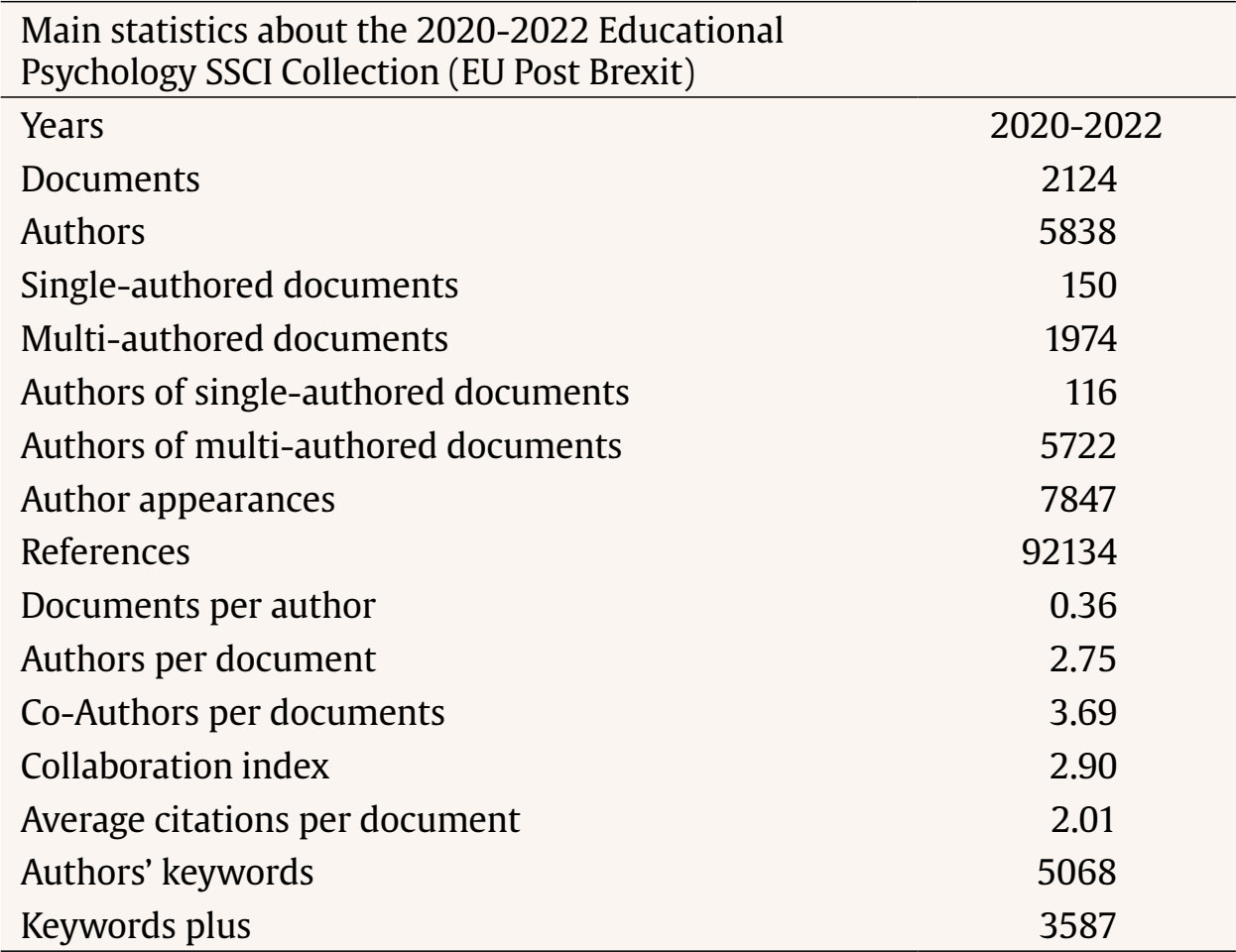 With the continuous presence of international tests such as PISA or PIRLS during these two decades, one of the contributions that PISA has introduced on understanding and knowledge is that the reader must have knowledge about the different types of text that makes him competent. Thus, the types of text have been classified as continuous (such as narrative description, exposition, argumentation, and instruction) and non-continuous texts classified by their structure (advertisements, advertisements, figures, web pages, graphics, or tables). In this way, it is assumed that this reading comprehension and reading competence may have a predictive capacity for the job competence that this student may have in the future. For this reason, when referring to the term “reading competence, it encompasses a broader concept than that of comprehension. It involves the entire process of understanding, all its types, its levels of representation, as well as all the strategies and activities where said process takes place. Table 5 Main Statistics about the 2020-2022 Educational Psychology SSCI Collection in EU Post Brexit including UK 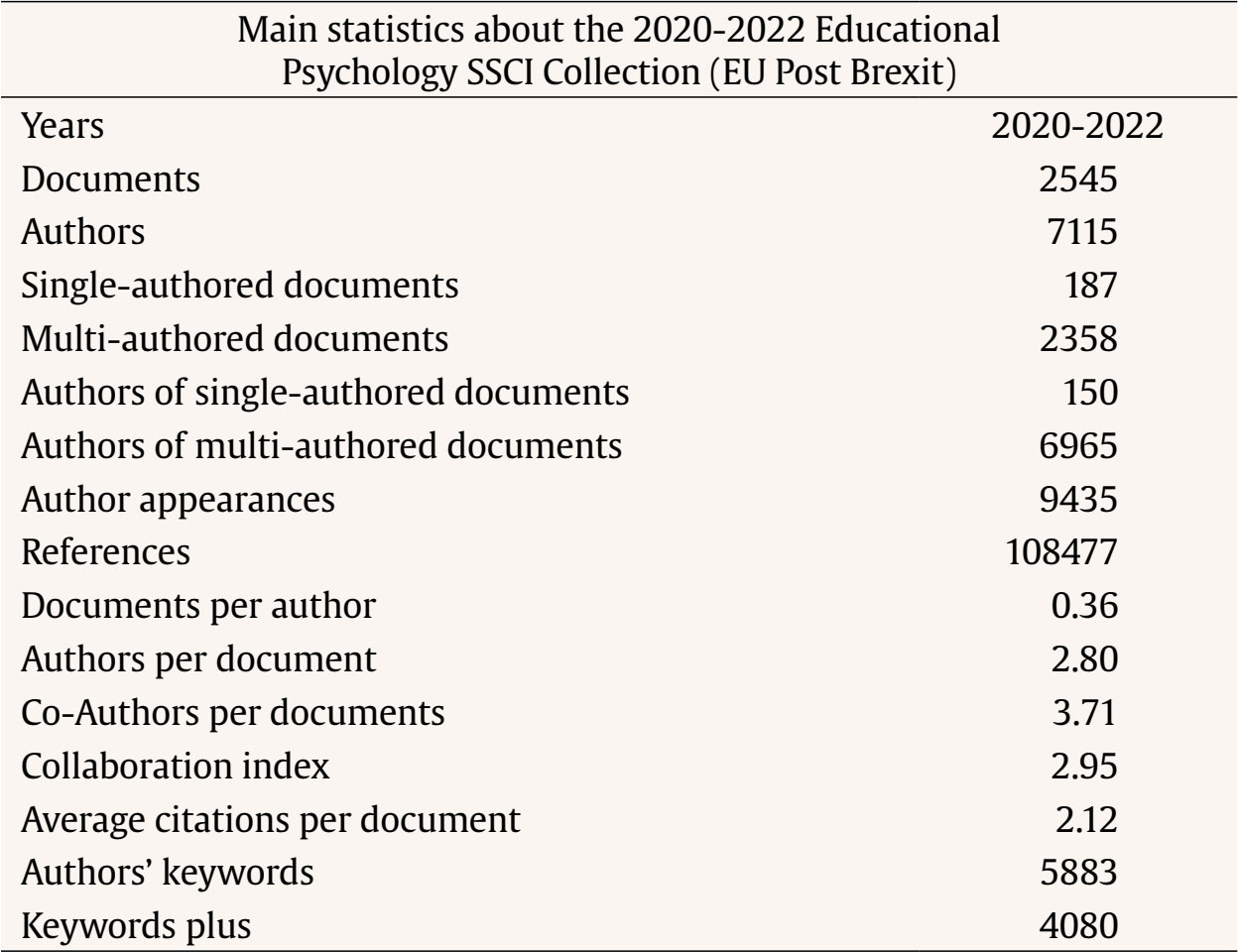 European Union Post Brexit Based on the same criteria exposed previously, two new datasets were extracted to explore potential differences in country productivity in the post Brexit European Union. The search for documents was focused again on the Web of Science Core Collection and the Social Science Citation Index (SSCI). The WoS category selected was Educational Psychology, and the main filters applied for the initial search were the type of documents, including articles and book chapters, and the publication year, including only the last years since Brexit, from 2020 to 2022 (March 18). Two different datasets were collected, one for the EU countries without including UK (2,124 documents; see Table 4 for the main statistics about the data collection), and another one for the EU countries including UK (2,545 documents; see Table 5 for the main statistics about the data collection). Table 6 shows the descriptive differences between both datasets in terms of documents produced by each country, classifying the top 20 most productive countries based on the number of documents produced by each country and the number of citations per country based on the corresponding author affiliation. As can be seen in Table 6, when not including UK in the dataset, Germany is again the European country presenting more documents published (n = 556, 26%), followed by Spain (n = 313, 15%), and Netherlands (n = 198, 9%). When including UK in the dataset, Germany is still the European country presenting more documents published (n = 556; 22%), followed by United Kingdom (n = 379, 15%), and Spain (n = 313, 15%). In terms of total number of documents published, the post-Brexit EU without including UK dataset contains 2,124 documents, while the post-Brexit EU including UK dataset contains 2,545 documents. This difference is not statistically significant when testing the mean difference (d = 19.45; t = 0.47; p > .05). Table 6 Most Productive Countries in European Union Post Brexit (2020-2022) 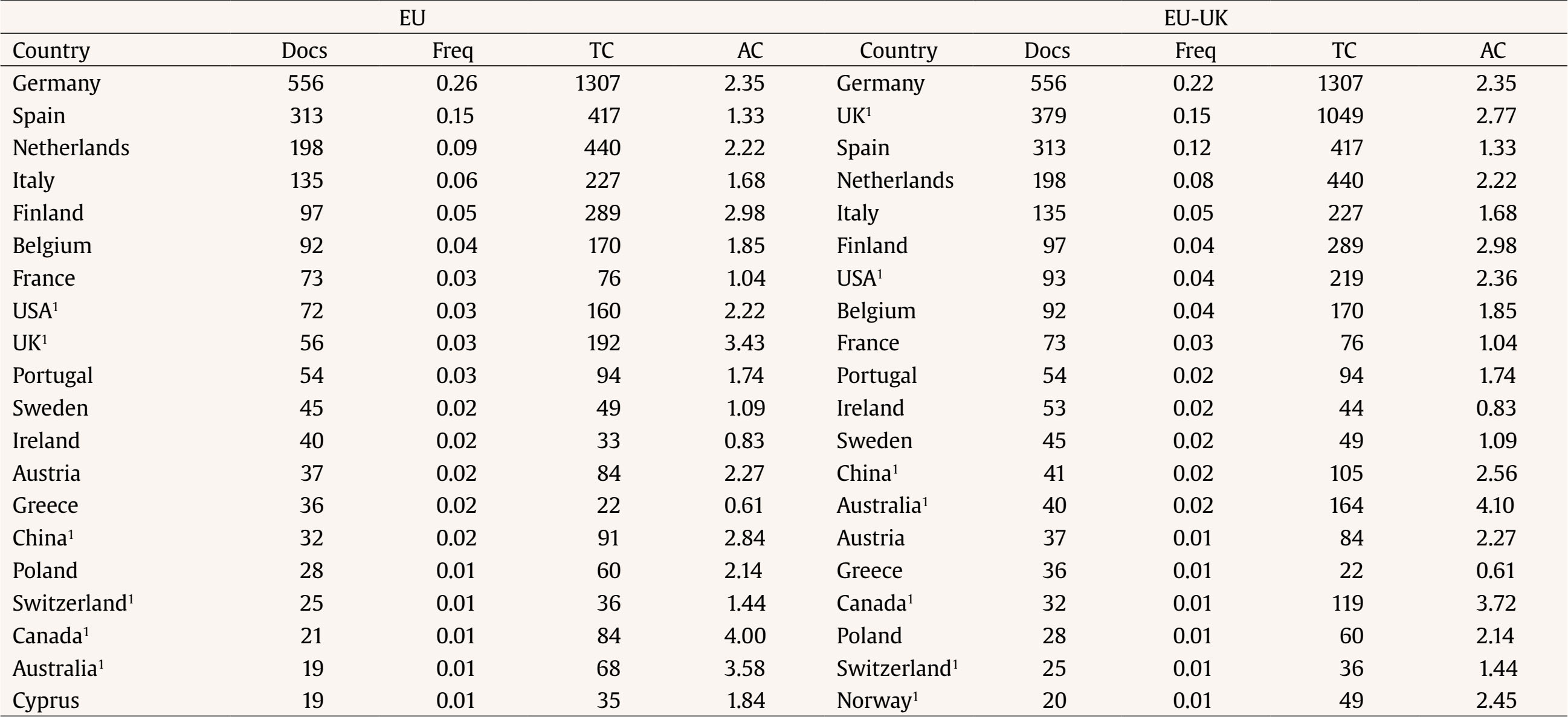 Note. TC = total citation; AC = average citation. 1Non-EU countries. This bibliometric study demonstrates the substantial contribution of the European Union to Educational Psychology scholarship during the first two decades of the twenty-first century, revealing robust and consistently expanding scientific productivity. With an annual growth rate of 7.72% and over 12,000 documents published between 2001 and 2021, the EU establishes itself as a pivotal region in advancing the discipline, accounting for 26.24% of global scholarly output in this field. Country-level productivity analysis identifies Germany, the United Kingdom, the Netherlands and Spain as leading contributors in terms of both publication volume and scientific impact. This scholarly dominance extends to the institutional level, with universities such as Jyvaskyla, Utrecht, and Amsterdam representing the most prolific research centers. The concentration of research activity within these institutions indicates well-established centers of excellence that have sustained their productivity throughout the two-decade period examined. Research themes demonstrate dynamic evolution responsive to contemporary educational challenges. Traditional areas including intellectual disability, motivation, and reading comprehension have maintained prominence while experiencing sustained growth. Simultaneously, emerging research lines have developed around metacognition, self-regulated learning, and digital technologies. This thematic diversification reflects disciplinary maturation and responsiveness to twenty-first century social and technological transformations. The influence of Educational Psychology on European and international educational policy is particularly evident through contributions to large-scale assessment programs including PISA, TIMSS, and PIRLS. These initiatives, established at the turn of the century, have fundamentally shaped educational practice by integrating cognitive, motivational, and metacognitive frameworks into learning assessment and evidence-based educational reform. The increasingly interdisciplinary and collaborative nature of Educational Psychology research represents a key finding. The collaboration index of 1.78, coupled with extensive international partnerships, demonstrates that the discipline has successfully transcended national boundaries, facilitating knowledge exchange and methodological advancement across diverse research traditions and geographical contexts. Analysis of post-Brexit trends reveals that preliminary data (2020-2022) show no statistically significant differences in aggregate productivity. The United Kingdom maintains its position as the second most productive nation despite EU withdrawal, suggesting that established collaborative networks have demonstrated resilience to political-administrative reconfigurations. Future Directions: Big Data and Artificial Intelligence in Educational Psychology European Educational Psychology is positioned at a critical juncture, facing transformative possibilities presented by artificial intelligence and big data analytics. The emergence of educational data mining and learning analytics have ushered in an unprecedented era characterized by the capacity to collect fine-grained behavioral data—potentially thousands of measures per learner per hour—and analyze datasets encompassing millions of students through sophisticated computational methodologies (Baker, 2020; Dede et al., 2016; Fischer et al., 2020). This technological advancement promises to transcend traditional limitations of self-report instrumentation by integrating multiple data streams: behavioral traces, physiological indices (fMRI, EEG, eye-tracking), and real-time activity logs during learning episodes. Next-generation educational technologies are increasingly designed to respond adaptively to learners’ motivational and affective states alongside cognitive competencies, enabling individualized instruction calibrated to learners’ characteristics and sociocultural contexts (D’Mello, 2013; Pekrun, 2006). Nevertheless, this trajectory presents critical challenges requiring systematic attention from the European Educational Psychology research community. Priority areas include: developing ethical frameworks governing educational data use and learner privacy protection; preparing teachers, educational leaders, and technologists with competencies to implement AI-enhanced pedagogies effectively; empirically validating that AI-based interventions yield genuine learning improvements rather than technologically mediated reproductions of conventional practices; and ensuring equitable access to digital learning environments to prevent exacerbating existing educational disparities. The COVID-19 pandemic functioned as a critical catalyst, dramatically accelerating digital technology integration in educational settings and fundamentally reconceptualizing the spatial and temporal dimensions of learning activities. This disruption has simultaneously illuminated technology’s transformative potential and exposed limitations in existing digital infrastructures and competencies. European researchers bear responsibility for conducting rigorous empirical investigations of these shifts to establish evidence-based frameworks for integrating synchronous and asynchronous, physical and virtual learning modalities. Several methodological advances warrant particular attention in future research. The integration of sophisticated quantitative methodologies—including hierarchical linear modeling, educational data mining, and machine learning algorithms—enables researchers to test hypotheses with unprecedented precision while inductively discovering novel patterns in large-scale datasets. Moreover, the field’s capacity to assess cognitive processing during learning has expanded substantially, incorporating eye-movement analysis, think-aloud protocols, physiological measures, and computational analyses of learner-generated data (Mayer, 2018). Future research must also address the complexity of individual differences beyond traditional learning styles frameworks, which have been demonstrated to lack empirical support (Pashler et al., 2008). Instead, scholarship should focus on validated dimensions of individual variability, particularly prior knowledge—recognized as the most educationally consequential individual difference (Mayer, 2011)—alongside motivational beliefs and metacognitive competencies. Developing efficient, valid assessment instruments for these constructs represents a crucial objective for advancing personalized instruction. The interdisciplinary character of Educational Psychology, evident from its inception, is positioned to strengthen further as neuroscience, computational science, and learning sciences contribute theoretical frameworks and methodological tools. This convergence demands researchers maintain theoretical and methodological pluralism while fostering integration across diverse validated approaches—cognitive, neurocognitive, sociocultural, and affective perspectives on teaching and learning (Jacobson et al., 2016). In summary, twenty-first century European Educational Psychology occupies a strategic position to advance scientifically grounded, technologically sophisticated, learner-centered education. Progress requires maintaining equilibrium among competing priorities: technological innovation and established psycho-pedagogical principles; fundamental research and practical application; and disciplinary specialization and interdisciplinary collaboration. Successfully navigating these tensions will enable the discipline to fulfill its mission of preparing competent, creative, adaptive learners for participation in rapidly evolving societies and professions that have yet to emerge. The evidence presented in this review suggests European Educational Psychology possesses the scholarly infrastructure, collaborative networks, and research momentum to meet these challenges and continue advancing both scientific understanding and educational practice. Conflict of Interest The authors of this article declare no conflict of interest. Cite this article as: León, J. A. & Moreno, J. D. (2026). Educational psychology in the European Union in the twenty-first century: An extensive bibliometric study. Psicología Educativa, 32, Article e260465. https://doi.org/10.5093/psed2026a22 References |
Cite this article as: León, J. A. & Moreno, J. D. (2026). Educational Psychology in the European Union in the Twenty-first Century: An Extensive Bibliometric Study. Psicología Educativa, 32, Article e260465. https://doi.org/10.5093/psed2026a22
Correspondence: josedavid.moreno@uam.es (J. D. Moreno).Copyright © 2026. Colegio Oficial de la Psicología de Madrid


 PDF
PDF e-PUB
e-PUB CrossRef
 JATS
JATS Imprimir
 Enviar
ALERTA POR E-MAIL
La Revista de Psicología Educativa está distribuida bajo una licencia de Creative Commons Reconocimiento-NoComercial-SinObra Derivada 4.0 Internacional.com