Emotional Symptoms, Condom Use, and Clinical Outcomes in Men Living with HIV: Associations with Antiretroviral Adherence and Time since Diagnosis
[Los síntomas emocionales, el uso de condón y los resultados clínicos en varones que tienen VIH: su asociación con la adherencia a los antirretrovirales y el tiempo transcurrido desde el diagnóstico]
Francisco J. Rosas-Santiago1, María A. J. Tello-Bello2, & Ricardo Sánchez-Medina3
1Instituto de Investigaciones Psicológicas, Universidad Veracruzana, México; 2Centro de Investigaciones sobre Enfermedades Infecciosas, Instituto Nacional de Salud Pública, México; 3Universidad Nacional Autónoma de México, México
https://doi.org/10.5093/clh2026a15
Received 5 December 2025, Accepted 16 April 2026
Abstract
The study reveals that emotional, behavioral, and clinical factors interact closely in men living with HIV, showing that depression and anxiety weaken treatment adherence and influence sexual practices and viral suppression.
Stress emerges as a key predictor of STIs and mental-health care, highlighting the need for early psychological screening.
Findings also show that self-care behaviors improve over time, challenging the “prevention fatigue” hypothesis and supporting stage-specific interventions.
Resumen
Antecedentes: El presente estudio tuvo como objetivo examinar la relación de los síntomas emocionales, las conductas sexuales y la adherencia al tratamiento antirretroviral con diversos indicadores clínicos en varones con VIH en México. Método: Se realizó un estudio transversal con 656 hombres que viven con VIH, reclutados en cinco clínicas especializadas. Se utilizaron instrumentos estandarizados (DASS-21, CEAT-VIH y un inventario validado de conducta sexual), analizándose los datos mediante modelos de regresión múltiple y logística. Resultados: Un nivel más elevado de depresión y ansiedad se vinculaba a una menor adherencia a la terapia antirretroviral, mientras que el uso de condón con parejas ocasionales se asociaba a una ligera mejora en la adherencia. El estrés predijo la prevalencia de infecciones de transmisión sexual (ITS) a lo largo de la vida y el uso de servicios de salud mental. El uso consecuente del condón y una adecuada adherencia al tratamiento se asociaron con el mantenimiento de una carga viral indetectable. El mayor tiempo transcurrido desde el diagnóstico se correlacionó con un mayor uso del condón y un menor nivel de depresión. Conclusiones: La salud mental desempeña un papel importante en la adherencia al tratamiento y en las conductas preventivas. La integración de la evaluación psicológica sistemática y de intervenciones en salud mental dentro de la atención del VIH es fundamental para potenciar los resultados del tratamiento y el bienestar a largo plazo.
Palabras clave
Adherencia a la terapia antirretroviral, Salud mental, Conducta sexual, VIH, Varones que tienen sexo con varones, Salud públicaKeywords
Antiretroviral therapy adherence, Mental health, Sexual behaviour, HIV, Men who have sex with men, Public healthCite this article as: Rosas-Santiago, F. J., Tello-Bello, M. A. J., & Sánchez-Medina, R. (2026). Emotional Symptoms, Condom Use, and Clinical Outcomes in Men Living with HIV: Associations with Antiretroviral Adherence and Time since Diagnosis. Clinical and Health, 37, Article e260729. https://doi.org/10.5093/clh2026a15
Correspondence: ricardo.sanchez@iztacala.unam.mx (R. Sánchez-Medina).Human immunodeficiency virus (HIV) infection represents a crucial challenge for public health at the global and national levels. In Mexico, more than 400,000 cumulative cases have been documented as of 2024, with prevalence concentrated among men who have sex with men (MSM), a group whose estimated prevalence exceeds 7.6 %, in contrast to the national average of 0.3% among adults (Ministry of Health, 2025). Magura et al. (2025) point out that, despite advances in coverage and free antiretroviral treatment (ART), gaps persist in therapeutic adherence, an essential condition for achieving and maintaining viral suppression. Lack of adherence has a direct impact on clinical progression to acquired immunodeficiency syndrome (AIDS), an increase in opportunistic co-infections and a reduction in quality of life (Belaunzarán-Zamudio et al., 2023). From an epidemiological and economic perspective, HIV imposes a significant burden (Schnitzler et al., 2021). Associated costs include direct medical expenses for hospitalizations, treatment of sexually transmitted infections (STIs), psychiatric comorbidities, and chronic pharmacotherapy, as well as indirect costs linked to lost labor productivity and impaired subjective well-being (Mutebi, 2024). Specifically in Mexico, it has been documented that nearly 60% of people with HIV have suboptimal adherence to ART, which translates into frequent treatment interruptions and increased care costs, estimated at more than $8,400 per person (Heyerdahl-Viau et al., 2025), making research into its determinants a strategic priority. The determinants of ART adherence are multifactorial (Tello-Bello et al., 2025), among people living with HIV (PLHIV), the prevalence of depressive symptoms reaching about 34% and that of major depression about 13%, figures that are consistently associated with lower adherence to antiretroviral treatment. Evidence shows that depression reduces the likelihood of adhering to medication by up to half, highlighting mental health as a key determinant in HIV clinical outcomes (Necho et al., 2022). At the same time, sexual behaviours have a dual implication: inconsistent condom use increases the risk of STIs, while the type of sexual relationship (stable partner, casual partner, or sex worker) is related to the structuring of care practices and adherence (Sánchez-Medina et al., 2023). In this regard, empirical evidence suggests that condom use is not a uniform practice but is contingent upon the relational context. Specifically, research among men who have sex with men (MSM) indicates that inconsistent condom use is significantly more prevalent with regular partners (37%) compared to casual partners (18%), highlighting that emotional closeness often reduces the perceived necessity of barrier methods (Hill et al., 2018). Furthermore, the likelihood of inconsistent use is notably higher in stable or recurring dynamics, whereas individuals engaging in one-night stands are more likely to maintain consistent condom use (Zhang et al., 2024). This systematic variation underscores the importance of distinguishing between partnership types, as psychological drivers, such as trust and familiarity, markedly influence sexual risk-taking. Relatedly, sexual positioning such as insertive or receptive roles further modulates prevention. Evidence indicates that men who exclusively adopt insertive roles often report more inconsistent condom use compared to those in receptive or versatile roles (Chu & Huang, 2020). This disparity is frequently linked to a lower perceived risk of HIV infection during insertive intercourse (de Araújo et al., 2024). Furthermore, the negotiation of barrier methods is influenced by these specific roles and the partner dynamic, directly impacting exposure to various sexually transmitted infections (Lee et al., 2021). The inclusion of clinical variables such as the presence of STIs, AIDS diagnosis, undetectable viral load, psychological and psychiatric treatment is essential to understanding the complexity of the phenomenon. In this regard, T.-Y. Wu et al. (2024) point out that STIs remain a prevalent comorbidity in MSM with HIV, and Zhang et al. (2021) found that their concurrence can accelerate the clinical progression of the virus. A history of AIDS reflects an advanced stage of the disease and is therefore a critical indicator of the cumulative impact of non-adherence (Chaves et al., 2025). Achieving and maintaining an undetectable viral load not only prolongs life expectancy and improves quality of life, but also virtually eliminates the risk of sexual transmission, in line with the international “Undetectable = Untransmittable (U = U)” strategy (Centres for Disease Control and Prevention [CDC, 2023]). Similarly, Arashiro et al. (2023) highlight that psychiatric care in this population is becoming increasingly relevant, given the high prevalence of affective and anxiety disorders, which directly affect adherence to ART and continuity of clinical follow-up. Also, it is well established that people living with HIV benefit from psychotherapeutic interventions that address the psychological difficulties associated with adapting to the diagnosis (Yu et al., 2022). Furthermore, the time elapsed since diagnosis and since the start of ART has been identified as a modulator of these dynamics (Ahmed et al., 2021). Evidence shows that adherence to ART tends to decline over time (Jiao et al., 2022), and psychological distress, social stigma, and structural inequalities persist as barriers that continuously affect the overall health of this population (Burke et al., 2025). There is a need to generate evidence that simultaneously analyses emotional, behavioral, and clinical factors in MSM living with HIV in Mexico in order to guide comprehensive intervention policies and programmes. In this context, the general purpose of this study was to analyse the relationship between emotional symptoms (anxiety, depression, and stress), sexual behaviors (condom use), and adherence to antiretroviral treatment, as well as their influence on clinical and healthcare indicators, taking into account the time elapsed since diagnosis and since the start of ART. Specifically, three questions were addressed:
Participants A total of 656 men living with HIV participated in this study. They were recruited from five specialised clinics belonging to two institutions that provide care for people living with HIV, located in three cities in Mexico (see Table 1). The sample consisted predominantly of adult men, with a small proportion of participants identifying with gender identities other than male. In terms of sexual orientation, most participants identified as homosexual, followed by smaller groups identifying as heterosexual or bisexual. Most of the sample reported being single, while a smaller proportion were married or in a civil partnership. With respect to occupational status, the majority of participants were engaged in non-professional activities, although professional employment, student status, homemaking, and unemployment were also represented. Educational attainment varied across the sample, ranging from basic education to postgraduate studies, with most participants reporting upper secondary or higher education. Regarding clinical characteristics, participants had been living with HIV for several years on average and had been receiving antiretroviral therapy for a substantial period. A considerable proportion reported a lifetime history of sexually transmitted infections, and a smaller group had received an AIDS diagnosis. Most participants reported having maintained an undetectable viral load in recent months. In relation to mental health care, a minority of participants reported current or past psychiatric treatment, and a slightly larger proportion indicated receiving psychotherapeutic care at the time of the study. Variables and Instruments Inventory of Sexual Behaviours in Men who Have Sex with Men The questionnaire includes one ordinal item assessing the number of sexual partners and two Likert-type scales measuring frequency of sexual practices and condom use across partner types (Valdez-Montero et al., 2018). The sexual practices scale comprises eight items assessing the frequency of vaginal intercourse, oral sex (insertive and receptive), and anal intercourse (insertive and receptive) with men and women. Responses are recorded on a five-point scale ranging from 1 = never to 5 = always. The condom-use scale evaluates the frequency of condom use (and unprotected sex) across five sexual practices and three partner categories: stable partners, casual partners, and sex workers. For each practice, respondents first indicate whether they have engaged in the behaviour; if applicable, they rate condom use on a five-point Likert scale from always to never. Items are coded so that higher scores reflect greater levels of unprotected sex and sexual risk. The inventory showed adequate structural validity and good internal consistency (α < .80), providing a multidimensional assessment of sexual behaviour and condom use in MSM populations. Table 1 Sociodemographic and Clinical Characteristics of the Participants (N = 656) 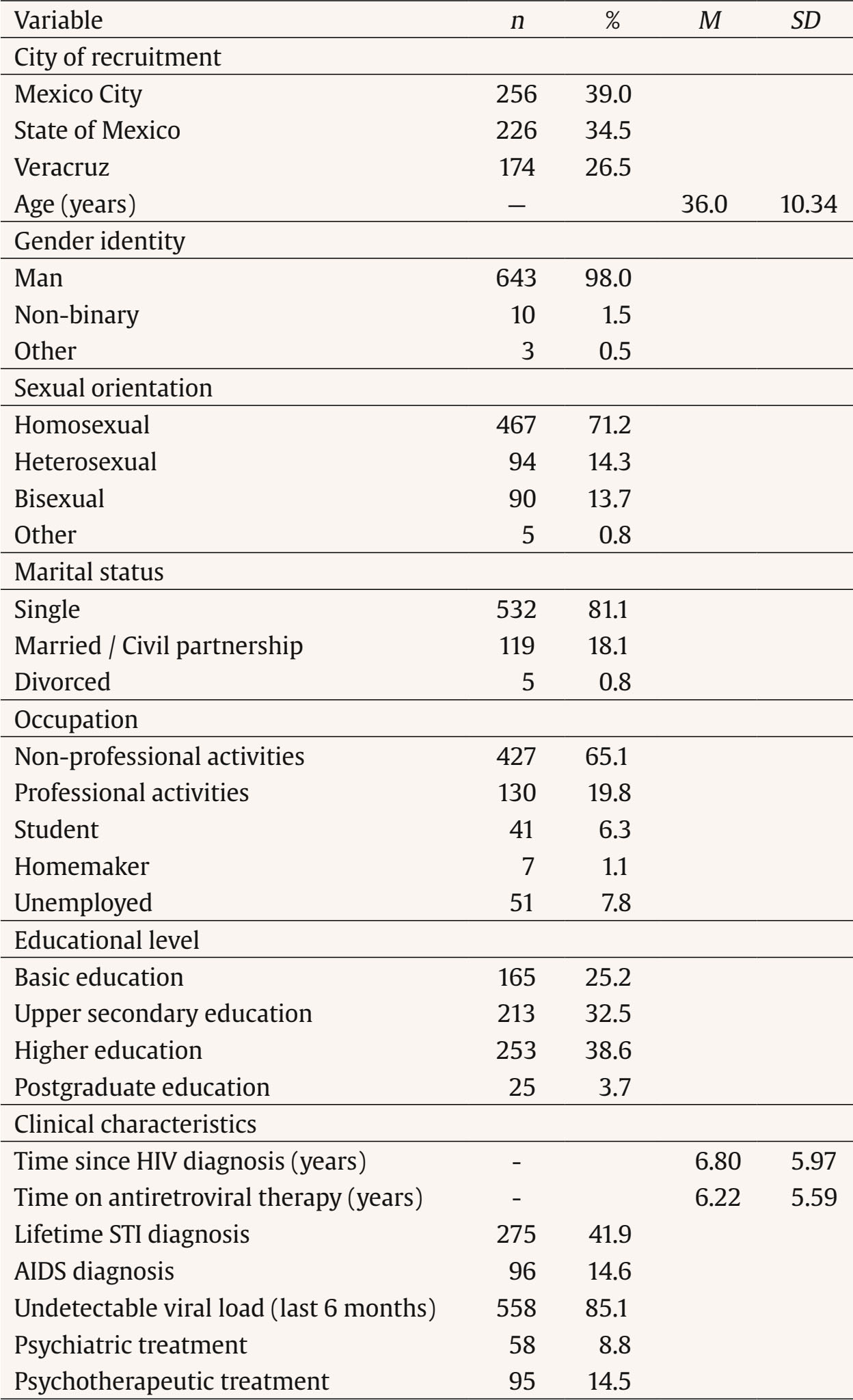 Note. Values are presented as frequencies (n), percentages (%), or means (M) with standard deviations (SD); STI = sexually transmitted infection; AIDS = acquired immunodeficiency syndrome. Antiretroviral Treatment Adherence Assessment Questionnaire (CEAT-VIH) The version validated by Tafur-Valderrama et al. (2008) was used, which uses 20 Likert-type items to assess treatment compliance, history of non-adherence, interaction with the doctor, patient beliefs, and strategies to improve adherence. Overall, the authors found an acceptable level of reliability (α = .70), similar to the original version validated in Spain (α = .73). Depression, Anxiety, and Stress Scale (DASS-21) The version validated in the Latin American population by Daza et al. (2002) was used, which comprises three dimensions: depression (7 items), anxiety (7 items), and stress (7 items). The authors reported acceptable reliability for each of the factors (α < .83). The items are in Likert format. Procedure Five specialised clinics belonging to two institutions that provide care for people living with HIV were visited: CEC Condesa and CEC Iztapalapa in Mexico City, CAPASITS Neza in the State of Mexico, and CAPASITS Xalapa and CAPASITS Veracruz in Veracruz. At each of the institutions, users were invited to participate in the research. Those who signed the informed consent form were given a booklet with the instruments. This consent form included information on the anonymity and confidentiality of the information, explicitly stating that participation or non-participation in the research was independent of the care they received at the clinic. On average, it took them half an hour to respond. Approval of the project by the Research Ethics Committee of the Institute of Health Sciences of the Veracruzana University, which is registered with the National Bioethics Commission (registration number: D/169/2022). Analysis of Results For the first research question, a multiple linear regression analysis was performed using a stepwise method to identify predictors of treatment adherence (dependent variable). In each analysis, the assumptions of normality, independence, and homoscedasticity of the residuals were verified; multicolinearity was also evaluated using tolerance indices and the variance inflation factor (VIF). For the second research question, binary logistic regression analyses were performed; five models were estimated, each with a different dependent variable: (a) lifetime presence of a sexually transmitted infection (STI), (b) previous diagnosis of AIDS, (c) remaining undetectable in the last six months, (d) psychiatric diagnosis, and (e) currently receiving psychotherapeutic treatment. The estimation method used was stepwise forward logistic regression (likelihood ratio), with a significance level set at p < .05. Beta coefficients (β), standard errors, Wald values, significance (p) and odds ratios (OR) were calculated with their 95% confidence intervals. Finally, for the third research question, a multiple linear regression analysis was performed using a stepwise method to identify predictors of the time elapsed since the start of antiretroviral treatment and the time of HIV diagnosis (dependent variables). In each analysis, the indicators already mentioned in the first objective were taken into account. Table 2 presents the results of the regression analysis for the first research question. The table shows that the model included anxiety, depression, and condom use in sexual practices with casual partners as predictor variables; all three variables contribute significantly to the prediction of treatment adherence, stress was not included in the model. These results indicate that increased levels of anxiety and depression are associated with decreased adherence, and that more frequent condom use with casual partners is associated with a slight increase in adherence. In terms of collinearity statistics, anxiety and depression had VIF values of 2.921 and 2.922, respectively, indicating moderate collinearity between the two variables, although not reaching problematic levels. Table 2 Results of the Multiple Linear Regression Model for Treatment Adherence  Note. R = .30, R² = .095, adjusted R² = .091, F = 22.81. p < .001. For the second research question, binary logistic regression analyses were performed to identify predictors of various clinical and healthcare indicators (see Table 3). In the first model, lifetime STI prevalence was associated with lower condom use with a stable partner (OR = 0.97, p = .043) and lower condom use with sex workers (OR = 0.97, p = .036), as well as higher stress levels (OR = 1.08, p < .001). In other words, lower condom use with stable partners and sex workers is associated with more STIs; conversely, higher stress levels are associated with a higher probability of having had an STI. Table 3 Results of Binary Logistic Regressions on Clinical and Healthcare Indicators 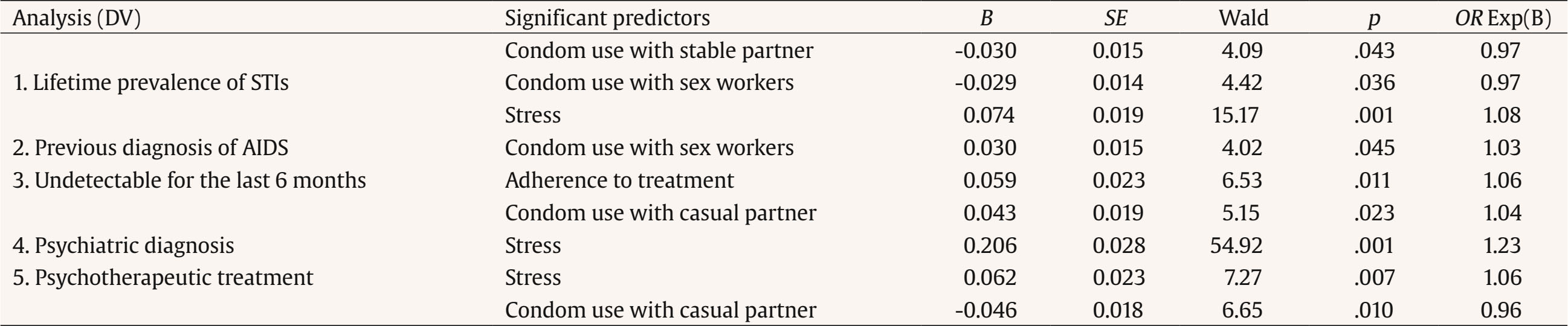 Note. DV = dependent variable; OR = odds ratio; SE = standard error. In the second model, having been diagnosed with AIDS was significantly associated with condom use with sex workers (OR = 1.03, p = .045), i.e., those who report more protected sex with sex workers are more likely to have been diagnosed with AIDS. In the third model, remaining undetectable in the last six months was related to greater adherence to treatment (OR = 1.06, p = .011) and safer sex practices with casual partners (OR = 1.04, p = .023), i.e., those who engage in safer sex with casual partners and adhere to their treatment are more likely to remain undetectable. The fourth model showed that psychiatric treatment was strongly associated with stress levels (OR = 1.23, p < .001), i.e., men with higher stress levels are much more likely to have received a mental health diagnosis. Finally, in the fifth model, receiving psychotherapeutic treatment was related to stress (OR = 1.06, p = .007) and less condom use with casual partners (OR = 0.96, p = .010); in this sense, the higher the level of stress, the more likely people are to receive psychotherapy; in addition, those who report less condom use with casual partners also tend to be in psychological treatment. Finally, for the third research question, two regression models were presented (see Table 4). In the first model, which considered the time elapsed since the start of antiretroviral treatment as a dependent variable, it can be observed that both condom use with a stable partner and depressive symptoms were significant predictors, i.e., greater involvement in condom use with a stable partner was associated with a increase in the time since the start of antiretroviral treatment, while lower levels of depression were related to a longer time since the start of treatment. In the second model, with regard to the time elapsed since HIV diagnosis as a dependent variable, three predictors were identified: condom use with a stable partner and with sex workers, as well as depression. The results indicated that more frequent condom use with stable partners and sex workers was positively associated with a longer time since diagnosis, while lower levels of depression were associated with a shorter time since diagnosis. In both models, the collinearity statistics (tolerance close to 1.0 and VIF between 1.00 and 1.05) indicate that there is no evidence of problematic collinearity between the predictors. Table 4 Multiple Regression Models for Time Elapsed since Initiation of Antiretroviral Treatment and since HIV Diagnosis 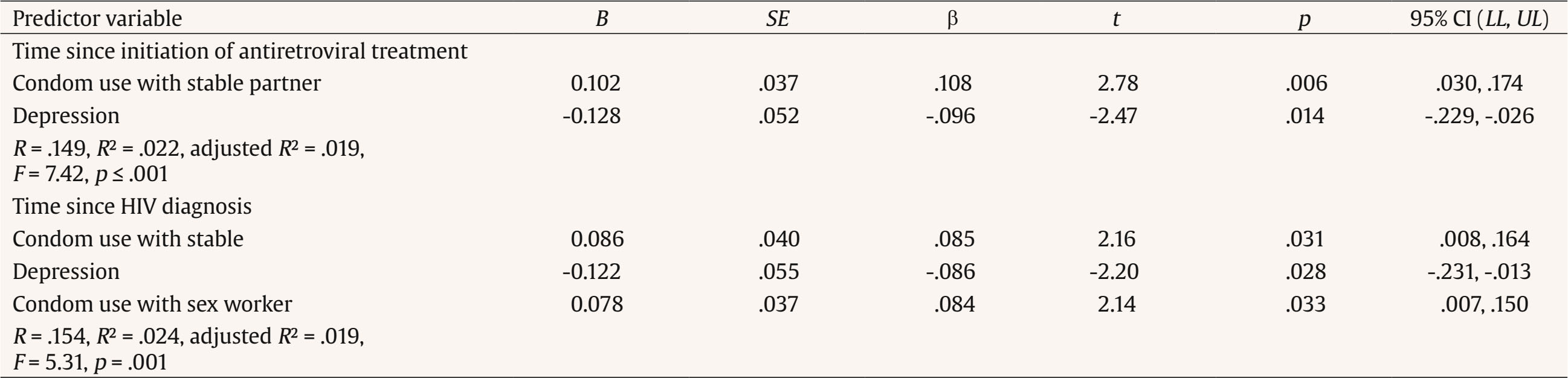 The discussion of the findings is organized according to the research questions that guided the study, with the aim of examining the results in light of recent scientific evidence and the conceptual frameworks that support them. This approach allows for an integrated analysis of the clinical, temporal and psychological aspects involved, considering their interaction in the processes that characterize the experience of living with HIV. Emotional Symptoms, Condom Use, and Adherence to Antiretroviral Treatment The results of this study show that anxiety and depression are negatively associated with adherence to antiretroviral therapy (ART), while condom use with casual partners predicts a slight increase in adherence. These findings are consistent with the international literature, which has consistently documented that depressive and anxiety symptoms affect therapeutic compliance and reduce the likelihood of achieving viral suppression (Haas et al., 2023). These effects can be explained by the fact that negative affectivity interferes with essential cognitive functions, such as memory and attention, which are necessary for maintaining adherence (A. Wu & Zhang, 2023). In addition, depression and anxiety often coexist with contextual risk factors, such as stigma and lack of social support, which exacerbate emotional vulnerability and compromise self-care (Guzmán-Mendoza et al., 2025). Regarding condom use with casual partners, its positive relationship with adherence suggests a consistent pattern of self-care, where preventive behaviors reinforce each other. It is possible that in contexts of less intimacy or knowledge of the other person, the perception of risk activates behavioral control mechanisms that promote both sexual protection and therapeutic compliance (Bowleg et al., 2020). This interpretation coincides with the idea that consistent condom use is not an isolated practice, but part of a repertoire of behaviors regulated by risk awareness and commitment to health (Silva et al., 2024). Thus, adherence to ART and condom use in casual contexts seem to be part of the same motivational framework of self-care and responsibility. Finally, stress was not a significant predictor of treatment adherence, possibly because its effect is more indirect and operates through other psychological variables such as anxiety and depression. When these factors are included simultaneously in the model, the specific contribution of stress may be reduced due to shared variance. Emotional Symptoms, Condom Use, Adherence, and Their Relationship with Clinical and Healthcare Indicators Analysis of clinical indicators revealed that stress is associated with a higher probability of having had a sexually transmitted infection (STI), while reduced condom use with stable partners and sex workers also increases this risk. These results support previous studies showing significant links between psychological distress and higher STI incidence, particularly when perceived stress is present (Singh & Singh, 2021). Recent evidence suggests a bidirectional relationship between stress and sexual risk, framed within a syndemic phenomenon where mental health problems and STIs reinforce each other (Bretz et al., 2023). Furthermore, the experience of an STI is often accompanied by feelings of guilt and shame (Scheinfeld, 2021), which could intensify emotional distress and create a cycle of vulnerability. The finding that condom use with sex workers is associated with an AIDS diagnosis may reflect a post-diagnosis adaptive response, where increased risk perception promotes the adoption of protective measures in contexts considered to be more dangerous (Luz et al., 2023). In this sense, diagnosis could function as a turning point that reorients sexual behaviors towards safer strategies, at least in interactions characterized by lower trust or greater uncertainty. Furthermore, the fact that viral undetectability is associated with greater adherence to ART and condom use with casual partners reinforces the notion of an integrated self-care profile. Both behaviors involve discipline, emotional regulation and a sense of responsibility towards one’s own health and that of others. This finding coincides with research that emphasizes the need for holistic approaches to HIV care, where clinical and psychological dimensions are addressed jointly (Brown & Adeagbo, 2022). On the other hand, the association between higher stress and psychiatric treatment indicates that those with more severe emotional distress are more likely to receive specialized care, suggesting adequate detection of psychological needs within the health system, although probably after the development of clinically significant symptoms. Variations according to Time since HIV Diagnosis and since Treatment Initiation The time elapsed since diagnosis and since the start of ART showed different associations with emotional and behavioral variables. A longer time since diagnosis was associated with more frequent condom use with a stable partner and with sex workers , while depression was associated with a more recent diagnosis. Similarly, those who had been in treatment for longer reported more consistent condom use with stable partners and lower levels of depression. These findings suggest a process of progressive adaptation to living with HIV and treatment, in which preventive practices and emotional regulation tend to stabilize over time. The higher levels of depression observed in the early stages of diagnosis coincide with the findings of Xia et al. (2023), who point out that the first few months after diagnosis represent a critical phase characterized by intense emotional distress, uncertainty and the need for psychological support. In contrast, people who have been living with HIV for longer seem to have developed more effective coping strategies and a greater internalization of self-care (Thurman et al., 2023). Although some authors suggest that condom use decreases over time due to preventative fatigue (Malekinejad et al., 2021), the results of this study point in the opposite direction, suggesting that experience and accumulated learning can strengthen protective behaviors in certain contexts. Study Limitations This study has several theoretical and methodological limitations that should be considered when interpreting the results. First, from a theoretical perspective, the findings show that psychological, behavioral, and clinical factors are more complexly interrelated than anticipated, posing challenges for linear or unidirectional explanatory models. The associations observed between emotional variables, adherence and condom use suggest that self-care processes do not necessarily respond to fixed causal sequences, but rather to reciprocal dynamics that depend on context, time of diagnosis and living conditions. This highlights the need for more integrative conceptual frameworks that consider the simultaneous interaction of individual, clinical and social levels. In methodological terms, the cross-sectional design limits the possibility of establishing causal relationships between the variables analyzed, so the results should be interpreted as associations rather than direct effects. Likewise, the use of self-report instruments may have introduced memory or social desirability biases, especially in questions related to sexual behavior and treatment adherence, where social norms and expectations could influence responses. Another limitation relates to convenience sampling. While this strategy facilitated access to a population that is difficult to contact, such as men living with HIV, it may have generated selection bias. The participants come from three specialized urban clinics, so the results may reflect particular characteristics associated with the type of care, the availability of institutional resources, or the quality of medical and psychological support, which limits the generalization of the findings to other contexts or regions of the country. Similarly, the absence of a complementary qualitative approach prevented the exploration of subjective meanings and personal experiences related to diagnosis, treatment, and sexual practices. The incorporation of interviews or focus groups would have allowed for a deeper understanding of the motivations, emotions, and barriers experienced by the participants, enriching the interpretation of the quantitative results. Furthermore, this study is subject to limitations regarding the contextual variables of sexual behaviour, as data were not collected concerning sexual positioning (insertive or receptive roles), the use of pre-exposure prophylaxis (PrEP) by partners, or their serological status. Given that these factors significantly influence risk perception and condom negotiation among MSM, it is essential for future studies to incorporate these variables into their design to provide a more comprehensive understanding of preventive practices. Finally, relevant structural factors (e.g., perceived stigma, discrimination, or differential access to health services), which have a decisive influence on adherence and preventive behaviors, were not included. The absence of these variables limits our understanding of the role that social inequalities and contextual determinants play in the health of people living with HIV. These limitations suggest the need for longitudinal, multi-method studies that integrate psychological, clinical, and social dimensions, allowing for clarification of self-care trajectories and adaptation processes over time. Practical Implications The practical implications of these results indicate the necessity of establishing a clinical care pathway where mental health screening functions as a trigger for preventive actions. Given that depression and anxiety predict lower adherence, healthcare centres should implement early warning protocols in which high scores in these areas automatically activate behavioural reinforcement interventions. This approach is essential for operationalising the Undetectable = Untransmittable (U = U) principle, ensuring that psychological support serves as the foundation for maintaining viral suppression. Likewise, counselling must be differentiated by relationship type, prioritising condom negotiation within stable partnerships where trust often reduces protective measures. By integrating stress management as a tool to decrease STI prevalence, care programmes transition towards a combined prevention model that proactively manages both biological and psychological risks. Strengths This study possesses several notable strengths, starting with the large and diverse sample of 656 men living with HIV, which provides significant statistical power and robustness to the findings. The multicentric nature of the research, involving five specialised clinics, enhances the external validity and representativeness of the results within the region. By integrating emotional, behavioural, and clinical variables into a single analysis, this research transcends traditional biomedical assessments to offer a holistic understanding of treatment success. This integrated approach constitutes a significant scientific advance by providing empirical evidence for a shared self-regulation framework between sexual health and therapeutic compliance. Conclusions The results of this study show a critical interaction between emotional symptoms, preventive behaviours, and treatment adherence, validating the need for comprehensive care models that unify mental health and sexual prevention within a single clinical protocol. The evidence underscores that the early detection of anxiety, depression, and stress should be considered a key indicator of quality of care, given its direct impact on therapeutic outcomes and the optimisation of healthcare resources. Furthermore, the positive relationship between condom use and adherence suggests that both behaviours share a common self-regulation framework, supporting the development of integrated psychoeducational programmes that simultaneously address sexual health and therapeutic compliance. The association observed between stress, STIs, and psychiatric care highlights the importance of strengthening emotional well-being monitoring to prevent costly clinical complications. The variations found according to the time since diagnosis indicate that care must be adapted to the different stages of the HIV adaptation process. This study provides a significant scientific advance by integrating emotional, behavioural, and clinical dimensions into a single analysis, contributing to a more efficient, humane, and evidence-based model of care. Conflict of Interest The authors of this article declare no conflict of interest. Cite this article as: Rosas-Santiago, F. J., Tello-Bello, M. A. J., & Sánchez-Medina, R. (2026). Emotional symptoms, condom use, and clinical outcomes in men living with HIV: Associations with antiretroviral adherence and time since diagnosis. Clinical and Health, 37, Article e260729. https://doi.org/10.5093/clh2026a15 References |
Cite this article as: Rosas-Santiago, F. J., Tello-Bello, M. A. J., & Sánchez-Medina, R. (2026). Emotional Symptoms, Condom Use, and Clinical Outcomes in Men Living with HIV: Associations with Antiretroviral Adherence and Time since Diagnosis. Clinical and Health, 37, Article e260729. https://doi.org/10.5093/clh2026a15
Correspondence: ricardo.sanchez@iztacala.unam.mx (R. Sánchez-Medina).Copyright © 2026. Colegio Oficial de la Psicología de Madrid


 PDF
PDF e-PUB
e-PUB CrossRef
 JATS
JATS Print
Print Send
SendEMAIL ALERT
Clinical and Health is licensed under a Creative Commons Attribution-NonCommercial-NoDerivatives 4.0 International License