Effects of Mindfulness Training on Wellbeing and Emotional Intelligence in Pre-Service Teachers
[Los efectos de una intervención basada en mindfulness sobre el bienestar y la inteligencia emocional en docentes en formación]
Alfonso Moreno-Gómez1, Pablo Luna1, Alba Rodríguez-Donaire2, Débora Rodrigo-Ruiz2, & Javier Cejudo1
1Universidad de Castilla-La Mancha, Ciudad Real, Spain; 2Universidad Internacional de La Rioja, Logroño, La Rioja, Spain
https://doi.org/10.5093/psed2026a12
Received 11 February 2025, Accepted 3 November 2025
Abstract
This research aims to evaluate the effect of the MindKinder adult program (MK-A) on the variables of life satisfaction and positive and negative affect. We also intend to analyse the differential effects in the experimental group depending on the level of previous emotional well-being and previous trait emotional intelligence. A total of 137 university students (pre-service teachers) in their first year of the Education degree program at a university participated in the study. Participants were randomly assigned to the experimental group (n = 72) and the control group (n = 65) using a cluster-randomised controlled trial. The results showed significant improvements in the experimental group compared to the control group in terms of subjective well-being, positive affect, and negative affect. Regarding the experimental group’s results, based on previous emotional well-being and trait emotional intelligence scores, the findings suggest that individuals with greater psychological vulnerability may benefit more from interventions like these.
Resumen
Esta investigación tiene como objetivo evaluar el efecto del programa para adultos MindKinder (MK-A) sobre las variables de satisfacción con la vida y el afecto positivo y negativo. También se pretende analizar los efectos diferenciales en el grupo experimental en función del nivel de bienestar emocional y la inteligencia emocional previos. En el estudio participaron un total de 137 estudiantes universitarios (futuros docentes) de primer año de la carrera de Educación. Los participantes fueron asignados aleatoriamente al grupo experimental (n = 72) y control (n = 65) mediante un ensayo controlado aleatorizado por conglomerados. Los resultados mostraron mejoras significativas en el grupo experimental en comparación con el grupo de control en cuanto a bienestar subjetivo, afecto positivo y afecto negativo. En lo que respecta a los resultados del grupo experimental, basados en las puntuaciones previas de bienestar emocional e inteligencia emocional, los resultados indican que las personas con mayor vulnerabilidad psicológica pueden beneficiarse más de intervenciones como estas.
Palabras clave
Atención plena, Bienestar subjetivo, Inteligencia emocional, Bienestar emocional, Satisfacción con la vidaKeywords
Mindfulness, Subjective well-being, Emotional intelligence, Emotional well-being, Life satisfactionCite this article as: Moreno-Gómez, A., Luna, P., Rodríguez-Donaire, A., Rodrigo-Ruiz, D., & Cejudo, J. (2026). Effects of Mindfulness Training on Wellbeing and Emotional Intelligence in Pre-Service Teachers. Psicología Educativa, 32, Article e260455. https://doi.org/10.5093/psed2026a12
Correspondence: manueljavier.cejudo@uclm.es (J. Cejudo).The university stage entails academic, cognitive, and emotional demands that may impact students’ well-being (Tosevski et al., 2010). Various studies have reported high levels of stress and psychological distress among university students, with consequences for their academic and personal adjustment (Bayram & Bilgel, 2008). As for future teachers (pre-service teachers), they are going to carry out a demanding profession (Van Droogenbroeck & Spruyt, 2015) that can cause them high levels of stress and fatigue since it entails an important emotional load (Kinman et al., 2011) mainly due to the changes that the teaching profession is undergoing in recent years (Van Droogenbroeck and Spruyt, 2015). As a result, their well-being, health, and the quality of their practice can be compromised (de Carvalho et al., 2021). It has been observed that prospective teachers perceive emotional training as essential for their professional preparation, with a focus on interpersonal management and emotional regulation identified as key areas of need (Saura et al., 2024). Furthermore, socio-emotional competencies predict indicators of occupational health and well-being (Braun & Hooper, 2024); beliefs about socio-emotional learning are associated with greater professional engagement (Choquette et al., 2024); and emotional intelligence training programs significantly enhance these competencies during initial teacher education (Özdemir Cihan & Dilekemen, 2024). These findings align with evidence from Spanish-speaking contexts, where emotional competence has been linked to motivation, academic effort, and performance (Sepúlveda-Ruiz et al., 2021). In the Spanish university context, recent reports have highlighted the presence of anxiety and depressive symptoms among students, as well as a perceived need for psychological support (Amador-Campos et al., 2024). These studies also emphasise the importance of addressing social isolation and the loss of relational skills, alongside the implementation of structural policies and support resources aimed at strengthening students’ emotional and social well-being. Such challenges may negatively impact motivation and academic performance, and evidence shows that promoting positive psychological resources is effective in improving these outcomes among students (Muro et al., 2018). Several studies emphasise the importance of preventive and educational programs within initial teacher training, designed to promote university students’ well-being and socio-emotional and cognitive development, with positive effects on their professional engagement and academic achievement (Auerbach et al., 2017; Braun & Hooper, 2024). In this regard, findings from a meta-analysis reveal positive associations between mental health and a greater disposition toward mindfulness (Mesmer-Magnus et al., 2017). The aim of mindfulness programs is to reduce emotional exhaustion while providing effective tools for stress management and emotional regulation skills, all of which contribute to a more effective teaching and learning process (Viciana et al., 2018). These interventions have been shown to lower psychological distress caused by academic workload, examinations, and the pressure to achieve academic success (Dvoáková et al., 2017), positively influencing students’ concentration (Arias et al., 2010) and mitigating potential mental health problems. Mindfulness can be considered both a process and a result. It would be defined as the quality of awareness that arises from intentionally and openly paying attention (Baer, 2011; Shapiro, 2009) to what is happening in the present moment, simply observing, whether internal or external experiences (Brown & Ryan, 2003; Kabat-Zinn, 2005; Shapiro et al., 2006). In conclusion, we can affirm that it is a way of processing an experience (Teasdale, 1999). On the other hand, mindfulness can be conceptualised either as a state or as a trait (Medvedev et al., 2017). As a state (State Mindfulness - SM), it refers to the characteristic quality of being consciously aware in a given moment (Bishop et al., 2004; Hamaker et al., 2007). As a trait (Dispositional Mindfulness - DM), which is the focus of the present study, it involves the tendency and intentionality to be aware and to sustain attention in the present moment with a particular attitude (Bajaj et al., 2016; Campos et al., 2015; Mesmer-Magnus et al., 2017). This disposition may vary across individuals (Baer, 2011; Zhu et al., 2020) and tends to remain stable over time in the absence of intervention (Brown & Ryan, 2003). Some authors identify two core components of mindfulness: the self-regulation of attention, which enables awareness of the present moment, and the orientation to experience that allows for approaching these present-moment experiences with curiosity, openness, and acceptance (Bishop et al., 2004). Mindfulness should not be considered a method to enhance relaxation, but rather an exercise that prepares the mind to reduce stress, depression, and emotional distress. Mindfulness can be developed by allowing individuals to respond positively to situations that evoke emotional reactions (Bishop et al., 2004). This positive response refers to working with one’s own experience, rather than avoiding or merely absorbing it (Amaro, 2015). Acceptance is identified as a critical dimension of Mindfulness-Based Interventions (MBIs) and is essential for the benefits of such interventions (Anlayo, 2022), as it implies maintaining an open and receptive attitude toward unpleasant experiences, rather than judging, ignoring, or minimising them (Coffey et al., 2010). From this, it could be hypothesised that mindfulness improves the management of negative states since individuals learn to adapt or become familiar with what happens inside them, reducing their reactivity to what arises (Coffey et al., 2010), thus facilitating the understanding of emotional life and getting rid of negative mental states (Ekman et al., 2005). Correlational studies using dispositional mindfulness measures confirm associations with lower levels of psychological distress and higher levels of life satisfaction (Brown & Ryan, 2003; Schutte & Malouff, 2011). Life satisfaction refers to an individual’s global cognitive evaluation of their own life satisfaction (Diener et al., 2003), which is part of what is known as subjective well-being (Diener et al., 2002). This concept encompasses emotional responses, life satisfaction, and general judgments (Muro et al., 2017). Additionally, subjective well-being is positively related to health (Howell et al., 2007). Multiple meta-analyses and other studies confirm that mindfulness is associated with lower levels of negative affective symptoms such as anxiety, depression, and stress (Alcántara-Obando & Peralta-Eugenio, 2023), as well as reduced neuroticism (Hanley et al., 2019; Quintana et al., 2017) and fewer behaviours linked to unhealthy eating patterns (Kauffman et al., 2020). Additionally, research has shown positive associations with optimism (Kraines et al., 2025), subjective well-being (Bajaj et al., 2016), improvements in emotional intelligence (Park & Dhandra, 2017), life satisfaction, lower negative affect (Schutte & Malouff, 2011), higher levels of resilience (Freligh & Debb, 2019; Mathad et al., 2017), and increased positive affect (Lee et al., 2022). Both self-control and mindfulness are positively related to psychological well-being (Bowlin & Baer, 2012). Moreover, individuals with higher levels of mindfulness are better able to manage distracting thoughts effectively (Kabat-Zinn, 2005), recognising them as mental processes rather than objective facts (Bajaj et al., 2016). Regarding MBIs, relevant findings in the general population suggest a significant affective impact of these programs, which promote happiness and mindfulness as a personality trait (Coo & Salanova, 2018), a reduction in negative affect (D’Adamo & Lozada, 2019; Schumer et al., 2018), and an increase in life satisfaction (Shankland et al., 2021). In educational settings, recent studies have examined the effects of MBIs across various academic levels, showing positive outcomes in early childhood education (Moreno-Gómez & Cejudo, 2019; Moreno-Gómez et al., 2020), primary education (Bakosh et al., 2018), university students (Moreno-Gómez et al., 2023), and also teachers from different educational stages (D’Adamo & Lozada, 2019). Although MBIs show evidence of their beneficial effects in various clinical and non-clinical populations, researchers should consider possible adverse effects, such as negative thoughts, and unpleasant experiences and sensations during the practice (Baer et al., 2019; Baer et al., 2021). The possible adverse effects that could arise during the course of an MBI can be classified according to aspects such as the characteristics of the program developed (e.g., duration of the program or intensity of the sessions), the individual characteristics of the participants (e.g., mental and physical health, age), and the teacher or therapist in charge of carrying out the intervention (e.g., training, relationship with the participants) (Baer et al., 2019). On the other hand, individual differences in the effects observed in mindfulness interventions lack systematic research, although it has been shown that the characteristics of each individual (e.g., personality trait) play a fundamental role in influencing these effects (Tang & Braver, 2020). For the university population, MBIs have shown positive effects. Results confirm a decrease in levels of perceived stress (Shapiro et al., 2011), depression and anxiety (Dvoáková et al., 2017; Regehr et al., 2013), psychological distress and sleep dysfunction (Hall et al., 2018), depressive symptoms (Y. Ma et al., 2018), reduced worry about COVID (Smit & Stavrulaki, 2021), and increased dispositional mindfulness (Quaglia et al., 2016; Smit & Stavrulaki, 2021). Similarly, other results indicate an increase in prosocial behaviors (Donald et al., 2019), empathy (Shapiro et al., 2011), positive emotional well-being (Totzeck et al., 2020), subjective well-being (de Vibe et al., 2013), positive affect (Van Gordon et al., 2014), life satisfaction (Dvoáková et al., 2017; Pizarro-Ruiz et al., 2021; Shapiro, 2009; Zeng et al., 2019), improvements in mental health (González-García et al., 2021), and decreased negative affect (Pizarro-Ruiz et al., 2021; Pogrebtsova et al., 2018). This is due to the fact that the cognitive mechanisms of mindfulness related to mental health refer to how improvements in attentional control, acceptance of one’s own experience, and non-reactivity to stressors are negatively associated with exaggerated or disproportionate response patterns that may lead to poor health outcomes (Cebolla et al., 2018; Gu et al., 2018; Martínez-Rubio et al., 2023). Moreover, individuals with a greater tendency toward awareness also tend to be more optimistic, which is linked to lower levels of anxiety and, consequently, to fewer mental health problems (Kraines et al., 2025). In light of the evidence presented, mindfulness should be considered for integration into teacher education programs. Research indicates that mindfulness, combined with classroom management training, can reduce the stress of the first few years of teaching by enhancing instructional skills (Hirshberg et al., 2020). Those pre-service teachers who have participated in an MBI show improvements in self-efficacy and life satisfaction (Poulin et al., 2008). Also, mindfulness produces improvements in the perceptions of negative student behaviour (Garner et al., 2018), leading to a decrease in reactivity (Brophy-Herb et al., 2019), and has a positive impact on emotional perception, understanding, use, and regulation (Garner et al., 2018) along with an acceptance of teacher’s own feelings (Brophy-Herb et al., 2019) which influences classroom climate and student outcomes (Jennings & Greenberg, 2009). In this regard, implementing MBIs may be particularly beneficial in educational contexts, as their application involves relatively low costs. MBIs can be delivered across diverse settings, carry minimal risk of adverse effects, and are generally easy to learn and practice, making them an accessible option (Halladay et al., 2019). Moreover, they have proven effective in reducing stress levels during the transition to university, thereby facilitating better adaptation among first-year students (Ramler et al., 2016). Consequently, this study aims to evaluate the impact of the MindKinder Adult program (MK-A) (Moreno-Gómez et al., 2023), a MBI on the variables: (1) life satisfaction (cognitive dimension of subjective well-being); (2) positive and negative affect (affective dimension of subjective well-being); (3) potential improvements in the experimental group based on previous emotional well-being scores; and (4) potential improvements based on previous trait emotional intelligence scores. Based on these objectives, the proposed hypotheses focus on the fact that the MK-A program will lead to significant improvements in life satisfaction for the experimental group compared to the control group (Hypothesis 1) as well as result in increased positive affect and reduced negative affect (Hypothesis 2), participants in the experimental group with higher baseline emotional well-being scores will show improvements comparable to those with lower scores (Hypothesis 3), and participants with higher baseline trait emotional intelligence scores will exhibit similar improvements to those with lower scores (Hypothesis 4). These last two hypotheses are supported by the conclusions drawn from various meta-analyses, which indicate that MBIs significantly benefit both healthy individuals and those with physical and psychological problems (Mesmer-Magnus et al., 2017). Although, according to different authors (Baer et al., 2019; Baer et al., 2021), it is necessary to study the effects of MBIs, especially considering the possible individual differences (Tang & Braver, 2020), as we have not found any study that analyses this differential effect of an MBI based on the participants’ previous emotional well-being and trait emotional intelligence. Participants The total sample was obtained through a non-probabilistic incidental sampling method (accessibility). It consisted of 137 first-year pre-service teachers from the grades in Early Childhood Education and Elementary Education degree programs at a university. Participants ranged in age from 18 to 24 years (M = 19.42, SD = 1.69), with 44 men (32.2%) and 93 women (67.8%). They were randomly assigned to either the experimental group (n = 72), which received an intervention based on the MK-A program, or the control group (n = 65). Allocation was conducted using cluster randomisation, with classroom groups serving as the unit of randomisation. A power analysis was performed with G*Power (Faul et al., 2007), indicating that approximately 64 participants per group were required to achieve 85% power to detect a small effect size (f2 = 0.02). The inclusion criteria for participants were: (1) signing the informed consent, (2) regular attendance with at least 90% of the intervention sessions, and (3) completing the evaluation questionnaires during both the pretest and the posttest phases. The final sample consisted of 113 students, divided into the experimental group (n = 61) and the control group (n = 52) (see Figure 1). Procedure The study used cluster randomisation with experimental and wait-list control groups. The independent variable was the MK-A program, and the dependent variables were subjective well-being in its cognitive and affective dimensions. Regarding the implementation of the program, the university professor responsible for teaching the first morning class was in charge of delivering the sessions. Before implementing the intervention with the participating students, the professor received a two-hour training session to learn the content and structure of the MK-A program. Extensive training was deemed unnecessary, as the professor acted primarily as a facilitator rather than an instructor (Bakosh et al., 2018). This training was facilitated by the primary author of the MK-A program, a professor and pedagogue with over 15 years of personal practice experience, who has also been a mindfulness trainer for 10 years. Additionally, weekly meetings guaranteed coordination with the research team during the program’s implementation process. Since the program utilises audio guides to facilitate mindfulness work, it enables its implementation without requiring extensive teacher training or reliance on an external expert (Bakosh et al., 2018). Thus, the bias of the trainers is minimised, whether due to their training or personal characteristics (Klingbeil et al., 2017). The core contents of the MK-A program included: “Breathing, My Body and Me, My Thoughts, How Do I Feel? and Contemplation” (see Table 1). Each session followed a structured format consisting of: a) preparation for meditation, b) audio-guided meditation, and c) sharing time. Table 1 Comparison between the Mindfulness Education Intervention Program for Adults (MK-A) and the Original Mindkinder Education Program 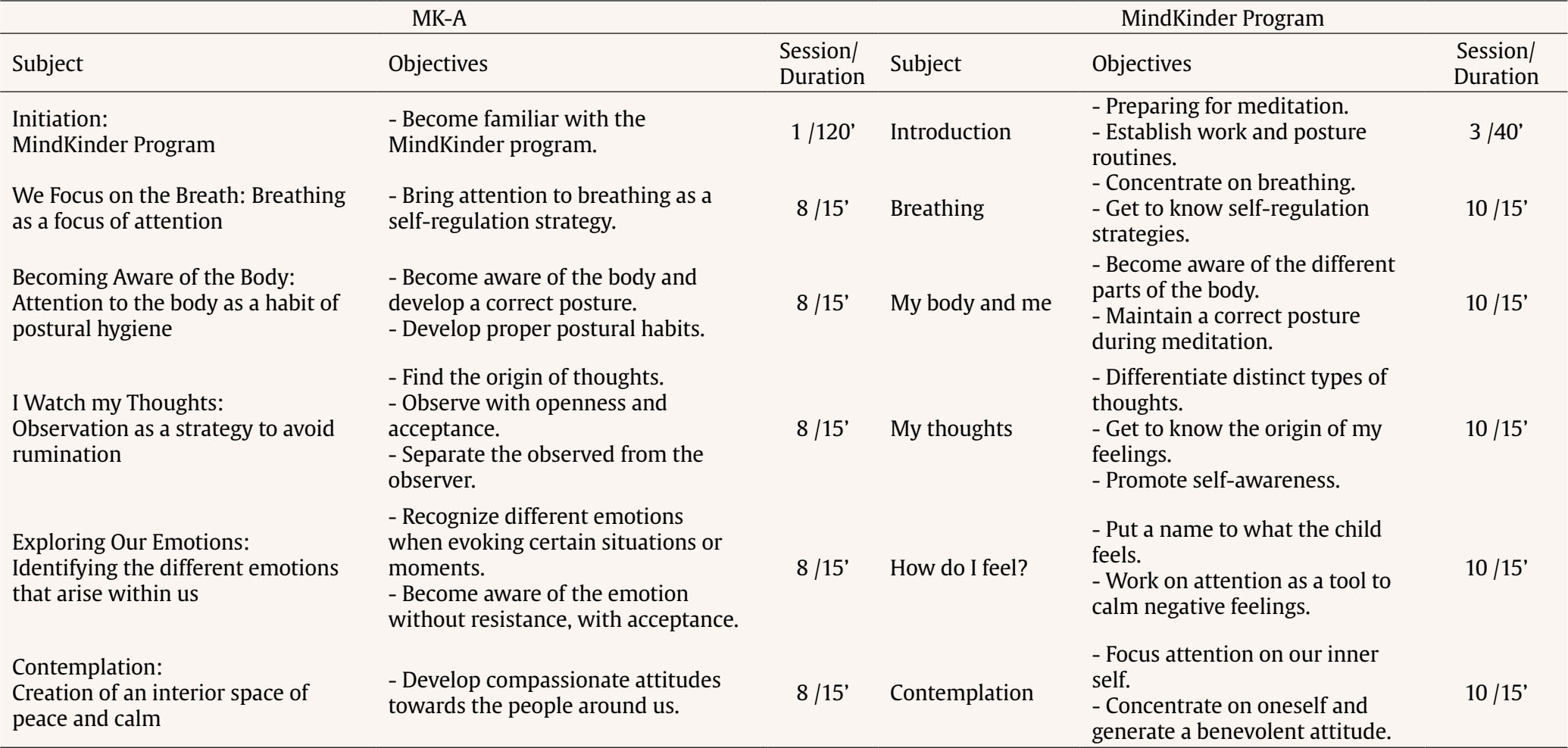 The MK-A program was developed over eight weeks, following the Mindfulness-Based Stress Reduction (MBSR) program (Kabat-Zinn & Hanh, 2009) and the Mindfulness-Based Cognitive Therapy (MBCT) program (Segal et al., 2018), which are currently standardised mindfulness-based programs (MBIs). The program, consisting of a series of meditations using audio guides (Bakosh et al., 2018) with a specific theme, followed a series of guidelines: (1) the work was carried out inside the classroom where the students had their classes and (2) the meditations were held first thing in the morning, just before the first class. At all times, an expert in the program was accessible. The primary purpose of audio guides was to minimise the possible adverse effect on the applicators of the program (Baer et al., 2019). Figure 1 Participant Flow Diagram. 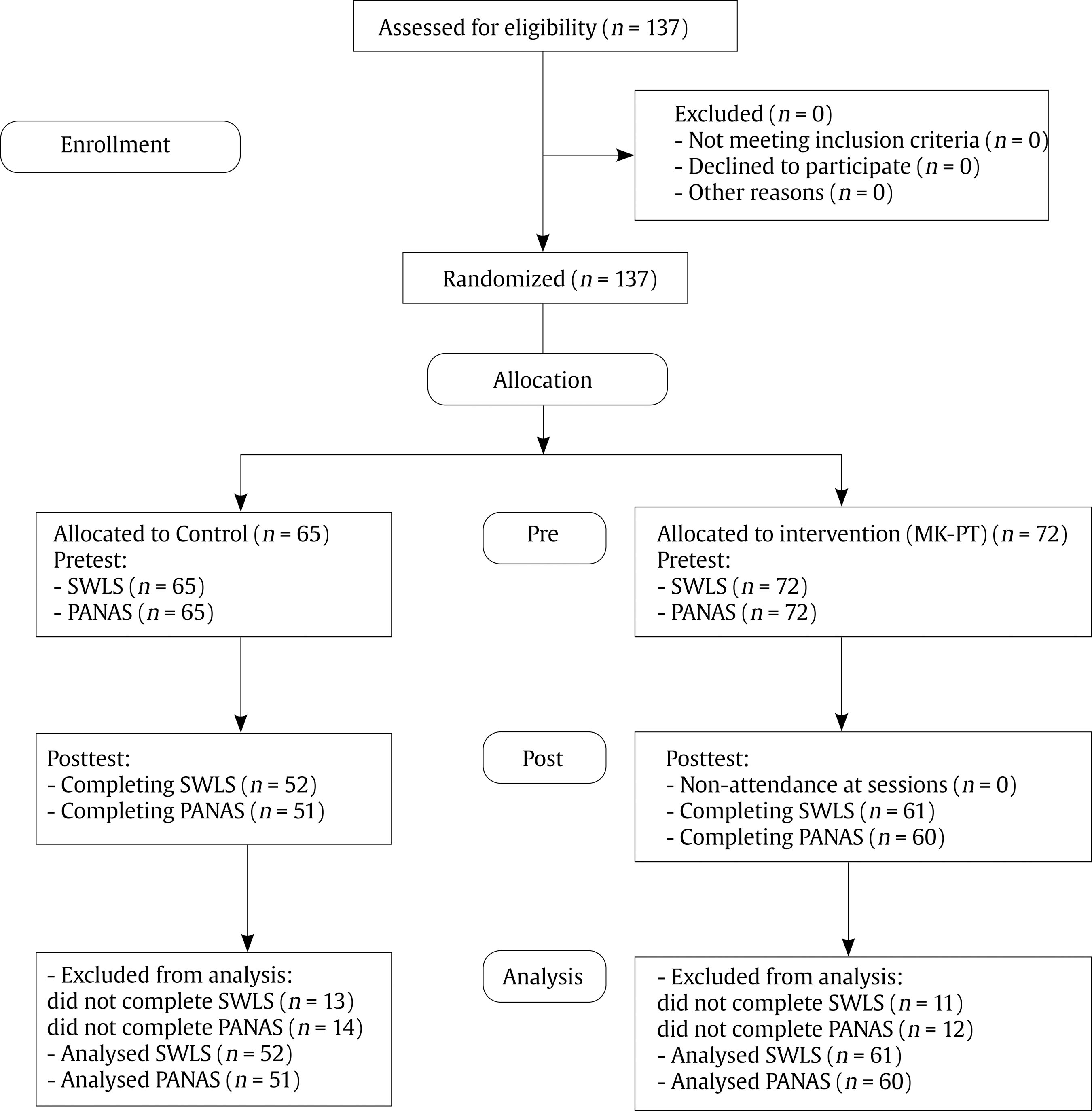 All procedures performed were in accordance with the 1964 Helsinki Declaration and its later amendments. An authorization was officially requested from the Governing Board and the Board of Directors of the Teaching University Centre to carry out the program in the centre and evaluate its impact. After this, informed consent was required from all participants, and the ethical standards of right to information, protection of personal data and confidentiality, and educational inclusion were met. The research project followed the postulates of the ethical code of the UCLM in accordance with the ethical standards outlined in the 1964 Declaration of Helsinki and its later amendments on human experimentation. Additionally, the authorship of the paper followed the criteria and the APA Ethics Code Standard 8.12a, Publication Credit (7th ed.). Informed consent was obtained from all participants included in the study. This work is part of a broader research composed of several stages. In the first stage, the intervention was carried out, for which Teaching University Centre members, among others, implemented the program at the center. Said work can be consulted in the resulting publication (Moreno-Gómez et al., 2023) as part of the second stage, the current manuscript aims to evaluate the program (MK-A). The evaluation team is composed of the authors identified in the submitted paper. Members of Teaching University Centre are excluded from the authorship of this work since, although they were part of the first phase of program implementation, they have not participated in the evaluation presented in the manuscript. An ethical statement document is provided, signed by the Teaching University Centre representative, who authorizes publishing this manuscript without any of the Teaching University Centre members being included as authors. Measures Satisfaction with Life Scale (SWLS; Diener et al., 1985) The scale was designed to measure global life satisfaction, was used to assess the cognitive dimension of subjective well-being. This questionnaire consists of five items (e.g., “In most aspects, my life is the way I want it to be”; “The circumstances of my life are very good”) rated on a 7-point Likert scale ranging from 1 = strongly disagree to 7 = strongly agree. Higher scores indicate better cognitive well-being. In the present study, the scale demonstrated adequate internal consistency, with a reliability coefficient of α = .78. Previous research has shown that the SWLS exhibits satisfactory levels of validity and reliability among university students (Dvoáková et al., 2017; Shankland et al., 2021; Zeng et al., 2019). The Positive and Negative Affect Schedule (PANAS; Sandín et al., 1999) It was used regarding the affective dimension of subjective well-being. This self-report questionnaire comprises 20 items (e.g., “I am interested in people or things”; “I feel disgusted or upset”) rated on a 5-point Likert scale (1 = very slightly or not at all; 2 = a little; 3 = moderately; 4 = quite a bit; and 5 = extremely). It consists of two subscales: Positive Affect (PA) and Negative Affect (NA). Higher scores on the PANAS-PA indicate greater positive affect, whereas higher scores on the PANAS-NA indicate greater negative affect. In the present study, the scale demonstrated high internal consistency for both the positive affect subscale (α = .82) and the negative affect subscale (α = .85). Both subscales showed adequate levels of validity and reliability among university students (Van Gordon et al., 2014). The Mental Health-5 Questionnaire (MH-5) Validated in Spanish (Alonso et al., 1995), it was used to assess the participants’ emotional well-being. This instrument consists of five items (e.g., “Were you very nervous?”; “Did you feel so low that nothing could cheer you up?”) on emotional well-being describing related aspects of how the participants have felt in the last four weeks. The MH-5 assesses two emotional well-being indicators: depressive and anxious symptomatology experienced by the individual. The responses are coded using a Likert scale that ranges from 1 = always to 6 = never. The internal consistency of the scale was α = .86, indicating adequate levels of validity and reliability, consistent with similar studies in university students (e.g., higher scores on this scale are associated with better emotional well-being). Trait Emotional Intelligence Questionnaire (TEIQue-SF; Petrides & Furnham, 2006) Adapted to Spanish (Pérez-González, 2003), this questionnaire was used to measure emotional intelligence. It consists of 30 items (e.g., “I have no difficulty expressing my emotions with words”; “I find it difficult to control my emotions”) scored on a 7-point Likert scale (from 1 = completely disagree to 7 = completely agree). Higher scores on this scale are associated with better emotional intelligence. In the present study, the instrument yielded an internal consistency of α = .86, which is in line with other studies that demonstrate evidence of validity and reliability for the population under study (Sanchez-Ruiz et al., 2013). Data Analyses The data obtained were analysed with the statistical program SPSS 24.0. Descriptive analyses (means and standard deviations) were performed first. Second, an analysis of variance (ANOVA) was conducted to assess the homogeneity of the sample across each of the scores from the pretest phase. Third, descriptive and covariance analyses (ANCOVA) were conducted on the scores obtained in the posttest phase, considering the scores from the pretest phase as a covariate for each instrument, to examine the program’s impact on each variable. Finally, the size of the partial eta squared effect was examined: negligible (0 ≤ η2 ≤ .009); small (.01 ≤ η2 ≤ .089); medium (.090 ≤ η2 ≤ .249); and large (η2 ≥ .250) (Tabachnick & Fidell, 2019). The effect size considered in the power analysis is clinically relevant, as it ensures that the differences detected are not only statistically significant but also meaningful for educational practice. Two subgroups were created for comparison using the ANOVA test to explore potential differences in means based on participants’ previous emotional well-being and emotional intelligence levels in the experimental and control groups. The first subsample included participants with previous low emotional well-being and trait emotional intelligence (subjects with scores equal to or less than the 25th percentile). The second subsample included participants with previous high emotional well-being and trait emotional intelligence (subjects with scores equal to or greater than the 75th percentile). First, we present the results obtained on the program’s effectiveness, comparing the effects between the experimental and control groups. Then, we offer the results on the differential effects based on the previous score of emotional well-being and trait emotional intelligence of the experimental group participants. Results on the Effectiveness of the Program The result of the ANOVA in the pretest phase confirmed that there were no significant differences between the experimental group and the control group in any of the variables (refer to Table 2). Before conducting the ANCOVA, statistical assumptions were verified. The scatterplot analysis revealed a linear relationship between the covariate and the dependent variable. Finally, inspection of the residuals using the Shapiro-Wilk test indicated that they followed an approximately normal distribution. After carrying out the ANCOVA in the posttest phase, using the pretest scores as a covariate, the results showed a significant increase in favor of the experimental group in life satisfaction with a small effect size (η2 = .040), in positive affect with a medium effect size (η2 = .092) and a decrease in negative affect with a small effect size (η2 = .047). Table 2 Means and Standard Deviations of the Pretest and Posttest Measurements in the Experimental and Control Groups, Analysis of Variance (ANOVA), Analysis of Covariance (ANCOVA) and Partial Eta Square (η2)  Note. M = mean; SD = standard deviation; η2 = eta square (effect size). Table 3 Means and Standard Deviations of the Pretest and Posttest Measures in the Experimental Group according to the Level of Emotional Well-Being (EWB), Analysis of Variance (ANOVA), Analysis of Covariance (ANCOVA), and Partial Eta Square (η2) 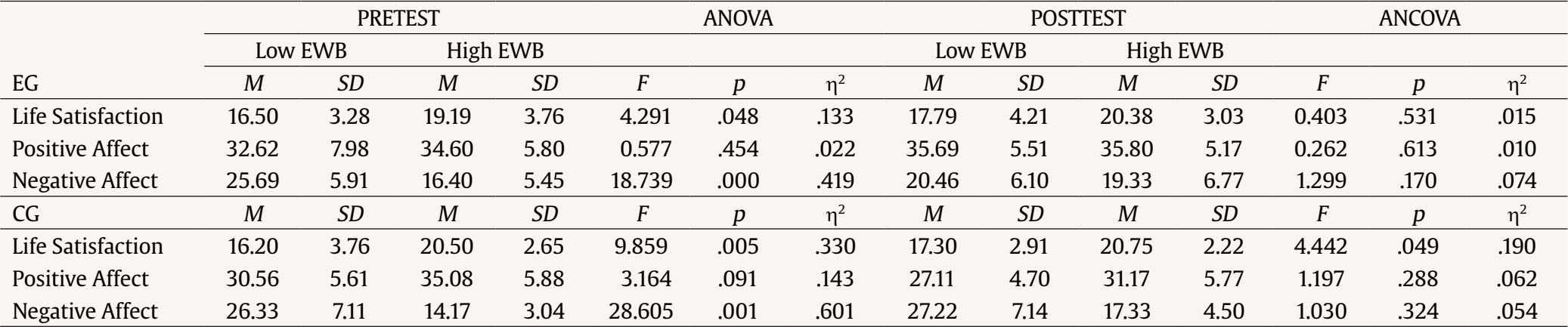 Note. M = mean; SD = standard deviation; EG = experimental group; CG = control group; η2 = eta square (effect size). Differential Effects according to Emotional Well-Being The result of the ANOVA in the pretest phase confirmed that there were significant differences in life satisfaction with a medium effect size in favour of the group with a high level of emotional well-being (HEWB), and in negative affect with a large effect size in favour of the group with a low level of emotional well-being (LEWB) in the experimental group (see Table 3). After performing the ANCOVA, the results showed that these differences found in the pretest phase disappeared. Regarding positive affect, the mean score of LEWB participants in the experimental group increased (ΔM = 3.07) more than the mean score of HEWB participants (ΔM = 1.20). In the control group, the mean score of LEWB participants in terms of positive affect decreased (ΔM = -3.45), as did the mean score of HEWB participants (ΔM = -3.91). In the negative affect domain, the experimental group’s LEWB participants showed a decrease in their mean score (ΔM = -5.23). In contrast, HEWB participants showed an increase in their mean score (ΔM = 2.93). In the control group, the mean score for LEWB participants increased (ΔM = 0.89), as did the mean score for HEWB participants (ΔM = 3.16). Differential Effects According to Trait Emotional Intelligence The result of the ANOVA in the pretest confirmed that there were significant differences in life satisfaction and positive affect in favour of the group with a high level of trait emotional intelligence in the experimental group (see Table 4). Table 4 Means and Standard Deviations of the Pretest and Posttest Measures in the Experimental Group According to the Level of Trait Emotional Intelligence (EI), Analysis of Variance (ANOVA), Analysis of Covariance (ANCOVA), and Partial Eta Square (η2) 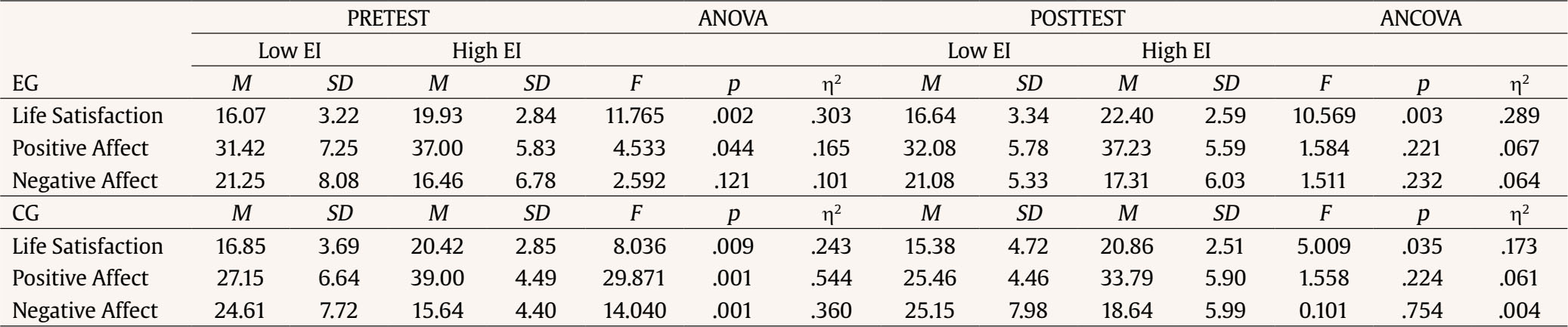 Note. M = mean; SD = standard deviation; EG = experimental group; CG = control group; η2 = eta square (effect size). In life satisfaction, in the experimental group, the mean score of the participants with a high level of trait emotional intelligence (HEI) increased (ΔM = 2.47) more than the participants with a low level of trait emotional intelligence (LEI) mean score (ΔM = 0.57). In the control group, the HEI participants’ mean score increased (ΔM = .44). In contrast, the LEI participants’ scores decreased (ΔM = -1.47). Regarding positive affect, in the experimental group, the HEI participants’ mean score increased (ΔM = .23) as did the LEI participants’ mean score (ΔM = .66). In the control group, the HEI participants’ mean score decreased (ΔM = -5.21), as did the LEI participants’ scores (ΔM = -1.69). In negative affect, in the experimental group, the HEI participants’ mean score increased (ΔM = .85), but the LEI participants’ mean score decreased (ΔM = -.17). In the control group, the HEI participants’ mean score increased (ΔM = 3.00) more than the LEI participants’ scores did (ΔM = .54). In general terms, this research evaluated the effects of the MK-A program on two subjective well-being variables in pre-service teachers: their cognitive and affective dimensions, yielding significant improvements in the experimental group compared to the control group. In addition, it aimed to analyse the differential effect of an MBI based on the participants’ previous level of emotional well-being and trait emotional intelligence. First, the results of our study confirmed Hypothesis 1. These findings align with previous research, which has reported increases in life satisfaction following MBIs (Shapiro et al., 2011; Zeng et al., 2019), although with low effect sizes (Dvoáková et al., 2017; Pizarro-Ruiz et al., 2021). A possible explanation for these outcomes lies in the established relationship between mindfulness and life satisfaction (Mesmer-Magnus et al., 2017). We propose that mindfulness enhances the cognitive component of subjective well-being (life satisfaction) by favouring conscious processes and enabling individuals to recognise when their minds are wandering. This awareness allows them to remain present and nonjudgmental (Brown & Ryan, 2003; Schutte & Malouff, 2011), which helps manage automatic thoughts and promotes healthier lifestyles (Bajaj et al., 2016). Furthermore, some studies on the effectiveness of MBIs in pre-service teachers have confirmed improvements in the global dispositional mindfulness score, with a medium effect size (Moreno-Gómez et al., 2023). Second, the results supported Hypothesis 2. These findings are consistent with previous studies that, after similar interventions, report increased positive affect and decreased negative affect (Van Gordon et al., 2014). Our results showed a reduction in negative affect with a small effect size, in line with the conclusions of various recent studies (Pizarro-Ruiz et al., 2021; Pogrebtsova et al., 2018). However, some studies have not found improvements in positive affect (Pizarro-Ruiz et al., 2021). A possible explanation for these inconsistencies may be the timing of the intervention, the emotional state of the participants, and the characteristics of the program itself, which could interfere with the expected outcomes and even produce adverse effects (Baer et al., 2019). Further research is needed to explore these variables in greater depth. The relationship between the practice of mindfulness programs and the reduction of stress, anxiety, or depression (Dvoáková et al., 2017; Halladay et al., 2019; Khoury et al., 2015) and the increase in quality of life and positive emotions (D’Adamo & Lozada, 2019) may help explain these results. The effects of present-moment attention and awareness help individuals to reduce anticipatory anxiety about the future and negative evaluations of the past (Shankland et al., 2021). As observed in our results, a slight decrease in negative affect was confirmed in the experimental group; however, it is necessary to note that negative affect increased in the control group. The administration of the posttest questionnaires coincided with the exam period, which may have influenced these results. Third, the results did not confirm Hypothesis 3. It has been shown that the gains differ depending on the emotional well-being level of the experimental group participants. Although the improvements in life satisfaction are similar, a greater increase in positive affect has been found in the LEWB group. In addition, the LEWB group has shown a decrease in their negative affect, while the HEWB group has shown an increase in this variable. These results could be explained because those participants with higher levels of various vulnerabilities, such as the earlier onset of depression related to emotional well-being, could be more favoured with this type of intervention, as shown by some research (S. H. Ma & Teasdale, 2004). Regarding the increase in negative affect among participants with better emotional well-being after the intervention, it could be considered an adverse effect caused by the program; however, we consider that results for life satisfaction do not justify this possible effect. In addition, it would be necessary to remember that the central axis of the MBI is none other than helping to find ways to develop an awareness of the experience in the present moment (Kabat-Zinn, 1994), promoting a change of attitude that does not judge life experiences but accepts them (Bishop et al., 2004). Acceptance is identified as a key dimension of MBIs and is central to the benefits of such interventions (Anlayo, 2022). It involves identifying and interpreting changes in experience, rather than trying to maintain pleasant experiences and avoid negative ones (Cavanagh et al., 2013). Mindfulness is associated with increased awareness and acceptance of negative emotions, as well as a more effective use of emotional regulation strategies (Cheung & Ng, 2019). Fourth, the results did not confirm Hypothesis 4. Results suggest that the improvements vary depending on the level of trait emotional intelligence among participants in the experimental group. The gains in life satisfaction are greater among HEI participants; however, the improvements in positive affect are similar. In addition, HEI participants have shown an increase in negative affect, whereas LEI participants have shown a slight decrease in this variable. The differences between HEI and LEI participants regarding life satisfaction may be due to the association between these two variables, as emotional intelligence is a crucial personal resource for promoting life satisfaction (Kong et al., 2019). Higher levels of emotional intelligence are associated with greater well-being (Sánchez-Álvarez et al., 2015). It can be affirmed that individuals with HEI find significant meaning in their lives and feel more committed (Robinson et al., 2022). Given the above, it can be said that the differences in life satisfaction between individuals with high versus low trait emotional intelligence may stem from the fact that trait emotional intelligence functions more as a precursor than a consequence of mindfulness (Petrides et al., 2017). Additionally, the plasticity of trait emotional intelligence in the context of MBIs suggests that mindfulness is positively associated with certain dimensions of emotional intelligence (Baer et al., 2006). Therefore, conducting a comprehensive evaluation of trait emotional intelligence based on complete instruments, rather than abbreviated versions, would be particularly interesting. Regarding the results obtained in the affective component, it could be suggested that individuals who experience their affective states more clearly may be able to avoid rumination processes (Palmer et al., 2002), which are associated with depression (Nolen-Hoeksema, 2000). This emotional clarity can be considered a fundamental element for adequately managing emotional states (Salovey et al., 1995). What seems to produce improvements with mindfulness is the ability to differentiate emotions by improving attention control and providing clarity (Kong et al., 2019). Maintaining an attitude of openness and receptivity towards these unpleasant experiences, rather than judging, ignoring, or minimising them, allows us to hypothesise that mindfulness helps individuals adapt to events that occur within them, reducing anxiety and reactivity, and improving the management of negative affect (Coffey et al., 2010). In addition, HEI individuals have a more remarkable ability to recognise emotions than LEI individuals (Austin, 2004). These results could enrich the conclusions drawn in some meta-analyses, concluding that MBIs significantly benefit both healthy individuals and those with physical and psychological conditions (Mesmer-Magnus et al., 2017). In addition to their novelty, these findings enrich the research by examining the effects of the intervention in relation to individual differences among participants (Tang & Braver, 2020), specifically in terms of emotional well-being and trait emotional intelligence. On the other hand, MBIs may reduce irrelevant cognitive load, leading to greater efficiency in information processing, which in turn results in improved academic performance (Ishaq et al., 2024). The positive relationship between mindfulness practices and academic performance, along with the negative correlation between stress and academic performance, suggests that mindfulness may mediate the impact of stressors on cognitive abilities, thereby contributing to greater academic success. However, further investigation is needed to clarify the potential differential effects of MBIs based on individual participant characteristics. Limitations and Future Research The conclusions of this research are primarily limited by the type of instruments used, all of which are typical performance measures. It may be necessary to use biological instruments (e.g., cortisol measurements, heart rate, blood sugar) to obtain more comprehensive results. We consider the most critical limitation of the study to be the lack of an active control group. Additionally, the sampling was conducted incidentally, which limited the generalizability of the results, although the assignment to the experimental and control groups was carried out randomly. Furthermore, the sample should be larger. The current study has included the evaluation of subjective or hedonic well-being, integrating two tools aimed at evaluating, respectively, the cognitive component (SWLS) and the emotional component (PANAS). However, psychological or eudaimonic well-being was not assessed. Since differences in life satisfaction were still evident between participants with high and low trait emotional intelligence in the posttest, this could suggest that the underlying differences in trait emotional intelligence levels could be a justified reason to distinguish between different levels of mindfulness training. In addition, it would have been appropriate to study possible unpleasant experiences during practice, in line with the contributions of several authors (Baer et al., 2021). On the other hand, it is necessary to continue investigating the impact of these interventions on positive affect, as some studies have not found improvements in this variable (Pizarro-Ruiz et al., 2021). Additional limitations of the study include the measurement of mindfulness states through these interventions, changes in cognitive mechanisms within the university population, and the implications of these findings for non-clinical and educational outcomes (e.g., academic achievement and performance). Another important limitation is that the posttest phase coincided with the exam period, which may have influenced the results. Moreover, individual differences among participants were not taken into account. In this regard, several studies (e.g., Tang & Braver, 2020) have shown that individual characteristics, such as personality traits, play a key role in shaping the effects of mindfulness training. This is partly due to significant correlations between mindfulness and personality variables such as neuroticism, trait anxiety, and conscientiousness (Banfi & Randal, 2022). It would also have been necessary to apply the Bonferroni correction to control for Type I error rate; therefore, the interpretation of the results may overestimate the presence of effects, reducing confidence in the evidence obtained. Finally, given the results obtained, future lines of theoretical and practical research should essentially consider individual differences among participants in MBIs to effectively evaluate their effects and design more specific mindfulness activities for these programs (Tang & Braver, 2020). In conclusion, the data obtained in this study enrich the research on the effectiveness of MBIs in university students, considering that the university population presents high levels of stress, sleep disturbances, and alcohol consumption associated with depression (Lipson et al., 2019; Ludy et al., 2018; Rosenthal et al., 2018). Furthermore, it provides a valuable and easy-to-use tool for university professors to utilise during the teaching and learning process. It is important to take into account, on the one hand, the individual differences of the participants (e.g., cognitive function, psychological well-being), which influence the results after the intervention (Tang & Braver, 2020) and, on the other hand, the positive relationship between emotional well-being, emotional regulation, and mindfulness (Mesmer-Magnus et al., 2017). In this sense, various studies have indicated that emotional intelligence protects against mental health problems such as depression, anxiety, and stress (Moeller et al., 2020). It would be advisable to incorporate applications focused on educational psychology and to effectively implement university training programs in soft skills and basic cognitive competencies (e.g., stress management, well-being promotion). Mental health issues are increasingly becoming public health concerns (Totzeck et al., 2020), posing a challenge for educational institutions (Auerbach et al., 2017), particularly as the demand for mental health services is steadily rising, accompanied by a corresponding economic burden (Lipson et al., 2019). The results of the present study are encouraging and may serve as a preventive resource. Conflict of Interest The authors of this article declare no conflict of interest. Cite this article as: de Moura Franco Barbosa, M., Espagolla Santos, A., Coscioni, V., & Leal Melo-Silva, L. (2026). Effects of mindfulness training on wellbeing and emotional intelligence in pre-service teachers. Psicología Educativa, 32, Article e260455. https://doi.org/10.5093/psed2026a12 The data presented in this study are available on reasonable request from the senior author. References |
Cite this article as: Moreno-Gómez, A., Luna, P., Rodríguez-Donaire, A., Rodrigo-Ruiz, D., & Cejudo, J. (2026). Effects of Mindfulness Training on Wellbeing and Emotional Intelligence in Pre-Service Teachers. Psicología Educativa, 32, Article e260455. https://doi.org/10.5093/psed2026a12
Correspondence: manueljavier.cejudo@uclm.es (J. Cejudo).Copyright © 2026. Colegio Oficial de la Psicología de Madrid


 PDF
PDF e-PUB
e-PUB CrossRef
 JATS
JATS Imprimir
 Enviar
ALERTA POR E-MAIL
La Revista de Psicología Educativa está distribuida bajo una licencia de Creative Commons Reconocimiento-NoComercial-SinObra Derivada 4.0 Internacional.com