Burnout Syndrome Predictors in Teachers and Professors: Differences by Level of Education in Brazil
[Los predictores del síndrome de agotamiento en maestros y profesores: diferencias por nivel de educación en Brasil]
Liciane Diehl1, Mary S. Carlotto2, Pedro Gil-LaOrden3, & Pedro R. Gil-Monte3
1Universidade do Vale do Taquari (Univates), Brasil; 2Universidade de Brasília (UnB), Brasil; 3Universidad de Valencia (UV), Spain
https://doi.org/10.5093/psed2026a7
Received 24 April 2024, Accepted 3 October 2025
Abstract
The burnout syndrome is a psychosocial phenomenon that occurs as a chronic response to occupational stressors. Teachers are considered a risk group for developing the syndrome. Teachers do not belong to a homogeneous group, as within this categorization there are differences in roles and responsibilities and different risks of developing burnout syndrome. This study aimed to verify whether there was any difference in the prediction of occupational stressors, regulatory focus, and emotional labor as variables of burnout syndrome, depending on different levels of education. Participants were 1,284 Brazilian teachers and professors who answered an online instrument, including the Spanish Burnout Inventory, the General Regulatory Focus Scale, the Emotion at Work Scale, and the Evaluation Scale of Psychosocial Stressors. The results revealed that there are differences between each other, confirming that the explanatory variables depend on the specificities of each level of education, allowing for actions to be proposed according to each group.
Resumen
El síndrome de agotamiento es un fenómeno psicosocial que ocurre como una respuesta crónica a factores estresantes interpersonales en situaciones relacionadas con el trabajo. Los docentes son considerados un grupo de riesgo para desarrollar el síndrome. Los docentes no pertenecen a un grupo homogéneo, ya que dentro de esta categorización existen diferencias en roles y responsabilidades y distinto riesgo de desarrollar el síndrome de agotamiento. Este estudio tuvo como objetivo comprobar si existía alguna diferencia en la predicción de los estresores laborales, el enfoque regulatorio y el trabajo emocional como variables del síndrome de agotamiento, dependiendo de los diferentes niveles de educación. Participaron 1,284 docentes y profesores brasileños que respondieron un instrumento en internet, incluido el Cuestionario para la Evaluación del Síndrome de Agotamiento, la Escala de Enfoque Normativo General, la Escala de Emoción en el Trabajo y la Escala de Evaluación de Factores de Estrés Psicosociales. Los resultados mostraron que existen diferencias entre sí, confirmando que las variables explicativas dependen de las especificidades de cada nivel educativo, permitiendo proponer acciones según cada grupo.
Palabras clave
Síndrome de agotamiento, Riesgo psicosocial, Maestros, Profesores universitarios, Salud del trabajadorKeywords
Burnout syndrome, Psychosocial risk, Teachers, Professors, Worker healthCite this article as: Diehl, L., Carlotto, M. S., Gil-LaOrden, P., & Gil-Monte, P. R. (2026). Burnout Syndrome Predictors in Teachers and Professors: Differences by Level of Education in Brazil. Psicología Educativa, 32, Article e260450. https://doi.org/10.5093/psed2026a7
Correspondence: mscarlotto@gmail.com (M. S. Carlotto).Chronic workplace stress and a negative subjective experience consisting of cognitions, emotions, and negative attitudes towards work can lead to the burnout syndrome (Gil-Monte, 2011). Theoretical models are based on the central assumption that a continuous imbalance between demands/resources at work and individual resources leads to the accumulation of workplace stress that can result in burnout (Bakker & Vries, 2021; Demerouti & Adaloudis, 2024). The World Health Organization (World Health Organization [WHO, 2019]) defines the burnout syndrome as the result of chronic, unmanaged workplace stress. The syndrome’s significant negative impact led to its inclusion in the 11th Revision of the International Classification of Diseases (ICD-11), which characterizes it as a phenomenon exclusive to the occupational context and not as a medical condition. This is one of the most important psychosocial occupational accidents today (Maslach & Leiter, 2022). Gil-Monte’s (2005) theoretical models represent the burnout syndrome through four dimensions: 1) Enthusiasm toward the job, referring to the individual’s desire to achieve work-related goals, which they perceive as attractive and a source of personal satisfaction; 2) Psychological Exhaustion, defined as the experience of emotional and physical exhaustion due to direct interaction with individuals who either cause or contribute to problems; 3) Indolence, manifested through attitudes of indifference towards individuals requiring assistance in the workplace and a lack of empathy for others’ issues; and 4) Guilt, evidenced by pressure and feelings of accountability concerning negative behaviours and attitudes developed at work that do not match the internal norms and social demands of the professional role. It affects several professional categories (Bocheliuk et al., 2020), though among human services teachers are the largest workforce vulnerable to BS (Rodríguez-Fragoso et al., 2025; Weißenfels et al., 2022). When teaching and interacting with students, teachers experience and express a wide range of emotions of different qualities and intensities (Wang & Buric´, 2023). The emotions are an integral part of everyday classroom activities and are experienced in interactions between teachers and professors and students quite often, which makes teaching an emotional labor (Hosotani & Imai-Matsumura, 2011; Keller & Becker, 2021). Emotional labor is defined as an effort that involves the planning and control of emotions by workers to express socially desired emotions in interpersonal interactions, according to labor context norms (Hochschild, 1983). Teachers develop various strategies to regulate their emotions in the classroom, which may differ from their true emotional experiences and can affect both their health and their students’ adaptation (Keller & Becker, 2021). Emotional labor is recognized as a new job stressor in modern society, which leads to the burnout syndrome (Yang & Chen, 2021). Emotional abilities are positively associated with lower levels of work stress (Schoeps et al., 2021). When individuals cannot control and manage their own emotions, emotional labor may result in burnout (Zeshan et al., 2024). In addition, the burnout syndrome has been associated with prevention-focused motivation (Dai, 2021), in which the worker is more inclined to avoid negative outcomes than try to achieve positive results. Promotion-focused individuals dedicate themselves to success, whereas prevention-focused individuals find motivation in avoiding failure. Higgins and Pinelli (2020) posit that both promotion and prevention focus are self-regulation systems that individuals encounter at various stages of their work activities. Despite consensus in the literature regarding the various problems faced by teachers, there are differences in their assignments and working conditions. In this sense, occupational stressors vary according to the nature of the institution (public or private), the region or area (rural or urban) where it is located (Kourmousi & Alexopoulos, 2016), and student age (Diehl & Carlotto, 2024). Organizational culture, including a lack of professional development, contributes to burnout syndrome in early childhood education. Poor communication and insufficient support play a significant role, along with increased workload due to extra tasks and having to work after hours, classroom-related factors such as challenging behaviors and physical demands, and personal factors such as maladaptive coping with stressors (Powers et al., 2025). Early childhood professionals need to continually engage in emotional labor during their work hours, whether in interactions with parents, other teachers, or children, and must remain positive, calm, and encouraging, in addition to performing a multitude of other caregiving and instructional tasks (Purper et al., 2023). The weak professional relationships, low professional status, and a lack of career progression and professional training opportunities were all linked to a higher risk of early educator burnout (Ng et al., 2023). In elementary school, the excessive workload, low autonomy, lack of support from co-workers (Carlotto & Câmara, 2019; Košir et al., 2015) and senior members of staff (Shackleton et al., 2019), and emotional labor (Kariou et al., 2021) are predictors of burnout. For high school teachers, potentially stressful variables are time pressure, lack of support and trust from supervisors (Skaalvik & Skaalvik, 2016), and low student motivation (Wang & Buric´, 2023), characterized as a high risk of burnout (García-Carmona et al., 2019). In a study by Herrera-Herrera et al. (2025), the burnout syndrome in high school teachers is associated with work overload due to the number of students and excessive bureaucracy, situations of violence such as vandalism, bullying, or cyberbullying, lack of support from parents and guardians for the teaching staff, and low social appreciation of the profession. In undergraduate teachers, burnout has been associated with poorer working conditions, work overload, conflict with colleagues (Moueleu-Ngalagou et al., 2018), time spent teaching, pressure to perform services, and an increase in the average number of hours worked per week (Turner & Garvis, 2023). A study involving 250 Brazilian university professors reported low autonomy, lack of social support, role conflict, and interpersonal conflict as the main predictors of burnout (Carlotto & Câmara, 2017). At the postgraduate level, professors in Brazil have less freedom because they are heavily controlled by the production model that aims to meet the rankings set by the evaluation policies of the Coordination for the Improvement of Higher Education personnel. Other stressors mentioned by the authors include a lack of resources to achieve the expected results, conflicts over the various roles they need to take on (manager, professor, and researcher), wage devaluation, and precarious career plans. Systematic reviews carried out on burnout in teachers have identified studies at all levels of education, but individually or combined at two levels of education (Agyapong et al., 2022; Menon et al., 2024; Thomas & Reyes, 2024). Thus, the scarcity of studies that jointly evaluate a set of variables (individual and contextual) at different levels of education (Diehl & Carlotto, 2024; Kourmousi & Alexopoulos, 2016) justify the relevance and the gap to be filled by the present investigation. Following the above, this observational, analytical, and cross-sectional study aimed to verify whether there was any difference in the prediction of occupational stressors, regulatory focus, and emotional labor as variables of burnout, depending on different levels of education, namely early childhood education, elementary school, high school, undergraduate education, and postgraduate education. Participants As a non-probabilistic sample, the study counted 1,284 teachers: 199 (15.50%) working in early childhood education, 322 (25.07%) in elementary school, 196 (15.26%) in high school, 362 (28.19%) in undergraduate education, and 205 (15.96%) in postgraduate education. We included public and private institutions from across the State of Rio Grande do Sul/Brazil, and only teachers and professors who had been working for at least one year joined the study. The sample size followed the guidance of Field (2009), in which the number of participants should be equal to 50 plus eight times the number of independent variables. As for sex, marital status, and offspring, most participants identified themselves as women (73.52%), married (51.86%), and having children (64.87%). The average age was 43.27 years (SD = 10.73). Most participants also had postgraduate degrees (79.42%). The average teaching time was 15.75 years (SD = 10.25); the average workload was 37.11 hours per week (SD = 10.87); and the average number of students served daily was 138.78 (SD = 183.81). Among the participants, almost the whole sample had no other professional activity (98.22%), and 66.97% worked for a public institution. Table 1 presents some sociodemographic and labor-related characteristics of the participants by level of education. Table 1 Sociodemographic and Labor-related Characteristics by Level of Education 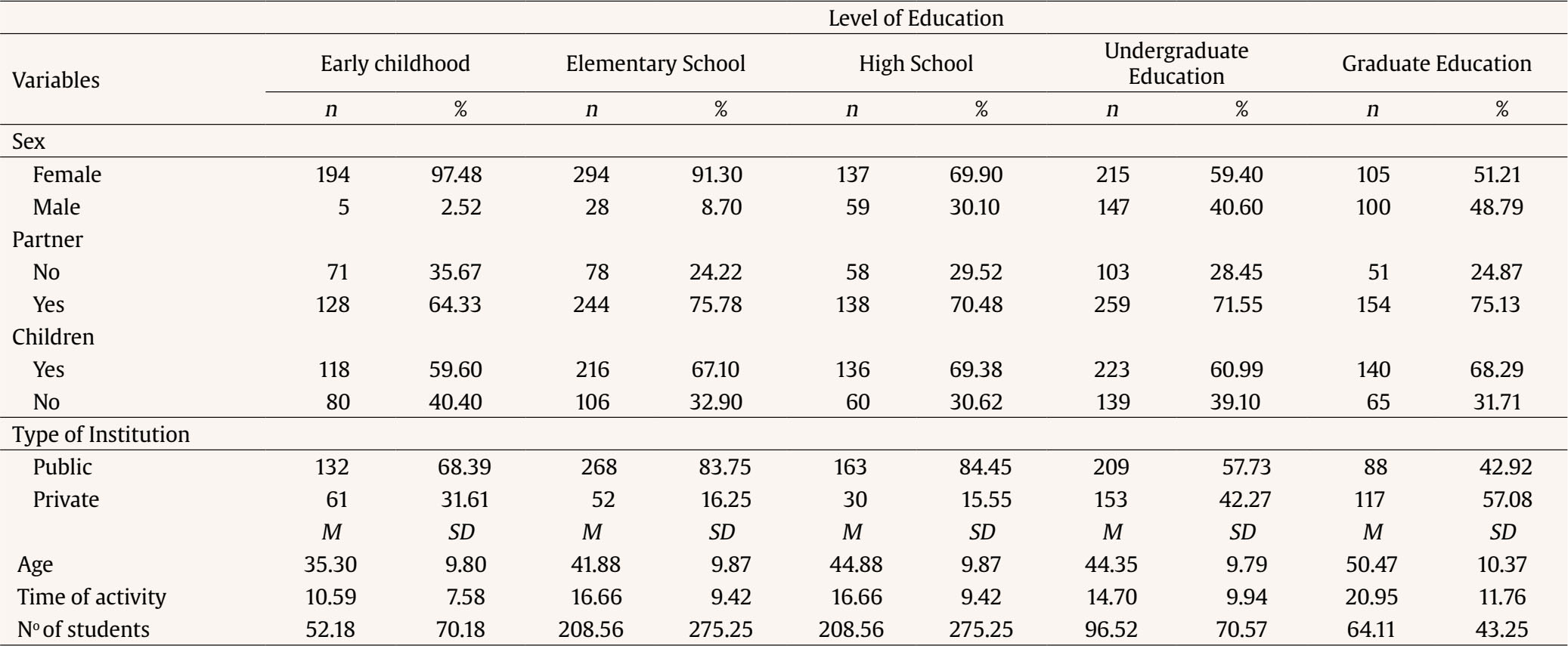 Instruments Eleven questions (sex, age, marital status, children, academic background, wage, teaching time, weekly workload, another professional activity, type of institution, and level of education) make up the sociodemographic and occupational data questionnaire. The Spanish Burnout Inventory, version for teachers – SBI-Ed - (Gil-Monte, 2011), translated and adapted for Brazil by Gil-Monte et al. (2010) – was applied, with 20 items distributed into four subscales. For this study, global BS was used, which is the average of the 15 items from the Enthusiasm toward job (inverted) subscales, Psychological Exhaustion, and Indolence. Enthusiasm toward the job (five items; α = .72; e.g., “I see my job as a source of personal accomplishment”); Psychological Exhaustion (four items; α = .86; e.g., “I feel emotionally exhausted”); Indolence (six items; α = .75; e.g., “I don’t like taking care of some students”). We evaluate the items on a five-point frequency scale, ranging from 0 = never to 4 = every day. The General Regulatory Focus Scale was developed by Lockwood et al. (2002) and adapted for organizational contexts and for use in Brazil by Carlotto et al. (2020). It evaluates how the individual regulates their focus to achieve goals: focus on promotion - to what extent a person is focused on achieving positive results (nine items; α = .81; e.g., “I like trying out lots of different things and am often successful in doing so”) and focus on prevention - to what extent a person is focused on avoiding negative results (nine items; α = .75; e.g., “I often think about how I can avoid failures in my life”). A Likert-type scoring system evaluates the scale, ranging from 1 = does not describe me at all to 5 = describes me very well. The Emotional Labour Scale (ELS) by Brotheridge and Lee (2003), was adapted for use in Brazil by Carlotto et al. (2016). The instrument contains 15 items distributed into four subscales, namely: frequency (three items; α =.72; e.g., “Adopt certain emotions required as part of your job”); intensity (two items; α =.78; e.g., “Express intense emotions”); variability (three items; α =.84; e.g., “Display many different kinds of emotions”; and emotional regulation (four items; α = .79; e.g., “Hide my true feelings about a situation”). We evaluate the items on a four-point frequency scale, ranging from 0 = never to 3 = always. The Scale for the Assessment of Workplace Context Psychosocial Stressors, developed by Ferreira et al. (2015), is composed of 30 items that assess these dimensions: Role Overload (five items; α = .71; e.g., “I have a fast pace of work”); Lack of Social Support (six items; α = .77; e.g., “I don’t get help from my colleagues when I have a problem at work”); Career Insecurity (five items; α = .72; e.g., “I live with rumors about staff cuts”); Lack of Autonomy (five items; α = .71; e.g., “I can’t decide when to take breaks during my work hours”); Work/Family Conflict (five items; α = .75; e.g., “I have difficulties in reconciling professional and family issues”); and Pressure due to Degree of Responsibility (four items; α = .77; e.g., “I know that my mistakes can affect the work of other colleagues”). Participants respond to the items on a six-point scale, which ranges from 1 = never affects me to 6 = always affects me. Data Collection Procedures Initially, principals of public and private schools and universities were contacted and asked to forward the invitation to their teachers. The invitation was also made available on the social media accounts of the study’s first author and members of the research group. Recruitment was conducted using the Respondent-Driven Sampling (RDS) technique, in which the initial participants (wave 1) sent the invitation to new participants (wave 2) until the desired sample size was reached (Goel & Salganik, 2009). According to the authors, this technique allows reaching a large number of participants with similar characteristics and technology to access the instruments. The research was approved by the Ethics Committee of the University of Vale do Rio dos Sinos – UNISINOS, Protocol No. 1.874.619. We informed all participants about the research objectives and procedures, allowing them to freely decide on their willingness to participate. We also guaranteed the anonymity and confidentiality of their responses. Data Analysis Procedures The database was analyzed on the PASW statistical package (SPSS/PASW, Inc., Chicago, IL). Initially, we tested multiple linear regression assumptions and found no contraindicated use based on Field’s (2009) parameters. We found that the variables did not have multicollinearity because the highest correlation was .67, the variance inflation factor (VIF) was below 4 (1.79), and the tolerance value was less than 1 (0.95). All Durbin-Watson coefficient analysis values were close to 2 (variation from 1.57 to 1.99), indicating the distribution’s independence and the residues’ non-correlation. Cook’s distance presented values between .003 and .006, lower than 1, revealing no atypical predictors and adequate model goodness of fit. Table 2 Descriptive Statistics and Correlation between Variables 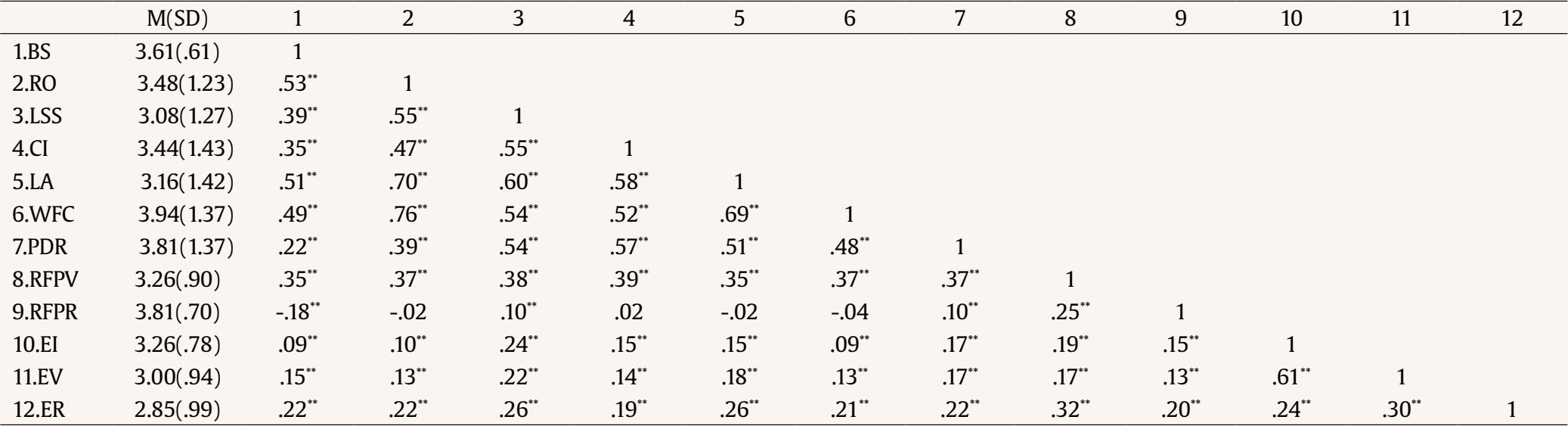 Note. BS = burnout syndrome; RO = role overload; LSS = lack of social support; CI = career insecurity; LA = lack of autonomy; WFC = work-family conflict; PDR = pressure due to degree of responsibility; RFPV = regulatory focus on prevention; RFPR = regulatory focus on promotion; EI = emotional intensity; EV = emotional variability; ER = emotional regulation. Table 3 Model Summary of Multiple Linear Regression Analysis for Burnout Syndrome 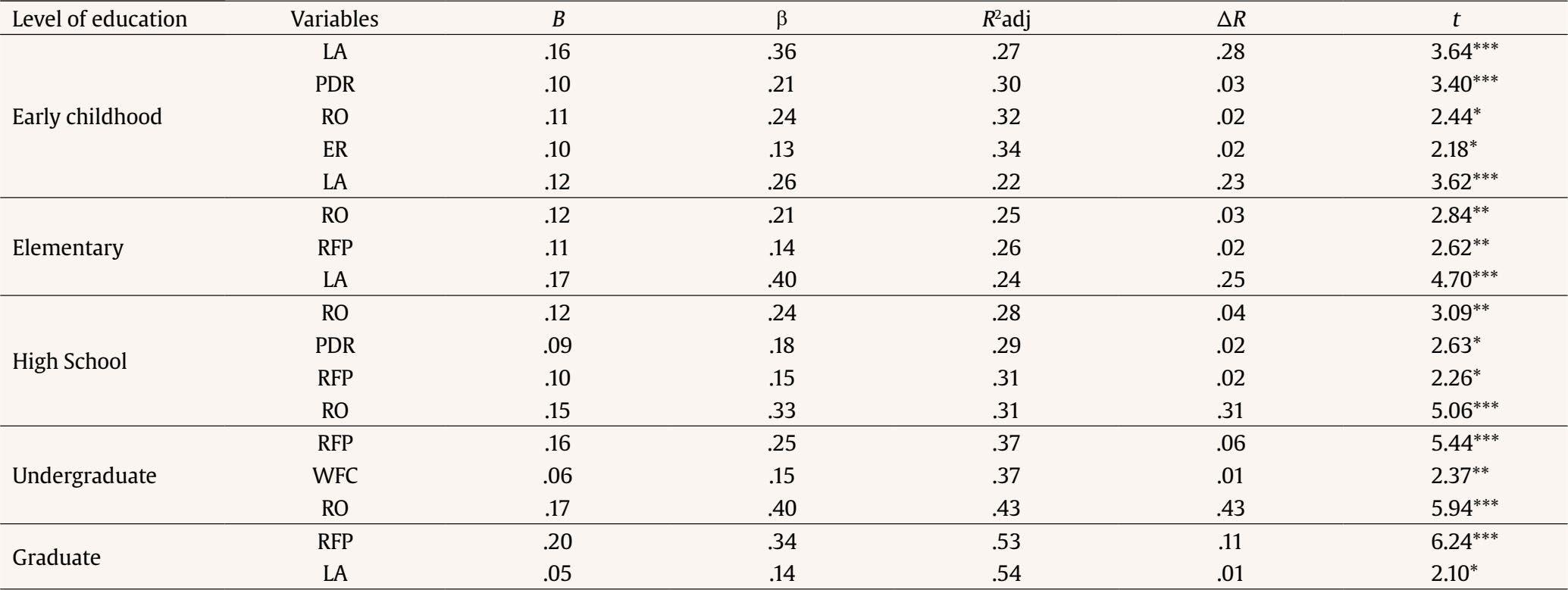 Note. WFC = work-family conflict; LA = lack of autonomy; RFP = regulatory focus on prevention; PDR = pressure due to degree of responsibility; ER = emotional regulation; RO = role overload. *p < .05, **p < .01, ***p < .001. Afterwards, a multiple linear regression analysis (stepwise method) was performed. The analysis took burnout syndrome as a dependent variable, while the independent variables were occupational stressors, regulatory focus dimensions, and emotional labor dimensions. The predictor variables were selected with a significance level of p < .05. The standardized regression coefficients calculated for each final model in the regression analysis determined the magnitude of the effect (Marôco, 2007). Table 2 presents the descriptive results of the variables used in the study. The average burnout score, based on a 0-4 score scale, is high. The highest average index was observed in the work-family conflict dimension. Regarding correlations, all variables were associated with burnout, with the greatest correlation identified being with role overload. Table 3 presents the results of the multiple linear regression analysis concerning the burnout syndrome (dependent variable) by level of education, considering psychosocial stressors in the workplace context, regulatory focus/motivation, and emotional labor as predictor variables. The analysis at the early childhood education level evidenced an explanatory model consisting of four variables, which together explained 34% of the variance. At the elementary school level, the explanatory model consisted of three variables, which explained 26% of the variance, while at the high school level, the explanatory model was composed of four variables, explaining 31% of the variance. At three levels of education, lack of autonomy was the variable of greatest relative importance (27%, 23%, and 25%, in that order). As for undergraduate and postgraduate education, the analysis resulted in explanatory models consisting of three variables at both levels of education, which together explained 37% and 54%, respectively. The set of variables that explained burnout syndrome indicates that, in early childhood education, the greater the lack of autonomy, pressure due to degree of responsibility, role overload, and emotional regulation, the higher the burnout indexes. In elementary school, the greater the lack of autonomy, role overload, and regulatory focus on prevention, the higher the burnout indices. With respect to high school, the greater the lack of autonomy, role overload, pressure due to degree of responsibility, and prevention-focused motivational system, the higher the burnout indices. At undergraduate and graduate levels, the higher the indexes of role overload, prevention-focused motivational system, and work-family conflict, the higher the burnout indexes. The results reveal a high effect magnitude (R2 = .34, R2 = .26, R2 = .32, R2 = .31, R2 = .37, R2 = .54) for all levels of education, according to the parameters recommended by Marôco (2007). In this sense, they indicate that the identified relationships will possibly also be present in the target population of teachers and professors. This study aimed to verify whether there was any difference in the prediction of occupational stressors, regulatory focus, and emotional labor as variables of burnout syndrome, depending on different levels of education. To operationalize the objective, a quantitative method investigation was carried out with 1,284 teachers, and their data were analyzed using multiple linear regression analysis. The results show that the lack of the autonomy variable has the highest predictive power in early childhood education, elementary school and high school, and role overload at the undergraduate and graduate levels. Concerning the pressure related to their level of responsibility, early childhood education teachers feel a strong sense of accountability despite having minimal involvement in decision-making and selecting pedagogical practices (Catucci, 2021). In addition, class overcrowding causes practical problems that interfere with childcare and class control (Silva et al., 2021). Role overload, according to Martins et al. (2019), can be explained by the lack of a clear demarcation between the roles of women, mother, and teacher. Furthermore, there are pressures from parents and discredit for being frequently referred to as the nanny figure, who does not need any specialization to perform her job, disregarding the responsibility for the quality of care for young children. We also identified emotional regulation as a predictor of the burnout syndrome in early childhood education. The results found in the sample are consistent with the literature, as burnout has been associated with emotional labor (Chakravorty & Singh, 2021; Purper et al., 2023). Thus, it is possible to predict that emotion regulation can have a negative impact on teachers at the level of their mental health and burnout may be one of the consequences (Purper et al., 2023). According to Chang (2020), without effective emotion regulation teachers are more likely to experience higher levels of burnout syndrome. In the case of elementary school, Medeiros (2021) argues that the constant search for quality at this level of education has led to an increase in the hiring and use of prescriptive guidelines for teachers’ work, creating workbook-based systems. Therefore, teachers prepare every lesson and assessment in advance, citing the goal of enhancing students’ performance on standardized tests. Usually, these occurrences lead to a decrease in classroom autonomy and creativity. In the current educational design, primary school teachers are expected to play many roles. In addition to teaching, they must motivate students to learn, take care of teaching materials, the classroom, and even the school as a whole and, not infrequently, take care of the hygiene, nutrition, and health of students, which correspond to family responsibilities that have been transferred to the school (Campos & Viegas, 2021). The teacher-student relationship plays an important role in the daily lives of teachers, being a source of positive and negative emotions, cognitions and physical sensations (Haldimann et al., 2023). As with parent-child relationships, teachers represent a secure foundation, stimulating students’ investigative capacity and assisting them throughout the learning process. Parents and society demand teachers, who feel responsible for the students’ performance and learning (Belo et al., 2021). In high school, the burnout syndrome was positively associated with the variables of lack of autonomy, role overload, pressure due to degree of responsibility, and regulatory focus on prevention. Analyzing the National Curriculum Parameters for High School in Brazil, Machado (2017) concludes that the main objective of the document is standardization, strict control over curricula, and pedagogical proposals, which leads teachers to take a passive position faced with the rules. Role overload agrees with the study by Broeck et al. (2020), high school teachers play an important role in students’ lives because students turn to teachers for advice, especially because teachers give formal recommendations at a decisive moment in the students’ educational careers. Teacher enthusiasm for teaching is an important resource during this critical developmental stage of students’ academic lives (Lazarides et al., 2021). However, adolescents are vulnerable to presenting problematic behaviors which makes them likely to pay less attention in class, engage less, and even drop out of school (Skaalvik & Skaalvik, 2016). The onset of adolescence presents the student with a new educational format that differs significantly from elementary school, along with emerging personal conflicts (Souza & Coutinho, 2020). Such facts, combined with the high social expectations of a teacher’s role, may cause the perception of insufficient information about the demands related to their roles and incompatibilities with the expectations that are inherent in the different tasks that these teachers must perform. The diversity of roles and lack of support compromises professional performance, as they have difficulty handling the numerous responsibilities assigned to them (Tang & Vandenberghe, 2021). The teacher, in addition to preparing and teaching classes, must motivate and guide students regarding their professional future, manage conflicts and meet bureaucratic demands. The motivational orientation with focus on prevention makes teachers cope more conservatively, avoiding risks so as not to compromise their position and adopting more punishment behaviors than rewards (Leung & Lam, 2003). This focus makes them more susceptible to negative outcomes, including the burnout syndrome (Dai et al., 2021). At the highest education level (undergraduate and postgraduate), the role overload variable was a predictor of burnout, a result also identified by Zábrodská et al. (2018) and Mahesar et al. (2020). It is assumed that these professors have been subjected to excessive workload, the increasing pressure for scientific production, and the search for research funding (Acker & McGinn, 2021). The variable that showed greater explanatory power for the burnout syndrome at the undergraduate and graduate levels was role overload, a psychosocial stressor that indicates an excessive number of tasks to be performed and is often related to burnout (Carlotto & Câmara, 2017; Mahesar et al., 2020). This result is in line with the changes that have occurred in the organization of work at universities over the last 20 years, which has led to a greater psychological burden on professors, with multiple work demands regarding the teaching activity itself and other demands concerning academic competitiveness and recognition. We expect the academy to generate social benefits through research, teaching, and extension; however, the pressure to produce articles is increasing. This pressure is leading to a profound change in the structure of academic behavior (Soria & Gomes, 2021). Under pressure, undergraduate and graduate faculty can manage stressors to avoid failure and remain on the job. The regulatory focus on prevention affects academics’ actions, decision-making, and problem-solving processes (Higgins & Pinelli, 2020) and may lead to higher levels of burnout. In undergraduate teachers, work-family conflict was identified as a predictor, probably due to the higher workload and the increased number of subjects and students at this level of education. These issues require longer commitment, being common to work from home, such as preparing classes and correcting tests and assignments. The heavy workload is a potentially important factor affecting the family domain (Mahesar et al., 2020). Teachers feel overwhelmed and pressured to constantly work to meet the demands of academia while struggling with work-life balance. At the graduate level, lack of autonomy proved to be a predictor of burnout. This is likely due to the current structure of post-graduation programs in Brazil. The Coordination for Higher Education Staff Development (CAPES), a government agency responsible for the quality standards of the post-graduation system in Brazil, prescribes your work as part of the current system. This organization encourages the pursuit of research funding, publication in high-impact national and international journals, and the training of a greater number of students at the master’s and doctoral levels. The professor’s work currently involves excessive workload, intensive and precarious conditions, increasing pressure for scientific production, and the search for research funding (Acker & McGinn, 2021; Pinho et al., 2024). This study expands the line of research investigating individual variables as predictors of the burnout syndrome. The greatest contribution of this study has been to identify and analyze the main predictors of burnout in teachers/professors by level of education. The results showed differences between each other, confirming that the explanatory variables depend on the specificities of each level of education. This study’s strengths include the use of a solid and internationally recognized theoretical model, as well as instruments adapted for use in Brazil that obtained adequate reliability indices. The sample size aligned with the analysis requirements revealed a high effect magnitude, suggesting that the results are likely applicable to the target population. A high effect magnitude indicated that the results are probably applicable to the target population, and the sample size matched the analysis requirements. Consider this study’s limitations when interpreting its results. The first one is its cross-sectional nature, which makes it difficult to capture the dynamics of the phenomena investigated. The second one is the use of self-report measures, which may generate some form of bias due to social desirability. The third one concerns the regional characteristics of the sample, which has a distinct culture from other regions of Brazil due to the strong presence of European immigration. Thus, longitudinal studies should be considered, as they would allow for verification of the stability of the explanatory model. We also recommend conducting studies with samples from various states and regions of Brazil and incorporating other individual variables, such as personality characteristics, self-esteem, empathy, and coping. It is important to advance the studies so that we can start to better understand, prevent, and reduce levels of burnout. We encourage educational institutions to analyze and redesign teachers’ roles in practice, with the aim of achieving greater autonomy. Specifically for early childhood and elementary education, we recommend working with parents to increase family involvement and recognition of their work, reducing pressure due to responsibility and role overload. We recommend interventions in secondary education that concentrate on the teacher-student relationship, with the goal of enhancing both parties’ understanding in the learning and motivation process. Greater support from administration and professional counseling and guidance services can contribute to reducing role overload and pressure due to responsibility, as well as reducing work-family conflict. For undergraduate and graduate teachers, we suggest actions aimed at redesigning teaching responsibilities and empowering teachers as the sole responsible party for students’ academic success and the image of the program and the institution. Therefore, this research emphasizes the value of identifying the factors associated with the burnout syndrome according to the specificities of each educational level. This will allow for the planning of differentiated interventions tailored to the needs of each educational level. Conflict of Interest The authors of this article declare no conflict of interest. Cite this article as: Diehl, L., Carlotto, M. S., Gil-LaOrden P., & Gil-Monte, P. R. (2025). Burnout syndrome predictors in teachers and professors: Differences by level of education in Brazil. Psicología Educativa, 32, Article e260450. https://doi.org/10.5093/psed2026a7 References |
Cite this article as: Diehl, L., Carlotto, M. S., Gil-LaOrden, P., & Gil-Monte, P. R. (2026). Burnout Syndrome Predictors in Teachers and Professors: Differences by Level of Education in Brazil. Psicología Educativa, 32, Article e260450. https://doi.org/10.5093/psed2026a7
Correspondence: mscarlotto@gmail.com (M. S. Carlotto).Copyright © 2026. Colegio Oficial de la Psicología de Madrid


 PDF
PDF e-PUB
e-PUB CrossRef
 JATS
JATS Imprimir
 Enviar
ALERTA POR E-MAIL
La Revista de Psicología Educativa está distribuida bajo una licencia de Creative Commons Reconocimiento-NoComercial-SinObra Derivada 4.0 Internacional.com