Working with Robots and Eudaimonic Well-being at Work: A Moderated Mediation Model via Job Autonomy, Work Engagement, and Emotional Exhaustion
[Trabajo con robots y bienestar eudaimónico: un modelo de mediación modulada]
Theresa Schweizer, Vicente González-Romá, José M. Peiró, Nina Jonczyk, & Lucía Barrera
Research Institute of Personnel Psychology, Organizational Development and Quality of Working Life (IDOCAL), University of Valencia
https://doi.org/10.5093/jwop2026a8
Received 12 December 2025, Accepted 15 June 2026
Abstract
This study examined whether the frequency of interaction with robots while working (FIR) was indirectly related to eudaimonic well-being (personal growth at work) via job autonomy, work engagement, and emotional exhaustion. We also tested whether employees’ attitude toward robots moderated these relationships. The sample was composed of 299 employees from a manufacturing company. Results showed a positive relationship between FIR and job autonomy. Moreover, we found a significant indirect “effect” of FIR on personal growth at work through job autonomy and work engagement. These relationships were moderated by attitude toward robots, which showed an enhancing effect. Our findings contribute to understanding how working with robots are affecting jobs and employees’ work experiences.
Resumen
Este estudio investiga si la frecuencia de interacción con robots en el trabajo (FIR) se relaciona indirectamente con el bienestar eudaimónico (crecimiento personal en el trabajo) a través de la autonomía en el puesto, el compromiso laboral y el agotamiento emocional. También se analiza si la actitud de los empleados hacia los robots modula estas relaciones. La muestra de estudio incluyó 299 empleados de una empresa manufacturera. Los resultados mostraron una relación positiva entre FIR y autonomía. Además, encontramos un efecto indirecto significativo de FIR sobre el crecimiento personal en el trabajo a través de la autonomía y el compromiso laboral. Estas relaciones fueron moduladas por la actitud hacia los robots, que mostró un efecto potenciador. Estos resultados contribuyen a comprender cómo el trabajo con robots influye sobre los puestos y las experiencias laborales de los empleados.
Palabras clave
Robotización, Características del trabajo, Autonomía en el puesto, Compromiso laboral, Agotamiento emocional, Bienestar eudaimónicoKeywords
Robotization, Work characteristics, Job autonomy, Work engagement, Emotional exhaustion, Eudaimonic well-beingCite this article as: Schweizer, T., González-Romá, V., Peiró, J. M., Jonczyk, N., & Barrera, L. (2026). Working with Robots and Eudaimonic Well-being at Work: A Moderated Mediation Model via Job Autonomy, Work Engagement, and Emotional Exhaustion. Journal of Work and Organizational Psychology, 42, Article e260776. https://doi.org/10.5093/jwop2026a8
Correspondence: vicente.glez-roma@uv.es (V. González-Romá)., Correspondence: vicente.glez-roma@uv.es (V. González-Romá).In recent years, the speed of robotization (i.e., the process of introducing and installing robots in organizations) has accelerated significantly. According to the International Federation of Robotics (IFR, 2019), in 2019 alone approximately 373,000 new industrial robots were installed worldwide, a number that grew to 384,000 in 2020 despite the global pandemic. By 2023, installations had surpassed 590,000, marking a 7% increase from the previous year. This growth is expected to continue, with projections suggesting even more significant increases by 2026. Robots, as defined by the International Organization for Standardization (ISO, 2012), are actuated mechanisms programmable in two or more axes that can perform intended tasks autonomously within their environment. Their increasing presence in the workforce has made them permanent features in a wide range of workplaces across industries, taking on roles like precision manufacturing, package delivery, and supporting humans in various jobs and industries (Royakkers & van Est, 2015). Despite the rapid expansion of robotization, our understanding of how working with robots influences critical job characteristics, such as job autonomy, and work outcomes, such as employee well-being, remains limited. This significant omission arises from the scarcity of empirical studies examining these issues (Cascio & Montealegre, 2016; Jonczyk et al., 2025). The current lack of knowledge represents a relevant problem that researchers must address for several reasons. From a theoretical perspective, it is crucial to gain a deeper understanding of how robotization in work organizations impacts job characteristics, as these perceptions significantly shape employees’ work experiences and outcomes (Humphrey et al., 2007). This includes identifying the mechanisms through which robotization influences workers’ well-being and the moderators that might enhance its positive effects or mitigate negative ones. Such insights will contribute to more robust theoretical models in line with the dynamic evolution of jobs and allow for more precise predictions of the impact of robotization on job outcomes (Parker & Knight, 2024). From a practical perspective, understanding how to enhance the positive effects of robotization and reduce its negative impacts is critical as robotization continues to grow in the workforce (Cascio & Montealegre, 2016; IFR, 2019). We need to get a better understanding of how robots impact employees’ work experiences, as recent research demands, especially as successful integration depends on effective human-robot interaction (Huang & Rust, 2017). Positive human-robot interactions can lead to better integration strategies, fostering more collaborative environments and ultimately boosting both performance and well-being (Zhang et al., 2020), ensuring that technology enhances rather than undermines the quality of work life. This knowledge will help organizations maximize the benefits of robots while minimizing their disadvantages, leading to better integration strategies tailored to specific jobs and workers. From an ethical perspective, investigating these effects is imperative to prevent unintended consequences that may compromise employee autonomy and well-being. It is essential that organizations offer employees opportunities for professional and personal growth, and research into robotization can help fulfill this by improving workplace environments and fostering employee development (Cascio & Montealegre, 2016). The present study seeks to help solve this research problem by contributing to the understanding of how working with robots, defined as the frequency of interaction with robots while performing job-related tasks (henceforth, FIR), influences key job characteristics and employee outcomes. We focused on the “frequency” of interaction with robots for several reasons. Firstly, the frequency with which employees use new technologies at work is a way to operationalize new technologies’ use intensity, which in turn is one of the two dimensions considered to conceptualize new technologies’ use at work (Wang et al., 2020). Secondly, it is assumed that the higher the frequency of new technology use at work, the stronger its influence on employees (Wang et al., 2020). This assumption suggests that measuring frequency of use is a valid way to examine how the utilization of technology is related to employees’ work experiences. Thirdly, frequency measures are considered objective indicators of new technology use (Wang et al., 2020). Fourthly, it is relatively easy to obtain frequency indicators from employees. Specifically, our research will investigate how FIR relates to job autonomy. Given that autonomy is a core work characteristic in widely accepted work characteristic models (Hackman & Oldham, 1975; Morgeson & Humphrey, 2006; Parker & Knight, 2024), examining the relationship between FIR and job autonomy is particularly significant. Job autonomy is defined as the degree of independence and discretion to make decisions at work (Hackman & Oldham, 1975; Morgeson & Humphrey, 2006). It is considered a key predictor of work motivation, job satisfaction, and performance. Additionally, the recent SMART model by Parker and Knight (2024) considers job autonomy as a central element in the work design theory, which becomes particularly important in the context of work redesign shaped by robotization. Autonomy is crucial in modern workplaces as it empowers employees to make decisions, focusing on responsibility and ownership at work, making it increasingly relevant in the context of robotization. Given its key role in performance and well-being, job autonomy is well-suited to examine the correlates of FIR, serving as a focal variable in the present study. Furthermore, we will examine the indirect relationship between FIR, on the one hand, and work engagement, emotional exhaustion, and personal growth at work, on the other hand. We focus on work engagement and emotional exhaustion as mediators because they act as mediators between work characteristics (i.e., job autonomy) and work outcomes (i.e., well-being) in theoretical models (Demerouti & Bakker, 2011; Schaufeli & Taris, 2014), illustrating how FIR relates to well-being through both functional (i.e., work engagement) and dysfunctional (i.e., emotional exhaustion) states. We focus on personal growth at work as the outcome variable for several reasons. Firstly, personal growth at work is an indicator of well-being. Well-being is a key criterion for organizational sciences and reflects the optimal functioning of an organization (Tay et al., 2023), making it a holistic indicator of optimal functioning of employees. Secondly, personal growth is one of the most important dimensions of eudaimonic well-being (Ryff & Singer, 2008). According to these authors, “of all the aspects of well-being, it is personal growth that comes closest in meaning to Aristotle’s eudaimonia, as it is explicitly concerned with the self-realization of the individual” (Ryff & Singer, 2008, p. 21). Furthermore, we aim to investigate the moderating role of employees’ attitudes toward robots. Attitudes influence behavior and decision-making (Ajzen, 1991; Fazio, 1990), shaping how individuals perceive and respond to their environment. Research has shown that attitudes can affect work-related experiences (Riketta, 2008). Given the increasing integration of robotization in the workplace, attitudes toward robots are particularly relevant, as they might influence whether employees view robots as an opportunity or a threat. To investigate the moderating role of attitudes toward robots, we will use the Technology Acceptance Model (TAM; Davis, 1989). Based on this model, we posit that a positive attitude toward robots can increase the positive relationship between FIR and job autonomy. The study variables will be integrated into a moderated mediation model to provide a more nuanced understanding of the relationships between the study variables. The research model is depicted in Figure 1. Figure 1 Research Model 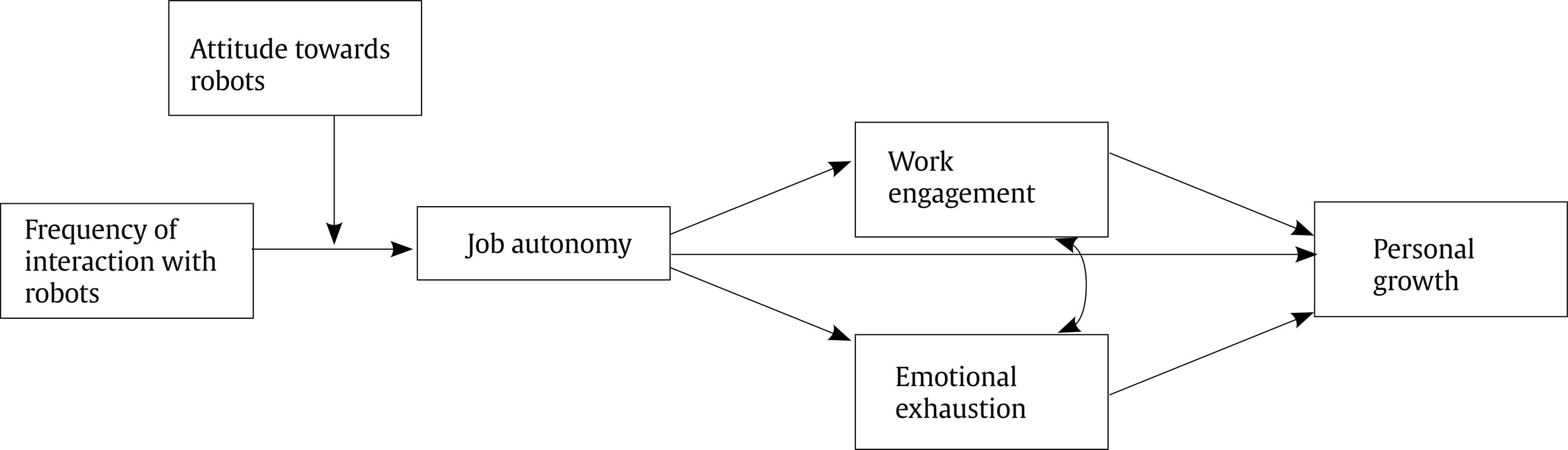 Note. FIR = frequency of interaction with robots while working. This study aims to make several contributions. Firstly, from a theoretical perspective, it refines existing models of work characteristics and work design to include the implications of human-robot interaction as an antecedent, making them more suitable for today’s technologically advanced work environments. Secondly, in choosing personal growth as the outcome variable, we adopt a eudaimonic approach to well-being, advancing research on the relationship between robotization and employee well-being. In doing so, we aim to clarify the mediating role of job autonomy, work engagement, and emotional exhaustion, providing a nuanced view of the pathways leading to well-being. Thirdly, by examining the attitudes toward robots as a moderator, our study provides insights into how individual differences can shape responses to FIR. This contributes to a more nuanced understanding of the relationship between interaction with robots and a key feature of work design (i.e., job autonomy). From a practical perspective, our study suggests specific recommendations for organizations to mitigate the potential negative effects of the new technologies while enhancing and fostering the positive ones. Ultimately, our findings will support the development of strategies to foster a productive and sustainable work environment that prioritizes employee well-being in increasingly robotized workplaces. Frequency of Interaction with Robots while Working (FIR) and Job Autonomy We posit that the frequency of interaction with robots while working (FIR) is positively related to job autonomy. This expected relationship is based on the following arguments. Evidence from research on work design (Hackman & Oldham, 1975; Parker & Knight, 2024) suggests that changes in work design directly influence employees’ perceived autonomy. FIR introduces such changes by transforming the nature of work tasks. As robots take over routine and repetitive tasks, employees can focus on more complex and stimulating activities, enhancing their sense of control over work processes. For instance, as a consequence of the implementation of robots in some companies and the subsequent increase in FIR for some employees, certain jobs were remarkably enriched given that their occupants went from performing physical tasks (e.g., moving boxes and containers) to supervising robots (Wingfield, 2017). Additionally, as FIR increases employees can gain greater flexibility in structuring their work because routine and repetitive tasks are performed by robots. This offers opportunities for independent decision-making, workflow management, and creative problem-solving. The implementation of robots reduces physical job demands (Jonczyk et al., 2025) and creates opportunities for employees to allocate their energy and attention to higher-value activities. This reallocation increases their capacity to manage workloads effectively and structure job tasks, which are critical components of job autonomy. This aligns with Cascio and Montealegre’s (2016) argument that reducing mundane tasks allows employees to engage in activities requiring more creativity and freedom, thereby increasing their perception of autonomy in the workplace. Therefore, we propose the following: Hypothesis 1: FIR is positively related to job autonomy. Job Autonomy, Work Engagement, and Personal Growth at Work Based on the motivational process embedded within the Job Demands-Resources (JD-R) model (Bakker & Demerouti, 2007), we posit that job autonomy is positively related to work engagement. Work engagement is a “positive, fulfilling, work-related state of mind characterized by vigor, dedication, and absorption” (Schaufeli et al., 2002, p. 74). The motivational process in the JD-R model suggests that job resources, such as autonomy, directly stimulate employees’ intrinsic motivation by fulfilling key psychological needs, ultimately leading to increased work engagement. Job autonomy also empowers employees to manage their tasks in ways that align with their preferences, thereby promoting feelings of competence and self-efficacy, which are central to work engagement (Demerouti et al., 2001). It also allows employees to perceive their tasks as more in line with their personal values, which can deepen their engagement (Bakker & Demerouti, 2007). The more autonomy employees perceive, the more likely they are to experience engagement as they see their work as self-directed and meaningful. Therefore, we propose the following: Hypothesis 2: Job autonomy is positively related to work engagement. Furthermore, we posit that job autonomy is directly related to personal growth at work. According to the Self-Determination Theory (SDT; Deci & Ryan, 2000), autonomy is a fundamental psychological need that, when fulfilled, enhances intrinsic motivation and well-being. When employees perceive more autonomy, such as more control over their tasks and decision-making, they feel a sense of ownership and self-direction, both of which are essential conditions for eudaimonic well-being, especially for personal growth (Van den Broeck et al., 2016). Furthermore, according to Schaufeli & Taris (2014), within the JD-R model, job resources, such as job autonomy, play a central role in stimulating personal growth and development. Job autonomy can create an environment that might be more aligned with employees’ personal interests, which encourages them to pursue development opportunities that stimulate and develop their skills. This contributes to their personal growth at work. Therefore, we propose: Hypothesis 3: Job autonomy is positively related to personal growth at work. We further posit that work engagement is positively related to personal growth at work. In the SDT (Deci & Ryan, 2000), work engagement is closely linked to intrinsic motivation. When individuals are intrinsically motivated, they strive toward opportunities for self-development and self-improvement (Schaufeli et al., 2002). This intrinsic motivation drives employees to seek mastery goal orientation, which can foster personal growth. This is in line with the findings of Wallace et al. (2013), who found that employees who are engaged at work develop confidence, capability, and a sense of progress, which are linked to self-improvement and personal growth. Furthermore, engaged workers display high levels of learning (Bakker & Demerouti, 2007) and are more likely to receive positive feedback, which further fuels their personal growth by encouraging them to work on their capabilities (Sonnentag et al., 2010). Therefore, we propose the following: Hypothesis 4: Work engagement is positively related to personal growth at work. The Indirect Relationship between FIR and Personal Growth at Work via Job Autonomy and Work Engagement Our research further aims to examine the indirect “effects” of FIR on personal growth through different paths. We postulated that FIR is positively related to job autonomy (Hypothesis 1), job autonomy fosters work engagement (Hypothesis 2), and work engagement is positively related to personal growth (Hypothesis 4). Therefore, we hypothesize a positive indirect effect of FIR on personal growth via job autonomy and work engagement. Hypothesis 5: There is a positive indirect effect of FIR on personal growth via job autonomy and work engagement, such that FIR is positively related to job autonomy, which, in turn, is positively related to work engagement, which, in turn, is positively related to personal growth at work. Moreover, based on the positive relationship expected between FIR and job autonomy, and the latter and personal growth at work, we propose: Hypothesis 6: FIR has a positive indirect effect on personal growth through job autonomy, such that FIR is positively related to job autonomy, which, in turn, is positively related to personal growth. Job Autonomy, Emotional Exhaustion, and Personal Growth at Work We posit that job autonomy is negatively related to emotional exhaustion. Emotional exhaustion is generally considered the core symptom of burnout syndrome (e.g., Shirom, 1989) and arises from a depletion of resources when work demands exceed employees’ capabilities (Hobfoll, 1989). Several empirical studies and meta-analyses have provided empirical evidence showing that there are cross-links embedded within the JD-R model so that job resources (e.g., job autonomy) are negatively related to job strains (e.g., emotional exhaustion) (Alarcon, 2011; Crawford et al., 2010; Davcheva et al., 2025; González-Romá et al., 2020; Lesener et al., 2019; Schaufeli & Taris, 2014). Job autonomy can provide employees with tools to prevent emotional exhaustion, such as being able to regulate their workload, adjust their tasks, and decide how and when to perform their work, reducing energy depletion (Demerouti et al., 2001). Autonomy also fosters a sense of control, reducing feelings of helplessness and stress that might contribute to emotional exhaustion (Alarcon, 2011). When employees perceive greater autonomy, they can manage their work in a way that aligns with their capabilities, ultimately reducing exhaustion. Therefore, we propose the following: Hypothesis 7: Job autonomy is negatively related to emotional exhaustion. We posit that emotional exhaustion is negatively related to personal growth at work. Following the SDT (Deci & Ryan, 2000), emotional exhaustion disrupts intrinsic motivation, diminishing opportunities for self-development and self-improvement (Schaufeli et al., 2002), which hinders personal growth. Emotional exhaustion also depletes employees’ resources (Bakker & Demerouti, 2007). When employees are emotionally exhausted and lack key resources, they experience diminished cognitive functioning and motivation (Hobfoll, 1989), which are essential for personal growth. Furthermore, when employees are emotionally exhausted, they are less likely to engage in meaningful, growth-oriented behaviors (Deci & Ryan, 2001) or seek out development opportunities (Maslach & Leiter, 2016), which are essential for eudaimonic well-being, specifically, personal growth. Emotional exhaustion also negatively relates to proactive behaviors (e.g., job crafting) or pursuing challenging goals which have the potential to facilitate personal growth (Sonnentag et al., 2010). Therefore, we propose: Hypothesis 8: Emotional exhaustion is negatively related to personal growth at work. The Indirect Relationship between FIR and Personal Growth at Work via Job Autonomy and Emotional Exhaustion Considering that we hypothesized that FIR is positively related to job autonomy (Hypothesis 1), autonomy is negatively related to emotional exhaustion (Hypothesis 7), and emotional exhaustion is negatively related to personal growth at work (Hypothesis 8), we expect to find a positive indirect effect of FIR on personal growth mediated by job autonomy and emotional exhaustion. Hypothesis 9: FIR has a positive indirect effect on personal growth via job autonomy and emotional exhaustion, such that FIR positively relates to job autonomy, which in turn, negatively relates to emotional exhaustion, which in turn, negatively relates to personal growth. The Moderating Role of Attitude toward Robots According to the Technology Acceptance Model (TAM; Davis, 1989), individuals’ attitudes toward technology greatly influence their ability to adapt and respond to technological changes (Hassanein & Head, 2006). We argue that employees with more positive attitudes toward robots are more likely to embrace this technology and integrate it into their work (Frey & Osborne, 2017), potentially discovering ways in which robots can be used to increase their autonomy. When employees see robots as helpful tools rather than threats, they can better adapt to working with them and benefit from potential positive outcomes, such as enhanced autonomy (Hancock et al., 2011). For instance, in a recent study by Nguyen et al. (2025), logistics workers who saw robots as valuable tools for handling repetitive tasks like sorting and lifting were more likely to embrace these technologies and integrate them into their work, enabling them to work more autonomously and focus on other responsibilities. On the other hand, negative perceptions of robots can negatively influence employees’ intention to interact with them (Guan et al., 2021) Similarly, positive attitudes toward robots might reduce resistance to change as employees with a constructive, more positive perspective are better equipped to navigate the challenges of robotization and are more likely to experience greater autonomy in their roles (Hancock et al., 2011). Thus, when employees have favorable attitudes toward robots, they are more likely to see the new technology as a collaborative tool to support their job autonomy rather than a threat that reduces their autonomy. Based on these arguments, we propose the following hypothesis: Hypothesis 10: The positive relationship between FIR and job autonomy is moderated by attitude toward robots so that this positive relationship increases as attitude toward robots increases. Finally, considering the indirect effect hypotheses proposed above (Hypotheses 5, 6, and 9) and the moderator hypothesis just presented, we hypothesize the following conditional indirect effects: Hypothesis 11: The positive indirect effect of FIR on personal growth via job autonomy and work engagement is moderated by attitude toward robots so that the positive indirect effect increases as attitude toward robots increases. Hypothesis 12: The positive indirect effect of FIR on personal growth via job autonomy is moderated by attitude toward robots so that the positive indirect effect increases as attitude toward robots increases. Hypothesis 13: The positive indirect effect of FIR on personal growth via job autonomy and emotional exhaustion is moderated by attitude toward robots so that the positive indirect effect increases as attitude toward robots increases. Sample The sample consisted of 299 employees working in the production lines of a manufacturing company focused on the management of reusable containers for supermarkets. The company rents, repairs, cleans, and distributes reusable packaging, and implements various types of automation technologies, such as industrial robots. Their robots lift and stack packages at the end of the working lines. Employees working in these lines oversee the automated processes and ensure quality control. Initial contact with the company was established through members of the research institute. The participation was voluntary, and employees were assured that data would be treated confidentially, as described in detail in the informed consent. In total, 308 employees completed the survey, of which nine participants (2.9%) were excluded because they failed two attention check items (e.g., “To ensure the quality of the survey responses, please select the option strongly disagree.”). The final employee sample (N = 299) consisted of 52.5% women and 44.5% men (3% of participants indicated “Other”). Most participants (41.5%) were aged 26 to 35 years old, 39.5% were between the ages of 36 and 45, 9.4% were aged 18 to 25, and 8.7% were between the ages of 46 and 55. One percent were aged 56 years or older. Regarding education level, 38.5% had completed secondary education, 21.1% a vocational training degree, 30.4% high school, and 8.3% had a university degree. Regarding tenure in the current job, 53.5% reported more than 5 years, 7.7% reported 3 to 5 years, 19.4% between 1 to 3 years, and 19.4% reported less than one year of tenure. Data collection took place in the last quarter of 2023. The study followed a cross-sectional design. The participants responded to an online questionnaire available through a computer during working hours in a room, provided by the company, away from the production lines. Measures Frequency of Interaction with Robots while Performing the Job (FIR) This variable was measured with one item: “Please indicate how often you interact with any of the robots installed in your company during work.” The response scale ranged from 1 (never) to 6 (always). We also included a picture of the typical robots installed in the company to enhance clarity. As a way to estimate the reliability of this item, and following the procedure suggested by Su et al. (2019), we calculated the reliability of a scale composed of three items that included the one that was used in the present study. This scale was answered by a distinct sample of 217 employees from the same company. The reliability of the 3-item scale (Cronbach’s alpha and McDonald’s omega) was .91. Then, we estimated the reliability of a single item of this scale by using the Spearman-Brown formula. The result obtained was .77. It suggested that the reliability of the item we employed was satisfactory. However, this result must be interpreted with caution because the Spearman-Brown formula assumes that items are parallel. This is a very strong assumption that we tested by means of confirmatory factor analysis. The results we obtained showed that the three items mentioned above were neither parallel nor tau-equivalent, they only were congeneric. Future studies should estimate the reliability of the FIR item we used by computing its test-retest correlation. Job Autonomy This variable was measured with three items from Morgeson and Humphrey’s (2006) scale (e.g., “My job gives me the opportunity to use my initiative or judgment to perform it”). The response scale ranged from 1 (strongly disagree) to 6 (strongly agree). The scale’s reliability (McDonald’s omega) was .79. Emotional Exhaustion This variable was measured using the 3-item version of the emotional exhaustion scale of the Maslach Burnout Inventory (MBI; Maslach & Jackson, 1986) used by Peiró et al. (2001). A sample item is: “I feel used up at the end of the workday.” The response scale ranged from 1 (never) to 6 (always). The scale’s reliability (McDonald’s omega) was .80. Work Engagement This variable was measured using the UWES-3 (Schaufeli et al., 2019), a 3-item scale for work engagement (e.g., “In my job, I feel full of energy”). The response scale ranged from 1 (never) to 6 (always). The scale’s reliability (McDonald’s omega) was .85. Personal Growth at Work This variable was measured with three items from van Dierendonck’s (2004) 7-item version of Ryff’s (1989) original personal growth scale. We adapted the scale items to the work context (e.g., “Due to my job, I continue to improve as a person”). Participants responded on a scale from 1 (strongly disagree) to 6 (strongly agree). The scale’s reliability (McDonald’s omega) was .89. Attitude toward Robots This variable was measured with a 4-item scale developed by our research team. Our goal was to build a short unidimensional scale with good psychometric properties. First, we reviewed existing (longer) scales that measured attitudes toward robots and related technologies (e.g., Nomura et al., 2006). Then, we created an item pool containing items from these scales adapted to our needs and new items inspired by the existing ones. After removing very similar items, the final item pool was composed of eight items. The content validity of these items was assessed by twelve raters. These raters were full or associate professors in Organizational Psychology. We asked them to assess to what extent each of the eight items was appropriate to measure employees’ attitude toward robots implemented in companies. They answered by using a graded response scale that ranged from 1 = no appropriate at all to 5 = very appropriate. The average scores obtained for the eight items ranged from 4.17 to 4.75. These results supported the content validity of the eight items. We selected the four items with the highest average scores (higher than 4.41). These items were the following: 1. robots make employees’ jobs easier, 2. robots make work more stimulating, 3. implementing robots in companies is a good idea, and 4. robots improve employees’ jobs. Next, we examined the psychometric properties of this 4-item in a new sample composed of 217 employees who worked in the same company that collaborated in this study. This sample was different from the one that we used to test our hypotheses. First, we submitted the four items to an exploratory factor analysis (EFA) using the maximum likelihood estimation method. The solution yielded a single factor that explained 76.2% of the common variance. Factor loadings ranged from .68 to .92. These results supported the scale’s factor validity. Next, we estimated the scale’s reliability in this sample. McDonald’s omega coefficient was .89. Overall, all these results supported the psychometric properties of the 4-item scale. In the study sample used to test our hypothesis, McDonald’s omega coefficient was .85. Control Variable We controlled for the number of attention check items that respondents failed (0, 1). To investigate the validity of the study scales, we ran a confirmatory factor analysis (CFA). The hypothesized measurement model assumed a five-factor structure (Model 1), which included the following factors: job autonomy, attitudes toward robots, work engagement, emotional exhaustion, and personal growth at work. We also fitted a single-factor model (Model 2) as an alternative model for comparative purposes. Model 1 showed a good fit to data, χ²(94) = 254.6, p < .001; CFI = .94; RMSEA = .076; 90% CI [.065, .087]; SRMR = .079. Moreover, its fit was consistently better than the fit of Model 2, χ²(104) = 1340.0, p < .001; CFI = .50; RMSEA = .199; 90% CI [.190, .209]; SRMR = .149; Dχ²(10) = 1085.4, p < .0011. These results supported the discriminant validity of our measures. Moreover, the standardized factor loadings provided by Model 1 were statistically significant and higher than .58. Table 1 Means, Standard Deviations, Intercorrelations, and Coefficient Alpha Reliabilities  Note. N = 299. Italic values along the main diagonal are reliability estimates; FIR = Frequency of Interaction with Robots. *p < .05, **p < .01 (one-tailed). Analysis We estimated the hypothesized relationships among observed variables with structural equation modeling (SEM) as implemented in Mplus (Muthén & Muthén, 2017). The hypothesized indirect and moderation effects were tested by means of bootstrapping with 5,000 samples. Given that our hypotheses specified directional relationships based on theoretical foundations, we utilized one-tailed hypothesis tests with an alpha level of .05 (e.g., Cho & Abe, 2013). This approach is suitable in mediation studies (Preacher et al., 2010). To maintain consistency, we reported 90% bias-corrected confidence intervals (CI). Means, standard deviations, and correlations among the study variables are shown in Table 1. The hypothesized model without the moderator variable showed a good fit to data, χ²(3) = 2.80, p = .423; RMSEA = 0, 90% CI = [.000, .095]; CFI = 1.0; SRMR = .023. Direct Relationships between FIR, Job Autonomy, Emotional Exhaustion, and Personal Growth at Work Regarding the estimated relationships, the path from FIR to job autonomy was positive and statistically significant (β = .094, p < .05), supporting Hypothesis 1. Job autonomy was positively associated with work engagement (β = .375, p < .01), and personal growth (β = .314, p < .01), supporting Hypothesis 2 and 3, respectively. Work engagement was positively related to personal growth (β = .494, p < .01), supporting Hypothesis 4. Indirect Effects of FIR on Personal Growth at Work via Job Autonomy and Work Engagement The unstandardized indirect effect of FIR on personal growth through autonomy and work engagement was statistically significant (.017, SE = .009, 90% CI = [.005, .035]). This result supports Hypothesis 5. The unstandardized indirect effect of FIR on personal growth through autonomy was statistically significant (.029, SE = .014, 90% CI = [.009, .056]). This result supports Hypothesis 6. We estimated the corresponding effect sizes by computing the completely standardized indirect effect. The results obtained (.022 and .038, respectively) indicated small effect sizes. Thus, personal growth increased by .022 standard deviations (SDs) for every one-SD increase in FIR via autonomy and work engagement. Similarly, personal growth increased by .038 SDs for every one-SD increase in FIR via autonomy. The total completely standardized indirect effect (.022 + .038 = .06) indicated that personal growth at work increased by 0.06 SDs for every one-SD increase in FIR via the two mentioned mediators. Figure 2 Plot of the Conditional Bivariate Relationship between FIR and Job Autonomy Moderated by Attitude toward Robots. 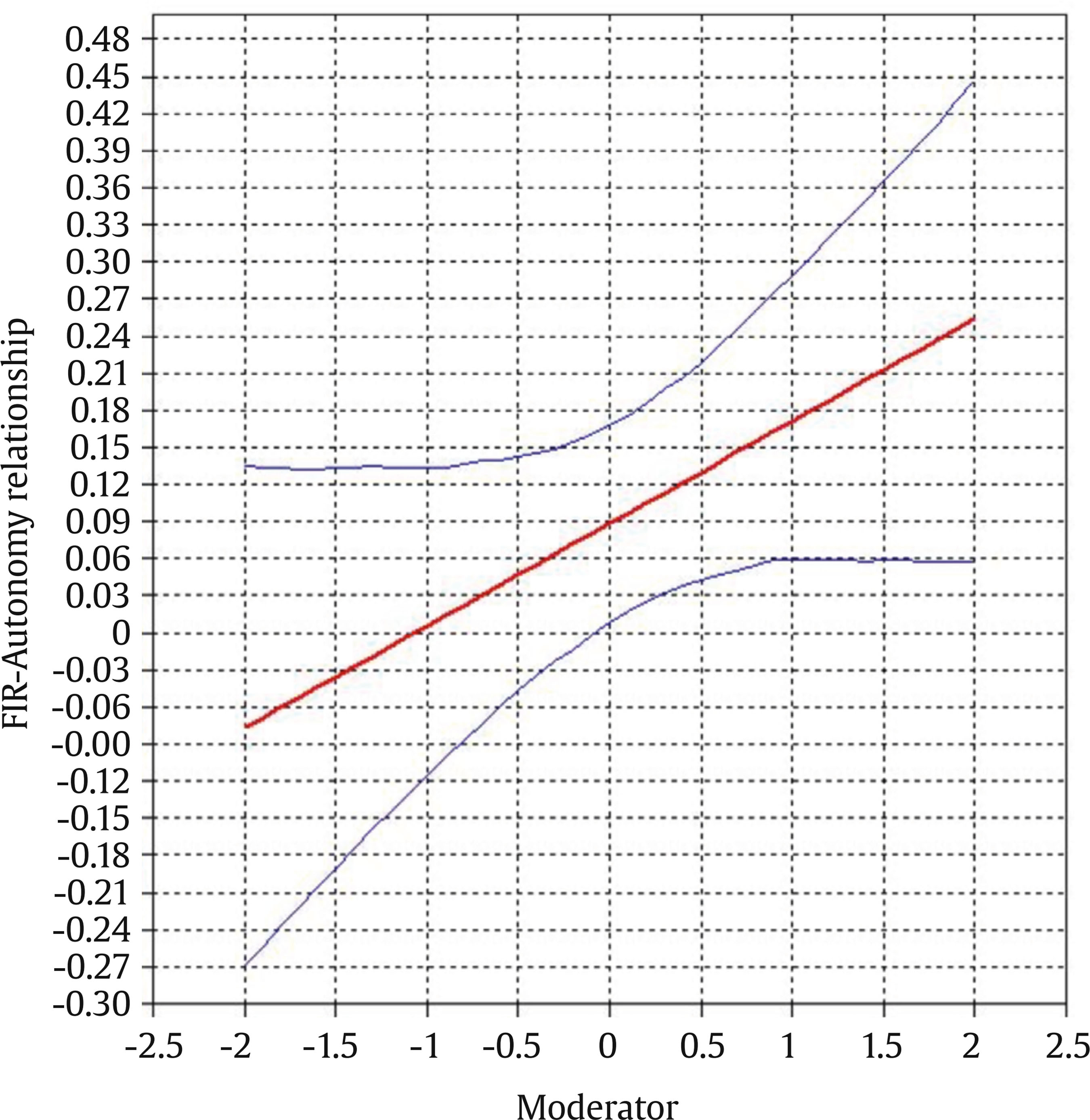 Note. FIR = frequency of interaction with robots; Moderator = attitude toward robots (centered scores). The red line represents the point estimate of the FIR-autonomy relationship across the range of the moderator values. The blue lines define the corresponding 95% confidence interval (the only one provided by Mplus). Direct Relationships between Job Autonomy, Emotional Exhaustion, and Personal Growth at Work Job autonomy was negatively associated with emotional exhaustion (β = -.128, p < .05), supporting Hypothesis 7. Emotional exhaustion had a negative relationship with personal growth (β = -.126, p < .05), supporting Hypothesis 8. The Indirect Effect of FIR and Personal Growth at Work via Job Autonomy and Emotional Exhaustion The indirect effect of FIR on personal growth through autonomy and emotional exhaustion was not significant (.002, SE = .001, 90% CI = [.000, .006]). This result did not support Hypothesis 9. Table 2. Values for the Significant Conditional Indirect Effects at Different Levels of The Moderator (Attitude toward Robots)  Note. FIR = frequency of interaction with robots. Moderation Analysis The model including the moderator (i.e., attitude toward robots) showed a good fit to data, χ²(9) = 25.357, p = .003, RMSEA = .078, 90% CI = [.043, .115], CFI = .95, SRMR = .056. The results indicated that employees’ attitudes toward robots significantly and positively moderate the relationship between FIR and autonomy (β = .083, SE = .047, p = .038). This suggests a significant conditional direct effect (CDE), meaning that the relationship between FIR and job autonomy strengthens as attitudes toward robots improve. To help interpret this moderator effect, we computed the corresponding simple slopes for three values of the moderator. The results showed that when attitudes toward robots were low (-1SD) the relationship was not significant (.015, BC 90% CI = [-.081, .116]). However, when the moderator value was medium (Mean; .088, BC 90% CI = [.021, .155]) and high (+ 1SD; .162, BC 90% CI = [.074, .258]) the FIR-autonomy relationship was stronger and statistically significant. We also illustrated the relationship between FIR and autonomy with the moderator (see Figure 2). This figure shows that the FIR-Autonomy relationship increases as the moderator increases. These results supported Hypothesis 10. Figure 3 Plot of the conditional indirect effect “FIR – Job Autonomy – Work Engagement – Personal Growth” moderated by attitude toward robots 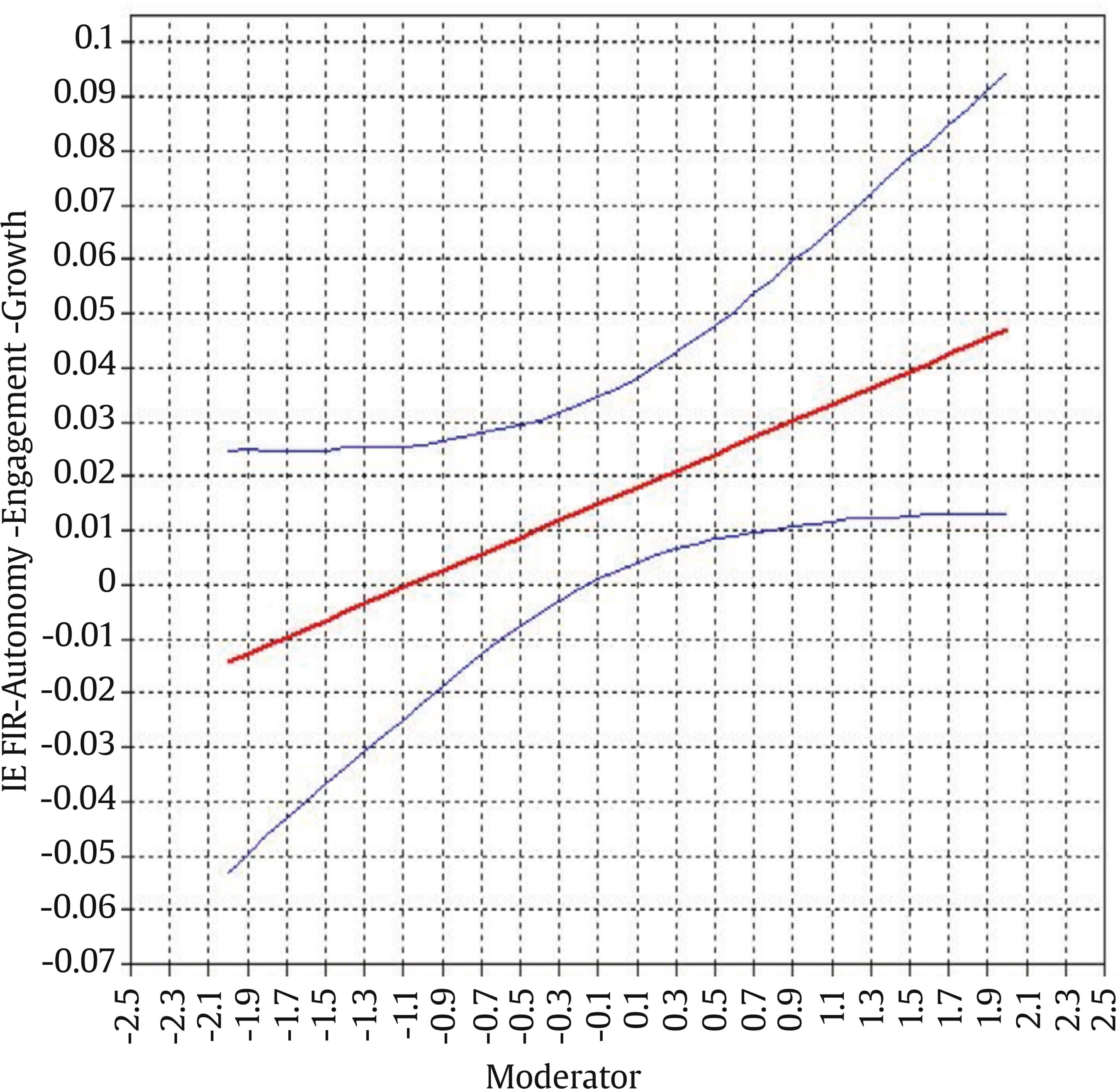 Note. FIR = frequency of interaction with robots; IE = indirect effect; Moderator = attitude toward robots (centered scores). The red line represents the point estimate of conditional indirect effect across the range of the moderator values. The blue lines define the corresponding 95% confidence interval (the only one provided by Mplus). To test Hypotheses 11, 12, and 13, and the associated conditional indirect effects, we computed the corresponding indices of moderated mediation (IMM; Hayes, 2015). The results obtained showed that employees’ attitude toward robots moderated the following indirect effects: FIR – Job Autonomy – Work Engagement – Personal Growth (IMM = .015, BC 90% CI = [.002, .032]), and FIR – Job Autonomy – Personal Growth (IMM = .026, BC 90% CI = [.003, 0.055]; Hypotheses 11 and 12, respectively). The IMM for the indirect effect involving emotional exhaustion (FIR – Job Autonomy – Emotional Exhaustion – Personal Growth) was not statistically significant (IMM = .001, BC 90% CI = [.000, 0.006]; Hypothesis 13). To interpret the significant conditional indirect effects (CIE) we computed the corresponding values at different levels of the moderator (see Table 2). The results obtained showed that in both cases the indirect effect was not statistically significant at low values (-1SD) of the moderator, being significant at medium (mean) and high (+ 1 SD) moderator values. Additionally, the value of the indirect effect increased as the moderator increased. Finally, we illustrated the relationship between each indirect effect and the moderator (see Figures 3 and 4). These figures demonstrate that both indirect effects increased as the moderator increased. These results supported Hypotheses 11 and 12 but did not support Hypothesis 13. Figure 4 Plot of the conditional indirect effect “FIR – Job Autonomy –Personal Growth” moderated by attitude toward robots 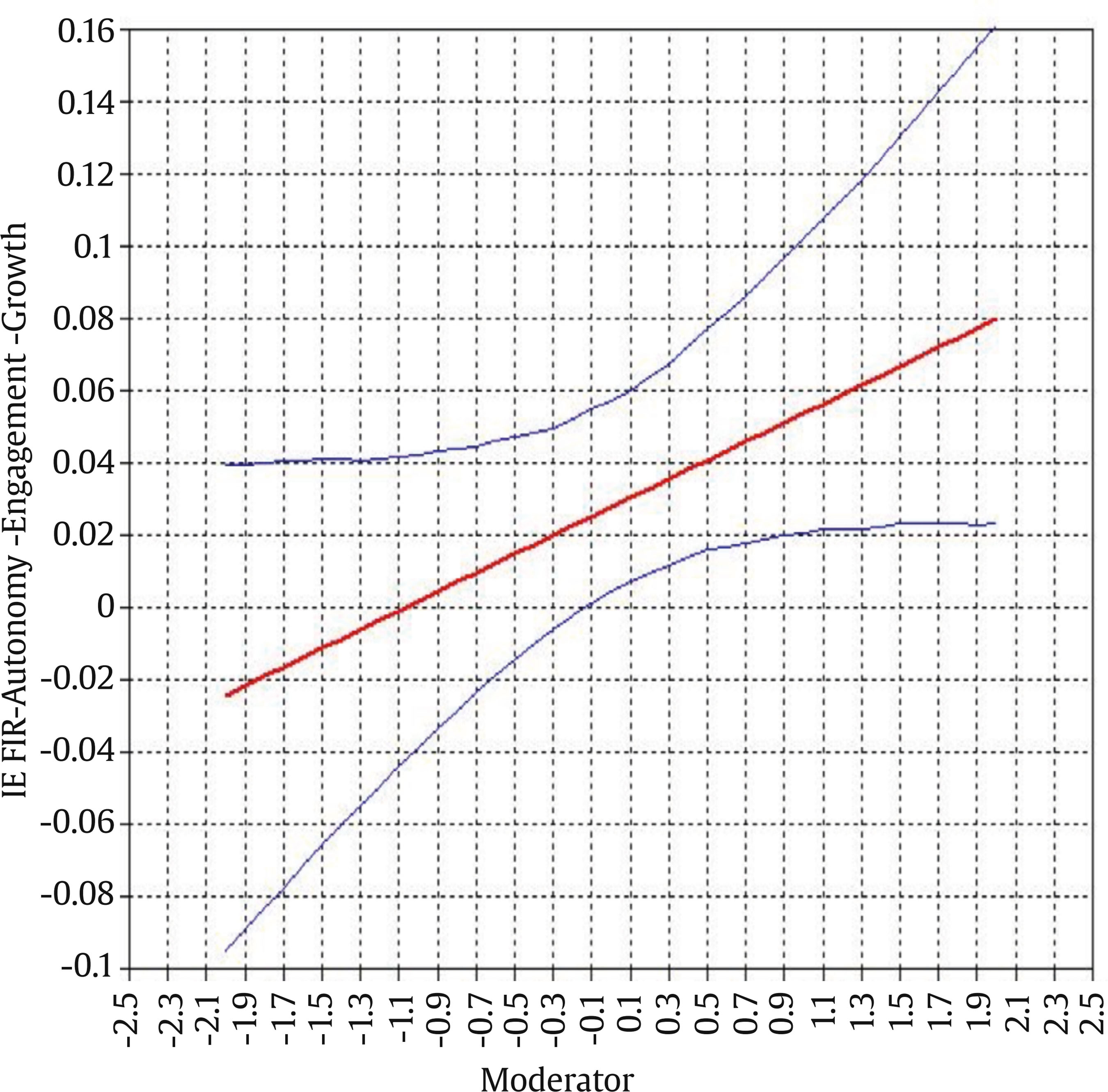 Note. FIR = frequency of interaction with robots; Moderator = attitude toward robots (centered scores). The red line represents the point estimate of conditional indirect effect across the range of the moderator values. The blue lines define the corresponding 95% confidence interval (the only one provided by Mplus). Our study aimed to investigate the relationships between the frequency of interaction with robots at work (FIR) and job autonomy, work engagement, emotional exhaustion, and personal growth at work. Furthermore, we examined the moderating role of attitude toward robots. Our results largely supported our hypotheses. FIR was positively related to job autonomy, which, in turn, was positively associated with work engagement and personal growth at work. The hypothesized indirect effects of FIR on personal growth via job autonomy alone and via job autonomy and work engagement combined were positive and significant. Job autonomy was also negatively related to emotional exhaustion, which, in turn, was negatively related to personal growth at work. However, the indirect effect of FIR on personal growth via job autonomy and emotional exhaustion was not statistically significant. Finally, our moderation analysis revealed that attitudes toward robots enhanced the positive relationship between FIR and job autonomy, as well as the indirect effects of FIR on personal growth at work via job autonomy alone and via job autonomy and work engagement. Theoretical Implications Our results have several theoretical implications. They contribute to extending job characteristics and work design models (Hackman & Oldham, 1975; Morgeson & Humphrey, 2006; Parker & Knight, 2024) in several ways. Firstly, our study shows that FIR is a correlate of a key work characteristic: job autonomy. Thus, job characteristics and work design models should consider FIR as a potential antecedent of job autonomy and other key work characteristics. Future studies should test whether the relationship observed here between FIR and job autonomy is also observed when other work characteristics are examined. Secondly, by showing that attitudes toward robots play an important moderating role in the relationship between FIR and job autonomy, our results provide empirical support for the integration of the Technology Acceptance Model (TAM; Davis, 1989) and work design theories. Our results emphasize the importance of attitudes toward robots for boosting the positive relationship between FIR and job autonomy. This provides a more nuanced knowledge about the conditions under which the functional outcomes of FIR can be expected. Thirdly, by choosing personal growth at work as a work outcome in our research model, our study contributes to extending work characteristics models through the incorporation of indicators of eudaimonic well-being. Research about work characteristics outcomes has been mainly focused on indicators of hedonic well-being (e.g., job satisfaction; Humphrey et al., 2007; Parker & Knight, 2024). Our results show that work characteristics models should also include eudaimonic well-being indicators. Doing so will provide a more comprehensive perspective on how work design is related to the outcomes of work. Fourthly, our moderated mediation model provides a detailed and nuanced perspective about the mechanisms through which FIR is related to a key eudaimonic well-being dimension. Our results help us understand “why” working with robots is related to personal growth at work, “what” variables are involved in this indirect relationship, and under “what conditions” this relationship is enhanced. This nuanced knowledge contributes to developing our discipline in a relatively new area (i.e., the relationship between working with robots and work characteristics and outcomes) in which the number of empirical studies is still scarce (Jonczyk et al., 2025). In this regard, it is worth mentioning that “empirically substantiating the boundary conditions of one variable’s [relationship with] another and the mechanism(s) by which that [relationship] operates are recognized as markers of deeper understanding than merely establishing that X affects Y” (Hayes, 2015, p. 1). Finally, our study shows that FIR matters, as it may influence a key work characteristic (job autonomy), relevant psychological states (work engagement and emotional exhaustion), and an important work outcome (personal growth at work). Thus, our promising results should foster research and theory development in this relatively new area of research. Practical Implications Our results also have some practical implications. Firstly, our findings suggest that integrating robots into the workplace and fostering FIR can empower employees by giving them more autonomy over their tasks and work processes. This aligns with previous research indicating that robotization can enhance job roles by taking on routine tasks and allowing employees to focus on more complex and meaningful work that involves decision-making (Barrera, González-Roma et al., 2025). Additionally, robots can provide precise information, further increasing employees’ control over their tasks (Fréour et al. 2021). Thus, robotization and fostering FIR can be a way to enrich jobs. To maximize these benefits, organizations should promote positive attitudes toward robots given that our results show that such attitudes can strengthen the positive relationship between FIR and job autonomy. Practical strategies to foster positive attitudes toward robots could include communication initiatives that highlight the advantages of robotization for employees’ quality of working life (i.e., reduced physical demands and musculoskeletal problems; Barrera, González et al., 2025) and training programs that demonstrate how to work with robots and navigate the transition process. Additionally, continuous feedback practices could be established to ensure that employees are actively involved in the implementation of robots, allowing them to share their ideas and suggestions on how robotization affects their work and what measures could be taken to improve it. Secondly, when implementing robots, it is crucial to make sure that job autonomy is expanded considering the existing resources and constraints rather than diminished. For instance, the time saved by assigning robots the more physically demanding tasks should allow employees to devote time to supervising robots and making firsthand decisions when problems appear. Our results suggest that these improvements in job autonomy can translate into more work engagement, less emotional exhaustion, and more personal growth at work. Limitations and Future Directions Our study has some limitations that suggest directions for future research. Firstly, given that we used a cross-sectional design, we cannot infer causal relationships among the study variables. Longitudinal and quasi-experimental studies are necessary to examine how the implementation of robots is related to job characteristics and employee well-being. For instance, detecting companies willing to implement robots could offer an opportunity to design a study in which the consequences of robotization in some production lines could be compared with a control group in which robots are planned to be implemented later on. Secondly, our data came from a single organization within a specific industry, which limits the generalizability of our findings. Future studies should replicate our findings in other sectors and focus on different types of robots (i.e., collaborative robots or cobots). In the particular organizational context we studied, robot implementation was positively associated with job autonomy. As we explained above, this suggests that robot implementation allowed employees to focus on the performance of more complex tasks (e.g., supervision of robots) that gave them more control over their work. However, this outcome might not be universal and might depend on the organizational context. Berkers et al.’s (2023) qualitative study showed that the warehouse workers who were consulted in the process of robot implementation had more control over how tasks were carried out and how to interact with the new technology. For them, job autonomy increased. However, in most of the warehouses they studied, where robots were introduced through a top-down, efficiency-driven approach, workers lost autonomy. These findings suggest that the positive relationship between FIR and autonomy that we observed may not be a direct outcome of robotization and may depend on the strategy of implementation followed by companies. This idea opens an avenue for future research. Thirdly, our data came from a single source, which might have inflated the relationships between the study variables due to common-method bias. However, the fact that some correlations between the study variables were very close to zero (e.g., .01) suggests that this was not a serious problem in our study (Spector, 2006). Last, we only measured one key work characteristic (i.e., job autonomy). Future research should consider other work characteristics that might be affected by the implementation of robots (e.g., skill variety and workload) given that the empirical research on the relationships between robotization and job characteristics and outcomes is still very scarce (Jonczyk et al., 2025). This will help increase our understanding of how robotization is shaping jobs in contemporary organizations. Fourthly, the scales we used to measure the study variables were composed of few (four or less) items. We did so to shorten the questionnaire length and prevent respondent tiredness. The scales we used in some cases were the original versions [e.g., job autonomy (Morgeson & Humphrey, 2006), work engagement (Schaufeli et al., 2029)], but in other cases we used abridged versions of the original scales (e.g., emotional exhaustion, personal growth). Although all the multi-item scales we used showed a satisfactory reliability, we acknowledge that short scales as ours may not adequately cover the content domain of the involved construct. Thus, future studies should replicate our finding using longer scales. The present study sheds light on how, why, and in which conditions the frequency of interaction with robots while working is related to job autonomy, work engagement, emotional exhaustion, and personal growth at work. Given the scarce literature on this topic (Jonczyk et al., 2025), our results contribute to improving our knowledge about the phenomenon of working with robots, which is expected to increase notably in the coming years. Our study is a step toward reaching a more comprehensive and detailed understanding. Note Conflict of Interest Thea authors of this article declare no conflict of interest. Note Although the fit of Model 1 was good, the estimates it provided included a negative (small) residual variance for the second emotional exhaustion item (-.07), and consequently, a standardized factor loading slightly larger than 1 (1.02). To address this issue (ill-defined solution with out-of-range values), we set the value of this residual variance to .28 and fitted the model again. We chose this value because it matched the estimated residual variance for the item with the highest standardized factor loading (.92, the second personal growth item). The solution obtained for this modified five-factor model was well-defined (with no out-of-range values) and indicated a good model fit, χ2(95) = 261.9, p < .001; CFI = .93; RMSEA = .077; 90% CI [.066, .088]; SRMR = .079, which was significantly better than the fit of Model 2, Δχ2(9) = 1078.1, p < .001. Although the fit of Model 1 was good, the estimates it provided included a negative (small) residual variance for the second emotional exhaustion item (-.07), and consequently, a standardized factor loading slightly larger than 1 (1.02). To address this issue (ill-defined solution with out-of-range values), we set the value of this residual variance to .28 and fitted the model again. We chose this value because it matched the estimated residual variance for the item with the highest standardized factor loading (.92, the second personal growth item). The solution obtained for this modified five-factor model was well-defined (with no out-of-range values) and indicated a good model fit, χ²(95) = 261.9, p < .001; CFI = .93; RMSEA = .077; 90% CI [.066, .088]; SRMR = .079, which was significantly better than the fit of Model 2, Dχ²(9) = 1078.1, p < .001. The data that support the findings of this study are available from the corresponding author upon request. References |
Cite this article as: Schweizer, T., González-Romá, V., Peiró, J. M., Jonczyk, N., & Barrera, L. (2026). Working with Robots and Eudaimonic Well-being at Work: A Moderated Mediation Model via Job Autonomy, Work Engagement, and Emotional Exhaustion. Journal of Work and Organizational Psychology, 42, Article e260776. https://doi.org/10.5093/jwop2026a8
Correspondence: vicente.glez-roma@uv.es (V. González-Romá)., Correspondence: vicente.glez-roma@uv.es (V. González-Romá).Copyright © 2026. Colegio Oficial de la Psicología de Madrid


 PDF
PDF e-PUB
e-PUB CrossRef
 JATS
JATS Print
Print SEND
SEND