Fighting Turnover Intention: Meta-Analytic Insights on the Role of Talent Management and Employee Engagement
[La lucha contra la intención de abandono: perspectiva metanalítica sobre el papel de la gestión del talento y el compromiso de los empleados]
Luna Sinisterra1, Jonathan Peñalver1, Belen Fernández-Castilla2, & Marisa Salanova1
1Equipo de investigación WANT, Castellón de la Plana, Universitat Jaume I, Castellón, Spain; 2Universidad Nacional de Educación a Distancia
https://doi.org/10.5093/jwop2026a4
Received 28 July 2025, Accepted 6 May 2026
Abstract
Nowadays, organizations are facing talent shortages with important costs. Talent management plays an important role in reducing turnover intention, and this relationship is often explained by the mediating role of employee engagement. This meta-analysis examines the relationships among these variables following PRISMA guidelines. Based on 29 studies, the results confirm talent management practices are significantly and negatively related to turnover intention, while employee engagement partially mediates this relationship. In addition to it, the study tested several moderators, none of them explaining the variance in effect sizes. This suggests that the observed relationships may be relatively stable across different demographic and contextual contexts, but also proposes some methodological challenges in the assessment of moderators. The findings highlight the importance of employee engagement as a key mechanism through which talent management practices influence turnover intention, and they call for further research into alternative mediators and more nuanced moderator analyses. This is the first meta-analysis to quantitatively synthesize these three variables, offering robust evidence for future theory and practice.
Resumen
En la actualidad, las organizaciones se enfrentan a escasez de talento con importantes costes. La gestión del talento desempeña un papel importante en la reducción de la intención de abandono y esta relación se explica frecuentemente por el papel mediador del compromiso de los empleados. Este metanálisis examina las relaciones entre estas variables siguiendo las directrices PRISMA. A partir de 29 estudios, los resultados confirman que las prácticas de gestión del talento se relacionan significativa y negativamente con la intención de abandono, mientras que el compromiso de los empleados media parcialmente esta relación. Asimismo, se analizaron diversos moderadores, ninguno de los cuales explicó la varianza en los tamaños del efecto, lo que indica que las relaciones observadas pueden ser relativamente estables en distintos contextos demográficos y contextuales, aunque también plantea algunos desafíos metodológicos en la evaluación de los moderadores. Los resultados destacan la importancia del compromiso de los empleados como mecanismo clave a través del cual las prácticas de gestión del talento influyen en la intención de abandono y apuntan a la necesidad de investigar mediadores alternativos y análisis de moderadores más precisos. Se trata del primer metanálisis que sintetiza cuantitativamente estas tres variables, ofreciendo una prueba robusta para la teoría y la práctica futuras.
Palabras clave
Prácticas de gestión del talento, Intención de abandono, Compromiso de los empleados, MetanálisisKeywords
Talent management practices, Intention to quit, Employee engagement, Meta-analysisCite this article as: Sinisterra, L., Peñalver, J., Fernández-Castilla, B., & Salanova, M. (2026). Fighting Turnover Intention: Meta-Analytic Insights on the Role of Talent Management and Employee Engagement. Journal of Work and Organizational Psychology, 42, Article e260772. https://doi.org/10.5093/jwop2026a4
Correspondence: lsiniste@uji.es (L. Sinisterra).Turnover intention and job-hopping have always been key challenges for organizations. During recent years, both have been further accelerated due to contextual factors like the COVID-19 pandemic and the growing presence of young generations in the workplace (Barhate & Dirani, 2022; Chen et al., 2023). These trends have intensified the difficulty organizations face in retaining talent, making turnover intention one of the most important issues today (Luna-Arocas & Danvilla del Valle, 2022). When employees abandon their job, organizations incur different costs related to recruitment and training, productivity losses, diminished team motivation, and deterioration of the organization’s reputation (Castro-Gonzalez et al., 2021). In response to this growing issue organizations need to understand how and why people want to stay in an organization. In this context, talent management emerges as an important variable, since a milestone for organizations is the retention of happy and productive workers (Kossyva et al., 2024). However, in order to design effective talent management practices that reduce employee turnover intention, organizations need first to understand the psychological mechanisms through which these practices influence turnover intention. Among these mechanisms, employee engagement emerges as a powerful one in explaining the aforementioned relationship (Alhajaj & Ahmad, 2023). The systematic review of Sinisterra et al. (2024) identified employee engagement as an important mediator between talent management practices and turnover intention. Based on its findings, by promoting employee engagement through talent management, organizations not only may mitigate the current employee turnover issue, but also build a healthy, resilient, and committed workforce. Moreover, in an increasingly diverse workforce, individual and contextual characteristics such as age, gender, culture, and occupational sector may influence these relationships, and deserve further empirical attention (Mazzetti et al., 2023; Šakytė-Statnickė et al., 2023). Although the aforementioned systematic review has provided valuable insights about the relationship between talent management, employee engagement, and turnover intention, systematic reviews have some limitations. For example, they allow researchers to synthesize the existing literature, identify patterns, and reach conclusions based on the existing studies to date. However, they are narrative in nature and do not statistically integrate the results (Ahn & Kang, 2018). On the contrary, meta-analyses go a step further by quantifying the results of previous research using statistical techniques, providing precise estimates of overall effects and effect sizes of the relationships (Ahn & Kang, 2018). Taking this into the account, this study aims to quantify the relationship between talent management, employee engagement, and turnover intention, and also the mediating role of employee engagement in these connections through a meta-analytic approach. Finally, moderator effects will also be analyzed proposing the following moderators: age, gender, culture, and industry. This study presents an important strength, which is the employment of the OSMASEM (One-Stage Meta-Analytic Structural Equation Modeling) approach, which represents an innovative and advanced method for analyzing complex relationships among variables (Jak & Cheung, 2020). The OSMASEM approach reduces potential biases characteristic of traditional meta-analytic methods, at the same time as it allows to simultaneously examine direct, indirect and mediation effects. The use of OSMASEM methodology in this study not only strengthens the robustness of its results but also contributes to the validation of this methodology in the literature. Talent Management, Employee Engagement, and Turnover Intention Talent management consists of the attraction, development, and retention of talent (Luna-Arocas & Danvilla-del-Valle, 2023). It is the process through which an organization attracts, develops, and retains employees who contribute to its competitive advantage (Kossyva et al., 2024). According to Macpherson et al. (2023), talent management is essential in the success of organizations, since it influences many work-related behaviors and outcomes (e.g., job satisfaction, motivation, turnover intention; Kumar, 2022). Given its influence on work outcomes, research has widely examined the role of talent management in turnover intention and concluded that, when effectively implemented, talent management practices help to reduce employee’s turnover intention (Graham et al., 2024; Kumar, 2022). Turnover intention is defined as the degree to which an employee is willing to leave their current organization (Triningsih & Darma, 2024). One psychological mechanism through which the relationship between talent management and turnover intention works is employee engagement (Sheehan et al., 2019; Vermooten et al., 2019). Traditionally, research on employee engagement has been focused on work engagement (Saks et al., 2022). However, Saks (2006) introduced the concept of organizational engagement, supporting the fact that employee engagement is a multidimensional construct encompassing both work and organizational engagement. Work engagement consists of “a positive, fulfilling, work-related state of mind that is characterized by vigor, dedication, and absorption” (Schaufeli et al., 2002, p. 74). On the other hand, organizational engagement is characterized by a highly positive attitude toward the organization, a firm connection to it, and a willingness to contribute to its success (Saks et al., 2022). Engaged employees are more likely to feel emotionally connected to their work and organization, which strengthens their commitment and reduces their desire of leaving the organization (Vermooten et al., 2019). Talent management practices, such as career development plans or recognition programs, are functional to increase employees’ engagement, by satisfying employees’ intrinsic and extrinsic needs (Marescaux et al., 2013; Memon et al., 2021; Shahzad et al., 2024). This in turn develops a sense of belonging and satisfaction, which reduces employees’ intentions of leaving the organization (Winarno et al., 2022). Based on prior research, this study proposed the following hypotheses: H1: Talent management practices (i.e., selection and recruitment, training and development, performance management, rewards and recognition, and career development) are negatively associated with employees’ turnover intention. H2: Employee engagement mediates the relationship between talent management practices and turnover intention. Moderator Variables Age Generation theory suggests that people born within the same generation share similar behavioral profiles, set of values, and way of thinking, in both their personal and professional lives (Barhate & Dirani, 2022; Šakytė-Statnickė et al., 2023). Consequently, each generation may show distinct workplace needs, values, and aspirations (Barhate & Dirani, 2022). Regarding talent management practices, literature suggests that these practices are perceived differently between generations (Barhate & Dirani, 2022; Kossyva et al., 2021). Similarly, when it comes to employee engagement, literature suggests that younger generations tend to be less engaged – both in terms of work and organizational engagement – compared to older generations (Coetzee et al., 2017; Douglas & Roberts, 2020; Šakytė-Statnickė et al., 2023). Finally, with respect to turnover intention, baby boomers are usually more loyal to their organizations, since they value job stability and long-term dedication, Generation X shows stronger commitment to their profession and field of work rather than to their organizations, while Generation Y and Z are less loyal to a single organization, constantly searching for new growth opportunities and better working conditions (Šakytė-Statnickė et al., 2023). Various studies suggest age as a key determinant of turnover intention, being younger employees the ones with higher turnover intention (Chen et al., 2023; Emirolu et al., 2015). Based on previous research, we propose the following hypothesis: H3: Age moderates the relationship between talent management, employee engagement, and turnover intention. Gender Gender is one of the most common variables included as control variables in experimental studies or as moderator variables in meta-analyses within the field of organizational psychology (Bernerth and Aguinis, 2016; Mazzetti et al., 2023), since it may help to understand the real relationship between variables by considering for potential gender differences that could influence workplace outcomes. However, results across studies are contradictory. On the one hand, some studies suggest gender to influence significatively on this meta-analysis’ variables. For example, Pocnet et al. (2015) found gender moderates the relationship between personal resources and work engagement and Mensah (2021) proposes women to show less well-being in the workplace than men. In addition, some studies found differences in turnover intention depending on gender, being women the ones with higher turnover intention levels (Gessesse & Premanandam, 2024; Nakamura, 2001; Ono, 2023). On the other hand, various studies found opposite effects. For example, Banihani et al. (2013) and Hartman and Barber (2020) found non-significant gender differences on work engagement. Moreover, Alemu and Pyktina (2020), Rezwan and Takahashi (2022), and Windon et al. (2019) found no significant relationship between gender and turnover intention. In order to resolve this debate, this meta-analysis examines the moderating effect of gender in the relationship between talent management, employee engagement, and turnover intention, and proposes the following hypothesis: H4: Gender moderates the relationship between talent management, employee engagement, and turnover intention. Occupational Sector Occupational sector refers to the industry or field in which individuals are employed (e.g. healthcare, education, manufacturing, etc.). Different occupations provide different levels of job resources (e.g., autonomy, task variety, training), which influence employee engagement and work-related attitudes (Innstrand, 2016). Therefore, it is likely that employees from different sectors will differ in their levels of employee engagement, turnover intentions, and perceptions of talent management practices. For example, sectors such as information technology, banking, or healthcare tend to report higher turnover intentions (Brossoit et al., 2020; Kasa et al., 2022; Salunkhe et al., 2024). In addition, Innstrand et al. (2016) found differences in work engagement levels across occupations, with lawyers showing the highest work engagement levels, and teachers and advertising professionals the lowest. Finally, a meta-analysis by Mazzetti et al. (2023) found that occupational sector moderates the relationship work engagement and turnover intentions. Therefore, we propose the following hypothesis: H5: Occupational sector moderates the relationship between talent management, employee engagement, and turnover intention. Cultural Values Cultural values can be defined as the values, beliefs, norms, and behaviours shared by members of a nation (Omar & Urteaga, 2010). Following Hofstede’s (1983) dimensions, countries can be classified as individualistic or collectivistic based on their dominant cultural values. In individualistic countries (e.g., the U.S., Australia, or European countries) employees’ tend to put their personal interests ahead of group needs. In contrast, collectivistic cultures (e.g., Indonesia, China) emphasize group values and needs, and collective well-being (Hofstede, 2001). Literature suggests that these cultural differences may influence how employees perceive talent management and employee engagement (Etoom, 2022; Hu et al., 2014; Mazzetti et al., 2023; Pocnet et al., 2015). For instance, feedback has been found to have a stronger impact on engagement in collectivistic cultures than in individualistic ones (Mazzetti et al., 2023). These differences may also extend to turnover intention. Individualistic countries, where personal fulfilment and alignment with the job is prioritized, may have higher turnover rates than collectivistic countries where sense of duty, loyalty to the organization, and social obligations are employees’ core values (Setthakorn et al., 2024). Therefore, we propose the following hypothesis: H6: Culture moderates the relationship between talent management practices, employee engagement, and turnover intentions. Search Strategy The studies included in this meta-analysis were initially identified through a previously conducted systematic review (Sinisterra et al., 2024), analyzing the relationship between talent management, employee engagement, and turnover intention. The systematic review followed PRISMA guidelines (Moher et al., 2009). The systematic search was performed in February 2023 in four popular databases (Scopus, Web of Science, Business Source Premier, and ProQuest), and was updated in May 2024. The complete search string is available in the Appendix, Table S1. The inclusion criteria used were: (1) empirical quantitative studies; (2) studies available in English or Spanish; (3) studies conducted in an organizational environment; (4) studies addressing one or more of the following talent management practices: selection and recruitment, training and development, rewards and recognition, career development, and performance management (these practices were selected for being the most widely studied talent management practices in relation with engagement and turnover intention, as including all possible ones would be unfeasible and conceptually inconsistent; Pandita & Ray, 2018); and (5) studies assessing the relationship between talent management, employee engagement, and turnover intention. Eventually, 43 were included in the systematic review. For more information about the search strategy and selection process, we forward to Sinisterra et al. (2024). In the current study, the articles identified in the systematic review were re-examined to select only those that provided sufficient statistical data (e.g., correlations, sample sizes) for inclusion in the meta-analysis. Eventually, this study included 29 studies that met the eligibility criteria. Data Extraction Data was extracted independently by two different authors, and then their findings were cross-checked. Information retrieval during data extraction included: author name, sample size, year of publication, country of origin, type of culture, mean age of participants, percentage of women in the studies, study design, type of industry of participants, and correlation coefficients between variables. Quality Assessment The Appraisal tool for Cross-Sectional Studies (AXIS tool; Downes et al., 2016) was employed to assess the quality of the included studies. This tool comprises 20 questions covering different aspects of study design and quality, and the risk of bias in cross-sectional studies. Questions are answered using “yes”, “no”, or “don’t know”. A score of 1 was assigned to responses marked as “yes,” while “no” and “don’t know” received a score of 0. The general score, expressed as a percentage (0 to 100%) was used to group studies into three categories: high-quality studies (above 80%), moderate-quality studies (60%-80%), and low-quality studies (below 60%). Data Analysis Pearson correlation coefficients between the variables of interest (i.e., talent management, engagement, and turnover intention) were extracted from primary studies. Afterwards, two types of analyses were carried out. First, each bivariate correlation separately was combined to obtain an overall effect and run moderator, publication bias, and sensitivity analysis. Second, OSMASEM (Jak & Cheung, 2020) was implemented to test a meta-analytic mediation model. Details on each of these procedures are provided in the next paragraphs. To obtain an overall effect of each bivariate relationship, Pearson correlation coefficients were initially converted to Fisher’s Z-scores (Cooper et al., 2019). These Z-scores were then combined, and the resulting overall effect sizes were converted back to Pearson correlation coefficients, which are the values presented in the manuscript. In several studies, several Pearson correlations were available for a given bivariate relationship, often extracted from the same sample. To avoid biased estimates, statistical methods that account for the dependency among effect sizes extracted from the same study were implemented. Specifically, we applied three-level models (Van den Noortgate et al., 2013, 2015) together with a posteriori robust variance correction (Fernández-Castilla et al., 2021; Pustejovsky & Tipton, 2022). Besides confidence intervals, 95% prediction intervals were also calculated (using the standard errors provided by the robust variance correction). These intervals estimate the range within which the true effects are expected to fall for 95% of similar future studies (IntHout et al., 2016). Forest plots were created for each bivariate relationship, taking into account the presence of multiple effect sizes within studies (Fernández-Castilla et al., 2020). When applying a three-level model, two sources of variance are estimated: the variability of effect sizes within studies (Level 2) and the variability of effect sizes across studies (Level 3). The magnitude of these variances, both between studies and within a study, was assessed using likelihood ratio tests. Subsequently, moderator analyses were conducted by introducing study characteristics as predictor variables in the three-level model. The results of these meta-regressions were corrected using robust variance correction. For qualitative moderator variables, meta-regressions were performed only for categories that contained at least five effect sizes. When comparing more than two categories, multiple comparisons of their overall effects were conducted using Tukey’s correction to prevent inflated Type I error. When the moderator variables were quantitative, they were centered before analysis. Finally, analyses to detect the potential presence of publication bias were implemented: funnel plots were created and visually analyzed, three-level Egger regression tests were performed, and the statistic of the Trim and Fill test was obtained, as explained in Fernández-Castilla et al. (2021). If the distribution of effect sizes in the funnel plot was asymmetrically distributed at the bottom of the figure, and/or the three-level Egger regression test was statistically significant, and/or the value of the statistic was above two, we concluded that publication bias might be present. If that was the case, selection methods proposed by Vevea and Woods (2005) were applied to obtain an overall estimate adjusted for publication bias. Finally, an outlier analysis was conducted to identify extreme effect sizes. We calculated the studentized deleted residuals for each effect size (Viechtbauer & Cheung, 2010), looking for values that exceeded ± 1.96. Upon identifying potential outliers, we excluded them and reran all analyses to ensure robustness. To fit the meta-analytic mediation analysis, we used OSMASEM approach. The input was the 3 x 3 correlation matrices of each study, containing the three correlations of interest. Through this approach, a structural equation model can be fitted on the observed correlation coefficients extracted from the studies (for more technical información, we refer to Cheung and Jak & Cheung, 2020 and Jak et al., 2021). This method uses full information maximum likelihood as estimation method, which makes it robust to the missingness of some correlations in some studies. In our study, we began by fitting a simple regression model to examine the relationship between talent management and turnover intention. If this relationship was statistically significant, we proceeded with a second model, incorporating engagement as a mediator variable. In this second model, we focused on the significance of both the direct effect of talent management on turnover intention and the indirect effect through engagement. If the second model showed that the direct effect of talent management on turnover intention was not significant, while the indirect effect was significant, we concluded that full mediation was present. If both the direct and indirect effects were statistically significant, we concluded that partial mediation was present. The implementation of this approach was carried out in R (RStudio Team, 2023) using the metaSEM package (Cheung, 2015). From the initial set of studies identified in the systematic review (Sinisterra et al., 2024), which included 43 studies, a total of 29 articles met the inclusion criteria of this meta-analysis and were included. Quality Assessment and Characteristics of the Included Studies The quality of studies was assessed using the AXIS tool, since almost all included studies used a cross-sectional design (Downes et al., 2016). Rating indicated high quality for 1 study, moderate quality for 26 studies, and low quality for 2 studies. The average score was 67.07%. Demographic information of the 29 studies included in the meta-analysis can be found in the Appendix, Table S2. The results of the meta-analyses for each bivariate correlation are presented in Table 1. Also, information on the specific instruments used to measure each variable (i.e., employee engagement, talent management, and turnover intention) across the included studies is available in the coding spreadsheet, which has been made publicly accessible via the Open Science Framework (https://osf.io/kz459/overview). A detailed description of these instruments can also be found in Sinisterra et al. (2024). Table 1 Results from the Separate Meta-analysis Carried out for Each Bivariate Relationship Using Three-level Models and a Posterior Robust Variance Correction  Note. Cor. = correlation; TM = talent management; Engag. = engagement; Intent. = intention to quit; m = number of effect sizes analyzed; k = number of studies included; r = overall Pearson correlation; SE = standard error; CI = confidence intervals; PI = prediction intervals, Figure 1a Forest Plot of the Relationship between Talent Management and Engagement. 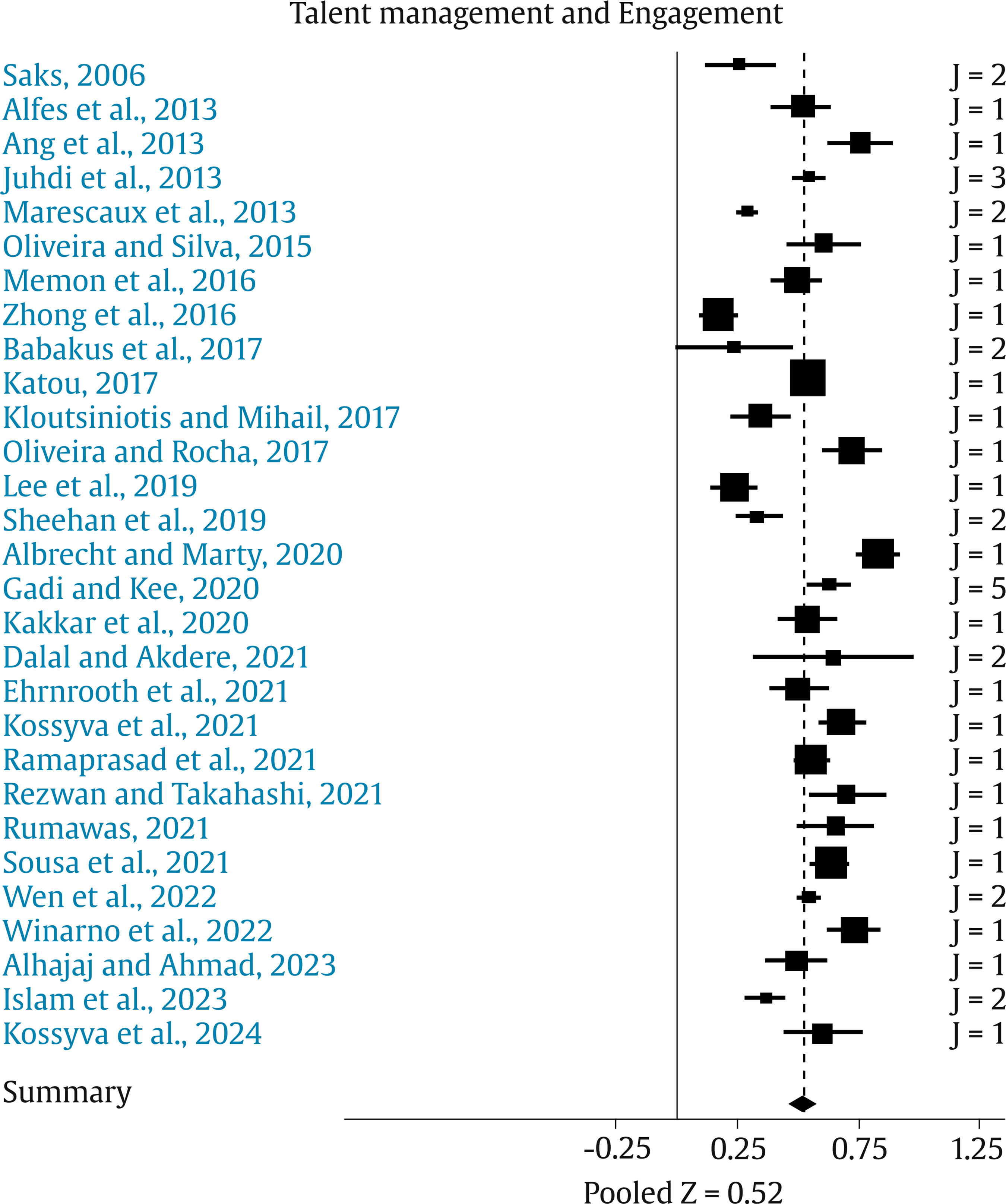 Figure 1b Forest Plot of the Relationship between Talent Management and Intention to Quit. 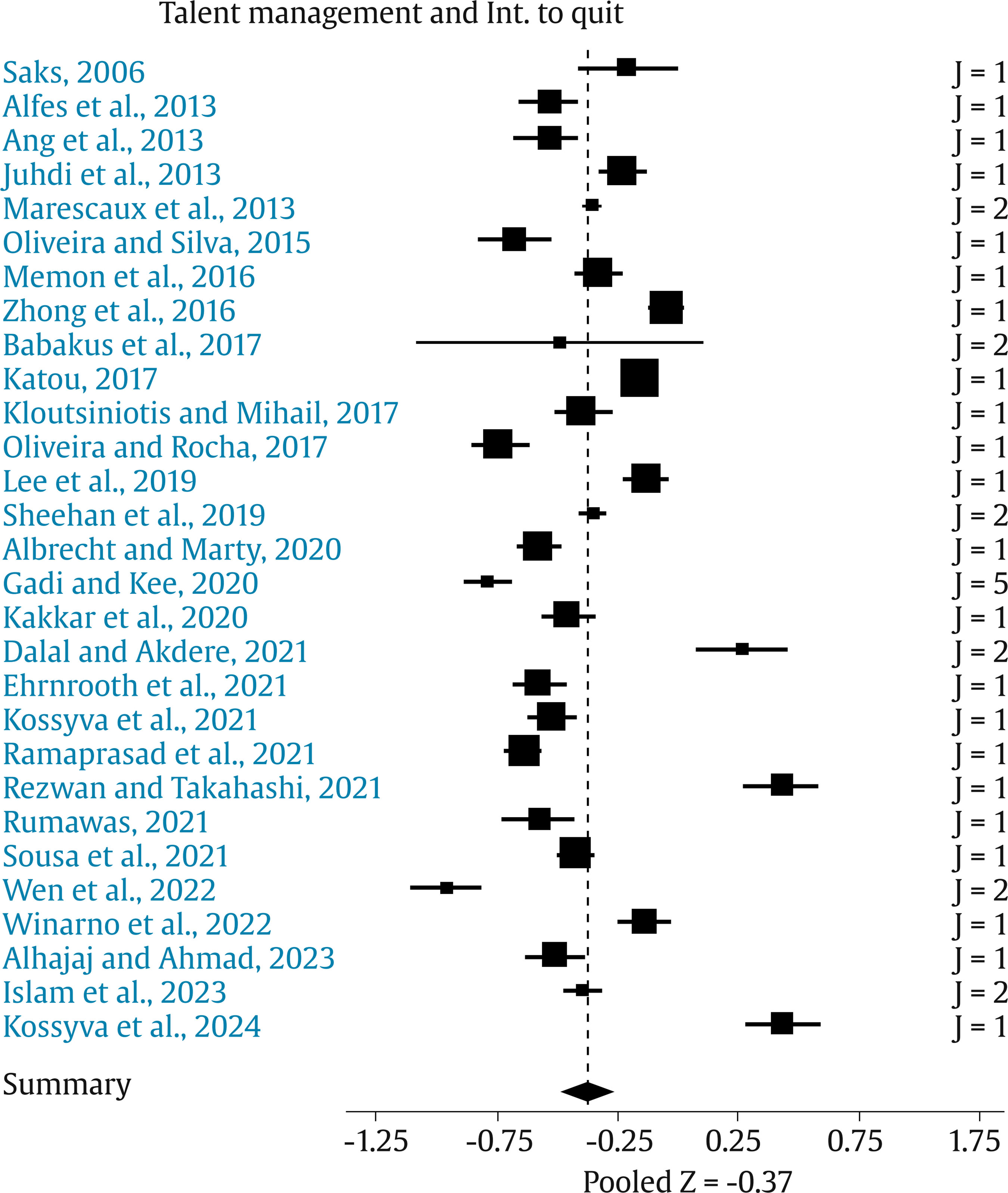 All Pearson correlations were statistically different from zero and moderate-to-large according to Cohen’s (1988) cutoffs. Forest plots are provided for each correlation (see Figures 1a, 1b, and 1c). The relationship between talent management and engagement was positive, while the correlation of both talent management and engagement with turnover intention was negative. The results of the likelihood ratio tests are provided in the Appendix, Table S3. All variance estimates were statistically different from zero, except for those associated with the correlation between engagement and turnover intention. To explain this observed variability, moderator analyses were carried out on each correlation. Figure 1c Forest Plot of the Relationship between Engagement and Intention to Quit. 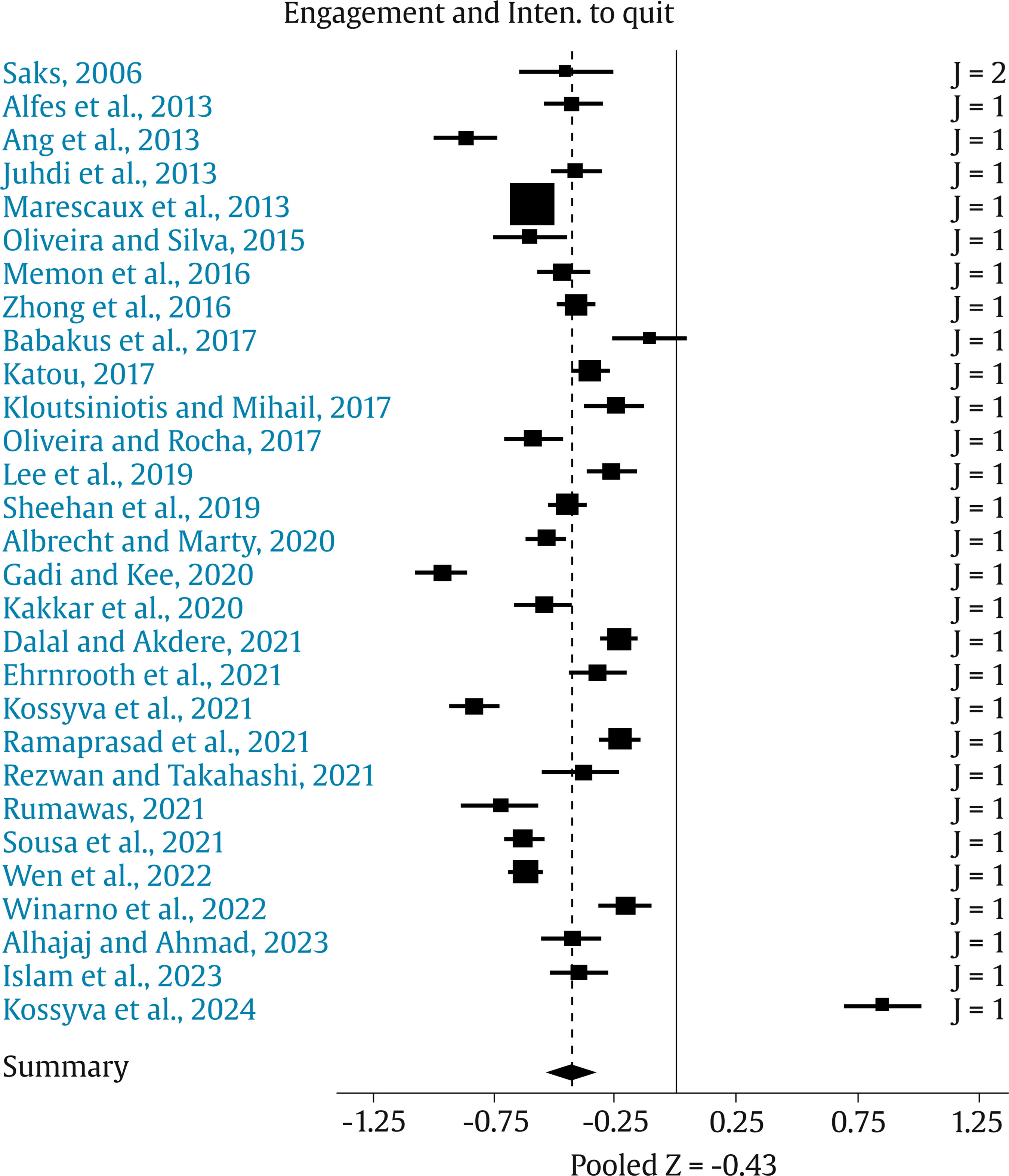 Results from the Separate Meta-analysis Carried out for Each Bivariate Relationship Using Three-level Models and a Posterior Robust Variance Correction Among the existing qualitative variables, we were only able to analyze the type of talent management, culture, and industry, as the remaining variables had fewer than five effect sizes across all categories. None of the moderator variables significantly explained the variability observed across the effect sizes. Results from the moderator analysis can be found in Table 2. Table 2 Results from Moderator Analysis 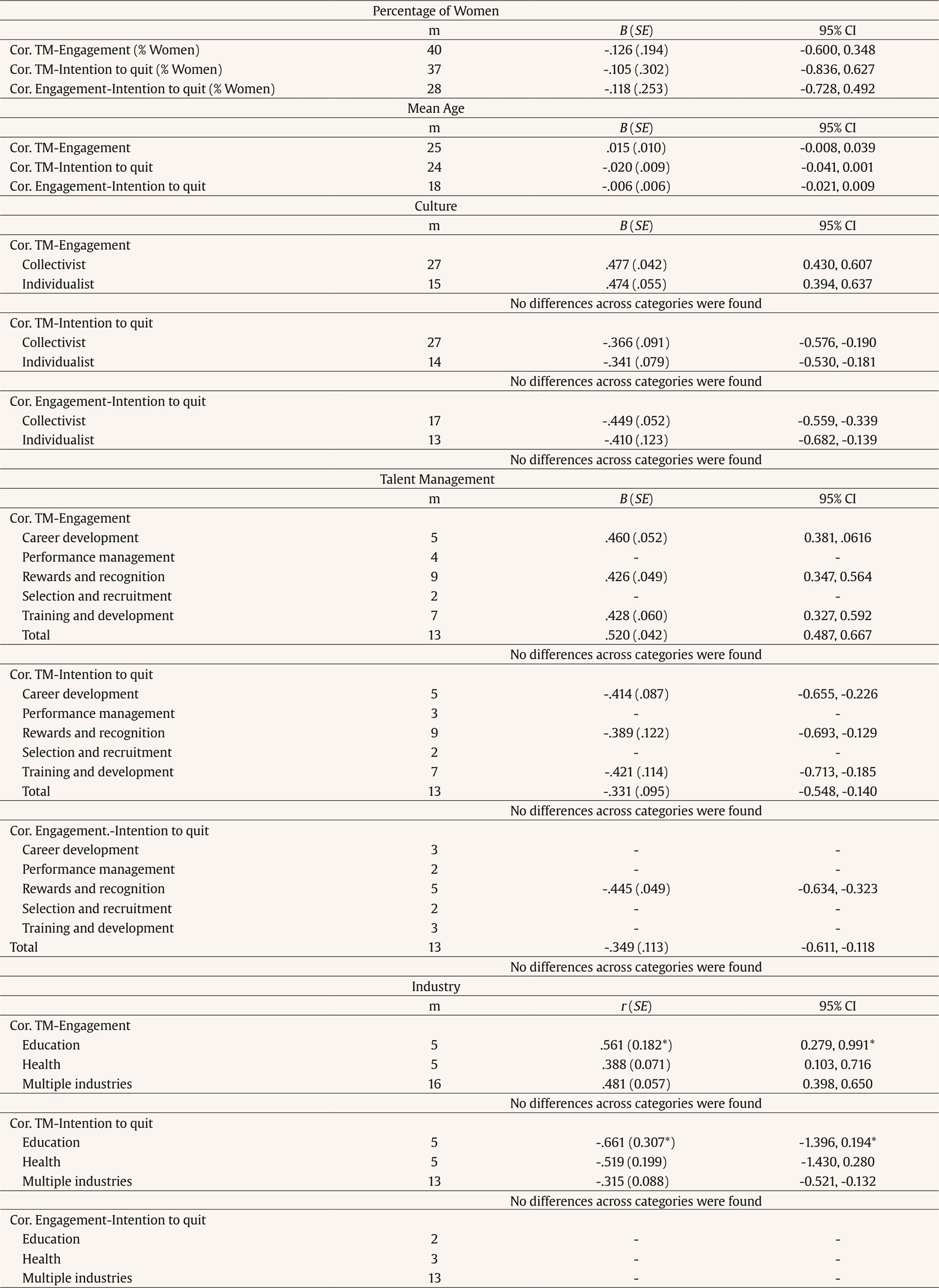 *When robust variance correction was applied, the standard error (SE) of this effect dropped to 0 since all the effect sizes from this category came from the same study. Therefore, the standard error and confidence intervals used was the one obtained prior to applying robust variance correction. Note. Cor. = correlation; TM = talent management. Funnel plots for the three correlations of interest can be found in Figures 2a, 2b, and 2c. A visual inspection of the figures indicated that there was no substantial asymmetry in the distribution of effect sizes. The results of this visual analysis was confirmed by the results of the three-level Egger regression test, where it was found that the standard errors of the effect sizes did not predict their magnitude (B = 0.412, p = .864 for the correlation between talent management and engagement, B = 2.171, p = .585 for the correlation between talent management and turnover intention, and B = 3.447, p = .385 for the correlation engagement and turnover intention). Furthermore, the statistic of the Trim and Fill was below two for the three correlations ( = 0.169 for the correlation between talent management and engagement; and = 0 for the correlation between talent management and turnover intention and for the correlation between engagement and turnover intention). Figure 2a Funnel Plot of the Relationship between Talent Management and Engagement. 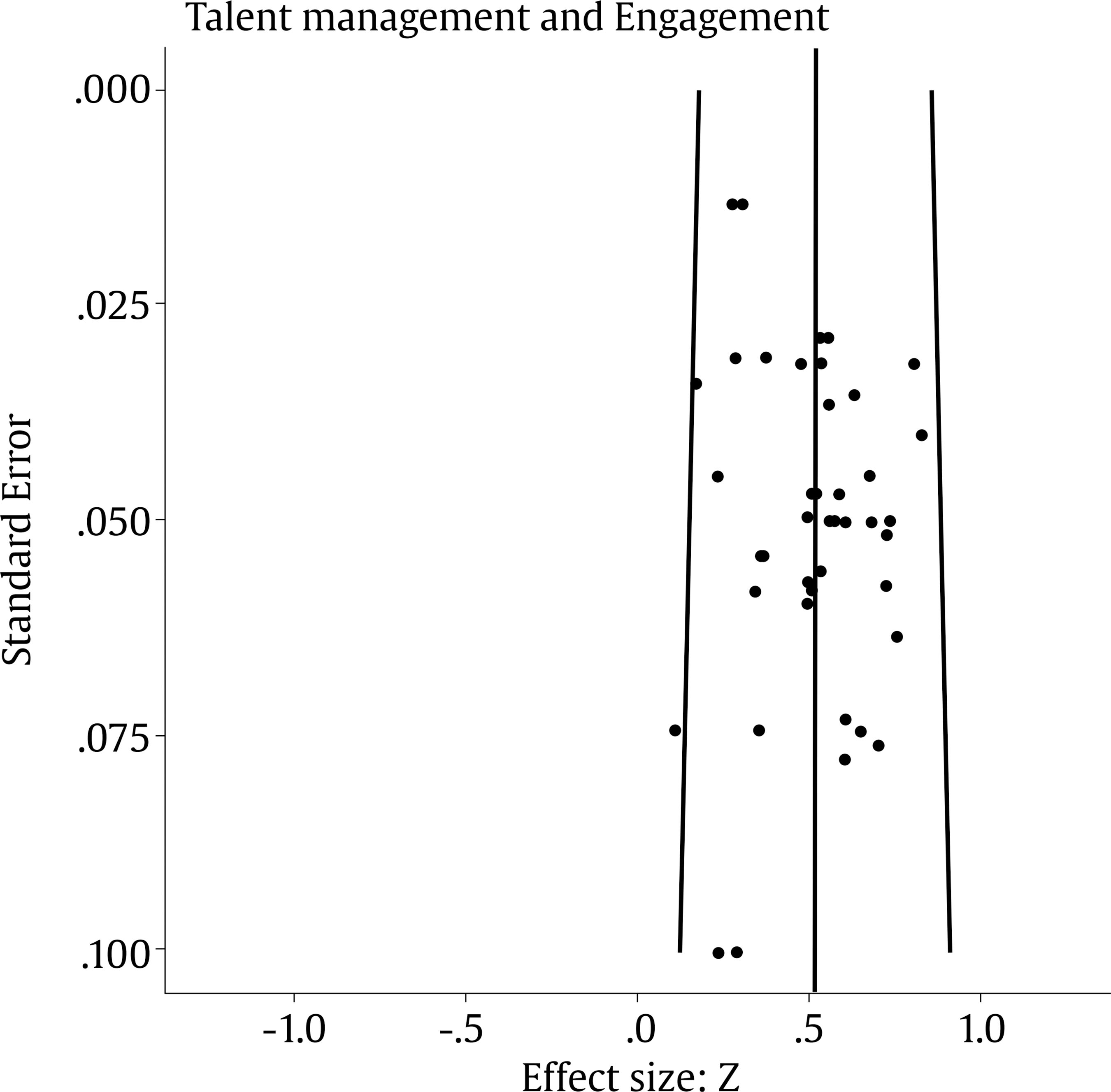 Figure 2b Funnel Plot of the Relationship between Talent Management and Intention to Quit. 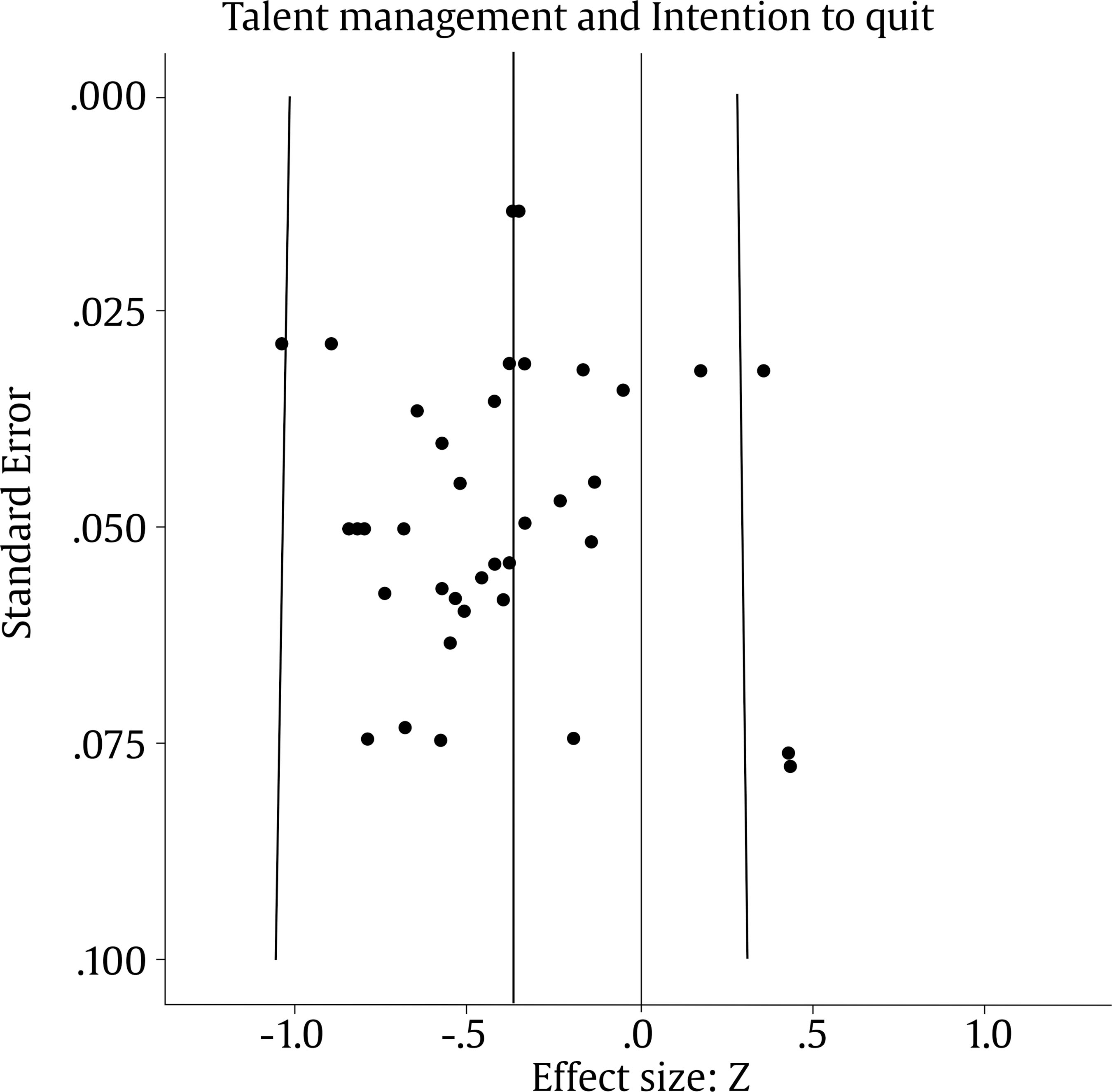 Figure 2c Funnel Plot of the Relationship between Engagement and Intention to Quit. 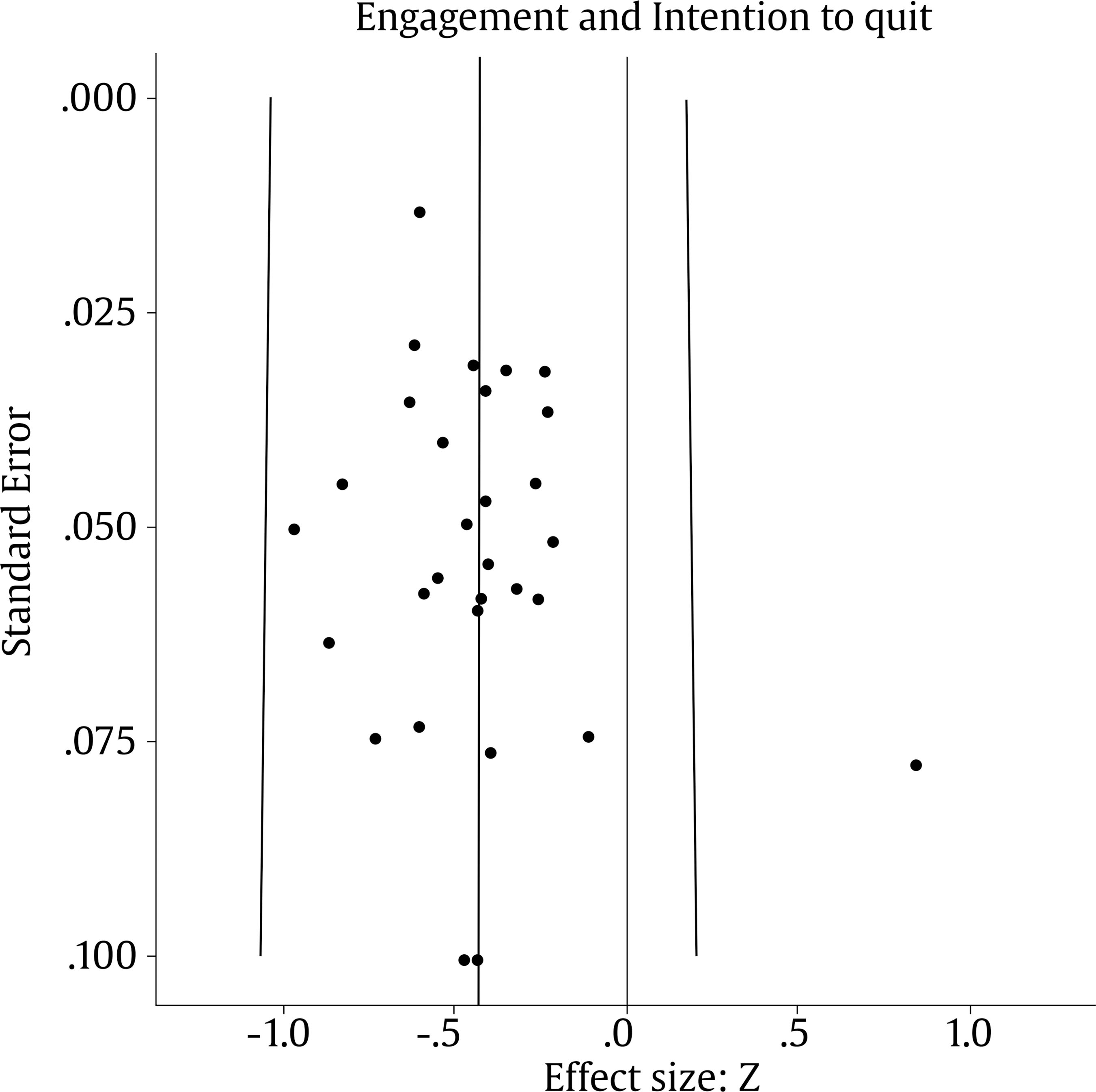 Finally, regarding the sensitivity analyses, several potential outliers were detected. For the correlation between talent management and engagement, two correlations were reported in Babakus et al. (2017) and Zhong et al. (2016) that were smaller than the others and therefore showed studentized deleted residuals out of bounds. These Fisher’s Z were 0.11 and 0.17, respectively. Without these outliers, the overall effect became slightly larger (r = .49). As for the correlation between talent management and turnover intention, four Fisher’s Z were detected as outliers (Z = 0.81 from Dalal & Akdere, 2021; Z = 0.60 from Kossyva et al., 2024; Z = 0.70 from Rezwan & Takahashi, 2021; and Z = 0.55 from Wen et al., 2022). These effects had in common that they were all positive, whereas the Pearson correlation reported by most of the other studies was negative. Without these effects, the overall effect became -.41. Finally, for the correlation between engagement and turnover intention, the Fisher Z reported in the study of Kossyva et al. (2024), which was .60, was detected as an outlier. After removing this effect, the overall effect remained almost the same (r = -.42). Moving on to the next phase of the analysis, the results of the meta-analytic mediation model can be found in Figures 3a and 3b. In Figure 3a, it can be seen that Talent Management significantly predicts turnover intention. When Engagement is entered as a mediator variable (Figure 3b), this effect drops from -.331 to -.189 but remains statistically significant. Furthermore, the indirect effect of Talent Management on turnover intention through Engagement is statistically significant (indirect effect = -.142, 95% CI [-0.215, -0.086]). All these results suggest that Engagement “partially mediates” the relationship between Talent Management and turnover intention. Figure 3 Meta-analytic Mediation Model of the Relationship between Talent Management and Turnover Intention through Engagement. 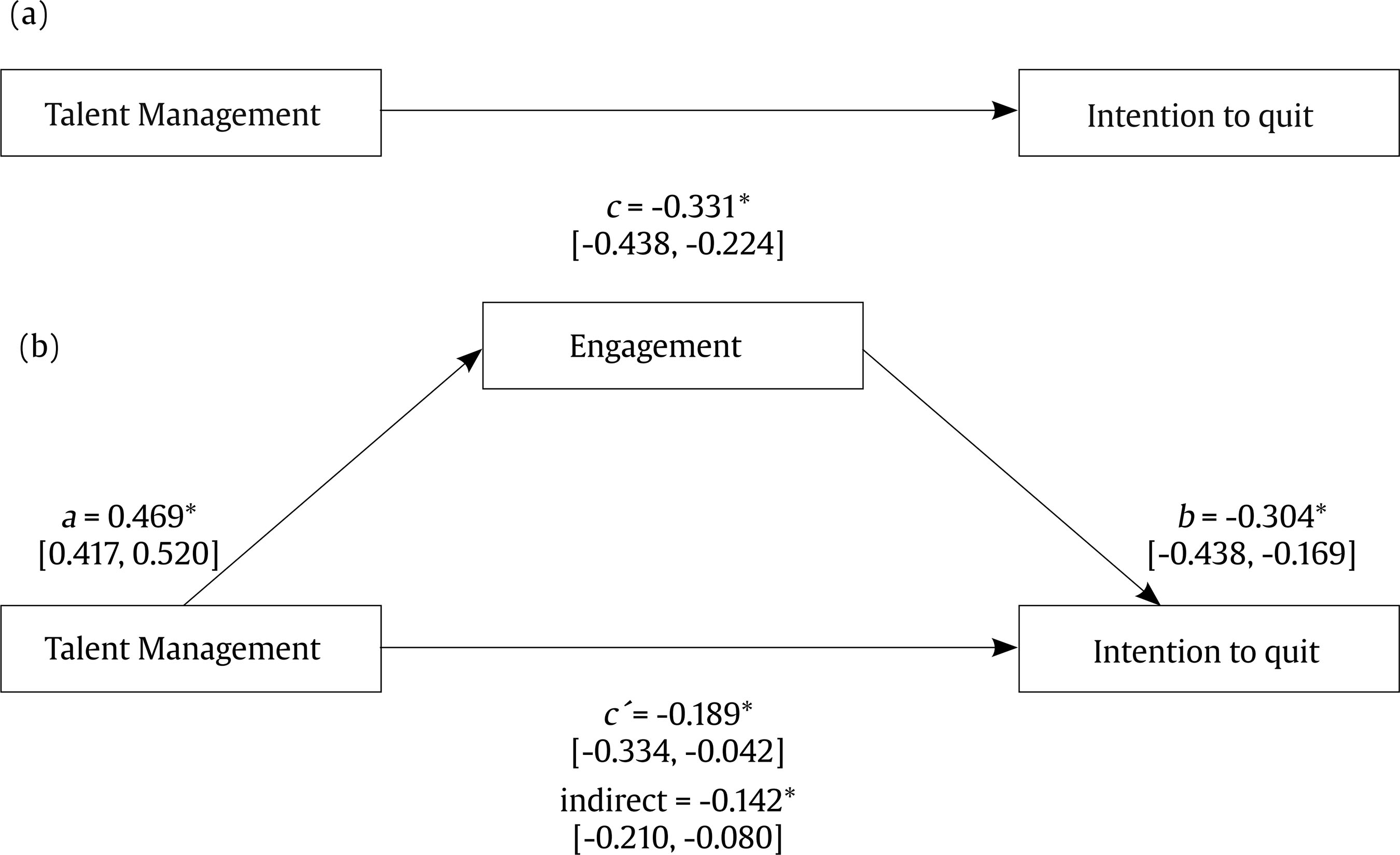 *p < .05. The main objective of this study was to meta-analyze the relationship among talent management, employee engagement, and turnover intention, with a particular emphasis on the mediating role of employee engagement in this relationship. The findings from the present meta-analysis, which includes 29 studies and 19,080 participants, confirm significant correlations between the three variables. To our knowledge, this meta-analysis is the first to thoroughly summarize the relationship between talent management, employee engagement, and turnover intention quantitatively. First, hypothesis 1 proposed that talent management practices are negatively associated with employees’ turnover intention. The results confirm this hypothesis by showing a moderate negative correlation between both variables. This negative relationship can be explained through the Social Exchange Theory (SET; Homans, 1961; Blau, 2017). SET proposes that organizations and employees engage in a reciprocal relationship where organizations invest resources in their employees (e.g., talent management practices) and, as a response, employees are likely to feel a sense of reciprocity and respond with positive attitudes and behaviours (e.g., decreased turnover intentions). Hypothesis 2 proposed that employee engagement mediates the relationship between talent management practices and turnover intention. This hypothesis is partially confirmed, as the results of the meta-analytic mediation model show that employee engagement partially mediates the relationship between talent management and turnover intention. This highlights the importance of designing talent management strategies and practices aimed at enhancing employee engagement, when the aim of the organization is to retain their employees in a healthy and sustainable way. However, the results indicate that engagement acts as a partial mediator in the relationship between talent management and turnover intention, since the direct effect remains significant when engagement is included in the model (MacKinnon et al., 2007). This suggests that employee engagement plays an important role in explaining this relationship. However, the persistence of a significant direct effect indicates that other mediating mechanisms may also be involved, such as job satisfaction or perceived organizational support (Shahzad et al., 2024; Supi et al., 2023). Hypotheses 3, 4, 5, and 6 proposed that demographic and contextual variables (age, gender, occupational sector, and culture) would moderate the studied relationships. However, the results did not support these hypotheses, as none of the moderator variables significantly explained the observed variability in the effect sizes for any of the three correlations studied. While some individual studies have reported significant moderation effects of these variables – suggesting, for instance, that age or culture might shape how employees perceive talent management practices or engage with their organizations (e.g., Hu et al., 2014; Mazzetti et al., 2023; Pocnet et al., 2015; Šakytė-Statnickė et al., 2023) – the current meta-analysis did not find evidence to support those effects at a broader level. This suggests that, contrary to some previous findings, the relationships among talent management, engagement, and turnover intention may be more stable across demographic and contextual factors than expected. Nonetheless, the inclusion of these moderators within a meta-analytic mediation framework remains relatively uncommon, which adds value to this study. However, there may also be other reasons for the absence of significant moderator effects. First, methodological issues could have limited the detection of these effects. In the case of gender, previous research has identified methodological challenges that may difficult the detection of moderation effects in meta analyses, even when these effects are strong (Craig Aulisi et al., 2023). This can happen due to the scarce variance in gender composition across primary studies (i.e., variability in male-to-female ratios), which reduces the power to detect significant moderating effects (Craig Aulisi et al., 2023). Regarding culture, lack of significant effects may be attributed to the fact that, nowadays, due to globalization, workplaces are increasingly multicultural, so employees living in the same country may have both individualistic and collectivistic values (Morris, 2023). However, the majority of primary studies only report the country where the study was conducted. This raises the question of whether culture remains a relevant moderator variable in meta analyses in the current globalized world, or if cultural values should be asked individually in questionnaires, rather than assuming a country adheres strictly to only individualistic or collectivistic values. Second, the lack of significant effects in the moderator analysis could be explained by the need to examine the joint effect of demographic variables, as their impact may change when combined. Instead of analyzing the impact of variables such as gender, age, culture, and occupational sector independently (as is commonly done), it may be interesting to assess how they interact with each other (Wilks & Neto, 2013). Previous studies have suggested that interactions among demographic variables may exert a stronger influence on results than when these variables are examined separately (Lahey & Oxley, 2021; Ng & Feldman, 2010). For example, the perception of talent management practices, employee engagement levels, and turnover intentions may differ significantly between an older collectivistic woman and a younger individualistic man (or vice versa), rather than simply between a woman and a man, across age generations or culture. Implications Theoretical Implications From a theoretical perspective, this meta-analysis contributes to advancing knowledge on the mechanisms that link talent management practices with employee turnover. First, the results support and extend the Social Exchange Theory in explaining employee behaviour (SET; Homans, 1961; Blau, 2017), by providing meta-analytic evidence that talent management efforts translate into increased employee engagement which, in turn, translates in reduced turnover intentions. This reinforces the idea that when organizations invest in their employees, they will reciprocate these efforts avoiding negative work behaviours, such as intention to quit. Second, this study explains the process of how talent management negatively influences turnover intentions by confirming that employee engagement partially mediates this relationship. This finding highlights the complexity of organizational relationships and indicates that other psychological or organizational variables may also be involved. Therefore, it suggests the need to explore additional mediators and mechanisms in combination with employee engagement, encouraging future research to fully understand the relationship. Finally, the absence of significant moderating effects for demographic and contextual factors may suggest the generalizability of existing theories and models across age, gender, sectors, and cultures. This supports the universal relevance of talent management practices and engagement in the retention of sustainable and healthy employees. Alternatively, the lack of significant moderating effects can also imply challenges and limitations in the way demographic variables are measured and reported in primary studies. Given the growing diversity in today’s workplaces, traditional approaches may no longer detect the full complexity of how demographic and contextual factors influence employee behaviours and experiences. Practical Implications This meta-analysis also has important implications for practitioners. First, organizations should invest in the designing and implementation of talent management practices, as a direct strategy to reduce employee turnover. Second, organizations should design their talent management practices aimed at promoting their employees’ engagement with their job and their organization. Since engagement partially mediates the relationship between talent management and turnover intention, it is important to promote employee engagement by providing effective and motivating talent management practices. At the same time, there may also be other factors that explain the relationship between talent management and employee retention. Other variables such as perceived organizational support and job satisfaction may also explain part of the influence of talent management on turnover intention. Therefore, organizations should consider employee engagement when developing strategies for retaining employees, but without forgetting other important factors and variables, which may interact with engagement to better explain this relationship. Limitations and Further Research Despite the relevant contributions of this meta-analysis, it is also important to consider its limitations. The first limitation (1) of this study is the lack of complete information in some studies, specifically regarding the mean age. Sixteen studies did not report the mean age of participants. To address this, emails requesting this information were sent to the respective authors, and only four of them responded with the required information. Additionally, some studies reported the distribution of participants across generational intervals. However, this data cannot be used in meta-analytic analyses, which require the mean age of participants. Therefore, the moderator analysis for age was conducted using only 17 out of the 29 included studies. Although the quality of included studies, as measured by the AXIS tool, was moderate and acceptable, the available data was not enough for robust meta-analytic analyses. Previous studies showed differences in perception of talent management, employee engagement and turnover intention depending on age (Chen et al., 2020; Douglas & Roberts, 2020; Ramaprasad et al., 2021). However, the influence of age on these variables in the current study was not significant. This could be explained by the fact that missing data could have influenced the results of the moderator analysis related to age, potentially limiting the robustness of the findings in this regard. In addition, variables such as organization tenure could not be examined as moderators due to the lack of this information in the included studies. Without complete information, it will not be able to achieve robust and comprehensive conclusions. Future research should address this limitation by reporting all necessary information about demographic information, specifically the mean age of participants and its standard deviation. Second (2), the limited number of effect sizes in some categories restricted the scope of analyses. It has not been possible to analyze the separate effect of each talent management practice on engagement and intention to quit, in order to examine if some practices have greater impact than others, because we did not have at least five effect sizes of each practice. It happened the same with “industry” as moderator variable. Additionally, outlier analyses revealed the presence of extreme effect sizes in certain studies. However, sensitivity analyses confirmed the overall stability of the results. In future studies, talent management practices could be examined separately in relation to each of the dependent variables (i.e., employee engagement and turnover intention), rather than as a total measure of talent management. Therefore, this will allow for the identification of differences in the effect sizes of each talent management practice on employee engagement and turnover intention, providing evidence of which practice has a greater impact on these variables. This information could guide organizations in the design and development of their talent management strategy, by providing information about which practice should be prioritized to increase the desire of employees to stay in their organization. Third (3), the heterogeneity in how talent management practices and turnover intention were measured across studies has represented a limitation in achieving more robust and wider results. As highlighted by Sinisterra et al. (2024), the extant literature on talent management fails to capture an appropriate conceptualization and definition of the construct. Despite the many approaches to the concept, there is still no consensus on the definition of talent management, nor is there a validated universal scale for its measurement. Consequently, it has not been possible to analyze whether variations in the way talent management is measured influence the results, as each study used a different scale. A similar challenge occurs with the measurement of turnover intention, complicating the ability to compare findings across studies. In addition, as there is no consensus on the practices that conform the concept of talent management and the list of proposed practices can be endless, this meta-analysis included the five most studies ones (selection and recruitment, career development, performance management, training and development, and rewards and recognition; Pandita & Ray, 2018). However, this selection may limit the robustness of the findings, since some interesting studies considering other talent management practices may have not been identified or excluded. Future research should make efforts to arrive at a consensus in the definition and conceptualization of talent management and to develop a universal talent management scale. In addition, when conceptualizing talent management, researchers should arrive at an agreement of which practices are included within this concept, so a broader systematic review and meta-analysis including all talent management practices and their relation with employee engagement and turnover intention could be conducted. Fourth (4), the limited literature addressing organizational engagement – only 2 out of the 29 studies included in this meta-analysis considered this dimension of employee engagement – represents another limitation of this study. This lack of research has made it impossible to examine whether the mediating effect of employee engagement on the relationship between talent management and turnover intention differs when considering work engagement versus organizational engagement. Future studies should consider organizational engagement as an important dimension of employee engagement, and study its mediating role between talent management practices and turnover intentions. The limited research regarding organizational engagement has identified it as an important antecedent of employee wellbeing (Farndale et al., 2014; Saks et al., 2022) and has confirmed its mediating role in the relationship between talent management and turnover intention (Juhdi et al., 2013; Saks, 2006). However, studies including organizational engagement in these relationships should be increased to validate these results. The fifth limitation (5) of this meta-analysis is that the majority of studies are cross-sectional. Cross-sectional studies gather data at a single point in time, difficulting the prediction of causal relationships between variables (Wang & Chen, 2020). Future studies should consider examining these relationships using a longitudinal design, to infer causal relationships over time. A further limitation (6) of this metanalysis concerns the search strategy. Although electronic database searches are a standard and well-established method for identifying relevant studies, best practices in meta-analysis recommend complementing these with additional procedures, such as searching dissertation databases or conducting manual searches of key journals (Harari et al., 2020). The absence of these strategies may have limited the comprehensiveness of the study selection process and should be considered when interpreting the findings. Finally, the last limitation (7) of this study is the analysis of demographic variables (i.e., gender, age, and culture) independently, rather than considering its combined effects, especially in increasingly diverse workplaces (Lahey & Oxley, 2021). Future studies should address this limitation by examining how demographic variables interact to influence workplace outcomes. Understanding these joint effects is crucial for promoting inclusive organizational strategies that satisfy the unique needs of diverse employee groups (Croitoru et al., 2022; Drydakis et al., 2023). Conflict of Interest The authors of this article declare no conflict of interest. Cite this article as: Sinisterra, L., Peñalver, J., Fernández-Castilla, B., & Salanova, M. (2026). Fighting turnover intention: Meta-analytic insights on the role of talent management and employee engagement. Journal of Work and Organizational Psychology, 42, Article e260772. https://doi.org/10.5093/jwop2026a4 Funding This research has been co-funded by the Generalitat and the European Social Fund within the framework of the collaboration agreement between the Generalitat Valenciana, through the Department of Education, Culture, Universities, and Employment, and the Universitat Jaume I for the promotion of doctorates in collaboration with companies (PREDOC-DI/2023/01). References References marked with an asterisk indicate studies included in the meta-analysis |
Cite this article as: Sinisterra, L., Peñalver, J., Fernández-Castilla, B., & Salanova, M. (2026). Fighting Turnover Intention: Meta-Analytic Insights on the Role of Talent Management and Employee Engagement. Journal of Work and Organizational Psychology, 42, Article e260772. https://doi.org/10.5093/jwop2026a4
Correspondence: lsiniste@uji.es (L. Sinisterra).Copyright © 2026. Colegio Oficial de la Psicología de Madrid


 PDF
PDF e-PUB
e-PUB CrossRef
 JATS
JATS Print
Print SEND
SEND