Normal and Derailing Personality Predictors of Counterproductive Work Behaviors
[Los predictores de personalidad normales y perjudiciales de los comportamientos laborales contraproductivos]
Michael J. Boudreaux1, Linda S. Muller2, Deidre Y. Hall1, & Chase A. Winterberg1
1Hogan Assessment Systems, Tulsa, OK, USA; 2PAR Technology, New Hartford, NY, USA
https://doi.org/10.5093/jwop2026a6
Received 3 September 2025, Accepted 12 June 2026
Abstract
Counterproductive work behaviors (CWBs) pose substantial costs to organizations, and personality characteristics influence employees’ propensity to engage in them. This study used relative weight analysis to examine the contributions of normal-range (Hogan Personality Inventory; HPI) and derailing (Hogan Development Survey; HDS) characteristics in predicting 11 forms of CWBs. HDS scales, particularly Colorful, Mischievous, and Leisurely, were consistently the strongest predictors of overt misconduct and interpersonal deviance, while low HPI Adjustment, Prudence, and Ambition were more predictive of performance-related CWBs such as poor work quality, absenteeism, and misuse of time. Across outcomes, scores on the HDS generally explained a greater proportion of variance than those on the HPI, emphasizing the importance of maladaptive characteristics in workplace misconduct. These findings suggest that integrating both types of assessment offers a more comprehensive and nuanced understanding of CWBs and provides practical insight for organizations aiming to identify and mitigate risks associated with employee misconduct.
Resumen
Los comportamientos contraproductivos en el trabajo (CWB) suponen un coste para las empresas y las características de personalidad afectan a la tendencia de los trabajadores a comprometerse con ellas. El estudio ha utilizado un análisis de pesos relativos para analizar las aportaciones de las características de rango normal (Inventario de Personalidad de Hogan, HPI) y perjudiciales para la predicción de 11 tipos de CWB. Las escalas del HPI, sobre todo "diligente", "vivaz" y "apocado", eran los predictores más potentes del comportamiento inadecuado manifiesto y de la desviación interpersonal, mientras que los bajos en ajuste, prudencia y ambición de la HPI predecían más los CWB relacionados con el desempeño, como la escasa calidad del trabajo, el absentismo y el uso indebido del tiempo. Entre los resultados, las puntuaciones del HDS por lo general explicaban una mayor proporción de varianza que las del HPI, resaltando la importancia de las características disfuncionales del comportamiento inadecuado en el trabajo. Dichos resultados indican que la integración de ambos tipos de evaluación permite un conocimiento más completo y detallado de los CWB y una visión más práctica en las empresas que tratan de encontrar y reducir los riesgos asociados a la práctica indebida de los empleados.
Palabras clave
Comportamientos laborales contraproductivos, Personalidad oscura, Práctica indebida de los empleados, Comportamiento organizativo, Conducta inadecuada del empleadoKeywords
Counterproductive work behaviors, Dark personality, Employee misconduct, Organizational behavior, Workplace devianceCite this article as: Boudreaux, M. J., Muller, L. S., Hall, D. Y., & Winterberg, C. A. (2026). Normal and Derailing Personality Predictors of Counterproductive Work Behaviors. Journal of Work and Organizational Psychology, 42, Article e260774. https://doi.org/10.5093/jwop2026a6
Correspondence: mboudreaux@hoganassessments.com (M. J. Boudreaux).Counterproductive work behaviors (CWBs) are a broad class of actions by employees that harm, or are intended to harm, the organization, its employees, or both (Gruys & Sackett, 2003; Spector et al., 2006). These behaviors range in severity from mild disruptions to serious offenses and are associated with substantial social and financial costs. Employee theft and related fraud alone, for example, cost global businesses over $4.7 trillion annually (Association of Certified Fraud Examiners, 2024). Workplace deviance is not uncommon – studies consistently show that a large proportion of employees admit to engaging in some form of CWB (e.g., Furnham & Taylor, 2004; Robinson & Bennett, 1995), with some estimates as high as 90% (Harris & Ogbonna, 2002). Given their widespread prevalence and impact, understanding the antecedents of CWBs is critical for organizations seeking to mitigate harm and promote healthier, more sustainable work environments. Previous research has examined two broad categories of CWB predictors: situational factors (e.g., work stressors, injustice) and individual differences in personality. Although situational factors are powerful triggers, personality traits represent relatively stable predispositions that may shape whether, and how strongly, employees respond to workplace conditions with deviant behavior (Sackett & DeVore, 2001). In this study, we focus on perpetrator personality as a hypothesized cause, highlighting both normal-range and derailing personality characteristics as predictors. Normal-Range Personality and CWBs Research on the link between normal-range personality and CWBs has largely centered around the Big Five, or five-factor model of personality (FFM; McCrae & John, 1990). The Big Five/FFM organizes personality differences in terms of five broad trait dimensions: Extraversion, Agreeableness, Conscientiousness, Neuroticism, and Openness to Experience. Findings consistently show that low Conscientiousness and low Agreeableness are robust predictors of CWBs; smaller effects are found for Neuroticism, whereas Extraversion and Openness show negligible relationships (de Oliveira et al., 2020; Hastings & O’Neill, 2009; Pletzer et al., 2019; et al., 2016; Salgado, 2002). In a comprehensive meta-analysis, Pletzer et al. (2019) estimated corrected correlations with overall CWBs as Conscientiousness = -.37, Agreeableness = -.36, Neuroticism = .19, Extraversion = -.05, and Openness = -.08. Collectively, the Big Five explained about 19% of the variance in overall workplace deviance (Pletzer et al., 2019). While the studies discussed thus far treated CWBs as a single, overall construct, research suggests that they are better understood as a family of related but distinct behaviors. Reflecting this perspective, Bennett and Robinson (2000) introduced a two-dimensional taxonomy that distinguishes organizational deviance (e.g., theft, sabotage, tardiness) from interpersonal deviance (e.g., bullying, gossiping, harassment). Primary and meta-analytic studies indicate that Agreeableness is most strongly and negatively related to interpersonal deviance, Conscientiousness is most strongly and negatively related to organizational deviance, and Neuroticism shows positive associations with both (e.g., Berry et al., 2007; Bowling & Eschleman, 2010; Hitlan & Noel, 2009; Mackey et al., 2019; Mount et al., 2006; Sackett et al., 2006). Even at this broad level of classification, important personality differences emerge. Researchers have also developed more fine-grained taxonomies. Gruys and Sackett (2003) compiled over 250 behaviors from psychology, management, business, and sociology literatures, distilled them to 66 unique behaviors, and sorted them into 11 categories (e.g., Theft and Related Behaviors, Misuse of Time and Resources, Inappropriate Verbal Acts). Subsequent studies found differentiated trait associations across these categories: Conscientiousness was negatively associated with most types, Agreeableness was negatively related to theft, misuse of information, and poor quality work, Openness was negatively linked to theft, and Neuroticism was positively associated with poor quality work (Hafidz, 2012; Marcus et al., 2016). These findings highlight that personality-CWB relations are not uniform but vary depending on the specific form of deviance under consideration. Maladaptive Personality and CWBs Research on maladaptive personality has shown that these tendencies play a meaningful role in predicting CWBs. This literature encompasses at least two related but conceptually distinct traditions. One focuses on socially aversive traits characterized by manipulation, callousness, and interpersonal exploitation. The most widely studied framework within this tradition is the Dark Triad, which consists of Machiavellianism, narcissism, and psychopathy (Paulhus & Williams, 2002). A second approach, rooted in socioanalytic theory and applied personality assessment, focuses on maladaptive interpersonal tendencies that may derail effectiveness in organizational settings, particularly under conditions of stress or pressure (Hogan & Hogan, 2001). Although these perspectives overlap conceptually, they differ in their theoretical foundations and the specific forms of maladaptation they emphasize. Meta-analytic findings consistently support links between Dark Triad traits and CWBs. Studies show that all three traits are positively associated with overall CWB as well as its interpersonal and organizational dimensions (DeShong et al., 2015; Ellen et al., 2021; Filipkowski & Derbis, 2020; O’Boyle et al., 2012). In their comprehensive meta-analysis, O’Boyle et al. (2012) reported corrected effect sizes in the small-to-moderate range and estimated that the Dark Triad collectively explained about 28% of the variance in CWBs. When examined simultaneously, Narcissism emerged as the strongest predictor, followed by Machiavellianism, whereas psychopathy showed weaker or less consistent effects (O’Boyle et al., 2012). Similarly, Cohen (2016) characterized the overall pattern as strong for narcissism, moderate for Machiavellianism, and comparatively weak for psychopathy. Ellen et al. (2021) further found that Dark Triad traits explained additional variance in both interpersonal and organizational deviance after controlling for the Big Five, suggesting that maladaptive personality characteristics capture aspects of workplace misconduct not fully reflected in normal-range personality models. Building on this literature, researchers have expanded beyond the Dark Triad to examine broader aversive personality frameworks. One example is the Dark Tetrad, which incorporates sadism alongside Machiavellianism, Narcissism, and psychopathy and has likewise demonstrated positive associations with interpersonal and organizational CWBs (Fernández-del-Río et al., 2022). The inclusion of sadism reflects growing recognition that workplace dysfunction may involve not only exploitative and manipulative tendencies but also the enjoyment of causing psychological and interpersonal harm to others. Although the Dark Triad/Tetrad literatures have advanced understanding of maladaptive personality and CWBs, these models primarily focus on socially aversive and antagonistic traits. Broader conceptualizations suggest that workplace dysfunction may also arise from a wider range of interpersonal tendencies that are not necessarily antisocial in nature. One influential framework is Hogan’s socioanalytic model of personality (Hogan, 1982; Hogan & Blickle, 2018), which emphasizes the social and reputational aspects of behavior in organizational settings. From this perspective, individuals are motivated by the dual goals of “getting along” and “getting ahead,” and personality influences how effectively these goals are pursued in workplace relationships. The Socioanalytic theory further proposes that maladaptive tendencies may emerge under conditions of stress, pressure, fatigue, or weakened self-regulation, potentially disrupting workplace effectiveness and damaging professional relationships. The Hogan Development Survey (HDS; Hogan & Hogan, 2009) was developed within this socioanalytic framework to assess derailing tendencies that can undermine workplace functioning while remaining below clinical thresholds (Boudreaux et al., 2026). The HDS captures a broad range of maladaptive interpersonal styles, including emotional volatility, social withdrawal, passive resistance, dramatic attention-seeking, and impulsive risk-taking. These tendencies are conceptualized as derailers that can disrupt workplace relationships and effectiveness even when they do not reflect overt antisociality. Importantly, the HDS was not designed to directly assess Machiavellianism, narcissism, or psychopathy. Nevertheless, some HDS scales share conceptual similarities with aspects of these constructs. For example, Skeptical and Leisurely reflect distrustful interpersonal tendencies, Bold and Colorful reflect grandiose and attention-seeking characteristics, and Mischievous captures impulsivity and risk-taking. However, the correspondence is incomplete, as the HDS does not directly assess several hallmark features emphasized in traditional Dark Triad models, such as strategic manipulation, callous interpersonal exploitation, or criminal tendencies. Consequently, the HDS is best viewed not as an alternative measure of dark personality, but as a broader assessment of workplace derailers that may manifest through a variety of maladaptive interpersonal styles. Research examining HDS derailers has shown meaningful associations with dysfunctional workplace outcomes. For example, derailers such as Excitable, Skeptical, Bold, and Mischievous have been linked to interpersonal conflict, deviant workplace behaviors, and leadership difficulties (Hogan & Hogan, 2001). Furnham and Trickey (2011) further reported positive associations between HDS derailers and job turnover and career problems. These findings suggest that HDS derailers are relevant to a broad range of organizational outcomes and may provide a valuable complement to both normal-range and Dark Triad/Tetrad frameworks in understanding workplace dysfunction. Overview of the Current Study Although prior research has linked broad personality traits to workplace deviance, relatively few studies have examined the joint influence of normal-range personality traits and derailing tendencies in predicting distinct forms of CWBs. Research on aversive personality has focused primarily on antagonistic traits associated with the Dark Triad/Tetrad, which share a common core of self-serving and morally disengaged behavior (Moshagen et al., 2018). By emphasizing antagonistic forms of maladaptation, these frameworks capture only a portion of the maladaptive personality domain (LeBreton et al., 2018; Spain et al., 2013). In contrast, socioanalytic theory emphasizes a wider range of maladaptive tendencies that may be relevant to the larger dispositional landscape relevant to CWBs. Yet, research examining the simultaneous contributions of normal-range and derailing personality tendencies across multiple CWBs remains limited. The present study addresses this gap by examining the relative importance of the Hogan Personality Inventory (HPI; Hogan & Hogan, 2007) and HDS scales in predicting 11 categories of CWBs. Using relative weight analysis, we evaluate the extent to which normal-range and derailing personality characteristics contribute to the prediction of workplace deviance while accounting for the overlap among personality dimensions. In addition to identifying the most influential individual predictors, we quantify the overall contributions of the HPI and HDS frameworks to each CWB category. Together, these analyses provide a more comprehensive assessment of the dispositional risk factors underlying workplace deviance and clarify the relative roles of normal-range and maladaptive personality characteristics in predicting CWBs. Participants Participants were 762 adult workers recruited from the Amazon Mechanical Turk (MTurk; n = 268) and Prolific (n = 494) online crowdsourcing platforms.1 To be eligible to participate, workers had to have a full- or part-time job, an accepted Human Intelligence Task (HIT) rate of at least 99%, have completed at least 500 HITs, to be at least 18 years old, speak English as their primary language, and live in the United States. There were 385 women and 374 men (3 people identified as “other” or did not wish to respond). The average age of workers was 40.7 (SD = 11.9). Race/ethnicity was as follows: 75.6% White, Caucasian; 7.9% Black, African American; 6.7% Asian; 5.5% Hispanic or Latino; 3.5% two or more races; the remaining 0.8% identified as “other” or did not indicate their race/ethnicity. Most participants had full- (75.9%) or part- (20.2%) time jobs; the remaining 3.9% (n = 30) were unemployed, students, or retired; these 30 participants were dropped from all analyses. Of the remaining participants, 28 (3.8%)2 were removed due to elevated scores on infrequency scale items (e.g., “My best friends are all astronauts”), invalid CAPTCHA codes, or short completion times. Measures Dimensions of Counterproductive Work Behavior Gruys and Sackett’s (2003) CWB measure includes 11 scales as follows: (1) Theft and Related Behavior (e.g., “take cash or property belonging to the company”); (2) Destruction of Property (e.g., “deface, damage, or destroy property, equipment, or product belonging to the company”); (3) Misuse of Information (e.g., “destroy or falsify company records or documents”); (4) Misuse of Time and Resources (e.g., “conduct personal business during work time”); (5) Unsafe Behavior (e.g., “endanger yourself by not following safety procedures”); (6) Poor Attendance (e.g., “intentionally come to work late”); (7) Poor Quality Work (e.g., “intentionally do slow or sloppy work”); (8) Alcohol Use (e.g., “come to work under the influence of alcohol”); (9) Drug Use (e.g., “engage in drug use on the job”); (10) Inappropriate Verbal Actions (e.g., “argue or fight with a co-worker”); and (11) Inappropriate Physical Actions (e.g., “physically attack [e.g., pushing, shoving, hitting] a co-worker). Participants rated each behavior on a 5-point frequency scale (1 = never, 2 = once or twice, 3 = once or twice per month, 4 = once or twice per week, 5 = every day) and were given an option for “does not apply to my job,” which was treated as missing. Participants who rated at least 67% of the items per scale were retained in the sample. A weighted average was obtained by summing item responses within each CWB category, dividing by the number of items rated, and rescaling to the total number of items in each category. Hogan Personality Inventory The Hogan Personality Inventory (HPI; Hogan & Hogan, 2007) measures the “bright side” of personality, or people’s normative, day-to-day reputations. Its seven primary scales align with the dimensions of the FFM (John et al., 2008) and include Adjustment (aligned with FFM Neuroticism), Ambition and Sociability (both aligned with FFM Extraversion), Interpersonal Sensitivity (aligned with FFM Agreeableness), Prudence (aligned with FFM Conscientiousness), and Inquisitive and Learning Approach (both aligned with FFM Openness). The HPI contains 206 items rated on a 4-point, Likert-type scale (1 = strongly disagree, 2 = disagree, 3 = agree, 4 = strongly agree). In the present sample, alpha reliabilities ranged from .80 (Prudence) to .93 (Adjustment and Ambition; Mdn = .90). Hogan Development Survey The Hogan Development Survey (HDS; Hogan & Hogan, 2009) measures the “dark side” of personality, or dysfunctional characteristics that affect the lives of otherwise normal adults (for a review, see Boudreaux & Sherman, 2023). Its eleven scales align with Horney’s (1950) three themes of flawed interpersonal interactions. The Excitable, Skeptical, Cautious, Reserved, and Leisurely scales fit a pattern of “moving away” from people (i.e., managing feelings of inadequacy by avoiding connections with others). The Bold, Mischievous, Colorful, and Imaginative scales describe a pattern of “moving against” people (i.e., managing feelings of self-doubt through dominance and intimidation of others). Finally, the Diligent and Dutiful scales fit a pattern of “moving toward” people (i.e., managing insecurities by attempting to build alliances to minimize the threat of criticism). The HDS contains 154 items rated on the same 4-point, Likert-type scale as the HPI. In the present study, alpha reliabilities ranged from .72 (Leisurely) to .89 (Cautious and Bold; Mdn = .84).3 Data Analytic Procedures Preliminary analyses of the CWB variables revealed substantial positive skewness, violating the assumption of normality required for parametric analyses. To address this, a natural logarithmic transformation was applied to all CWB scales. The log-transformed variables were used for all inferential analyses, including multiple regression and relative weights analysis (RWA). Descriptive statistics (e.g., means, standard deviations, distributional summaries) are reported using the original, untransformed CWB data to retain interpretability on the original scale. Correlational analyses involving CWBs also used the log-transformed variables to maintain consistency with subsequent modeling and to minimize the influence of outliers on Pearson’s correlation estimates. We first report descriptive statistics (e.g., means, SDs, reliability coefficients) for scores on all CWB scales, both overall and separated for each gender. Descriptive statistics and inter-scale correlations for the HPI and HDS are presented in Table S1 in Appendix. To evaluate the predictive value of personality on CWBs, we used a multi-step analytic strategy, incorporating both traditional and modern regression-based approaches. Zero-order Pearson correlations were first computed between each of the 18 personality scales (7 from the HPI and 11 from the HDS) and each of the 11 CWB categories. These correlations provided a baseline measure of the magnitude and direction of association between each predictor and outcome. Correlations were computed using functions in base R (R Core Team, 2024). Multiple regression models were then fit for each CWB outcome using all 18 predictors simultaneously to evaluate their unique contributions while controlling for the others. To facilitate comparison across predictors, both the CWB outcomes and predictors were standardized. Standardized beta coefficients were extracted from the fitted ordinary least squares models. Because the predictors were moderately to highly correlated, RWA was conducted to determine the relative importance of each scale in explaining variance in the outcomes. In the presence of multicollinearity, standardized regression coefficients may underestimate the importance of predictors because shared variance among correlated predictors can obscure their relative contributions. RWA addresses this limitation by partitioning the model’s total R2 into proportional weights that reflect each predictor’s contribution while accounting for shared variance among predictors (LeBreton et al., 2008, 2004). To evaluate the stability of the relative importance estimates, bootstrap confidence intervals were estimated using the procedures described by LeBreton et al. (2008, 2004) with 300 bootstrap resamples. Variance and inflation (VIF) and tolerance statistics were also examined to assess multicollinearity among predictors. RWA was performed using functions from the relaimpo package (Grömping, 2006, 2019). Relative weights were rescaled to sum to 100%. To compare the theoretical importance of personality domains, predictors were grouped into two conceptual blocks: HPI (normal-range characteristics) and HDS (derailing characteristics). After computing individual relative weights, scores were aggregated by block to assess the total proportion of explained variance attributable to each set. The total R2 from each model was multiplied by each block’s percentage contribution to obtain block-specific R2 values. Block-level results were summarized to show the relative percentage of variance explained, the raw R2 contribution of each block, and the total R2 for each CWB outcome. Descriptive Statistics Descriptive statistics, overall and separated by gender, are presented in Table 1. The CWB category corresponding to the highest mean score was Misuse of Time and Resources (M = 22.6, SD = 8.3), which represents 18.5% of the maximum possible on a scale ranging from 13 to 65. The CWB category with the lowest mean score was Inappropriate Physical Actions (M = 7.1, SD = 0.6), representing 0.4% of the maximum possible on a scale that ranges 7 to 35 points. Table 1 Descriptive Statistics for Counterproductive Work Behaviors - Overall and Separated by Gender 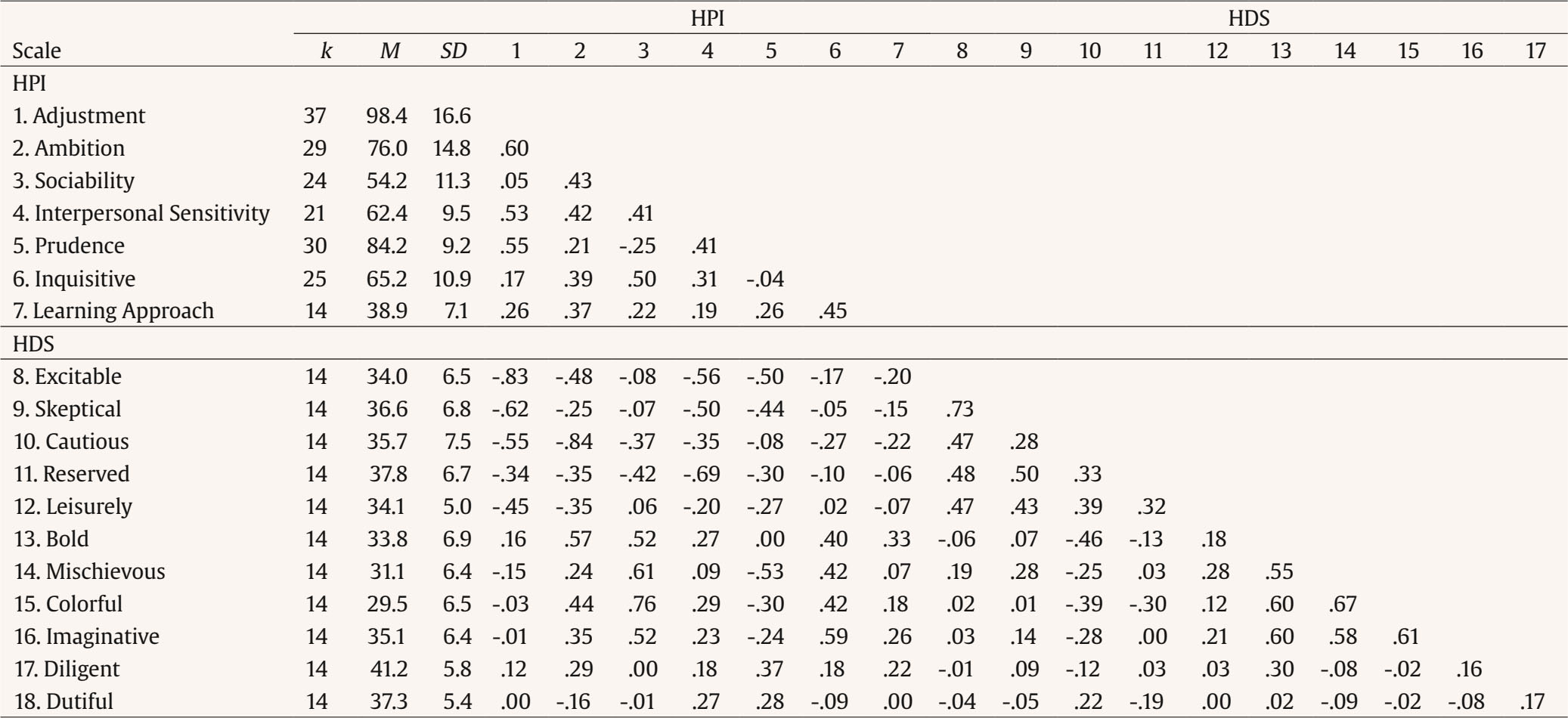 Note. 1n ranges from 330 to 353; 2n ranges from 342 to 351; 3N ranges from 672 to 704; 4effect size for gender difference; k = number of items; α = coefficient alpha; ω = McDonald’s omega; items rated on a 1-5 scale. **p < .01, two-tailed. Gender differences emerged for two of the scales, with men scoring higher on Alcohol Use and Inappropriate Verbal Actions. Cohen’s d indicates that the size of these differences is small (< 0.30). Skewness and Kurtosis indices were greater than +3 for all scales but Misuse of Time and Resources, indicating that the distributions have a substantial number of values clustered at the bottom of the scale and a few very large values in the right tail. Cronbach’s α ranged from .55 (Unsafe Behaviors) to .91 (Destruction of Property; Median = .78), and McDonald’s ω ranged from .56 (Unsafe Behaviors) to .93 (Drug Use; Median = .80). Correlations among the CWB categories ranged from .13 (Misuse of Time and Resources with Inappropriate Physical Actions) to .62 (Theft and Related Behaviors with Destruction of Property; Mdn = .32; see Table S2 in Appendix). Relative Importance of HPI and HDS Scales in Predicting CWBs Multicollinearity diagnostics indicated acceptable levels of predictor overlap among the HPI and HDS scales, with VIF values ranging from 1.40 to 6.04 and tolerance values ranging from .17 to .71. Bootstrap confidence intervals indicated that the largest relative weights consistently excluded zero, supporting the stability of the primary predictors across the CWB dimensions. Results of the correlation, regression, and RWAs are summarized in Table 2. We highlight the three most important predictors according to the relative weights for each CWB criterion. For Theft and Related Behaviors, the strongest predictor was HDS Colorful (r = .18, β = .29; RW = 17.9%), followed by low HPI Prudence (r = -.21, β = -.21; RW = 14.1%) and low HPI Ambition (r = -.11, β = -.31; RW = 12.6%). This suggests that higher levels of attention-seeking and lower levels of conscientious rule-following and achievement motivation are associated with theft-related outcomes. Table 2 Relative Importance and Regression Effects of HPI and HDS Scales on CWBs 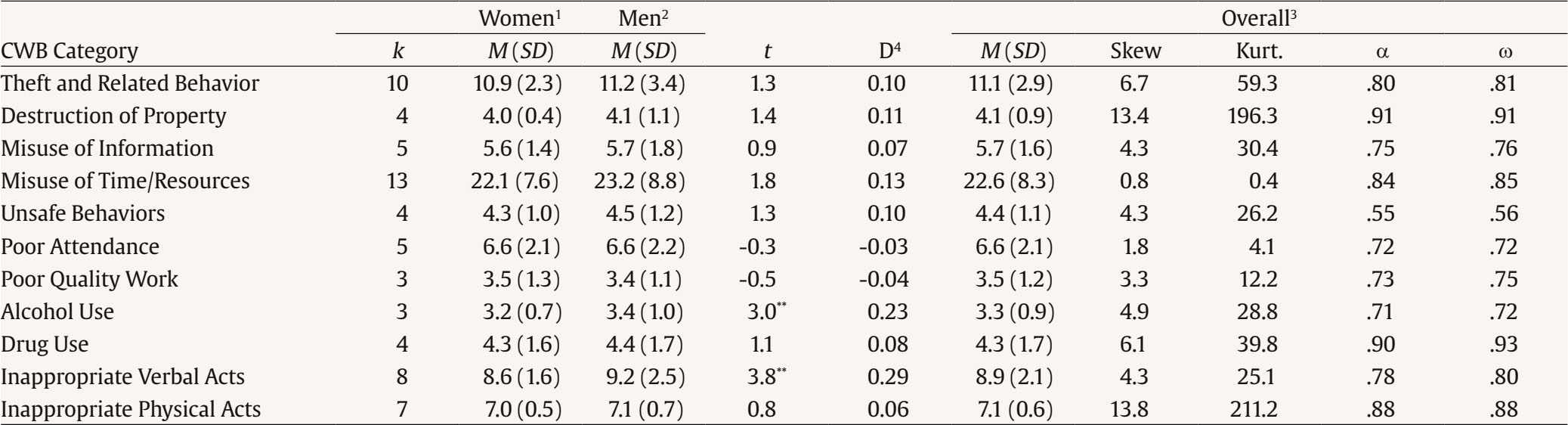 Note. Variance explained (%) reflects the proportion of total R2 attributed to each block (HPI and HDS) based on relative weights analysis; R2 contribution representes raw variance explained in each CWB category. Destruction of Property was also best predicted by HDS Colorful (r = .18, β = .28; RW = 25.6%), along with low HPI Ambition (r = -.04, β = -.34; RW = 14.7%) and high HDS Bold (r = .13, β = .16; RW = 11.2%), indicating that stimulation-seeking, disengagement, and overconfidence contribute to this behavior. For Misuse of Information, the leading predictors were HDS Leisurely (r = .27, β = .18; RW = 20.6%), low HPI Adjustment (r = -.26, β = -.16; RW = 13.3%), and low HPI Prudence (r = -.21, β = -.12; RW = 9.1%). This pattern suggests that individuals who are covertly defiant, defensive, and less likely to adhere to rules may be more inclined to misuse organizational information. Misuse of Time and Resources was predicted by low HPI Adjustment (r = -.29, β = -.13; RW = 13.7%), high HDS Leisurely (r = .23, β = .14; RW = 11.7%), and high HDS Cautious (r = .21, β = .11; RW = 9.3%). These results suggest that disengagement and low effort are central, while the unexpected positive role of HDS Cautious may reflect excessive self-management or avoidance of responsibility. For Unsafe Behaviors, the top predictors were HDS Mischievous (r = .21, β = .12; RW = 16.5%), HDS Colorful (r = .16, β = .17; RW = 13.0%), and HPI Inquisitive (r = .15, β = .16; RW = 12.6%), suggesting that risk-taking, boundary-testing, and stimulation-seeking are key contributors. Poor Attendance was primarily predicted by HDS Leisurely (r = .26, β = .19, RW = 19.9%), low HPI Adjustment (r = -.28, β = -.10; RW = 14.9%), low HPI Prudence (r = -.23, β = -.11; RW = 10.1%), and high HPI Sociability (r = .16, β = .15, RW = 10.1%). Together, this suggests that defiance, stress vulnerability, low self-discipline, and blurred boundaries between personal and professional demands contribute to absenteeism. For Poor Quality Work, low HPI Adjustment (r = -.33, β = -.28; RW = 28.7%) was by far the strongest predictor, followed by low HPI Ambition (r = -.23, β = −.22; RW = 14.8%) and HDS Excitable (r = .27, β = -.05; RW = 11.3%). These results highlight the central role of stress tolerance, drive, and emotional stability in work performance. Alcohol Use was best predicted by HPI Sociability (r = .21, β = .20; RW = 17.4%), with additional contributions from HPI Inquisitive (r = .16, β = .13; RW = 10.8%) and HDS Mischievous (r = .21, β = -.01; RW = 9.8%), suggesting that outgoing, novelty-seeking, and impulsive individuals may be more prone to alcohol-related problems. For Drug Use, low HPI Prudence (r = -.20, β= -.17; RW = 20.7%) emerged as the top predictor, followed by HDS Mischievous (r = .20, β = .01; RW = 12.1%) and HPI Inquisitive (r = .14, β = .10; RW = 10.3%). This indicates elevated risk among individuals who are rule-averse, sensation-seeking, and open to experimentation. Inappropriate Verbal Actions were most strongly associated with low HPI Prudence (r = -.28, β = -.15; RW = 15.1%), low HPI Adjustment (r = -.25, β = -.20; RW = 14.9%), and high HDS Mischievous (r = .24, β = .00; RW = 7.4%), reflecting deficits in impulse control, stress regulation, and rule adherence. Finally, Inappropriate Physical Actions were predicted by HDS Colorful (r = .17, β = .19; RW = 15.9%), low HPI Ambition (r = -.02, β = -.35; RW 15.5%), and high HDS Bold (r = .14, β = .14; RW = 12.3%), suggesting that social dominance, low achievement motivation, and overconfidence contribute to physical aggression. The bar charts in Figure 1 graphically illustrate the relative importance of the individual predictors across outcomes. Consistently, HDS Colorful, HDS Mischievous, HDS Leisurely, HPI Prudence, HPI Adjustment, and HPI Ambition emerged as the most influential predictors, frequently ranked among the top contributors by relative weight. In contrast, some scales, such as HPI Interpersonal Sensitivity, HPI Learning Approach, HDS Reserved, and HDS Dutiful, demonstrated low relative weights and minimal contributions. Figure 1 Relative Importance of Predictors in Explaining CWB Outcomes 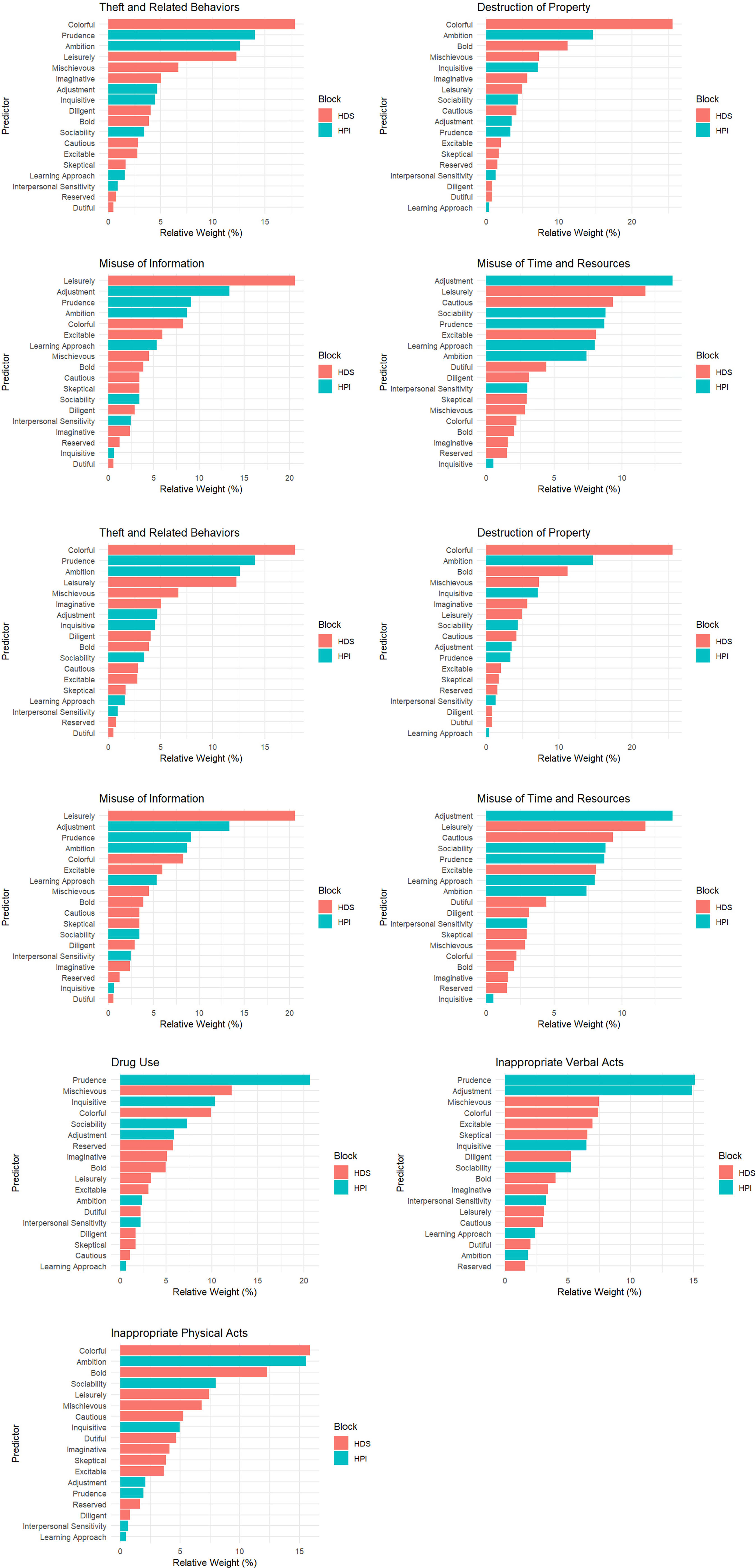 Block-Level Contributions of HPI and HDS Scales in Predicting CWB Outcomes Table 3 shows both block-level variance explained and raw R2 contribution for each CWB outcome. Across most domains, HDS scales accounted for a greater proportion of the explained variance than HPI scales. For example, HDS scales explained 65.4% of the variance in Destruction of Property (vs. 34.6% for HPI scales) and 66.3% in Inappropriate Physical Actions (vs. 33.7% for HPI scales). Total R2 values ranged from .08 (Drug Use, Inappropriate Physical Actions) to .16 (Misuse of Time and Resources, Inappropriate Verbal Actions), indicating modest but meaningful prediction. Table 3 Block-Level Contributions of HPI and HDS Predictors to Variance in CWB Outcomes 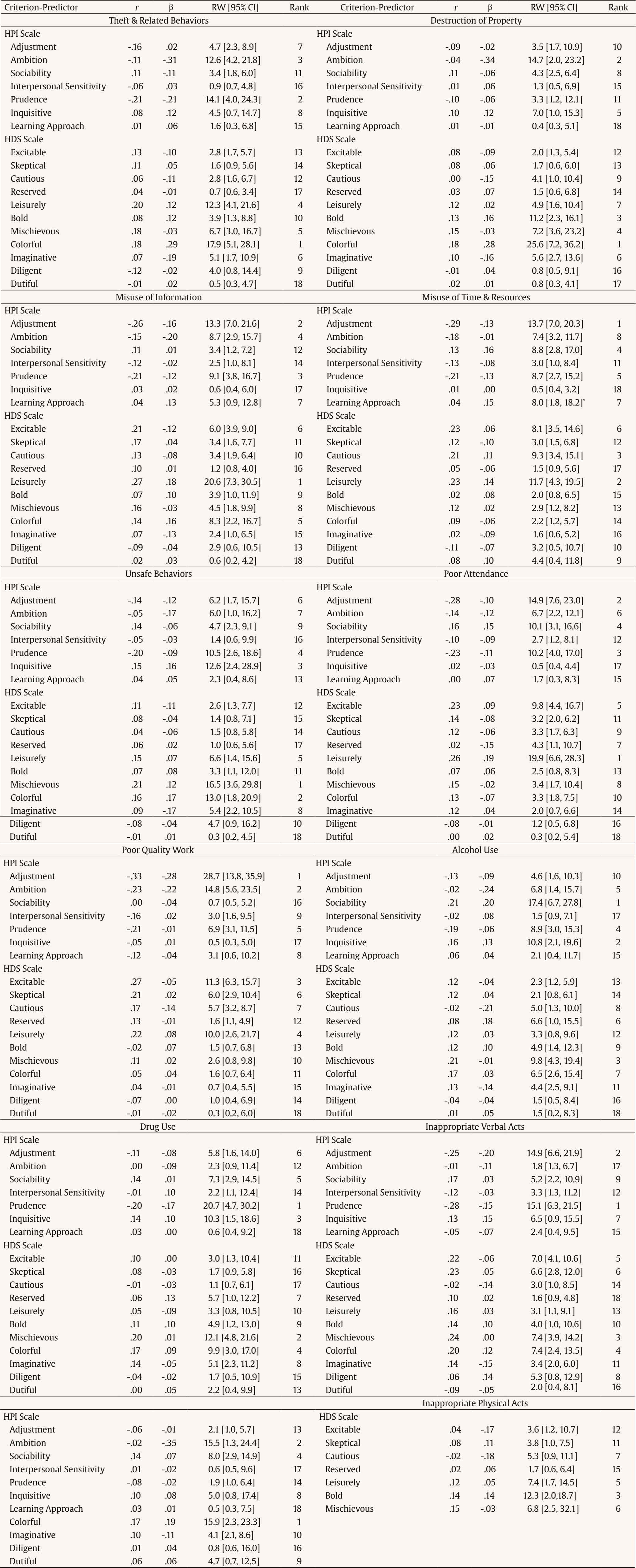 Note. Variance explained (%) reflects the proportion of total R2 attributed to each block (HPI and HDS) based on relative weights analysis. R2 contribution represents raw variance explained in each CWB category. The present study examined the relative importance of normal-range (HPI) and derailing (HDS) personality traits in predicting a wide array of CWBs. Across 11 outcomes, results indicated that both HPI and HDS scales contributed meaningfully to predicting CWBs, but their influence differed systematically across domains. Specifically, derailing traits emerged as stronger predictors of overt, interpersonal, and misconduct-related behaviors (e.g., theft, unsafe behaviors, physical aggression), whereas normal-range traits were more influential for performance-related and self-regulatory outcomes (e.g., work quality, attendance, misuse of time). Several HPI scales consistently accounted for meaningful variance in CWBs. Prudence and Adjustment emerged as the most robust predictors, consistent with prior research (Berry et al., 2007; Bowling & Eschleman, 2010; Mount et al., 2006). The current findings build on this research by linking these traits to specific categories of CWB. Lower scores on Prudence, reflecting impulsivity, rule-bending, and low conscientiousness, were linked to higher levels of theft, drug use, inappropriate verbal actions, and poor quality work. Similarly, low Adjustment predicted outcomes such as poor attendance, poor quality work, and verbal misconduct, highlighting the role of emotional instability in driving CWBs under stress or frustration. Ambition, though often weakly correlated with CWBs, showed strong negative regression effects, indicating that low drive and goal persistence uniquely predict misconduct when considered alongside other traits. Other HPI scales played narrower, domain-specific roles. Sociability and Inquisitive modestly predicted behaviors tied to socializing or novelty-seeking, such as alcohol use, drug use, and unsafe acts. In contrast, Interpersonal Sensitivity made minimal contributions, and Learning Approach showed only a weak correlation with poor quality work. The lack of association between Interpersonal Sensitivity and CWB categories was unexpected given robust effects for Agreeableness in the broader literature. Conceptual and operational differences between the two constructs may explain this discrepancy. Big Five Agreeableness is typically defined by trust, altruism, and a general tendency toward cooperation and conflict avoidance (Costa & McCrae, 1992). In contrast, HPI Interpersonal Sensitivity reflects a narrower, socially attuned form of Agreeableness, emphasizing tact, perceptiveness, and diplomacy (Hogan & Hogan, 2007). While these qualities overlap, Interpersonal Sensitivity places less emphasis on prosocial concern and more on interpersonal style. As a result, it may be less directly tied to counterproductive acts such as aggression or sabotage, which are strongly tied to antagonistic aspects of low Agreeableness. In terms of the HDS, several scales uniquely predicted CWBs after accounting for overlap with the HPI. Colorful consistently emerged as one of the strongest predictors of interpersonal and high-visibility behaviors, including inappropriate verbal and physical actions, theft, and unsafe behaviors. Similarly, Mischievous was also a prominent predictor, particularly for CWBs involving impulsivity and risk (e.g., drug use, unsafe behaviors), although its unique contribution was sometimes reduced when controlling for related traits. Leisurely proved influential as well, especially for outcomes such as poor attendance and misuse of time and resources, consistent with tendencies toward passive resistance or covert defiance. Importantly, these findings suggest that the HDS captures broader patterns of interpersonal and self-regulatory dysfunction beyond the antagonistic traits typically emphasized in traditional Dark Triad/Tetrad frameworks. Rather than assessing explicitly antisocial tendencies alone, the HDS provides insight into maladaptive interpersonal styles and behavioral risks that may emerge under stress or pressure in organizational contexts. The relationships between HPI and HDS scales were also broadly consistent with prior research examining the associations between normal-range and maladaptive personality characteristics (e.g., Moscoso & Salgado, 2004). For example, low HPI Adjustment was strongly associated with HDS Excitable and Skeptical tendencies, whereas low Prudence was associated with derailers characterized by impulsivity and resistance to authority, such as Mischievous and Leisurely. Likewise, higher Ambition was positively associated with Bold and Colorful tendencies. These patterns support the view that normal-range and maladaptive personality characteristics represent related but distinct aspects of personality functioning, demonstrating meaningful overlap between the two domains while remaining differentially associated with various forms of CWBs. Implications The current findings have several implications for organizational practice, particularly in employee selection, development, and risk management. Although overall effect sizes were modest, the consistency of certain predictors across outcomes suggests that they may serve as early warning indicators of potential misconduct. Rather than adopting a one-size-fits-all approach, organizations may benefit from tailing selection and performance criteria to the behavioral demands of specific roles. For positions requiring high levels of trust, safety, or public interaction, incorporating assessments such as the HDS can help identify candidates with interpersonal derailers that may undermine effectiveness. Conversely, for roles emphasizing dependability and sustained task performance, normal-range assessments like the HPI may provide greater value. Beyond selection, the results support the use of personality data for development and risk management. Employees with elevated derailing traits may benefit from targeted coaching designed to improve self-regulation and interpersonal effectiveness. Rather than relying on personality assessments solely to screen out candidates, organizations can use these measures to inform developmental planning and provide individualized feedback. At a broader level, aggregate personality profiles may help identify areas of organizational vulnerability, allowing leaders to proactively address conditions that increase the likelihood of misconduct. Such applications highlight the value of personality assessment for identifying distinct sources of behavioral risk and tailoring interventions to the forms of workplace dysfunction most likely to emerge. Limitations and Future Directions Several limitations warrant consideration. First, all data were collected via self-report, which may introduce social desirability or underreporting, particularly for sensitive behaviors such as theft, drug use, or property damage. The reliance on a single data source also raises the potential for common method variance, which could artificially inflate associations between predictors and outcomes. Second, although the CWB measure was administered approximately six months after the HPI and HDS, no specific time frame was assessed. While this temporal separation strengths the predictive design and reduced some concerns regarding common method inflation, it may also have introduced additional variability into the observed relationships. Personality traits and workplace conditions may shift over time, and intervening organizational or situational factors could influence the emergence of CWBs during the interval between assessments. As a result, the observed associations may underestimate or obscure more proximal personality-behavior relationships. It therefore remains unclear whether certain personality traits directly lead to CWBs or whether other contextual or reciprocal processes are involved. Third, the overall variance explained by the models was modest, suggesting that contextual factors may also play important roles. Finally, the sample was drawn from Prolific and Amazon’s Mechanical Turk, which may not fully represent the broader working population. Accordingly, future research could strengthen this line of inquiry by incorporating time-bound behavioral measures, collecting multi-source data or objective indicators of CWBs, and extending sampling beyond online platforms to improve generalizability and external validity. Examining contextual moderators such as job stress, leadership quality, and organizational climate may also help clarify the conditions under which personality traits are most likely to translate into CWBs. Finally, future studies should investigate the incremental validity of HPI and HDS dimensions relative to broader Big Five and Dark Triad/Tetrad frameworks to clarify their unique and overlapping contributions to organizational misconduct. This study provides a comprehensive examination of how both normal-range and derailing personality characteristics predict a wide range of CWBs. Findings demonstrate that specific HPI and HDS scales consistently contribute to different forms of workplace misconduct. While derailing traits were more predictive of overt, interpersonal behaviors, normal-range traits more strongly explained self-regulatory and performance-related outcomes. These results underscore the multifaceted nature of CWB and highlight the value of incorporating both types of personality assessments into organizations’ selection, development, and risk management strategies. Conflict of Interest The authors of this article declare no conflict of interest. Cite this article as: Boudreaux, Michael J., Muller, Linda S., Hall, Deidre Y., & Winterberg, Chase A. (2026). Normal and derailing personality predictors of counterproductive work behaviors. Journal of Work and Organizational Psychology, 42, Article e260774. https://doi.org/10.5093/jwop2026a6 1 The samples from the two platforms were comparable in terms of gender (MTurk: 51.9% men; Prolific: 47.6% men), race/ethnicity (MTurk: 76.9% White; Prolific: 74.9% White), and age (MTurk: Mean = 42.5; Prolific: Mean = 39.8). 2 The data reported in this paper were part of previously ongoing studies. Pre-screening flagged approximately 14–16% of invalid cases in the initial Mturk and Prolific samples. These participants were not invited for subsequent assessments. Attention checks at later rounds yielded fewer invalid cases. The sample reported here included participants who passed initial pre-screening for work quality. 3 The HPI, HDS, and CWBs were administered on separate occasions to reduce cognitive load. In the MTurk sample, the HPI and HDS were administered approximately 2 weeks apart (the HPI was administered first); the CWB measure was administered approximately 6 months after the HPI. In the Prolific sample, the HPI and HDS were administered approximately 1 week apart; the CWB measure was administered approximately 6 months after the HPI. We describe our sampling plan, data exclusions, and sample items where appropriate. The syntax, raw results, and processed data are publicly available at the American Psychological Association’s repository hosted for Open Science (raw data are not available due to proprietary reasons): https://osf.io/q3pvj. The study design, hypotheses, and analyses were not preregistered in an independent, institutional registry. Appendix Supplementary Materials Table S1 Means, Standard Deviations, and Inter-Scale Correlations for the Hogan Personality Inventory (HPI) and Hogan Development Survey (HDS) 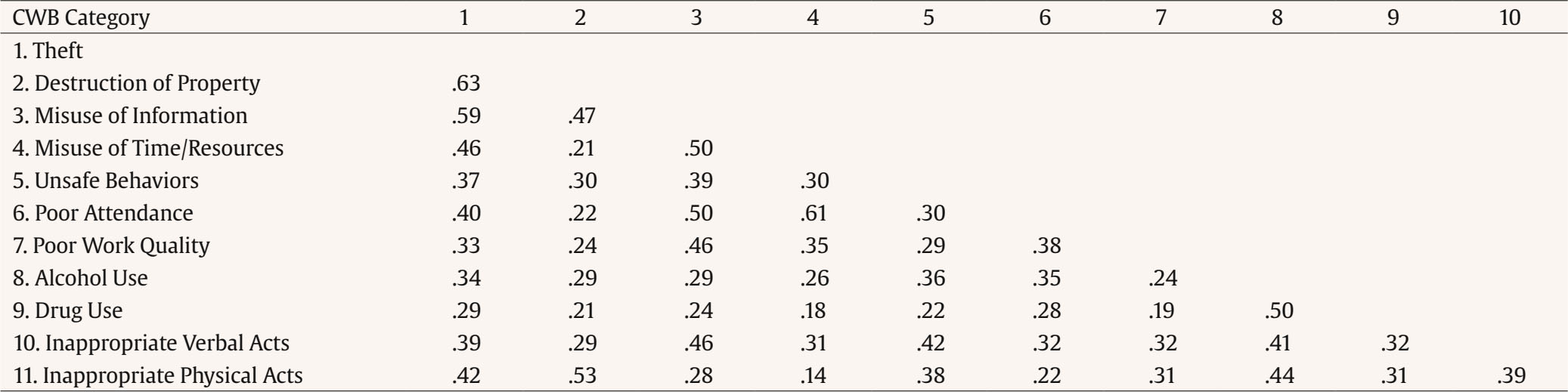 Note. N ranges from 667 to 691. r = .11, .13, and .16, p < .05, .01, and .001, respectively; two-tailed. Table S2 Correlations among CWB Categories 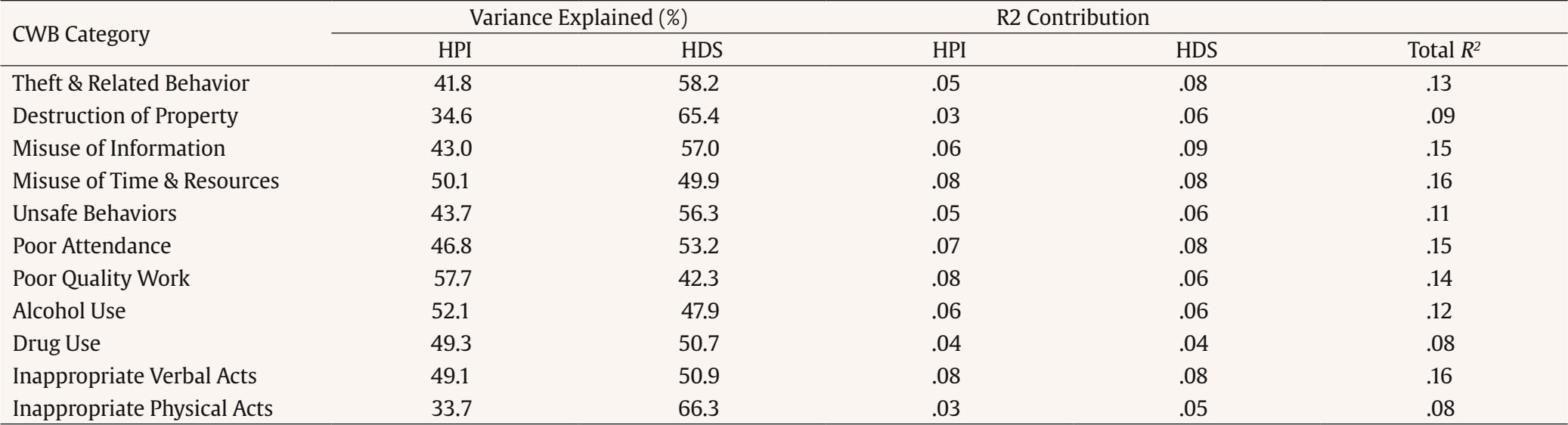 Note. N ranges from 672 to 704. r = .11, .13, and .16, p < .05, .01, and .001, respectively; two-tailed. |
Cite this article as: Boudreaux, M. J., Muller, L. S., Hall, D. Y., & Winterberg, C. A. (2026). Normal and Derailing Personality Predictors of Counterproductive Work Behaviors. Journal of Work and Organizational Psychology, 42, Article e260774. https://doi.org/10.5093/jwop2026a6
Correspondence: mboudreaux@hoganassessments.com (M. J. Boudreaux).Copyright © 2026. Colegio Oficial de la Psicología de Madrid


 PDF
PDF e-PUB
e-PUB CrossRef
 JATS
JATS Print
Print SEND
SEND