Assessing Creative Performance Using Brief Self-Report Scales: A Comparative Analysis in Spanish Employees
[La medida del desempeño creativo mediante escalas breves de autoinforme: un análisis comparativo en trabajadores españoles]
Jorge Cebrián1, Julia Sánchez-García2, & Pedro J. Ramos-Villagrasa3
1Aragón School of Design, Zaragoza, Spain; 2University Center of Defense of Zaragoza, Spain; 3University of Zaragoza, Spain
https://doi.org/10.5093/jwop2026a2
Received 13 October 2025, Accepted 18 February 2026
Abstract
Creative performance refers to employees’ ability to generate and apply novel and useful ideas that contribute to organizational effectiveness. This study analyzes the functioning of three brief self-report creative performance scales for their use in Spanish-speaking work contexts. Four-hundred and five Spanish employees across diverse occupational backgrounds (48.6% women). The analyses supported the undimiensional structure of the scale, its realibility and measurement invariance across gender. Evidence of validity was provided through strong associations with creative self-efficacy (CSE), other job performance dimensions, and Big Five personality traits. Hierarchical regression analyses demonstrated that CSE and the personality traits, i.e., openness, extraversion, and negative emotionality, predicted creative performance. In conclusion, the three scales offer reliable and valid tools for assessing creative performance in Spanish-speaking organizational contexts; however, the scale by Tierney et al. (1999) performs better. The discussion addresses implications for both research and practice, particularly in advancing the study of creative performance.
Resumen
El desempeño creativo se refiere a la capacidad de los empleados para generar y aplicar ideas novedosas y útiles que contribuyen a los resultados organizacionales. Este estudio analiza el funcionamiento de tres escalas breves de autoinforme de desempeño creativo para su uso en contextos laborales de habla hispana. Las escalas seleccionadas han demostrado elevada validez y fiabilidad en estudios realizados en otros países. Se recogieron datos de 405 empleados españoles de diversas profesiones (48.6 % mujeres). Los análisis factoriales confirmatorios respaldaron la estructura unidimensional de las escalas, aunque el ajuste del modelo varió entre los instrumentos. Los coeficientes de fiabilidad fueron satisfactorios para las tres medidas. Se estableció la invarianza de la medición en función del género, lo que permite comparaciones válidas respecto a esta variable. Se proporcionó evidencia de validez mediante fuertes asociaciones con la autoeficacia creativa (AC), otras dimensiones del desempeño laboral y los rasgos de personalidad del Big Five. Los análisis de regresión jerárquica demostraron que la AC y los rasgos de personalidad apertura a la experiencia, extraversión y emocionalidad negativa predijeron el desempeño creativo. En conclusión, las tres escalas ofrecen herramientas fiables y válidas para evaluar el desempeño creativo en contextos organizacionales de habla hispana; sin embargo, la escala de Tierney et al. (1999) presenta un mejor funcionamiento. Se comentan las implicaciones tanto para la investigación como para la práctica, particularmente en el avance del estudio del desempeño creativo.
Palabras clave
Desempeño creativo, Desempeño laboral, Big Five, España, Comparación de escalas, Medidas de autoinformeKeywords
Creative performance, Job performance, Big Five, Spain, Scale comparison, Self-report measuresCite this article as: Cebrián, J., Sánchez-García, J., & Ramos-Villagrasa, P. J. (2026). Assessing Creative Performance Using Brief Self-Report Scales: A Comparative Analysis in Spanish Employees. Journal of Work and Organizational Psychology, 42, Article e260770. https://doi.org/10.5093/jwop2026a2
Correspondence: pjramos@unizar.es (P. J. Ramos-Villagrasa).Creativity is widely recognized as a cornerstone of innovation and a key determinant of long-term organizational success, particularly in increasingly competitive environments (Akbari et al., 2021). In professional settings, creativity is progressively recognized as an essential component of job performance (Harari et al., 2016). Employee creative performance, which reflects the ability to generate and apply novel ideas in the workplace, plays a pivotal role in developing innovative solutions to organizational challenges (Shalley et al., 2009; Tierney & Farmer, 2011). The rising complexity and knowledge intensity of professional, managerial, and administrative roles have significantly increased employers’ expectations regarding employee creativity (Aleksic et al., 2016). In response to these evolving demands, organizations could implement strategic human resource management practices that not only support but actively stimulate creative thinking and innovation within their workforce (Villajos et al., 2019). Given its significance, the ability to assess creative performance is essential for both academic research and organizational practice (Said-Metwaly et al., 2017). This paper contributes to this regard, analyzing the functioning of three brief self-report creative performance scales and discuss which one is best suited depending on the context of application. Our study focuses on the Spanish context, where there is growing interest in self-report scales to measure performance dimensions that are suitable for a broad range of jobs (e.g., the Individual Work Performance Scale; Ramos-Villagrasa et al., 2019). Creative Performance in the Workplace Job performance is understood as the set of employee behaviors that contribute to organizational effectiveness and is widely regarded as the ultimate criterion in human resource management and work psychology (Campbell & Wiernik, 2015). Its relevance stems from its importance in processes such as personnel selection, training, performance appraisal, and compensation. Moreover, accurate assessment of performance remains a cornerstone of both research and practice, as organizations seek instruments that are reliable, efficient, and suitable for a wide range of occupational contexts (DeNisi & Murphy, 2017). Conventionally, scholars have categorized job performance into multiple core dimensions (Lievens et al., 2021; Rotundo & Sackett, 2002). These include “task performance”, which pertains to in-role behaviors, “contextual performance”, which involves discretionary behaviors that enhance the workplace environment, and “counterproductive performance”, which consists of detrimental behaviors directed at individuals or the organization. Beyond these three well-established dimensions, recent research has expanded the framework of job performance to include other domains such as “adaptive performance” (Park & Park, 2019) and “creative performance” (Zhou & Hoever, 2014), reflecting the evolving nature of job performance in modern workplaces. The present paper is focused on the latter. Creative performance is currently a central dimension of organizational success because globalization, technological change, and the shift toward knowledge-based economies have intensified the demand for employees capable of adapting and generating novel solutions (Anderson et al., 2014). As a tangible manifestation of creative thinking and problem-solving, creative performance reflects the ability to develop original ideas and implement novel solutions to face organizational challenges and opportunities (Shalley et al., 2009). By engaging in creative behavior, employees contribute to their organizations by identifying opportunities, solving complex problems, and fostering a culture of innovation (Tierney & Farmer, 2011). Creative performance has been situated at the intersection of creativity and innovation, yet it remains conceptually distinct from both (Damadzic et al., 2022). And as is the case in the job performance literature (e.g., Marques-Quinteiro et al., 2015; Ramos-Villagrasa et al., 2012), two different constructs exist (Montag et al., 2012): behaviors (namely, “creative performance”) and outcomes (or “creativity”), a distinction also supported by Montag et al. (2012). This also facilitates the integration of creative performance into the multidimensional framework of job performance, clarifying its nomological network and reinforcing its theoretical legitimacy within the fields of work and organizational psychology. However, not all creative performance culminates in innovation, nor is innovation always preceded by creativity (Hughes et al., 2018). Innovation refers to the implementation of new ideas or practices, while creative performance focuses on their generation, often constituting the first step in the innovation process (Anderson et al., 2014). Harari et al. (2016) and McKay and Kaufman (2019) further emphasize that creative performance entails proposing original ideas, while innovation requires their structured implementation into practices or products that are socially recognized. Building on this perspective, creative performance encompasses employees’ efforts to generate ideas, products, services, or processes that fulfill two core criteria: (1) originality or novelty and (2) potential value or applicability within an organizational context (Zhou & Hoever, 2014). Measurement of Creative Performance A fundamental assumption underlying the assessment of creative performance is the recognition that variability in creative behaviors exists among individuals, as environmental and individual factors lead to differences in creative expression, even if all humans possess similar innate potential (Dumas & Grajzel, 2024). To systematically evaluate and enhance creativity within their workforce, organizations must establish robust measures to assess creative performance. Traditionally, these assessments are carried out by supervisors (e.g., Oldham & Cummings, 1996; Tierney et al., 1999; Zhou & George, 2001), although instruments have usually been adapted for self-reporting (e.g., Kalyar & Kalyar, 2018; Mohammed & Kamalanabhan, 2019; Tsai et al., 2015). This is arguably due to the practical advantages offered by self-reports in certain contexts, such as ease of administration, broad applicability across diverse job types, and the ability to collect performance data even when supervisor ratings are unavailable or impractical (Ramos-Villagrasa et al., 2019). In addition to these approaches, other methods, such as peer evaluations and situational assessments rated by experts, have also been used to gain a more comprehensive view of creative performance (Wong et al., 2021; Yoon et al., 2015). Self-assessments are another method for measuring creative performance. Although self-reports for measuring performance tend to be more lenient and are therefore less common in applied contexts (DeNisi & Murphy, 2017), they offer several key advantages that should be recognized (Koopmans et al. 2014): (1) they allow for the measurement of performance in occupations where other measures are difficult to obtain, (2) employees have a complete view of their own behavior that other stakeholders cannot have, (3) they may help to mitigate the halo effect of ratings by managers and peers, and (4) they are easy to collect and help reduce problems with missing data and confidentiality. In fact, self-report measures for evaluating creative performance have existed for decades, with three of them being particularly noteworthy (Zhou & Hoever, 2014), the scales by Oldham and Cummings (1996), Tierney et al. (1999), and Zhou and George (2001). The first measure of creative performance (CPOC; Oldham & Cummings, 1996) was administered to a sample of 171 employees from two manufacturing facilities, encompassing 18 technical roles. It assessed a single dimension and demonstrated acceptable internal consistency (α = .85). Using this scale, Chiang et al. (2022) showed that effective followership was positively associated with work autonomy and creative self-efficacy, which together mediated its influence on creative performance over time. Villajos et al. (2019) further found that idiosyncratic deals and eudaimonic well-being fully mediated the relationship between human resources practices and creative performance, underscoring how tailored organizational practices can foster creativity. Although this latter study was conducted in Spain, the authors did not adapt the CPOC scale. The second measure of creative performance (CPTFG; Tierney et al., 1999) was validated with 191 research and development professionals, including managers, scientists, and technicians from a large chemical corporation. It also captures a single dimension, with excellent reliability (α = .95). The instrument remains in use today worldwide, as evidenced by studies such as that of Peng and Chen (2023), which demonstrated that work engagement mediates the relationship between team learning climate and creative performance, as well as between team psychological capital and creative performance. Furthermore, the study by Christensen-Salem et al. (2021) reported that the relationship between creative self-efficacy and creative performance is partially mediated by thriving and further moderated by perceived work significance and task interdependence, with the latter two factors strengthening the link when both are high. Additionally, Li, Jin, et al. (2020) found that proactive personality was positively associated with creative performance through job crafting, with the indirect effect being strongest under conditions of low-rather than high-involvement work systems. The third measure of creative performance (CPZG; Zhou & George, 2001) was administered to 149 office employees at a petroleum equipment manufacturing company, covering diverse roles across departments such as engineering, marketing, and human resources. This instrument measures a single dimension and showed high internal consistency (α = .96). Utilizing this scale, Al-Madadha et al. (2023) found that employees’ perceptions of corporate social responsibility were positively related to creative performance, with job satisfaction and organizational citizenship behavior emerging as key indirect pathways. Moreover, Choi et al. (2021) demonstrated that proactive personality was positively associated with creative performance, with creative self-efficacy mediating this relationship, and psychological safety serving as a moderator that strengthened these effects. As can be seen, all the scales are still used in research and are among the most established and widely applied measures available (e.g., Peng & Chen, 2023; Spoelma et al., 2024; Wang et al., 2023). And this is despite the fact that no adaptations are available for Spanish, one of the most widely spoken languages in the world. The Present Study Given the limited availability of instruments for assessing creative performance in the Spanish context, this study aims to analyze the three main self-report scales, provide evidence of their validity, and offer recommendations on their most appropriate use. As the study was developed in Spain, we needed to translate the scales into Spanish. To ensure the quality and interpretability of psychological measurements, it is essential to examine their reliability, particularly internal consistency. The three scales have a unidimensional structure and report high reliability scores in their original version, as indicated by Cronbach’s alpha coefficients ranging from .90 to .96.. Thus, it is hypothesized that: H1: The creative performance measures are expected to show a unidimensional structure and a internal consistency of .85 or more. To ensure that the creative performance measures function equivalently across gender groups, the present study will test for configural, metric, and scalar invariance. It is expected that configural invariance will confirm a consistent factor structure across groups, metric invariance will indicate equality of factor loadings, and scalar invariance will test equivalent item intercepts. Based on these expectations, measurement invariance between men and women is hypothesized. H2: The factor structure of the creative performance measures will be invariant across gender groups, indicating measurement equivalence between men and women. To ensure the construct validity of the adapted creative performance measures, convergent validity will be examined. In this study, job performance dimensions, creative self-efficacy, and Big Five personality traits will be employed for assessing convergent validity. As a dimension of job performance, creative performance can be expected to show significant associations with the remaining performance domains. Although direct evidence on these relationships is scarce, findings from related constructs suggest a plausible pattern. For instance, adaptive performance has been shown to correlate positively with both task and contextual performance, while displaying negative associations with counterproductive behaviors (Ramos-Villagrasa et al., 2020). Building on this reasoning, the following hypothesis is proposed: H3: Performance dimensions, including task performance, contextual performance, and adaptive performance will be positively associated with creative performance, while counterproductive performance will show a negative association with creative performance. Creative self-efficacy (CSE), defined as individuals’ beliefs in their ability to produce creative outcomes, influences creative performance, innovation capability, and business success, especially the latter (Yodchai et al., 2022). CSE represents an employee’s confidence when approaching tasks and performing their job creatively (Puente-Díaz, 2016). Individuals with strong confidence in their creative abilities are likelier to demonstrate creativity, making CSE a valuable predictor of individual creativity (Thundiyil et al., 2016). The positive relationship between CSE and creative performance is well-supported by previous literature (e.g., Christensen-Salem et al., 2021; Li et al., 2020; Tierney & Farmer, 2002). Accordingly, it is expected that: H4: CSE will be positively associated with all measures of creative performance. The relationship between creative performance and personality traits is also examined. Extensive research across diverse countries and occupational contexts has shown that personality is one of the most robust predictors of job performance (Salgado, 1997; Zell & Lesick, 2022), second only to cognitive ability (Schmidt & Hunter, 1998). Personality factors influencing creative performance can be categorized using the Big Five model, which outlines five broad traits: openness, conscientiousness, extraversion, agreeableness, and negative emotionality, commonly recognized in workplace settings (Salgado & De Fruyt, 2017). Among these, open-mindedness is the strongest predictor of creative performance, as it fosters curiosity, imagination, and receptiveness to novel ideas (Pesout & Nietfeld, 2021; Shaw & Choi, 2023; Sung & Choi, 2009). Extraversion also enhances creative performance by promoting social engagement and facilitating the exchange of ideas (Sung & Choi, 2009). Conscientiousness, typically linked to discipline and organization, also contributes by ensuring the structured implementation of creative ideas (Shaw & Choi, 2023). Despite some evidence suggesting that individuals who score high in neuroticism may leverage worry to enhance creativity in cognitively demanding tasks (Bai et al., 2024), the overall relationship between negative emotionality and creative performance remains predominantly negative (Leung et al., 2014). There is no empirical evidence supporting a relationship between agreeableness and creative performance (Shaw & Choi, 2023). Consequently, it is suggested that: H5: Open-mindedness, conscientiousness, and extraversion will be positively associated with creative performance, while negative emotionality will have a negative association with creative performance. Beyond validity evidence, it is also important to consider individual characteristics that may act as antecedents of creative performance. Examining such antecedents requires careful consideration of their conceptual boundaries and empirical distinctiveness. Sociodemographic factors such as gender and educational background represent potential predictors of variation in creative performance. Regarding gender, the meta-analysis by Hora et al. (2021) reveals a small but statistically significant difference in creative performance, with males exhibiting slightly higher levels than females. The authors attribute this difference primarily to societal influences, such as gender roles and cultural factors, and propose that efforts aimed at fostering equality have the potential to reduce or eliminate this disparity in creative performance. Educational level has likewise been identified as relevant, reflecting domain-specific expertise or knowledge that may support creative outcomes (Amabile, 1988; Tierney et al., 1999). Thus, it is posited that: H6: The creative performance measures are expected to show positive associations with being male and with higher educational levels. Ultimately, this study seeks to investigate the predictive capacity of key psychological constructs that the literature has consistently identified as relevant antecedents of creative performance in organizational contexts. In particular, personality traits and CSE have been shown to significantly influence individuals’ engagement in creative behaviors. By testing predictive models using the three creative performance instruments adapted into Spanish, this study seeks to explore the extent to which these constructs account for individual differences in creative performance. Considering the existing evidence, it is suggested that: H7: Gender, educational level, Big Five personality traits, and creative self-efficacy will each contribute to explaining a significant proportion of the variance in creative performance. Participants A total of 420 Spanish workers participated in the study. Among them, 3.6% did not pass the attention check (see below), leading to a final sample of 405 participants (48.6% women) with a mean age of 35.1 years (SD = 10.7) and an average of 11.8 years of job experience (SD = 10.3). Design and Procedure This research has been approved by the Research Ethics Committee of the Autonomous Community of Aragon (CEICA) with reference number PI23/559. The sampling method employed was non-probabilistic. Participants were recruited through the Prolific research platform. Before beginning the study, all participants were informed about the anonymous and confidential treatment of their responses, and their rights in accordance with ethical guidelines established by the American Psychological Association (APA). Participation was entirely voluntary, and no personally identifying information was collected. Instruments Sociodemographic Variables Participants provided information on their gender (categorized as 0 = male, 1 = female), age (measured in years), level of education (categorized as 1 = primary education, 2 = secondary education, 3 = intermediate vocational training, 4 = advanced vocational training, 5 = university degree/diploma/licentiate, 6 = postgraduate/master’s , 7 = doctorate), and job experience (measured in months). Creative Performance (CPOC, Oldham & Cummings, 1996; CPTFG, Tierney et al., 1999; and CPZG, Zhou & George, 2001) The three measures were translated into Spanish for the present study. To ensure both linguistic and conceptual equivalence, the adaptation process adhered to a rigorous back-translation methodology (Muñiz et al., 2013). Initially, four native Spanish speakers with advanced proficiency in English independently translated the original instruments. Their translations were then compared, discussed, and reconciled through a consensus-based process to produce a unified Spanish version. Subsequently, a professional bilingual translator, who had no prior exposure to the original scales, carried out a back-translation into English. This version was reviewed and compared with the original to identify and resolve any semantic or conceptual inconsistencies. This iterative process ensured that the final Spanish adaptation preserved both the intended meaning and contextual appropriateness of the original items. CPOC includes 3 items rated on a 7-point Likert scale ranging from 1 (not at all) to 7 (to a large extent). CPTFG consists of 9 items rated on a 6-point Likert scale ranging from 1 (strongly disagree) to 6 (strongly agree). CPZG comprises 13 items rated on a 5-point Likert scale ranging from 1 (not at all characteristic) to 5 (very characteristic). The items of the three scales can be found in the Appendix, and reliability analyses are reported in Results. Creative Self-efficacy (CSE; Carmeli & Schaubroeck, 2007) We used Carmeli and Schaubroeck’s (2007) 8-item scale adapted to Spanish by Cebrián et al. (manuscript under review). Items are rated on a 6-point Likert scale ranging from 1 (strongly disagree) to 6 (strongly agree). A sample item is, “I believe I can successfully perform any creative task I set my mind to” (ω = .95). Task Performance, Contextual Performance, and Counterproductive Work Behaviors (Koopmans et al., 2014) The three main dimensions of performance were measured using the Spanish version of the Individual Work Performance Questionnaire (Ramos-Villagrasa et al., 2019). This is a self-report instrument rated on a 5-point Likert scale, ranging from 0 (seldom) to 4 (always) for task performance and contextual performance, and from 0 (never) to 4 (often) for counterproductive work behaviors. Participants should answer considering their behaviors at work during the last three months. Dimension scores were computed by the mean values of each dimension. The number of items, observed reliability, and sample items were as follows: Task Performance (5 items, ω = .85; e.g., “I knew how to set the right priorities”), Contextual Performance (8 items, ω = .87; e.g., “I took on extra responsibilities”), and Counterproductive Work Behaviors (5 items, ω = .80, e.g., “I complained about unimportant matters at work”). Adaptive Performance (Marques-Quinteiro et al., 2015) We used the instrument adapted to Spanish by Ramos-Villagrasa et al. (2020). This scale encompasses 8 items rated on a 7-point Likert scale, ranging from 1 (totally ineffective) to 7 (totally effective). A sample item is “I quickly decide on the actions to resolve the problem” (ω = .87). BFI-2-S (Soto & John, 2017) The Big Five personality traits are assessed using the BFI-2-S, as adapted into Spanish by Gallardo-Pujol et al. (2021). It comprises 30 items (six per dimension) designed to evaluate different personality traits: Open-mindedness (e.g., “[I am someone who. . .] is curious about many different things,” ω = .78); Conscientiousness (e.g., “is systematic, likes to keep things in order,” ω = .79); Extraversion (e.g., “is outgoing, sociable,” ω = .74); Agreeableness (e.g., “is compassionate, has a soft heart,” ω = .73); and Negative Emotionality (e.g., “is moody, has up and down mood swings,” ω = .82). Responses are recorded on a five-point Likert scale, ranging from 1 (disagree strongly) to 5 (agree strongly). Data Analysis A comprehensive multi-step analytical approach was implemented to evaluate the reliability, validity, and internal structure of the adapted scales. Table 1 Item Descriptives and Factor Loadings of Creative Performance Scales 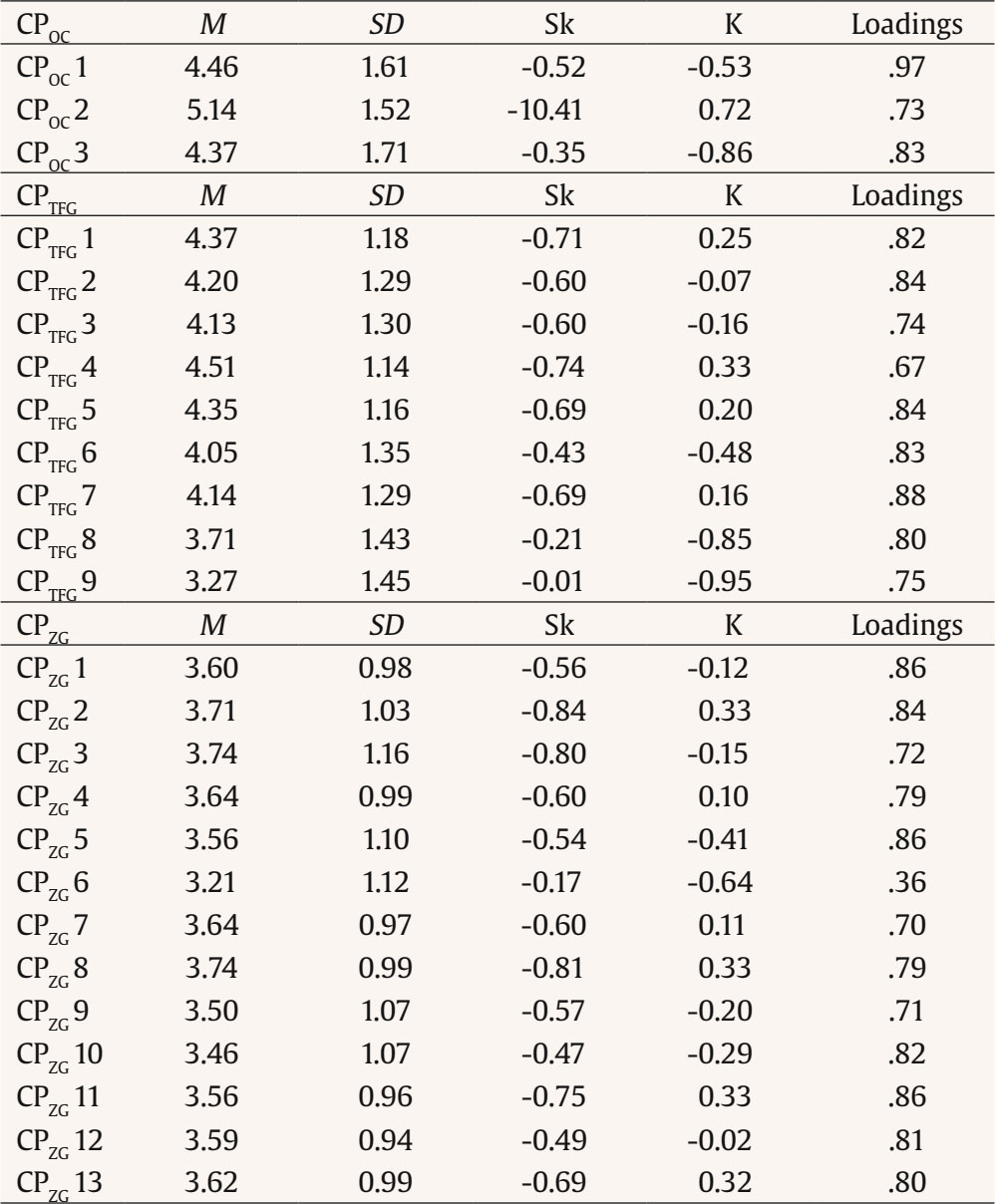 Note. N = 405. M = mean; SD = standard deviation; Sk = skewness (standard error = .121); K = kurtosis (standard error = .242); CPOC = Oldham and Cummings (1996); CPTFG = Tierney et al. (1999); CPZG = Zhou and George (2001). Descriptive statistical analyses were conducted to examine the distribution and variability of the data, including measures of central tendency, dispersion, and normality. Internal consistency was assessed using Cronbach’s alpha. In addition, inter-item correlations were computed to evaluate the coherence and psychometric strength of the scales. To confirm the factorial structure of the scales, a confirmatory factor analysis (CFA) was performed using the weighted least squares means and variance adjusted (WLSMV) estimation method, which is well-suited for ordinal data derived from Likert-type scales (Brown, 2015). Furthermore, an exploratory factor analysis (EFA) was conducted including all items from the three scales in a single model. This approach allowed us to assess the underlying structure of the items and discover if the factors may reflect specifics facets of creative performance. Model fit was assessed using multiple indices, including the Tucker-Lewis index (TLI), the comparative fit index (CFI), the standardized root mean square residual (SRMR), and the root mean square error of approximation (RMSEA), with at least two indices required to meet the established cut-off criteria for good fit (Hu & Bentler, 1998). Specifically, TLI and CFI showed values above .95 and RMSEA and SRMR values below .06, following conventional recommendations (McNeish & Wolf, 2023). The chi-square (χ²) test was not relied upon as the primary fit indicator due to its high sensitivity to sample size, which can lead to the rejection of well-fitting models in large samples (Morata-Ramírez et al., 2015). To verify that the creative performance measures operate similarly across gender groups, the study assessed configural, metric, and scalar invariance, examining the consistency of factor structure. Validity evidence based on internal structure was examined through factor loadings and explained variance. Convergent validity was evaluated primarily through correlations with job performance dimensions, CSE, and personality traits. To provide a more comprehensive evaluation of the validity of the adapted scales, regression analyses were conducted to explore the relationships between creative performance and other relevant psychological constructs. Statistical analyses were carried out using IBM SPSS Statistics v.29 for the Kolmogorov-Smirnov test of normality, while all other analyses were performed with Jamovi v.2.5. All information required to reproduce the reported methodology is available on OSF at https://osf.io/nc8px/. Preliminary Analyses The descriptive statistics for individual items are presented in Table 1, while the overall descriptive statistics are reported in Table 2. Skewness and kurtosis values ranged between -1 and 1, indicating an acceptable level of normality for CPOC, CPZG, and CPTFG. To assess the normality of the data distribution, a Kolmogorov-Smirnov (KS) test with the Lilliefors correction was performed for both scales. The results indicated a significant deviation from normality in CPOC, D(405) = 0.116, p < .001; CPTFG, D(405) = 0.083, p < .001; and CPZG D(405) = 0.095, p < .001. These findings confirm that the normality assumption does not hold for either scale. Table 2 Descriptive Statistics of the Different Variables 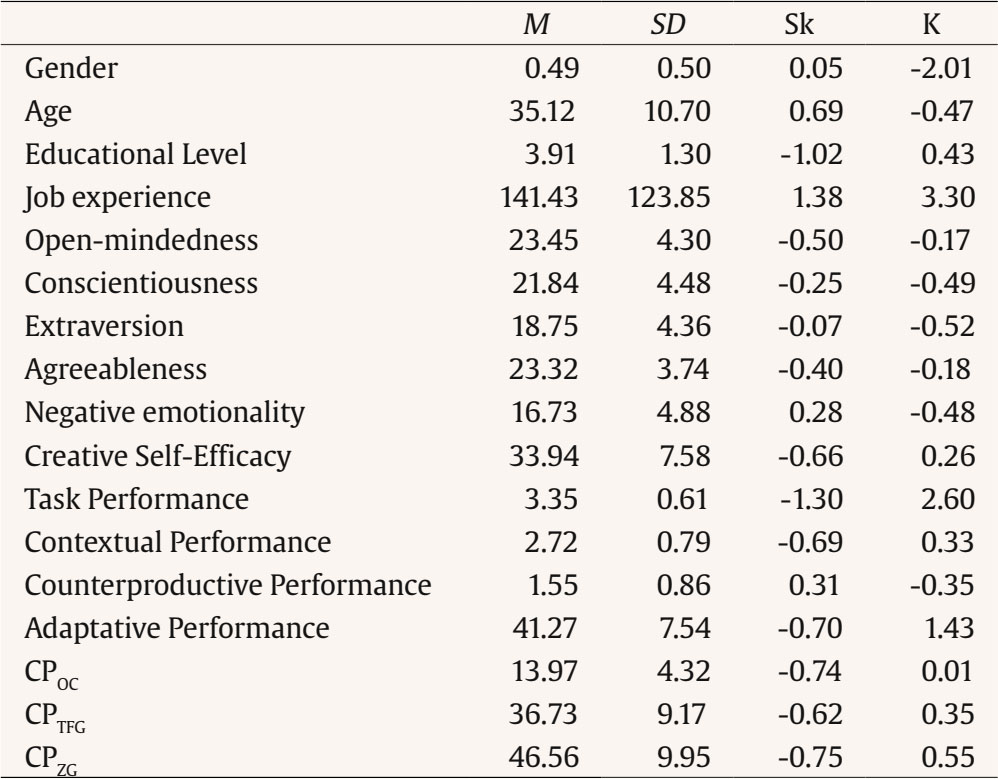 Note. N = 405. M = mean; SD = standard deviation; Sk = skewness (standard error = .121); K = kurtosis (standard error = .242); gender: 0 = men; 1 = women; CPOC = Oldham and Cummings (1996); CPTFG = Tierney et al. (1999); CPZG = Zhou and George (2001). Internal Structure The adapted Spanish scales demonstrated good internal consistency. McDonald’s omega coefficients were .87 for CPOC, .93 for CPTFG, and .93 for CPZG, while Cronbach’s alpha coefficients were .88, .93, and .94, respectively, all within the acceptable range. CFA results suggest a unidimensional structure for each of the three creative performance instruments, although model fit indicators varied across the scales. Taken together, these results provide support for H1. Reliability coefficients, inter-item correlations, fit indices, and corresponding factor loadings for the three instruments are reported in Table 3, and the CFA model is presented in Figure 1. Figure 1 Confirmatory Factor Analysis Models for CPOC, CPTFG, and CPZG. 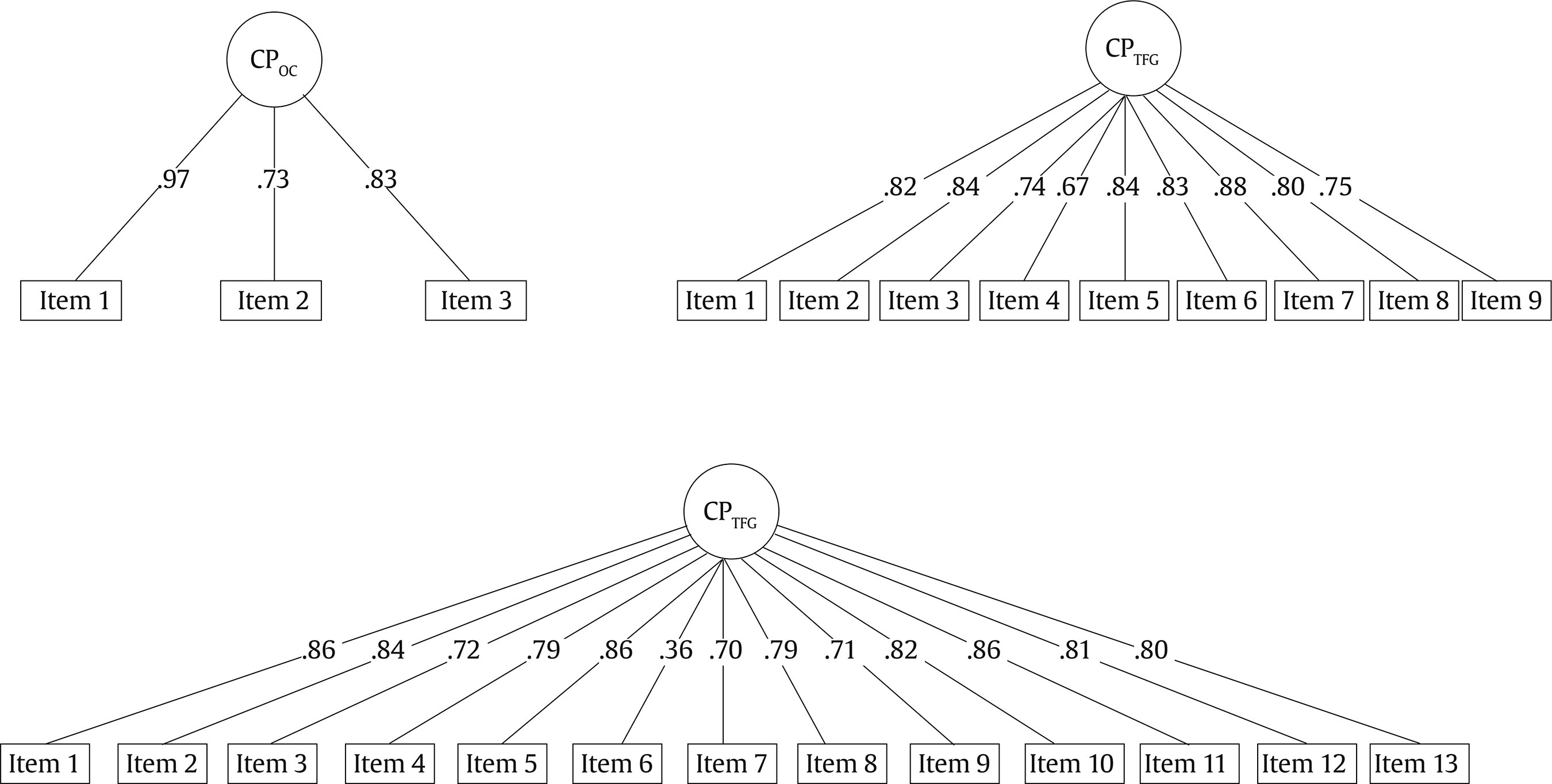 As the CPOC scale consists of only three items, conventional fit indices were not reported, as their values were zero. Instead, model fit was evaluated using degrees of freedom (df), which were also zero, indicating a perfect fit (Kline, 2016). Following Hair’s (2019) recommendation, factor loadings exceeded .70 and were statistically significant, confirming the scale’s adequate model fit. Additionally, inter-item correlations ranged from .68 to .83, reinforcing the scale’s precision and sensitivity in capturing variability. CPTFG exhibits an acceptable fit based on robust indices (CFI = .93, TLI = .90, SRMR = .03, RMSEA = .14. 95% CI [.12, .15]). Factor loadings ranged from .67 to .88, confirming strong item-factor relationships. Additionally, inter-item correlations ranged from .79 to .85, showing the instrument’s effectiveness in assessing creative performance. In contrast, CPZG exhibited a poor model fit (CFI = .89, TLI = .87, SRMR = .04, RMSEA = .13. 95% CI [.12, .14]). The wide range of factor loadings, spanning from .36 to .86, suggests that some items may not adequately represent the underlying construct. Furthermore, inter-item correlations ranged from .33 to .79, indicating a limited capacity to effectively assess creative performance. While the RMSEA values of both the CPTFG (.14) and CPZG (.13) scales exceeded the conventional threshold, at least two out of the four fit indices fell within optimal or acceptable ranges for both models, indicating an overall satisfactory model fit. Table 3 Reliability, Inter-Item Correlations, and Fit Indices of the Creative Performance Scales 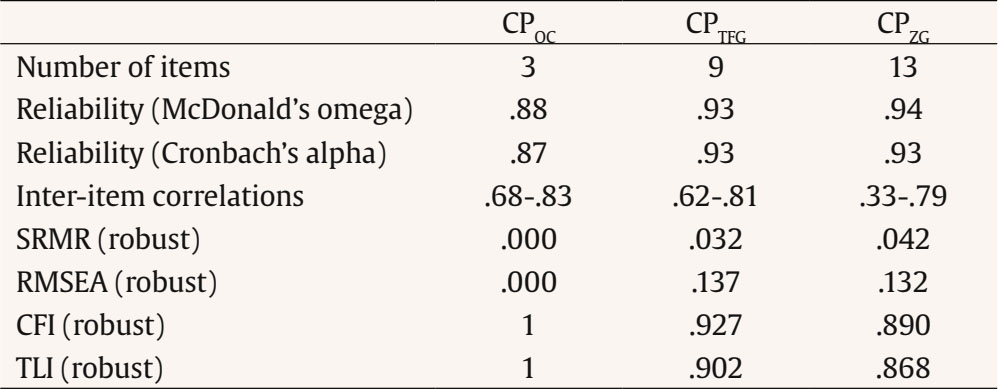 Note. CPOC = Oldham and Cummings (1996); CPTFG = Tierney et al. (1999); CPZG = Zhou and George (2001); SRMR = standardized root mean square residual; RMSEA = root mean square error of approximation; CFI = comparative fit index; TLI = Tucker–Lewis index. As a complementary analysis, an EFA including all items from the three measures was conducted to examine their shared structure. A minimum residual extraction method was used, and given the expectation of correlated factors, an oblimin rotation was employed. Data suitability was confirmed by a KMO of .96 and a significant Bartlett’s test, χ²(300) = 7589, p < .001. Parallel analysis indicated a four-factor solution, accounting for 61.9% of the total variance. The pattern of factor loadings is presented in Table 4. The first factor explained 21.9% of the variance and was primarily defined by the CPTFG items, with additional loadings from a small number of CPZG items. The second factor explained 20.2% of the variance and was largely composed of CPZG items. The third factor explained 12.2% of the variance and was clearly defined by the three CPOC items. The fourth factor explained 7.7% of the variance and captured additional variance among a subset of CPZG items. Although most items exhibited dominant loadings on a single factor, several cross-loadings were observed, particularly between CPTFG and CPZG items. Table 4 Exploratory Factor Analysis of All Items from the Three Creative Performance Scales 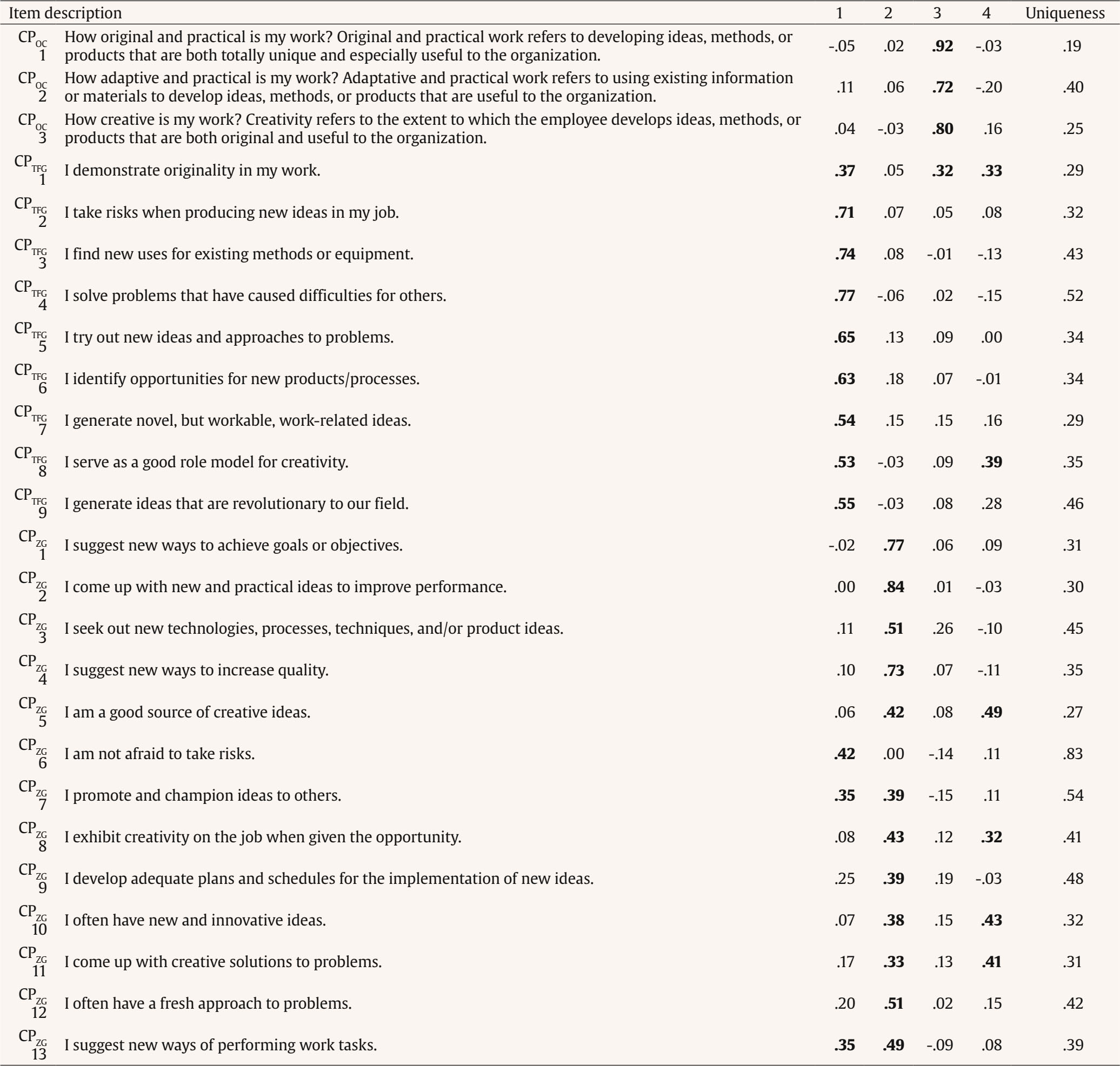 Note. Factor loadings ≥ .30 are in bold; CPOC = Oldham and Cummings (1996); CPTFG = Tierney et al. (1999); CPZG = Zhou and George (2001). Measurement invariance across gender was assessed at the configural, metric, and scalar levels, thus confirming H2. CPOC demonstrated a perfect fit across all levels (RMSEA = .00, CFI = 1.00), confirming full invariance and supporting valid mean comparisons across gender. CPTFG showed acceptable configural invariance (RMSEA = .16, CFI = .91), with small changes in metric (ΔRMSEA = -.01, ΔCFI = -.001) and scalar invariance (ΔCFI = -.002), indicating strong invariance and supporting mean comparisons. CPZG showed acceptable configural invariance (RMSEA = .14, CFI = .88), with minimal changes observed at the metric and scalar levels (ΔRMSEA = -.006, ΔCFI = -.001), supporting invariance across groups. Validity As shown in Table 5, the correlation matrix provides valuable insights into the relationships among key psychological constructs, assessing convergent validity, as well as their relationships with other sociodemographic characteristics. Table 5 Correlation matrix of the study variables 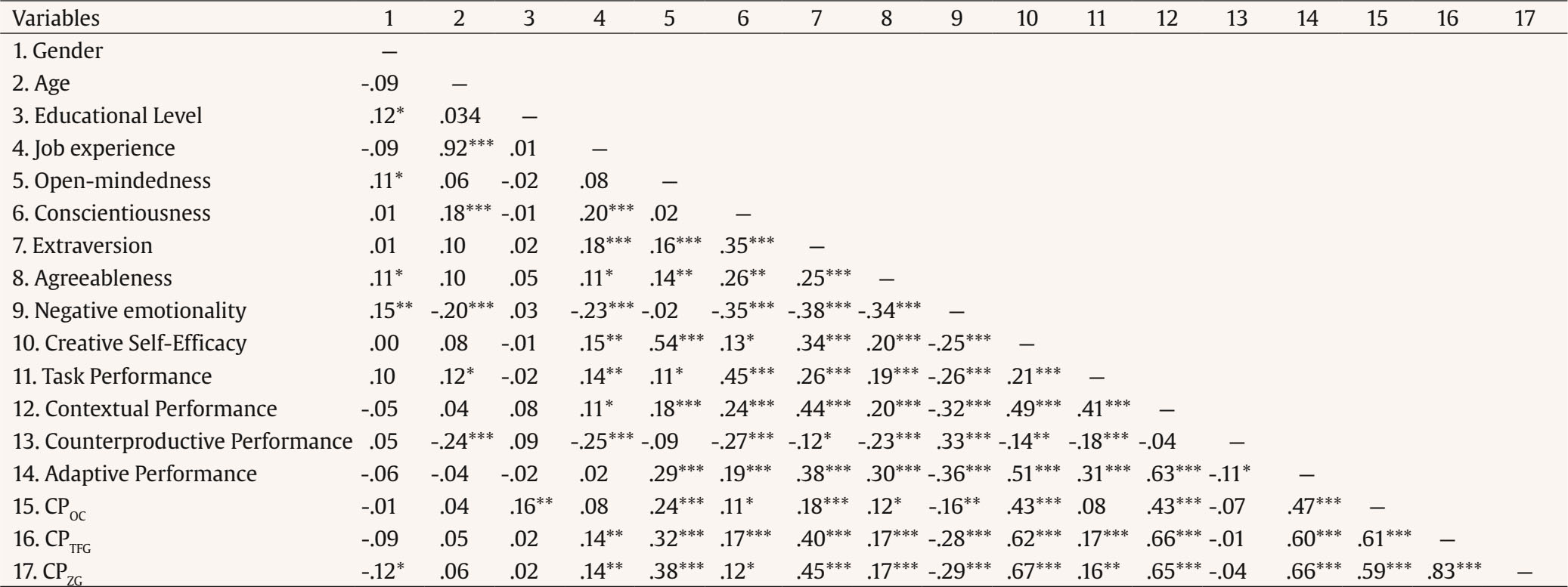 Note. N = 405; Gender: 0 = men; 1 = women; CPOC = Oldham and Cummings (1996); CPTFG = Tierney et al. (1999); CPZG = Zhou and George (2001). *p ≤ .05, **p ≤ .01, **p < .001. Concerning H3, the hypothesis received partial support. Task performance showed significant positive associations with CPTFG (r = .17, p < .001) and CPZG (r = .16, p < .01), but no significant association was found with CPOC. Contextual performance displayed stronger correlations with creative performance (CPOC: r = .43, p < .001; CPTFG: r = .62, p < .001; and CPZG: r = .67, p < .001). In contrast, counterproductive performance was not significantly related to any of the creative performance measures, providing no empirical support for the hypothesized association. Finally, adaptive performance also revealed strong positive correlations with creative performance (CPOC: r = .47, p < .001; CPTFG: r = .60, p < .001; and CPZG: r = .66, p < .001). Regarding the correlations between the CP scales and CSE, CPOC showed a moderate correlation (r = .43, p < .001), while CPZG (r = .67, p < .001) and CPTFG (r = .62, p < .001) exhibited strong associations. Therefore, H4 is supported. The analysis revealed no multicollinearity issues for CPOC CPTFG or CPZG confirming that each instrument contributes uniquely, yet in a related manner, to the assessment of creative performance. Their significant associations with CSE were accompanied by ideal variance inflation factor (VIF) values of 1.00 and tolerance levels of 1.00. These results suggest that CPOC, CPTFG, and CPZG are not collinear with CSE, reinforcing their distinctiveness while supporting their complementary value in capturing different facets of creative performance. The findings also confirmed H5, indicating significant associations between specific personality traits and creative performance. Open-mindedness (CPOC: r = .24, p < .001; CPTFG: r = .32, p < .001; CPZG: r = .38, p < .001) and extraversion (CPOC: r = .18, p < .001; CPTFG: r = .40, p < .001; CPZG: r = .45, p < .001) consistently demonstrated significant positive correlations with creative performance. Conscientiousness was also positively correlated with all creative performance measures (CPOC: r = .11, p < .05; CPTFG: r = .17, p < .001; CPZG: r = .12, p < .05), although the effect sizes were more modest. As expected, negative emotionality exhibited significant negative correlations (CPOC: r = -.16, p < .01; CPTFG: r = -.28, p < .001; CPZG: r = -.29, p < .001). Although not initially hypothesized, agreeableness was positively associated with creative performance across all three measures (CPOC: r = .12, p < .05; CPTFG: r = .17, p < .001; CPZG: r = .17, p < .001). Regarding H6, the findings provide limited support for the role of sociodemographic factors in predicting creative performance. Gender showed a significant correlation with CPZG (r = -.12, p < .05), indicating that being male was statistically associated with higher creative performance scores on this instrument. No significant correlations were found between gender and either CPOC or CPTFG. Educational level showed a significant positive correlation with CPOC (r = .16, p < .01), while no significant associations were found with CPTFG or CPZG. Table 6 Regression Analyses for Changes in Creative Performance 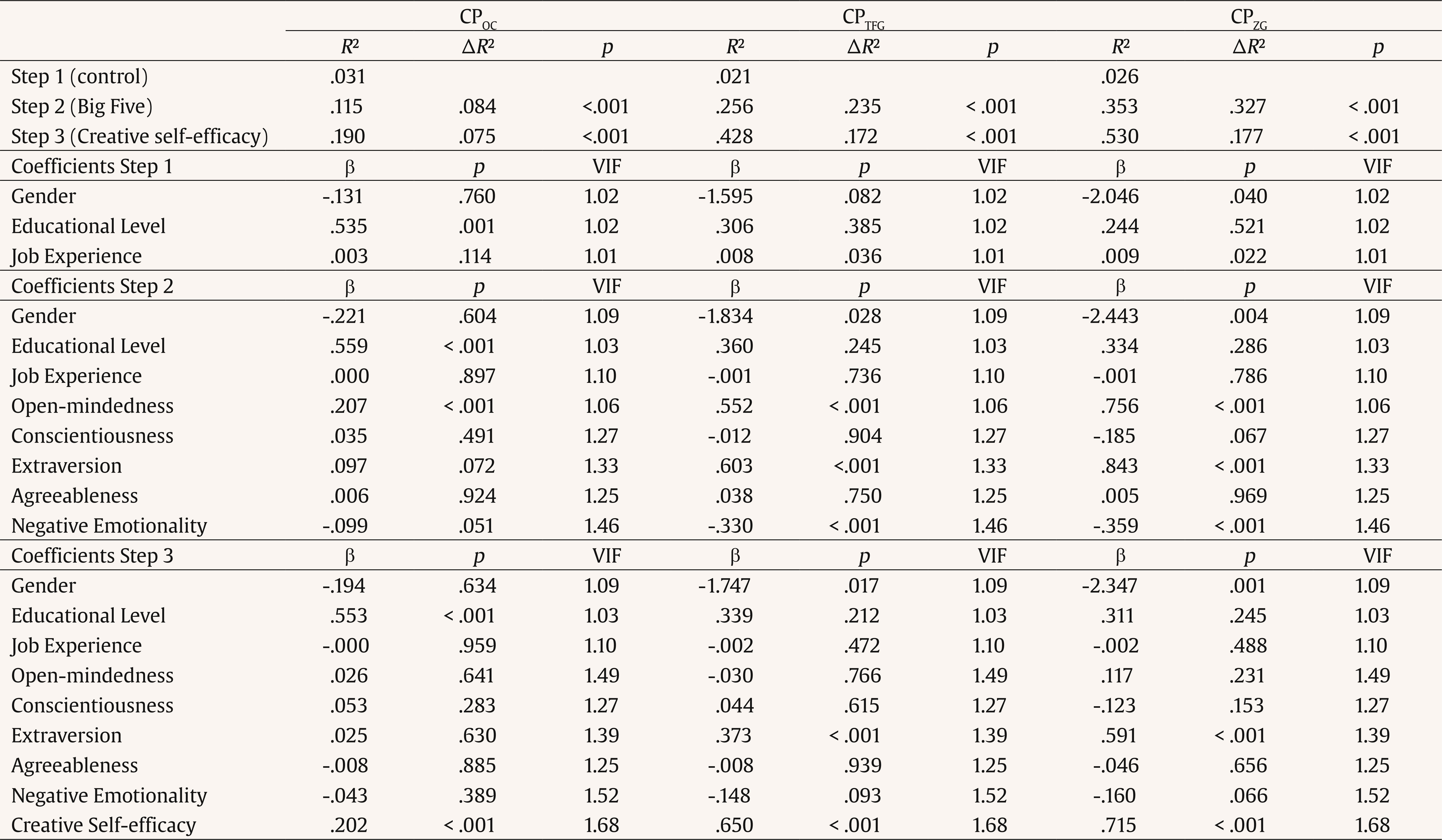 Note. N = 405. Gender: 0 = men; 1 = women; CPOC = Oldham and Cummings (1996); CPTFG = Tierney et al. (1999); CPZG = Zhou and George (2001); VIF = variance inflation factor. Regression Analysis To examine whether constructs previously identified in the literature as predictors of creative performance also predict scores on the three adapted instruments, hierarchical regression analyses were conducted. For each instrument, three successive models were tested: Model 1 introduces sociodemographic variables (gender, educational level, and job experience). Model 2 includes the Big Five personality traits, while Model 3 adds creative self-efficacy (CSE). This approach allowed us to assess the incremental contribution of each set of predictors to the explained variance in creative performance across the three measures. The results for each instrument are detailed in Table 6. Hypothesis H7 was supported, as creative self-efficacy significantly increased the explained variance in creative job performance beyond the contribution of the Big Five personality traits. In the first step, gender, educational level, and job experience were entered as predictors. This model accounted for a small but statistically significant proportion of variance in the three creative performance measures: 3.1% in CPOC, F(3, 401) = 4.32, p = .005; 2.1% in CPTFG, F(3, 401) = 2.87, p = .036; and 2.6% in CPZG, F(3, 401) = 3.54, p = .015. Gender was a significant predictor exclusively in the CPZG model (β = -2.05, p = .040). Educational level was positively associated with CPOC (β = .54, p < .001). Finally, job experience showed small yet statistically significant positive effects on both CPTFG (β = .08, p = .036), and CPZG (β = .10, p = .022). The inclusion of the Big Five personality traits in the second step significantly increased the explained variance in all three outcome variables. The models accounted for 11.5% of the variance in CPOC, ΔR² = .084, F(8, 396) = 6.42, p < .001; 25.6% in CPTFG, ΔR² = .235, F(8, 396) = 17.03, p < .001; and 35.3% in CPZG, ΔR² = .327, F(8, 396) = 27.03, p < .001. Personality traits did not substantially alter the predictive contribution of the sociodemographic variables. At this stage, educational level (β = .54, p < .001) and openness to experience (β = .21, p < .001) emerged as predictors of CPOC. For CPTFG, significant predictors included gender (B = -1.83, p = .028), openness to experience (β = .55, p < .001), extraversion (β = .60, p < .001), and negative emotionality (β = -.33, p < .001). Similarly, CPZG was significantly predicted by gender (β = -2.44, p = .004), openness to experience (β = .76, p < .001), extraversion (β = .84, p < .001), and negative emotionality (β = -.36, p < .001). The remaining personality traits did not show consistent significance across models. In the third step, the inclusion of CSE significantly increased the explained variance across all three models. Specifically, the final models accounted for 19% of the variance in CPOC, ΔR² = .075, F(9, 395) = 10.30, p < .001; 42.8% in CPTFG, ΔR² = .172, F(9, 395) = 32.87, p < .001; and 53% in CPZG, ΔR² = .177, F(9, 395) = 49.52, p < .001. In this final model, educational level (β = .55, p < .001) and CSE (β = .20, p < .001) emerged as predictors of CPOC. For CPTFG, significant predictors included gender (β = -1.75, p = .017), extraversion (β = .37, p < .001), and creative self-efficacy (β = .65, p < .001). Similarly, CPZG was significantly predicted by gender (β = -2.35, p = .001), extraversion (β = .59, p < .001), and creative self-efficacy (β = .72, p < .001). The present paper aims to analyze the functioning of the Spanish version of three self-report measures of creative performance, addressing a critical gap in the availability of validated instruments for Spanish-speaking populations. Through our empirical study, we aim to demonstrate that the three scales meet psychometric standards and contribute to the advancement of creative performance research. The adaptation of the scales followed best practices for cross-cultural validation of scales (Heggestad et al., 2019), which are outlined below. First, the lack of available Spanish measures for creative performance justified the need for adaptation. Second, a rigorous back-translation procedure involving independent translators and expert reviewers ensured conceptual equivalence. Third, CFA was conducted to evaluate the factor structure without removing items arbitrarily, using multiple fit indices (CFI, TLI, SRMR, RMSEA). Fourth, internal consistency was confirmed using Cronbach’s alpha, with all scales exceeding acceptable thresholds. Fifth, both the original and adapted versions were documented and accompanied by detailed psychometric evidence. Finally, the adapted instruments demonstrated strong content, construct, and convergent validity, affirming their accuracy and reliability in measuring the creative performance construct. Overall, the adapted Spanish scales demonstrated good internal consistency. McDonald’s omega coefficients were .87 for CPOC, .93 for CPTFG, and .93 for CPZG. For comparative purposes, Cronbach’s alpha coefficients were .88, .93, and .94, respectively, which are slightly lower than those reported for the original instruments (α = .90, .95, and .96), yet remain within the acceptable range. CFA supported the unidimensional structure of the three scales, with CFI and TLI values close to or above recommended thresholds, and SRMR values indicating satisfactory fit. The slightly elevated RMSEA values observed for CPTFG (.14) and CPZG (.13) are consistent with prior evidence that this index is often inflated in models with a small number of items and when robust estimation methods are applied (Asparouhov & Muthén, 2016). Taken together, these results support the adequacy of the three Spanish versions and provide the basis for identifying the most robust instrument. The EFA results considering the three scales at the same time indicate that each instrument tend to captures specific aspects of the construct. The structure reveals four distinguishable components: a behavioral dimension in CPTFG, a global evaluative dimension in CPOC, and two differentiated facets within CPZG. These findings underscore that creative performance, though often treated as unidimensional, manifests through multiple related but distinct expressions depending on its operationalization. Specifically, the CPTFG items loaded primarily on a single factor, reflecting a coherent behavioral dimension focused on proactive idea generation, experimentation, and problem-solving. Conversely, the CPOC items formed a clearly delimited evaluative component, as their wording invites respondents to assess how original, adaptive, or creative their work is, thereby capturing a global appraisal of creative performance rather than specific behaviors. The CPZG showed the most differentiated loading pattern, with items distributed across two facets. This structure likely reflects the breadth of its content, which spans from idea generation to idea promotion and implementation planning. Compared to the more focused behavioral emphasis of CPTFG and the evaluative orientation of CPOC, CPZG encompasses a a broader range of processes involved in creative performance. Although most items exhibited dominant loadings on a single factor, some cross-loadings were observed, particularly between CPTFG and CPZG items, indicating partial conceptual overlap across behavioral expressions of creative performance. This overlap does not contradict the differentiated structure identified within CPZG, rather it reflects that distinct facets of creative performance such as idea generation, promotion, and implementation are theoretically related and empirically interconnected. These findings support the view that creative performance represents a multifaceted yet internally coherent construct. Among the three scales, the CPTFG emerged as the most robust and best-performing measure. Internal consistency was notably high (ω = .93), and inter-item correlations ranged from .62 to .81, suggesting strong item coherence and internal homogeneity. CFA yielded satisfactory fit indices (CFI = .93, TLI = .90, SRMR = .03, RMSEA = .14, 95% CI [.12, .15]), with SRMR and CFI values falling within accepted thresholds. Standardized factor loadings ranged from .67 to .88, indicating substantial relationships between each item and the underlying latent construct. In addition, the instrument demonstrated strong scalar invariance, with minimal model changes, justifying mean comparisons. Collectively, these results position CPTFG as a particularly reliable and valid tool for assessing creative performance in Spanish-speaking contexts. The findings also contribute to the conceptualization of job performance. There is also some evidence indicating a positive relationship between creative performance and overall job performance (Zhang & Bartol, 2010). Additionally, a central methodological challenge in this field lies in determining whether creative performance can be reliably distinguished from related constructs such as adaptive or contextual performance, given their conceptual proximity and overlapping behavioral manifestations (Koopmans et al., 2011). The present study provides evidence at the dimension level, showing that creative performance is more closely related to contextual performance and adaptive performance than to task performance. This evidence, supported by the results of the different creative performance scales analyzed in this article, suggests that the relationship between performance dimensions may be more complex than initially thought. This is because creative performance appears to be strongly related simultaneously to in-role behaviors (particularly those concerning adaptation to changing situations, which may require creative approaches) and extra-role behaviors (due to its association with favorable organizational behaviors within contextual performance, but not those contrary to the organization, as reflected in counterproductive work behaviors). If research continues to consider the different dimensions of performance, it will be possible to confirm whether this result is specific to our study, the Spanish context, or, conversely, a pattern that is generalizable to other contexts. To the best of our knowledge, this study is the first to jointly examine the role of both Big Five personality traits and CSE as predictors of creative performance in the Spanish-speaking context. As hypothesized, open-mindedness, conscientiousness, and extraversion were positively associated with creative performance, while negative emotionality showed a negative association. Unexpectedly, agreeableness also displayed a significant relationship with creative performance. This result may be influenced by characteristics specific to the Spanish sample, underscoring the need for further research to examine this association. Among these traits, extraversion and open-mindedness consistently emerged as the strongest predictors (Shaw & Choi, 2023; Sung & Choi, 2009), showing robust positive relationships across instruments. Negative emotionality also behaved as expected, displaying a consistent negative correlation with creative performance (Leung et al., 2014). Conscientiousness did not show significant associations, and this lack of significance may reflect a more complex relationship between conscientiousness and creative performance. Although conscientiousness is the most relevant predictor of task performance, this pattern does not consistently extend to other performance dimensions, such as adaptive performance (Ramos-Villagrasa et al., 2019). While this trait is typically not regarded as a strong predictor of creativity, some experimental studies using divergent thinking tasks have even found negative associations, likely due to the cautious or rigid cognitive styles often associated with high conscientiousness (Weiss et al., 2021). CSE has been widely regarded as a key psychological mechanism through which personality influences creativity (Tierney & Farmer, 2002). Consequently, individuals with high openness and high creative self-efficacy are more likely to demonstrate higher creative performance than those with similar traits but lower levels of self-efficacy (Karwowski et al., 2013), highlighting an interaction between personality and self-beliefs. Drawing on social cognitive theory by Bandura (1997), prior research has emphasized that self-efficacy beliefs function as core regulators of human agency, shaping how individuals activate and sustain cognitive, motivational, and behavioral resources. In our study, the correlations between CSE and creative performance were particularly strong, especially for CPTFG and CPZG. Such high values may be attributable to the use of self-report measures, as other studies have found moderate-to-high correlations (e.g., r = .54, p < .001 in Chiang et al., 2022; r = .35, p < .001 in Choi, 2004; r = .67, p < .001 in Choi et al., 2021; and r = .77, p < .001 in Sun et al., 2020). However, similar results can also be found in studies with supervisory ratings (e.g., r = .57, p < .01 in Aleksic et al., 2016; and r = .44, p < .01 in Christensen-Salem et al., 2021). Future research in Spanish organizational settings should therefore incorporate multisource assessments of creative performance (e.g., supervisor or peer ratings) to determine whether the high correlations with CSE observed here reflect substantive relationships or are partly inflated by shared method variance. The hierarchical regression analysis revealed a consistent pattern across steps. In the third step, the inclusion of CSE further reduced the predictive effects of certain personality traits. Specifically, the effects of openness and negative emotionality became non-significant, suggesting that their influence may be mediated through CSE. This pattern aligns with theoretical perspectives that position CSE as a proximal determinant of creative performance, mediating the effects of personality traits (Choi, 2024; Choi et al., 2021). Further research may investigate this idea. Furthermore, while the associations involving educational level were inconsistent across instruments, gender emerged as a significant predictor of creative performance for CPTFG and CPZG with higher scores associated with being male, consistent with previous findings by Hora et al. (2021). Education contributes to creative performance by fostering knowledge, skills, and perspectives that support innovation and problem-solving (Amabile, 1996; Liu et al., 2019). Higher educational attainment has been linked to slightly increased creative performance, possibly due to a broader base of knowledge and skills (Tierney & Farmer, 2011). These results underscore the need for further research in Spanish samples to explore the extent to which demographic variables, such as gender and education, systematically influence creative performance outcomes across contexts and instruments. In sum, this study provides evidence that supports the use of three different self-report instruments to assess creative performance in Spanish-speaking work contexts. By integrating personality traits and creative self-efficacy into the analysis, it contributes to a more comprehensive understanding of the psychological factors that underpin creative behavior in the workplace. Practical Implications The present findings hold several implications for human resource management and organizational practice. First, the adapted measures provide organizations with reliable tools for assessing creative performance in Spanish-speaking contexts, allowing for the systematic identification of employees with high levels of creative behavior. Creative performance can be incorporated as an additional dimension of job performance, extending the traditional framework beyond task, contextual, adaptive, and counterproductive performance. Recognizing creativity as part of job performance enables organizations to capture employees’ contributions to innovation more systematically and align evaluation practices with the demands of dynamic and knowledge-intensive work environments. From a practical perspective, recognizing creative performance within the broader job performance framework underscores the value of integrating creative criteria into recruitment, appraisal, and talent management practices, which are positively associated with individual performance outcomes (Pomaranik & Kludacz-Alessandri, 2024). Organizations that explicitly value and measure creative contributions are better positioned to foster adaptability, idea generation, and sustained competitiveness (Harari et al., 2016). Indeed, high-performance work systems have been shown to enhance creative performance through increased employee engagement (Lyu et al., 2025). In practical terms, different emphases apply depending on the human resource function. In selection processes, organizations should prioritize the assessment of personality traits that consistently predict creative performance, namely openness to experience, extraversion, and low negative emotionality. In contrast, training and development initiatives should focus on creative self-efficacy, as employees’ confidence in their ability to generate and implement novel ideas is a critical factor shaping their engagement in innovation. By integrating these considerations into selection, appraisal, and development practices, organizations can foster both individual creativity and broader organizational adaptability. Limitations and Recommendations for Further Research The present study has several limitations that should be considered. The cross-sectional design limits the possibility of establishing causal inferences about the relationships among personality traits, creative self-efficacy, and job performance dimensions. Longitudinal or experimental approaches would provide stronger evidence by clarifying the temporal sequence of these variables and the potential reciprocal dynamics between them. Another limitation lies in the exclusive reliance on self-reported measures of creative performance. Although self-reports offer practical advantages, including ease of administration and applicability across diverse roles, they remain susceptible to common method bias and social desirability effects. Prior research also indicates that self-ratings may produce slightly higher scores than supervisor or objective assessments, even when such differences are not always statistically significant (Damadzic et al., 2022). These concerns highlight the importance of incorporating complementary approaches, such as supervisor evaluations, peer assessments, or expert-rated tasks, to mitigate potential bias and enhance the robustness of findings (Dumas & Grajzel, 2024). A further limitation concerns the sampling strategy. Although Prolific provided access to a diverse group of employed adults, the non-probabilistic design restricts the generalizability of the results. Replicating the study with larger and more representative occupational samples, ideally based on stratified or random sampling, would enhance external validity. A final limitation is the omission of cognitive ability, which has consistently been identified as the strongest predictor of overall job performance. Future research should examine whether its predictive value also extends to creative performance. Further efforts are also needed to clarify how personality traits and creative self-efficacy interact, as their combined effects may help to explain the psychological mechanisms underlying individual differences in creative performance. In addition, although the CPTFG scale performed best in the present study, all scales functioned adequately. Further research should examine whether these findings hold across different cultural contexts and occupational domains, as contextual factors may shape how creative performance is assessed. Conflict of Interest The authors of this declare no conflict of interest. Cite this article as: Cebrián, J., Sánchez-García, J., & Ramos-Villagrasa, P. J. (2026). Assessing creative performance using brief self-report scales: A comparative analysis in Spanish employees. Journal of Work and Organizational Psychology, 42, Article e260770. https://doi.org/10.5093/jwop2026a2 Funding The author(s) declared that financial support was received for this work and/or its publication. This research was funded by the Ministry of Science and Innovation, Government of Spain, under grant PID2021-122867NA-I00; and by the Department of Innovation, Research and University of the Government of Aragon (Group S31_23R). References Appendix Creative Performance Scales Items Spanish Version A continuación, encontrará tres preguntas sobre su trabajo. Responda su grado de acuerdo con cada una de ellas, desde 1 = Nada hasta 7 = Mucho.
Por favor indique con qué frecuencia las siguientes afirmaciones describen el comportamiento que ha tenido en su trabajo actual. Responda siguiendo la escala:
Por favor indique con qué frecuencia las siguientes afirmaciones le describen como trabajador/a. Responda siguiendo la escala:
|
Cite this article as: Cebrián, J., Sánchez-García, J., & Ramos-Villagrasa, P. J. (2026). Assessing Creative Performance Using Brief Self-Report Scales: A Comparative Analysis in Spanish Employees. Journal of Work and Organizational Psychology, 42, Article e260770. https://doi.org/10.5093/jwop2026a2
Correspondence: pjramos@unizar.es (P. J. Ramos-Villagrasa).Copyright © 2026. Colegio Oficial de la Psicología de Madrid


 PDF
PDF e-PUB
e-PUB CrossRef
 JATS
JATS Print
Print SEND
SEND